Mansa Musa
c. 1280–1337 · Ruler of the Mali Empire, famous for his gold-laden pilgrimage to Mecca.
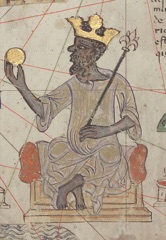
Musa I, called Mansa Musa, mansa meaning king, ruled the Mali Empire in West Africa in the early fourteenth century. Mali controlled the gold fields of the upper Niger and Senegal rivers and the trade routes across the Sahara, making it one of the richest states in the world. A devout Muslim, Musa made the pilgrimage to Mecca in 1324 and 1325 with a huge caravan of attendants and camels carrying gold. Arab writers recorded that when he passed through Cairo he gave away and spent so much gold that its value there fell for years. His journey made Mali famous, and a Spanish map of 1375, the Catalan Atlas, shows him seated on a throne holding a golden nugget. He brought back scholars and the architect Abu Ishaq al-Sahili, built mosques such as the Djinguereber in Timbuktu, and encouraged Timbuktu's growth as a center of trade and learning. His empire also took the trading city of Gao. Ibn Battuta visited Mali in the reign of Musa's brother Sulayman.
Faith: A Sunni Muslim of the Maliki school who made a famous pilgrimage (hajj) to Mecca in 1324. Source: Wikipedia
Key dates
- c. 1312 Becomes mansa of Mali
- 1324–25 Pilgrimage to Mecca through Cairo
- 1327 Djinguereber Mosque in Timbuktu
- c. 1337 Dies
- 1375 Shown on the Catalan Atlas
Watch


Videos load from YouTube in privacy-enhanced mode only when you press play.
Read about them
Grades 9–12
- The Travels of Ibn Battuta · In the library
More lives
Alfred the Great · Charlemagne · Genghis Khan · Henry II of England · Justinian I · Anna Komnene
Notes: Dates of his reign vary between sources (about 1312–1337).