Wonders & Monuments · Seven Wonders
The Great Pyramid
The tomb of the pharaoh Khufu, and the only ancient wonder you can still stand before.
Still standing. It is the only one of the Seven Wonders of the Ancient World that still stands. The smooth white casing stones are mostly gone, and the top is a little lower than when it was new, but the mass of the pyramid remains.
What it is
The Great Pyramid was built on the Giza plateau, west of the Nile, in the Fourth Dynasty of Egypt, as a tomb for the pharaoh Khufu, whom the Greeks called Cheops. Two later pyramids on the same plateau belong to his successors Khafre and Menkaure; the Great Sphinx lies nearby. The sides of Khufu’s pyramid face almost exactly north, south, east and west. When it was finished it rose about 481 feet (146 metres). It is a little shorter now, and the polished Tura limestone that once sheathed it was taken away in later centuries for other buildings.
How the stones were raised is still studied, and no one living saw the work. Herodotus, visiting Egypt some two thousand years later, recorded what Egyptian guides told him: long years of labour, a causeway for the stones, and a pyramid built in steps, with the remaining blocks lifted from stage to stage. His figures are those of a traveller, not a modern survey; they are worth reading as the oldest long account we have, and then comparing with what the stones themselves still show.
“For the making of the pyramid itself there passed a period of twenty years; and the pyramid is square, each side measuring eight hundred feet, and the height of it is the same.”
Why it matters
This is costly work offered to the dead, and it has outlasted almost every other work of its age. The labour, the exactness of the plan, and the plain, unornamented mass of the faces ask for patience more than for a quick impression. To look at it honestly is to see both the skill of the builders and the fact that it was raised by a king’s command, at a price paid by many hands. Among the seven ancient wonders, it alone still lets a student test the old reports against the thing itself.
Look closely
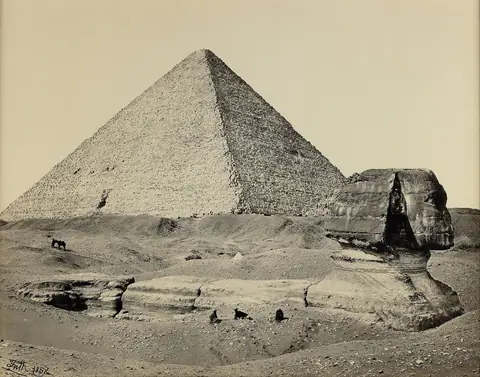
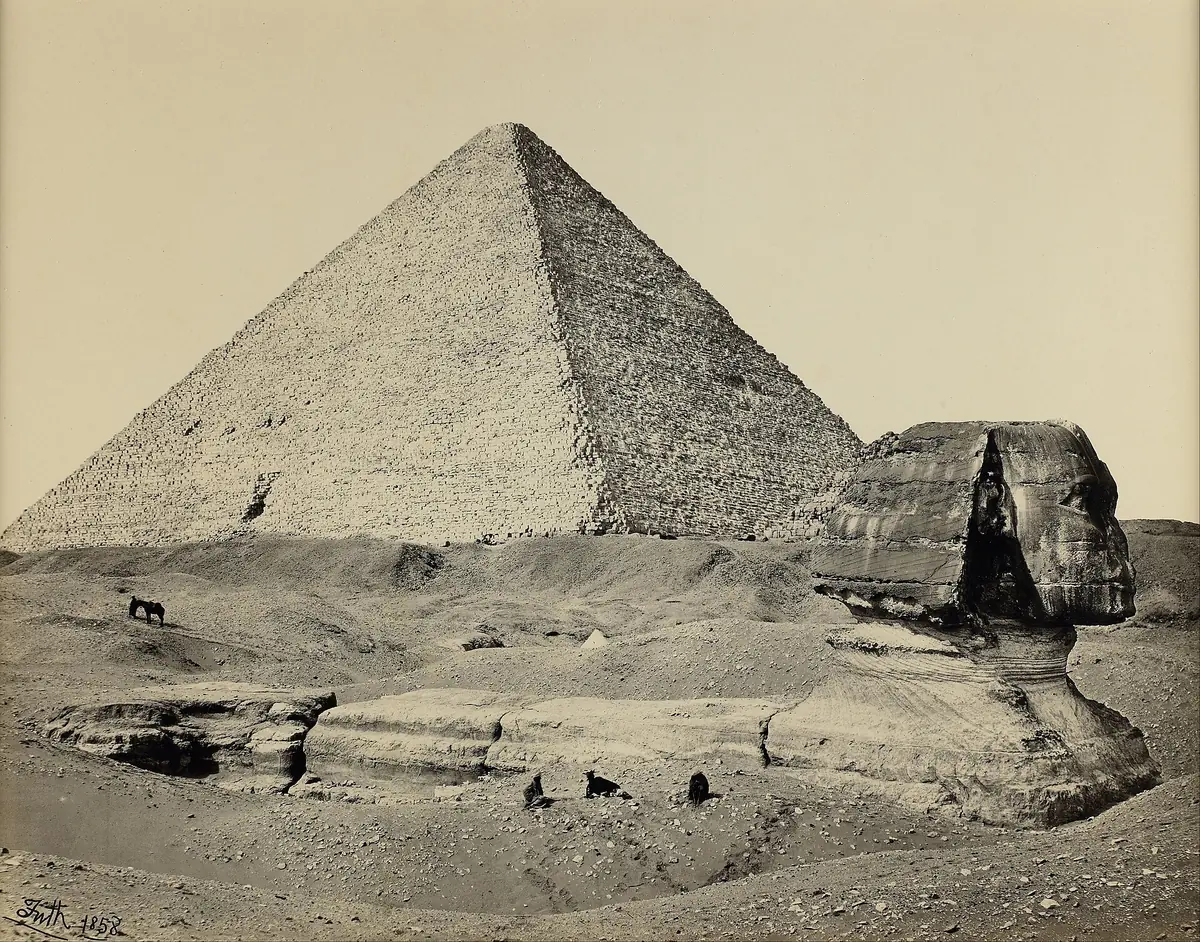
Image: Wikimedia Commons · Public domain The Great Pyramid and the Great Sphinx
Look closely. Frith made this photograph when the pyramids still stood in open desert, before the modern city reached the plateau. The Great Pyramid rises behind the Sphinx. Notice how much of the smooth casing is already gone, and how the worn head of the Sphinx sits before the mass of the tomb. This is a record of what was there, not a reconstruction.
In the library: Herodotus, The Histories
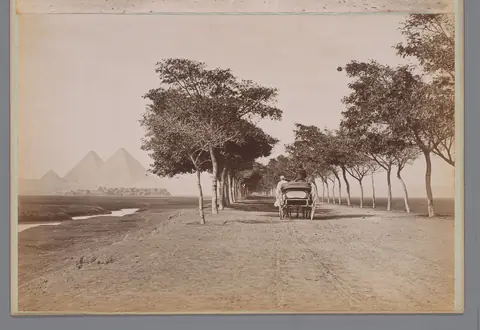
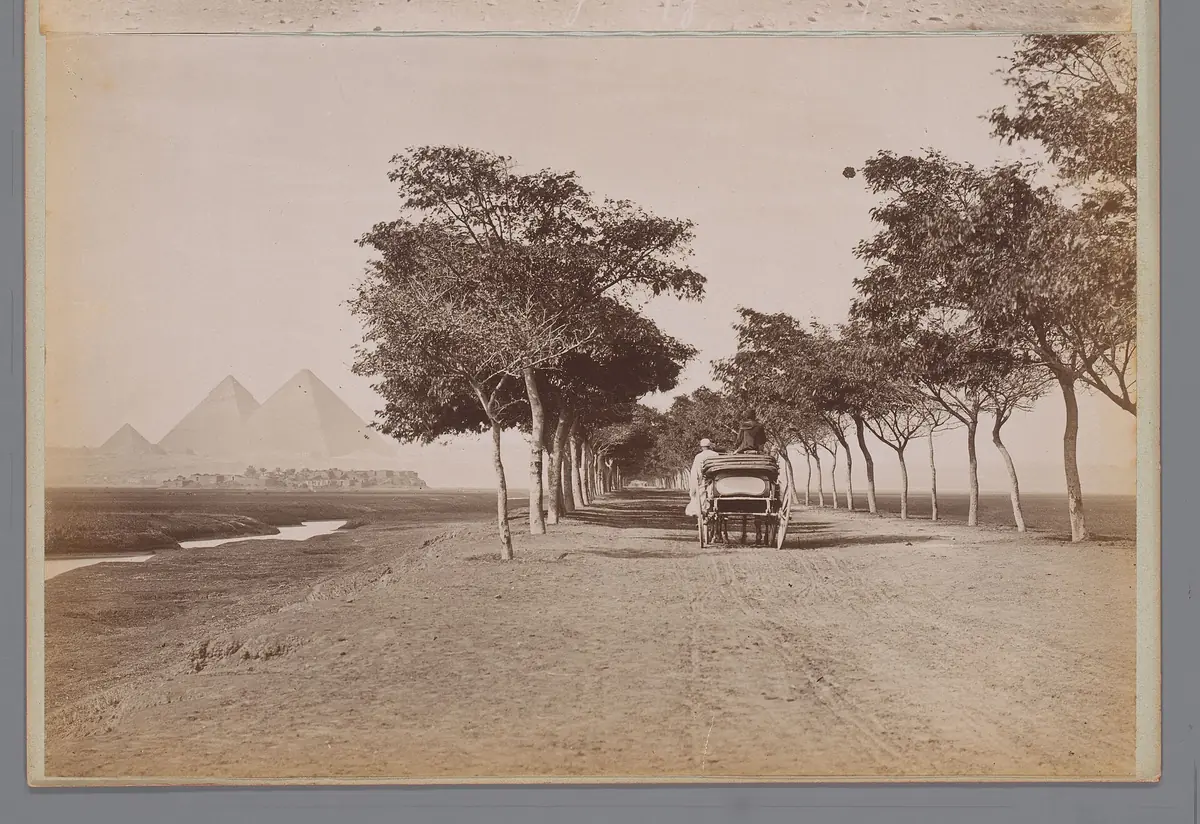
Image: Wikimedia Commons · CC0 (public domain) The pyramids from the road
Look closely. A carriage moves down a tree-lined road, and two pyramids appear far off at the end of the vista. The nearer great mass is Khufu’s pyramid; Khafre’s stands beside it. The picture is useful because it gives the works a human scale: they dominate the horizon even when they are not filling the frame.
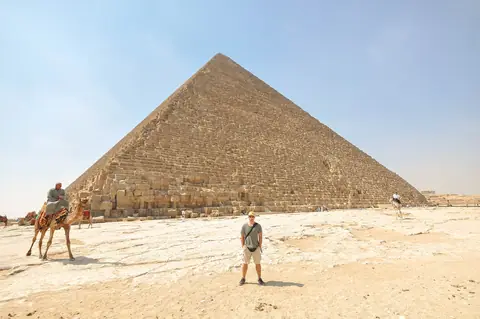
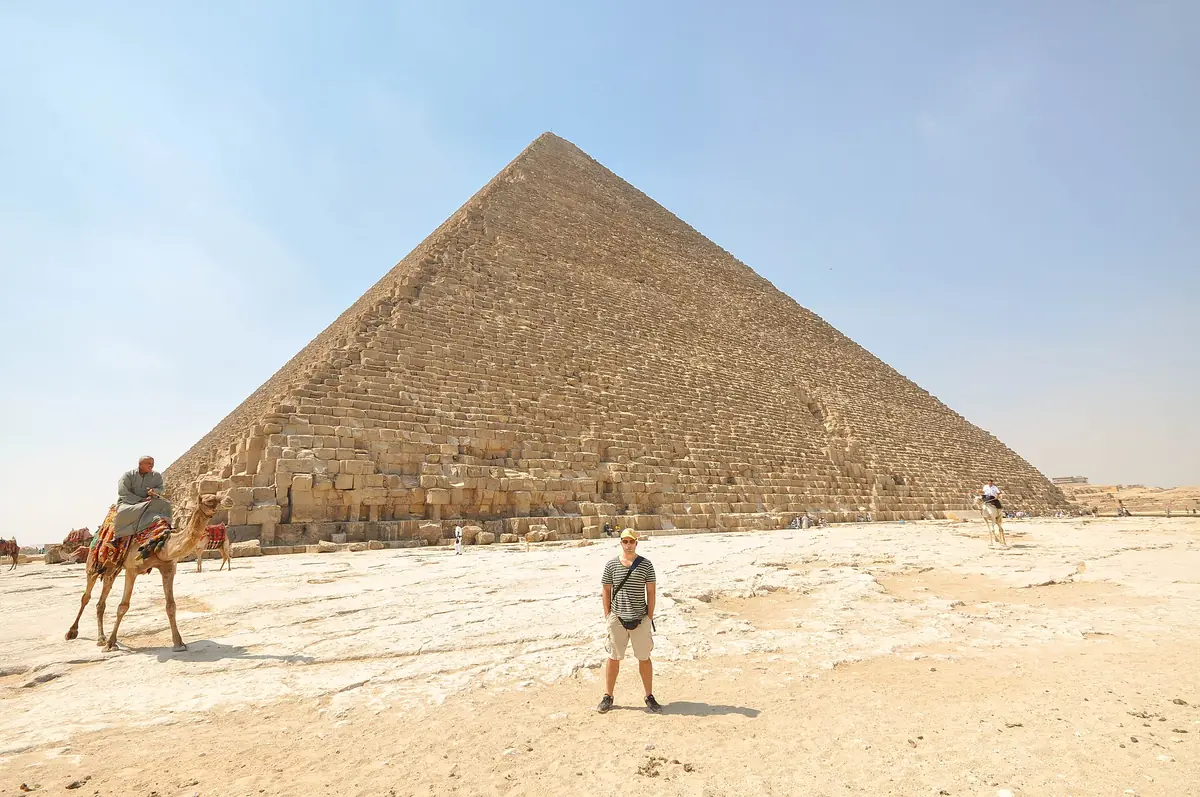
Image: Wikimedia Commons · CC BY 2.0 · Photo: Jorge Láscar The Great Pyramid of Khufu today
Look closely. A modern view of the same tomb, now at the edge of Cairo. You can see the courses of stone, the truncated top, and the rough surface left after the casing was stripped. Walk your eye up one edge and down another, and notice how the simple geometry still holds after more than four thousand years.
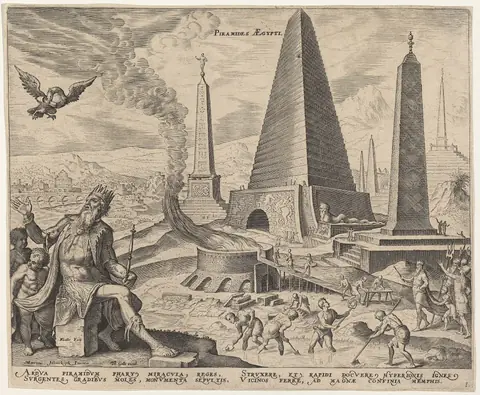
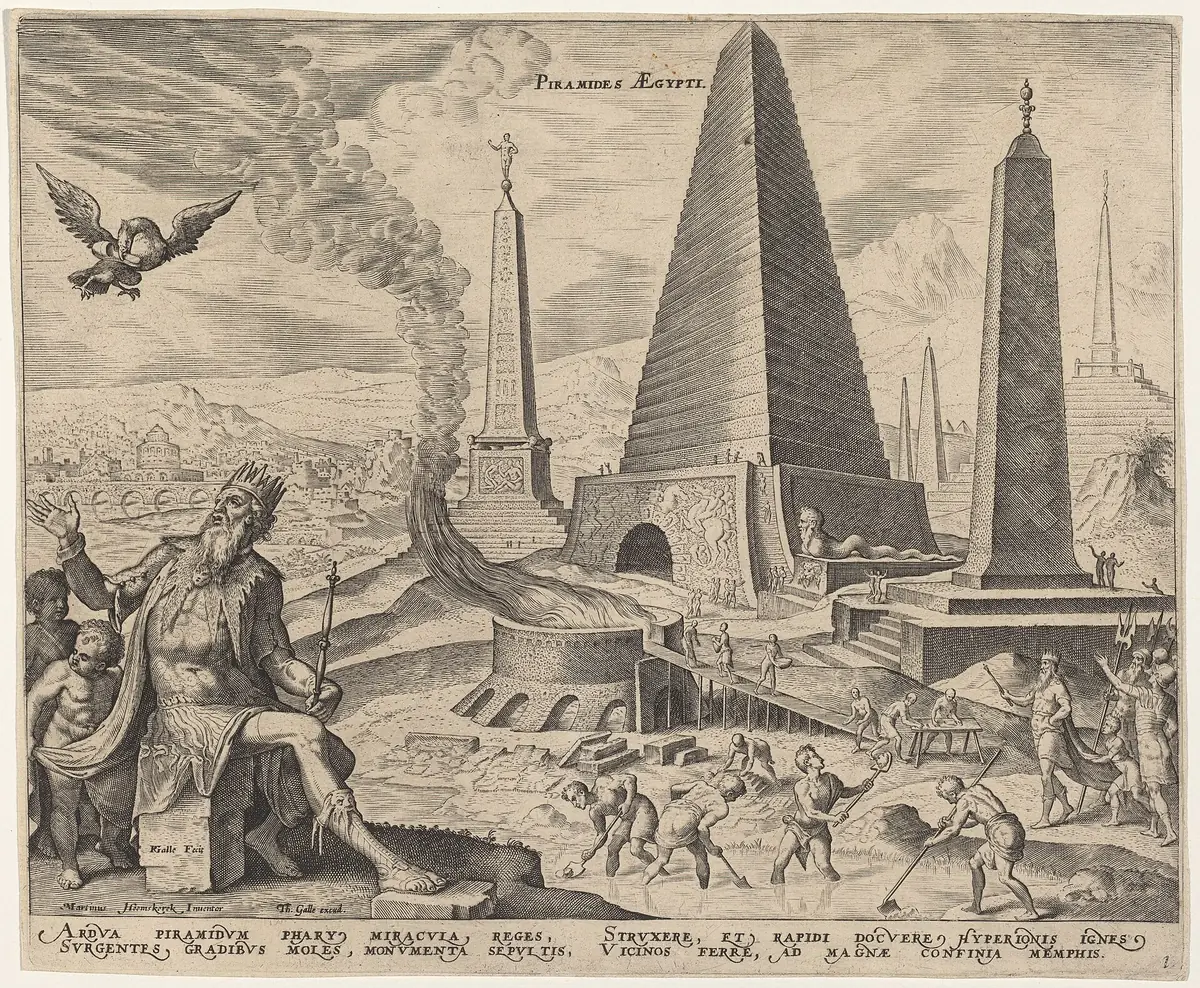
Image: Wikimedia Commons · CC0 (public domain) The Pyramids of Egypt, imagined in 1572
Look closely. Philips Galle engraved this plate after a design by Maarten van Heemskerck, in a series on the wonders of the world. Heemskerck had never stood at Giza. Obelisks, a great sphinx-like figure, and busy foreground groups are arranged as a Renaissance picture of Egypt, not as a survey of the site. Compare it with Frith’s photograph, and you can see at once what an engraving invents and what a photograph records.
In the library: Herodotus, The Histories


What to watch for
Look slowly- What still stands. This is the only ancient wonder that remains as a building. Compare later engravings with the photographs.
- The missing casing. The stepped look of the faces today is not how it first appeared. Look for remaining casing stones near the base on close views.
- The three pyramids. Khufu’s is the greatest; Khafre’s can look taller from some angles because it stands on slightly higher ground.
- Cardinal facing. The sides are laid out to the four points of the compass with striking exactness.
- Herodotus and the stones. Read his report, then ask what a visitor can and cannot check from the outside.
- A tomb, not a stage set. The pyramid was built for burial and for lasting memory, not as a public theatre or temple nave.
Sources
Dates follow standard historical references and, where we quote a book, the wording of the edition hosted in this library. Photographs are used only when the photograph itself is Public domain, CC0, or CC BY with a named credit. Lost wonders are shown in later engravings and reconstructions, which are imaginings, not photographs of the original work. Each picture links to its source page with full licence details.