Wonders & Monuments · Seven Wonders
The Hanging Gardens
The wonder whose very existence is still argued, and which survives only in later descriptions and pictures.
Existence debated. No certain remains have been found at Babylon, and the Greek and Roman descriptions were written later. Herodotus, who describes the city and its walls at length, does not mention hanging gardens. Some scholars have argued that the gardens, if they existed, belonged to Nineveh rather than Babylon. What you see here are later imaginings, not photographs of a surviving work.
Nebuchadnezzar II, in Great Lives
What it is
Later Greek and Roman writers described a great terraced garden at Babylon, watered as if in mid-air, and often connected it with King Nebuchadnezzar II in the sixth century BC. The familiar story that he built it for a wife who missed the hills of her own country is a late tradition, not a claim we can read on a contemporary Babylonian inscription. No undisputed remains of such a garden have been identified in the ruins of Babylon.
That silence matters. Herodotus, in this library, gives a long account of Babylon’s walls, gates and river, and he never mentions hanging gardens. Other ancient lists of wonders sometimes named the walls of the city instead. In modern times some scholars have suggested that the story better fits the well-documented garden works of the Assyrian king Sennacherib at Nineveh. The honest position for a student is to hold the wonder as a report, not as a building you can still visit, and to keep the debate in view.
Why it matters
Beauty here is a rumour of green terraces in a flat river land, and of costly engineering meant to delight and to impress. But costly reports also require integrity. It is a virtue to say when a famous work cannot be shown, and when the oldest visitor we can read does not mention it. The hanging gardens teach that lesson as clearly as they teach anything about Babylon.
Look closely
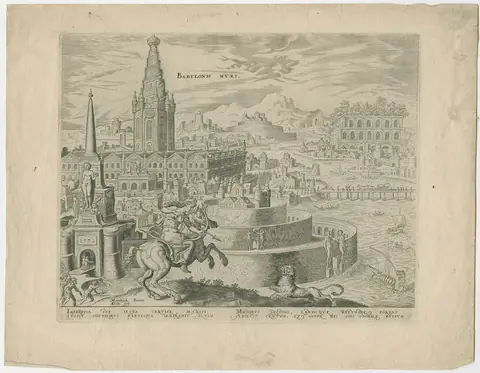
Image: Wikimedia Commons · Public domain (PD-Art) The Hanging Gardens of Babylon, engraved 16th century
Look closely. Philips Galle engraved this design after Maarten van Heemskerck. Terraces rise like a planted mountain, with water, trees and tiny figures. It is a vivid picture of what later Europe thought the gardens were. It is not evidence of how they looked, or even that they stood at Babylon. Use it as a Renaissance imagining, and then return to the written debate.
In the library: Herodotus, The Histories
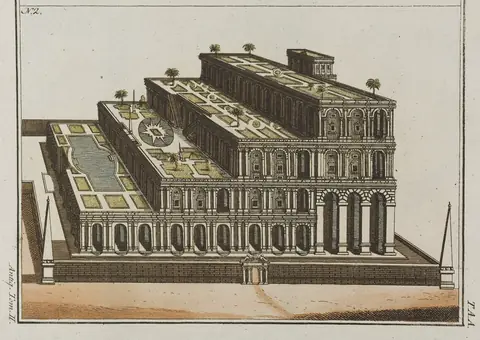
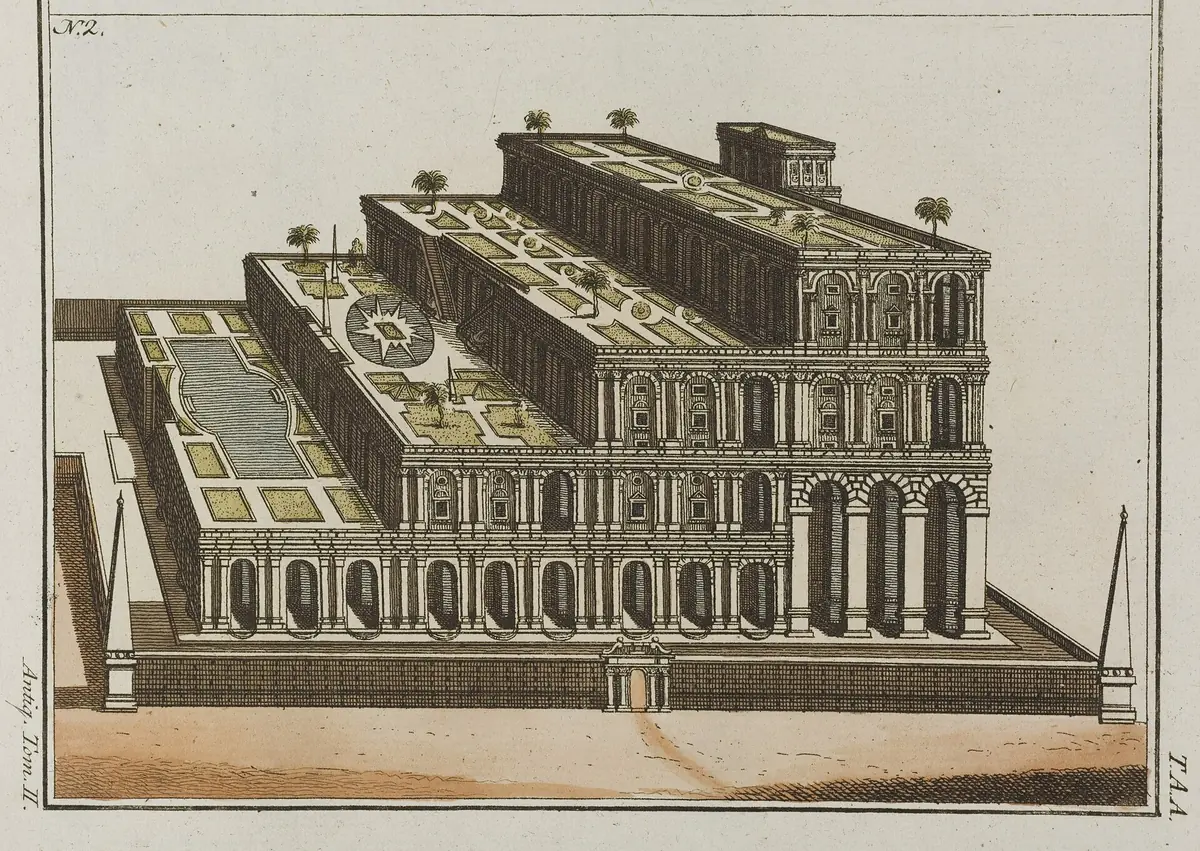
Image: Wellcome Collection · CC BY 4.0 · Photo: Wellcome Collection A later reconstruction of the terraces
Look closely. This coloured plate turns the gardens into a formal, almost palatial structure: stacked arcades, roof terraces, a long basin and neatly patterned planting. The architecture owes more to later European taste than to any excavated plan at Babylon. It is useful as a reminder of how steadily the story was retold, and how freely it was redrawn.
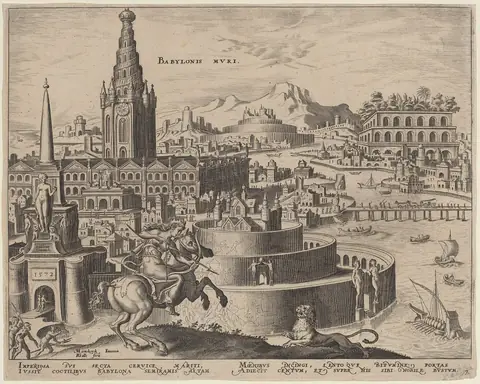
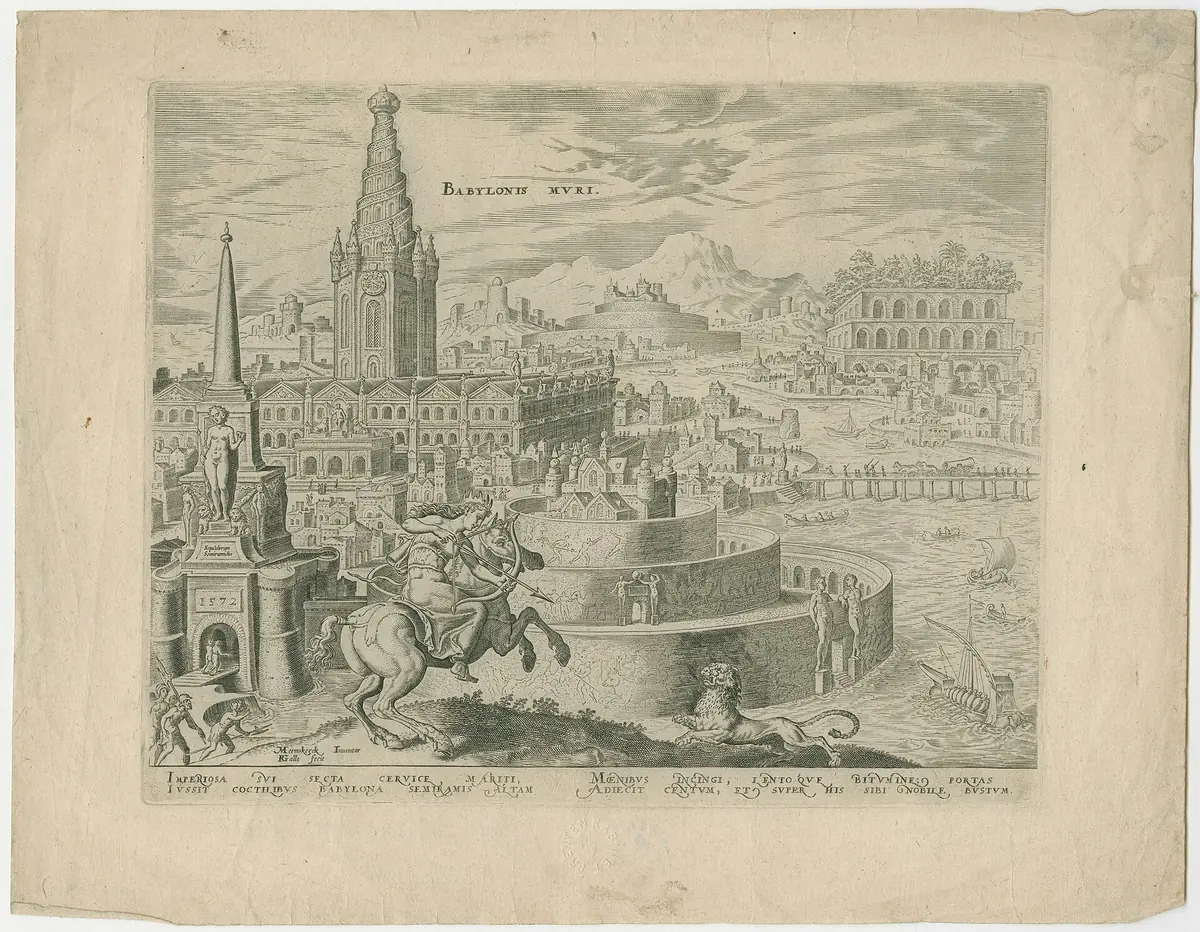
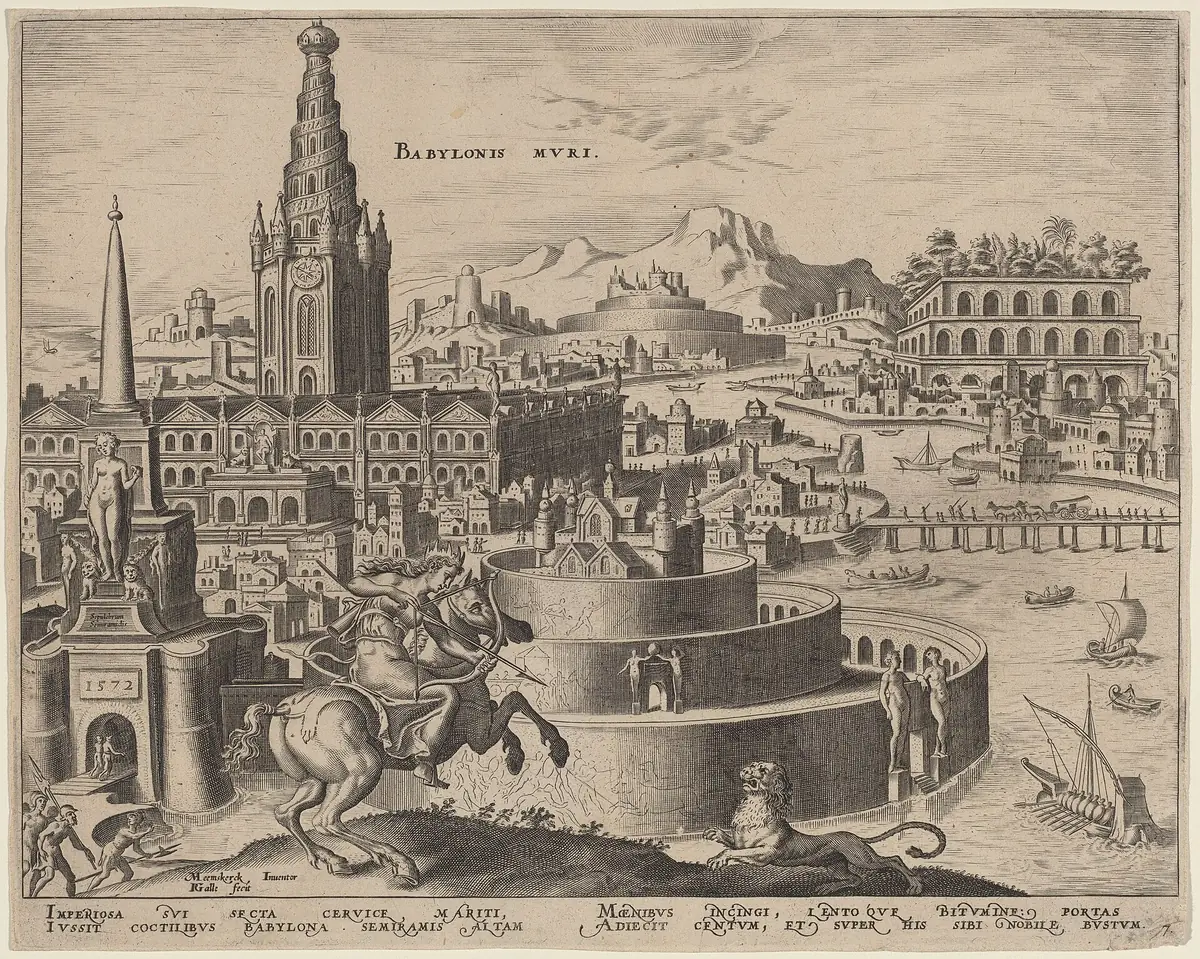
Image: Wikimedia Commons · CC0 (public domain) The Walls of Babylon, a related wonder in the same series
Look closely. Heemskerck and Galle also engraved the walls of Babylon, which some ancient lists named among the wonders instead of the gardens. Herodotus does describe the walls of the city. The plate is still an imagining, but it points to a work the old visitor actually reported. Set it beside the hanging-garden plates and you can see how one city gathered more than one wonder-story.
In the library: Herodotus, The Histories


What to watch for
Look slowly- Imagining, not recording. Every picture on this page is a later reconstruction or allegory. None is a photograph of the gardens.
- What Herodotus does not say. He describes Babylon and does not mention hanging gardens. That silence is part of the evidence.
- Walls or gardens. Some ancient lists named the walls of Babylon among the wonders. Heemskerck engraved both subjects.
- Later architecture in the pictures. Arches, balustrades and formal parterres often belong to the artist’s own age, not to sixth-century Babylon.
- Nineveh as a rival claim. Keep in mind the modern argument that the gardens, if real, may have been Assyrian rather than Babylonian.
- Legend and loyalty to the facts. A famous name is not the same thing as a proven building.
Sources
Dates follow standard historical references and, where we quote a book, the wording of the edition hosted in this library. Photographs are used only when the photograph itself is Public domain, CC0, or CC BY with a named credit. Lost wonders are shown in later engravings and reconstructions, which are imaginings, not photographs of the original work. Each picture links to its source page with full licence details.