Wonders & Monuments · Great monuments
Stonehenge
The stone circle on Salisbury Plain, raised in the late Neolithic and still standing in open country.
Still standing. The circle still stands on the plain, though some stones have fallen and others were re-set in modern restorations. It is a prehistoric monument, not a Classical temple, and no contemporary written account of its building survives.
What it is
Stonehenge stands on Salisbury Plain in Wiltshire. The great sarsen stones and the smaller bluestones were set up in the late Neolithic, around 2500 BC, on a site that had already been marked by earthworks and burials. The largest stones were brought from the nearby downs; the bluestones come from much farther west, in the Preseli hills of Wales. How they were moved, and exactly what rites were held here, is still studied. There is no contemporary inscription, and later legends should be read as later legends.
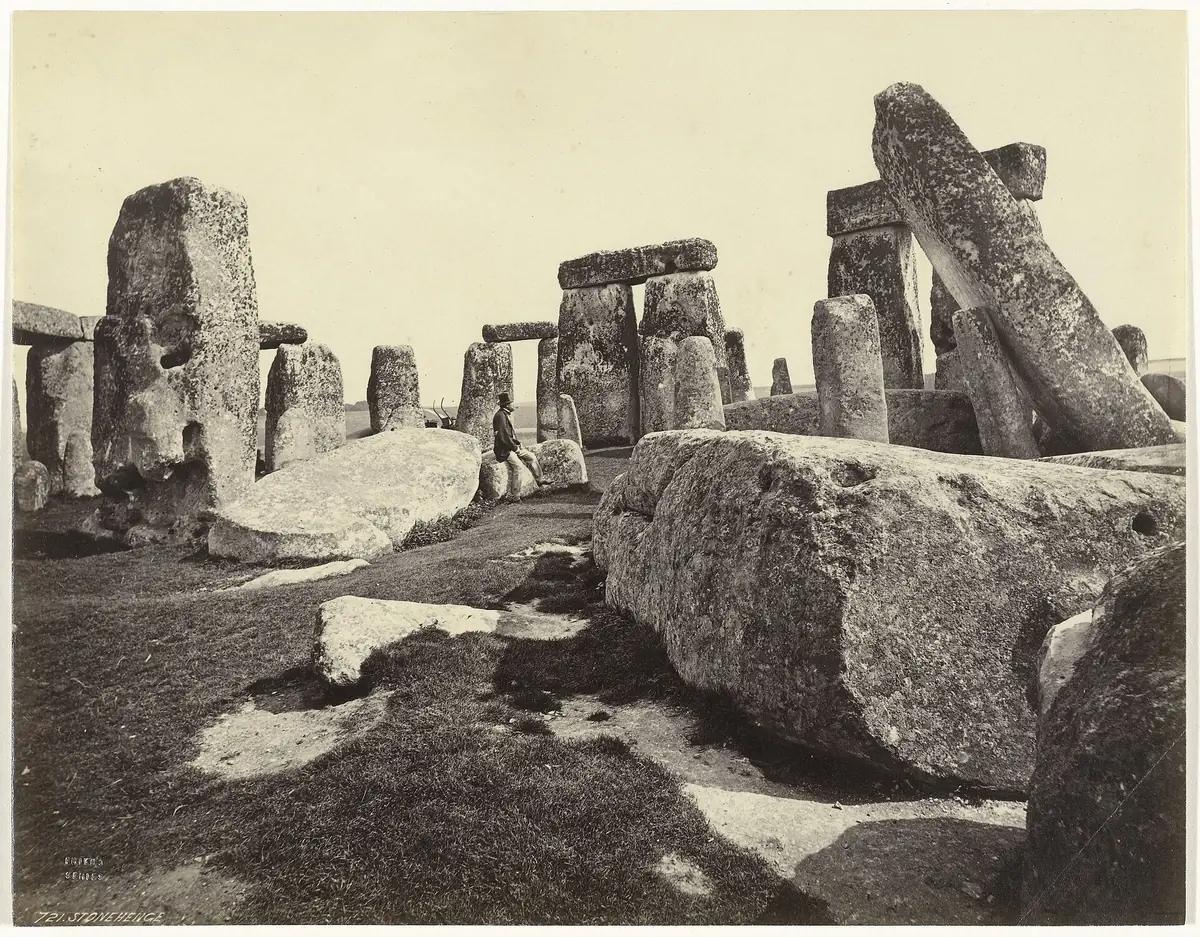
What you can still see is a circle and horseshoe of standing stones, some capped with lintels, in a wide open landscape. Some stones have fallen. Nineteenth-century photographs show the monument before later straightening and the modern visitor path. It is work of great cost and exactness, offered by people whose names we do not have, and it has outlasted the wooden buildings of its age.
Why it matters
This is costly work raised and kept in repair over many generations, without a king’s name on the stones. The labour of moving and dressing the blocks, and of setting lintels level on uprights, asks for perseverance. To look at it honestly is to admire the skill and to admit how much about its purpose remains unknown.
Look closely
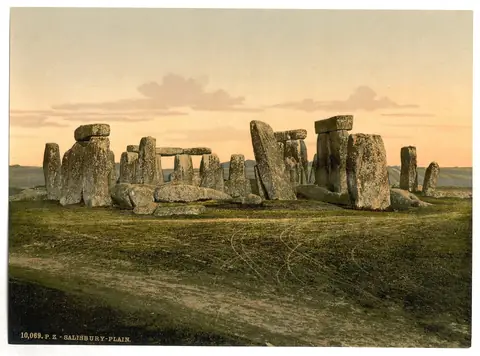
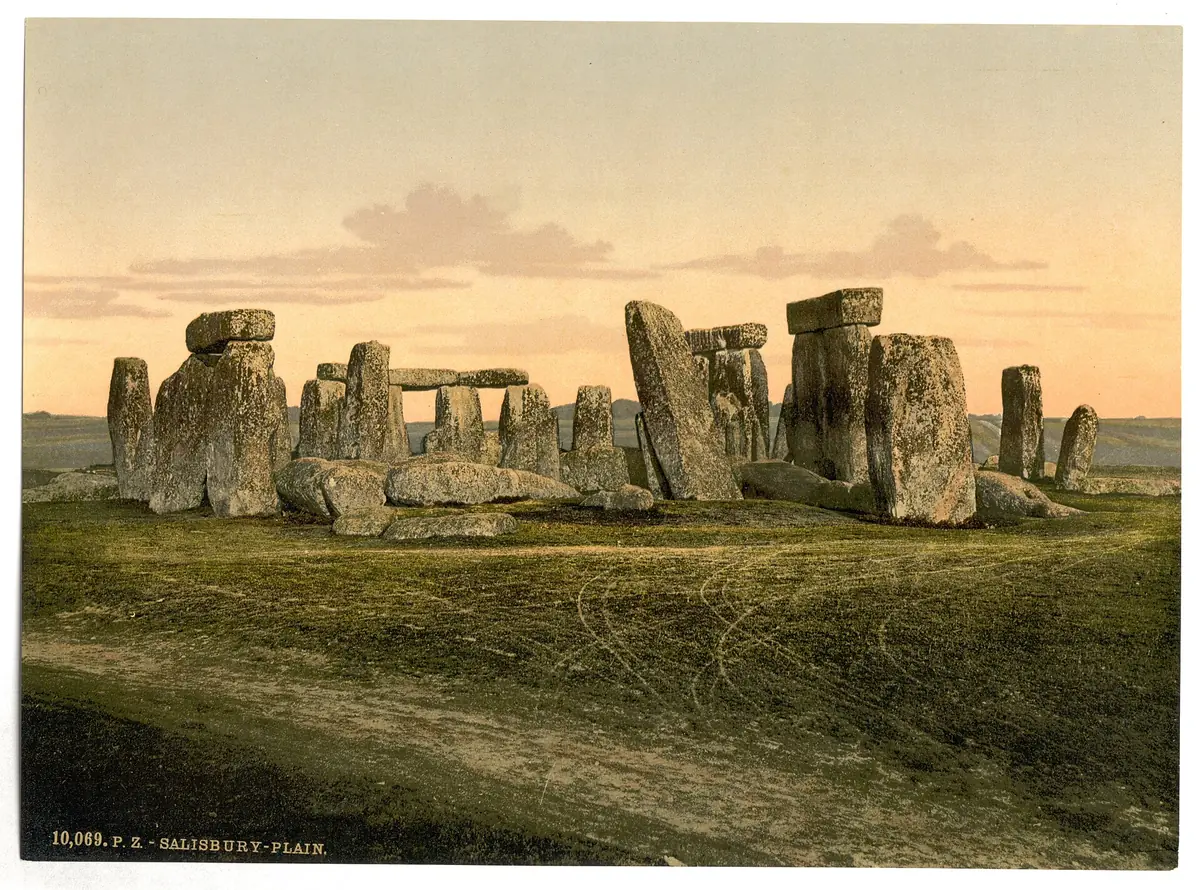
Image: Wikimedia Commons · Public domain (PD-Art) Stonehenge on the plain
Look closely. A colour photochrom made from a photograph near the end of the nineteenth century. The circle stands in open grassland under a wide sky, with fallen stones in the foreground and the lintelled uprights beyond. This is a record of the monument in the landscape, before today’s visitor facilities filled the near ground.
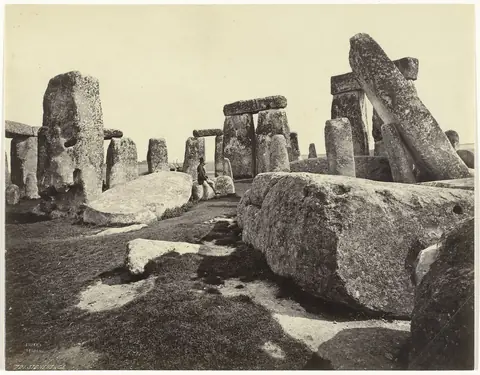
Image: Wikimedia Commons · CC0 (public domain) Among the stones
Look closely. A closer historic photograph, taken from inside or beside the circle. You can see the bulk of the sarsens, the gaps where stones have fallen, and the texture of the weathered faces. Walk your eye from one upright to the next and notice which still carry a lintel.
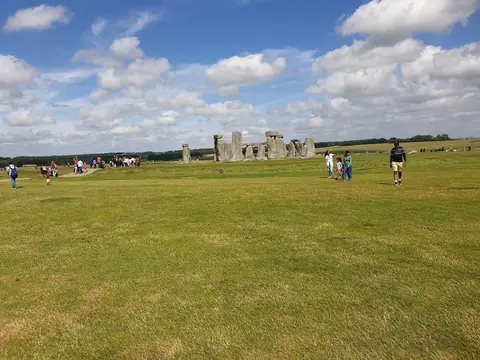
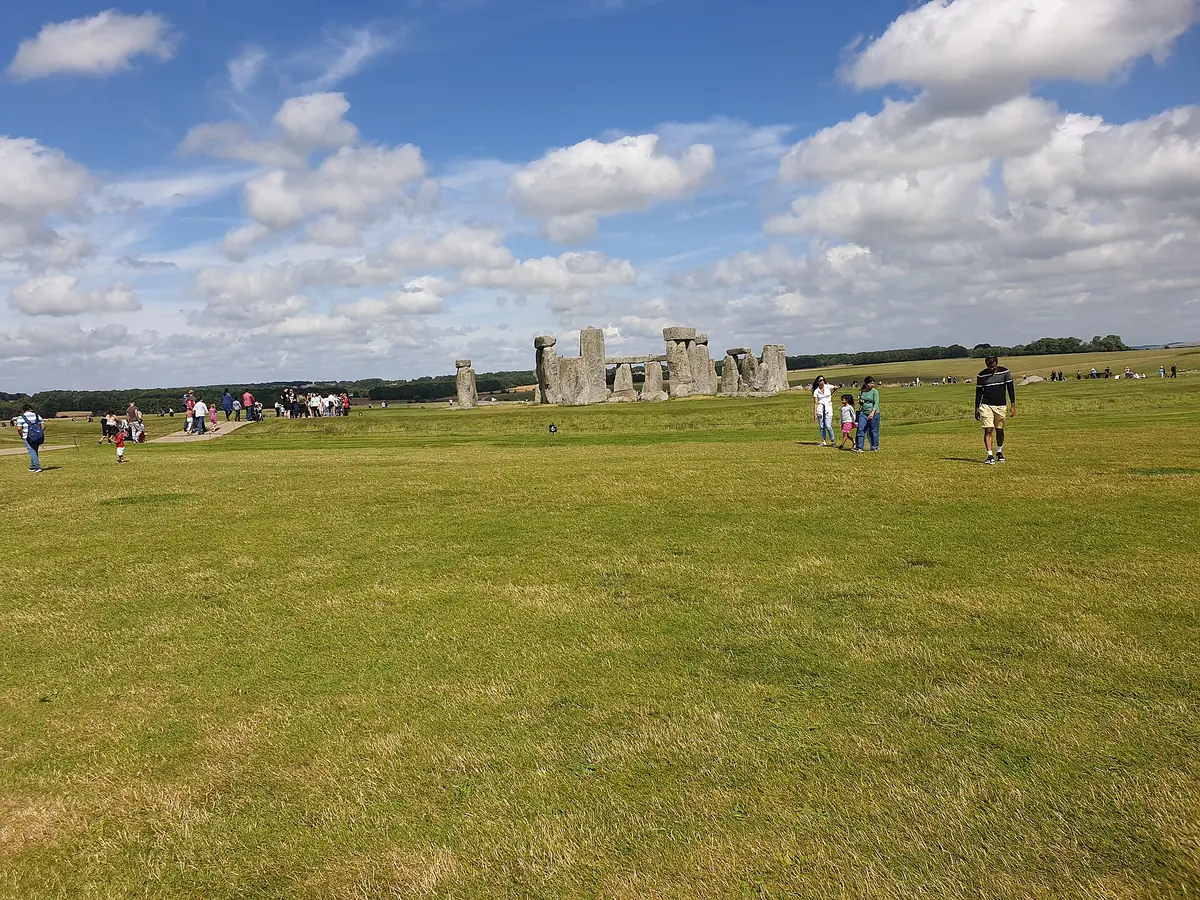
Image: Wikimedia Commons · CC BY 4.0 · Photo: HJ Mitchell Stonehenge today
Look closely. A modern view of the same circle, with visitors on the grass giving a sense of scale. The plan of uprights and lintels is still clear. Compare it with the older photographs to see what has been tidied or re-set, and what has not changed.


What to watch for
Look slowly- What still stands, and what has fallen. Compare the uprights and lintels with stones that lie on the ground.
- Sarsens and bluestones. The largest blocks are local sarsen; the smaller inner stones travelled a long way.
- The lintels. Some uprights still carry the horizontal cap-stones that lock the circle together.
- Open country. Older photographs show the circle standing in a nearly empty plain, before later roads and fences.
- Restoration. A few stones were re-set in the twentieth century. A historic photograph is a check on what a later visit may have straightened.
- No contemporary text. We do not have a builder’s inscription. Later stories about the stones are not evidence from the builders themselves.
Sources
Dates follow standard historical references and, where we quote a book, the wording of the edition hosted in this library. Photographs are used only when the photograph itself is Public domain, CC0, or CC BY with a named credit. Lost wonders are shown in later engravings and reconstructions, which are imaginings, not photographs of the original work. Each picture links to its source page with full licence details.