Wonders & Monuments · Great monuments
The Washington Monument
The marble obelisk on the National Mall, completed in 1884 as a monument to George Washington.
Still standing. The obelisk still stands on the Mall. A change in the colour of the marble, visible on the shaft, marks the long interruption in the building. The monument has been repaired after later earthquakes and wear.
George Washington, in Great Lives · The Lincoln Memorial
What it is
The Washington Monument is a marble obelisk on the National Mall in Washington, D.C., built to honour George Washington, the first president of the United States. The project was begun in 1848, then halted for many years, and was completed in 1884, with the official dedication in 1885. The long pause is still written on the shaft: the stone of the upper work does not quite match the colour of the earlier courses. The finished monument is a plain, very tall obelisk, without a statue at the top, set on axis with the Capitol and the Lincoln Memorial, with the Reflecting Pool between it and that later memorial.
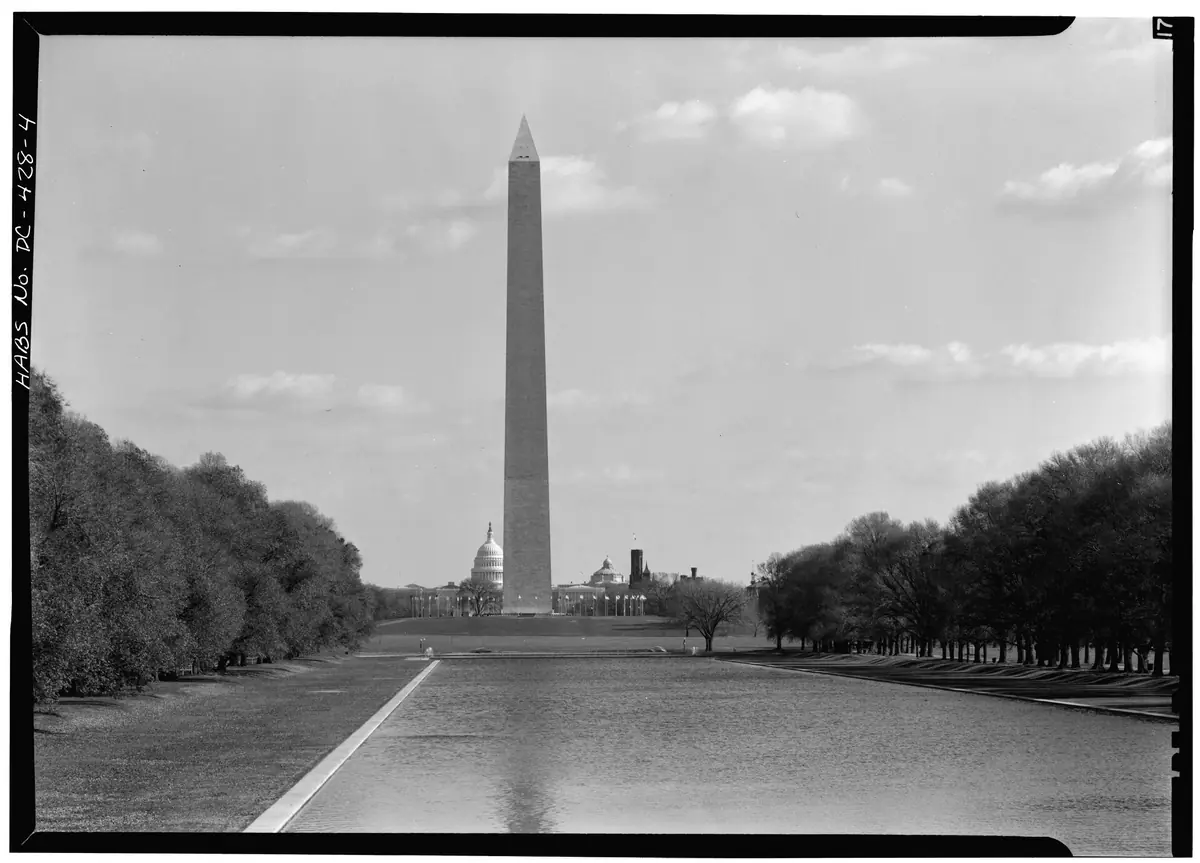
The photographs here show the shaft from the west, across the pool, including a historic government view and later pictures from the Lincoln Memorial. This library has a life of Washington. The monument is an image of civic honour, not a tomb and not a house.
Why it matters
This is costly work offered to the memory of a founding president, in a form of almost severe simplicity. The virtue to notice is civic gratitude, and the perseverance that finished a shaft after a long interruption. Beauty here is a single upright line and its reflection in the pool.
Look closely
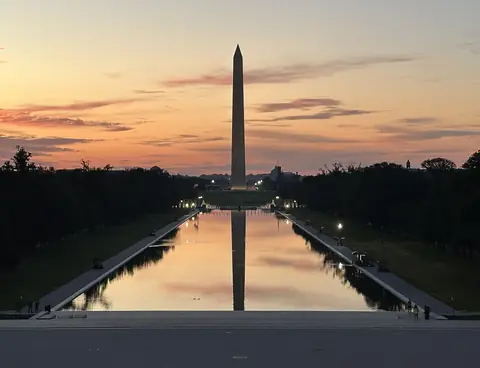
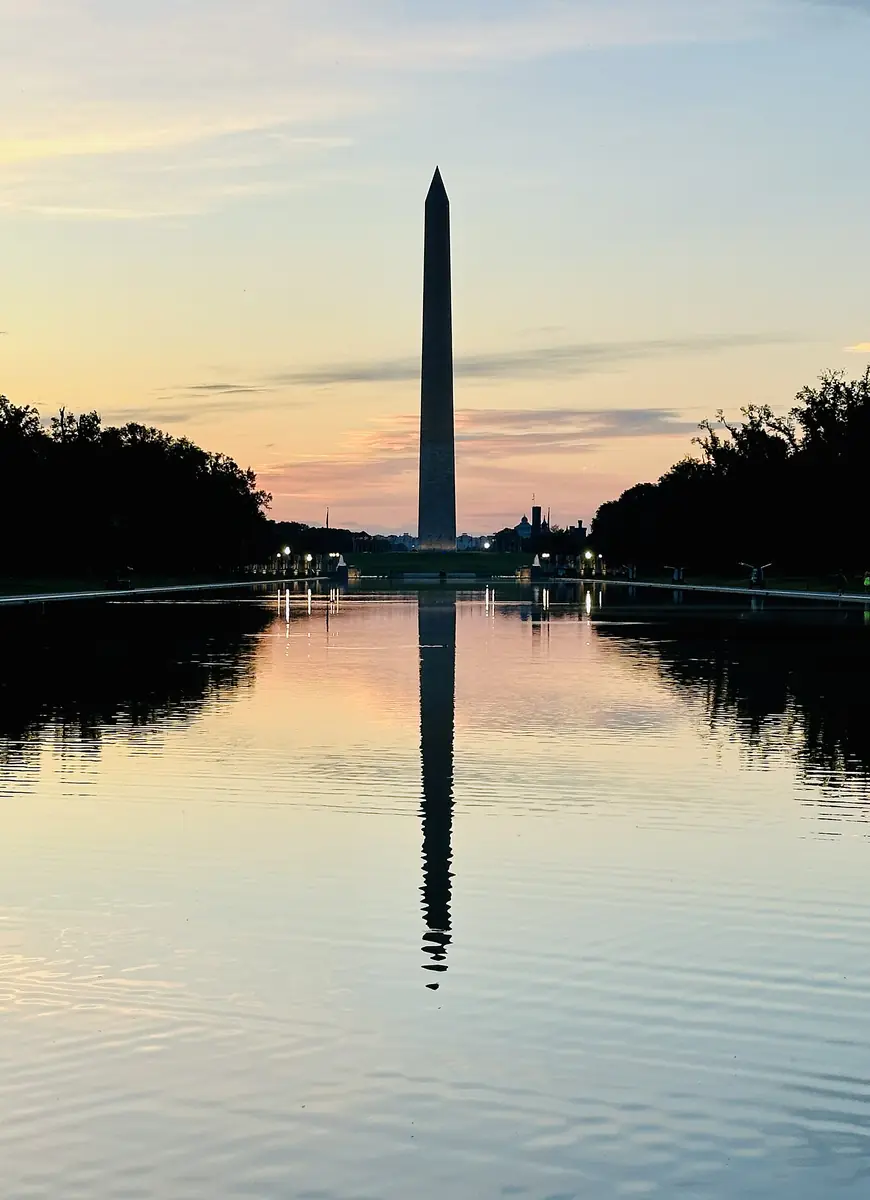
Image: Wikimedia Commons · CC BY 4.0 · Photo: APK The monument from the Lincoln Memorial
Look closely. The obelisk seen from the Lincoln Memorial, with the Reflecting Pool leading the eye to the shaft in a late light. This is the Mall’s designed axis as a single picture: water, sky and a plain monument at the end of the path.
In the library: George Washington, in Great Lives · The Lincoln Memorial
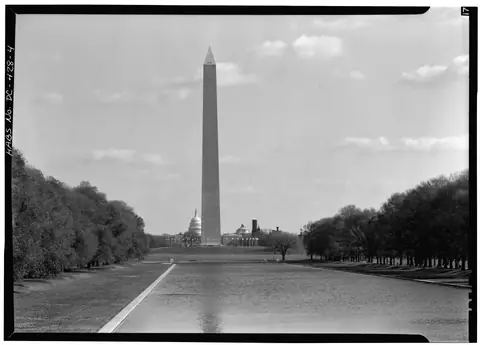
Image: Wikimedia Commons · Public domain From the west, with the Reflecting Pool
Look closely. A government survey photograph looking east along the pool to the monument, in black and white. The shaft stands on the axis, and the formal landscape is easy to read without the colour of a sunset view. It is a record of the completed setting.
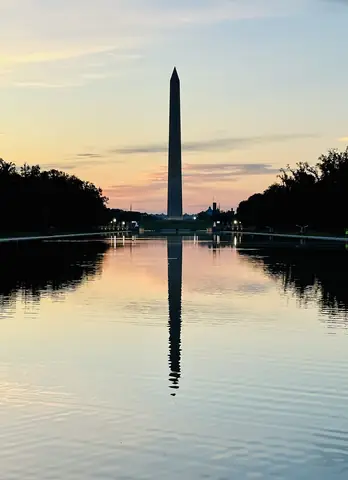
Image: Wikimedia Commons · CC BY 4.0 · Photo: APK The shaft and its reflection
Look closely. A closer view of the obelisk rising from the far end of the Reflecting Pool, with the water repeating the line of the stone. Use it to judge the plainness of the shaft and the way the monument is meant to be seen across a long, still surface.
In the library: George Washington, in Great Lives
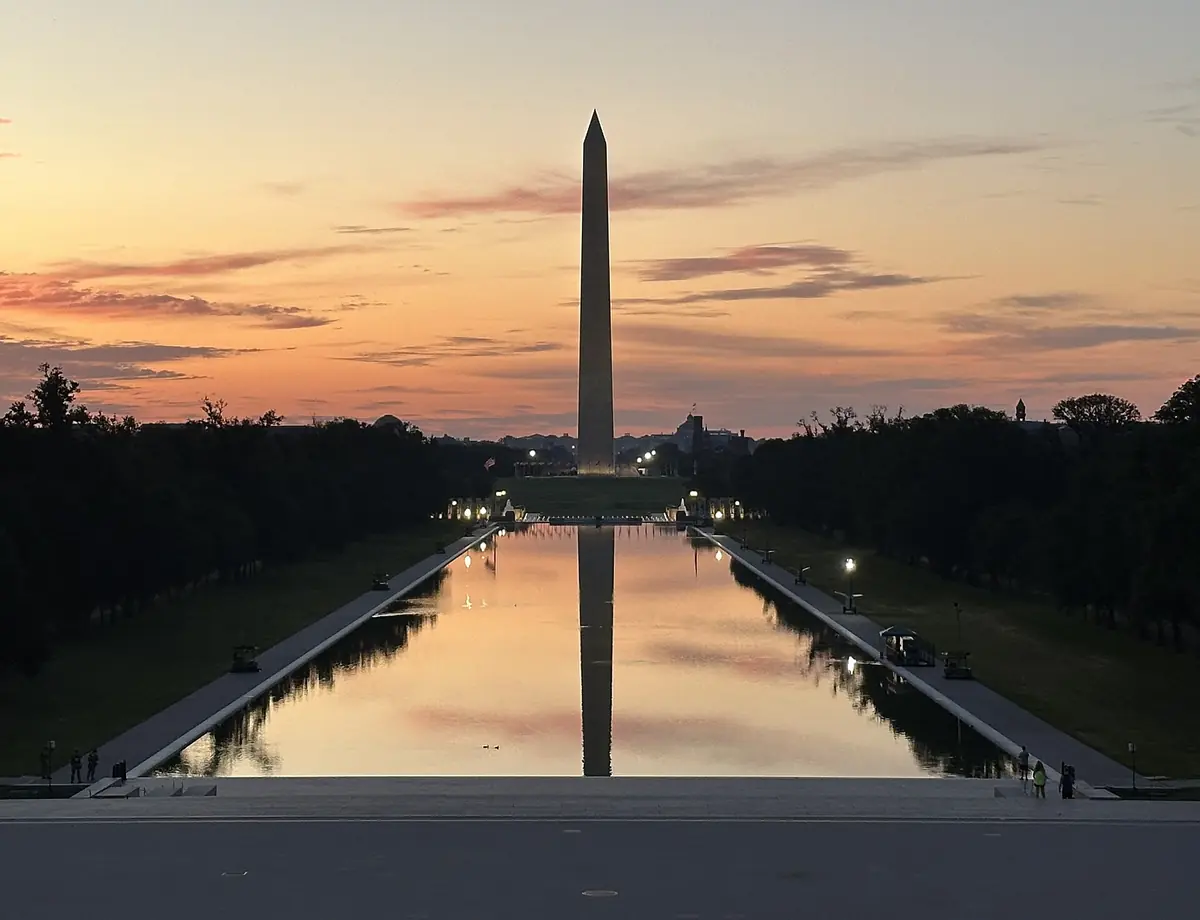


What to watch for
Look slowly- A plain obelisk. There is no figure at the summit. The point of the design is the shaft itself.
- The change in the stone. Look for the band where later marble meets the earlier work, a record of the long pause in building.
- The Mall’s axis. From the Lincoln Memorial and the Reflecting Pool, the monument is one end of a designed landscape.
- Not the earlier unbuilt designs. Some nineteenth-century drawings show a different, more decorated monument. The standing work is the completed obelisk.
Sources
Dates follow standard historical references and, where we quote a book, the wording of the edition hosted in this library. Photographs are used only when the photograph itself is Public domain, CC0, or CC BY with a named credit. Lost wonders are shown in later engravings and reconstructions, which are imaginings, not photographs of the original work. Each picture links to its source page with full licence details.