Wonders & Monuments · Great monuments
The Lincoln Memorial
The memorial to Abraham Lincoln on the National Mall, with French’s seated statue in a classical chamber.
Still standing. The memorial still stands at the west end of the Mall. The statue, the chamber and the inscriptions of the Gettysburg Address and the Second Inaugural are in place. The building has been repaired and cared for as a national memorial.
Abraham Lincoln, in Great Lives · Daniel Chester French, in Great Art · The Lincoln Memorial, in Virtue in Stone · Lincoln, Second Inaugural Address · The Gettysburg Address · The Washington Monument
What it is
The Lincoln Memorial stands at the west end of the National Mall in Washington, D.C., and was dedicated in 1922. Henry Bacon designed a classical temple of white stone, with a Doric colonnade and a great chamber inside. In that chamber sits the marble statue of Abraham Lincoln by Daniel Chester French: a seated, clothed figure, grave and still, between inscribed walls. The texts of the Gettysburg Address and of the Second Inaugural Address are carved in the building. This library hosts both speeches, and a life of Lincoln. The statue is also discussed in Virtue in Stone and on the Great Art page for French.
The memorial has been a place of national gathering as well as of quiet visiting. The pictures here show the statue in the chamber, a view from above and behind the figure looking out through the colonnade, and the building at night from the direction of the pool. The carved memorial lines on the wall behind the statue are part of the architecture; they are not quoted typographically on this page. The page quotation is Lincoln’s own closing from the Second Inaugural, taken word for word from the hosted text.
“With malice toward none, with charity for all, with firmness in the right as God gives us to see the right, let us strive on to finish the work we are in, to bind up the nation's wounds, to care for him who shall have borne the battle and for his widow and his orphan, to do all which may achieve and cherish a just and lasting peace among ourselves and with all nations.”
Why it matters
This is costly work offered to the memory of a president who held the Union and called the nation to charity at the end of a civil war. The virtue to notice is that charity, and the courage the statue was meant to honour. Beauty here is a quiet chamber, a seated figure, and words cut in stone that this library also keeps as a text.
Look closely
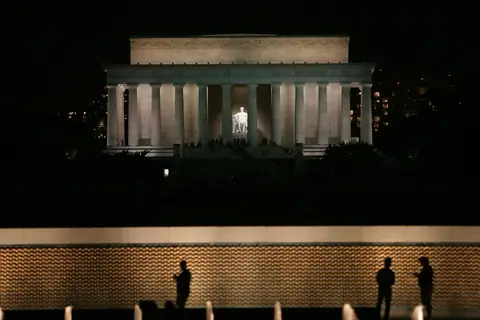
Image: Wikimedia Commons · Public domain The memorial at night
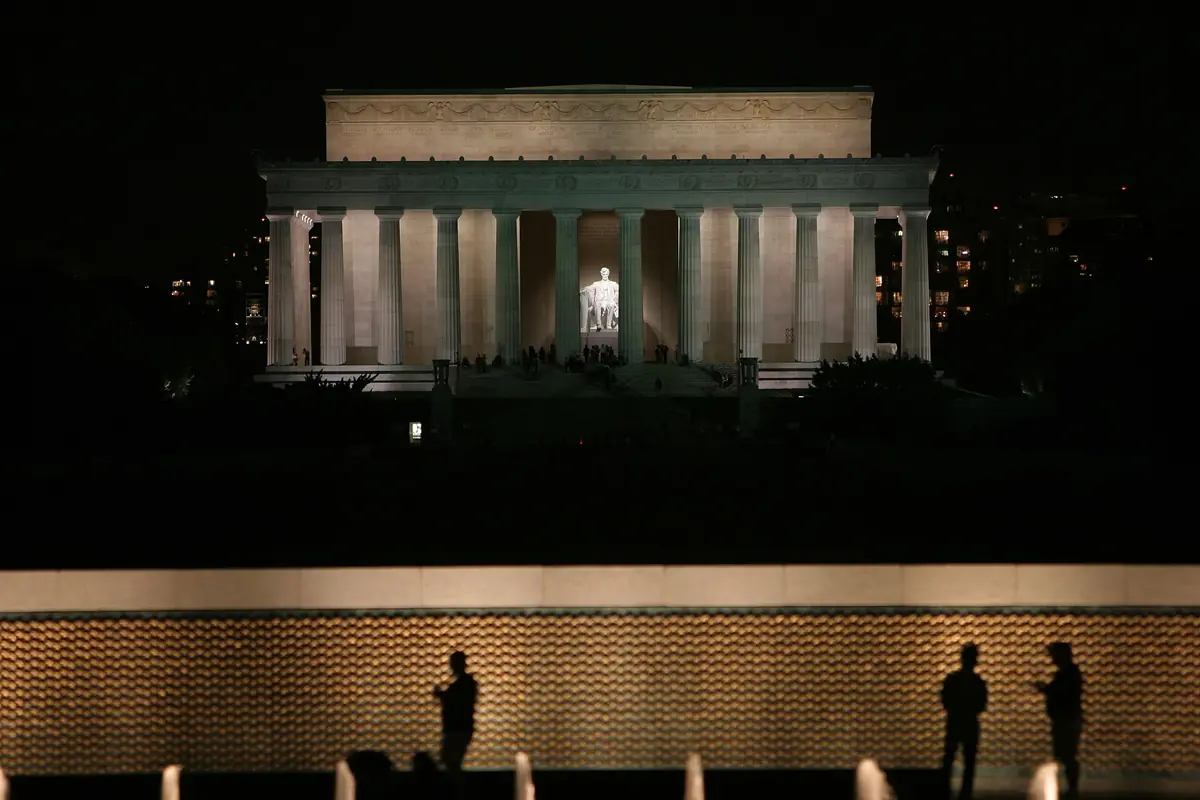
Look closely. The memorial seen after dark from the direction of the water, with the colonnade lit and the seated statue visible in the central chamber. Figures in the foreground give the building a human scale. This is the monument as a public place at the end of the Mall.
In the library: Abraham Lincoln, in Great Lives · The Washington Monument
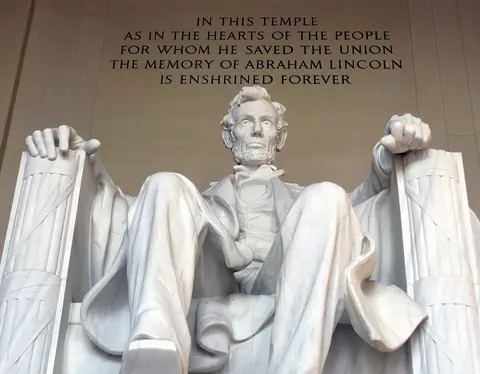
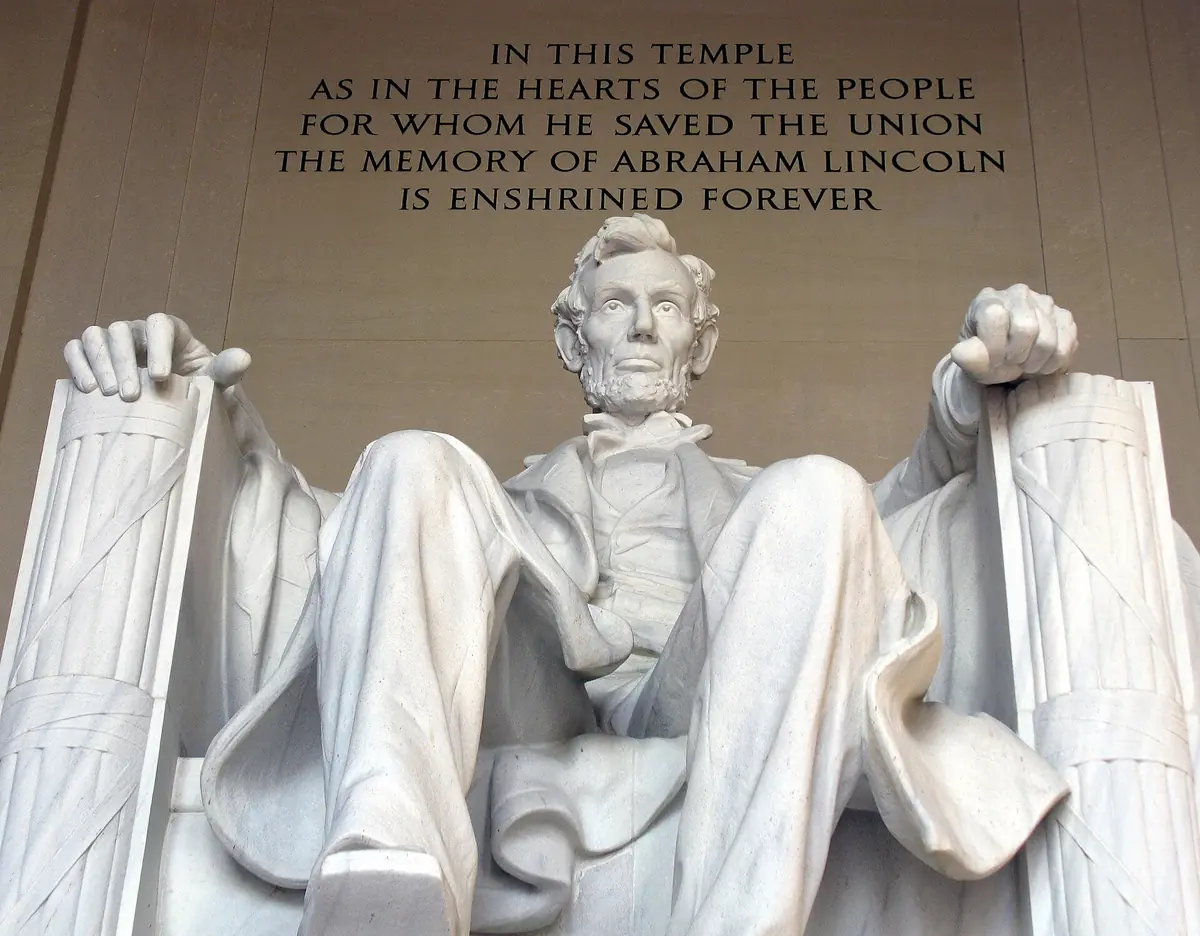
Image: Wikimedia Commons · Public domain The seated statue in the chamber
Look closely. Daniel Chester French’s seated Lincoln, photographed from the front of the chamber, with the carved memorial lines on the wall above the figure. Look at the face, the hands and the hang of the stone coat. The inscription is part of the architecture; the words of Lincoln quoted on this page are taken from the hosted Second Inaugural, not transcribed from the wall.
In the library: Daniel Chester French, in Great Art · Lincoln, Second Inaugural Address · The Gettysburg Address
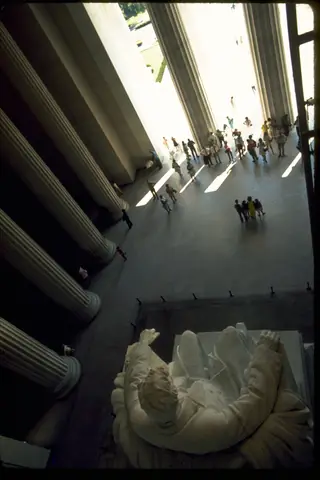
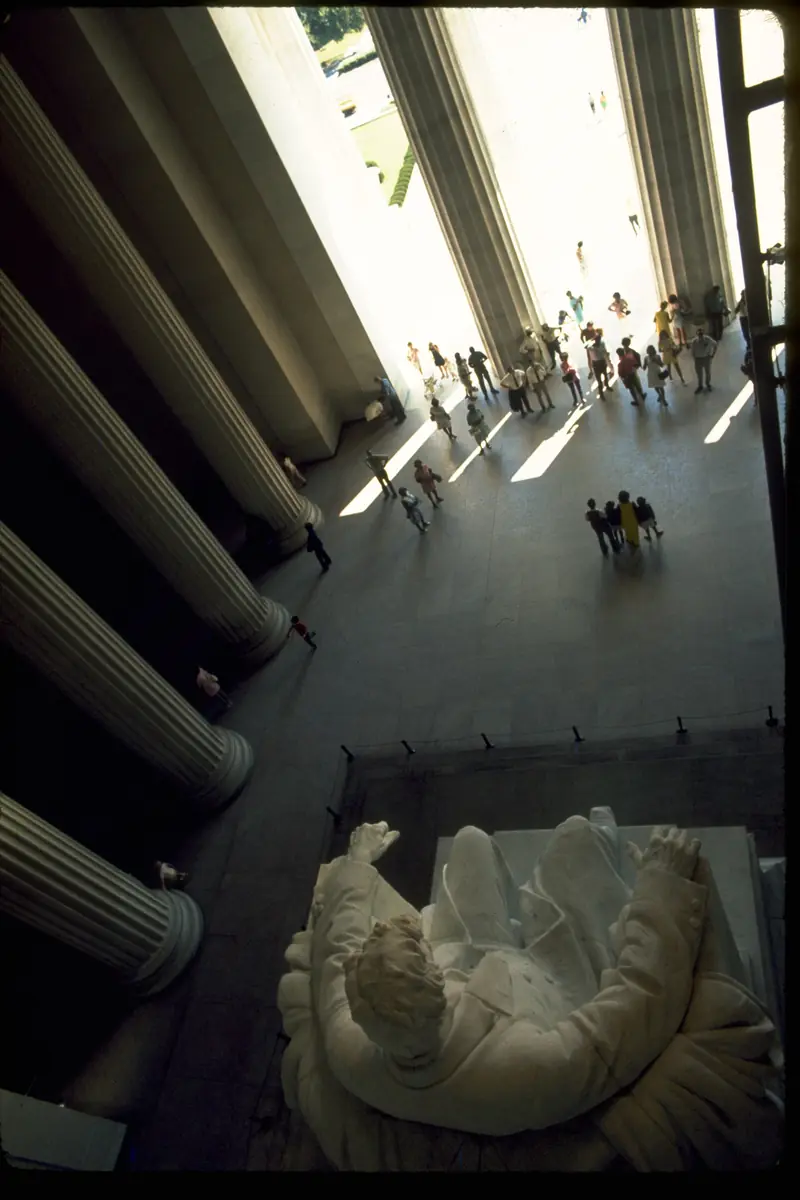
Image: Wikimedia Commons · Public domain Looking out from above the statue
Look closely. A photograph taken from above and behind the statue, looking out through the colonnade to the visitors and the light of the Mall. You see the head and shoulders of the seated figure from the back, and the scale of the chamber around him. It is a useful reminder that the memorial is a room as well as a statue.
In the library: The Lincoln Memorial, in Virtue in Stone


What to watch for
Look slowly- A temple of memory, not a tomb. Lincoln is buried in Springfield. This is a civic memorial.
- French’s statue. Look at the hands, the chair, and the hanging of the coat. The figure is clothed and seated, not a standing orator.
- The inscribed speeches. The Gettysburg Address and the Second Inaugural are carved in the chamber. This library hosts both texts; we do not wrap the wall inscriptions in typographic quotes here.
- The colonnade and the Mall. From outside, the memorial is one end of the axis that includes the Reflecting Pool and the Washington Monument.
- A view from behind. One photograph looks down from above the statue, out through the columns, and is useful for the scale of the chamber.
Sources
Dates follow standard historical references and, where we quote a book, the wording of the edition hosted in this library. Photographs are used only when the photograph itself is Public domain, CC0, or CC BY with a named credit. Lost wonders are shown in later engravings and reconstructions, which are imaginings, not photographs of the original work. Each picture links to its source page with full licence details.