Wonders & Monuments · Great monuments
The Western Wall
The surviving western retaining wall of the Temple Mount, and the ancient holy platform it supports.
Still standing. The Western Wall still stands as a retaining wall of the Temple Mount. The Temple itself, in its first and second forms, does not. The mount remains a holy place for Jews, Christians and Muslims. This page describes the stones and their history; it does not argue a modern political claim.
The Bible, in this library · Josephus, Jewish Antiquities · Solomon, in Great Lives · Herod the Great, in Great Lives · The Church of the Holy Sepulchre
What it is
The Temple Mount in Jerusalem is one of the world’s oldest holy places. In the Hebrew Bible, Solomon began to build the house of the LORD there, on mount Moriah. That First Temple was destroyed. A Second Temple stood later, and in the first century BC Herod the Great greatly enlarged the mount, building huge retaining walls to support a wider platform. In AD 70 the Temple itself was destroyed. The Western Wall that people come to today is part of Herod’s retaining wall, not a standing wall of Solomon’s house and not a wall of the Temple sanctuary.
The pictures here are historic photographs of the wall as a place of prayer, and a later view of the remaining courses in the plaza. They should be looked at with respect. The site is holy to Jews, and the mount above is also holy to Christians and to Muslims. This library has the Bible, Josephus’s Jewish Antiquities, and lives of Solomon and of Herod. Those works help a student read the history of the place; they do not settle later disputes about it.
“Then Solomon began to build the house of the LORD at Jerusalem in mount Moriah”
Why it matters
These stones have been a place of prayer and memory through ruin. The virtue to notice is reverence, and the integrity to say what still stands and what does not: a retaining wall of the mount, not the Temple itself. Costly building, destruction, and faithful remembrance meet here.
Look closely
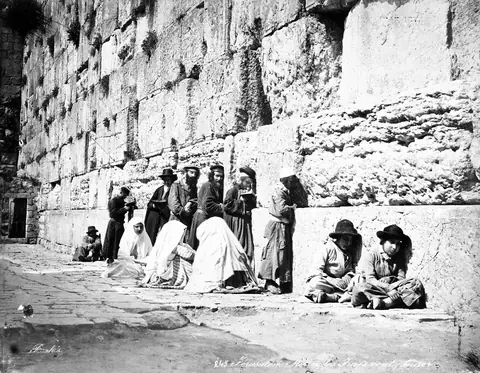
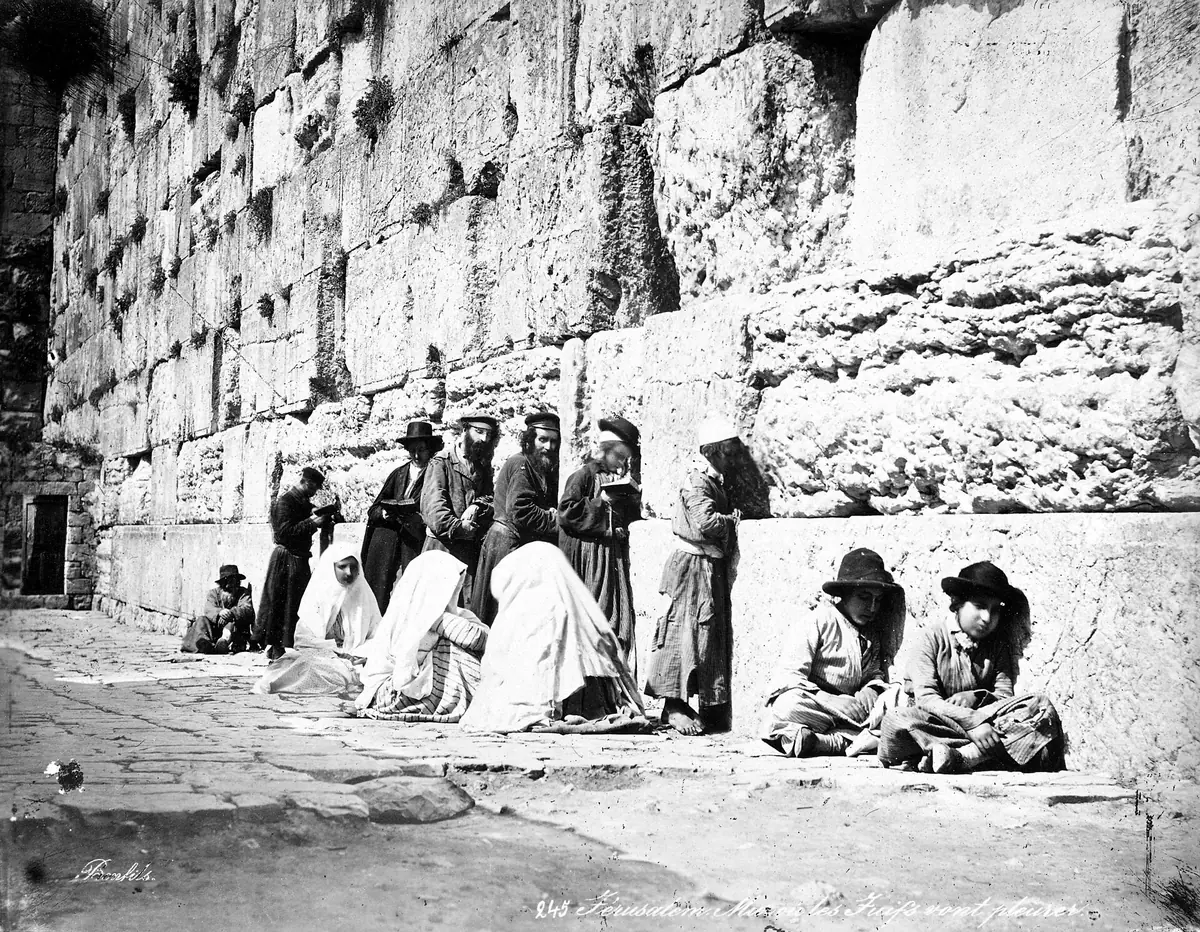
Image: Wikimedia Commons · Public domain At the Western Wall, 1870s
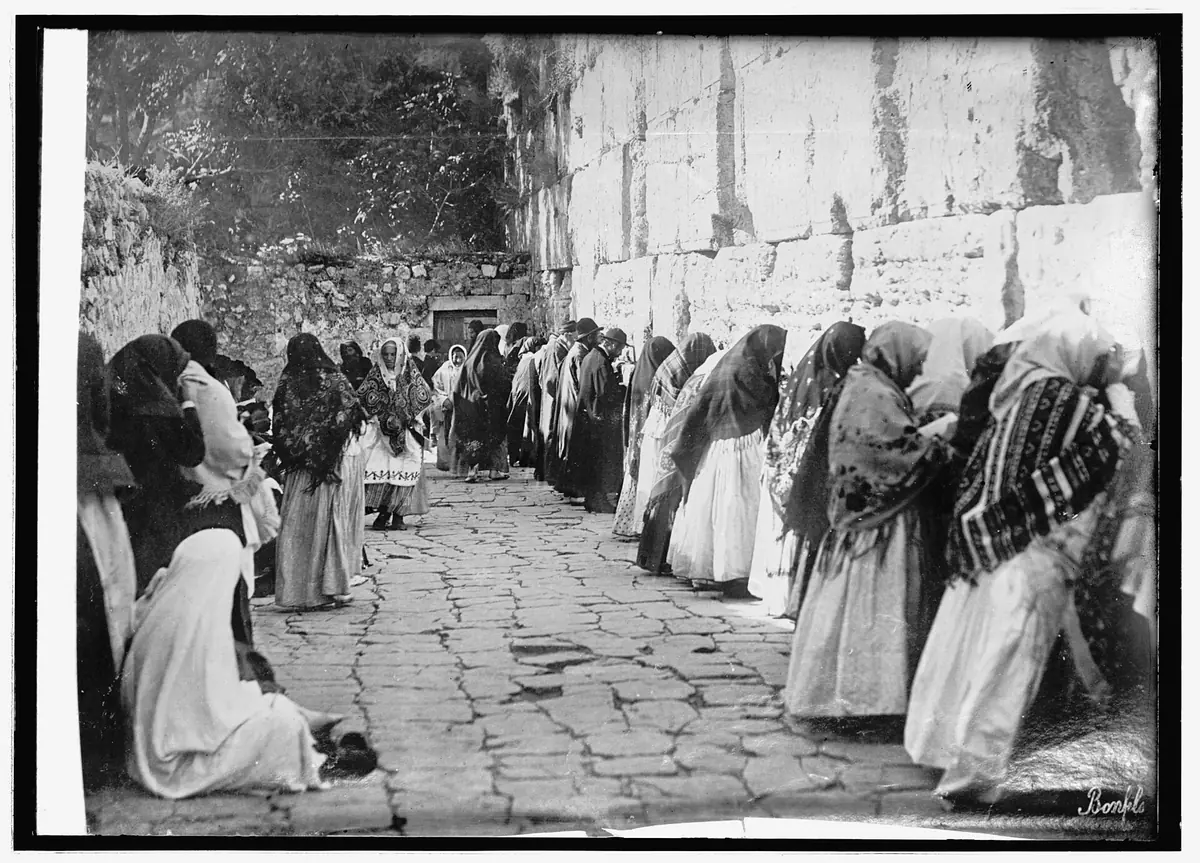
Look closely. Bonfils photographed people at prayer along the great courses of the wall in the 1870s, when the pavement was narrow and the wall rose immediately from a confined space. The size of the lower blocks is clear, and so is the character of the place as a site of devotion, not as an empty ruin.
In the library: The Bible (King James Version) · Solomon, in Great Lives
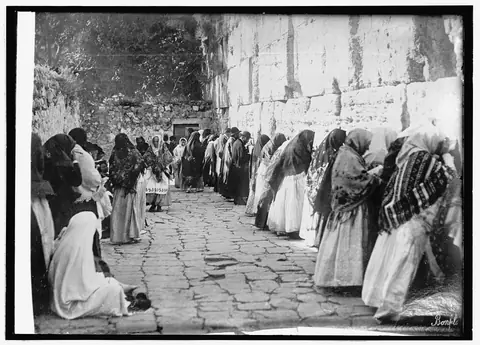
Image: Wikimedia Commons · Public domain At the wall on a Friday
Look closely. Another Bonfils photograph, made on a Friday, looking along the wall with a gathered crowd. It is useful as a record of the place in use. The masonry and the narrow approach of that time are the architectural facts; the people are part of the history of the site.
In the library: Josephus, Jewish Antiquities
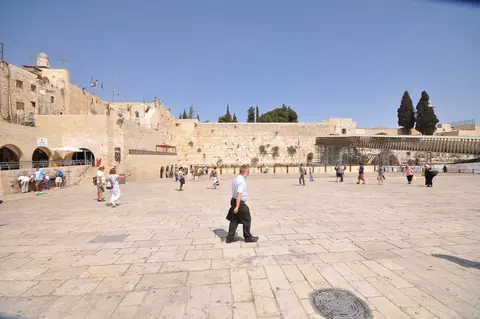
Image: Wikimedia Commons · CC BY 2.0 · Photo: Jorge Láscar The wall and the plaza
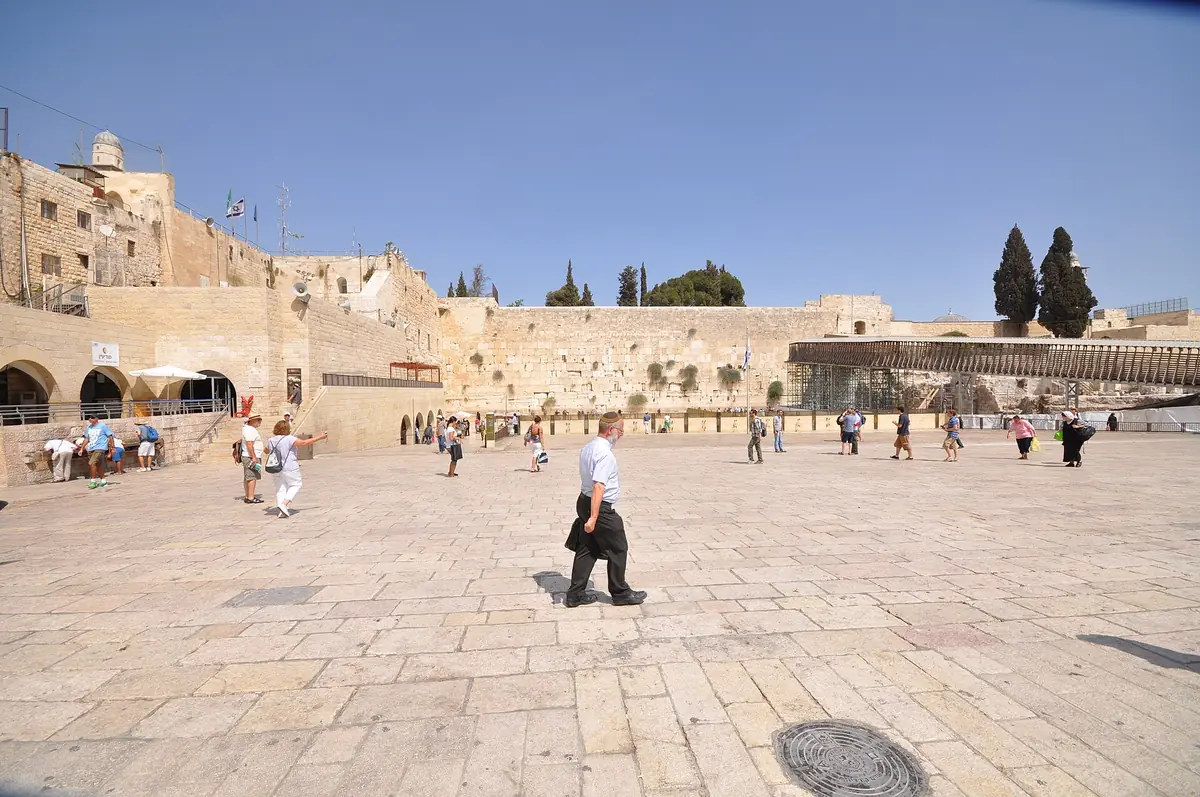
Look closely. A modern view of the remaining courses of the Western Wall and the open plaza before it. The large lower blocks and the later, smaller upper masonry can be compared at a glance. The photograph is of the wall as it now stands in the plaza, not of the platform above.
In the library: Herod the Great, in Great Lives


What to watch for
Look slowly- A retaining wall, not the Temple. The courses you see supported the platform. The sanctuary above did not survive.
- Herodian masonry. The large lower blocks, with their drafted margins, belong to Herod’s expansion of the mount.
- A place of prayer. Historic photographs show people at the wall. Look with respect; this is not a curiosity shop.
- Solomon and Herod. The Bible describes the first house on the mount. The wall in the pictures is later. Keep the two clearly distinct.
- A shared holy place. Jews, Christians and Muslims all hold this mount sacred. The page does not take a modern political side.
Sources
Dates follow standard historical references and, where we quote a book, the wording of the edition hosted in this library. Photographs are used only when the photograph itself is Public domain, CC0, or CC BY with a named credit. Lost wonders are shown in later engravings and reconstructions, which are imaginings, not photographs of the original work. Each picture links to its source page with full licence details.