Work record
Around the World in Eighty Days
1873 · 19th Century · Novel · French
Abstract
Background. Verne drew on the opening of the Suez Canal in 1869, the completion of the American transcontinental railroad the same year and a new Indian rail line, which together made a timed circuit of the globe newly plausible. The story ran as a newspaper serial before Hetzel issued it in book form.
Plot. Fogg stakes twenty thousand pounds that he can return to his club within eighty days. Steamers and trains carry him east, while Fix, awaiting an arrest warrant, delays him at every port. In India the travellers ride an elephant and save Aouda from sacrifice; in America they survive a Sioux attack on their train. Arrested at Liverpool, Fogg reaches London apparently five minutes late, until Passepartout learns that travelling eastward has gained them a day.
Structure. Chapters move leg by leg through a dated itinerary, each crisis measured in hours lost or regained. Verne alternates Fogg's unruffled calculations with Passepartout's mishaps, such as his stolen shoes in a Bombay temple and his stint as an acrobat in Yokohama.
Themes. Punctuality against chance, loyalty and generosity spending what the wager seems to forbid, and a world shrunk by steam and telegraph.
Significance. One of Verne's most popular books, it inspired real circumnavigation races, beginning with Nellie Bly's in 1889, and many stage and film versions.
Main characters
- Phileas Fogg: Impassive, exact English gentleman of the Reform Club who makes the wager
- Passepartout: Fogg's newly hired French manservant, impulsive, loyal and resourceful
- Detective Fix: Scotland Yard officer who trails Fogg as a suspected bank robber
- Aouda: Young Parsi widow rescued from a funeral pyre, who later marries Fogg
- Sir Francis Cromarty: Brigadier-general who travels with Fogg across India
- Andrew Speedy: Captain of the Henrietta, whose ship Fogg buys and burns for fuel
- Colonel Stamp Proctor: Quarrelsome American who challenges Fogg to a duel

Summary
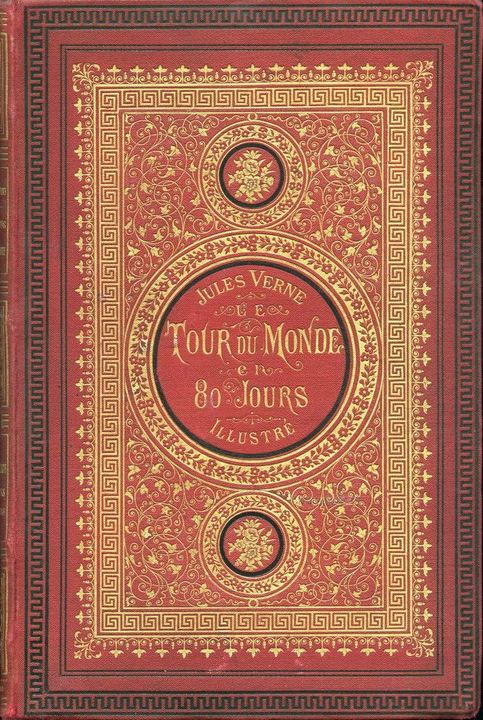
Jules Verne’s Around the World in Eighty Days, in George Makepeace Towle’s public-domain English translation, follows Phileas Fogg’s Reform Club wager to circle the globe in eighty days with his servant Passepartout, while detective Fix shadows him as a bank-robbery suspect. Steamships, railways, elephants, and storms turn geography into a race; calm precision meets loyal improvisation. Label three transport crises on a wall map and ask which was Fix’s fault more than the sea’s. Passepartout’s errors and courage together prove loyalty can spend hours the wager seems to forbid. Towle’s named translation is the English text against which every stored quote was checked. The journey begins on 2 October 1872, when Fogg leaves the Reform Club after a whist-table argument about how quickly the world can now be crossed. He goes by steamer through the Suez Canal to Bombay, then finds that the railway across India is unfinished and buys an elephant to cover the gap. On that jungle detour Passepartout helps rescue a young Parsee widow, Aouda, from a funeral pyre, and she joins the party. Fix, convinced that Fogg is the gentleman who robbed the Bank of England, keeps trying to hold him in British territory until a warrant arrives; in Hong Kong he drugs Passepartout with opium and separates him from his master, and the servant later earns his passage in Yokohama with a troupe of Japanese acrobats. Crossing the Pacific to San Francisco, the travellers take the train east, live through an attack on the line and Passepartout's capture, and finish the American leg on a sail-driven sledge across the frozen prairie. When the Atlantic steamer runs short of coal, Fogg buys the ship and burns her woodwork to keep going. Arrested on landing, released when the real thief is found, and believing himself late and ruined, he receives Aouda's offer of marriage, only to learn that travelling eastward has given him an extra day.
Virtues in this work
- Fortitude: Fogg meets delays without panic or abandoned duty.
- Friendship: Passepartout’s loyalty becomes essential to the race.
- Industry: Planning and steady movement win against wasted time.
Plot or Argument
- The wager
Fogg bets he can span the world in eighty days from the Reform Club.
- Routes and obstacles
Transport mishaps and Fix’s interference test the schedule repeatedly.
- Heart and clock
Loyalty and a final time discovery resolve the wager.
Characters
- Phileas Fogg, protagonist
Punctual gentleman of the wager.
- Passepartout, companion
French servant-companion.
- Fix, antagonist
Detective shadowing Fogg in error.
Lessons
Precision as character
Fogg’s punctuality is moral coolness under pressure, not mere fussiness.
- How does Fogg keep time?
- When does calm help?
Servant to friend
Passepartout grows into loyal companionship through errors and courage.
- How does he err?
- How does he help?
Geography alive
Routes teach the world’s shape through urgency and real places.
- Name three legs.
- What obstacle is worst?
Context
French steam-age adventure novel of timed circumnavigation and detective error. It remains a formative English-language classic for school and home in the public domain.
Composition
1873; Towle’s English translation circulated widely in the US.
Reception
Perennial classic of the race against time.
Comparisons
- robinson-crusoe
Solo ordeal versus timed global race.
- treasure-island
Adventure motion and loyal companions.
Quotes
“Phileas Fogg lived, in 1872, at No. 7, Saville Row, Burlington Gardens, the house in which Sheridan died in 1814.”
“Passepartout, a surname which has clung to me because I have a natural aptness for going out of one business into another.”
For Students
A reading companion for classical Christian high school students. See the student guide.
Reading Guide
Watch for
- The Reform Club wager scene.
- Hiring Passepartout in London.
- Fix’s suspicion and pursuit.
- Major transport legs and delays.
- The closing time discovery.
Key terms and names
- Wager
- Bet to circle the globe in eighty days.
- Passepartout
- Fogg’s servant-companion.
- Steam age
- Trains and steamships enabling the race.
- Itinerary
- Planned routes raced against the clock.
Seminar Questions
- Comprehension What does Fogg bet according to the text?
- Comprehension Who is Passepartout?
- Comprehension Why does Fix follow?
- Interpretation Is Fogg cold or disciplined?
- Interpretation How does loyalty beat mere speed?
- Interpretation What world picture does the novel give?
- Big Question What is worth racing for, and what must not be sacrificed to the clock?
Faith Connections
- Ecclesiastes 3:1 (Scripture)
A time for every purpose—the wager’s clock under providence.
- Proverbs 27:10 (Scripture)
Thine own friend—Passepartout’s loyalty in crisis.
- Steam-age travel narrative (Great Conversation)
Technology serving steadfast character.
Logic and Rhetoric
Central argument: Discipline and loyalty can master distance when technology opens the world.
Rhetorical device: race against time. The clock structures episodes.
Debate: Resolved: that Fogg’s calm is a virtue.
Memory Work
Phileas Fogg lived, in 1872, at No. 7, Saville Row, Burlington Gardens, the house in which Sheridan died in 1814.
Writing Prompts
Essay: Map the journey and mark three crises.
Comparison with Robinson Crusoe: Compare Fogg’s calm with Crusoe’s inventiveness under ordeal.
Medical Lens
Travel strain is light narrative pressure.
Listen to the book
Public-domain audiobook from LibriVox, read by TBOL3, translated by George Makepeace Towle. Recording: Around the World in Eighty Days on LibriVox (Internet Archive).
LibriVox recordings are volunteer readings released into the public domain. The reading may follow a different edition or translation from the text in this library.
Creative Prompts
- Classroom
Plot an eighty-day route on a world map.
- Essay
How does Fix’s error create suspense?
- Fiction
A missing transport leg and how loyalty answers it.
Further Reading
- Treasure Island, Stevenson
Adventure motion.
Verification notes
Plot, characters, and publication facts for Around the World in Eighty Days follow standard sources. Quotes verified against the attached Gutenberg text.
No verification flags recorded.