Work record
The Economic Consequences of the Peace
John Maynard KeynesThe Economic Consequences of the Peace by John Maynard Keynes (1919)The Economic Consequences of the Peace is John Maynard Keynes's attack on the Treaty of Versailles, written in the summer of 1919 and published in London late that year.1919 · Early 20th Century · Political Theory · English
Abstract
Background. A young Cambridge economist who had represented the British Treasury in Paris quit the delegation in protest and, within months, put his objections to the settlement before the general reading public in plain and forceful prose.
Argument. Prewar prosperity, he contends, was a delicate and unusual arrangement resting on German industry, American food, and habits of thrift. The settlement stripped Germany of ships, coal, colonies, and overseas assets, then demanded an open-ended indemnity the country could never meet and the armistice had not allowed.
Portraits. Vivid sketches of the three statesmen, a cynical Frenchman, an outwitted American, and a nimble Welshman, explain how such terms were agreed behind closed doors by tired men under pressure from angry electorates at home.
Remedies. He urges amending the settlement through the League, forgiving wartime loans among the Allies, a large international credit to restart production, and reopened commerce with Russia, warning that inflation and hunger threaten civilization itself, and that a settlement built on revenge will be repaid by revolution or another war.
Significance. A transatlantic best seller, it shaped how a generation judged Versailles, made its author famous, and remains disputed: prophetic to some, and to critics such as Mantoux a polemic that undermined the peace.
Key figures
- Georges Clemenceau: French premier who sought security for France by weakening Germany
- Woodrow Wilson: American president whose Fourteen Points Keynes says were abandoned
- David Lloyd George: British prime minister portrayed as agile and uncannily quick to read others
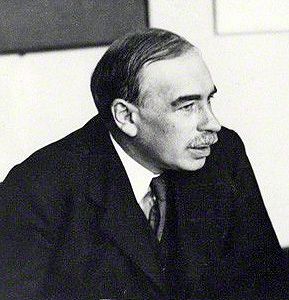
- John Maynard Keynes: Treasury economist who resigned from the British delegation

Summary
The Economic Consequences of the Peace is John Maynard Keynes's attack on the Treaty of Versailles, written in the summer of 1919 and published in London late that year. Keynes, a Cambridge economist, had served the British Treasury through the First World War and was its chief representative at the Paris Peace Conference until early June 1919, when he resigned because he saw no hope of changing the economic terms of the treaty. The book opens with a picture of Europe before 1914. Keynes describes a crowded, prosperous, and fragile continent whose people had grown used to rising wealth, free trade, and easy travel, and who forgot how unusual and unstable that order was. Its prosperity depended on Germany's industry and coal, on food bought from the Americas, and on a habit of saving by which the rich reinvested rather than consumed. The third chapter is a set of sharp portraits of the three leaders who made the treaty. Clemenceau of France is a clear-eyed old cynic who wants only to make France safe by crushing Germany; President Wilson is a high-minded but slow and inflexible man, outplayed by cleverer politicians; Lloyd George of Britain is quick and uncannily alert to everyone in the room, and Wilson is no match for him. Keynes argues that the Fourteen Points on which Germany had agreed to an armistice were betrayed in the drafting. The central chapters examine the treaty's economic clauses. Germany loses its merchant fleet, its colonies, its foreign property, much of its coal and iron, and control of its rivers and tariffs, and it must also pay reparations of a sum not yet fixed. Keynes estimates what Germany could really pay, about ten billion dollars, and argues that the Allies' claims, including pensions and separation allowances, were far beyond that and contrary to the armistice terms. He describes a Central Europe close to famine, with collapsing currencies and broken trade, and warns that inflation destroys the trust on which ordinary economic life rests. In the last chapter Keynes proposes remedies: revising the treaty through the League of Nations, cancelling the debts the Allies owed one another, an international loan to restart European production, and restored trade between Central Europe and Russia. He ends with a warning that a peace of vengeance would bring a far worse catastrophe. The book was a best seller in Britain and the United States and made Keynes famous. It helped turn opinion against the treaty, and historians still debate whether it was a prophecy of what followed or a polemic that weakened the peace.
Virtues in this work
- Justice: Keynes argues that the victors must keep the terms they offered at the armistice and must not impoverish a whole people.
- Prudence: The book insists that a settlement must be judged by its consequences for all of Europe, not by the passions of the moment.
- Honor: Keynes resigned his post rather than lend his name to terms he believed were wrong.
Plot or Argument
- Chapter I: Introductory
Keynes warns that Europe's prosperity rested on a delicate and temporary organization, which the war shook and which the peace, unless revised, will finish destroying.
- Chapter II: Europe Before the War
Before 1914 a growing population lived by industry, especially Germany's, by food imported from the New World, and by a social habit of saving and investment. Keynes stresses how unusual and fragile this order was.
- Chapter III: The Conference
Portraits of Clemenceau, Wilson, and Lloyd George explain how the treaty was made. Keynes argues that Wilson, slow and unprepared, was outmaneuvered, and that a Carthaginian peace replaced the Fourteen Points.
- Chapter IV: The Treaty
Keynes reviews the economic clauses: the loss of Germany's merchant ships, colonies, and foreign property, the coal and iron of the Saar, Upper Silesia, and Lorraine, and Allied control of German transport and tariffs.
- Chapter V: Reparation
He compares the reparation claims with the armistice terms, estimates what Germany could pay, and condemns the inclusion of pensions and the open-ended powers of the Reparation Commission, calling the policy both impossible and wrong.
- Chapter VI: Europe After the Treaty
Central Europe faces hunger, falling production, broken transport, and runaway inflation. Keynes warns that debasing money destroys the trust between debtors and creditors on which society rests.
- Chapter VII: Remedies
He proposes revising the treaty through the League of Nations, cancelling inter-Allied war debts, an international loan, and renewed trade between Central Europe and Russia, and he warns that vengeance will bring a worse catastrophe.
Lessons
Justice toward a defeated enemy
Keynes argues that the reparation terms broke promises made at the armistice and would keep millions in poverty, and that such a policy would be wrong even if it enriched the victors. Students can weigh his argument against the real guilt of Germany for the war and the real suffering of France and Belgium.
- What promises does Keynes say the Allies made before the armistice?
- Why does Keynes call the policy wrong even if it were possible?
- How can justice for victims be joined to mercy for a defeated people?
Honest money and public trust
In Chapter VI Keynes warns that governments that pay their bills by inflation quietly confiscate their citizens' savings and break the trust between debtors and creditors. Honest weights and measures are an old moral principle; Keynes shows what happens to a society when money itself becomes dishonest.
- How does inflation take wealth from citizens without a law being passed?
- Why does Keynes think inflation turns ordinary business into a gamble?
- What does Scripture say about just weights and measures?
Character in leaders
Keynes's portraits of Clemenceau, Wilson, and Lloyd George are vivid and often unkind. They teach students that treaties are made by persons with virtues and faults, and that a leader's pride, fatigue, or flattery can shape the lives of millions. Students should also ask whether Keynes was fair to them.
- What does Keynes admire and what does he criticize in Clemenceau?
- Why does Keynes think Wilson failed at Paris?
- Is it fair to judge leaders' motives as sharply as Keynes does?
Prophecy and its limits
Keynes predicted that a peace of vengeance would bring a new catastrophe, and twenty years later a second world war began. Later critics such as Etienne Mantoux argued that Germany could have paid more and that the book weakened the will to enforce the treaty. Students can learn to test a famous argument against what actually happened.
- What does Keynes predict in Chapter VII if Central Europe is kept poor?
- What did Mantoux argue against Keynes?
- Can a true warning still do harm?
Context
The First World War ended with the armistice of 11 November 1918, which Germany accepted on the basis of President Wilson's Fourteen Points and later Allied statements. In 1919 the victorious powers met in Paris, where Clemenceau, Wilson, and Lloyd George dominated the drafting of the Treaty of Versailles, signed on 28 June 1919. The treaty required Germany to accept responsibility for the war's loss and damage, to give up territory and colonies, to disarm, and to pay reparations whose total was left to a commission. Much of Central and Eastern Europe was hungry and in disorder, with revolution in Russia and unrest in Germany and Hungary.
Composition
Keynes was the British Treasury's official representative at the conference until 7 June 1919, as he states in the Preface. He left in protest and wrote the book over the summer, finishing the Preface at King's College, Cambridge, in November 1919. Macmillan published it in London late in 1919, and Harcourt, Brace and Howe published it in New York in 1920; the library's text is the New York edition.
Reception
The book was a best seller on both sides of the Atlantic and made Keynes famous; its portraits of the peacemakers were widely quoted. It strengthened opposition to the treaty in the United States, which never ratified it, and sympathy for Germany in Britain, which later fed support for appeasement. Keynes followed it with A Revision of the Treaty (1922). In The Carthaginian Peace (1946) the French economist Etienne Mantoux argued that Keynes had underestimated Germany's capacity to pay and had helped discredit the treaty.
Comparisons
- The General Theory of Employment, Interest and Money
Keynes's later and more technical book on unemployment; this earlier book shows the same concern with confidence, saving, and the fragility of economic order.
- The Road to Serfdom
Hayek, writing in the next world war, also warns that economic disorder and state power threaten freedom, but he draws opposite conclusions about planning.
- Socialism: An Economic and Sociological Analysis
Mises, writing in Vienna in the same postwar years, defended the market order against socialist planning; students can compare his remedies for ruined Europe with Keynes's.
- All Quiet on the Western Front
Remarque shows the war from the trenches; Keynes shows the peace from the conference table, and both describe a generation's ruin.
Quotes
Frequently cited
“The power to become habituated to his surroundings is a marked characteristic of mankind”
Frequently cited
“What an extraordinary episode in the economic progress of man that age was which came to an end in August, 1914”
Frequently cited
“The policy of reducing Germany to servitude for a generation, of degrading the lives of millions of human beings, and of depriving a whole nation of happiness should be abhorrent and detestable”
Frequently cited
“There is no subtler, no surer means of overturning the existing basis of society than to debauch the currency”
Frequently cited
“If we aim deliberately at the impoverishment of Central Europe, vengeance, I dare predict, will not limp”
“He felt about France what Pericles felt of Athens--unique value in her, nothing else mattering”
“By a continuing process of inflation, governments can confiscate, secretly and unobserved, an important part of the wealth of their citizens”
For Students
A reading companion for classical Christian high school students. See the student guide.
Reading Guide
Watch for
- Keynes's claim in Chapters I and II that the prosperity of Europe before 1914 was unusual, fragile, and taken for granted.
- The portraits of Clemenceau, Wilson, and Lloyd George in Chapter III; ask what Keynes admires and where he may be unfair.
- His argument in Chapter V that the reparation demands broke the terms on which Germany surrendered.
- The warning about inflation and debased money in Chapter VI.
- Statistics and tables: skim the figures, but follow the argument they support.
Key terms and names
- Armistice
- The agreement of 11 November 1918 that ended the fighting of the First World War before a peace treaty was made.
- Fourteen Points
- President Wilson's January 1918 statement of war aims, on which Germany sought and accepted the armistice.
- Reparations
- Payments demanded from a defeated nation to compensate the victors for war damage.
- Carthaginian peace
- A peace meant to crush the defeated enemy, after Rome's destruction of Carthage in 146 BC.
- Inflation
- A general rise in prices, often caused by printing money, which lowers the value of savings and fixed incomes.
- Inter-Allied debts
- Loans the Allied governments made to one another during the war, chiefly from Britain and the United States.
Seminar Questions
- Comprehension What does Keynes say was unusual about the European economy before 1914?
- Comprehension What remedies does Keynes propose in Chapter VII?
- Interpretation Is Keynes fair to Wilson, Clemenceau, and Lloyd George? Use his own descriptions.
- Interpretation Why does Keynes say the reparations policy would be wrong even if it were possible?
- Interpretation How does Keynes connect inflation to the breakdown of social trust?
- Big Question What does justice require of the victor toward a defeated enemy?
- Big Question Should a scholar who disagrees with his government resign and publish, or stay and try to change things from within?
Faith Connections
- Romans 12:19-21 (Scripture)
Vengeance is mine; I will repay, saith the Lord... if thine enemy hunger, feed him. Keynes warns that a peace of vengeance will be repaid in kind.
- Leviticus 19:35-36 (Scripture)
Ye shall do no unrighteousness in judgment, in meteyard, in weight, or in measure. Keynes shows how debased money becomes a hidden injustice against a whole people.
- Proverbs 22:7 (Scripture)
The borrower is servant to the lender. Keynes asks whether war debts and reparations should be allowed to keep nations in servitude for a generation.
Logic and Rhetoric
Central argument: The Treaty of Versailles broke the terms on which Germany surrendered and imposed burdens Germany could not pay; by impoverishing Central Europe it would ruin the whole continent, so the treaty must be revised, war debts cancelled, and Europe's economy rebuilt.
Rhetorical device: character sketch. In Chapter III Keynes describes Wilson as a blind and deaf Don Quixote entering a cavern, making a political argument through a vivid portrait of a person.
Debate: Resolved: that the Treaty of Versailles was too harsh on Germany.
Memory Work
The power to become habituated to his surroundings is a marked characteristic of mankind
There is no subtler, no surer means of overturning the existing basis of society than to debauch the currency
Writing Prompts
Essay: Using Chapters V and VII, explain Keynes's case against the reparations and judge whether events after 1919 proved him right.
Comparison with The Road to Serfdom: Compare Keynes's fears for Europe in 1919 with Hayek's in 1944. What does each think threatens freedom and prosperity, and what does each propose?
Medical Lens
Keynes writes as an economist, but Chapter VI and its notes gather reports of hunger, malnourished children, and tuberculosis in Austria and Germany in 1919, and argue that famine and economic collapse feed each other.
- Chapter VI: Europe After the Treaty
Footnoted reports from Vienna and Germany in 1919 of deaths from tuberculosis and of children stunted by malnutrition.
Creative Prompts
- Essay
Using Chapter V, write an essay on whether a nation that starts a war should be made to pay for all the damage, and what limits justice and mercy place on that payment.
- Dialogue
Write a conversation in Paris in May 1919 between Keynes and a French official whose town was destroyed in the war, each arguing honestly for his view of reparations.
- Classroom
Make a timeline from the armistice of November 1918 to the outbreak of war in September 1939, marking the treaty, the reparation schedule, the German inflation of 1923, and the rise of Hitler, and discuss which of Keynes's warnings came true.
Further Reading
- A Revision of the Treaty, John Maynard Keynes
Keynes's 1922 sequel, revising his figures after the reparation schedule was fixed.
- The Carthaginian Peace, or the Economic Consequences of Mr. Keynes, Etienne Mantoux
The best-known rebuttal, published in 1946.
- Paris 1919: Six Months That Changed the World, Margaret MacMillan
- John Maynard Keynes, Robert Skidelsky
Verification notes
The text is Project Gutenberg #15776, which reproduces the New York edition (Harcourt, Brace and Howe, 1920); Gutenberg's license header and footer are removed and its footnotes, numbered [1] to [168], are kept at the end of each chapter. Keynes's service at the conference until 7 June 1919 is taken from his own Preface. Publication late in 1919, the book's commercial success, its influence on opinion against the treaty, A Revision of the Treaty (1922), and Mantoux's The Carthaginian Peace (1946) were checked at https://en.wikipedia.org/wiki/The_Economic_Consequences_of_the_Peace. All quotations were checked by exact search against the stored text, which prints dashes as double hyphens.
- Exact London publication date of the Macmillan first edition (usually given as December 1919).