Work record
My Last Duchess
1842 · 19th Century · Poetry · English
Abstract
Background. Browning, then thirty and known chiefly for the obscure narrative poem Sordello and for plays written for the London stage, included this piece in the 1842 pamphlet Dramatic Lyrics. Critics have linked its nobleman to Alfonso II d'Este, whose first duchess died young in 1561, though Browning names no one and invents both artists.
Content. Pausing in his gallery with a visiting negotiator, a Renaissance duke uncovers a lifelike painting of his former wife and explains, unasked, why her face glows. She delighted equally in sunsets, fruit, a servant's courtesy and her husband's ancient lineage, and he would not lower himself to rebuke her. He issued orders, and her smiling ended. He then returns to the matter of a new wife and her dowry and admires a bronze sea-god on the way downstairs.
Form. Couplet rhymes are muted by sentences that spill over the line breaks, so that verse sounds like urbane talk; the listener's reactions are inferred only from the speaker's replies.
Themes. Possessive pride, the reduction of a wife to an object in a collection, aristocratic honor, and the gap between what a man says and what he discloses.
Significance. The best-known dramatic monologue in English and a classroom staple for teaching inference and irony.
Main characters
- The Duke of Ferrara: Proud collector and speaker, negotiating a second marriage
- The Duchess: His dead young wife, present only in her portrait
- The envoy: Silent agent of the prospective bride's father
- Frà Pandolf: Fictional monk-painter of the portrait
- The Count: Father of the woman the Duke now intends to wed
- Claus of Innsbruck: Fictional sculptor of the Duke's bronze Neptune

Summary
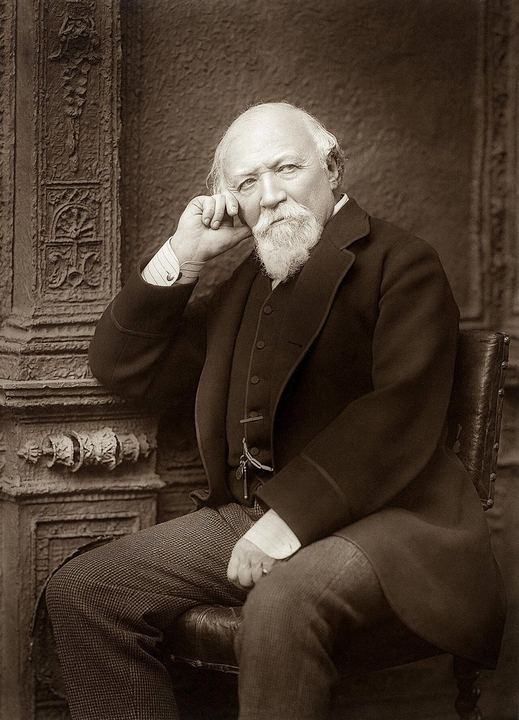
My Last Duchess is a dramatic monologue of 56 lines, first published in Robert Browning's Dramatic Lyrics in 1842 and headed Ferrara. The speaker is a Renaissance Duke of Ferrara, and his listener, who never speaks, is an envoy sent by a Count to arrange the Duke's marriage to the Count's daughter. As the two men pause in the Duke's gallery, he draws back a curtain that only he may open and shows a portrait of his former wife, painted by Frà Pandolf, that looks as if she were alive. He explains that visitors always want to ask what put such an earnest glance and spot of joy in her face, and he takes it on himself to answer. Her fault, as he describes it, was that she was too easily pleased: a compliment from the painter, the sunset, a bough of cherries brought by a servant, a ride on her white mule round the terrace, all drew the same thanks and blush from her as his own favors. She seemed to rank his gift of a nine-hundred-years-old name with anybody's gift. He would not lower himself to correct her, since even explaining his displeasure would be stooping, and he chooses never to stoop. Her smiles grew more general; he gave commands; then all smiles stopped together. With that, he invites the envoy to rise and go down to the company, mentions the dowry he expects from the Count while insisting that the daughter herself is his object, and on the stairs points out a bronze of Neptune taming a sea-horse, cast for him by Claus of Innsbruck. The poem's power lies in what the Duke reveals without meaning to: his pride, his jealousy of every pleasure not given by him, and very likely his responsibility for his wife's death, all while he negotiates his next marriage. Browning writes in rhymed couplets of iambic pentameter, but the sentences run so freely across line ends that the rhyme is barely heard, giving the effect of polished conversation.
Virtues in this work
- Humility: The Duke's boast that he chooses never to stoop shows by its absence what humility would have required: a simple word to his wife.
- Charity: The Duchess thanks the painter, the servant who brought cherries and her husband alike, a generous warmth the Duke calls a fault.
- Prudence: The envoy, and the reader with him, must judge from the Duke's own words what kind of man the Count's daughter would be marrying.
Plot or Argument
- Lines 1-13: the portrait unveiled
The Duke shows the envoy the lifelike painting of his last Duchess, names the painter Frà Pandolf, and notes that he alone draws the curtain.
- Lines 13-34: the Duchess's fault
He explains the spot of joy in her cheek: she was pleased by everything, a painter's compliment, a sunset, cherries, her mule, and thanked others as she thanked him for his ancient name.
- Lines 34-47: never to stoop
He refuses to stoop to correcting her; her smiles continued, he gave commands, and all smiles stopped together, leaving only the painting.
- Lines 47-56: down to the company
He turns to business, the Count's munificence and the dowry, claims to want the daughter herself, and points out his bronze Neptune as they descend.
Characters
- The Duke of Ferrara, speaker
A proud Renaissance nobleman and connoisseur who reveals more about himself than he intends.
- The Duchess, his late wife
Known only through the portrait and the Duke's account, a young woman glad of every kindness.
- The envoy, silent listener
The Count's agent sent to negotiate the Duke's next marriage.
- Frà Pandolf, painter
The friar-artist whose courteous compliments brought a blush to the Duchess's face.
- The Count, father of the proposed bride
The envoy's master, whose daughter the Duke now intends to marry.
- Claus of Innsbruck, sculptor
Cast the bronze Neptune that the Duke shows off on the stairs.
Lessons
Pride that cannot stoop
The Duke's ruling principle is that he chooses never to stoop, and that refusal leaves him unable even to speak to his wife about what grieves him. Browning shows pride not as grandeur but as a cramped, possessive smallness.
- Why does the Duke say that even explaining his displeasure would be stooping?
- What would it have cost him to speak to her?
- How does his pride shape the way he treats the envoy?
A person turned into a possession
The Duchess is now a painting behind a curtain that only the Duke may draw, and the poem ends with another work of art he owns. The poem asks readers to notice how the Duke values his wife as he values his bronzes.
- Why does the Duke prefer the painting to the living woman?
- What does the Neptune statue at the end suggest about the Duke?
Reading what a speaker does not say
The Duke never states that he had his wife killed; the reader infers it from I gave commands and the silence that follows. Dramatic monologue trains careful readers to hear what a speaker reveals beyond his intention.
- What evidence does the poem give that the Duke caused his wife's death?
- Why might the Duke tell this story to the envoy of his next bride's father?
- What do you imagine the envoy reports to the Count?
Context
The poem is set in the Italian Renaissance, among the courts of Ferrara, where the house of Este ruled and patronized painters and sculptors. Scholars commonly identify the speaker with Alfonso II d'Este, Duke of Ferrara, whose young first wife Lucrezia de' Medici died in 1561 within a few years of their marriage, and who afterward negotiated a marriage with a Habsburg archduchess through an envoy from the Tyrol. Frà Pandolf and Claus of Innsbruck are Browning's inventions.
Composition
My Last Duchess was published in 1842 in Dramatic Lyrics, the third number of Browning's pamphlet series Bells and Pomegranates, where it was paired with the poem later called Count Gismond under the heading Italy and France. It took its present title, My Last Duchess, with the subtitle Ferrara, in his Poems of 1849. Browning had visited Italy in 1838, and Italian settings run through his work.
Reception
The poem became the most famous example of the dramatic monologue, the form Browning developed alongside Tennyson in the 1840s, and it is a standard text for teaching close reading. Browning is reported to have said in later life that the Duke's commands were that she be put to death, or perhaps shut up in a convent. Robert Langbaum's study The Poetry of Experience made it central to criticism of the form.
Comparisons
- tennyson-ulysses
Tennyson's Ulysses, published the same year, is the other great early dramatic monologue; both speakers are rulers whose words reveal their characters, but Ulysses yearns outward while the Duke possesses.
- ozymandias
Shelley's sonnet also turns on a work of art that preserves a proud ruler's passions; the sculptor read Ozymandias's sneer as the reader reads the Duke's pride.
- the-prince
Machiavelli describes the Italian princes of the age Browning imagines, who used cruelty and display to secure power; the Duke is a domestic study of the same world.
- friends-romans-countrymen
Antony's speech is a public performance that persuades by indirection; the Duke's private speech also works by indirection, but what it reveals undoes the impression he wants to make.
Quotes
Frequently cited
“That's my last Duchess painted on the wall, Looking as if she were alive.”
Frequently cited
“She had A heart--how shall I say?--too soon made glad, Too easily impressed; she liked whate'er She looked on, and her looks went everywhere.”
Frequently cited
“This grew; I gave commands; Then all smiles stopped together. There she stands As if alive.”
“as if she ranked My gift of a nine-hundred-years-old name With anybody's gift.”
“and I choose Never to stoop.”
“Notice Neptune, though, Taming a sea-horse, thought a rarity, Which Claus of Innsbruck cast in bronze for me!”
For Students
A reading companion for classical Christian high school students. See the student guide.
Reading Guide
Watch for
- The curtain that only the Duke draws, mentioned in lines 9-10, and what it says about his control.
- The list of things that pleased the Duchess in lines 25-29: his favor, the sunset, the cherries, the white mule.
- The Duke's claim in lines 35-36 that he has no skill in speech, made in the middle of a skillful speech.
- The flat sentence I gave commands in line 45 and the silence that follows it.
- The sudden turn to the dowry in lines 49-53 and the bronze Neptune in the last lines.
Key terms and names
- Dramatic monologue
- A poem spoken by one character to a silent listener at a particular moment, revealing the speaker's character, often more than he intends.
- Ferrara
- A city in northern Italy ruled in the Renaissance by the Este dukes; the poem's heading names it as the setting.
- Frà Pandolf
- The fictional friar-painter of the Duchess's portrait; Frà is short for frate, brother.
- Envoy
- The Count's representative, who listens throughout and never speaks.
- Enjambment
- Running a sentence over the end of a verse line; Browning's constant enjambment hides his rhymed couplets.
- Dowry
- The property a bride's family brings to a marriage; the Duke raises it in lines 49-51 while claiming not to care.
Seminar Questions
- Comprehension Who is the Duke speaking to, and why is that person visiting?
- Comprehension What things pleased the Duchess, according to the Duke?
- Comprehension What does the Duke point out as he and the envoy go downstairs?
- Interpretation What does the Duke mean by I gave commands; then all smiles stopped together?
- Interpretation Why does the Duke tell this story to the envoy of the man whose daughter he plans to marry? Is it a warning, a boast, or a slip?
- Interpretation The Duke's complaints about his wife sound like praise to most readers. How does Browning make one speech carry two meanings?
- Big Question Is it possible to love a person and also want to control everything that makes that person happy?
Faith Connections
- Philippians 2:5-8 (Scripture)
Christ, being in the form of God, humbled himself and took the form of a servant. The Duke's boast that he chooses never to stoop is the exact opposite of the mind Paul commends.
- 1 Corinthians 13:4-5 (Scripture)
Charity envieth not, vaunteth not itself, seeketh not her own. The Duke envies every pleasure his wife received from others and seeks only his own honor.
- Proverbs 16:18 (Scripture)
Pride goeth before destruction. In the poem the destruction falls on the Duchess, and the reader is left to wonder what awaits the Count's daughter.
- Augustine, City of God XIV.28 (Church Fathers)
Augustine says two loves made two cities, love of self even to contempt of God and love of God even to contempt of self. The Duke is a portrait of the first love turned inward on a household.
Logic and Rhetoric
Central argument: The Duke argues that his wife failed to honor his name above all other gifts, that correcting her would have been beneath him, and that he therefore acted as he did. The poem argues back through his own words: the faults he names are virtues, his refusal to stoop is pride, and the man now seeking a new bride is a danger to her.
Rhetorical device: dramatic irony. In lines 21-24 the Duke means to describe a fault when he says her heart was too soon made glad and her looks went everywhere, but the reader hears a description of a warm and generous young woman.
Debate: Resolved: that the envoy should advise the Count to refuse the marriage.
Memory Work
That's my last Duchess painted on the wall, Looking as if she were alive.
This grew; I gave commands; Then all smiles stopped together. There she stands As if alive.
Writing Prompts
Essay: Argue how Browning makes the Duke condemn himself without ever admitting guilt. Use at least three moments in the poem where the Duke reveals more than he means to.
Comparison with Ulysses: Both My Last Duchess and Tennyson's Ulysses are dramatic monologues spoken by rulers and published in 1842. Compare what each speaker reveals about himself and argue which poet uses the form more effectively to judge his speaker.
Listen to the book
Public-domain audiobook from LibriVox, read by Various volunteers. Recording: My Last Duchess on LibriVox (Internet Archive).
LibriVox recordings are volunteer readings released into the public domain. The reading may follow a different edition from the text in this library.
Creative Prompts
- Dialogue
Write the envoy's report to the Count after this visit, in prose, saying what he observed and whether he advises the marriage.
- Classroom
Have one student read the poem aloud as the Duke while another plays the silent envoy, reacting only with gestures. Discuss where the envoy's reactions might prompt the Duke's next words.
- Poetry
Write a short dramatic monologue in which a speaker shows a visitor a treasured object and, without meaning to, reveals a flaw in his or her own character.
Further Reading
- Robert Browning's Poetry (Norton Critical Edition), James F. Loucks and Andrew M. Stauffer (eds.)
- The Poetry of Experience: The Dramatic Monologue in Modern Literary Tradition, Robert Langbaum
- The Book, the Ring, and the Poet: A Biography of Robert Browning, William Irvine and Park Honan
Verification notes
Publication in Dramatic Lyrics (1842) and the poem's form are standard. The 1842 printing as I. Italy, paired with Count Gismond under the heading Italy and France, and the 1849 retitling are documented in the publication history. The identification with Alfonso II d'Este is a scholarly reading, not stated by Browning; Browning's remark about the commands is reported secondhand. Line numbers follow the stored text's 56 lines; the editor's line-number markers in the stored text are not part of the poem, and quotes avoid the lines that carry them.
No verification flags recorded.