Work record
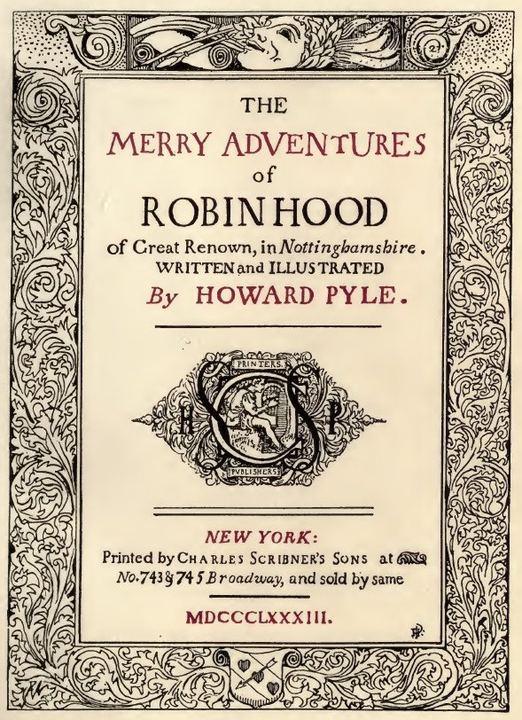
The Merry Adventures of Robin Hood
1883 · 19th Century · Novel · English
Abstract
Background. Pyle, an illustrator from Wilmington, Delaware, drew on the old English outlaw ballads and recast them for American children, writing the text and drawing every picture himself.
Structure. Each part gathers two or three adventures that usually close with a feast, a jest or a new recruit, and the preface invites readers to set aside serious things for a land of fancy.
Narrative. On his way to a shooting match at Nottingham, young Robin kills a royal forester in a quarrel and flees to Sherwood. There he gathers companions by fighting them, bests the Sheriff in the guise of a butcher and a beggar, and frees Will Stutely from the gallows. Little John enters the Sheriff's household as a servant; Robin restores Allan a Dale's bride and ransoms Sir Richard's land.
Climax. Queen Eleanor brings Robin's archers to shoot before King Henry, and Robin later kills Guy of Gisbourne. King Richard, disguised as a friar, feasts in the greenwood and takes Robin into his service.
Epilogue. Returning to Sherwood years afterward, Robin falls sick and is bled to death by the Prioress of Kirklees; his last arrow marks his grave.
Significance. With its mock-archaic speech and ink drawings, the book fixed for American readers the image of a courteous, laughing outlaw and served for generations as the standard family version of the legend.
Main characters
- Robin Hood: Yeoman archer outlawed at eighteen who leads the band in Sherwood
- Little John: Giant who beats Robin at quarterstaff on a footbridge and becomes his right hand
- Will Scarlet: Robin's gaily dressed kinsman, outlawed for killing his father's steward
- Friar Tuck: Stout Curtal Friar of Fountain Dale who meets Robin at a stream crossing
- Allan a Dale: Minstrel whose sweetheart Robin rescues from an arranged marriage
- The Sheriff of Nottingham: Robin's greedy, repeatedly outwitted chief adversary
- Sir Richard of the Lea: Indebted knight whom Robin helps redeem his lands from the Priory of Emmet
- Queen Eleanor: Summons Robin to London to shoot for her in the king's archery match
- Guy of Gisbourne: Hired killer in horsehide whom Robin slays in single combat
- King Richard: Visits Sherwood in disguise and pardons the band

Watch the summary
The Merry Adventures of Robin Hood in 113 seconds · 1:53
Summary
Howard Pyle’s The Merry Adventures of Robin Hood (1883) gathers the Sherwood outlaw tales into one continuous prose romance for young readers: archery contests, Lincoln green fellowship, clever rescues, and courtesy toward the poor in the days of King Henry. Pyle’s Robin is bold and playful rather than grim; Little John, Friar Tuck, and the merry men turn skill into loyalty. The book teaches that courage can laugh, that justice may live outside corrupt officials, and that fellowship disciplines wildness into service. Pyle’s greenwood pages reward chapter reading aloud: one contest, one rescue, one feast. Students can ask whether merry speech softens justice or serves it, and how Lincoln green fellowship differs from mere gang loyalty. The stored Gutenberg text lets teachers verify every quoted shaft and glade. A classroom archery rule-sheet drafted from one episode beats a lecture on outlaw ethics. Parents can pause when Robin spares an enemy and weigh mercy against weakness using only the scene given. Later chapters bring in Allan a Dale, whose sweetheart Robin saves from a forced marriage to a rich old knight, and Sir Richard of the Lea, a ruined knight to whom Robin lends the money to redeem his lands. Near the end King Richard comes to Sherwood disguised as a friar and takes Robin and his men into royal service, and an epilogue tells how the aged Robin, betrayed by the Prioress of Kirklees, shoots a last arrow to mark where he will be buried. Lincoln green fellowship is measured by shared danger, not by loud boasts alone. Many of the best-loved episodes take their familiar shape here: Robin's quarterstaff bout with Little John on a narrow bridge, which ends in laughter and lifelong friendship; his meeting with Friar Tuck at Fountain Abbey, where each makes the other carry him across a stream; and the shooting match at Nottingham, where Robin wins the golden arrow in disguise under the Sheriff's nose. Will Scarlet, Midge the Miller and Arthur a Bland the tanner join the band through similar trials of strength or wit, and the proud Bishop of Hereford is made to feast in the greenwood and then to pay for it.
Virtues in this work
- Justice: The band resists corrupt force on behalf of the wronged.
- Friendship: Merry men share danger and keep loyalty under pressure.
- Fortitude: Robin meets peril with skill and cheerful grit.
Plot or Argument
- Outlaw of Sherwood
Robin gathers skillful companions under greenwood law against corrupt force.
- Contests and rescues
Archery matches and clever plots free friends and humble proud officials.
- Fellowship’s code
Merry speech and shared danger forge honor among the band.
Characters
- Robin Hood, protagonist
Outlaw leader of Sherwood, skilled and merry.
- Little John, companion
Mighty yeoman and loyal friend.
- Friar Tuck, companion
Fighting friar of appetite and wit.
Lessons
Justice and merry courage
Robin’s band resists unjust power without becoming merely vengeful or grim.
- Where is injustice clear?
- How does laughter serve courage?
Fellowship over ego
Little John’s strength and Friar Tuck’s wit serve the company, not vanity alone.
- Who helps Robin most?
- When does pride endanger the band?
Skill with courtesy
Archery mastery is joined to manners toward the weak and the guest.
- What rules guide Robin?
- How do contests reveal character?
Context
American retelling of English outlaw ballads as Victorian children’s romance of justice and fellowship.
Composition
Published 1883; Pyle’s prose unifies ballad material for young readers.
Reception
Standard school and home Robin Hood for generations of American children.
Comparisons
- the-princess-and-the-goblin
Child-scaled courage with allies.
- treasure-island
Adventure fellowship under pressure.
Quotes
“IN MERRY ENGLAND in the time of old, when good King Henry the Second ruled the land, there lived within the green glades of Sherwood Forest, near Nottingham Town, a famous outlaw whose name was Robin Hood.”
“No archer ever lived that could speed a gray goose shaft with such skill and cunning as his”
For Students
A reading companion for classical Christian high school students. See the student guide.
Reading Guide
Watch for
- Opening greenwood portrait of Robin Hood.
- An archery contest under social pressure.
- A rescue that uses wit more than force.
- How the merry men keep fellowship rules.
- Treatment of the poor or a proud official.
Key terms and names
- Sherwood
- Forest home of Robin’s band.
- Outlaw
- One outside ordinary legal protection, here resisting corrupt force.
- Archery contest
- Public test of skill that reveals honor.
- Merry men
- Robin’s fellowship of skilled companions.
Seminar Questions
- Comprehension Where does Robin live, and who rules the land?
- Comprehension Name three companions and one gift of each.
- Comprehension What happens in a major archery contest?
- Interpretation Is Robin’s justice the same as the sheriff’s law?
- Interpretation How does merry speech shape courage?
- Interpretation What limits keep the band from mere crime?
- Big Question When may skillful resistance serve justice without becoming revenge?
Faith Connections
- Micah 6:8 (Scripture)
Do justly and love mercy—Sherwood’s better justice aims here.
- Proverbs 17:17 (Scripture)
A friend loveth at all times among the merry men.
- Outlaw ballad tradition (Great Conversation)
Justice outside corrupt offices in English romance.
Logic and Rhetoric
Central argument: Fellowship and skill can serve justice when official power is corrupt.
Rhetorical device: romance episode. Contests and rescues structure moral tests.
Debate: Resolved: that merry courage can be serious virtue.
Memory Work
IN MERRY ENGLAND in the time of old, when good King Henry the Second ruled the land, there lived within the green glades of Sherwood Forest, near Nottingham Town, a famous outlaw whose name was Robin Hood.
Writing Prompts
Essay: Choose one contest and explain what it teaches about honor.
Comparison with The Princess and the Goblin: Compare Pyle’s Robin with MacDonald’s Curdie: how does each practice courage with friends?
Medical Lens
Combat is adventurous, not clinical.
Listen to the book
Public-domain audiobook from LibriVox, read by Various volunteers. Recording: Merry Adventures of Robin Hood (Dramatic Reading) on LibriVox (Internet Archive).
LibriVox recordings are volunteer readings released into the public domain. The reading may follow a different edition from the text in this library.
Creative Prompts
- Classroom
Stage a fair archery contest with clear rules of courtesy.
- Essay
How does Pyle keep Robin merry without making him cruel?
- Fiction
A new rescue that uses wit more than force.
Further Reading
- The Story of King Arthur and His Knights, Howard Pyle
Pyle’s Arthurian companion volume.
Verification notes
Plot, characters, and publication facts for The Merry Adventures of Robin Hood follow standard sources. Quotes verified against the attached Gutenberg text.
No verification flags recorded.