Work record
No Treason
1867-1870 · 19th Century · Political Theory · English
Abstract
Background. Printed at the author's own cost in postwar Boston, these numbers came from a veteran antislavery lawyer who had once defended the Constitution as a charter of freedom and who now asked what Northern victory had settled about political obligation.
Argument. Authority can rest only on agreement, and agreement means each adult's personal assent. Majorities hold no natural title over minorities. Rebels who openly renounce a government betray nobody, and an instrument ratified by a small number of men two generations earlier cannot oblige their descendants.
Structure. The first number treats consent and the Revolution; the second reads the preamble, Article III and the idea of allegiance; the sixth, by far the longest, examines voting, taxation, anonymous balloting, oaths of office, national debts and the absence of signatures.
Key Concepts. Treason as breach of trust; the principal-agent relation; ballots cast in self-defence; the robber who at least acts openly and alone; constitutions judged by ordinary rules of contract, so that a document no one signed obliges no one.
Significance. Overlooked at first, the 1870 number became a founding text for later individualist and libertarian writers and remains a frequent starting point for debates on political obligation, where critics question whether a nation can be treated as a private compact.
Key figures
- Lysander Spooner: Boston lawyer, abolitionist pamphleteer and author
- George the Third: Monarch who branded the revolutionaries traitors
- Benedict Arnold: Spooner's example of a traitor in the true sense
- Roger Williams: Rhode Island founder invoked in a hypothetical about abandoned principles

Summary
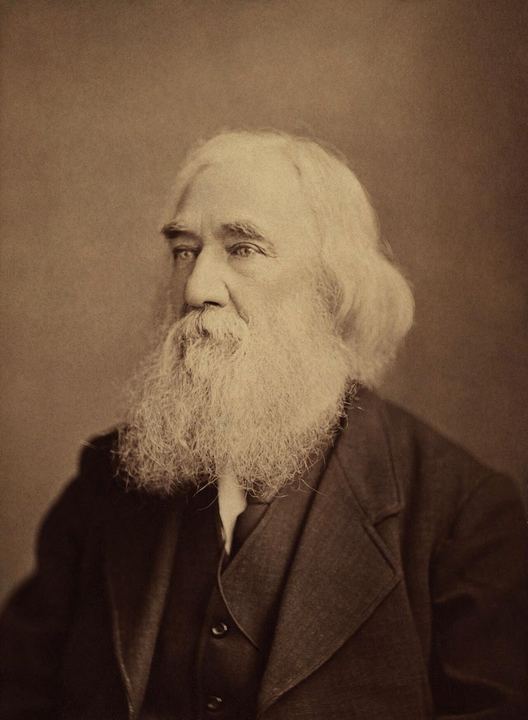
No Treason is a series of pamphlets that Lysander Spooner, a Boston lawyer and long-time abolitionist, published at his own expense after the Civil War. He planned a longer series but issued only three numbers, No. I and No. II in 1867 and No. VI, The Constitution of No Authority, in 1870; Nos. III to V never appeared, and the library text contains all three published numbers. No. I opens by insisting that the question of treason is separate from the question of slavery. Spooner argues that the North fought on the principle that men may rightly be compelled to support a government they do not want, and that this principle, if established, makes every unwilling subject a kind of slave. He then asks what a government's resting on consent really implies. Neither the consent of the strongest party nor of the most numerous party is enough, he says in seven numbered points, because a majority has no more natural right over a minority than one man over two. The only consistent meaning is the separate consent of each individual who is asked to pay or serve, and that, he contends, was the principle of 1776, when the colonists were called traitors by George III but broke faith with no one. No. II reads the Constitution itself. Its preamble speaks for 'the people', which Spooner treats as a contract binding only those who actually agreed to it, and only for as long as they chose. Treason in its true sense means betrayal, the breach of a trust, so open enemies who give fair warning, like the Southern states, cannot be traitors; Benedict Arnold is his example of a real one. No. VI is the longest and best known. It argues that the Constitution has no authority except as a contract, that its signers are long dead, and that voting and paying taxes do not prove consent, since a man may vote in self-defence and pays taxes under threat. He likens the tax collector to a highwayman who at least takes responsibility for his act, argues that the secret ballot leaves officeholders unable to name their principals, and denies that oaths of office or public debts bind anyone who did not personally agree to them. An appendix concludes that whatever the Constitution means, it has either authorized the government Americans have had or been powerless to prevent it.
Virtues in this work
- Honor: Spooner defines treason as breach of faith and praises those who give open warning before becoming enemies, as he says the patriots of 1776 did.
- Justice: His whole argument turns on the claim that no one may rightly take another's property or service without his agreement, as in the highwayman comparison of No. VI.
- Fortitude: He published the pamphlets himself, against the settled opinion of the victorious North in which he lived, after decades of equally unpopular antislavery writing.
Plot or Argument
- No. I, Introductory: treason and slavery
Spooner separates the question of treason from that of slavery and argues that the war established the principle that men may be compelled to support a government they do not want.
- No. I, §§ I-III: what consent requires
Consent of the strongest or of the majority cannot justify government; seven points show that majorities have no natural right over minorities, so nations can rightly exist only by consent.
- No. I, § IV: individual consent and 1776
Consent must be each man's separate consent. The Revolution was made by individuals exercising natural rights, and the patriots were not traitors because they had pledged no faith to the king.
- No. II, §§ I-II: the preamble and the meaning of treason
The preamble's 'We, the people' is read as a voluntary agreement binding only those who consented. Treason in its true sense requires breach of faith; open enemies cannot be traitors.
- No. II, §§ III-XI: allegiance, birth and taxation
The Constitution never uses the word allegiance, and birth on American soil creates no duty of support; taxation without individual consent is treated as taking by force.
- No. VI, § I: a contract of dead men
The Constitution's only possible authority is as a contract, yet its parties were few, are now dead, and never claimed to bind their posterity.
- No. VI, §§ II-VI: voting and taxes as evidence
Voting may be an act of self-defence and taxes are paid under compulsion, so neither proves consent; the tax collector is compared, to his disadvantage, with the highwayman.
- No. VI, §§ VII-XVI: the secret ballot, agents and oaths
Because voters act by secret ballot, officeholders cannot identify their principals, so they are agents of no one; oaths of office given to no identifiable party bind no one.
- No. VI, §§ XVII-XIX and Appendix
Public debts were contracted by agents without known principals and bind only those who lent and borrowed; contracts must be signed to bind, and the unsigned Constitution therefore binds nobody. The appendix concludes it is unfit to exist.
Characters
- Lysander Spooner, author
Massachusetts lawyer and abolitionist who argues from contract law and natural rights.
- George the Third, historical example
King who called the American revolutionaries traitors, though in Spooner's view they broke faith with no one.
- Benedict Arnold, historical example
Spooner's model of a true traitor, who injured the cause he professed to serve.
- Roger Williams, historical example
Founder of Rhode Island on religious toleration, used in No. I to illustrate a people abandoning its founding principle.
Lessons
What consent means
Spooner presses the phrase 'government by consent' as far as it will go and concludes that only the individual consent of each person who pays or serves can satisfy it. Whether or not readers accept his conclusion, the argument forces a careful definition of a word Americans use constantly. It also shows how much the classical liberal tradition depends on the idea of agreement.
- Why does Spooner reject both the consent of the strongest and the consent of the majority?
- Is there a meaning of consent between Spooner's individual signature and mere submission?
- How might Locke's idea of tacit consent answer Spooner?
Treason as betrayal
No. II argues that treason, in its ordinary sense, means breach of faith, so an open enemy who gives fair warning is not a traitor. Spooner uses Benedict Arnold and the patriots of 1776 to make the distinction concrete. The argument shows how a lawyer reasons from the plain meaning of words.
- What distinguishes Benedict Arnold from the signers of the Declaration in Spooner's account?
- Does the definition of treason in Article III of the Constitution support Spooner's reading?
Reasoning from contract
No. VI treats the Constitution as a contract and applies ordinary rules of contract law: parties must be competent, must actually agree, and must sign; contracts do not bind heirs who never agreed. The method is consistent and lawyerly, and its strength and its limits both lie in whether a political community is really like a private agreement.
- Which rules of private contract does Spooner apply to the Constitution?
- Is a nation more like a contract, a family, or something else?
- What would follow if Spooner's premise were granted?
Taxation and responsibility
Spooner's comparison of the tax collector with the highwayman is deliberately provocative: the highwayman, he says, at least acts openly and alone, while the government acts through agents whose principals are hidden by the secret ballot. The passage illustrates his concern for personal responsibility in public acts.
- Why does Spooner think the highwayman's conduct is in one respect more honest?
- What does the secret ballot protect, and what, in Spooner's view, does it conceal?
Context
The pamphlets appeared in the first years after the Civil War, while Congress debated Reconstruction and the legal status of the defeated Southern states, and while former Confederate leaders such as Jefferson Davis awaited possible treason trials. Spooner had spent two decades arguing against slavery on constitutional grounds, and he insisted that his defence of the right of secession was a separate question from slavery itself.
Composition
Spooner published the numbers himself in Boston: No. I and No. II, The Constitution, in 1867, and No. VI, The Constitution of No Authority, in 1870. The intermediate numbers announced in No. I were never issued. No. VI, more than twice the length of the first two together, is the part most often reprinted.
Reception
Little noticed in its day, No Treason was taken up by Benjamin Tucker's individualist circle in the 1880s and revived in the twentieth century by libertarian and anarchist writers, among whom The Constitution of No Authority became a standard text. Constitutional scholars have engaged it as a sharp statement of the problem of political obligation; critics reply that Spooner treats political society too narrowly as a private contract.
Comparisons
- second-treatise-of-government
Locke grounds government in consent but allows that residence and enjoyment of property give tacit consent; Spooner rejects tacit consent and demands each person's actual agreement.
- the-founding-documents
Spooner reads the Declaration's consent of the governed, the Constitution's preamble and its Article III definition of treason word by word; the founding texts are the documents he is interpreting.
- discourse-on-voluntary-servitude
Both hold that government rests on the cooperation of the governed; La Boétie explains why people keep consenting, Spooner argues that their supposed consent was never given.
- the-anti-federalist-papers
The Anti-Federalists feared a consolidated national power and questioned the ratification process; Spooner presses similar concerns after the Civil War seemed to settle them.
- walden
The library's Walden text includes Thoreau's Civil Disobedience, whose refusal to pay a poll tax and treatment of the tax collector as the state's face anticipate Spooner's arguments about taxation.
- the-social-contract
Rousseau seeks a general will in which each obeys only himself; Spooner insists that no will except each person's own can bind him.
Quotes
“We are, therefore, driven to the acknowledgment that nations and governments, if they can rightfully exist at all, can exist only by consent.”
“Having pledged no faith, they break none.”
“A traitor is a betrayer—one who practices injury, while professing friendship.”
“The Constitution has no inherent authority or obligation.”
“It purports, at most, to be only a contract between persons living eighty years ago.”
“The fact is that the government, like a highwayman, says to a man: Your money, or your life.”
“A man is none the less a slave because he is allowed to choose a new master once in a term of years.”
“But whether the Constitution really be one thing, or another, this much is certain—that it has either authorized such a government as we have had, or has been powerless to prevent it. In either case, it is unfit to exist.”
For Students
A reading companion for classical Christian high school students. See the student guide.
Reading Guide
Watch for
- The opening of No. I, where Spooner insists that the question of treason is distinct from that of slavery.
- The seven numbered points in No. I against the right of a majority to rule a minority.
- Spooner's definition of treason as betrayal in No. II, with Benedict Arnold as his example.
- The comparison of the tax collector and the highwayman in No. VI, § III.
- The repeated phrase about secret ballots in No. VI and the argument that officeholders cannot name their principals.
Key terms and names
- Consent
- For Spooner, only the actual, individual agreement of each person who pays or serves; neither majority vote nor residence counts.
- Treason in fact
- Spooner's term for real betrayal, a breach of faith by one who professes friendship, as opposed to anything a government chooses to call treason.
- Allegiance
- From the Latin for binding to; Spooner notes that the Constitution never uses the word and argues that birth creates no such bond.
- Principal and agent
- Legal terms for one who authorizes and one who acts on that authority; Spooner argues that secret voting leaves officials as agents without known principals.
- The Constitution of No Authority
- The title of No. VI (1870), the longest and most famous of the pamphlets.
- Secret ballot
- Voting in which no one knows how an individual voted; Spooner uses it to argue that no voter can be shown to have consented to anything.
Seminar Questions
- Comprehension Why does Spooner say at the beginning of No. I that the question of treason is distinct from that of slavery?
- Comprehension How does Spooner define treason in No. II, and why does he say the men of 1776 were not traitors?
- Comprehension What three reasons does Spooner give in No. VI for denying that the Constitution binds Americans of 1870?
- Interpretation Spooner says the highwayman is in some ways more honourable than the government. What does he mean, and what does the comparison accomplish rhetorically?
- Interpretation How does Spooner use the secret ballot, usually considered a protection for voters, against the claim that government rests on consent?
- Interpretation Is Spooner's argument in No. VI an attack on the Constitution itself or on the government that claims to act under it? Use the Appendix in your answer.
- Big Question Can a promise made by one generation bind the next? Consider families, churches and nations as well as contracts.
- Big Question What, besides explicit consent, might give a government legitimate authority?
Faith Connections
- Joshua 9:15-20; 2 Samuel 21:1-2 (Scripture)
Israel's leaders swear peace with the Gibeonites and hold the oath binding even though it was obtained by deceit; generations later Saul's breach of it brings famine. Scripture here treats a covenant as binding descendants, the very point Spooner denies for the Constitution.
- Romans 13:1-7 (Scripture)
Paul teaches that the governing authorities are ordained of God and that tribute is to be paid to whom it is due. A fair reading of Spooner should set his contract theory beside this alternative account of where political authority comes from.
- Matthew 22:17-21 (Scripture)
Asked whether it is lawful to give tribute to Caesar, Jesus answers, Render unto Caesar the things which are Caesar's. The question of what is owed to a government Spooner did not choose has an ancient precedent.
- Thomas Aquinas, Summa Theologiae I-II, q. 90, a. 3 (Great Conversation)
Aquinas holds that making law belongs to the whole people or to the one who has care of the whole people. This view of the community as a whole, not merely a sum of individual contracts, is the main alternative to Spooner's premise.
Logic and Rhetoric
Central argument: A government may rightfully exist only by consent. Consent, to mean anything, must be the actual agreement of each person asked to pay or serve, because a majority has no more right over a minority than one man over two. The Constitution's only possible authority is therefore as a contract, but few agreed to it, they are dead, they could not bind their posterity, and neither voting nor taxpaying proves later consent. Therefore the Constitution binds no one, and those who withdraw their support are not traitors.
Rhetorical device: reductio ad absurdum. In No. I Spooner imagines the heirs of Roger Williams burning heretics in the name of toleration, to make the North's war for a government resting on consent appear self-defeating; in No. VI, § III, the highwayman comparison works the same way.
Debate: Resolved: Voting in an election is evidence of consent to the government elected.
Memory Work
A traitor is a betrayer—one who practices injury, while professing friendship.
A man is none the less a slave because he is allowed to choose a new master once in a term of years.
Writing Prompts
Essay: Spooner treats the Constitution as a private contract. Explain how this premise shapes each stage of his argument in No. VI, then argue whether a constitution is the kind of thing that can be judged by the rules of contract.
Comparison with Second Treatise of Government: Locke says that a man who enjoys property or travels on the highways of a country gives tacit consent to its government; Spooner says only express individual consent counts. Compare their accounts and argue which better describes the obligations of a citizen.
Medical Lens
A legal and political argument with no medical subject matter.
Creative Prompts
- Dialogue
Write an exchange between Spooner and a member of Congress who has just taken the oath of office, in which each tries to say to whom the oath was made.
- Essay
Spooner says voting may be an act of self-defence rather than consent. Explain the argument and test it against one election you have studied.
- Classroom
List every rule of private contract Spooner applies to the Constitution in No. VI, then discuss which of them a defender of the Constitution would accept.
- Dialogue
Stage a short debate between Spooner and John Locke on whether living in a country and owning property there is a form of consent.
Further Reading
- The Unconstitutionality of Slavery, Lysander Spooner
His 1845 constitutional argument against slavery.
- An Essay on the Trial by Jury, Lysander Spooner
- Civil Disobedience, Henry David Thoreau
- Second Treatise of Government, John Locke
Chapter VIII on tacit consent is the classic position Spooner rejects.
Verification notes
All quotations were found verbatim by Grep in content/texts/no-treason.txt (Digital Library of Liberty and Power transcription of the author's 1867-1870 Boston editions; No. VI also checked against Project Gutenberg #36145). Section locators follow the Roman-numbered sections of each pamphlet in that text. Biographical facts (Athol birth, American Letter Mail Company 1844, The Unconstitutionality of Slavery 1845, Trial by Jury 1852) are standard. Summaries of No. VI sections XIII-XIX are condensed and should be checked against the text before detailed citation.
- Exact section boundaries for the discussion of public debts and signed contracts in No. VI (§§ XVII-XIX).
- The extent of the pamphlets' circulation in Benjamin Tucker's circle in the 1880s.