Great Churches & Monasteries · Holy Land & Middle East
Mar Mattai
A Syriac monastery on a mountainside above the Nineveh plain, kept alive for sixteen centuries.
Still standing. The monastery stands and is home to a small Syriac Orthodox community. In August 2014 the monks sent the manuscripts to safety as armed forces advanced to within a few kilometers, but the advance was halted and the monastery was not destroyed.
St Elijah's Monastery, near Mosul
What it is
Mar Mattai, the Monastery of St Matthew, stands on the slope of Mount Alfaf, about 20 kilometers north-east of Mosul. The Syriac Orthodox Church holds that it was founded in 363 by a monk named Mor Mattai, who fled persecution under the emperor Julian and settled in a cave on the mountain. The monastery became a center of Syriac learning, with a library that holds many manuscripts. It was attacked and rebuilt many times.
In the summer of 2014, when armed forces seized Mosul and then moved across the Nineveh Plains, the monks packed up their manuscripts and relics and sent them to safety in Erbil. Several families took shelter in the monastery. The advance halted a few kilometers from the walls, and the monks, with a guard of Kurdish soldiers, stayed. After the liberation of the region in 2016 and 2017 the monastery remained, and it has been used again for worship and for the gatherings of local Christians. The nearby villages and many churches of the plain suffered damage in those years.
Why it matters for a classical Christian student
Mar Mattai is why this section is called 'lost, ruined, and threatened'. It stands, but many of the Christian communities around it were scattered. A classical Christian student should know that the faith of Syriac Christians is among the oldest in the world, that they still use Syriac, a dialect of Aramaic, the language Jesus spoke, in their liturgy, and that they have kept a library through changes of rulers. The virtue to notice is faithfulness to a place.
Read alongside
- The Bible: The book of Jonah tells of the city of Nineveh, in the same region.
Look closely
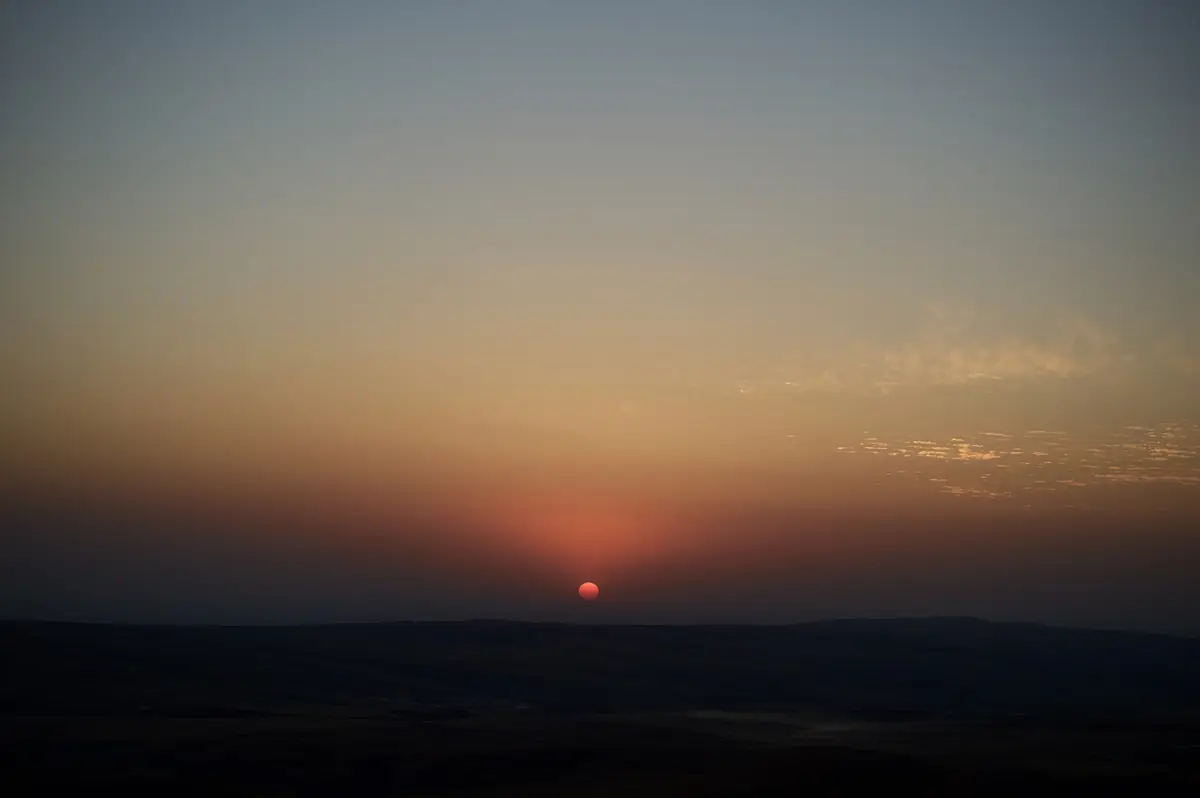
Image: Wikimedia Commons · CC0 (public domain) Sunset over Mosul from the monastery
Look closely. The monastery stands on Mount Maqlub, and the photograph looks out from it over the plain toward Mosul at sunset. The mountain gives a wide view of the region.

What to watch for
Look slowly- The Syriac manuscripts. The monks' decision to move them is part of the story.
- A living mountain monastery. It is still an active community.
- The nearby plain. It is the region of ancient Nineveh, the city of Jonah.
- Careful sources. Reports of 2014 are from journalists and church leaders, and details should be checked against several accounts.
Sources
Dates follow standard historical references and, where we quote a book, the wording of the edition hosted in this library. Where a tradition is not certain history, the page says so. Photographs and pictures are used only when the image itself is Public domain, CC0, or CC BY with a named credit. Each picture links to its source page with full licence details. Pictures taken before a site was damaged are labelled with their date.