Great Churches & Monasteries · Africa
St Macarius Monastery
A walled monastery in the valley where the desert fathers first sat down to pray.
Still standing. The monastery is a living Coptic Orthodox community, one of four that remain in the valley of Scetis. It has been raided and rebuilt many times and has been extensively restored.
What it is
About 100 kilometers north-west of Cairo lies a low valley, once called Scetis, with salt lakes and almost no other water. In the fourth century Macarius the Egyptian, a disciple of the desert tradition associated with Antony, settled there, and others followed. The valley became a center for monks who lived in separate cells and met for worship at the weekend. Four monasteries now remain in the Wadi El Natrun, among them the Monastery of St Macarius, which keeps the saint's name and a tomb church.
The community has suffered raids across the centuries and was rebuilt after each one. Today the monastery has a large church, a fortified tower, and the cells of its monks. Pilgrims visit especially on feasts of the Coptic year. The sayings of the desert fathers, collected in the fifth and sixth centuries and later called the Apophthegmata, preserve the memory of Scetis, and the Rule of St Benedict itself advises monks to read the Lives and Conferences of the Fathers.
“The wilderness and the solitary place shall be glad for them; and the desert shall rejoice, and blossom as the rose.”
Why it matters for a classical Christian student
The desert fathers are the root of Western monastic spirituality, and Scetis is their garden. The student should look here for the pattern of Christian solitude: a monk goes out to be alone with God and in doing so becomes a guide for others. The virtue to notice is patient discipline. Benedict's praise of the Fathers in the last chapter of his Rule shows that, centuries later, in Italy, monks still looked back to Egypt.
Read alongside
- The Rule of St Benedict: Chapter 73 sends the reader back to the Lives and Conferences of the Fathers.
- Early Christian Lives: Athanasius's Life of Antony describes the first monks of Egypt.
Great Lives connected here
- Athanasius of Alexandria, in Great Lives: Athanasius spent several exiles among the Egyptian monks and wrote of their way of life in his Life of Antony.
Look closely
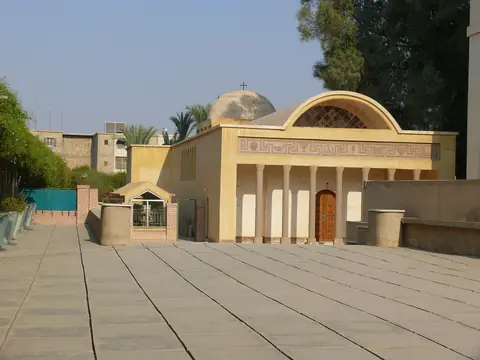
Image: Wikimedia Commons · CC BY 2.0 · Photo: someone10x Inside the monastery walls
Look closely. The monastery lies in the Wadi El Natrun and has been rebuilt many times. This photograph shows a church with a colonnaded porch and domes, and the paved court of a living community.
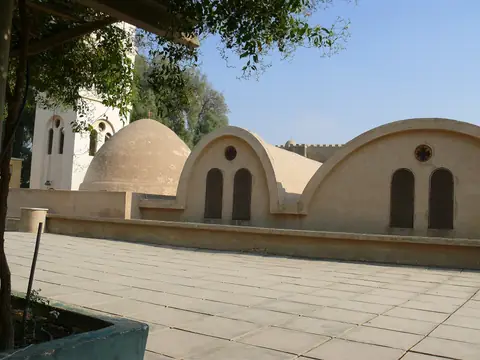
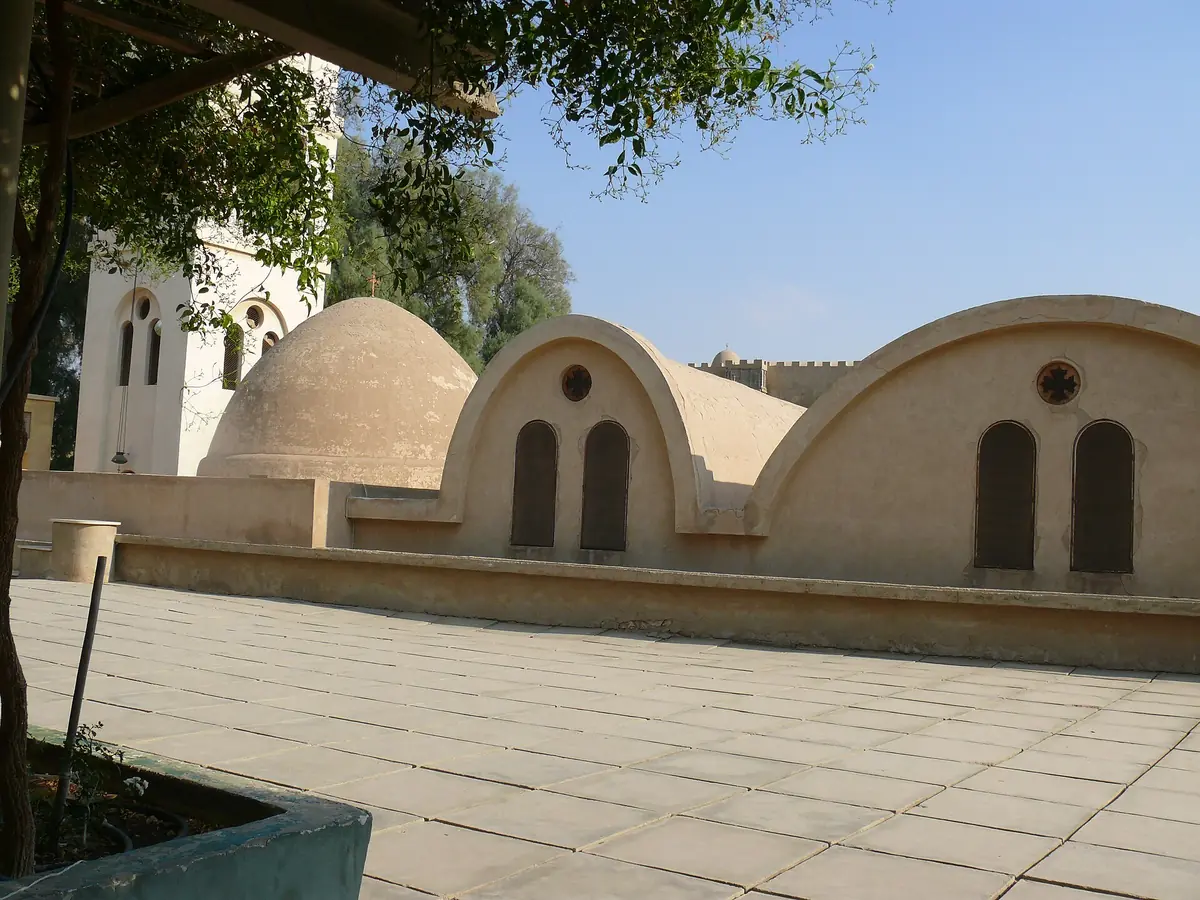
Image: Wikimedia Commons · CC BY 2.0 · Photo: someone10x The domed church
Look closely. Low domes and arched windows are typical of Coptic church buildings. A flat paved court and a plain wall surround them.
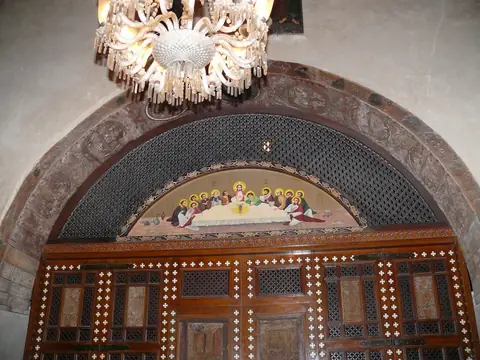
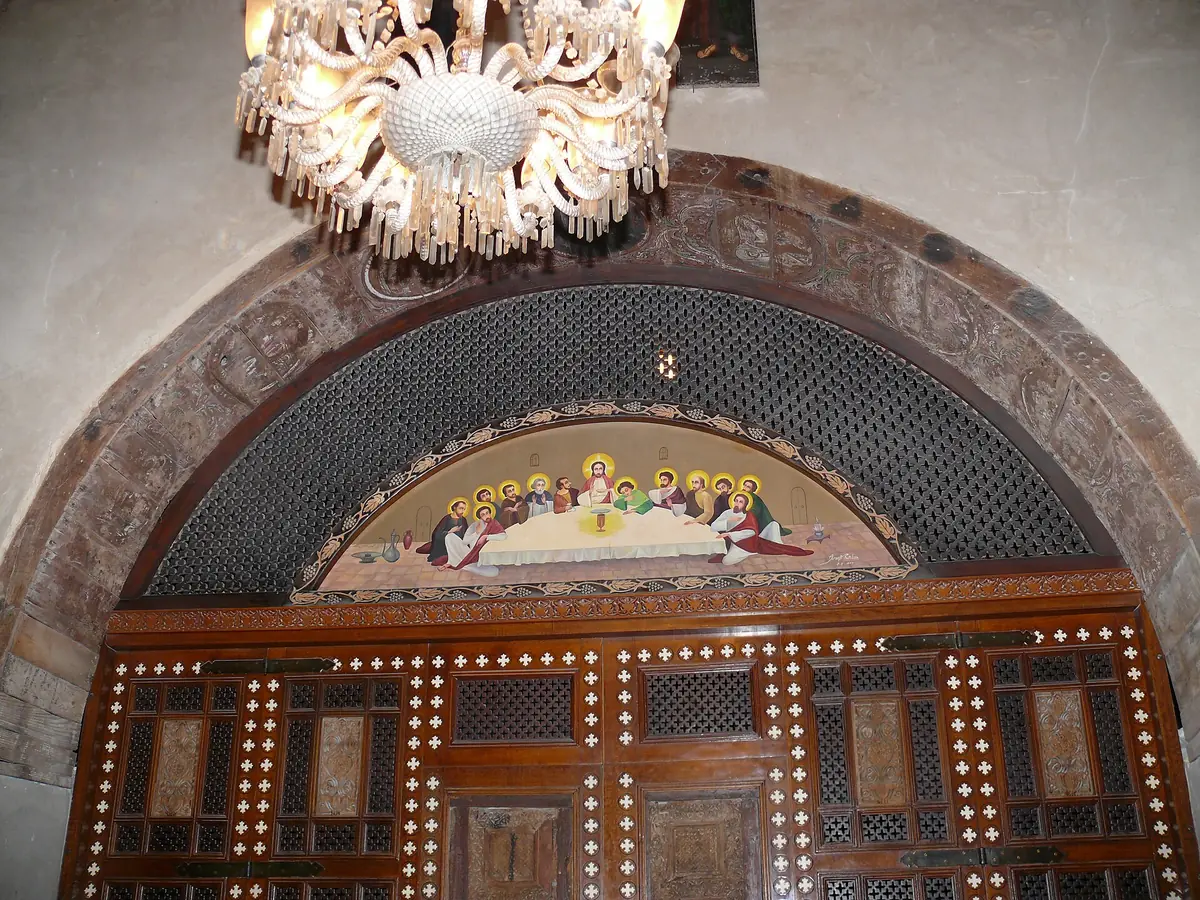
Image: Wikimedia Commons · CC BY 2.0 · Photo: someone10x A painted lunette over a door
Look closely. An arched painting over a wooden door, inlaid in small geometric pieces, under a hanging lamp. Churches of the Coptic tradition are often rich in painted and inlaid woodwork.
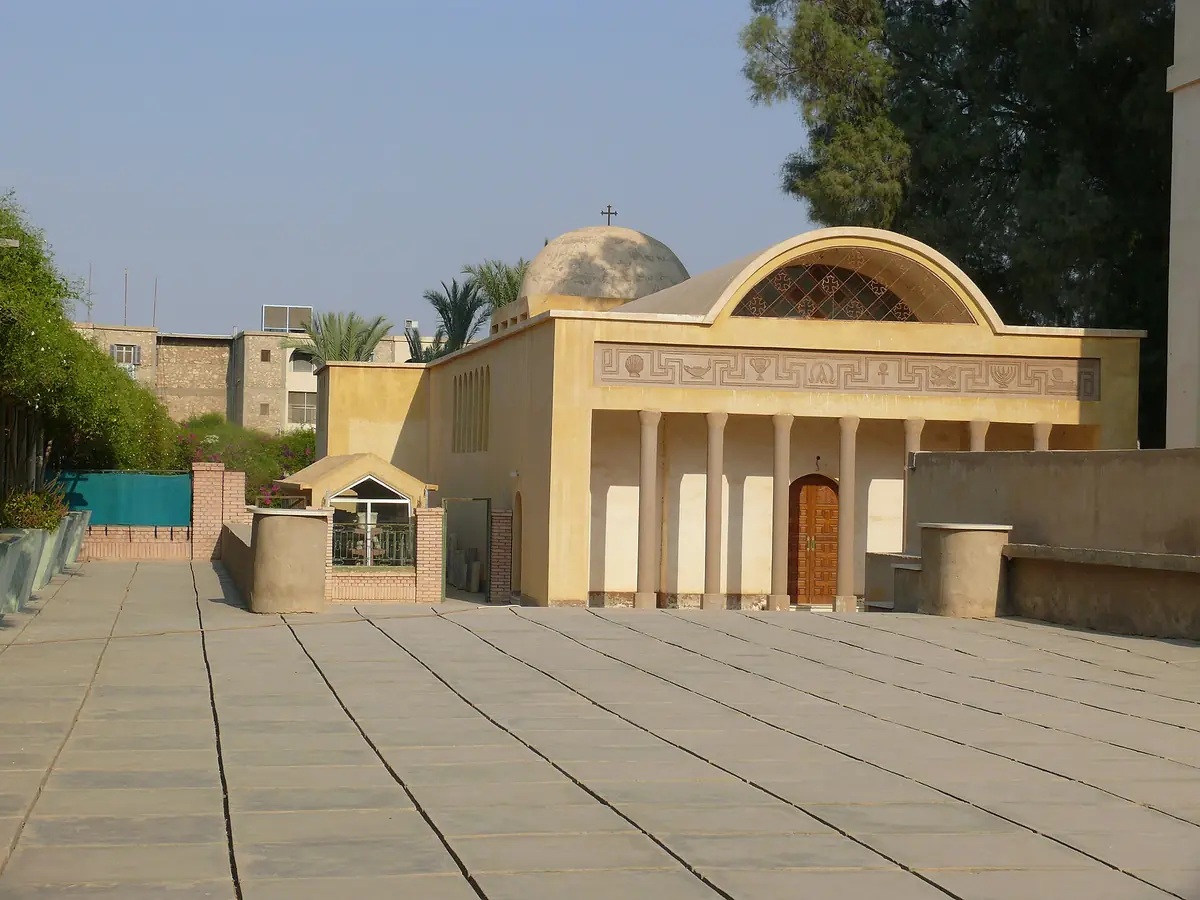


What to watch for
Look slowly- The valley, not just the walls. The landscape of salt and sand is part of the story.
- A shared life of separate cells. The monks of Scetis lived apart and met for common prayer.
- Benedict's last chapter. Compare what Benedict says about the Fathers with the older tradition here.
- Coptic worship. The liturgy preserves ancient Egyptian Christian forms and the Coptic language.
Sources
Dates follow standard historical references and, where we quote a book, the wording of the edition hosted in this library. Where a tradition is not certain history, the page says so. Photographs and pictures are used only when the image itself is Public domain, CC0, or CC BY with a named credit. Each picture links to its source page with full licence details. Pictures taken before a site was damaged are labelled with their date.