Great Churches & Monasteries · Africa
St Anthony's Monastery
The desert monastery that grew up around the mountain where Antony, the father of monks, prayed.
Still standing. The monastery is a living Coptic Orthodox community and is often called the oldest monastery in the world still in use. The walls and the church have been repaired and cleaned many times.
St Macarius, in the desert of Scetis · Monte Cassino, where Benedict wrote his Rule
What it is
Antony of Egypt, born around 251, gave away his goods and went into the desert to pray. Athanasius of Alexandria, who knew him, wrote his Life of Antony, which tells how he lived in an old tomb, then in a ruined fort, and last on the 'inner mountain' near the Red Sea, where he died at about the age of 105. Disciples gathered near him, and after his death they built a community on that place. The Monastery of St Anthony stands today in a green oasis under cliffs, a walled village of churches, cells, a bakery, a garden, and a spring that waters the whole place.
The walls were built to keep out raiders, and in times of danger the monks drew up a drawbridge or hauled people up by rope. The oldest church, the Church of St Anthony, holds wall paintings of the Coptic tradition. A long conservation campaign, finished in the 2000s, removed centuries of smoke and showed paintings dated to the thirteenth century. The monastery of St Paul the Hermit lies in a neighbouring valley of the same desert. Jerome's account of Paul's life, which is hosted in this library with Athanasius's work, tells of Antony's visit to Paul in his old age.
Why it matters for a classical Christian student
Here is the beginning of Christian monasticism. Antony's call came from hearing the Gospel read in church, with its word to sell what he had and give to the poor. Athanasius's biography was read across the Roman world, and Augustine says in his Confessions that hearing the story of Antony helped bring him to the point of conversion. A classical Christian student should see that the great monastic houses of Europe, from Monte Cassino to Melk, descend from this place. The virtues to notice are perseverance, humility, and a hard-won discipline of the body and mind.
Read alongside
- Early Christian Lives: Athanasius's Life of Antony, and Jerome's Life of Paul the First Hermit, which tells of Antony's visit.
- Confessions: In Book VIII Augustine hears of Antony and is moved to reflect on his own life.
Great Lives connected here
- Athanasius of Alexandria, in Great Lives: Athanasius of Alexandria wrote the Life of Antony, the account that made Antony's example known across the Christian world.
- Augustine of Hippo, in Great Lives: Augustine tells in his Confessions how hearing the story of Antony stirred him in the days before his conversion.
Look closely
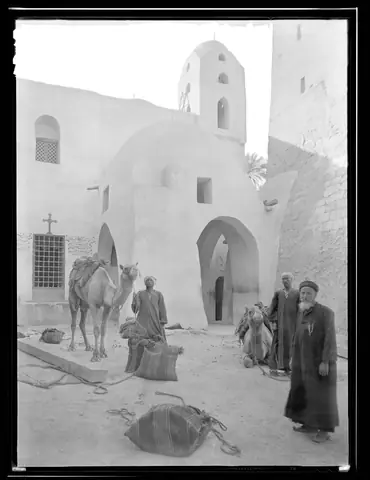
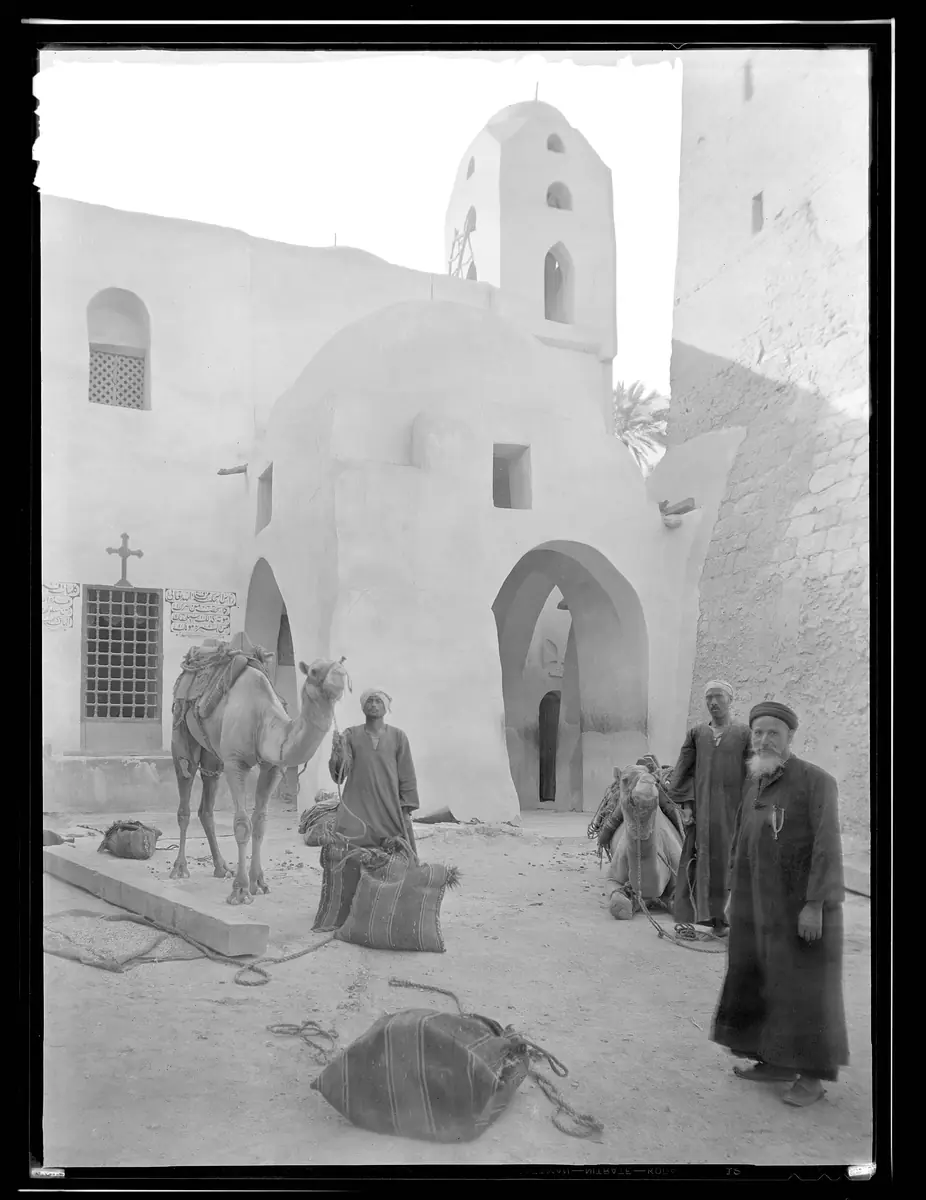
Image: Wikimedia Commons · CC0 (public domain) Camels before the Church of St Anthony
Look closely. A photograph of about 1930 shows a camel and several men in a whitewashed courtyard, with a church and bell tower behind them. Desert monasteries were also working communities, with travelers, animals and supplies coming and going.
In the library: Athanasius, in Great Lives
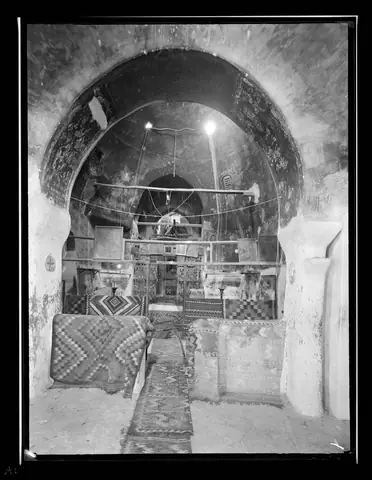
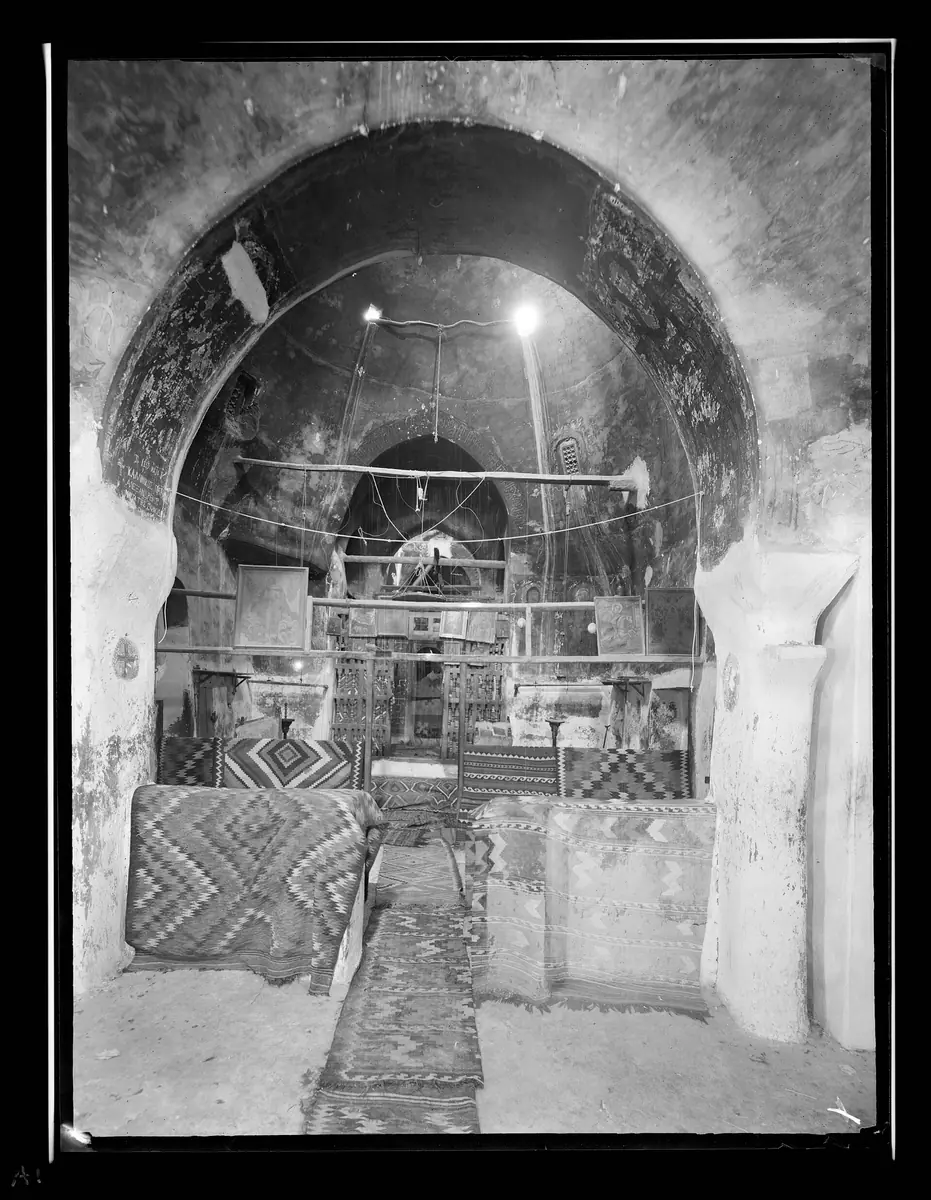
Image: Wikimedia Commons · CC0 (public domain) Inside the Church of St Anthony
Look closely. An old photograph of the vaulted interior, with the arched sanctuary at the far end and a carpet laid in the aisle. Notice how few windows there are and how the vault closes over the worshippers.
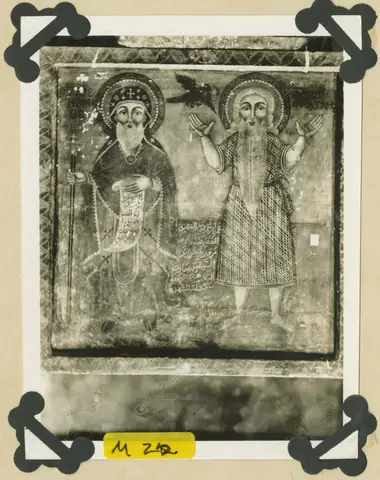
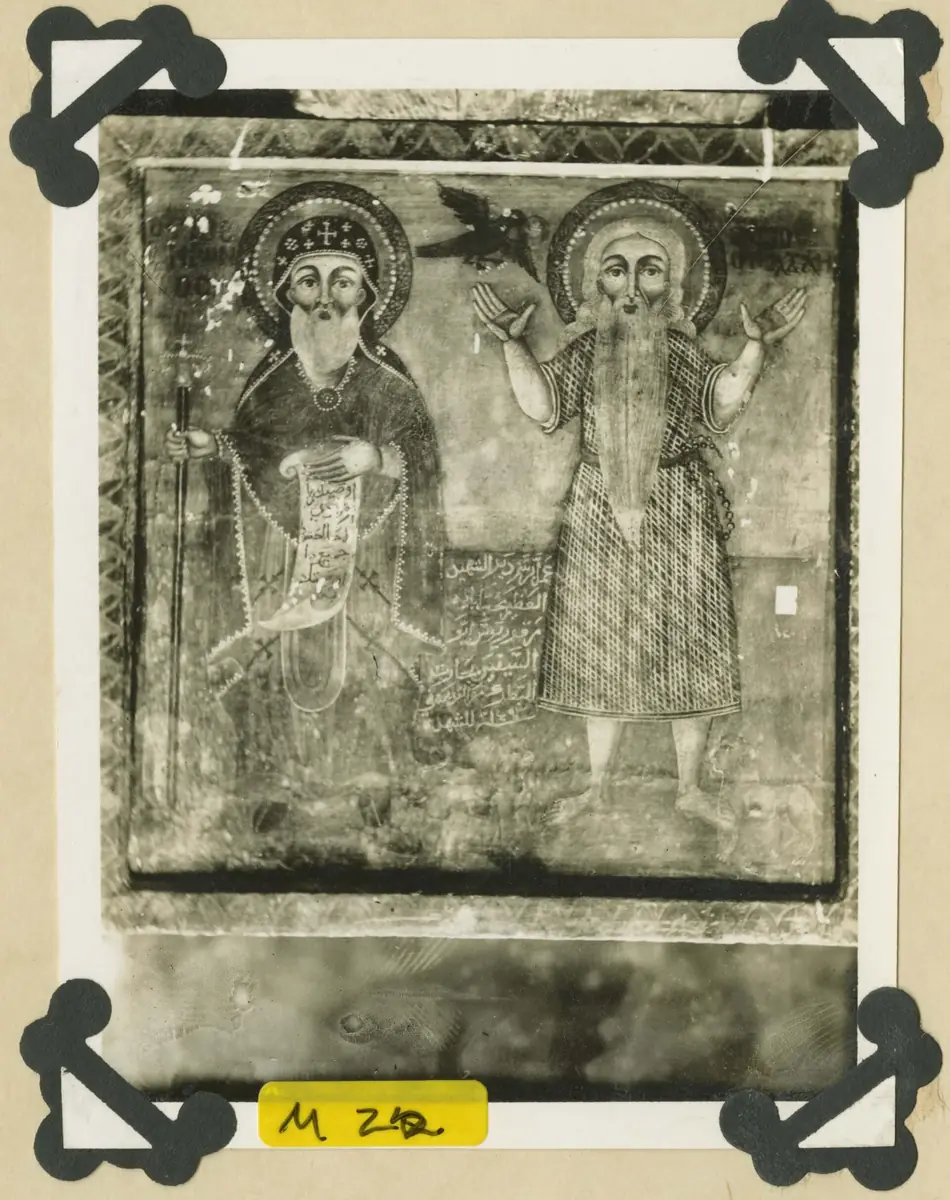
Image: Wikimedia Commons · CC0 (public domain) Icon of Saints Anthony and Paul
Look closely. An icon shows two robed figures standing side by side. The label names them as Anthony and Paul, the two early hermits of the Egyptian desert. Jerome wrote a life of Paul of Thebes in which Anthony visits him.
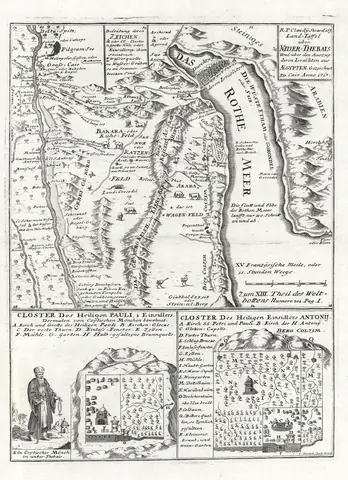
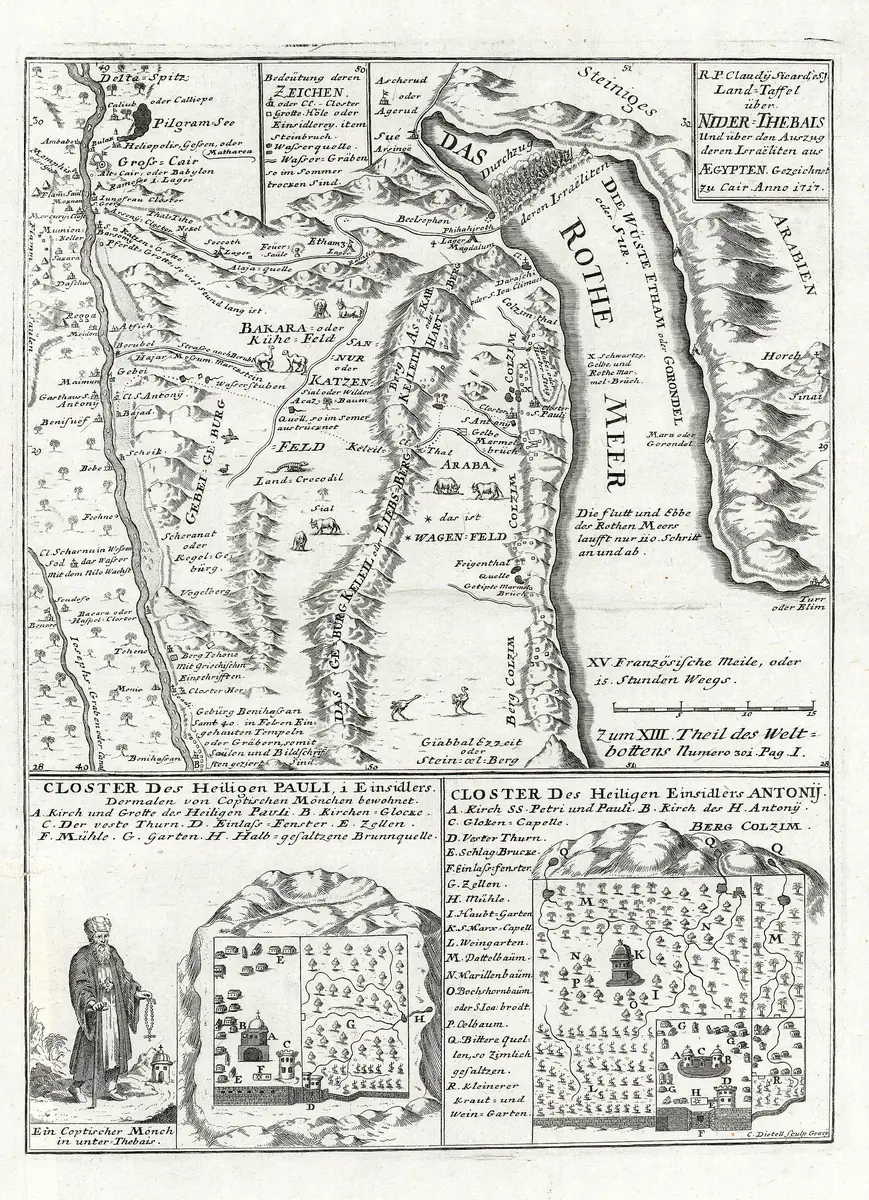
Image: Wikimedia Commons · Public domain (PD-Art) A map of the Thebaid
Look closely. A German map from 1717 of the Lower Thebaid and the route of the Israelites out of Egypt. The Thebaid was the region of the Egyptian desert where many early monks lived. Look for the rivers and the small scenes in the margins.


What to watch for
Look slowly- The spring and the garden. Water is why a community could live here at all.
- The Coptic wall paintings. Compare them in style with Byzantine icons.
- The old walls. Notice how a monastery in the desert was also a fortress.
- Antony in his own words. The hosted Life of Antony gives the longest early account of his teaching to the monks.
Sources
Dates follow standard historical references and, where we quote a book, the wording of the edition hosted in this library. Where a tradition is not certain history, the page says so. Photographs and pictures are used only when the image itself is Public domain, CC0, or CC BY with a named credit. Each picture links to its source page with full licence details. Pictures taken before a site was damaged are labelled with their date.