Great Art · Early Renaissance (Venice)
Giovanni Bellini
The father of Venetian painting, who set the Madonna in calm light and gave oil paint a new softness in the lagoon city.
His life
Giovanni Bellini was the son of the painter Jacopo Bellini and the younger brother of Gentile. He grew up in a family workshop in Venice, married his sister Nicolosia to Andrea Mantegna, and learned, in part, from that harder Paduan style before finding a language of his own. Over a very long career he became the city's official painter and the teacher of a whole generation, including Giorgione and Titian.
His early work still uses tempera and firm outlines; his later altarpieces, in oil, are famous for their soft air, deep colours and landscapes that seem to breathe. He painted the Doge, the great civic and church altarpieces of Venice, and many quiet pictures of Mary in a meadow or before a curtain. He died in 1516, well into old age. His gift was atmosphere: light falling on flesh, cloth and distant hills as if the day itself were a form of blessing.
Key works
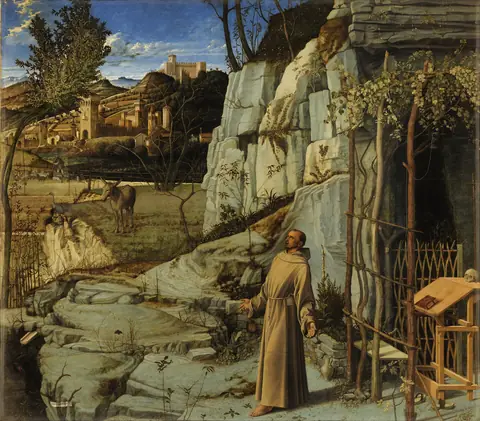
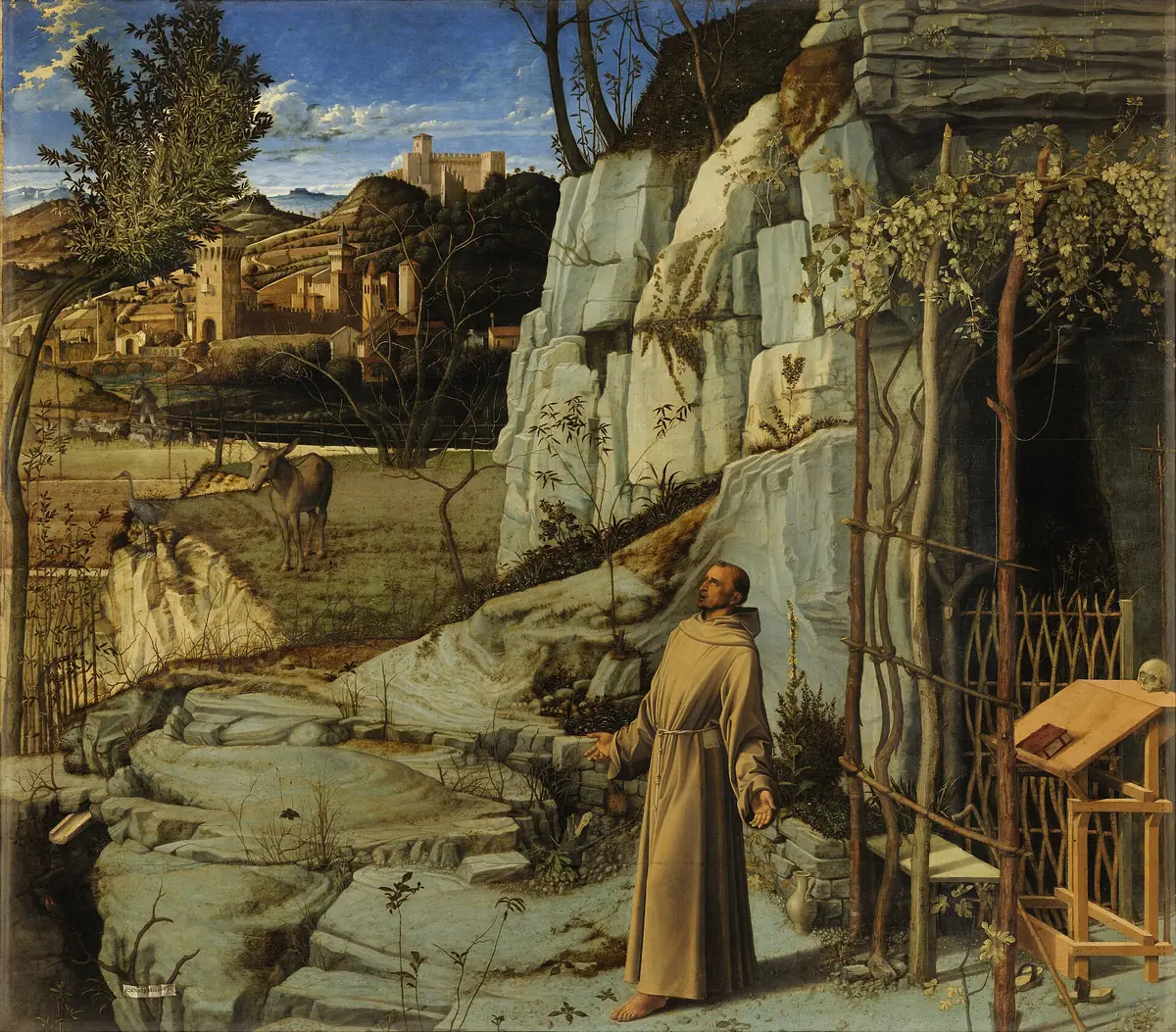
Image: Wikimedia Commons · Public domain (PD-Art) Saint Francis in the Desert
Look closely. Francis stands in a rocky landscape, his arms open, as if receiving the stigmata or simply praising God in the open air. A humble desk and a skull sit in a cave at the left; a town lies far off in the light. Look at the donkey, the heron, and the careful plants in the foreground: the whole created world is present at his prayer.
In the library: Francis of Assisi · Early Franciscan Sources · The Bible (KJV)
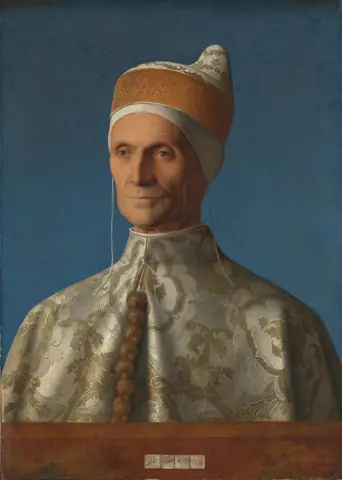
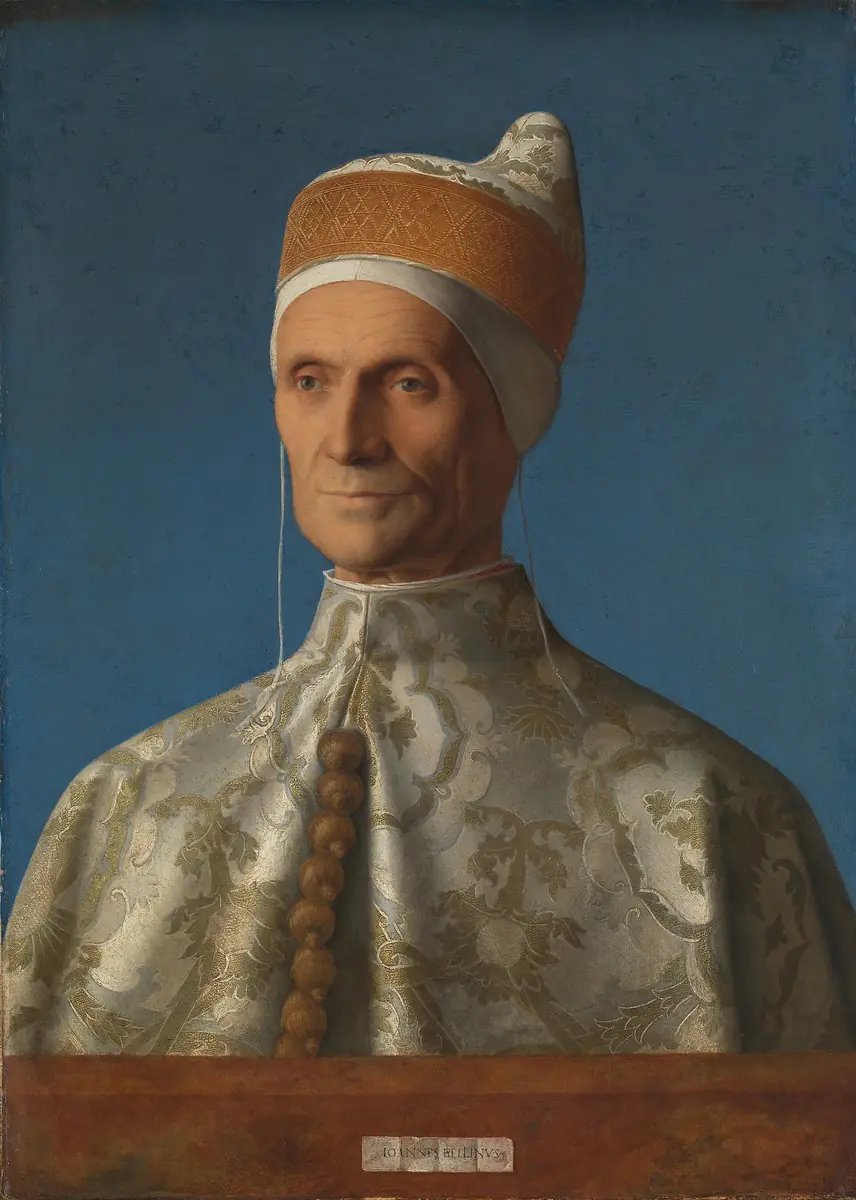
Image: Wikimedia Commons · Public domain (PD-Art) Portrait of Doge Leonardo Loredan
Look closely. The Doge of Venice, the elected head of the republic, is shown like a carved icon, in his horned cap and a cope woven with gold buttons. He does not look at us; he looks slightly aside, official and reserved. Look at how each gold stud is a tiny still-life, and at how Bellini can make a state portrait feel both hieratic and alive.
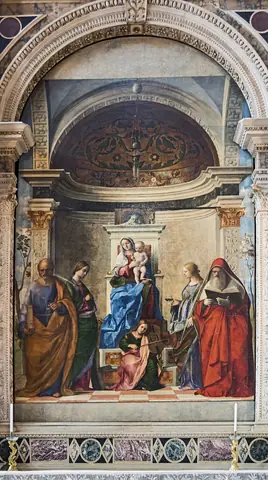
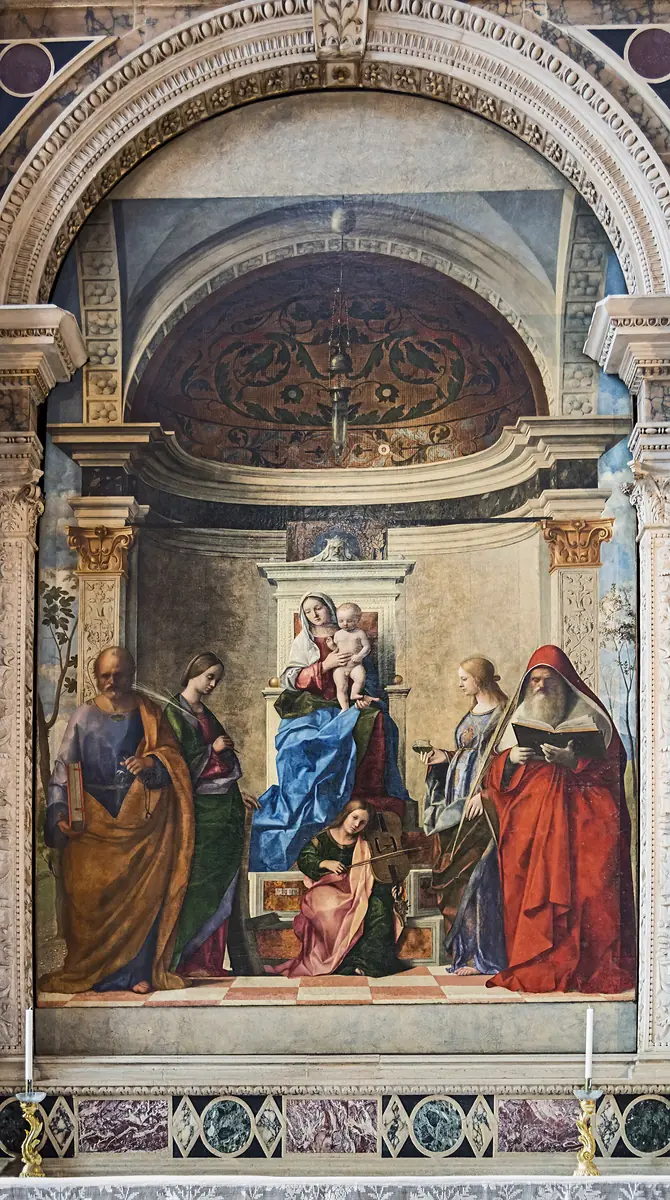
Image: Wikimedia Commons · Public domain (PD-Art) San Zaccaria Altarpiece
Look closely. Mary and the Child sit in a quiet apse of mottled marble, with four saints and an angel playing a viol at her feet. The picture is still in the church for which it was painted. Look at the soft light on the mosaic of the apse, at the stillness of the saints, and at how the painted architecture seems to continue the real chapel.
In the library: The Bible (KJV) · Mary, mother of Jesus · Jesus Christ
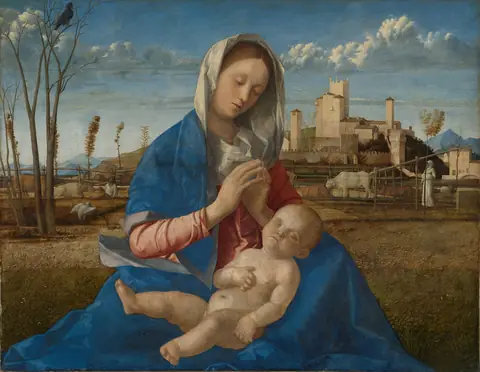
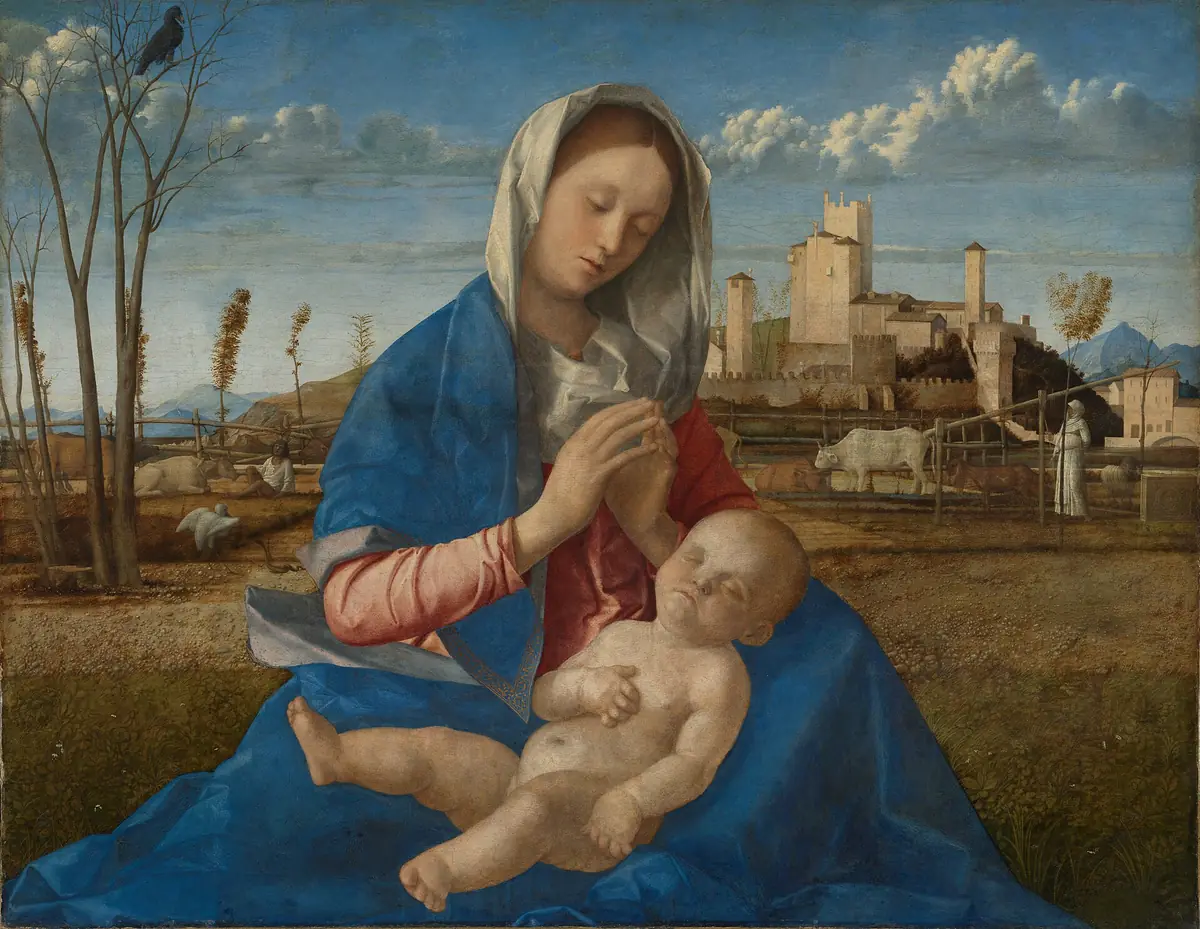
Image: Wikimedia Commons · Public domain (PD-Art) Madonna of the Meadow
Look closely. Mary sits in an open field, the Child asleep across her lap in a pose that quietly recalls a Pietà. Behind them a farmer works, a stork stands, and a pale town rises in the distance. The sleep of the Child, so peaceful, already hints at his death and at Mary's coming grief. Look at the cool morning colours of the meadow.
In the library: The Bible (KJV) · Mary, mother of Jesus · Jesus Christ
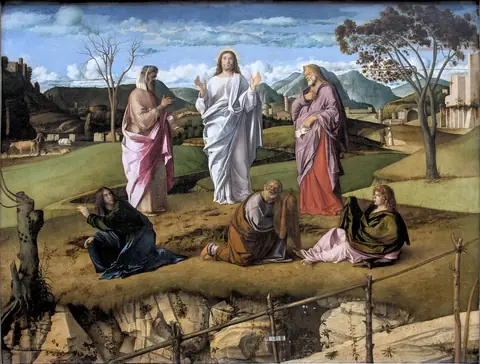
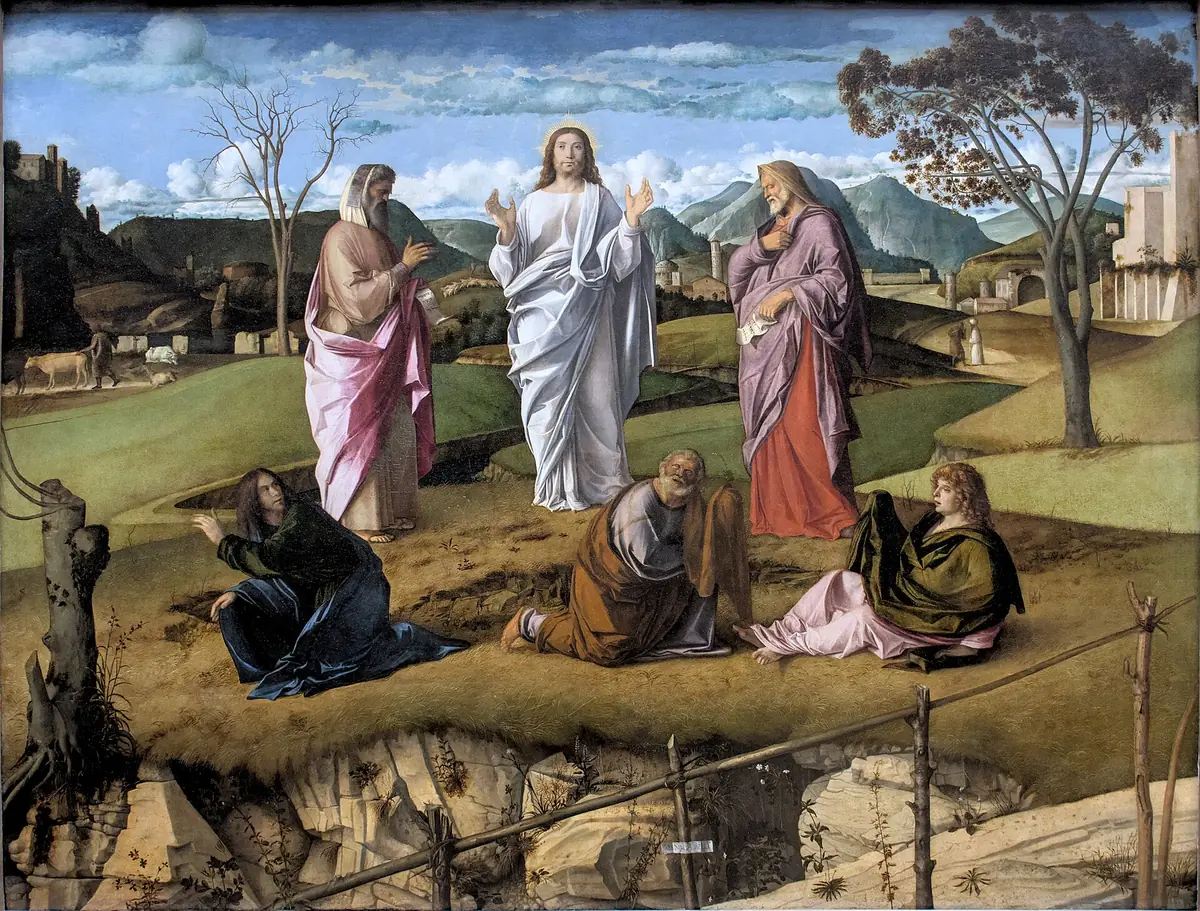
Image: Wikimedia Commons · Public domain (PD-Art) The Transfiguration of Christ
Look closely. Christ stands on the mountain in white, with Moses and Elijah on either side, while Peter, James and John fall or kneel in the foreground. The landscape is broad and pale, and the faces are very still. Look at how Bellini paints the glory not as a gold disc, but as light on white drapery against an open sky.
In the library: The Bible (KJV) · Jesus Christ · Moses · Elijah · Apostle Peter
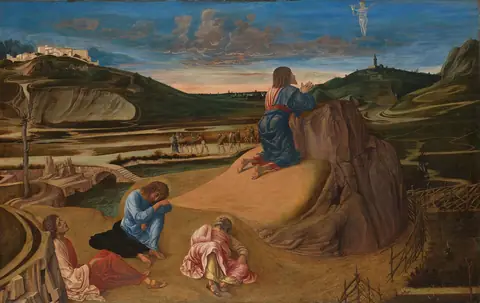
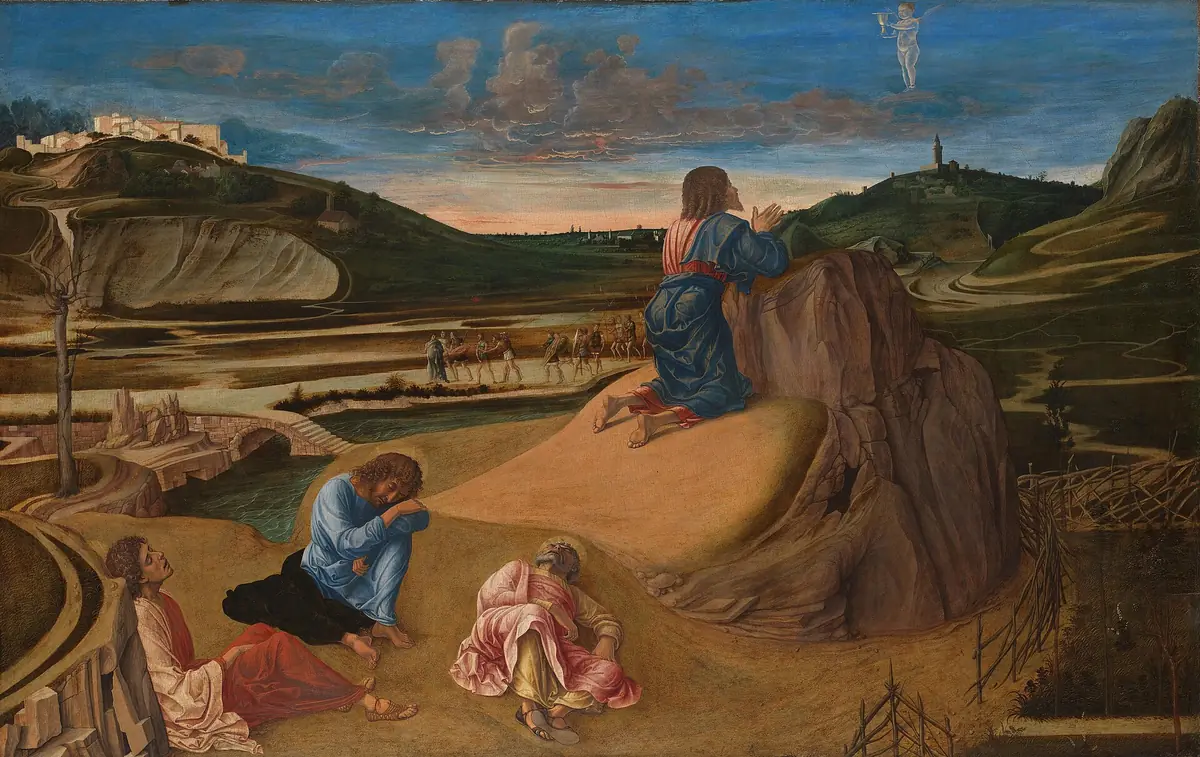
Image: Wikimedia Commons · Public domain (PD-Art) The Agony in the Garden
Look closely. Christ kneels on a rise at dawn, the disciples sleeping in a heap below, and a little angel appears in the sky with the cup. The rising light on the clouds is the heart of the picture. Compare it with Mantegna's harder, stonier Agony in the same gallery, painted earlier: Bellini keeps the idea and changes the air.
In the library: The Bible (KJV) · Jesus Christ · Apostle Peter · Andrea Mantegna
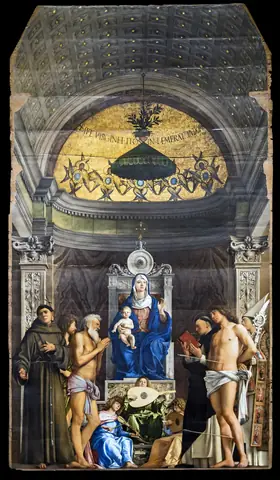
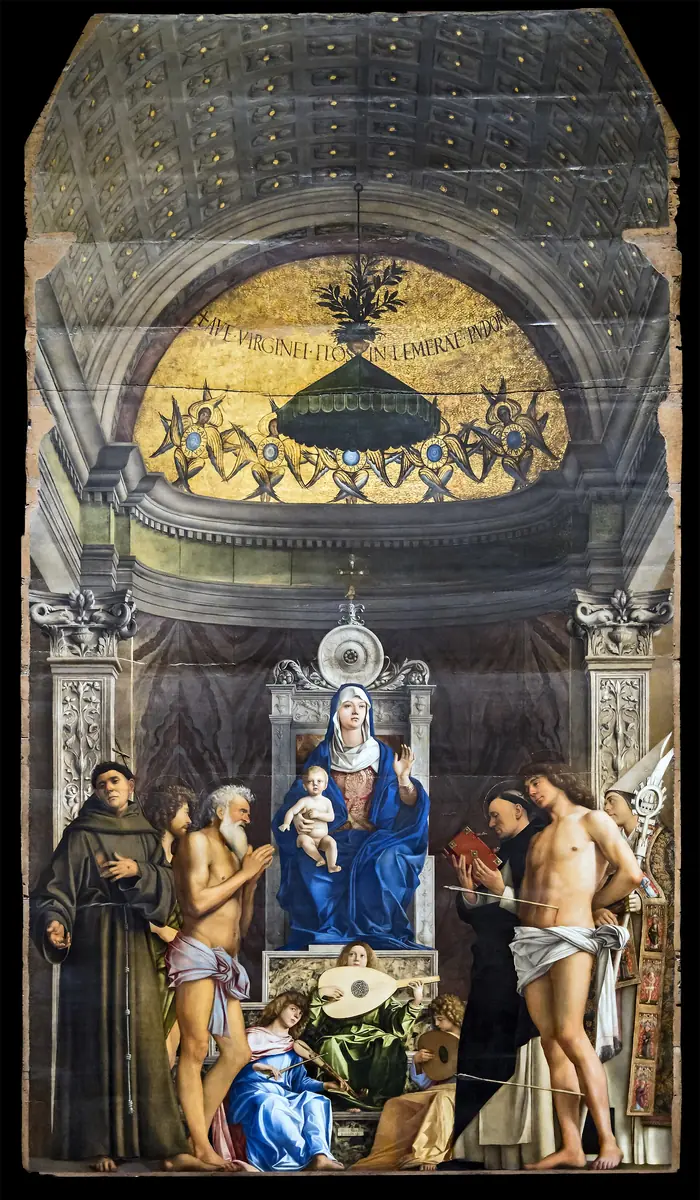
Image: Wikimedia Commons · Public domain (PD-Art) San Giobbe Altarpiece
Look closely. An illusionistic chapel opens in the wall: Mary and the Child sit on a high throne in a gilded apse, with saints including Francis and Job standing at the sides, and music-making angels on the steps. The altarpiece was made for the church of San Giobbe in Venice. Look up at the mosaic in the painted dome, and at how the saints seem to stand in a real niche.
In the library: The Bible (KJV) · Mary, mother of Jesus · Francis of Assisi · Job


What to watch for in Giovanni Bellini
Look slowly- Soft Venetian light. Edges grow gentler in the later work; colour seems to sit in air.
- Mary in a landscape. Meadows, hills and a pale sky often take the place of a gold ground.
- Quiet architecture. Apses, niches and marble pavements hold the saints in a calm, believable church.
- Landscape as feeling. In the Agony in the Garden, the dawn sky does as much work as the figures.
- A long career. Compare an early, harder picture with a late altarpiece and watch the style loosen and glow.
For older students
These famous works include nudity, so they are named here but not shown. Teachers and parents can decide when to look at them together.
- Naked Young Woman in Front of the Mirror, 1515, Kunsthistorisches Museum, Vienna. A late secular picture of a young woman unclothed at her toilet. It is named here but not shown.
- The Feast of the Gods (finished by Titian), 1514–1529, National Gallery of Art, Washington. This mythological feast, later altered by Titian, includes nude and partly clothed figures. It is named here but not shown.
Dates and collections follow the holding museums and Wikidata. Images of paintings are photographs of public-domain pictures from Wikimedia Commons or museum open-access releases; photographs of sculpture are used only when the photograph itself is Public domain, CC0, or CC BY with a named credit. Each picture links to its source page with full licence details.