Great Art · Neoclassical
Antonio Canova
The great neoclassical sculptor, who could give a pope, a president, and a dancing girl the same calm, finished grace.
His life
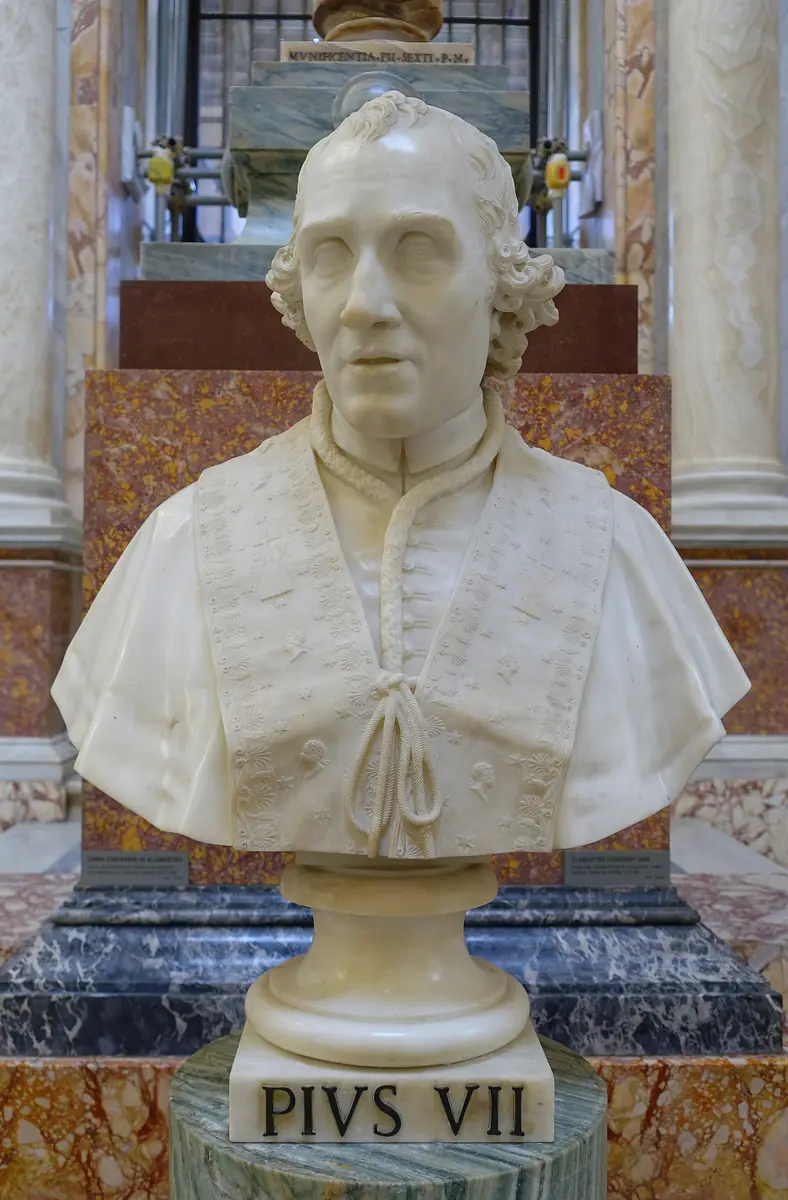
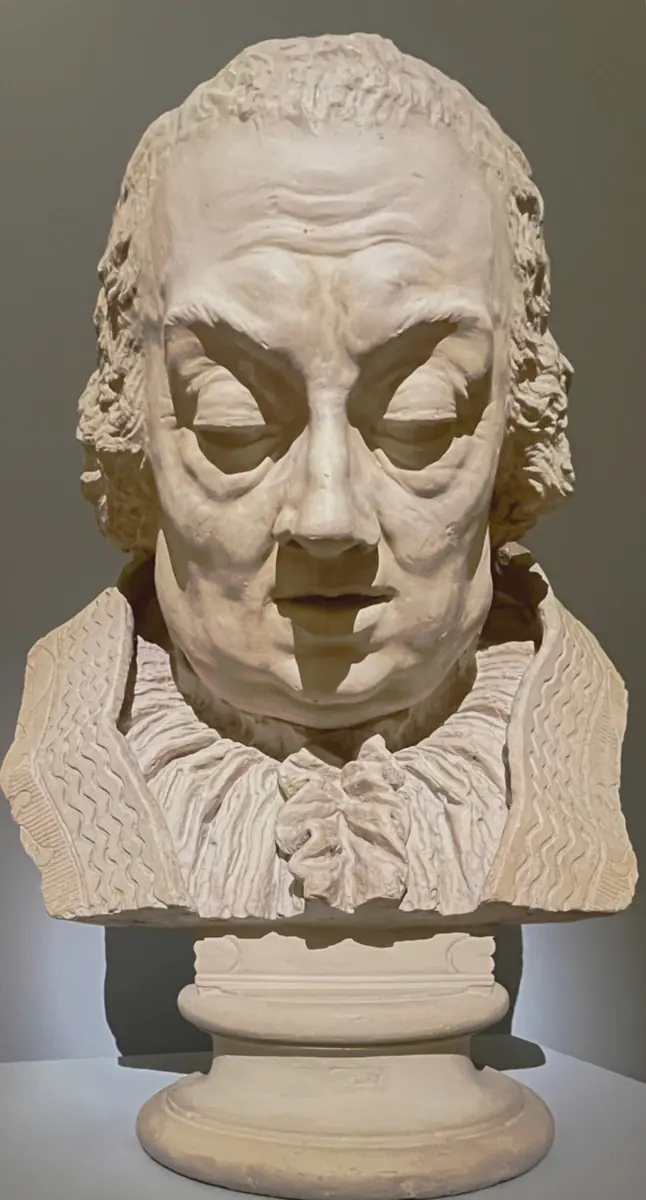
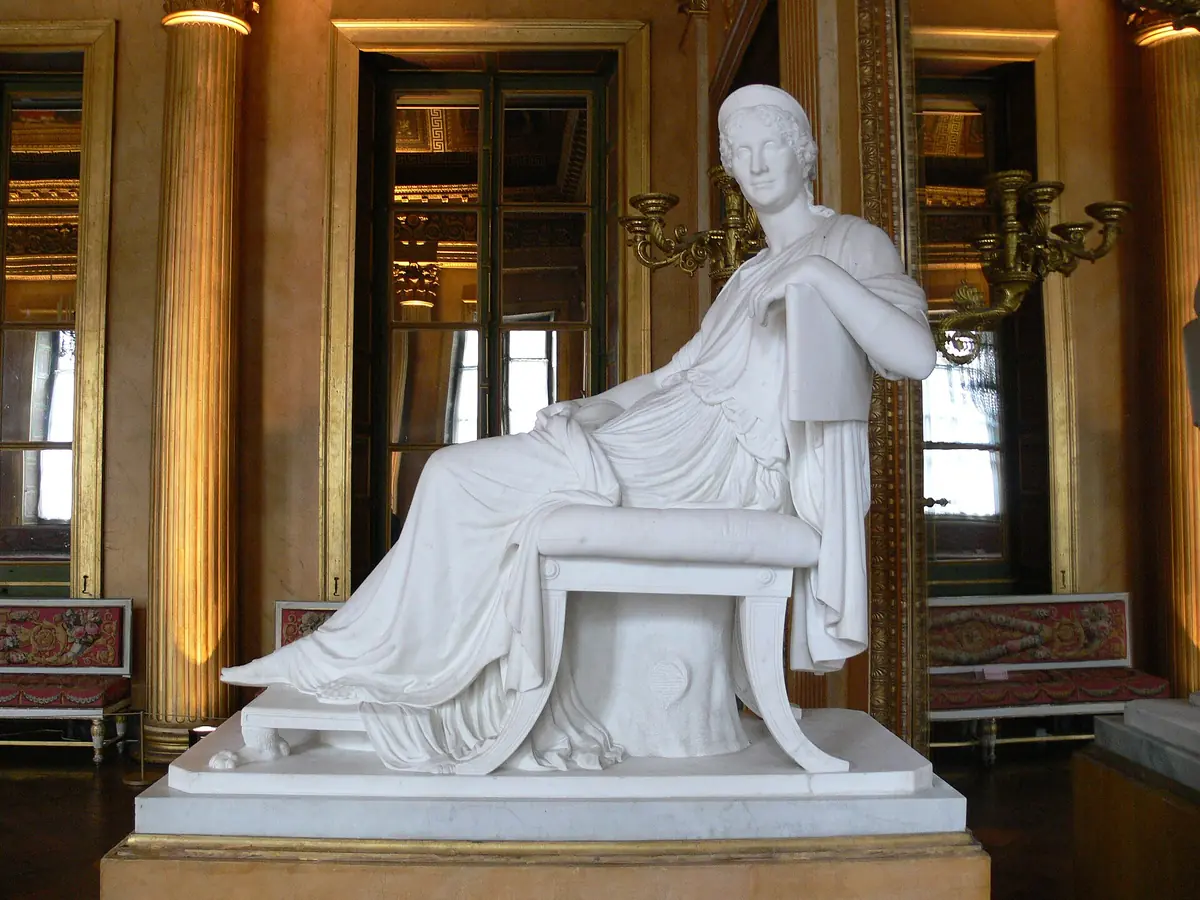
Canova was born in the Veneto and made his name in Rome, where he became the sculptor Europe asked for tombs, portraits, and ideal figures. He had a gift for a surface so finished that marble seemed like still water, and for a pose that never looks hurried. Many of the famous mythological groups — Cupid and Psyche, the Three Graces, Perseus — are named below, because they are largely unclothed. This page shows the public and portrait work: a bust of Pope Pius VII, a bust of Clement XIII, the tomb of the Archduchess Maria Christina in Vienna, a dancer with a finger to her chin, and the seated portrait of Letizia Ramolino Bonaparte, Napoleon's mother. A marble George Washington, made for North Carolina and lost at sea, is named among the works not shown.
He was generous to younger artists and careful of the antique sculptures of Rome. The gift is composure: a fold that falls once and is enough, a face that does not grimace, a monument that trusts stillness more than motion.
Key sculptures
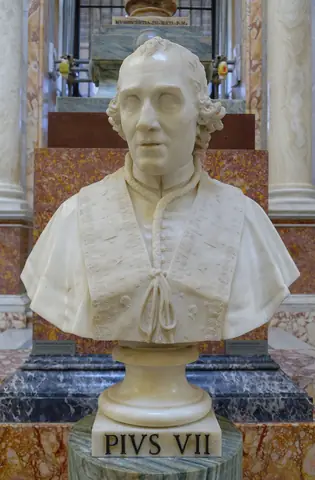
Image: Wikimedia Commons · Public domain Pope Pius VII
Look closely. A marble bust of Pius VII, the camauro and mozzetta clearly distinguished, the face calm and particular, on a pedestal inscribed with his name. Look at the quiet of the features and at the way a living pope has been given the stillness of an antique portrait without losing the man.
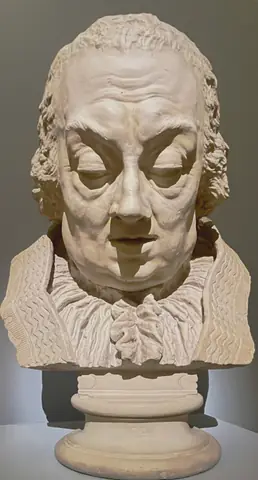
Image: Wikimedia Commons · CC0 (public domain) Bust of Pope Clement XIII
Look closely. A marble bust of the Rezzonico pope, the camauro and mozzetta carefully distinguished, the face aged and particular. Look at the contrast between the soft cap and the firmly carved features, and at the early, already finished grace of Canova's portrait style.
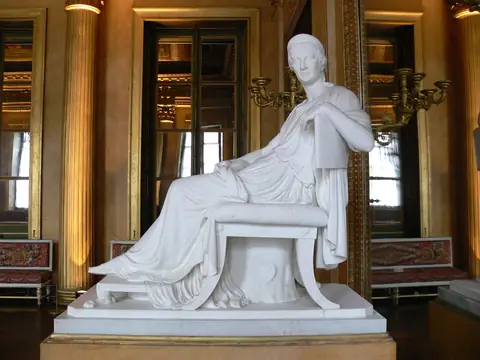
Image: Wikimedia Commons · CC BY 3.0 · Photo: Andreas Praefcke Letizia Ramolino Bonaparte
Look closely. Napoleon's mother, seated in a Roman chair, fully draped, a scroll in the crook of her left arm. Look at the long, simple fall of the robe, the relaxed turn of the head, and the way a living woman has been given an antique dignity without being made stiff.
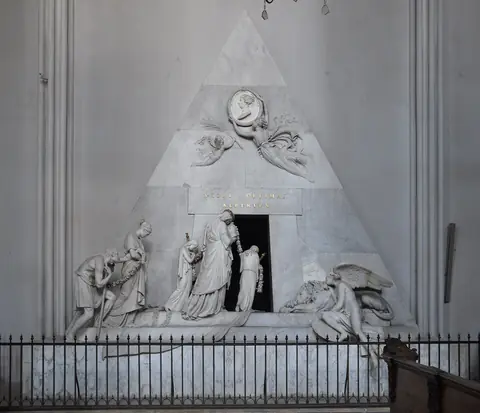
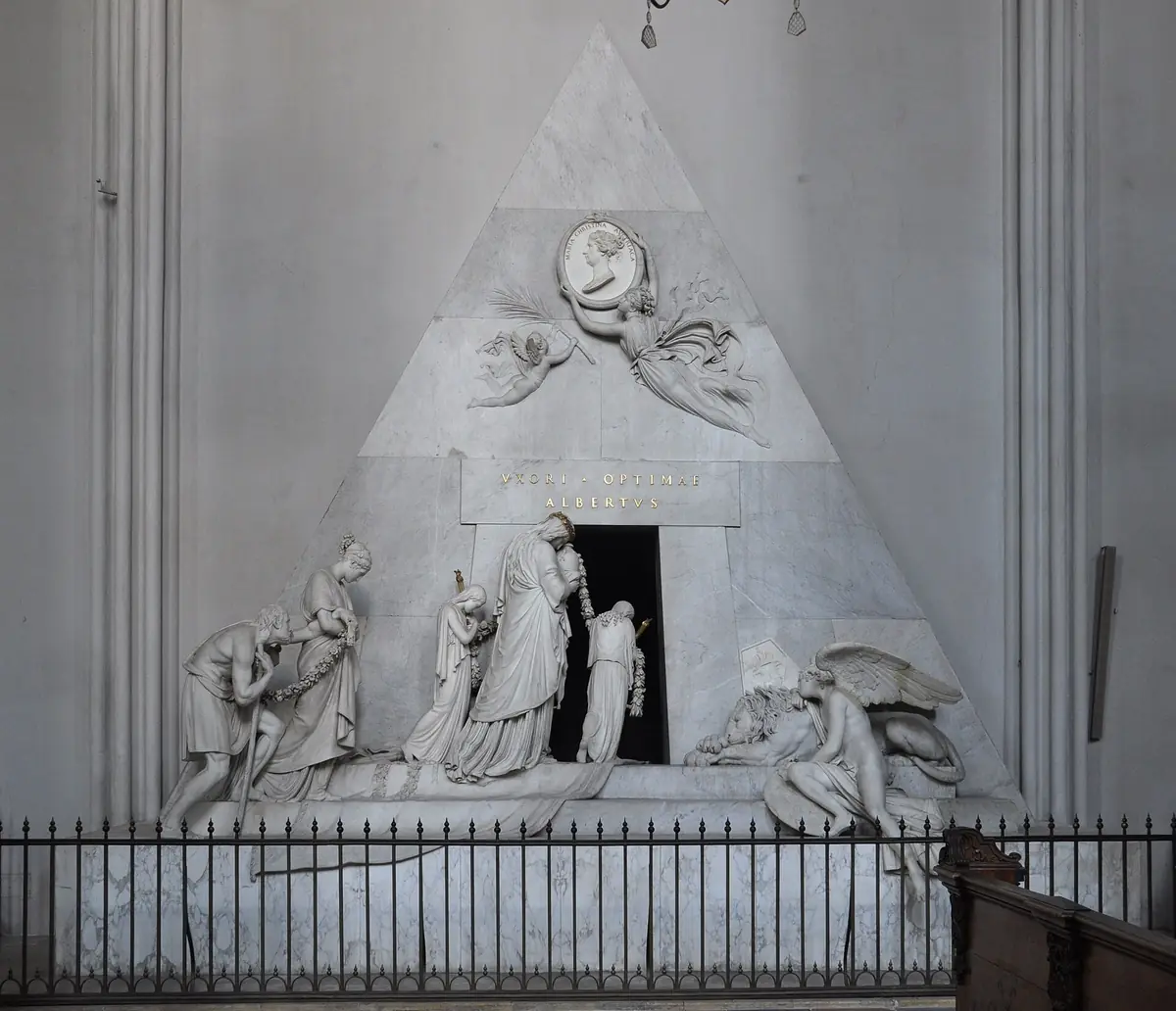
Image: Wikimedia Commons · CC BY 3.0 · Photo: Andreas Praefcke Tomb of the Archduchess Maria Christina
Look closely. A pyramid of pale marble, a doorway at its center, and a procession of mourners carrying the ashes toward the opening, a lion and a genius of death at the steps. Look at the quiet of the file of figures, the empty dark of the door, and the way grief has been made orderly without being made cold.
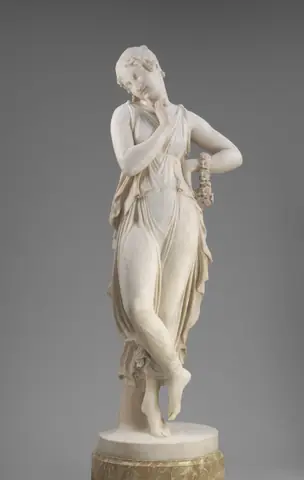
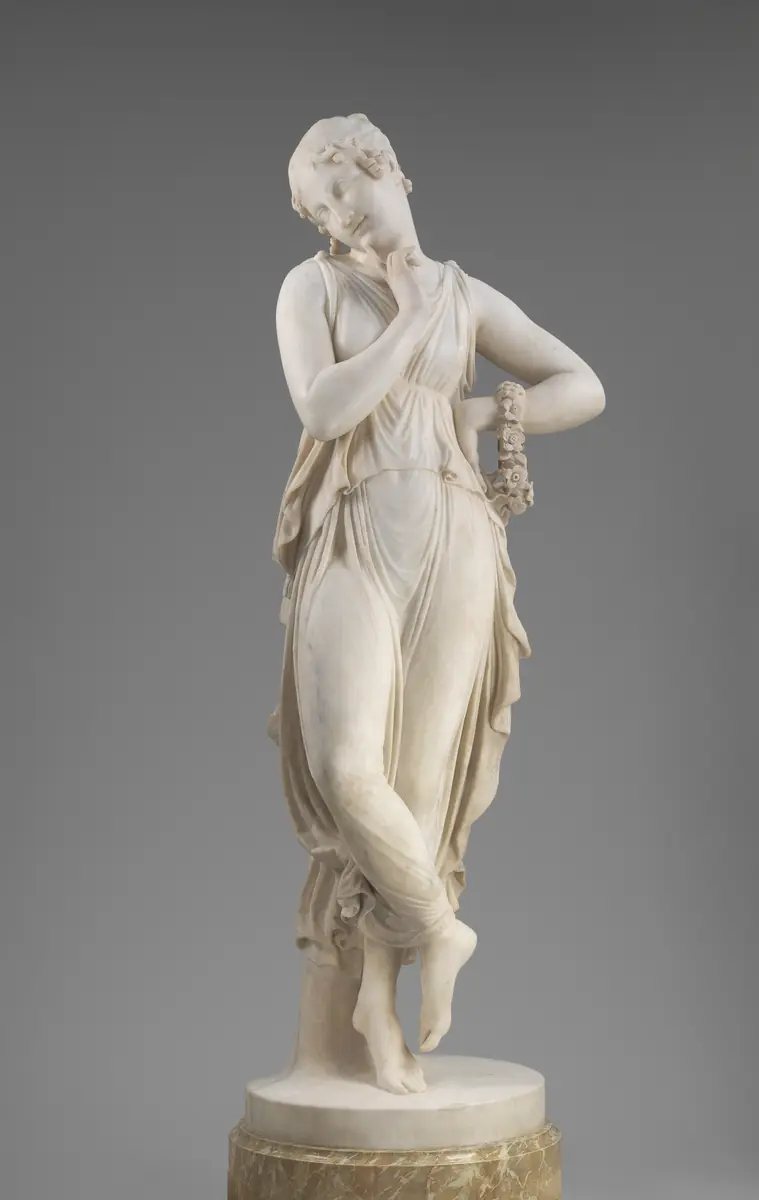
Image: Wikimedia Commons · CC0 (public domain) Dancer with a finger on her chin
Look closely. A standing girl in a thin, long dancing dress, one finger raised to her chin as if she were listening for the next step. Look at the almost unbroken fall of the skirt, the slight turn of the head, and the lightness of a figure that has nothing of the tomb or the palace about it.


What to watch for in Antonio Canova
Look slowly- A surface almost without tool marks. Canova polished until the marble looks calm.
- A portrait that is also a type. Pius and Washington are particular men, given a Roman dignity.
- Drapery in large, simple planes. Look at a cloak or a dancing dress that turns once and is enough.
- A tomb as a small stage. Maria Christina's monument is a procession into a doorway.
- A mother in a Roman chair. Letizia is a living woman given antique dignity, not a goddess in disguise.
For older students
These famous works include nudity, so they are named here but not shown. Teachers and parents can decide when to look at them together.
- Cupid and Psyche, 1793 and later versions, Louvre, Paris, and elsewhere. The two figures, largely unclothed, in an embrace.
- The Three Graces, 1812–1817, Victoria and Albert Museum, London, and the Hermitage, St Petersburg. Three standing female nudes, among Canova's most famous works.
- Perseus with the Head of Medusa, 1804–1806, Vatican Museums and the Metropolitan Museum of Art. The hero, a male nude, holds up the severed head.
- Pauline Bonaparte as Venus Victrix, 1805–1808, Galleria Borghese, Rome. Napoleon's sister, recumbent and unclothed, as Venus.
- George Washington, 1818–1821, The finished marble, made for North Carolina, was lost at sea. A seated civic figure in antique dress; only plasters and later copies survive, and a usable photograph of Canova's own plaster could not be verified for this page.
Dates and collections follow the holding museums and Wikidata. Images of paintings are photographs of public-domain pictures from Wikimedia Commons or museum open-access releases; photographs of sculpture are used only when the photograph itself is Public domain, CC0, or CC BY with a named credit. Each picture links to its source page with full licence details.