Great Art · Neoclassical
Bertel Thorvaldsen
The Danish sculptor of Christ and the apostles, and of a dying lion cut into the live rock at Lucerne.
Read Bertel Thorvaldsen's Great Life →
His life
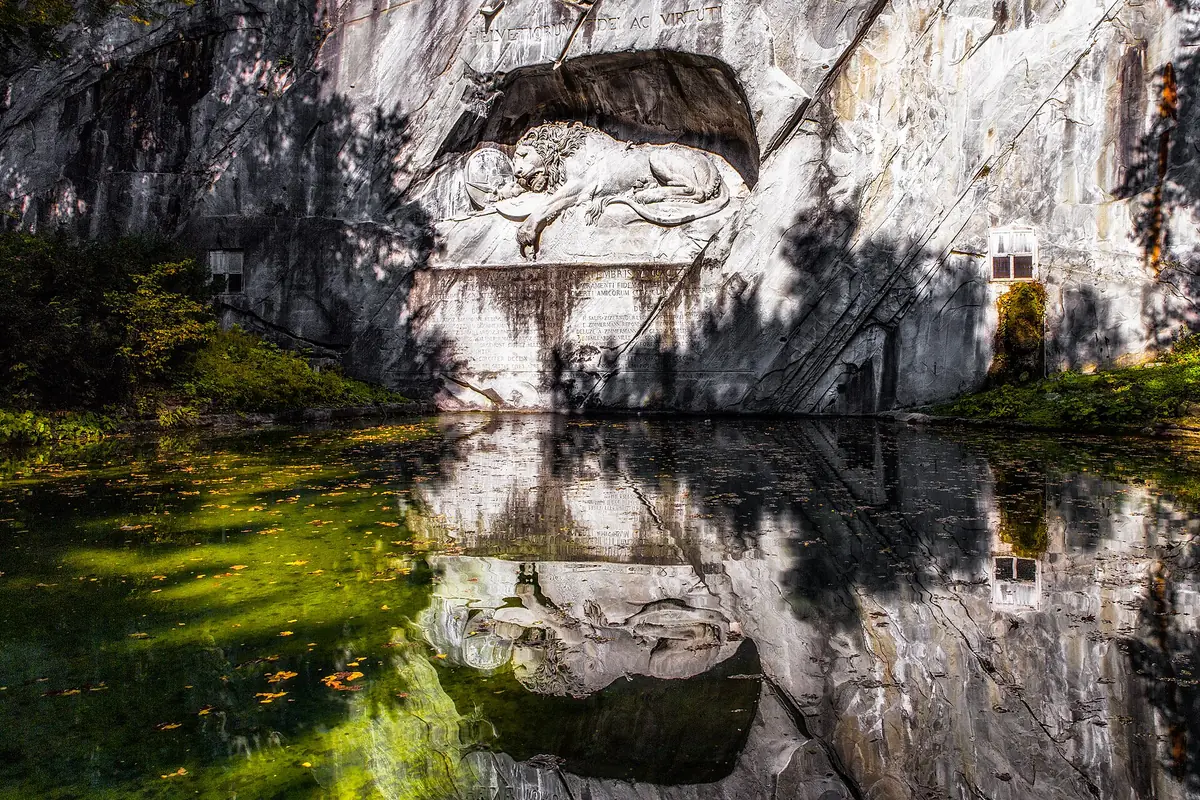
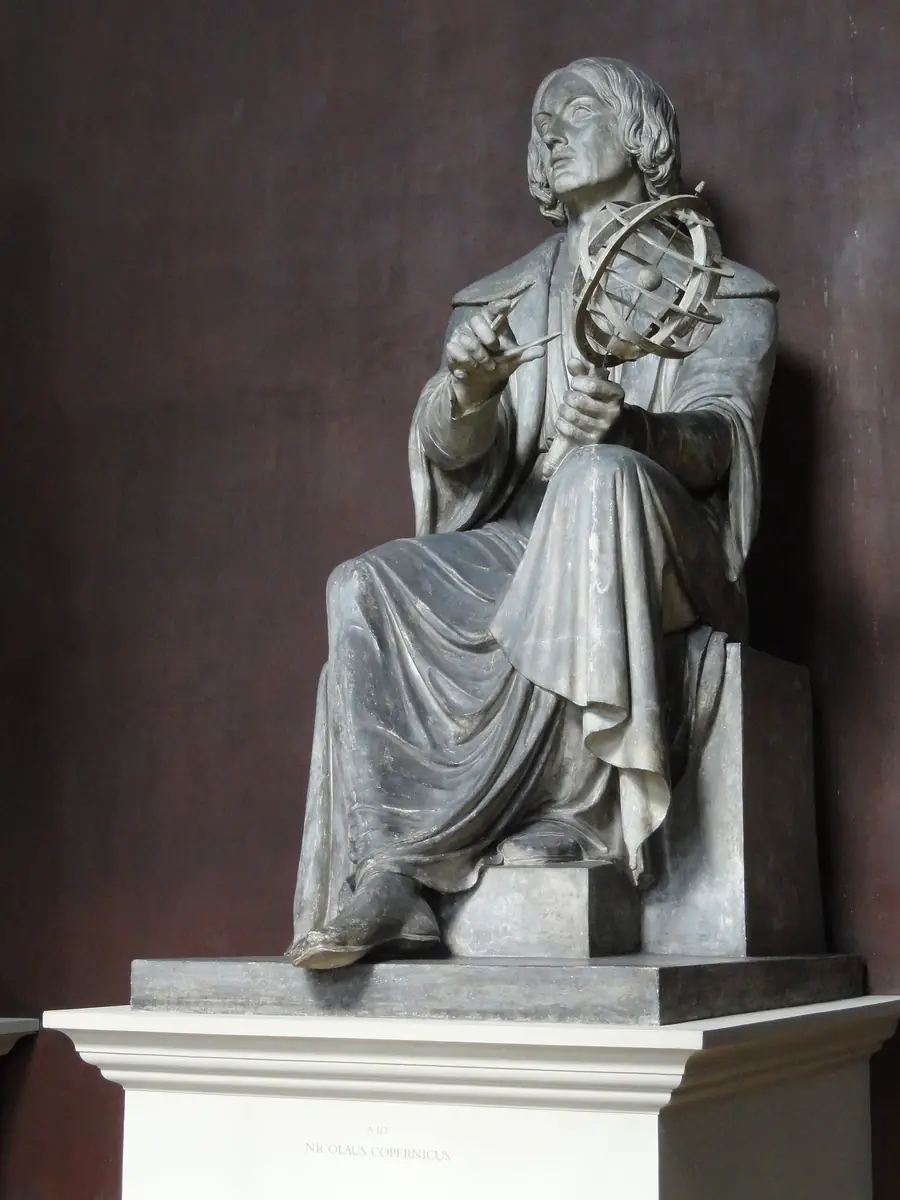
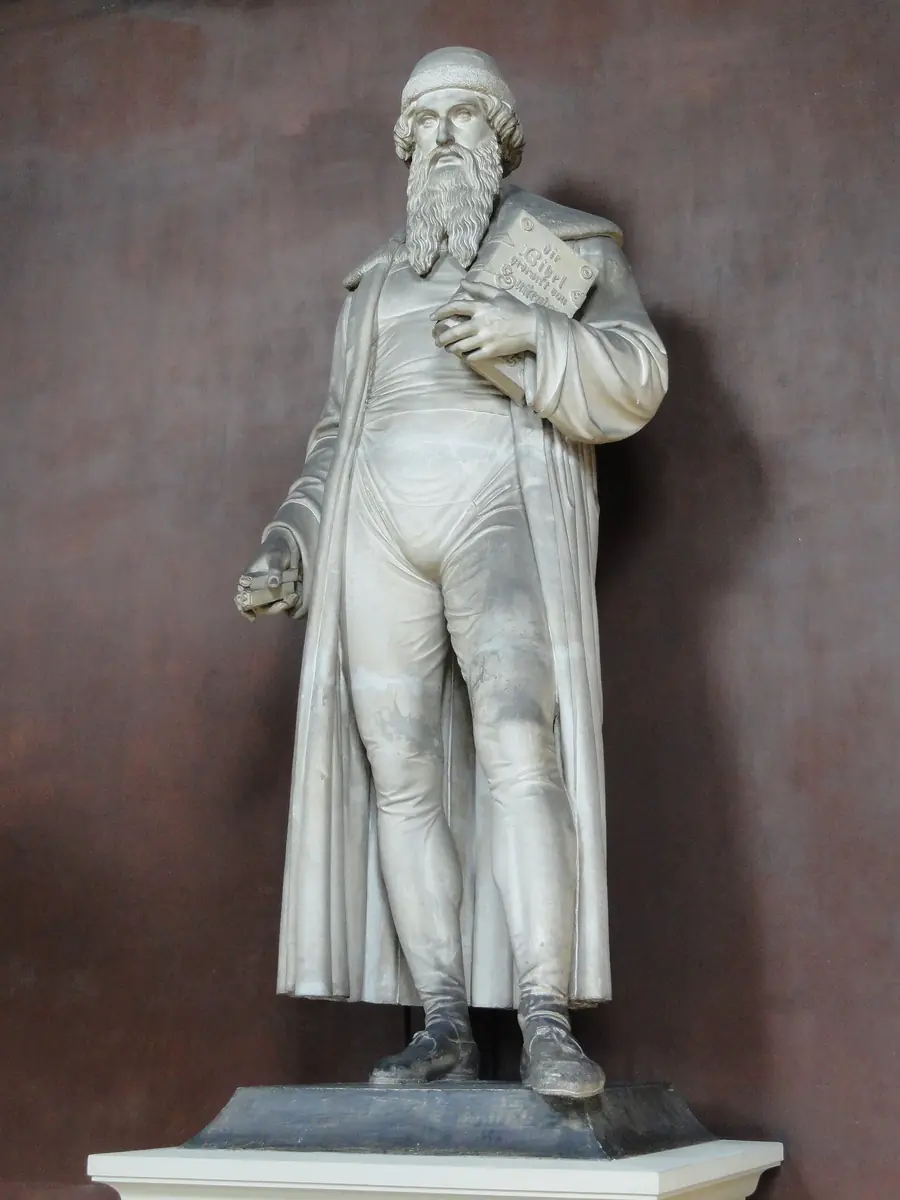
Thorvaldsen, the son of a wood-carver, left Copenhagen for Rome and became the leading neoclassical sculptor of his generation after Canova. He had a gift for a calm, closed form and for figures that seem to have been thought through to the last fold before a chisel was lifted. His Christus, with the apostles, was made for the Church of Our Lady in Copenhagen and has been copied across the Lutheran world. He also carved public monuments — Copernicus, Gutenberg — and designed the dying lion at Lucerne, cut in the cliff in memory of the Swiss Guards who fell in 1792.
He returned to Denmark a famous man and left a museum of his own work in Copenhagen, where the plaster models still stand. The gift is composure in the service of faith and of civic memory: a Christ who opens his hands, a lion who dies without grimace, a printer and an astronomer given the dignity of standing or sitting in stone.
Key sculptures
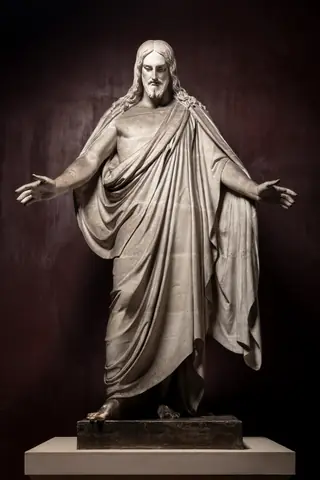
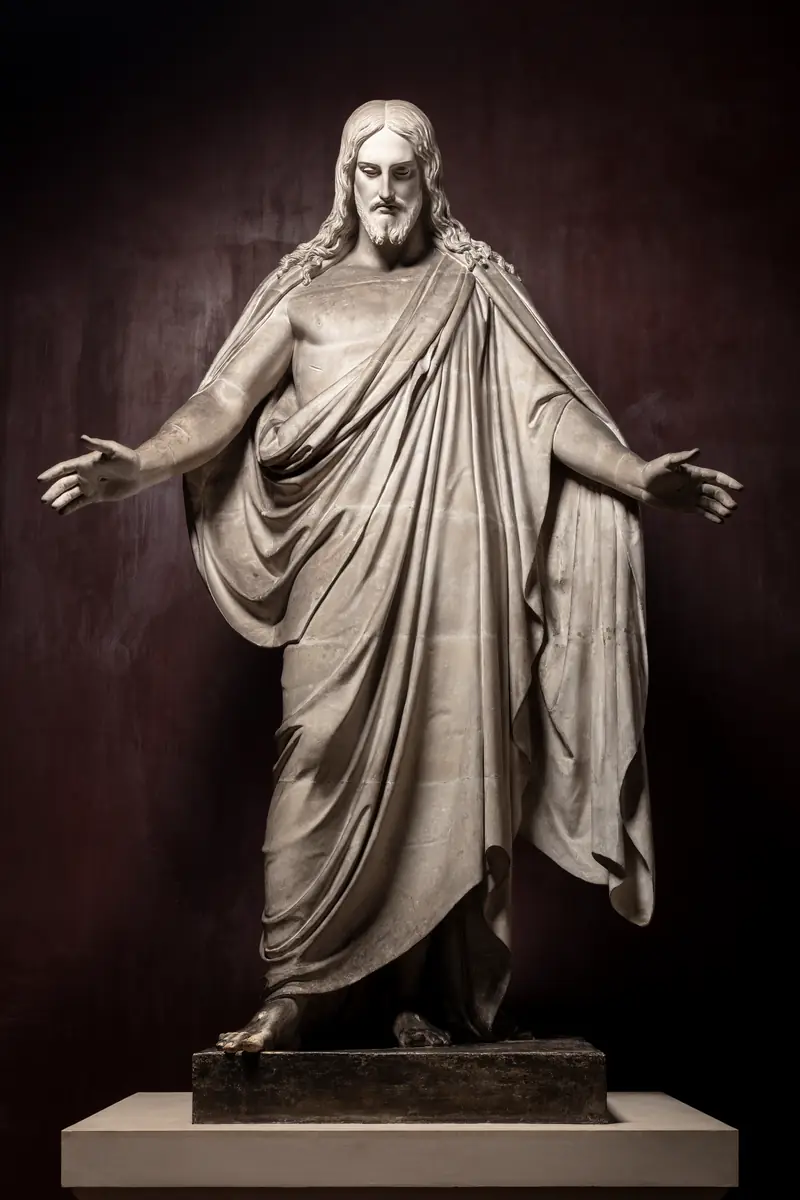
Image: Wikimedia Commons · CC0 (public domain) Christus
Look closely. Christ stands, fully draped, arms slightly open, the hands showing their palms, the face quiet and frontal. Look at the heavy, simple fall of the robe, the bare feet, and the way the figure seems to wait rather than to move — a welcome made of stillness.
In the library: The Bible (KJV) · Jesus Christ
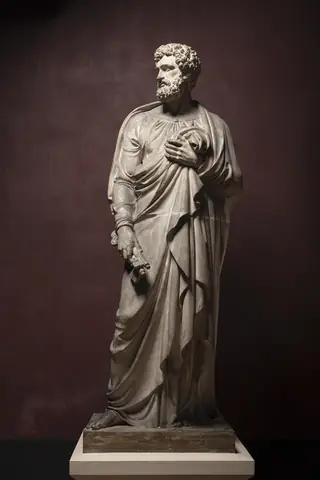
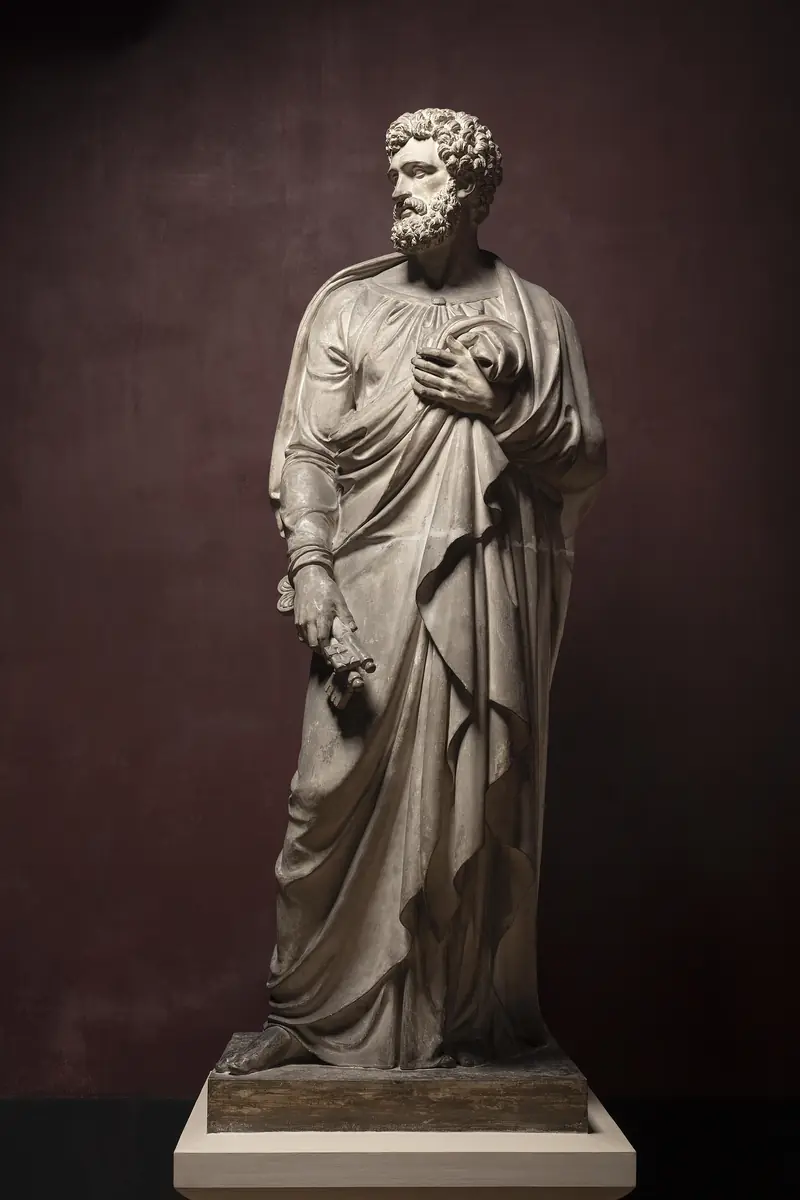
Image: Wikimedia Commons · CC0 (public domain) Saint Peter
Look closely. Peter stands draped, the keys of the kingdom in his hands, the head slightly turned. Look at the weight of the keys, the ample cloak, and the way an apostle has been made a companion to the Christus rather than a figure on his own.
In the library: The Bible (KJV) · Peter
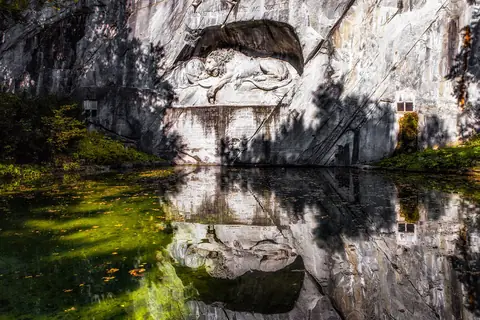
Image: Wikimedia Commons · CC BY 2.0 · Photo: See-ming Lee from Hong Kong SAR, China The Lion of Lucerne
Look closely. The dying lion, carved in the living cliff above a pool, a broken shield and a spear beside him, a Latin inscription in the rock over his back. Look at the heavy, quiet head, the reflection in the water, and the way a memorial has been made into a place you walk down into, not only a statue you stand before.
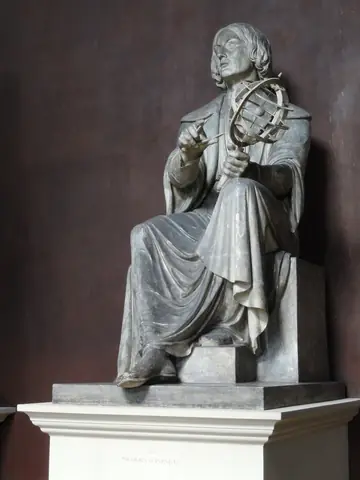
Image: Wikimedia Commons · CC0 (public domain) Nicolaus Copernicus
Look closely. The astronomer sits, a sphere or instrument in his hands, a heavy cloak around a quiet, thinking figure. Look at the downward attention of the head and at the way a life of calculation has been given the dignity of a seated ancient.
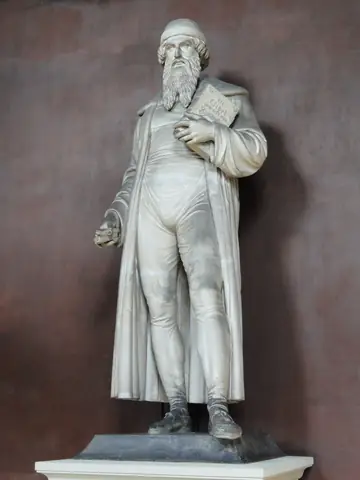
Image: Wikimedia Commons · CC0 (public domain) Johann Gutenberg
Look closely. The printer stands in long civic dress, a book or a plate of type in his hands, a grave, slightly heavy figure. Look at the plainness of the costume and at the way the inventor of movable type has been made to look like a man who has finished a day of work, not like a god of the press.
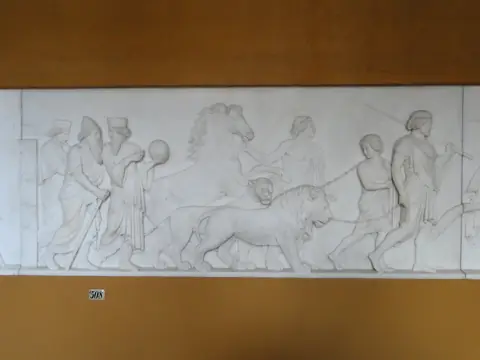
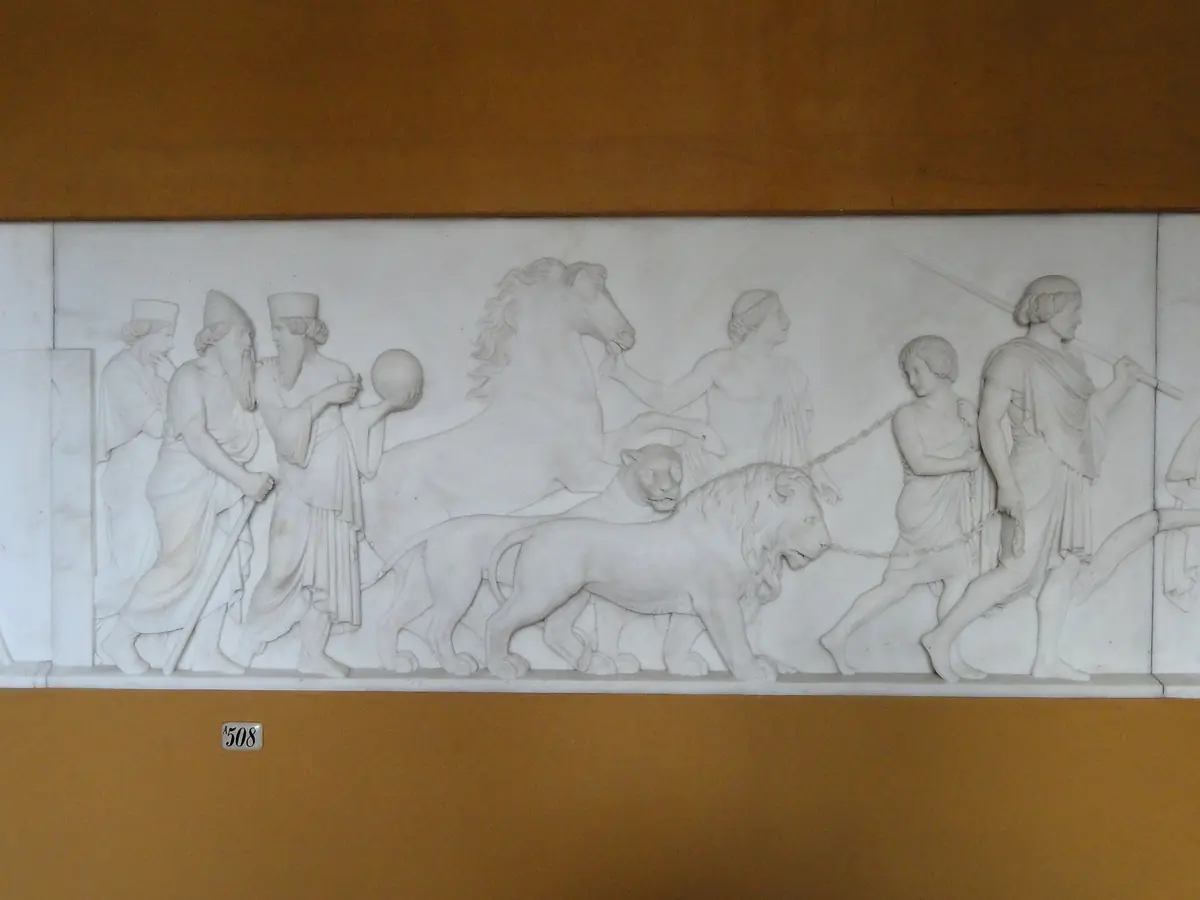
Image: Wikimedia Commons · CC0 (public domain) The Entry of Alexander into Babylon (a section of the frieze)
Look closely. A long, low relief of Alexander's procession: draped attendants, horses, and a lion led on a leash, moving in a calm, almost processional line. Look at the even height of the frieze, the measured pace of the figures, and the way a triumph has been made orderly without being made dull.
In the library: Alexander the Great · Plutarch, Lives


What to watch for in Bertel Thorvaldsen
Look slowly- Open hands. The Christus does not bless in the old papal way; the palms are shown.
- A calm, closed contour. Look at how little flutter there is in a cloak or a mane.
- A monument that is also a place. The lion at Lucerne is cut into the living rock, over a pool.
- Apostles as a company. Peter, here, is one of a set made to stand in a church.
- Civic sitters in antique dress. Copernicus and Gutenberg are particular men, given a Roman stillness.
Dates and collections follow the holding museums and Wikidata. Images of paintings are photographs of public-domain pictures from Wikimedia Commons or museum open-access releases; photographs of sculpture are used only when the photograph itself is Public domain, CC0, or CC BY with a named credit. Each picture links to its source page with full licence details.