Great Art · Neoclassical
Jean-Antoine Houdon
The great portrait sculptor of the late eighteenth century, who gave Washington, Franklin, Jefferson and Voltaire a face you could trust in the round.
His life
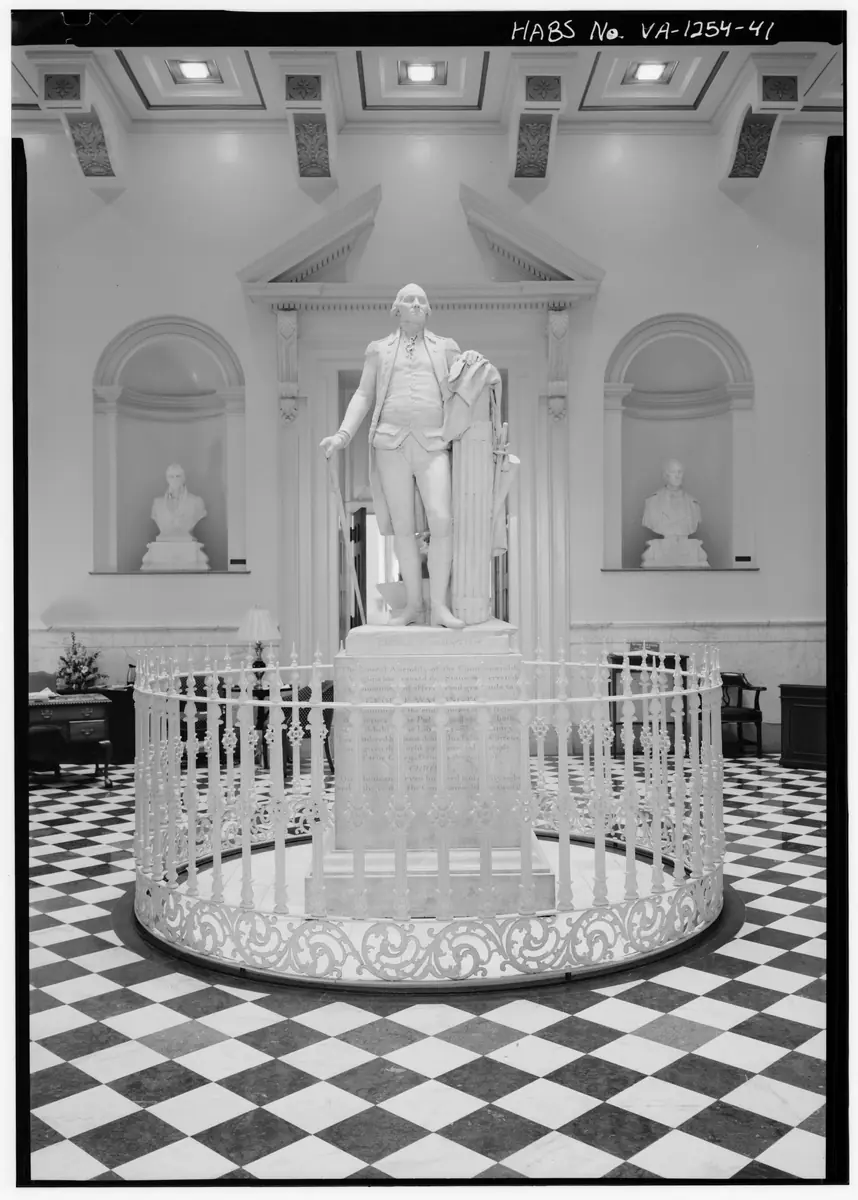
Houdon was trained in Paris and in Rome, and he became the sculptor Europe and America asked for when a likeness had to be both true and dignified. He crossed the Atlantic to model George Washington from life at Mount Vernon, and the marble that stands in the rotunda of the Virginia State Capitol is still the standard image of the first president: a modern man in his own clothes, a cane in one hand, a civilian sword and a fasces behind him, the farmer's plow at the base. He also modeled Franklin, Jefferson, and, earlier, a famous bust of Voltaire, smiling as if mid-sentence.
The gift is attention. Houdon looked at a face until the bones and the habit of the mouth were clear, and then he cut or modeled so that the portrait would still seem to think when you walked around it. These are not masks. They are people, kept.
Key sculptures
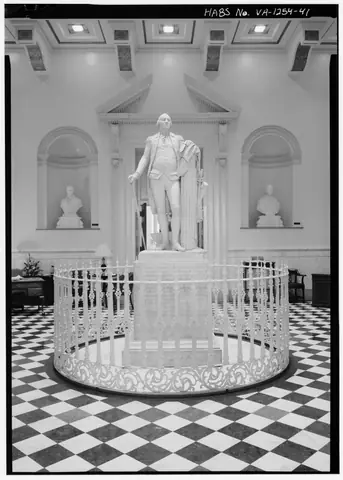
Image: Wikimedia Commons · Public domain George Washington, Virginia State Capitol
Look closely. A Historic American Buildings Survey photograph of Houdon's marble in the Capitol rotunda: Washington stands in his own coat, a cane in his right hand, a cloak and fasces at his left, a low iron fence around the pedestal, busts in the niches behind. Look at the plain civic dignity of the pose, and at the way the statue holds the checkered floor of the room without needing a Roman toga.
In the library: George Washington
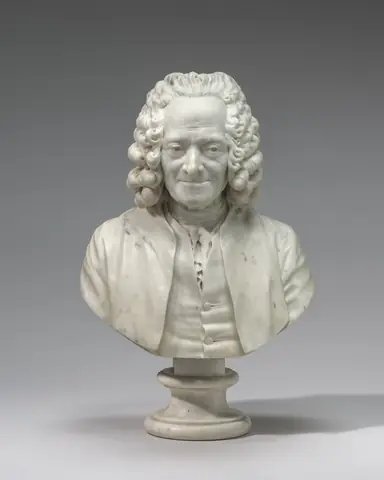
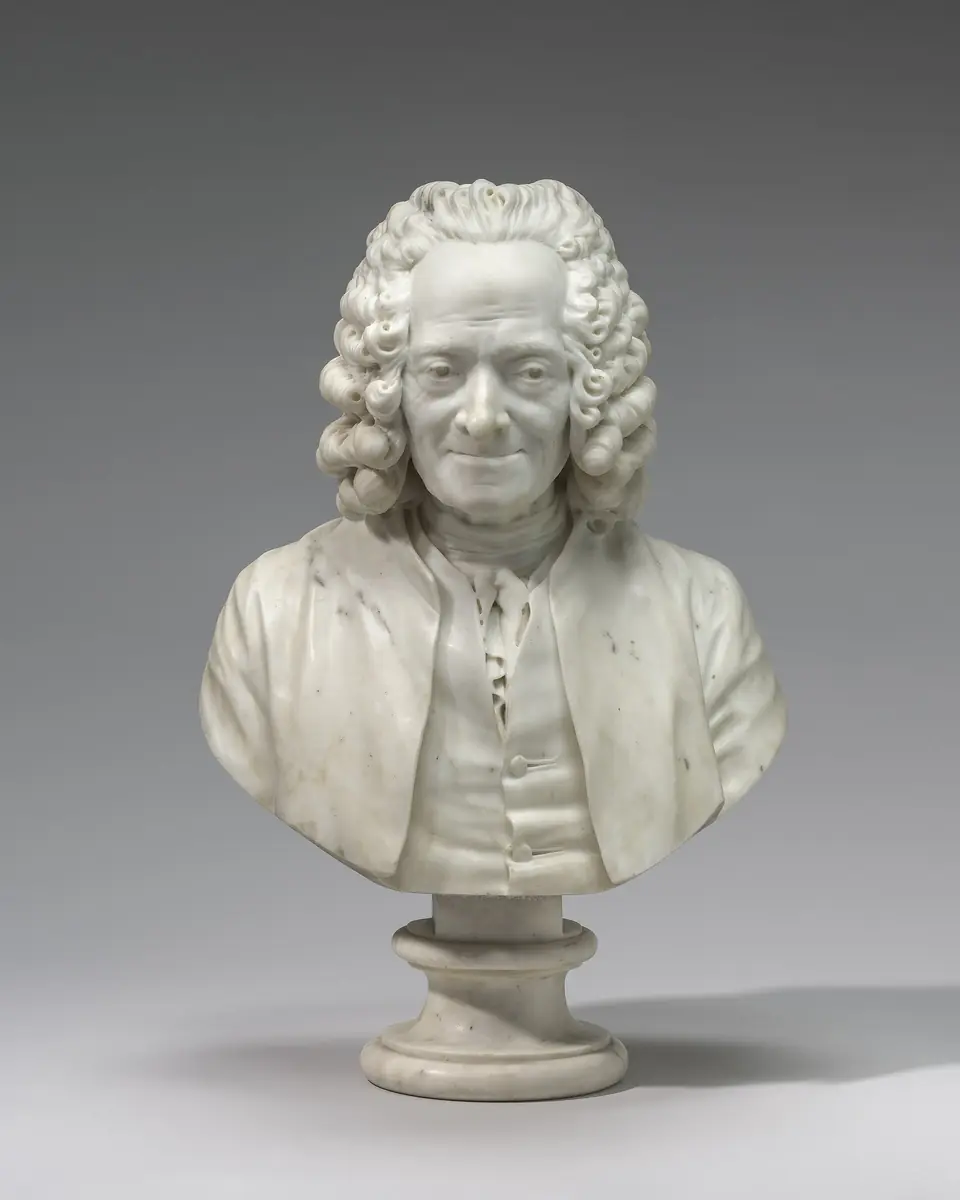
Image: Wikimedia Commons · CC0 (public domain) Voltaire
Look closely. A marble bust of the old writer, the head slightly turned, the mouth in a small, lively smile, a soft cap on the hair. Look at the particularity of the mouth and eyes, and at how little Houdon needs besides a head and a thought to make a person present.
In the library: Voltaire
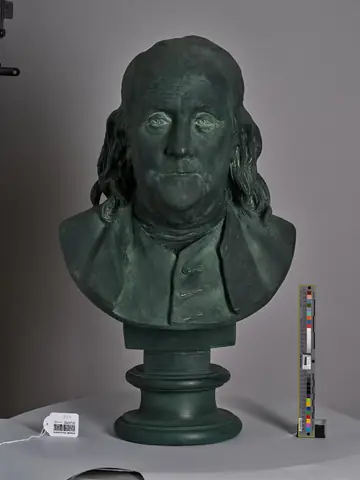
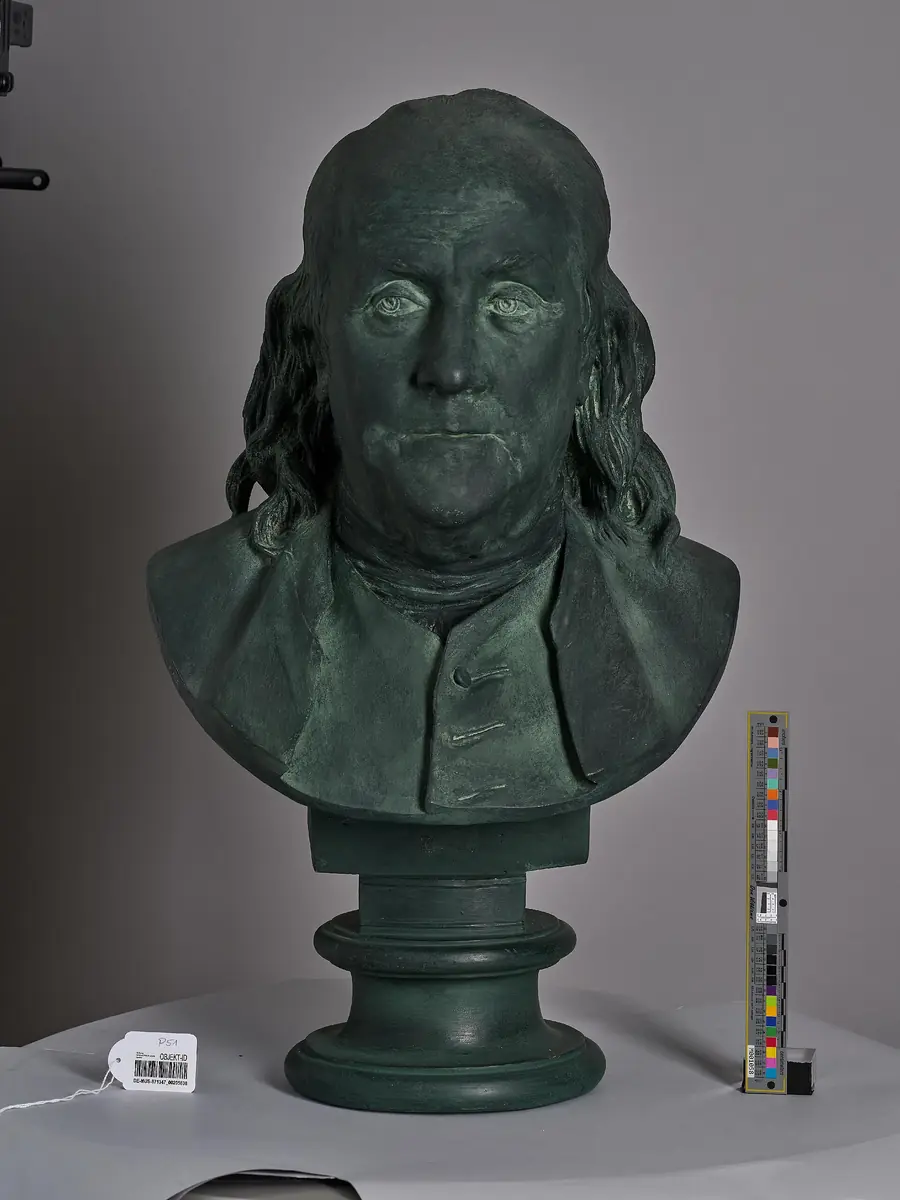
Image: Wikimedia Commons · CC BY 4.0 · Photo: Julius Fröbus GmbH Benjamin Franklin
Look closely. A bust of Franklin, the hair falling naturally, the face open and slightly amused, a plain coat at the shoulders. Look at the un-wigged honesty of the head, and at the sense of a man who has just finished speaking, or is about to.
In the library: Benjamin Franklin
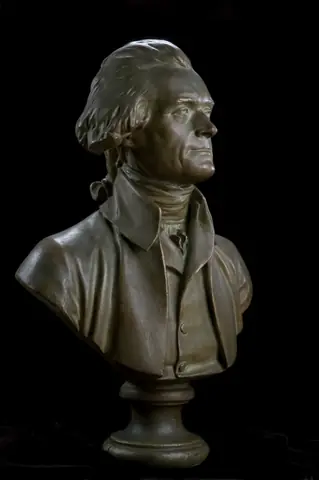
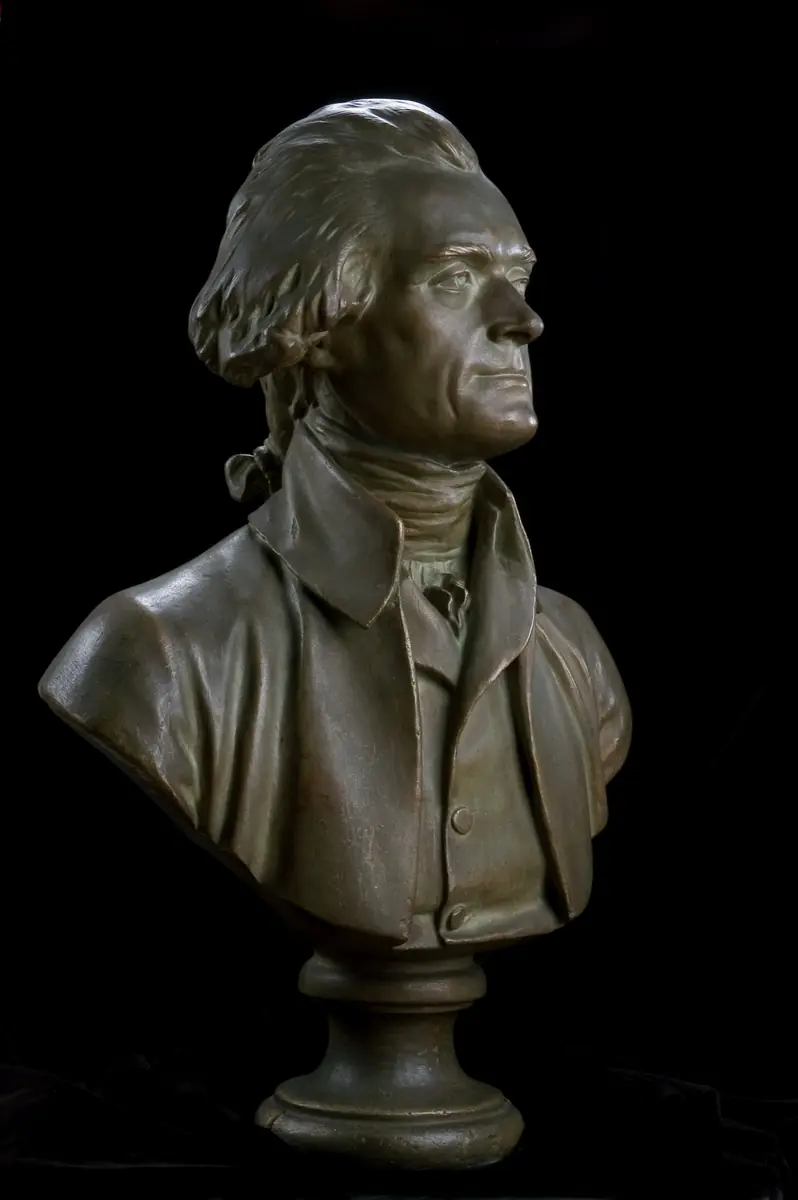
Image: Wikimedia Commons · CC0 (public domain) Thomas Jefferson
Look closely. A bust of Jefferson, the hair tied back, the face thin and attentive, a coat with a broad collar. Look at the long, thoughtful plane of the cheeks and at the way a public man has been modeled as if still thinking, not as if already on a coin.
In the library: Thomas Jefferson
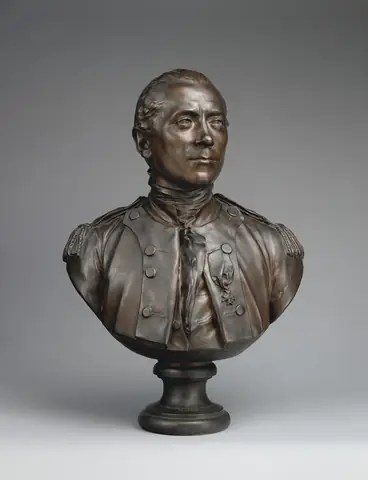
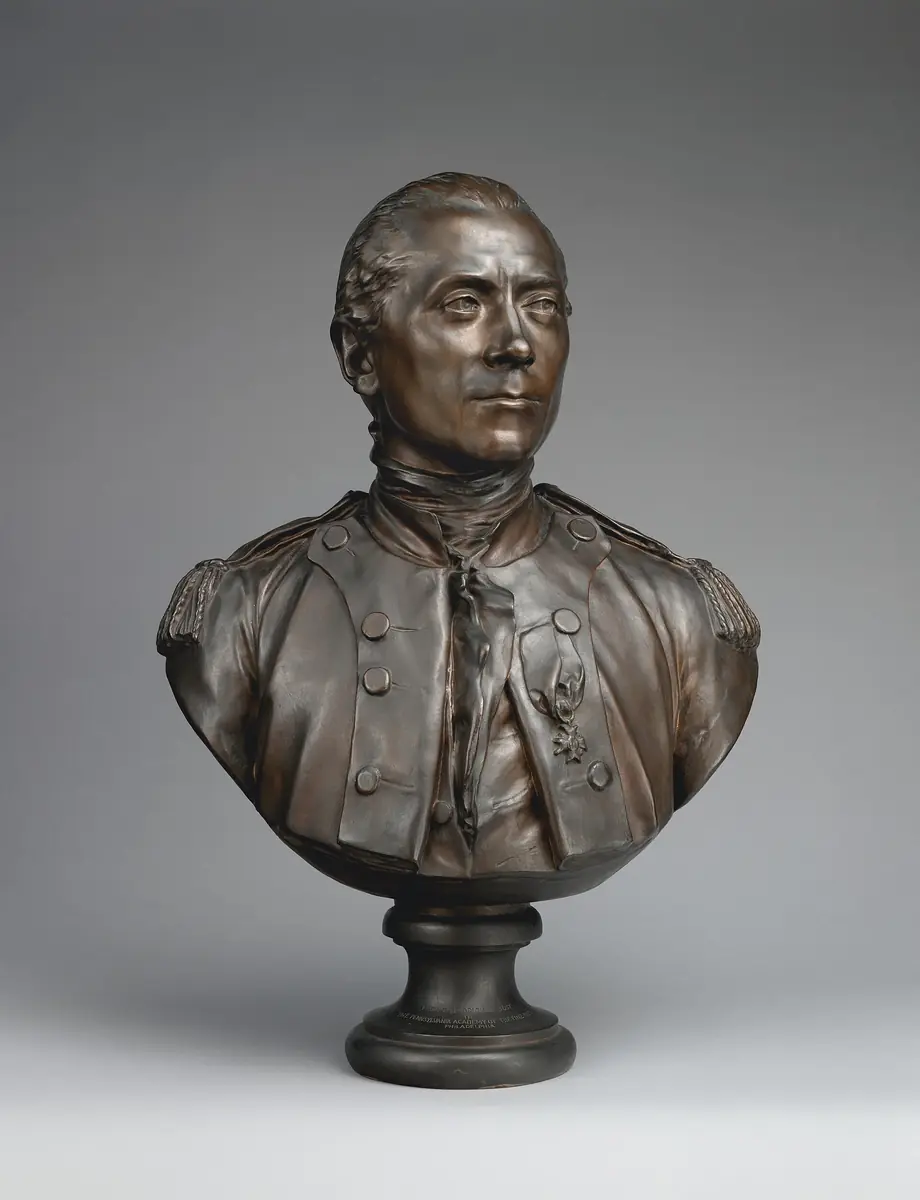
Image: Wikimedia Commons · CC0 (public domain) John Paul Jones
Look closely. A bust of the naval commander, in a formal coat, the head turned slightly, the mouth firm. Look at the alertness of the face and at the contrast with Washington's civilian calm — a fighting man, still clearly a particular person.


What to watch for in Jean-Antoine Houdon
Look slowly- Modern dress, not a toga, for Washington. Houdon let him keep his own coat and cane.
- A smile that has a thought behind it. Voltaire's mouth is particular, not a mask of cheer.
- Eyes that are opened. Look at how Houdon cuts or incises the pupil so the face can look back.
- A bust that turns. Walk around Franklin or Jefferson; the profile is as considered as the front.
- A civic setting. The Richmond Washington stands in a rotunda, behind a low iron fence, as if still on duty.
Dates and collections follow the holding museums and Wikidata. Images of paintings are photographs of public-domain pictures from Wikimedia Commons or museum open-access releases; photographs of sculpture are used only when the photograph itself is Public domain, CC0, or CC BY with a named credit. Each picture links to its source page with full licence details.