Great Art · Romanticism (Germany)
Caspar David Friedrich
The painter of the wanderer, the monk, and the oak, who made a northern landscape look like a place of thought and of faith.
His life
Caspar David Friedrich was born in 1774 in Greifswald, on the Baltic, and trained in Copenhagen before settling in Dresden, where he spent most of his working life. He painted slowly, often from careful drawings of trees, cliffs and the sea, and he placed small figures — a wanderer, a monk, a woman at a window — so that we look with them, not only at them. Crosses, ruins and empty shores return in the work like a quiet liturgy.
He died in Dresden in 1840, after years of poor health and changing taste. His gift was a landscape that thinks. Fog, oak, chalk and ice can feel like states of the soul, and a tiny figure can make a huge view into a prayer or a question, without a single written word.
Key works
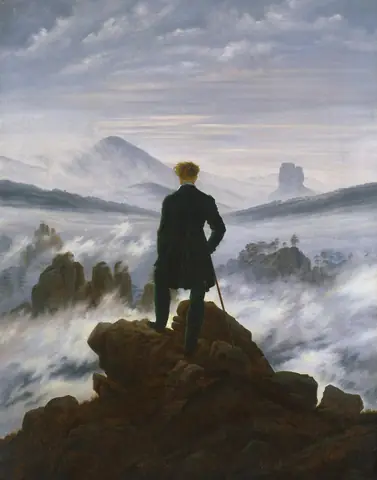
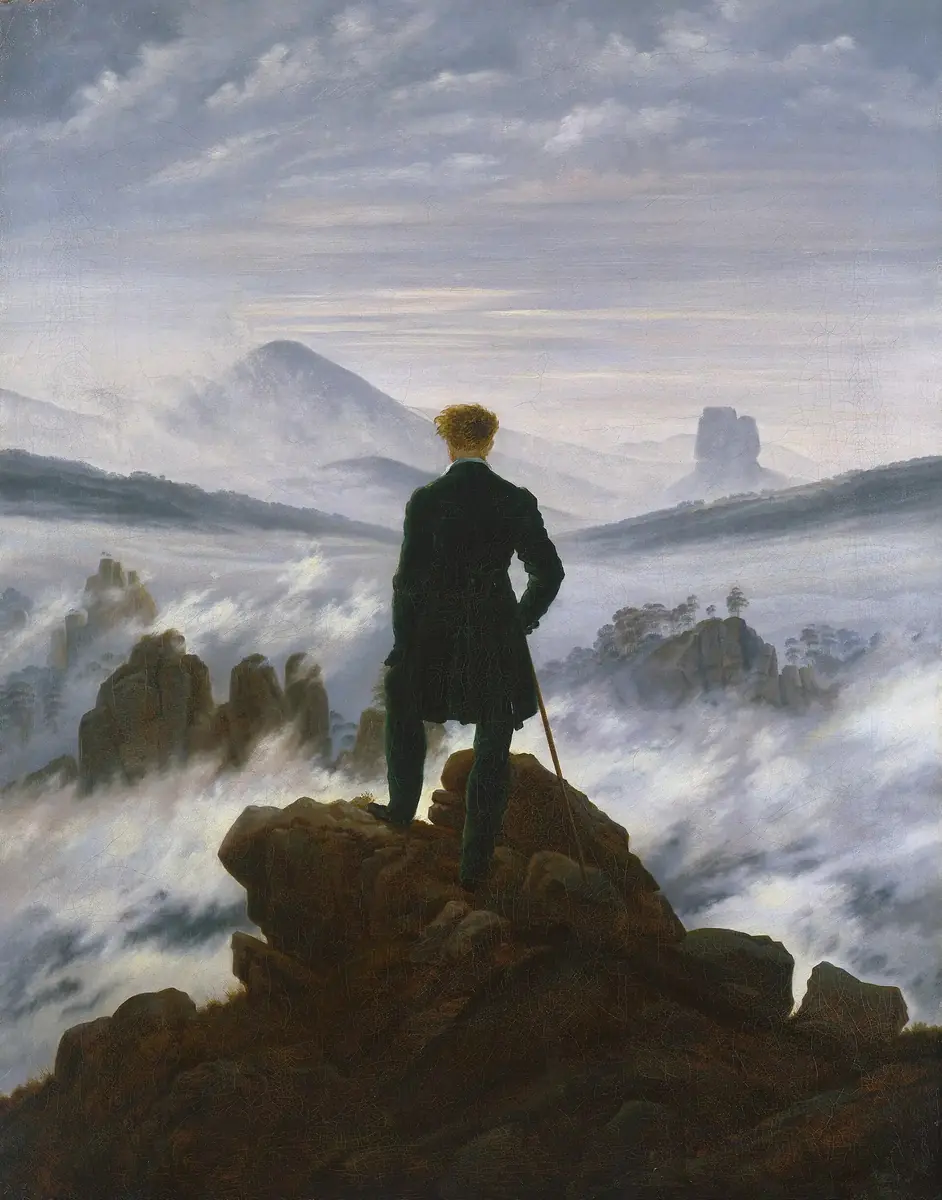
Image: Wikimedia Commons · Public domain (PD-Art) Wanderer above the Sea of Fog
Look closely. A man in a dark coat stands on a rocky peak, seen from behind, looking out over a sea of fog from which other peaks rise like islands. Look at the still, planted stance, at the contrast between the solid rock under his feet and the moving vapor, and at how a whole picture can be made of looking itself.
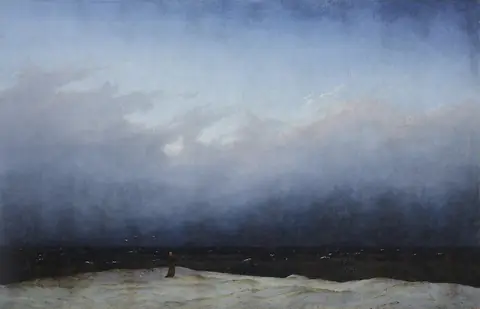
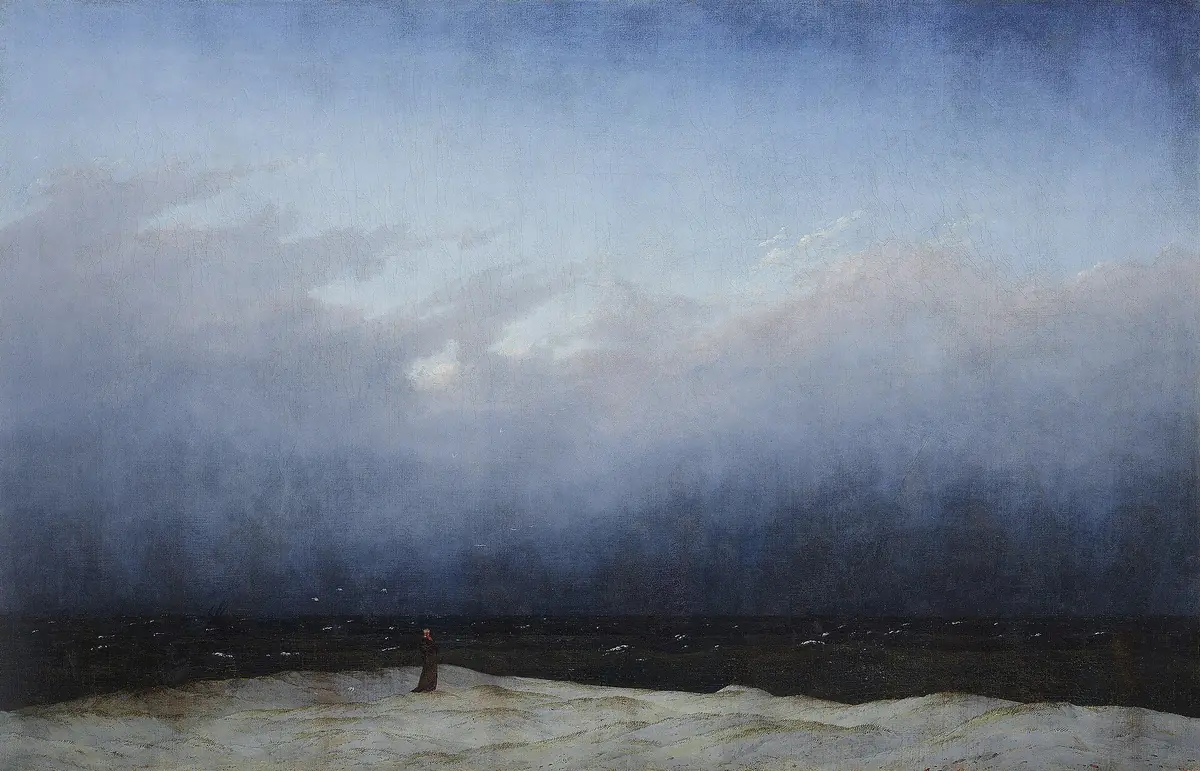
Image: Wikimedia Commons · Public domain (PD-Art) The Monk by the Sea
Look closely. A tiny monk stands on a narrow strip of pale shore under a huge, almost empty sky and a dark band of sea. There is almost no middle ground. Look at the smallness of the figure, at the heavy weather in the sky, and at the daring of a picture that is mostly air and water, with a single person for scale and for prayer.
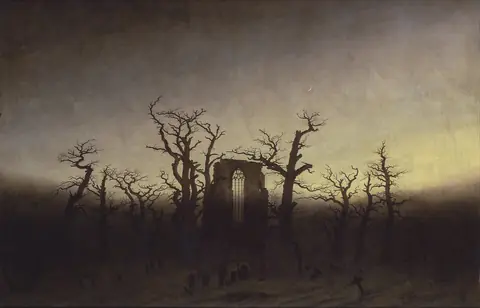
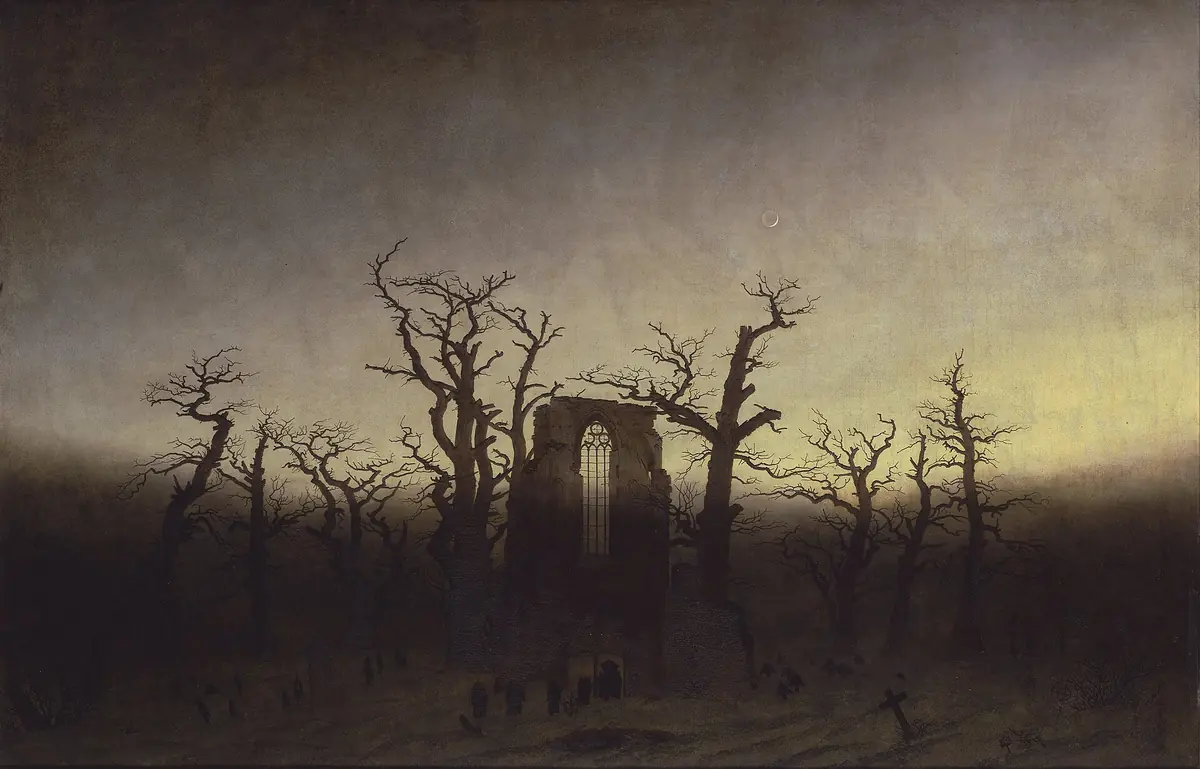
Image: Wikimedia Commons · Public domain (PD-Art) The Abbey in the Oakwood
Look closely. A ruined Gothic choir stands among bare, twisted oaks, a funeral procession of monks entering with a coffin, a pale winter sky and a rising moon or haze behind. Look at the empty window of the ruin, at the graveyard crosses, and at how a burial is set in a wood that seems itself to be in midwinter of the spirit. This picture was conceived as a companion to The Monk by the Sea.
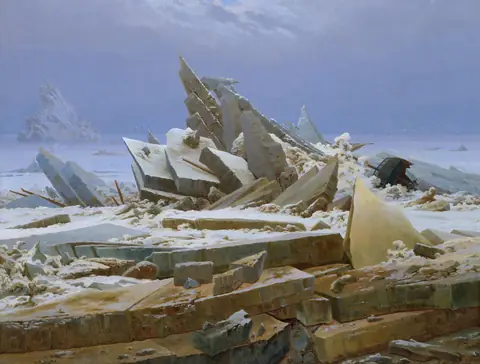
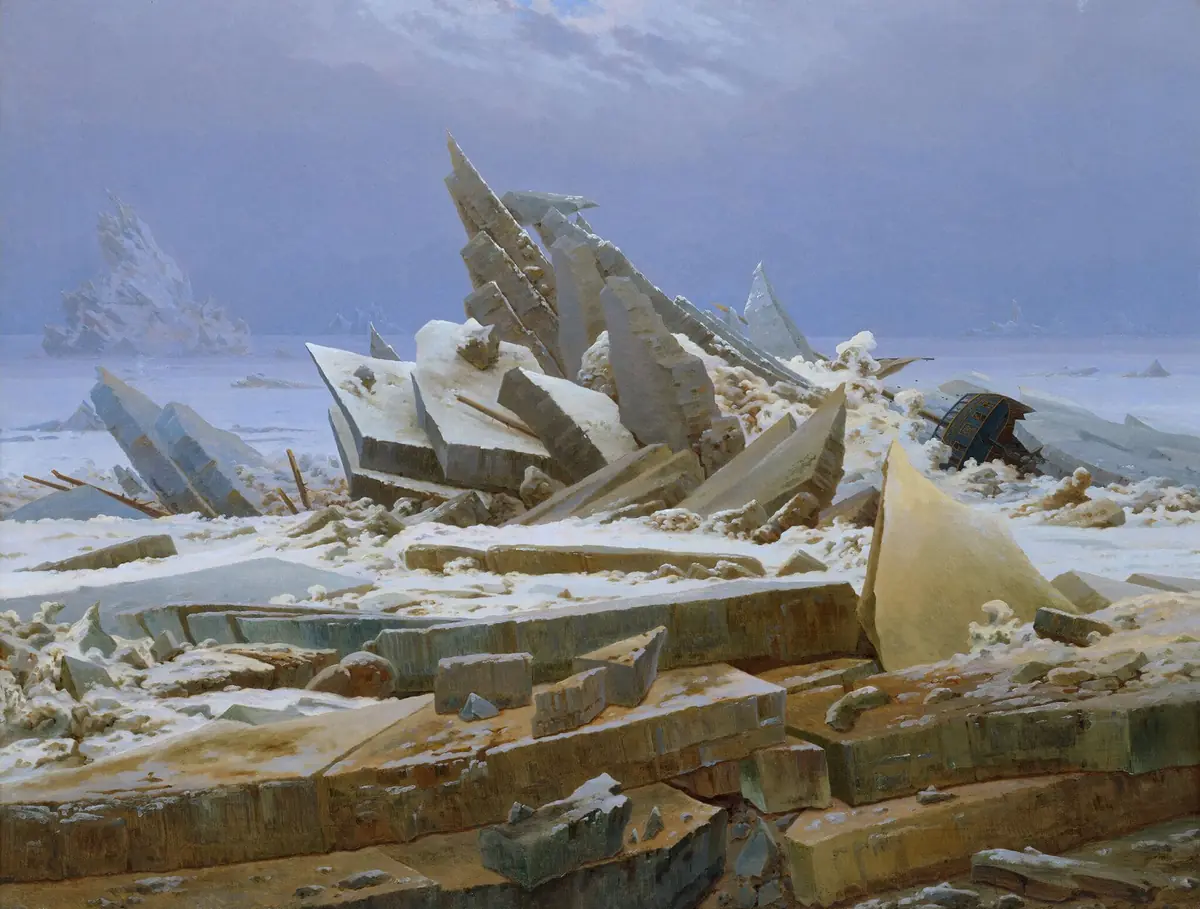
Image: Wikimedia Commons · Public domain (PD-Art) The Sea of Ice (The Wreck of Hope)
Look closely. Jagged slabs of ice have piled into a broken cathedral of a wreck; a ship's stern is almost buried, the farther floes receding into a cold, pale distance. Look at the sharp, almost architectural edges of the ice, at the tiny ruined hull, and at the merciless beauty of a landscape in which hope has already gone down.
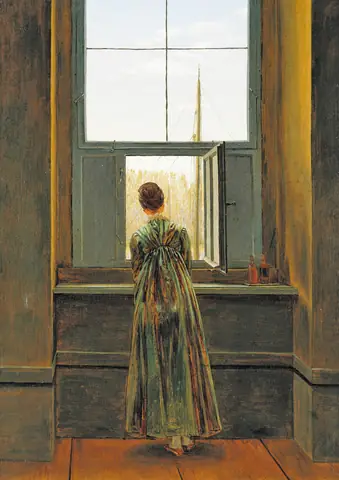
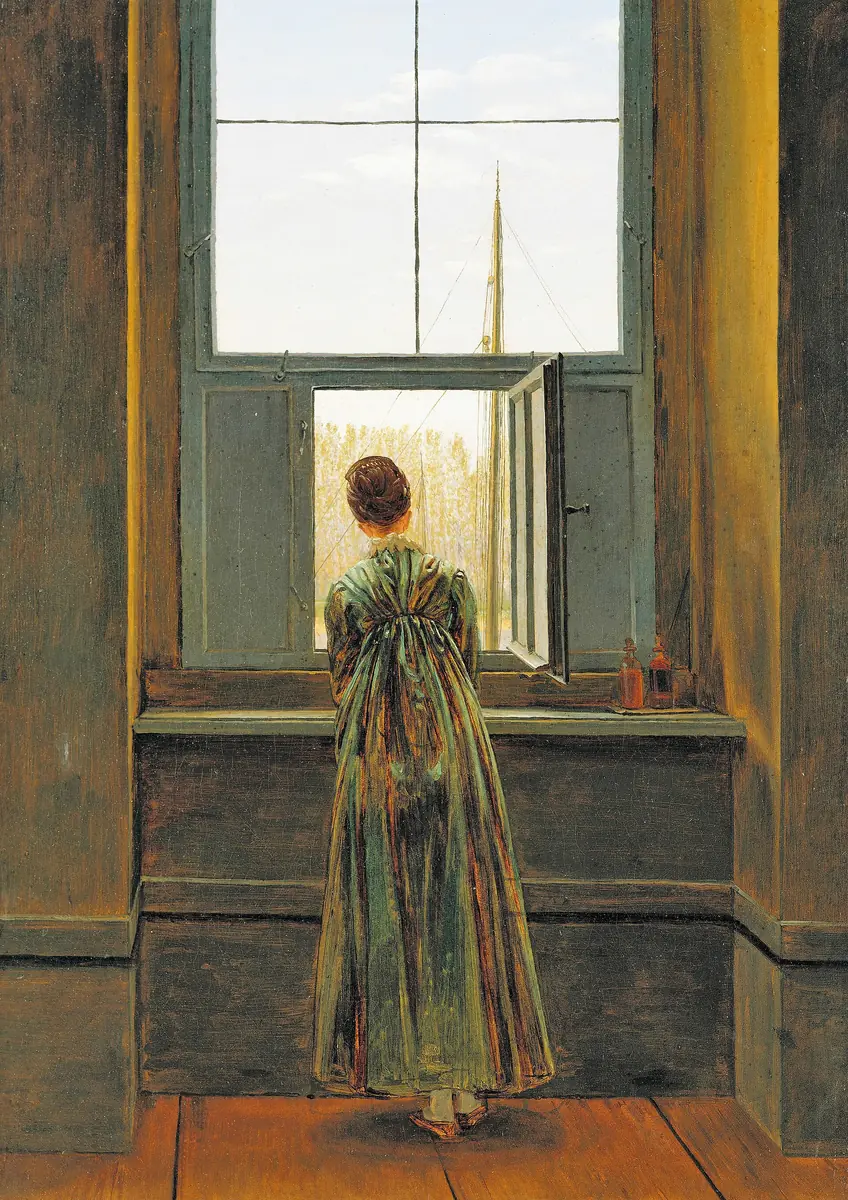
Image: Wikimedia Commons · Public domain (PD-Art) Woman at a Window
Look closely. A woman, seen from behind, stands at a tall, open window in a bare room, looking out at the masts of ships and a pale row of trees. Look at the simple geometry of the shutter and the floor, at the green of her dress, and at how a domestic view can feel as large as a mountain prospect, because we look with her.
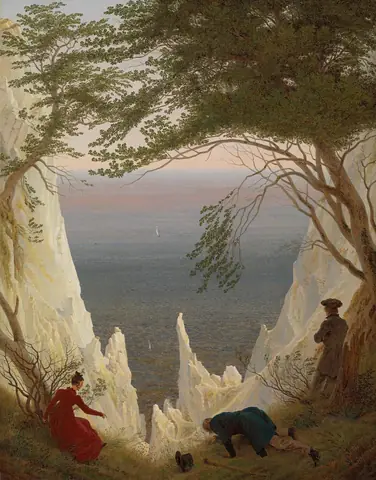
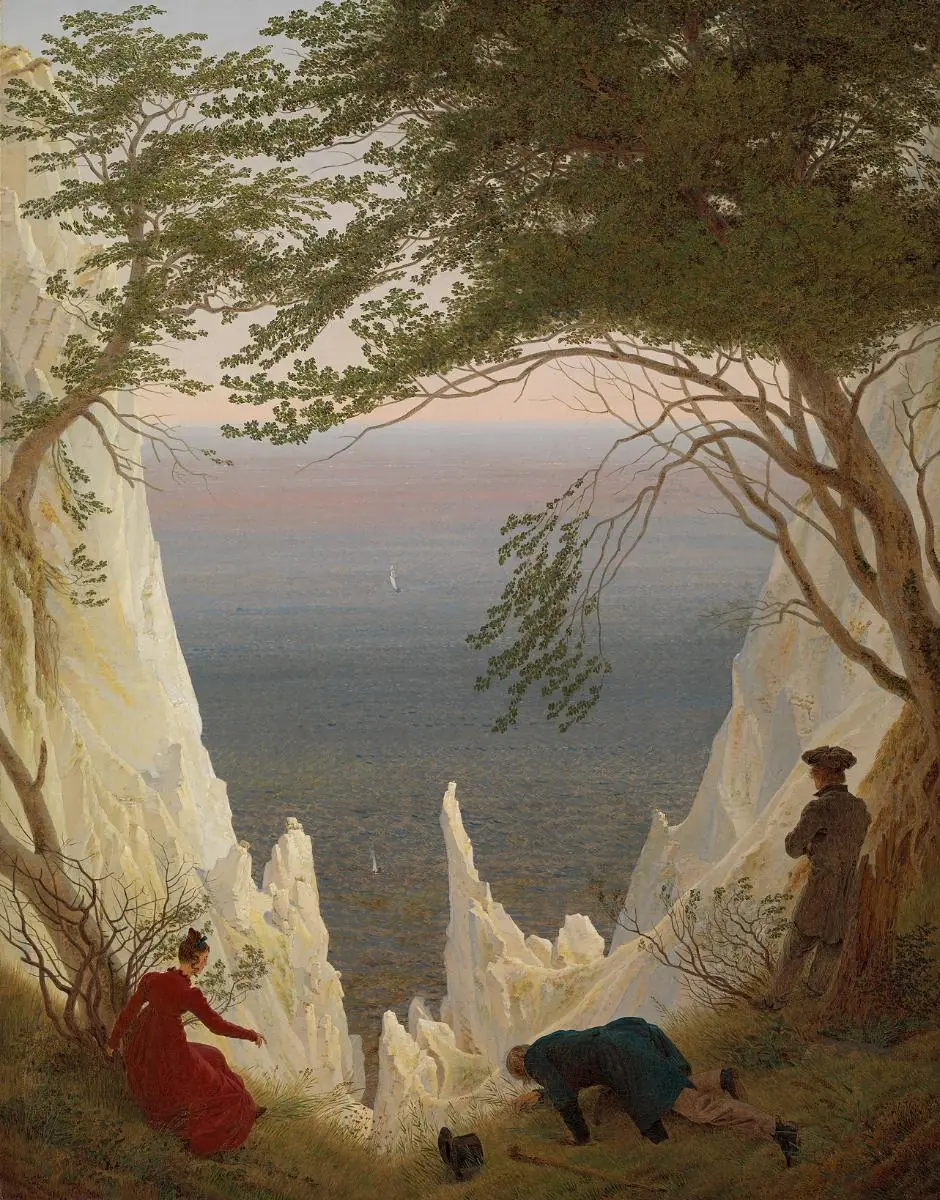
Image: Wikimedia Commons · Public domain (PD-Art) Chalk Cliffs on Rügen
Look closely. Two trees frame a sudden drop: white chalk cliffs fall to a pale sea, a tiny sail below, a woman in red reaching toward shrubs at the left, a man in a blue coat leaning to look over, and another standing at the right. Look at the depth of the view between the trees, at the three different ways of looking, and at the almost vertiginous opening in the middle of the picture.
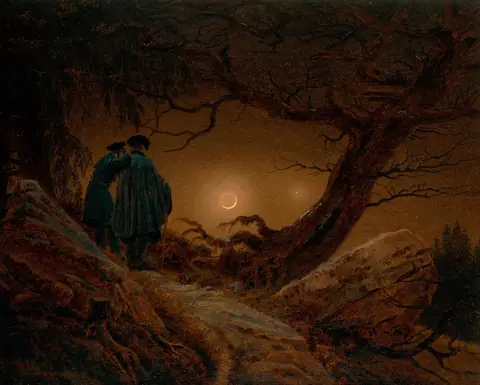
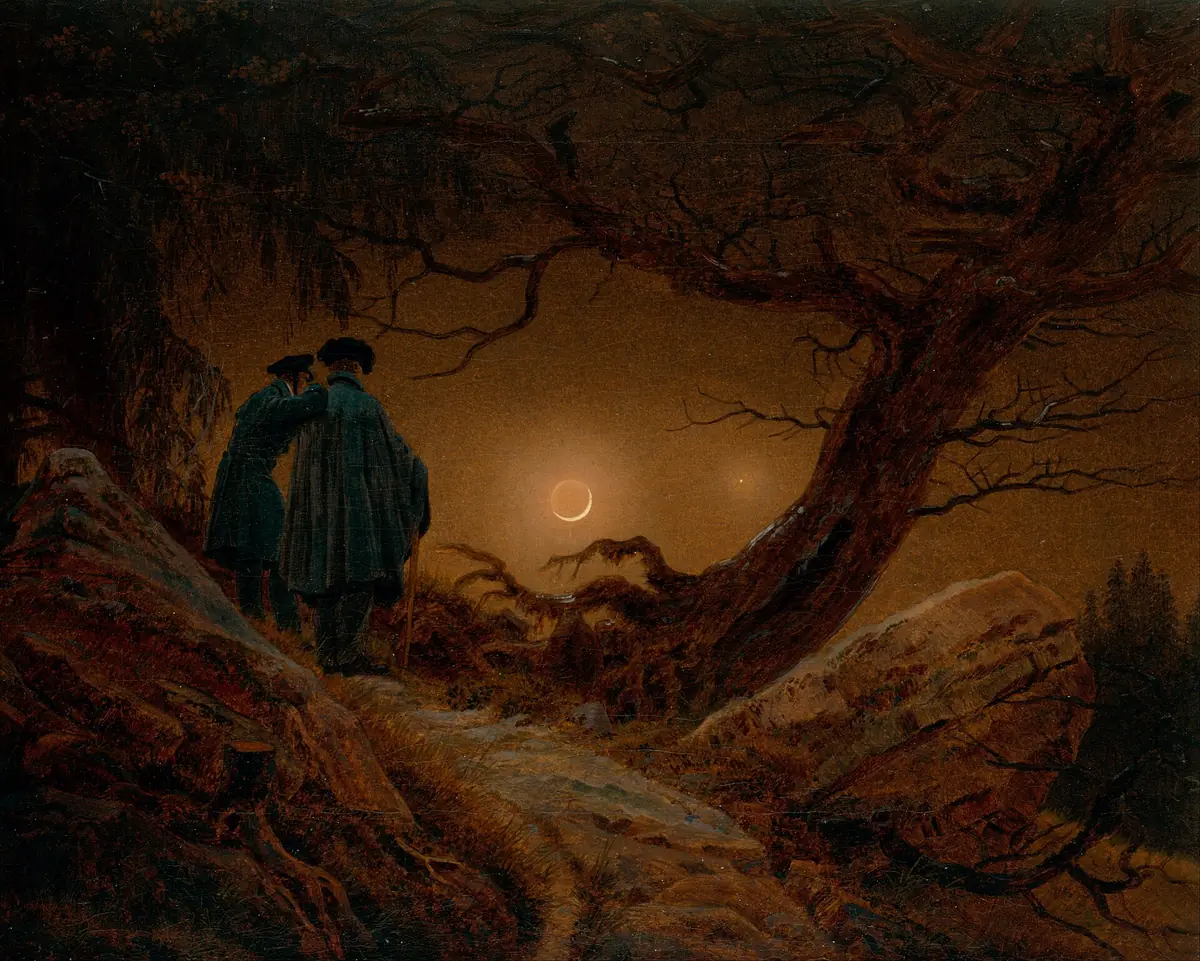
Image: Wikimedia Commons · Public domain (PD-Art) Two Men Contemplating the Moon
Look closely. Two men in cloaks stand on a stony path among leafless, twisted trees, looking at a waxing moon and a point of evening light. Look at the inward lean of their heads, at the pale sky between the branches, and at the companionship of two figures who have come out only to look.


What to watch for in Caspar David Friedrich
Look slowly- A figure seen from behind. We are often invited to stand with the wanderer and look out.
- Fog, oak and ruin. Weather and old stone do as much speaking as any face.
- A small cross in a large land. A crucifix or a Gothic ruin can be almost lost, then found.
- A quiet, pale distance. The farthest plane is often a mystery, not a map.
- Morning or dusk, not noon. The hour is part of the meaning.
Dates and collections follow the holding museums and Wikidata. Images of paintings are photographs of public-domain pictures from Wikimedia Commons or museum open-access releases; photographs of sculpture are used only when the photograph itself is Public domain, CC0, or CC BY with a named credit. Each picture links to its source page with full licence details.