Great Art · British (Romantic)
William Blake
The London poet-painter who engraved and coloured his own visions, and who made Scripture, song and prophecy look as if they had just been seen.
Read William Blake's Great Life →
His life
William Blake was born in London in 1757, trained as an engraver, and lived almost all his life there, often in modest rooms, with his wife Catherine, who helped him print and colour the plates. He published his own illuminated books — the Songs of Innocence and of Experience among them — writing the poems, designing the pages and making the prints by hand. He saw, or claimed to see, visions from childhood, and he used that inner sight on Biblical subjects, on Milton, and on his own mythology.
He died in London in 1827, still at work. His gift was vision given a body. A lamb on a plate of Innocence, a stair of angels at Bethel, or the risen Christ among the apostles can look both ancient and newly dreamed, as if the page were a window rather than a surface.
Key works
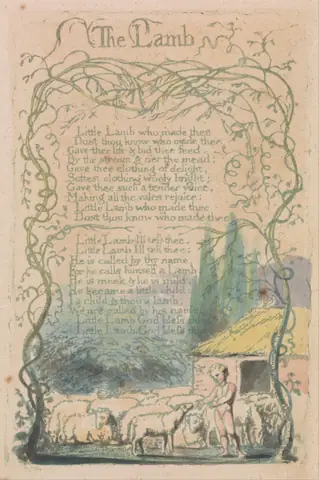
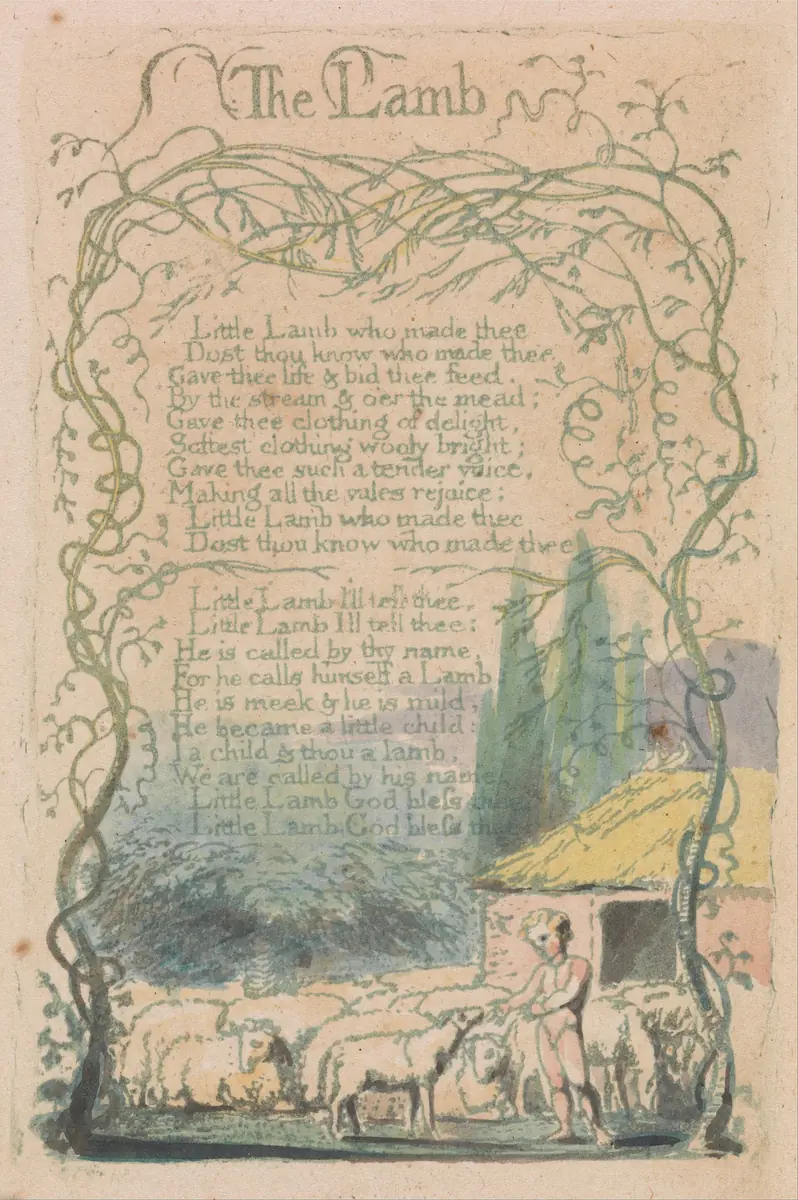
Image: Wikimedia Commons · Public domain (PD-Art) The Lamb (Songs of Innocence)
Look closely. On an illuminated plate of Songs of Innocence, the poem The Lamb is set among trees, a child, and the animal itself, the words and the vines growing together in a single coloured page. Look at how the letters are part of the picture, at the mildness of the scene, and at the question the poem asks — who made the lamb — which the child in the book already knows how to answer.
In the library: Songs of Innocence and of Experience · William Blake
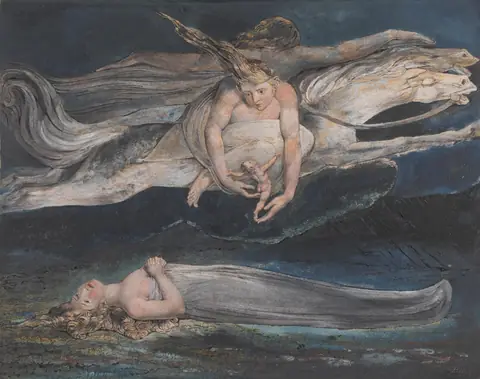
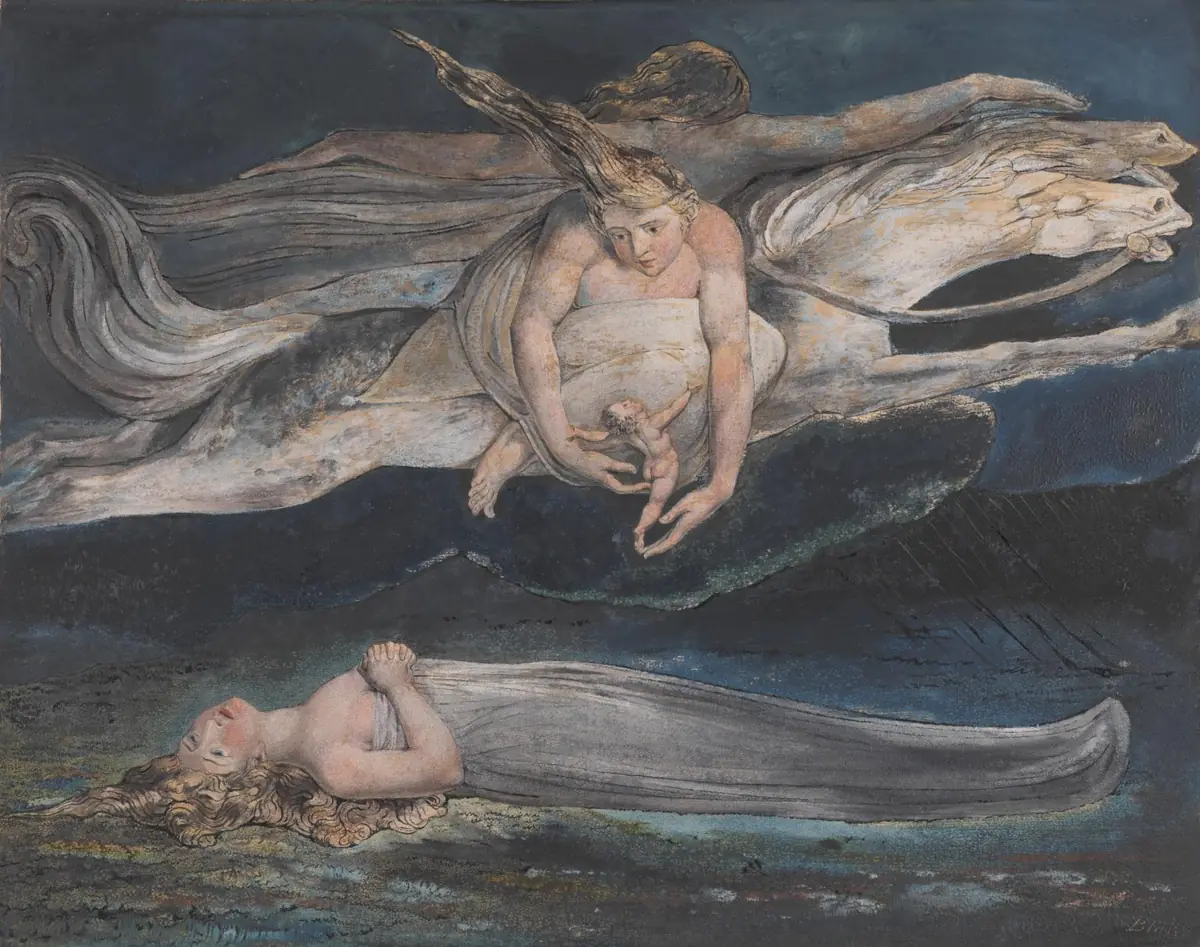
Image: Wikimedia Commons · Public domain (PD-Art) Pity
Look closely. A woman lies on the ground in a long pale dress, hands folded, while above her a wind-blown figure on a pair of horses stoops to catch or offer a tiny child. The design takes a hint from a line in Macbeth, but the picture is Blake's own. Look at the streaming hair and manes, at the long horizontal of the sleeping or swooning woman, and at the tenderness of the caught infant.
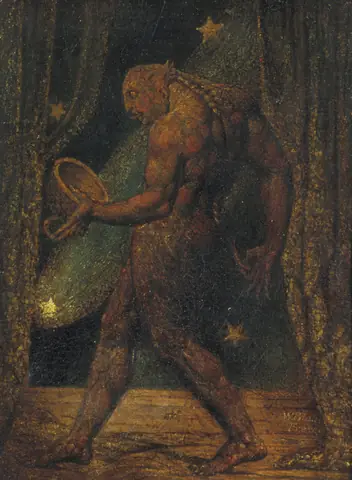
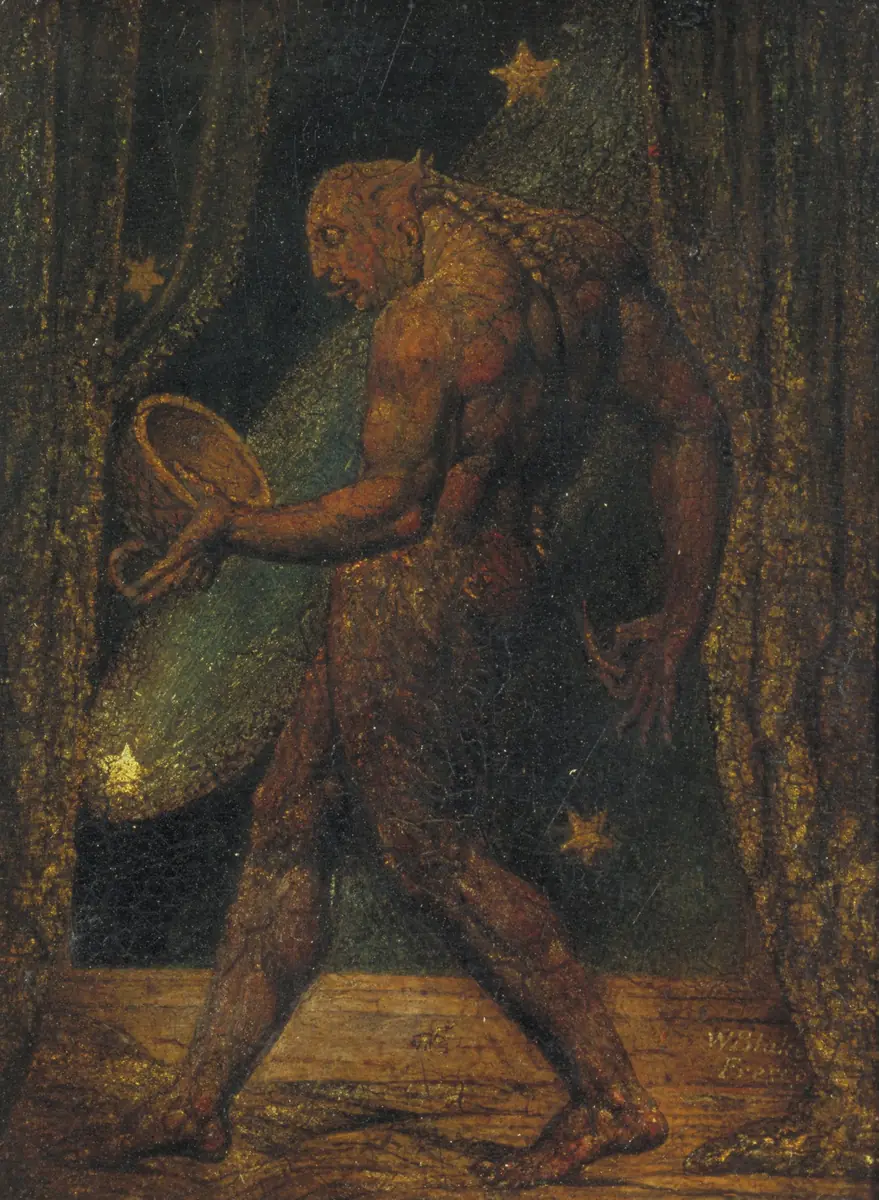
Image: Wikimedia Commons · Public domain (PD-Art) The Ghost of a Flea
Look closely. A muscled, bristling creature with a small head and a thirsty tongue steps among stars and drapery, a bowl or cup in its hand, as if a flea had been given a monstrous human form. Look at the tense, theatrical pose, at the odd combination of the tiny subject and the huge body, and at the late, almost portrait-like intensity of a vision Blake said had been shown to him.
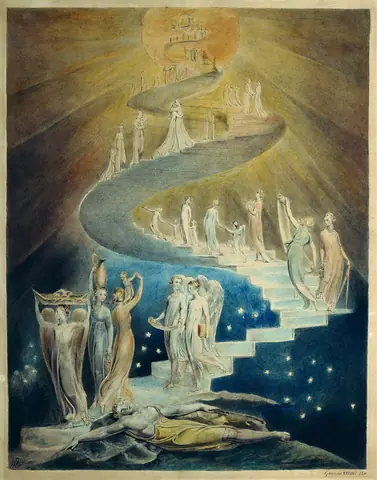
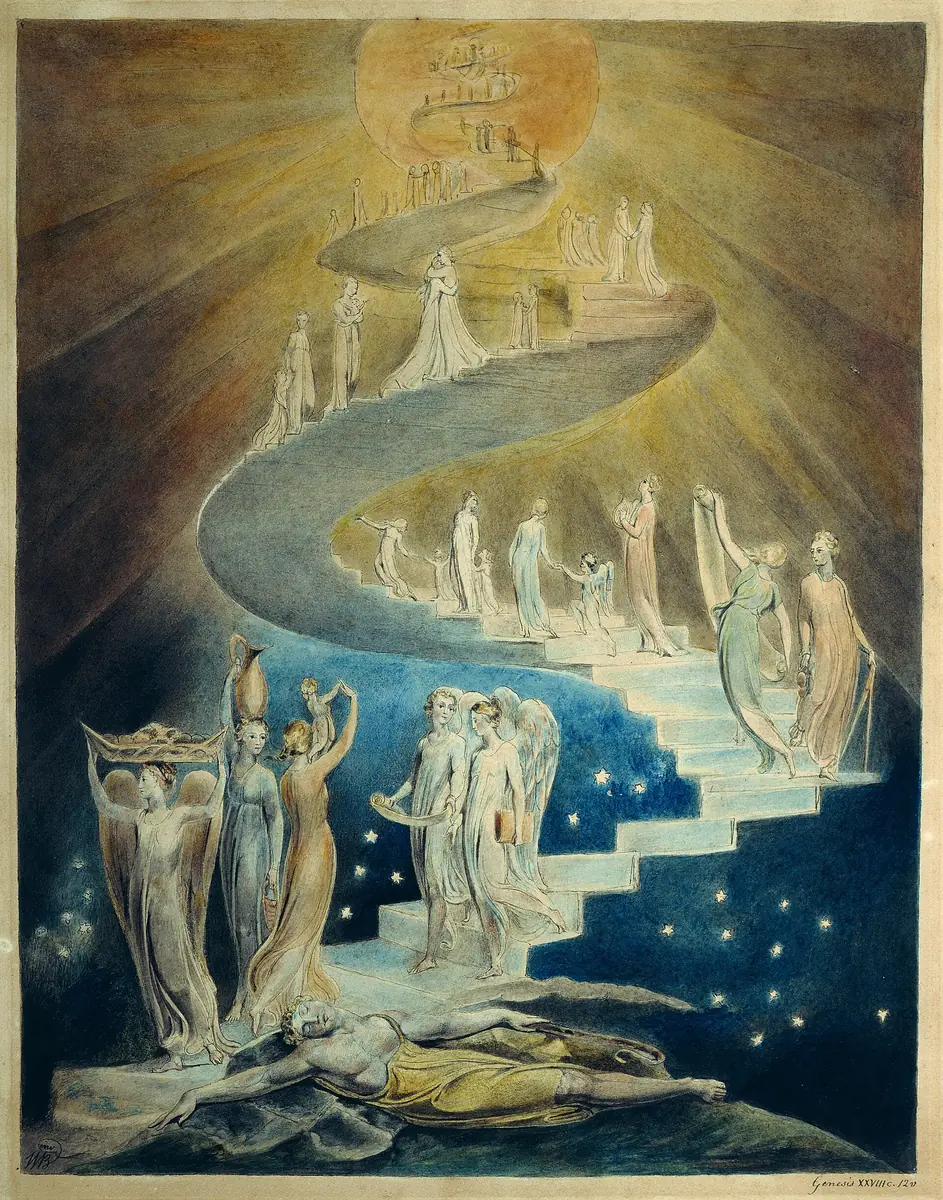
Image: Wikimedia Commons · Public domain (PD-Art) Jacob's Ladder
Look closely. A winding stair of light rises from a sleeper on the ground into a deep, starry blue, with angels ascending and descending in a single, turning procession. Look at the spiral of the stair, at the grace of the figures, and at how a brief verse in Genesis is opened into a whole architecture of vision.
In the library: The Bible (KJV)
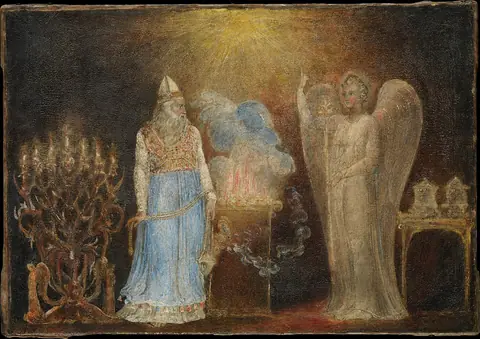
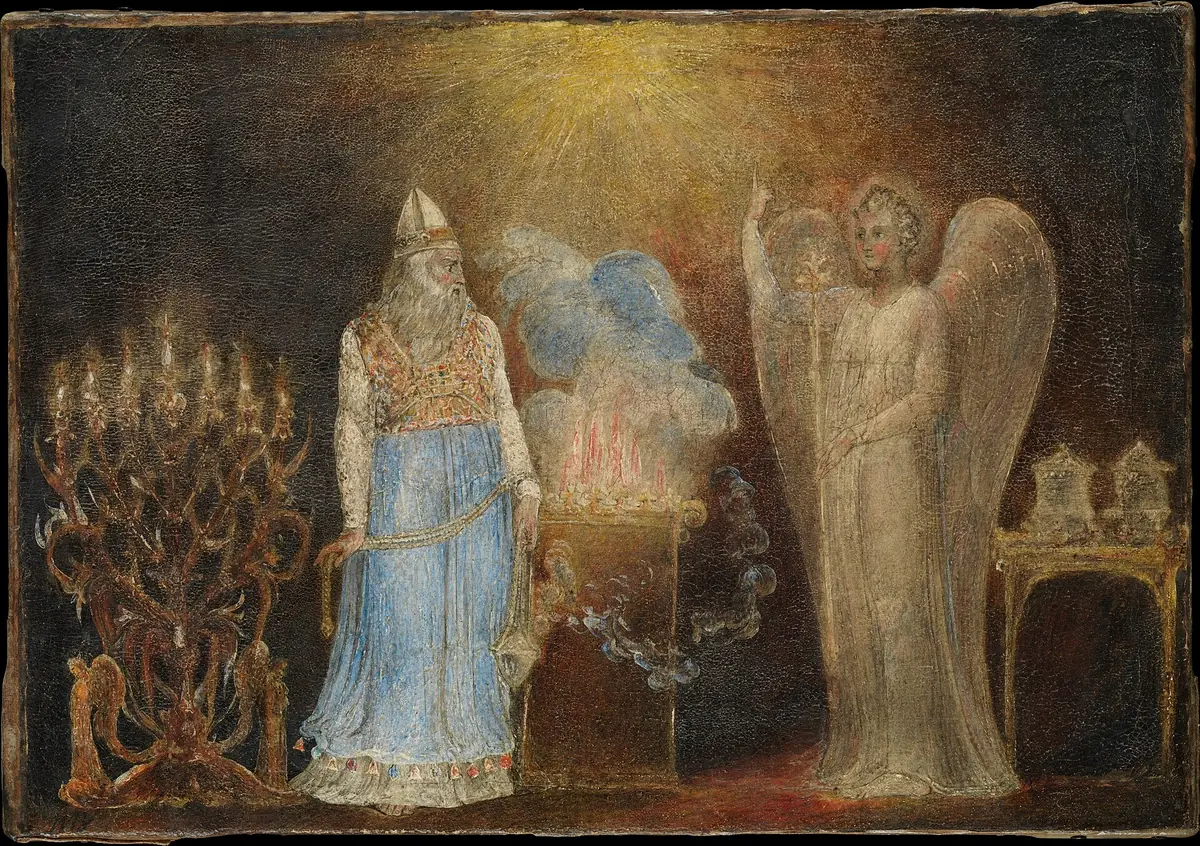
Image: Wikimedia Commons · CC0 (public domain) The Angel Appearing to Zacharias
Look closely. In the temple, the priest Zacharias stands at the altar as the angel appears in a burst of light to announce the birth of John; other figures and the architecture of the sanctuary close around the moment. Look at the contrast between the still priest and the radiant messenger, at the smoke and the gold, and at how a Gospel beginning is staged as a sudden interruption of ordinary worship.
In the library: The Bible (KJV) · John the Baptist
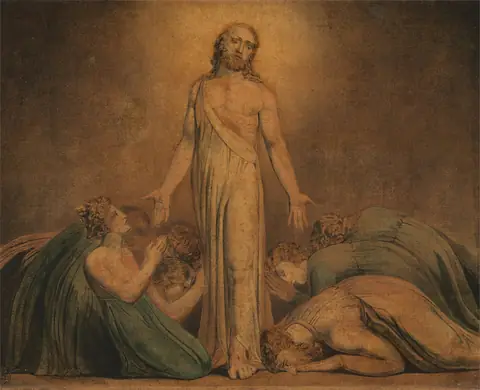
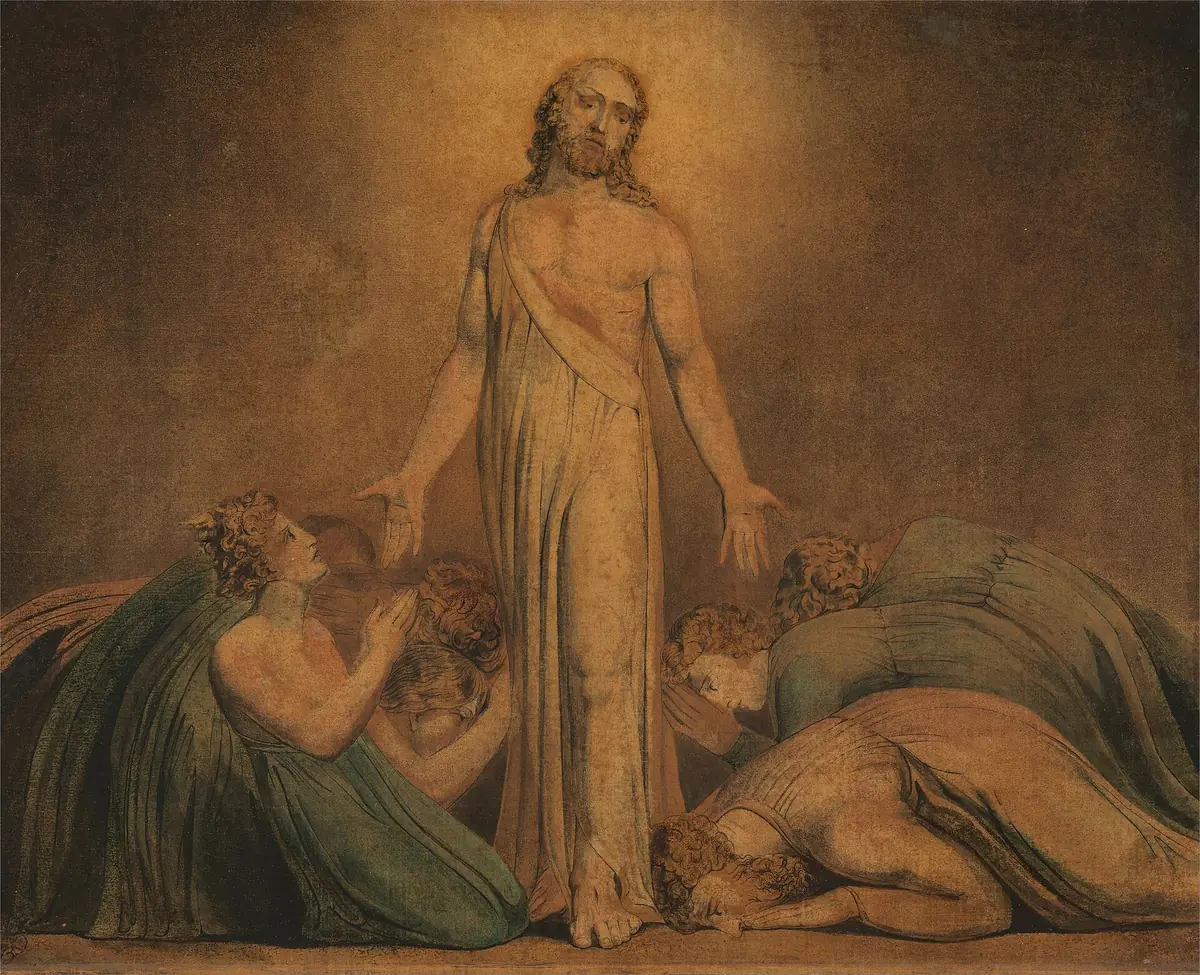
Image: Wikimedia Commons · Public domain (PD-Art) Christ Appearing to the Apostles after the Resurrection
Look closely. The risen Christ stands at the centre in a pale robe, hands open, a disc of light around his head, while the apostles kneel, lean, or fall down around him in a close, almost circular group. Look at the still, frontal figure, at the bowed backs, and at the quiet of a resurrection appearance without a landscape — only light and witnesses.
In the library: The Bible (KJV) · Jesus Christ · Peter
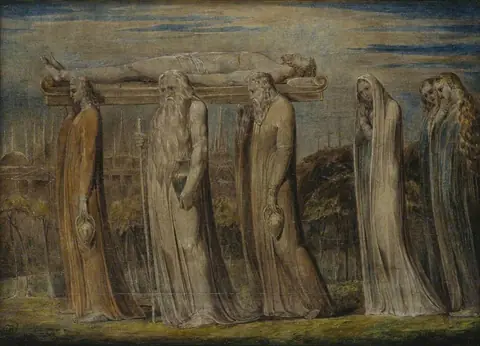
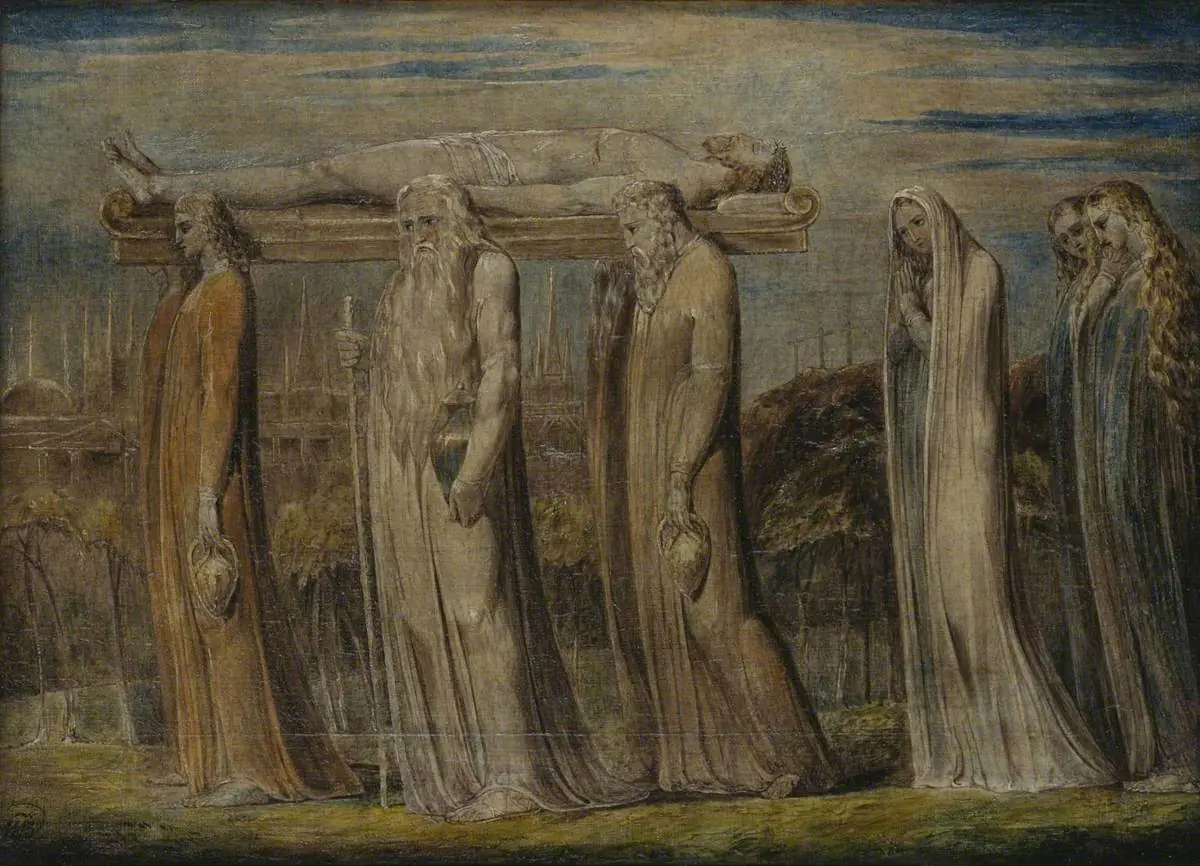
Image: Wikimedia Commons · Public domain (PD-Art) The Body of Christ Borne to the Tomb
Look closely. Christ, in a loincloth, is carried on a simple bier by robed bearers, while women in long, pale garments follow at the right, a distant town under a cool sky. Look at the long, still horizontal of the body, at the bowed heads of the mourners, and at the hush of a burial painted as a quiet procession rather than as a crowd.
In the library: The Bible (KJV) · Jesus Christ · Mary, mother of Jesus


What to watch for in William Blake
Look slowly- The page as a living thing. In the Songs, look at how the words and the vine or the tree grow together.
- A body of light, not of anatomy class. Figures can be elongated, glowing, or almost transparent.
- Scripture re-seen. A familiar Gospel or Genesis moment may be staged as if it were a dream.
- Small means, large vision. Watercolour, tempera and relief etching can carry a whole heaven.
- Tenderness and terror together. A child, a lamb, or a gentle angel may share the page with something darker — or, on this page, be kept for looking; the more unclothed or fierce designs are named for older students.
For older students
These famous works include nudity, so they are named here but not shown. Teachers and parents can decide when to look at them together.
- The Ancient of Days, 1794, British Museum, London, and other impressions. The frontispiece to Europe a Prophecy: a powerful, largely unclothed figure with a compass. Named here but not shown.
- Newton, c. 1795–1805, Tate, London. Newton is shown unclothed, stooping with a compass. Named here but not shown.
- The Great Red Dragon and the Woman Clothed with the Sun, c. 1805–10, Brooklyn Museum and National Gallery of Art, Washington. A vision from Revelation; the woman is unclothed. Named here but not shown.
- Elohim Creating Adam; Nebuchadnezzar; The Four and Twenty Elders, 1790s–1805, Tate, London, and other collections. Several visionary designs include unclothed figures. Named here but not shown.
Dates and collections follow the holding museums and Wikidata. Images of paintings are photographs of public-domain pictures from Wikimedia Commons or museum open-access releases; photographs of sculpture are used only when the photograph itself is Public domain, CC0, or CC BY with a named credit. Each picture links to its source page with full licence details.