Great Art · Romantic
J. M. W. Turner
The English painter of light on water, of steam and storm, and of old ships going down the river at sunset.
His life
Joseph Mallord William Turner was born in London in 1775, the son of a barber, and showed a gift for drawing very young. He entered the Royal Academy Schools as a boy, exhibited early, and spent a long working life on the road and on the water, filling sketchbooks with coasts, mountains, harbours and skies. He never lost the habit of looking hard at weather. Steam, rain, fire and a setting sun became, in his later pictures, almost the whole subject.
He died in Chelsea in 1851 and left a great body of work to the nation. His gift was to make light feel like a thing with weight — a glare, a mist, or a last band of gold — and to set human labour, a ship, or a scrap of history inside it without letting the weather become a mere backdrop.
Key works
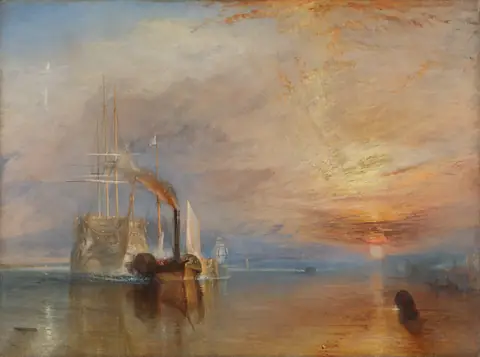
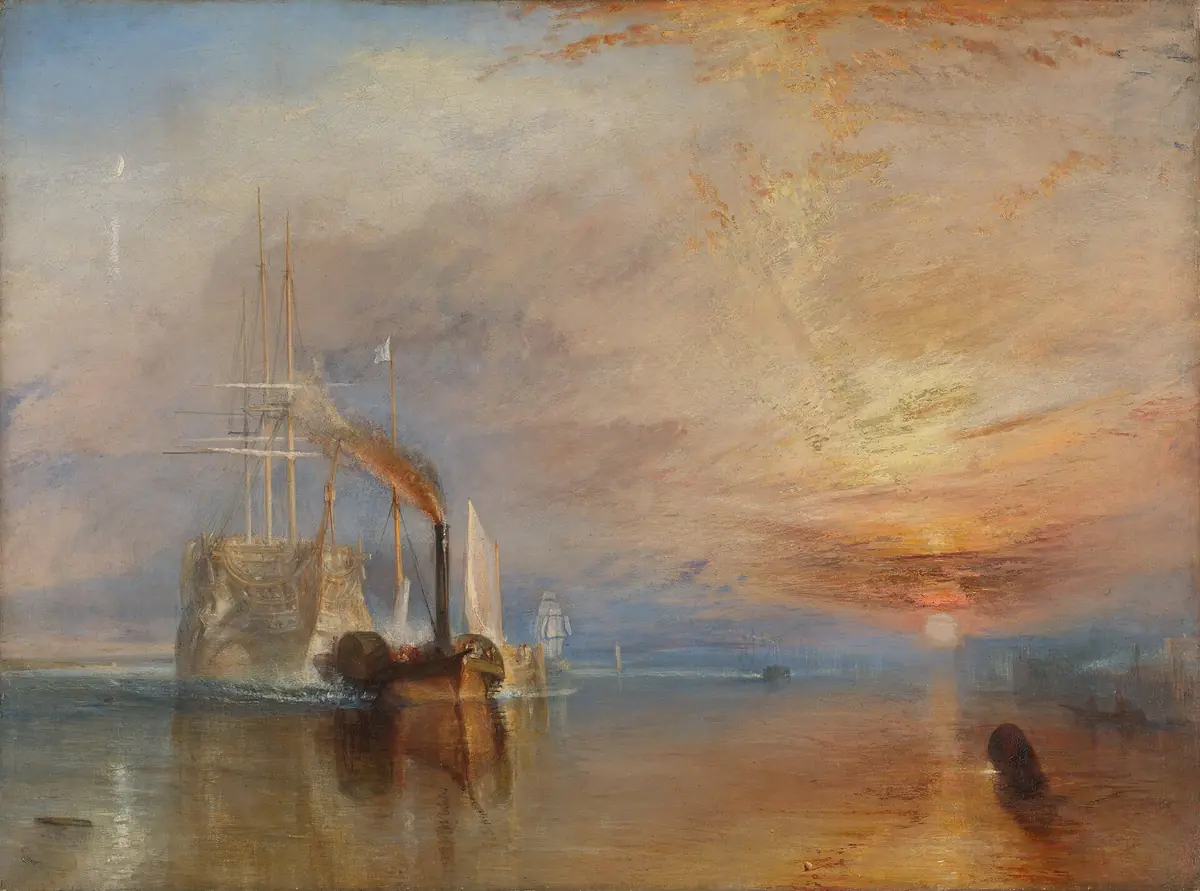
Image: Wikimedia Commons · Public domain (PD-Art) The Fighting Temeraire
Look closely. The old warship, pale and almost luminous, is towed down the still river by a dark, busy steam tug, while a great sunset fills the right-hand sky and is repeated in the water. Look at the contrast between the ghostly sailing ship and the squat, working tug, and at how the last light seems to belong more to the Temeraire than to the modern engine that is taking her in.
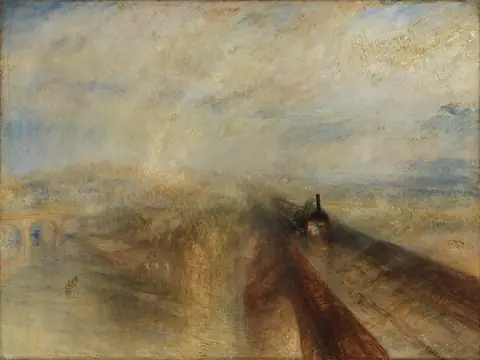
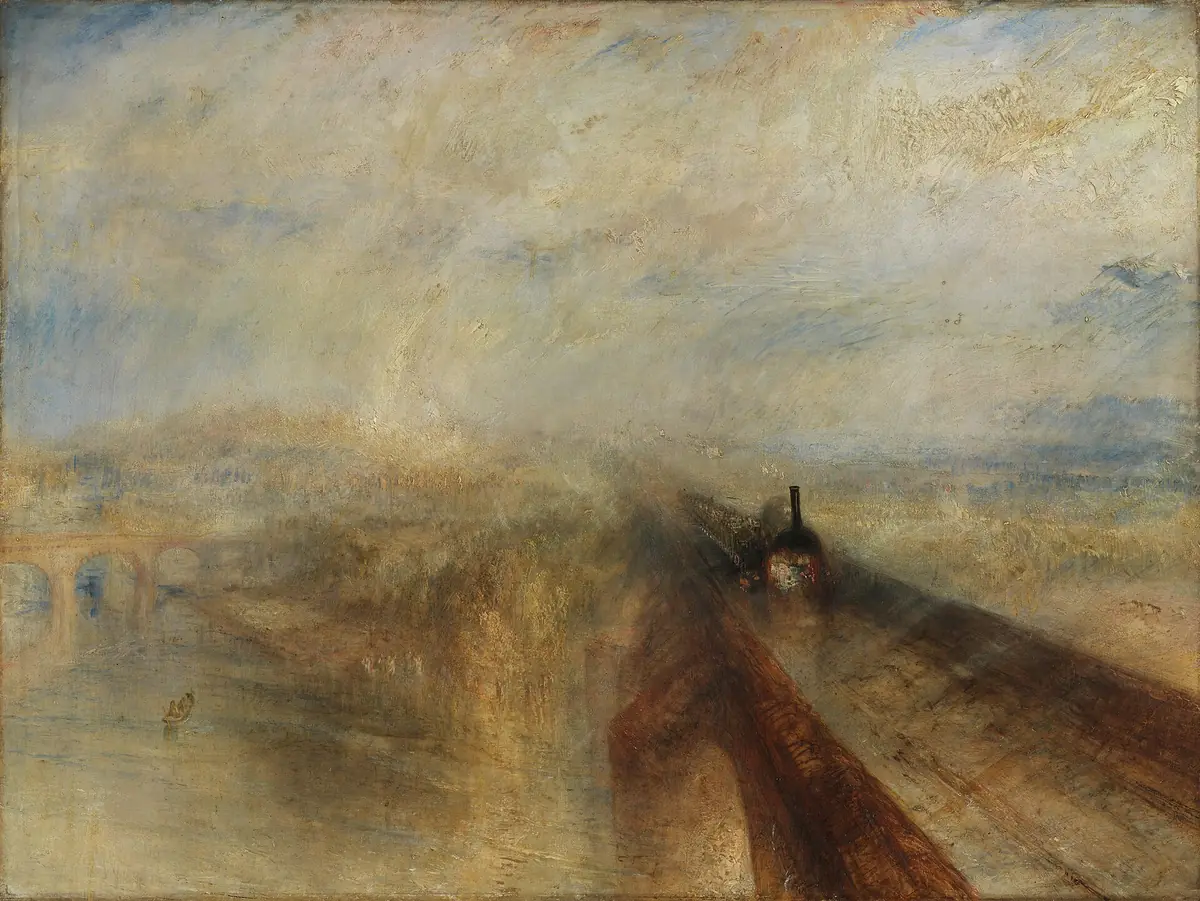
Image: Wikimedia Commons · Public domain (PD-Art) Rain, Steam and Speed — The Great Western Railway
Look closely. A locomotive drives straight toward us across a bridge in a blur of rain, its chimney and the dark mass of the train barely holding together in the weather. Look for the small hare running ahead of the engine on the tracks, and at how the bridge, the river and the far bank almost dissolve into the same wet light.
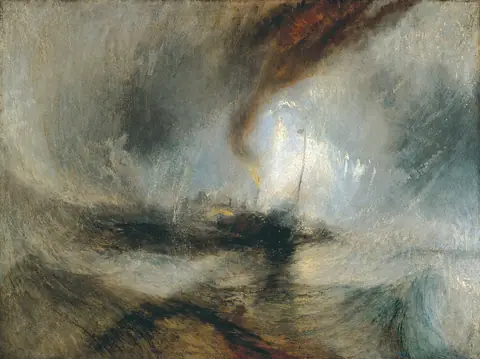
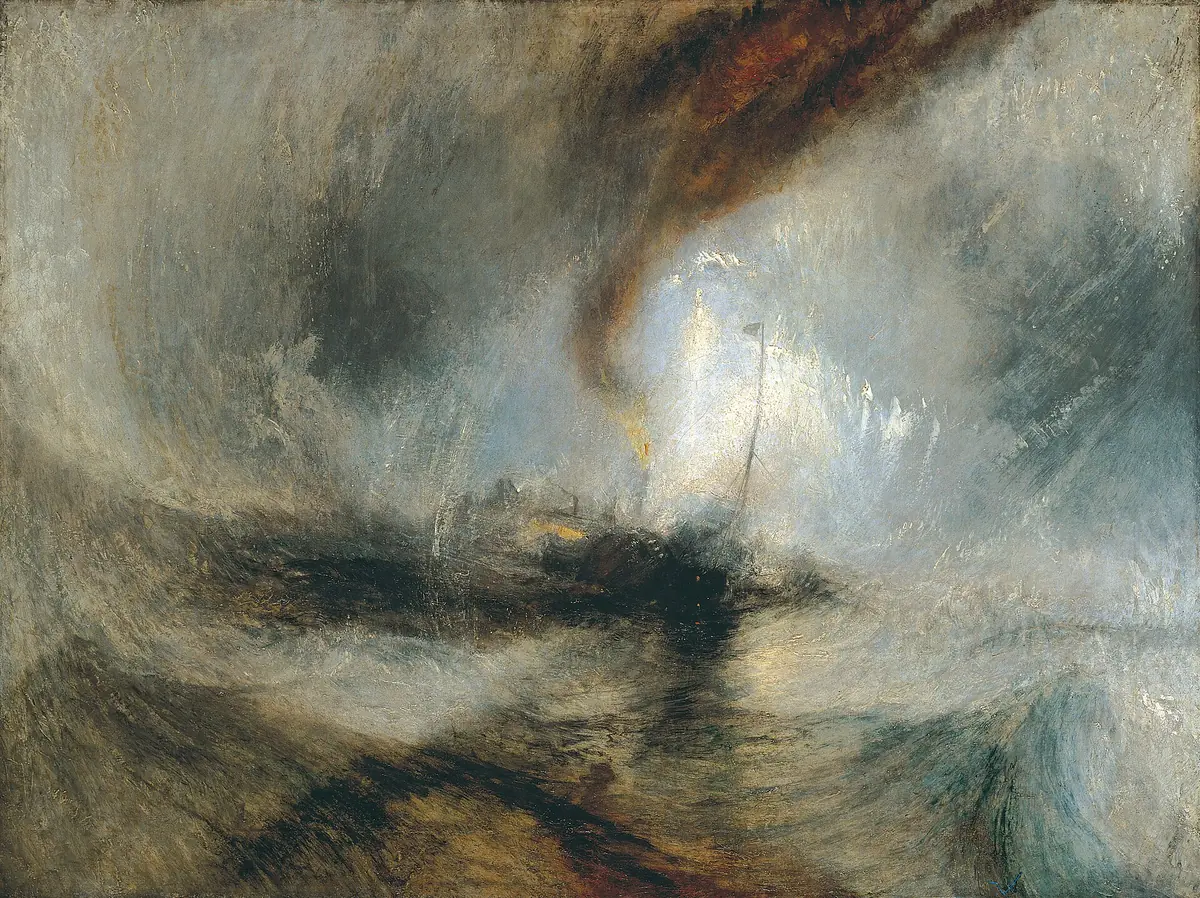
Image: Wikimedia Commons · Public domain (PD-Art) Snow Storm: Steam-Boat off a Harbour's Mouth
Look closely. A paddle steamer is caught in a turning storm of sea and snow; the hull, the mast and a small flare or flag are almost all that can be named in the swirl. Look at the spiral of the brushwork, at the pale wheel of the paddle, and at how little still water is left for the eye to rest on.
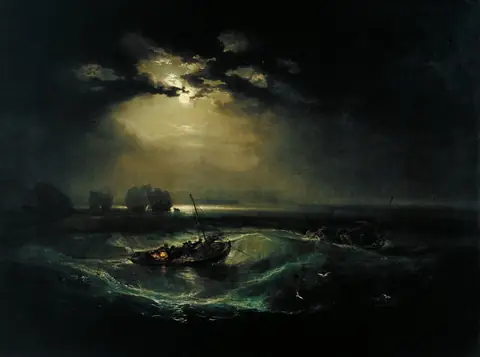
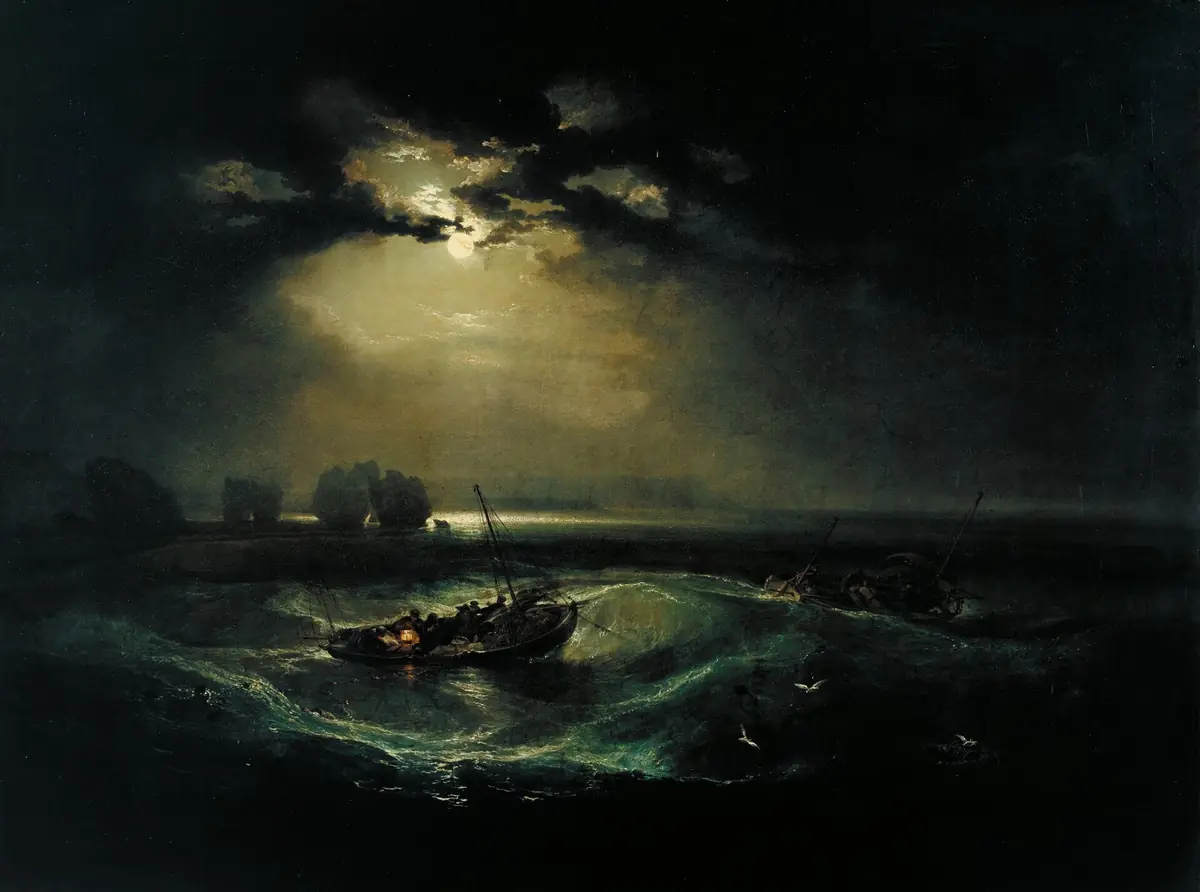
Image: Wikimedia Commons · Public domain (PD-Art) Fishermen at Sea
Look closely. Two fishing boats ride a dark, choppy sea at night, lit by a moon that breaks through cloud and by a small lamp in the nearer boat; pale cliffs rise in the distance. Look at how early Turner already gives the water real weight, and at the way the moonlight and the lamp divide the scene between a far, cold light and a close, working one.
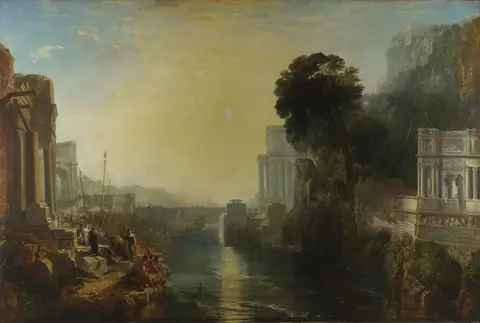
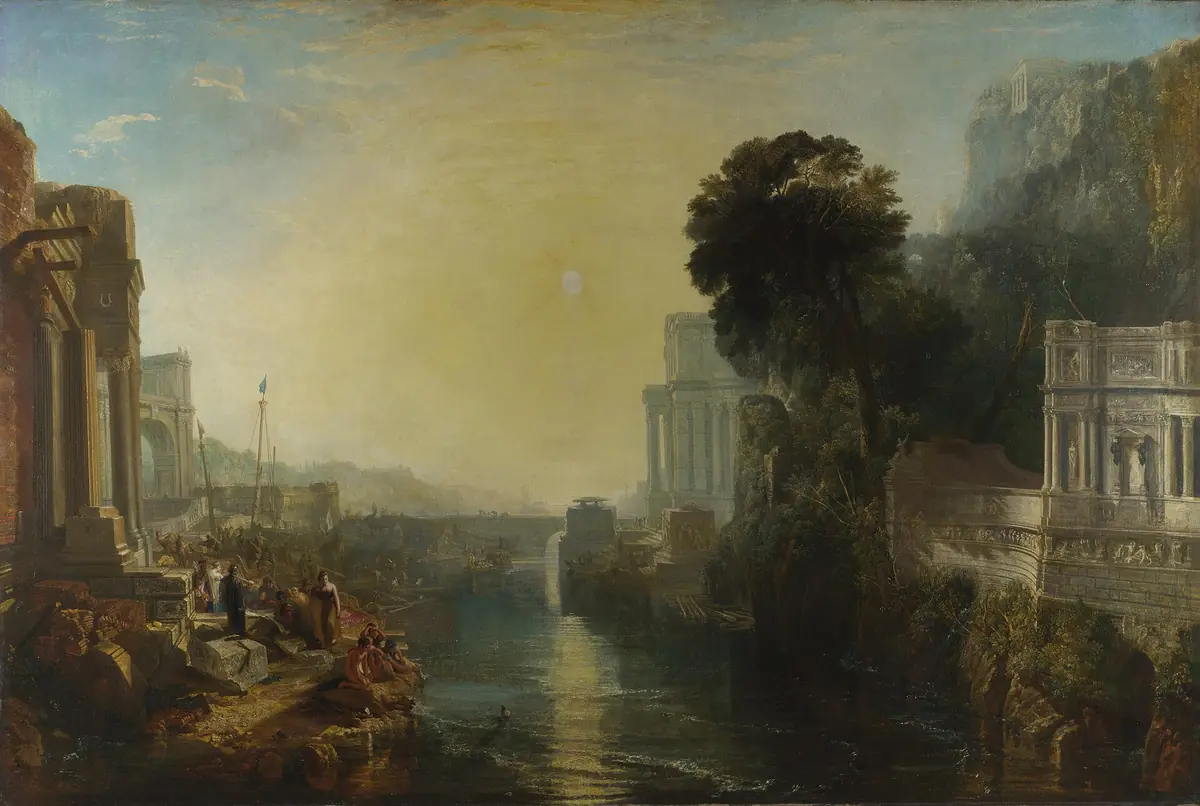
Image: Wikimedia Commons · Public domain (PD-Art) Dido Building Carthage
Look closely. A classical harbour city rises in the morning light, with a still river, classical buildings, and small figures on the bank; the sun sits low in a luminous haze at the centre. Look at the scaffolding and the unfinished architecture, at the reflections in the water, and at how a scene from Virgil is staged as a city actually being built, not only as a finished ruin.
In the library: The Aeneid · Virgil
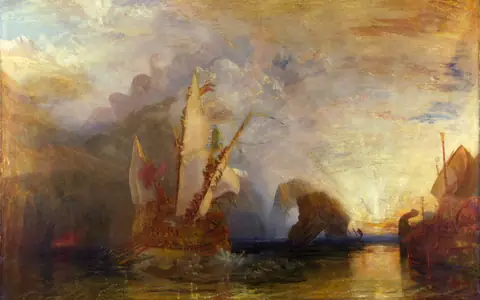
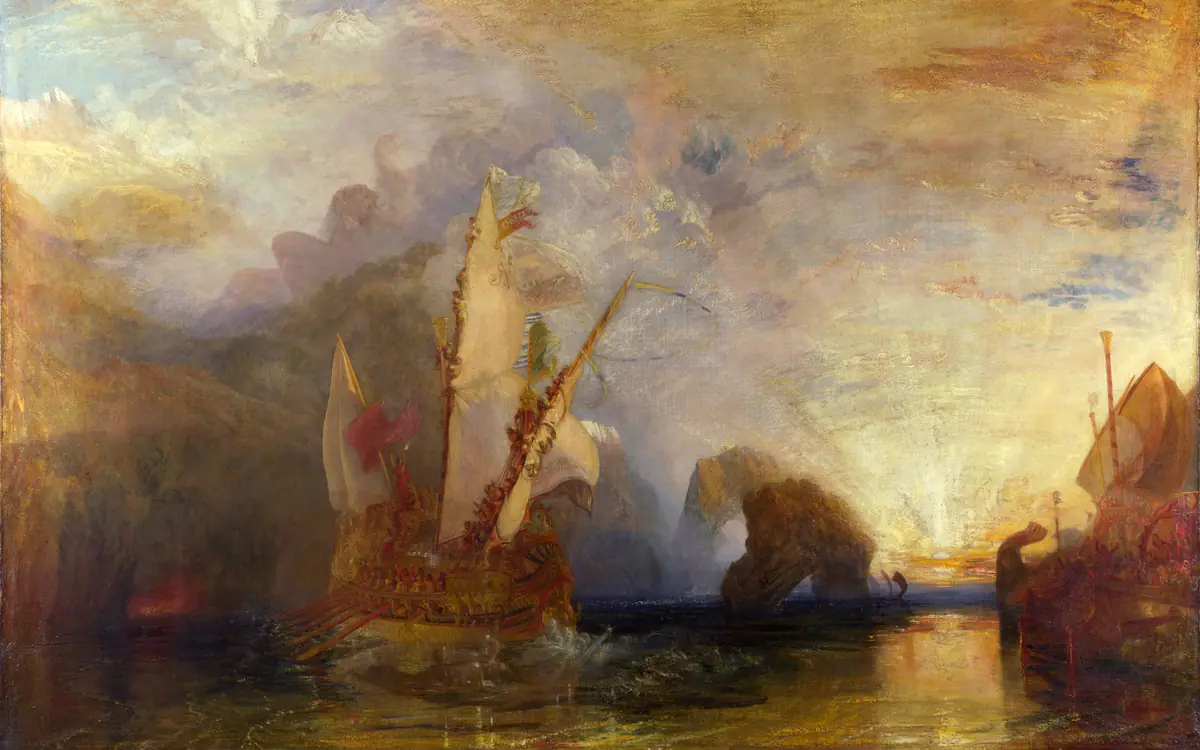
Image: Wikimedia Commons · Public domain (PD-Art) Ulysses Deriding Polyphemus
Look closely. Odysseus's ship, lit by a rich sunrise, pulls away from the coast while the blinded giant is a dim, mountainous presence on the high rocks behind. Look at the horses of the sun rising from the sea, at the fiery cloud, and at how the story is told more by the sky and the water than by close faces.
In the library: The Odyssey · Homer
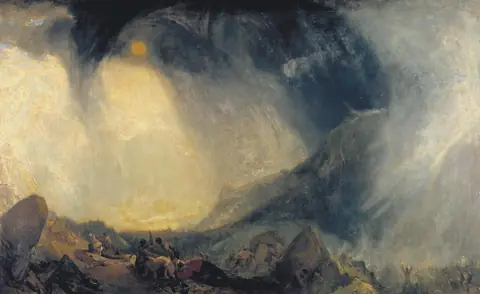
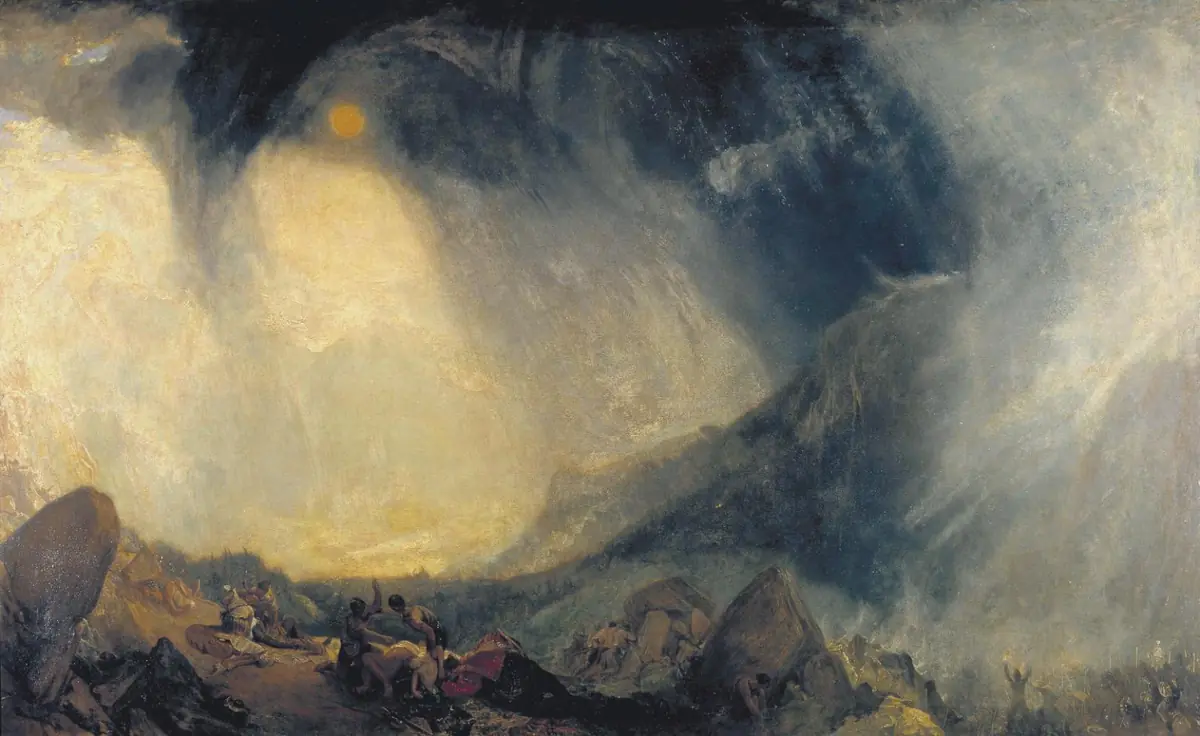
Image: Wikimedia Commons · Public domain (PD-Art) Snow Storm: Hannibal and his Army Crossing the Alps
Look closely. A great curved storm-cloud hangs over a dark alpine pass; Hannibal's army is a scatter of tiny figures, animals and booty in the lower half of the canvas, almost swallowed by the weather. Look at the black arc of the cloud, at the weak sun, and at how little of a famous history painting is spent on the general himself.


What to watch for in J. M. W. Turner
Look slowly- Weather as the subject. Ask what the light is doing, not only what the ships or figures are doing.
- A vortex of sea and sky. In the storm pictures, look at how the brush itself seems to turn.
- Old story, modern weather. A classical title may sit inside a sky that feels observed that morning.
- Steam and sail together. Turner lived through the change from wooden warships to engines; the two often share a canvas.
- Tiny figures, huge air. People can be no larger than a mark, and still set the scale of the whole view.
Dates and collections follow the holding museums and Wikidata. Images of paintings are photographs of public-domain pictures from Wikimedia Commons or museum open-access releases; photographs of sculpture are used only when the photograph itself is Public domain, CC0, or CC BY with a named credit. Each picture links to its source page with full licence details.