Great Art · Romantic
John Constable
The Suffolk painter who made the River Stour, a hay wain and a changing English sky seem worth a lifetime of looking.
His life
John Constable was born in East Bergholt, Suffolk, in 1776, the son of a miller and merchant who owned mills on the River Stour. He knew that countryside as working ground — mills, barges, locks and wet meadows — before he painted it, and he spent years learning to put its weather on canvas with a freshness that first puzzled London. He married Maria Bicknell after a long, opposed courtship, and her death in 1828 marked him deeply.
He was never as fashionable in his lifetime as some of his rivals, and he died in London in 1837. His gift was fidelity to a loved place. A wagon in the river, a wet towpath, or a sky full of moving cloud can feel as if it were painted on the spot, even when it was finished in the studio, because he had looked at that ground for so long.
Key works
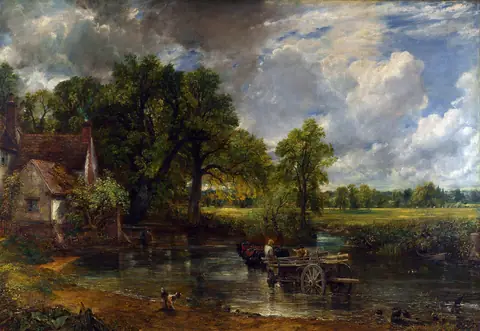
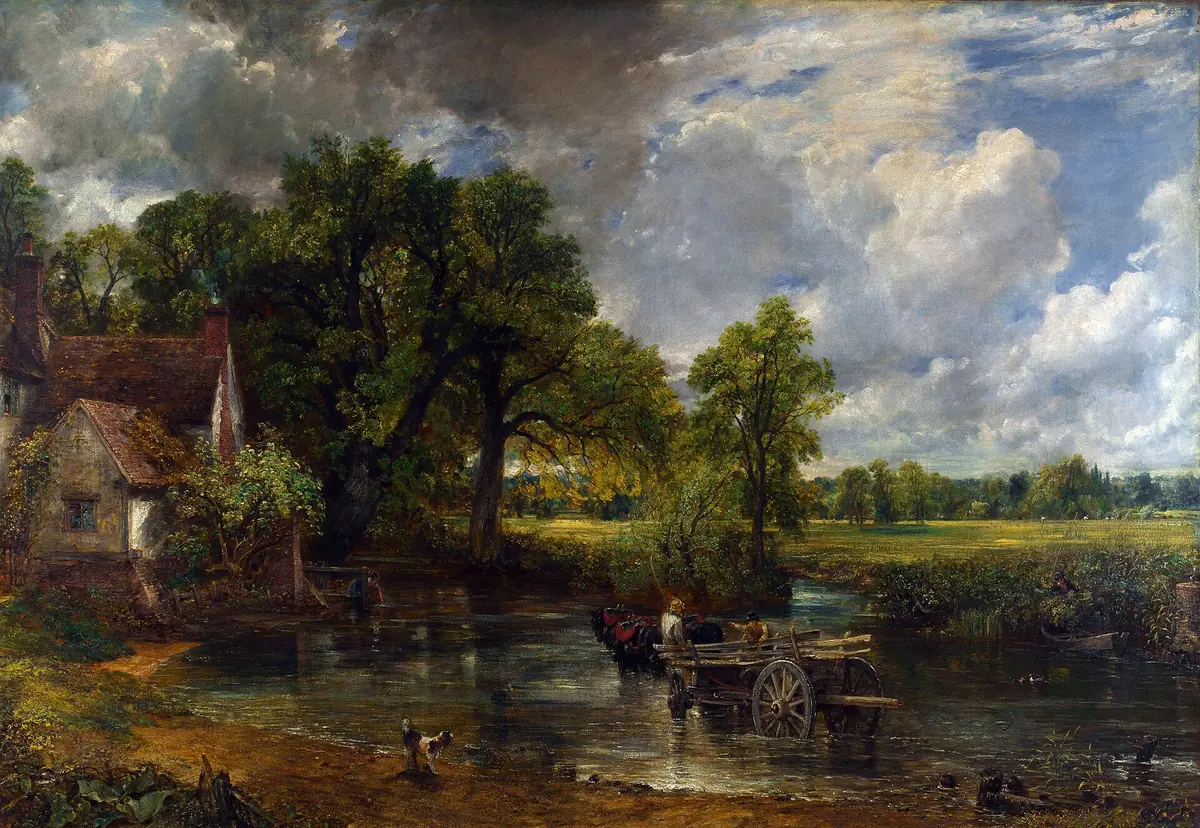
Image: Wikimedia Commons · Public domain (PD-Art) The Hay Wain
Look closely. A hay wagon stands in the shallow Stour in front of Willy Lott's cottage, with a dog at the near bank, a meadow and distant trees under a wide, moving sky. Look at the wet tracks on the shore, at the play of cloud-shadow on the fields, and at how ordinary the scene is — a working wagon, not a history picture — and still how carefully every part of the weather is seen.
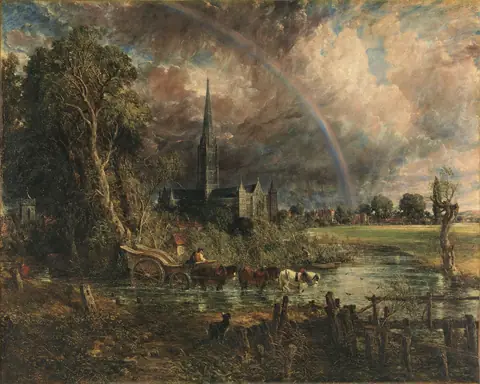
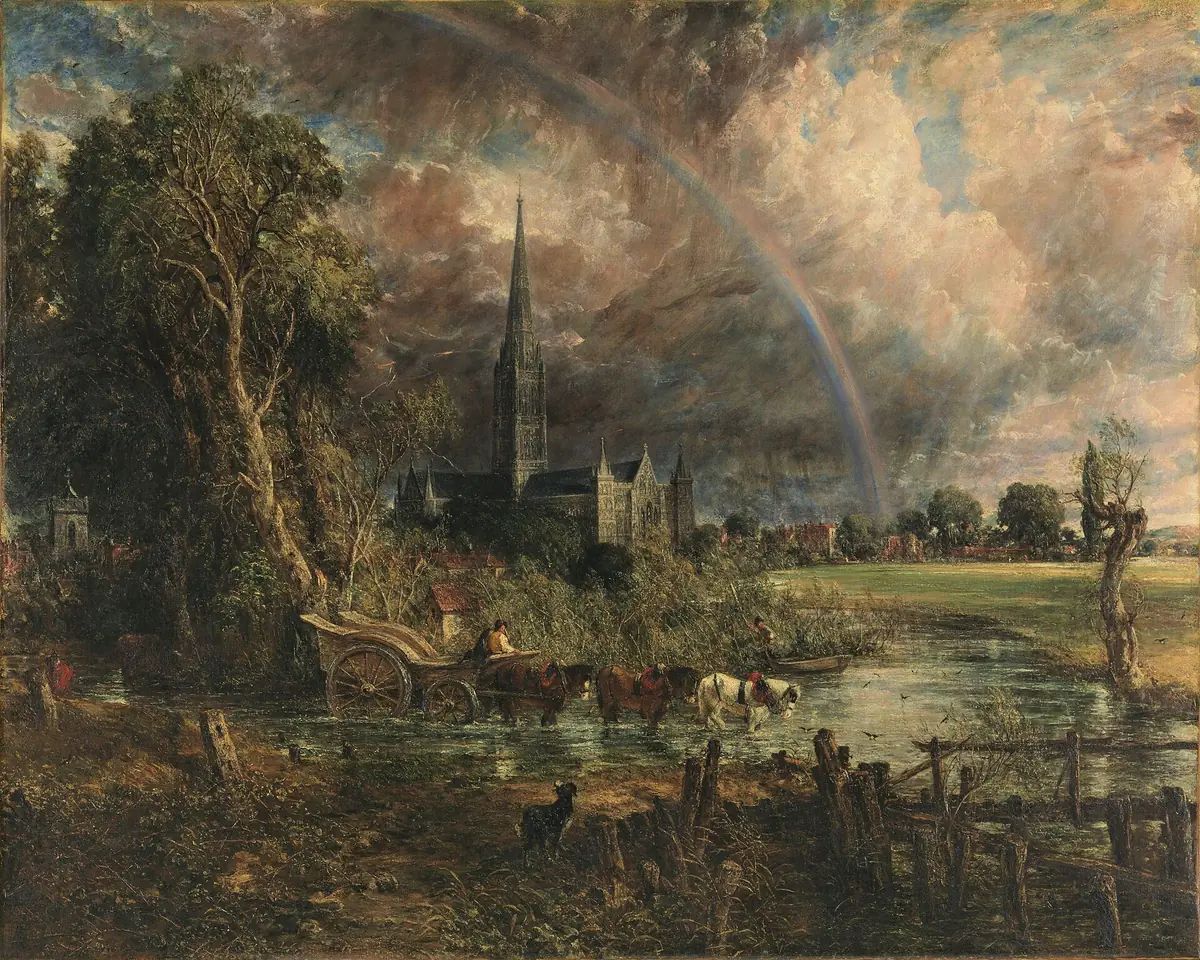
Image: Wikimedia Commons · Public domain (PD-Art) Salisbury Cathedral from the Meadows
Look closely. The cathedral spire rises through a stormy sky, with a wagon in the stream in the foreground, a dog, and a rainbow arching toward the church. Look at the broken light after rain, at the rainbow's careful placement, and at how the great church is set in wet working meadows rather than in a formal close.
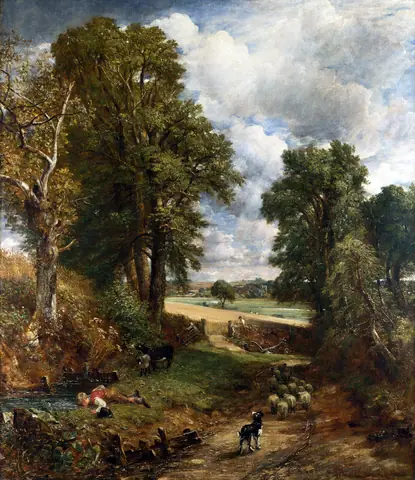
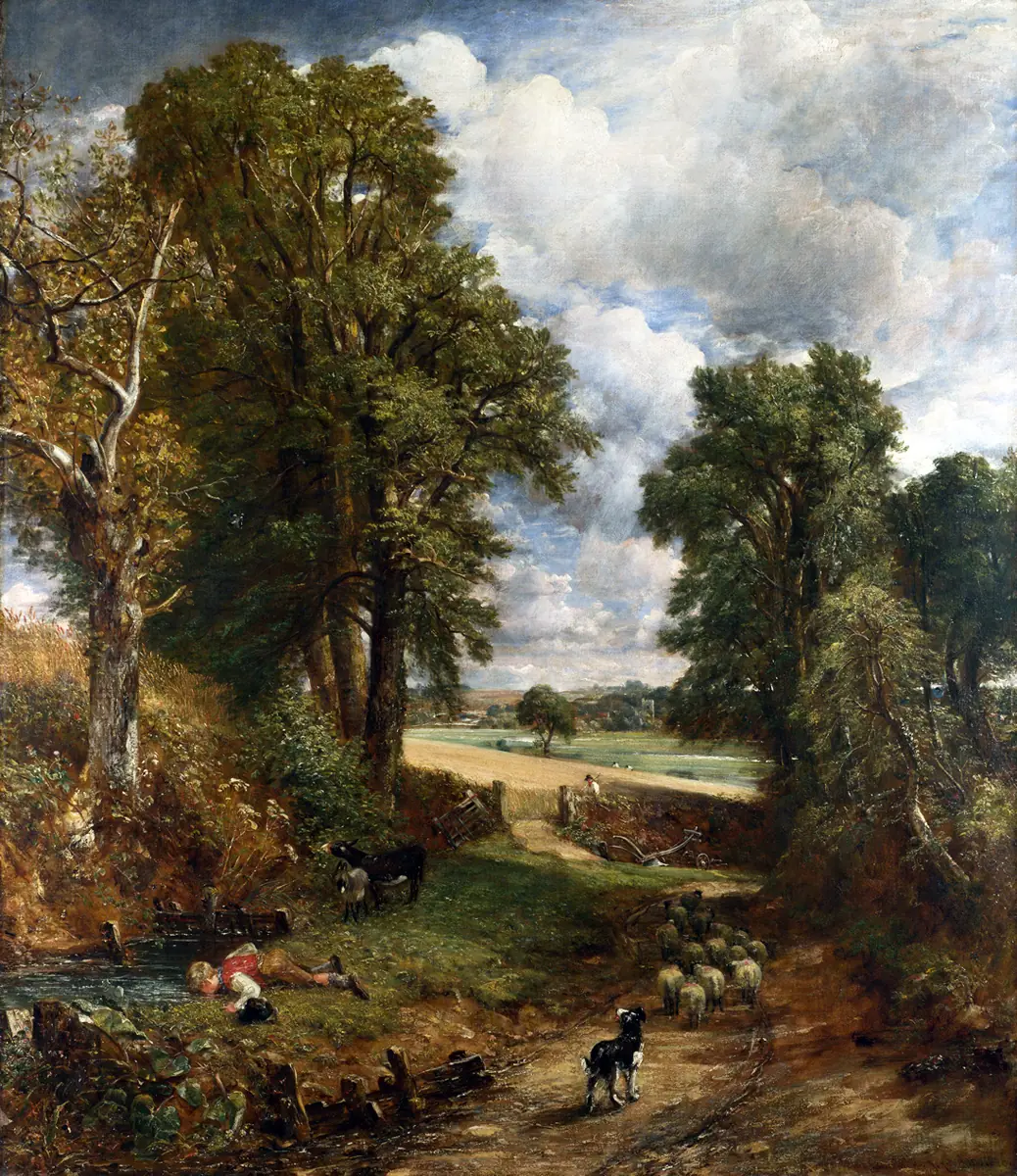
Image: Wikimedia Commons · Public domain (PD-Art) The Cornfield
Look closely. A lane runs between trees toward a cornfield and a distant church; a boy lies on the bank to drink from a stream, and sheep wait in the road. Look at the heat of the standing corn, at the deep shade of the lane, and at the small, ordinary thirst of the boy in the middle of a carefully built English summer.
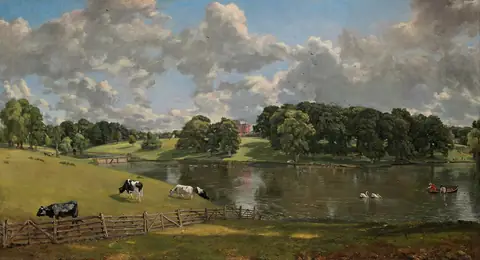
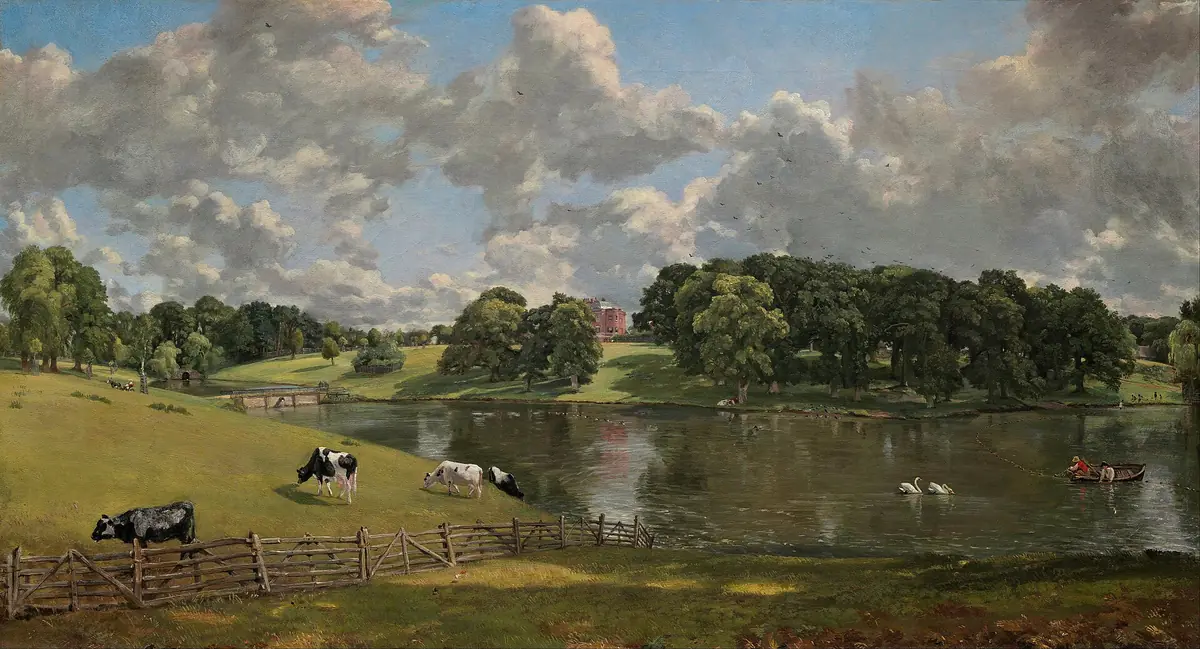
Image: Wikimedia Commons · Public domain (PD-Art) Wivenhoe Park
Look closely. A wide Essex park stretches under a fresh sky, with cattle, a lake, a house among trees, and small figures in a boat. Look at the long, level light on the grass, at the reflections in the water, and at how an estate portrait still feels like weather observed, not only property displayed.
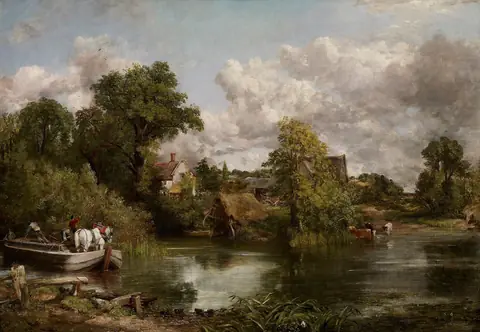
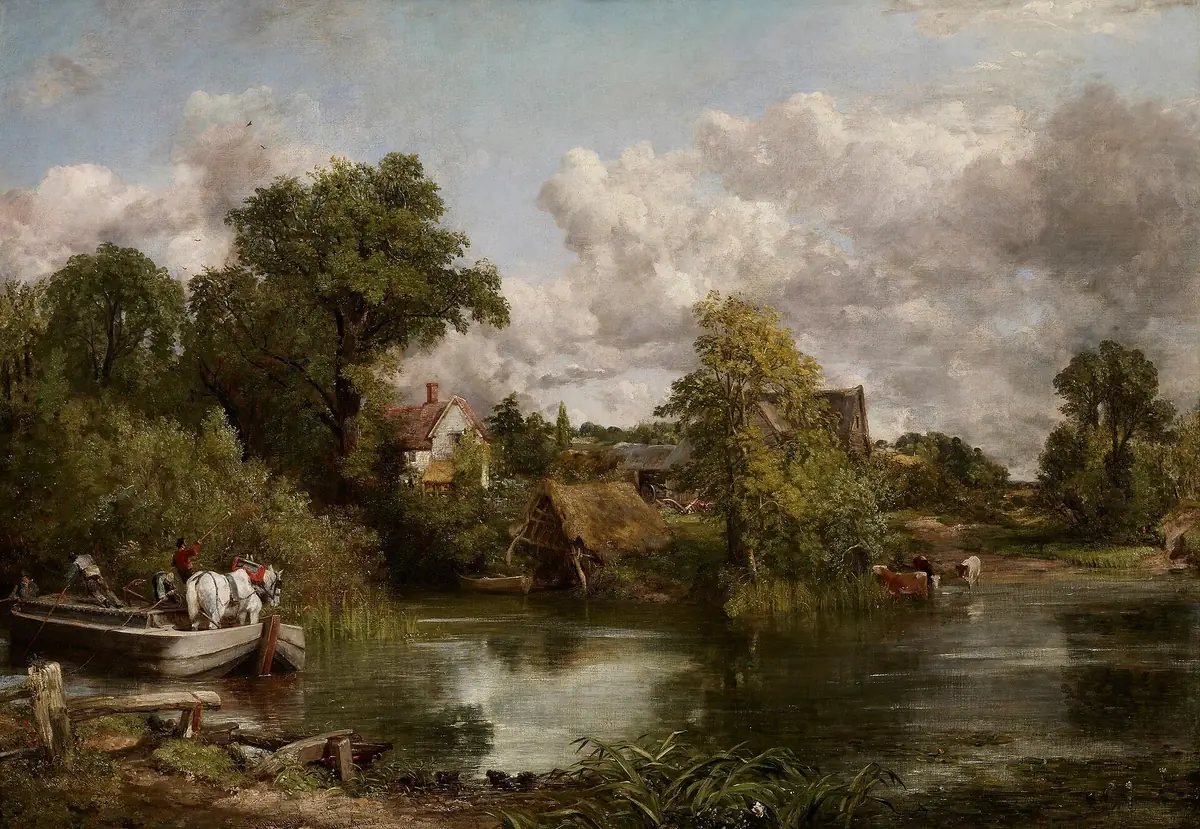
Image: Wikimedia Commons · Public domain (PD-Art) The White Horse
Look closely. A barge in the Stour carries a white horse, with trees, a cottage and a wet towpath under a lively sky. Look at the animal's pale shape against the dark trees, at the still and moving water together, and at the sense of a working river caught between one bank and the other.
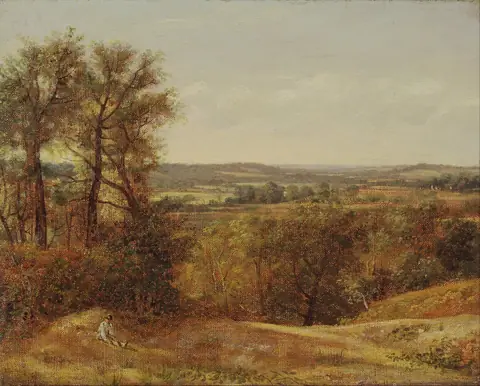
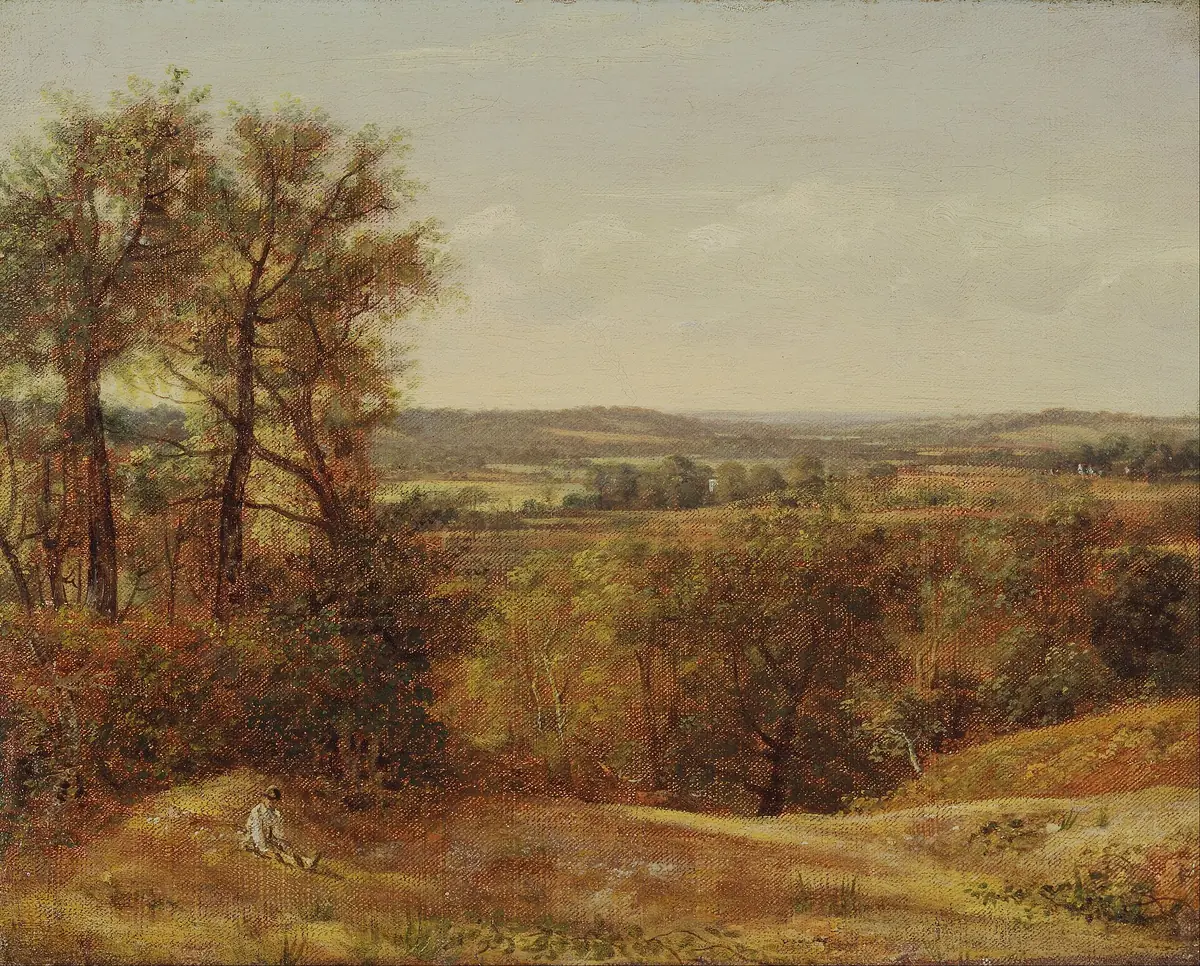
Image: Wikimedia Commons · Public domain (PD-Art) Dedham Vale
Look closely. From a high path, tall trees frame a drop into the wooded vale; a figure in pale clothes sits on the bank in the left foreground, and a small light building shows in the middle distance under a quiet sky. Look at the early, careful view of the country Constable loved, at the seated figure who gives the slope its scale, and at how much of the picture is already given to trees and air.
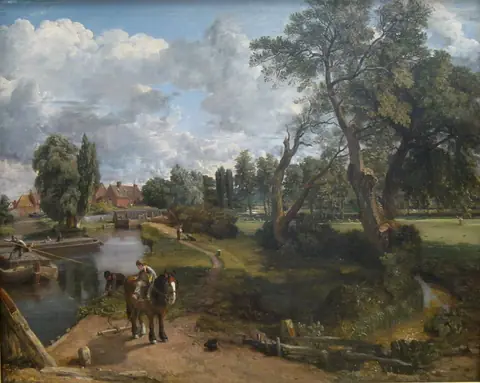
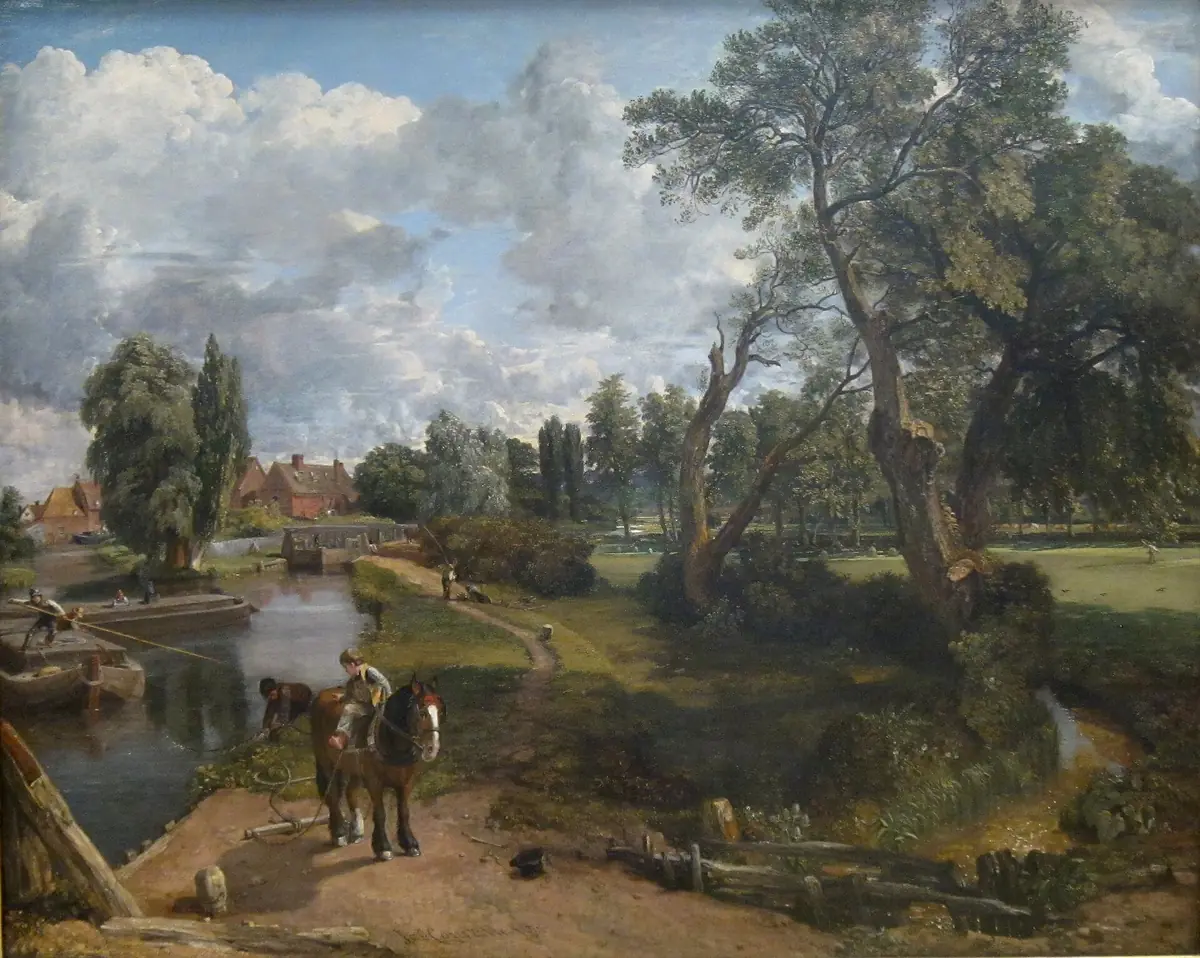
Image: Wikimedia Commons · CC0 (public domain) Flatford Mill (Scene on a Navigable River)
Look closely. The mill and its outbuildings stand by the Stour, with a barge, a boy on a horse, and the wet, worked edge of the river in the foreground. Look at the structure of the mill, at the towpath and the water, and at how a family place — his father's mill — is painted as a scene of labour and still reflection together.


What to watch for in John Constable
Look slowly- A working river. Look for barges, mills, horses and wet ground, not only a pretty view.
- The sky as the source of light. Clouds are studied, not filled in as a blue lid.
- A loved, particular place. Dedham Vale and the Stour return again and again; ask what has changed from picture to picture.
- Fresh, broken paint. Highlights on water or a wet meadow can be laid on as little touches of white.
- A distant tower. A church spire often steadies a wide landscape.
Dates and collections follow the holding museums and Wikidata. Images of paintings are photographs of public-domain pictures from Wikimedia Commons or museum open-access releases; photographs of sculpture are used only when the photograph itself is Public domain, CC0, or CC BY with a named credit. Each picture links to its source page with full licence details.