Great Art · Hudson River School
Thomas Cole
The English-born founder of the Hudson River School, who gave the American wilderness a moral weather and a whole human life in four pictures.
His life
Thomas Cole was born in Bolton, England, in 1801 and emigrated with his family to the United States as a young man. He worked first as an engraver and itinerant portraitist, then found his subject in the landscape of the Hudson and the Catskills. He became the leading painter of a generation that treated American wilderness as a serious, even sacred, subject, and he also painted ambitious allegories — The Course of Empire and The Voyage of Life — in which a landscape tells a moral story.
He settled at Catskill, New York, married, and died there in 1848, still in his forties. His gift was to join close observation of trees, weather and distance with a clear design: a river bend after a storm, a boat on a stream, or a ruined colonnade can be both a real place and a lesson about time.
Key works
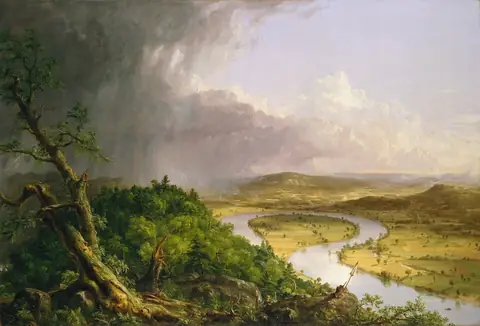
Image: Wikimedia Commons · Public domain (PD-Art) The Oxbow (View from Mount Holyoke, Northampton, Massachusetts, after a Thunderstorm)
Look closely. After a storm, the Connecticut River makes a great bent loop through cultivated fields, while the left-hand wilderness is still dark under departing rain; a tiny painter sits with his easel on the hillside in the lower centre. Look at the contrast between the wild, broken trees and the settled, sunlit farms, and at the little artist who has climbed up to see the whole bend at once.
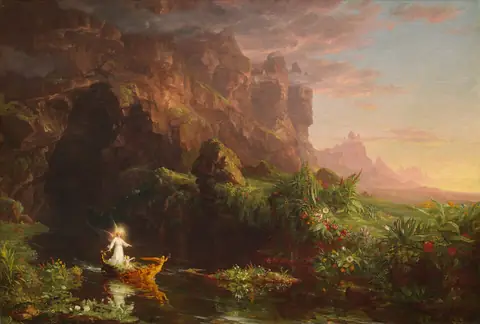
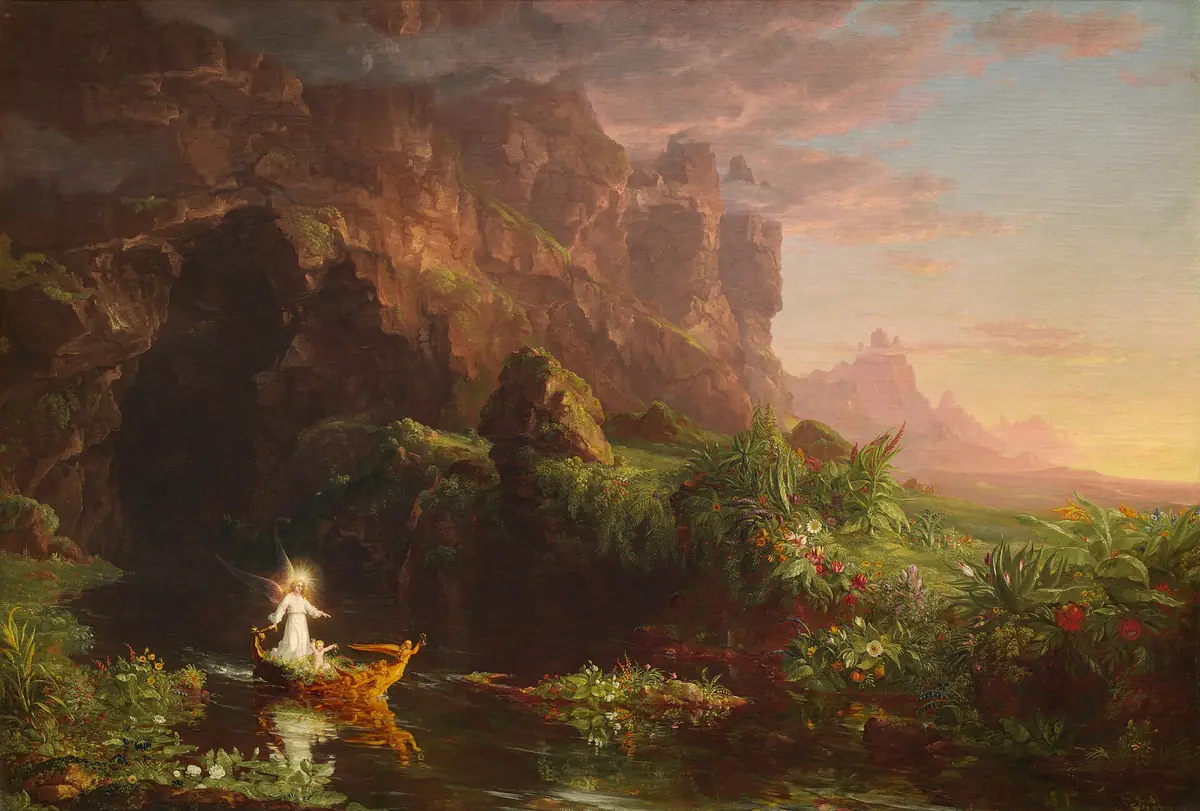
Image: Wikimedia Commons · Public domain (PD-Art) The Voyage of Life: Childhood
Look closely. A golden boat comes out of a dark cave onto a calm stream in the early morning; a child sits among flowers in the prow, and a tall angel stands at the tiller. Look at the way the cave and the first light divide the picture, at the carved figures on the boat, and at the sense that a whole life is just beginning on a still, narrow water.
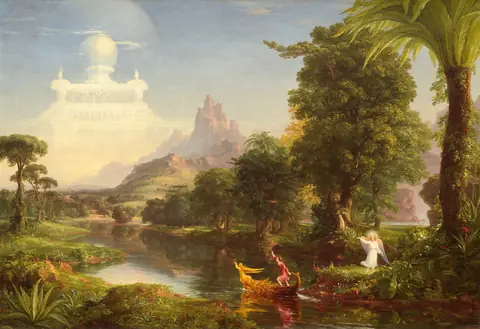
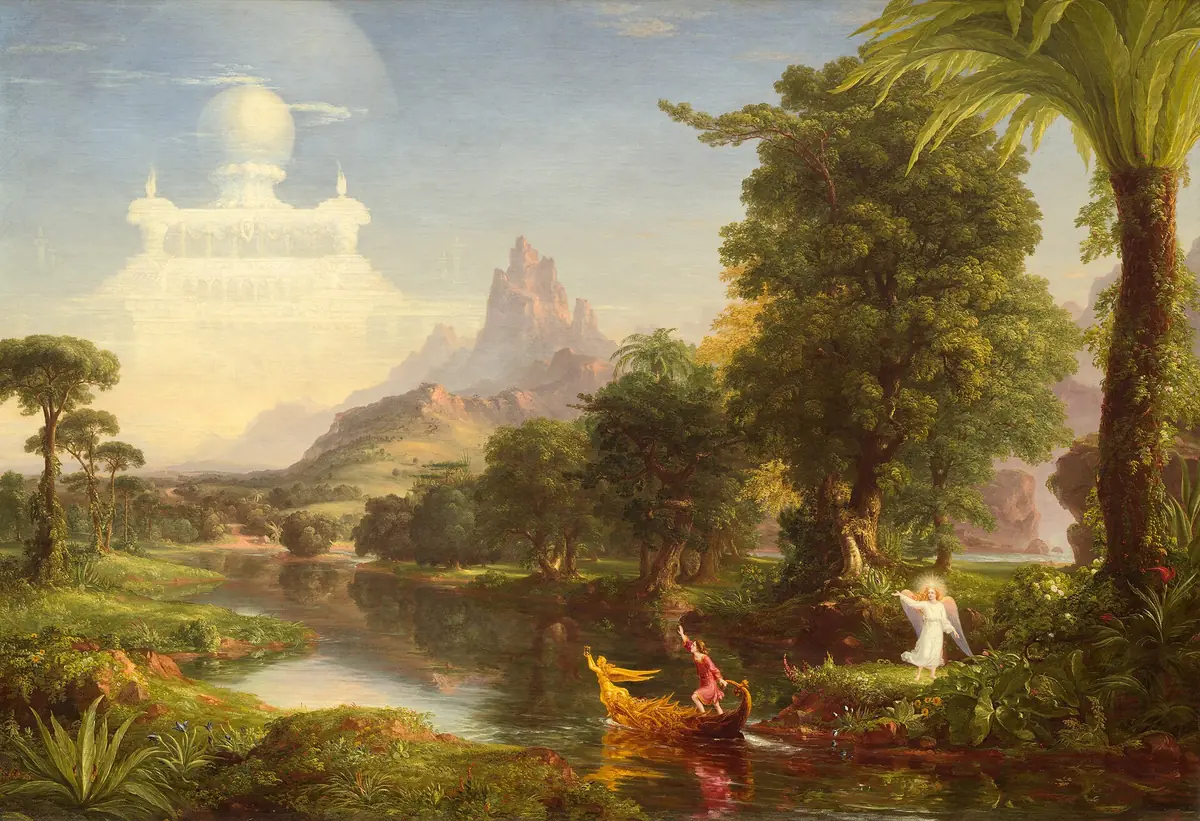
Image: Wikimedia Commons · Public domain (PD-Art) The Voyage of Life: Youth
Look closely. The same gilded boat is now in the young man's own hands; he stands and gestures toward a pale palace of clouds in the sky, while the guardian angel remains on the bank behind him. Look at the confident figure, at the still-smooth water, and at how the dreamed building hangs in the air ahead, not yet tested by a rougher stream.
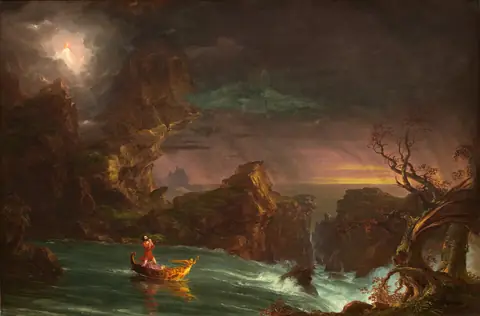
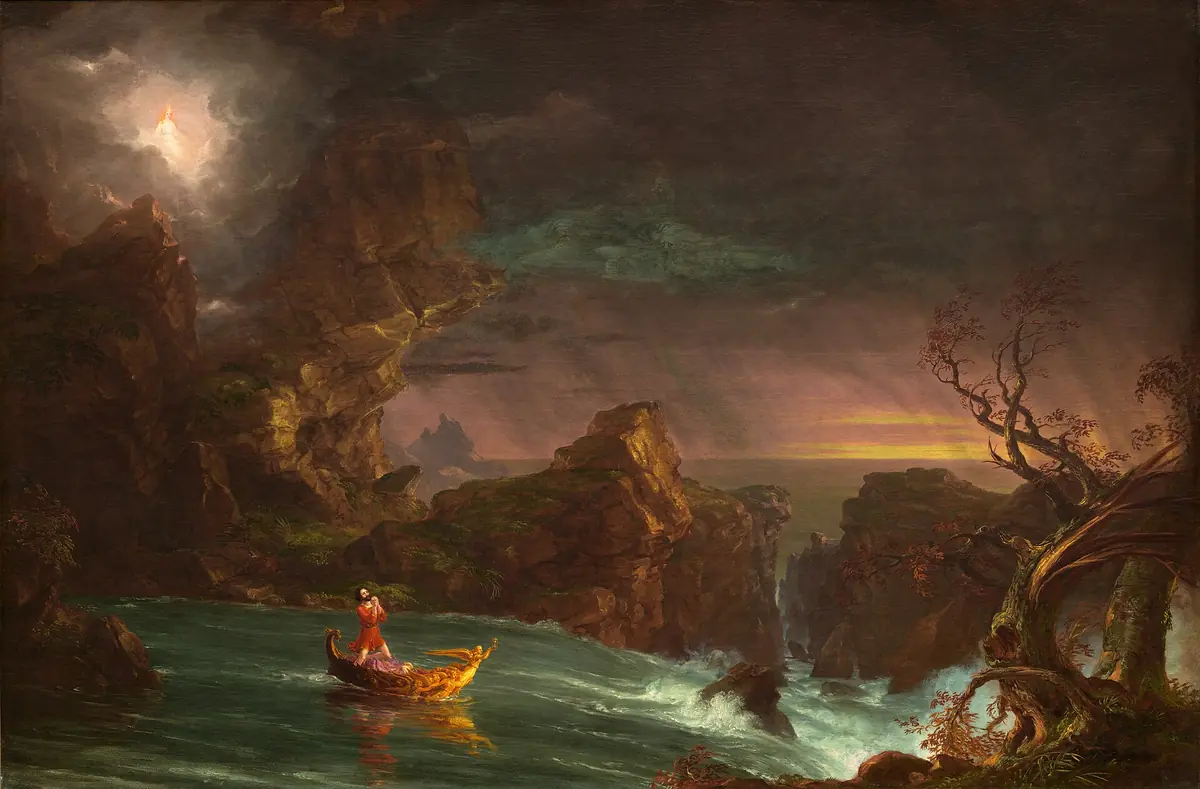
Image: Wikimedia Commons · Public domain (PD-Art) The Voyage of Life: Manhood
Look closely. The stream has become a dark torrent between rocks; the man is in the boat alone, hands raised, the tiller no longer easy, while the angel is a small, distant presence in the clouds. Look at the broken water, at the lack of a clear path, and at how the same voyage that began in a cave is now a trial of weather and faith.
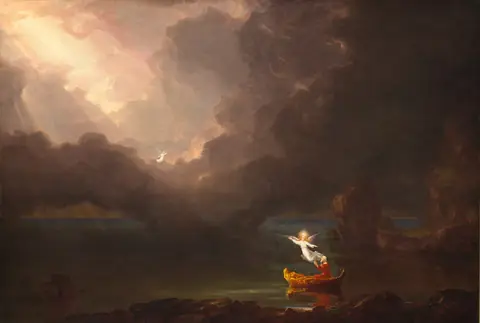
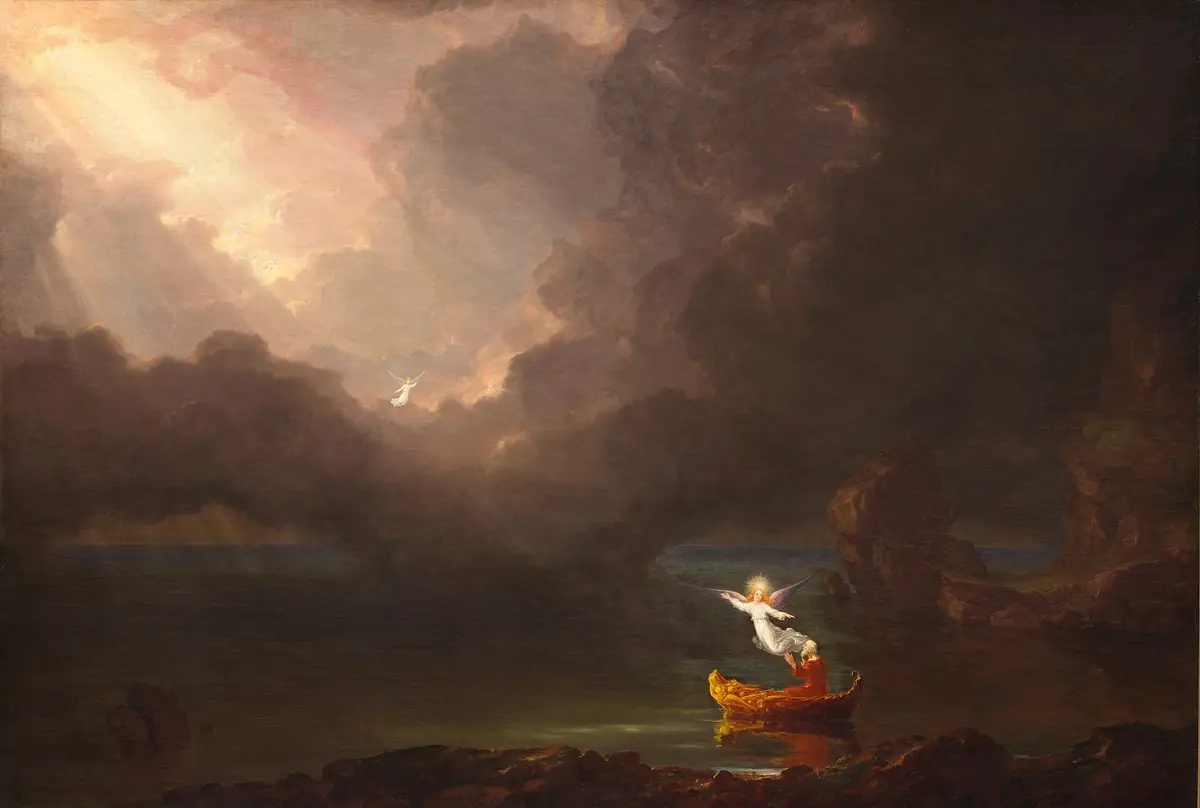
Image: Wikimedia Commons · Public domain (PD-Art) The Voyage of Life: Old Age
Look closely. The water is still and dark among rocks; an old man in a red robe sits in the worn golden boat, and a shining angel is close beside him, while another small figure of light appears in a break in the clouds at the left. Look at the quiet of the last water, at the wreck of the boat's ornaments, and at how the light, not the landscape, now seems to be the destination.
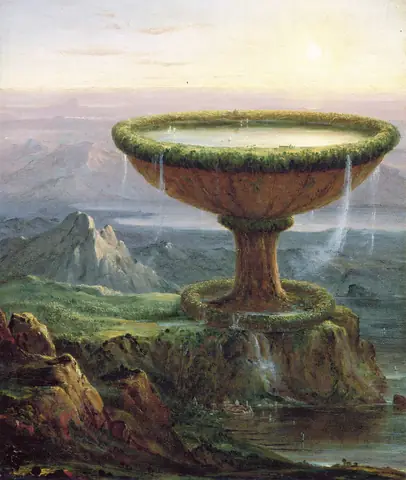
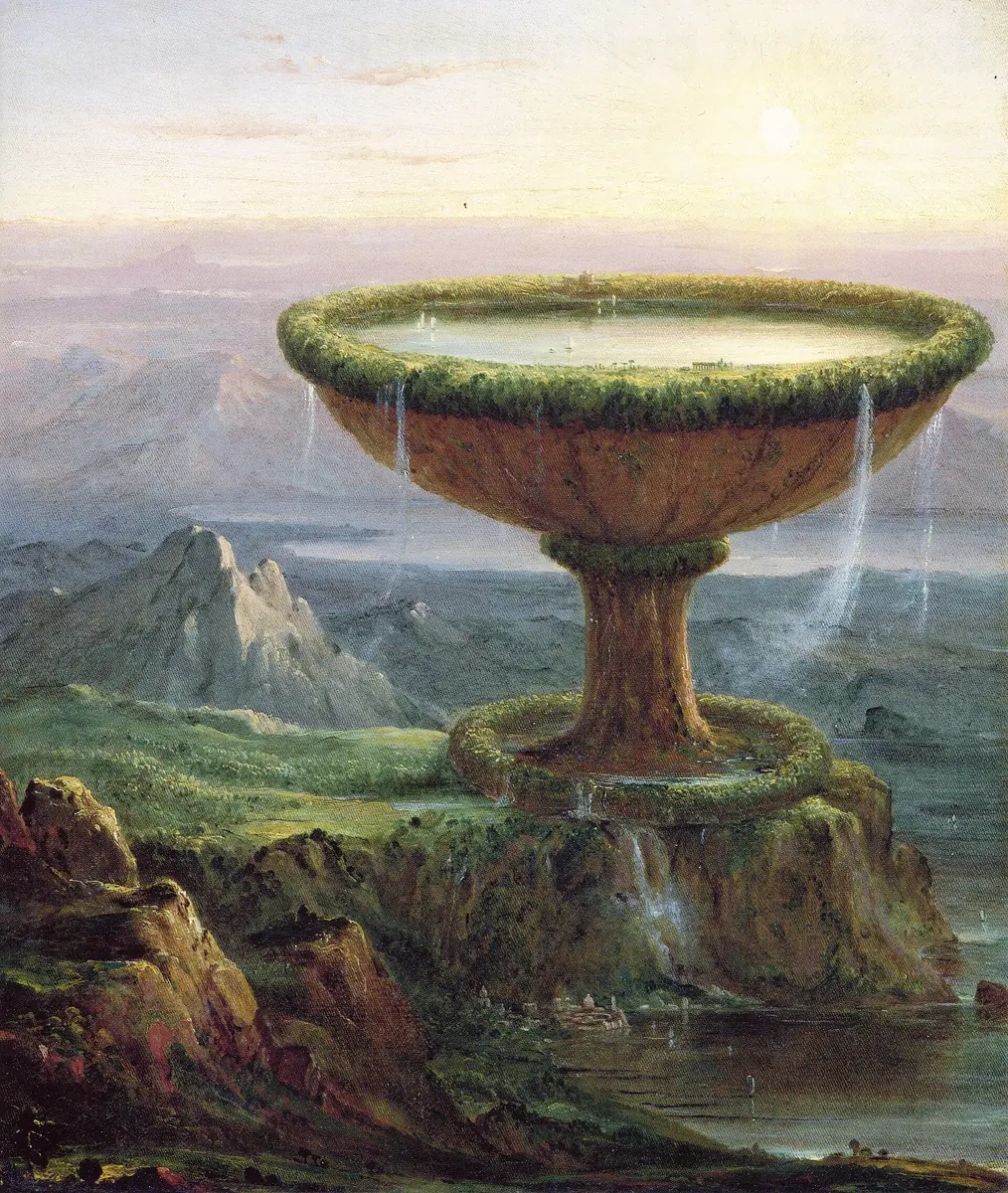
Image: Wikimedia Commons · Public domain (PD-Art) The Titan's Goblet
Look closely. An enormous stone goblet stands in a wide landscape, its rim a world of its own, with tiny trees, buildings and boats on the water that fills the cup. Look at the impossible scale, at the little civilisation around the rim, and at the ordinary hills and sea beyond, as if a myth had been set down in a real country.
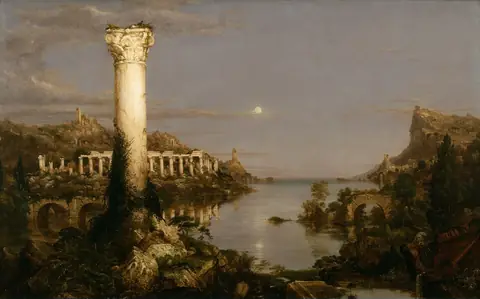
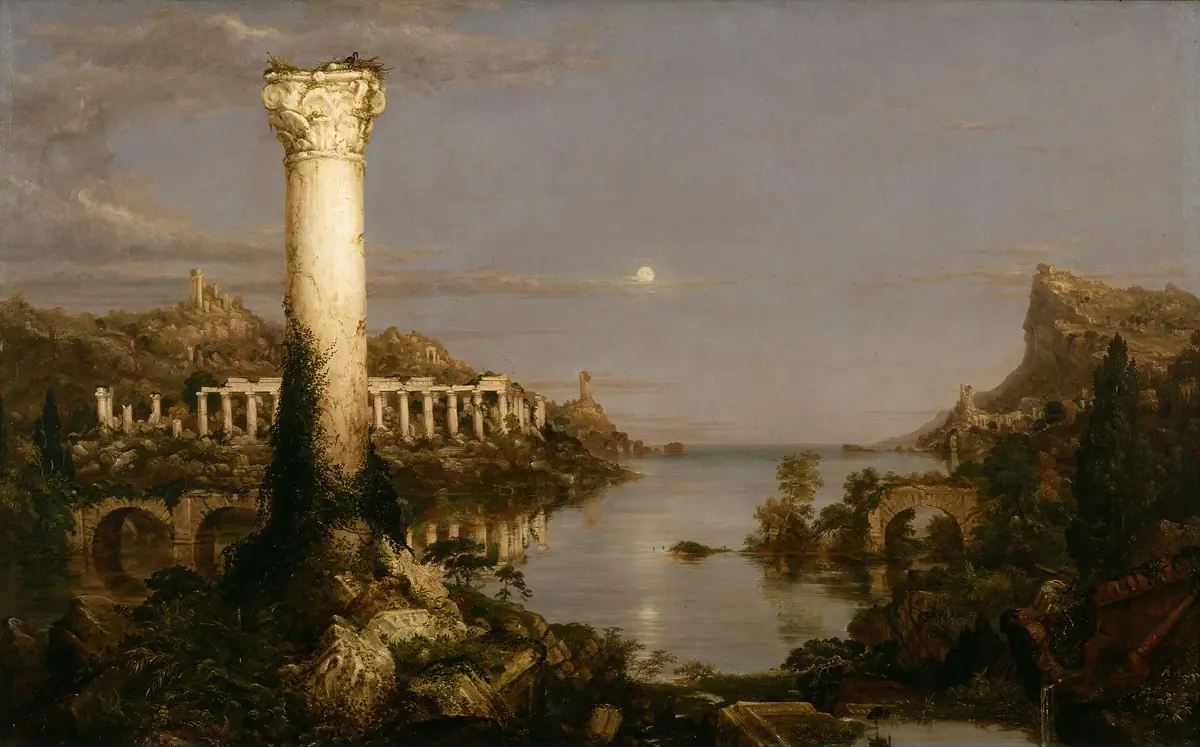
Image: Wikimedia Commons · Public domain (PD-Art) The Course of Empire: Desolation
Look closely. Moonlight falls on the ruins of a once-great city: a broken column in the foreground, a still water, a heron, and a lonely standing fragment farther out, with no people left. Look at how quiet the last picture in the cycle is, at the single bird, and at the way a column and a pool are enough to say that time has finished with this place.
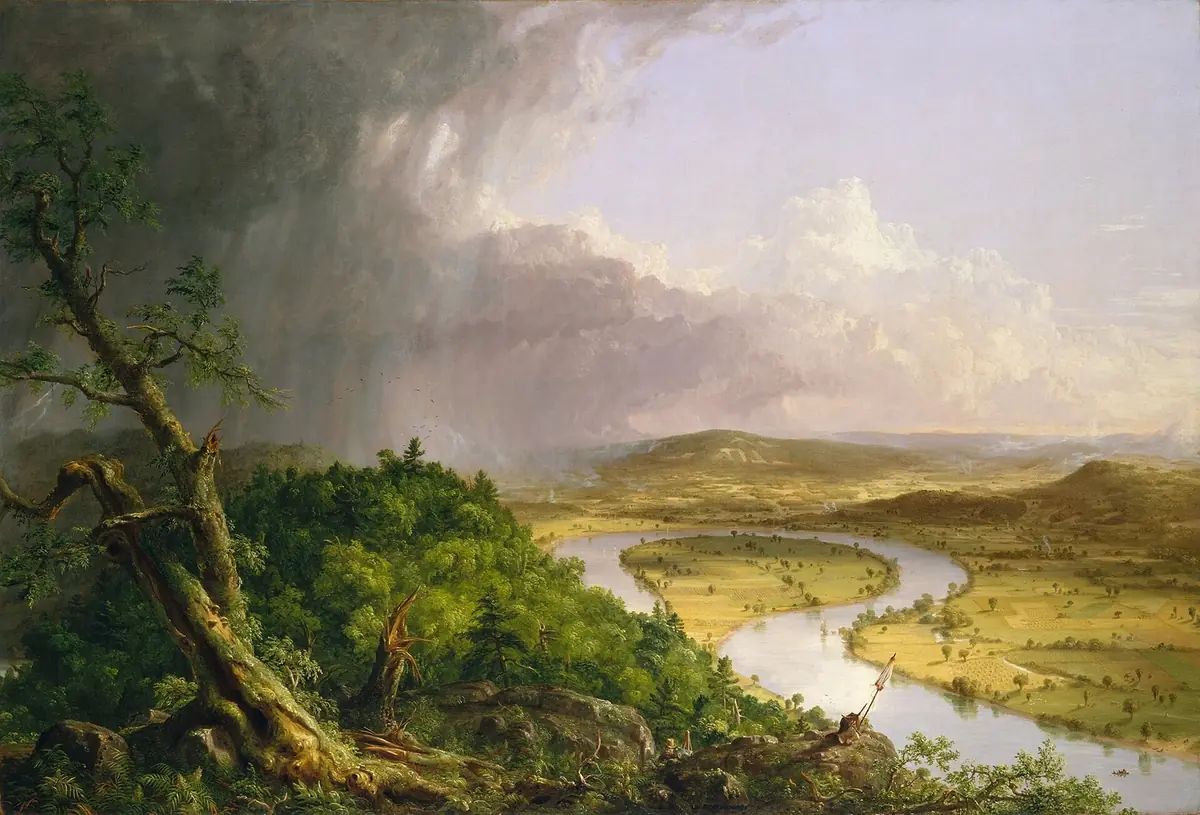


What to watch for in Thomas Cole
Look slowly- Wilderness with a viewpoint. A tiny painter, a broken tree, or a path often tells you where to stand.
- A moral weather. Storm, morning, or moonlight may carry the argument of the picture.
- The same stream, four times. In The Voyage of Life, read the boat, the angel and the water from childhood to old age.
- Empire in a cycle. The Course of Empire shows a place through time; Desolation is the last word.
- The American scale. Distance is deep; a river or a mountain range can dwarf the figures.
Dates and collections follow the holding museums and Wikidata. Images of paintings are photographs of public-domain pictures from Wikimedia Commons or museum open-access releases; photographs of sculpture are used only when the photograph itself is Public domain, CC0, or CC BY with a named credit. Each picture links to its source page with full licence details.