Great Art · Baroque (France)
Georges de La Tour
The painter of candlelight in Lorraine, who made a single flame enough to hold a Gospel story or a quiet act of work.
His life
Georges de La Tour was born in 1593 at Vic-sur-Seille in Lorraine and spent his mature life in Lunéville, as painter to the dukes of Lorraine. Little is known of his training; some of his daylight pictures of musicians and cardsharps look toward Caravaggio's followers, but his night scenes are his own. He painted slowly, repeating a few beloved subjects — a Magdalene, a sleeping Joseph, a newborn child — and letting a candle do the work of a whole window.
He died in Lunéville in 1652, in a time of war and plague. His gift was concentration. A hand, a cheek, or a book can emerge from the dark as if from prayer, and the rest of the world can wait outside the circle of the flame.
Key works
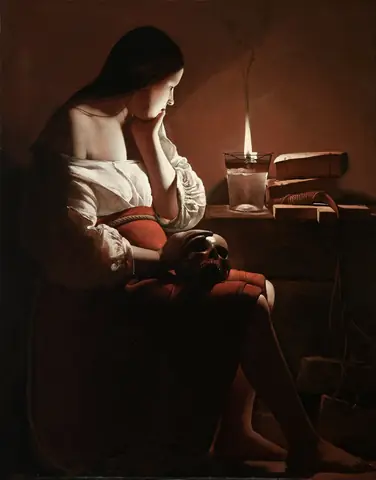
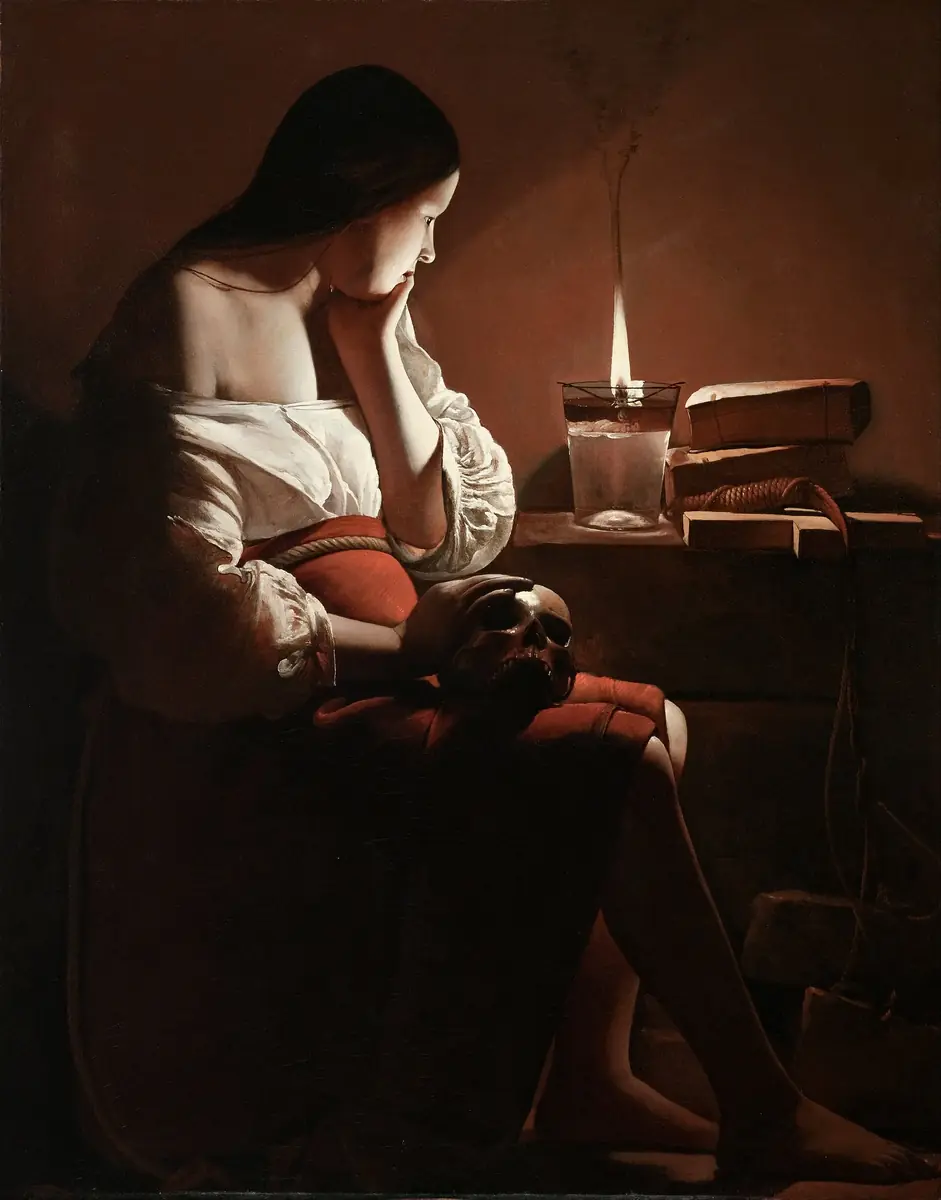
Image: Wikimedia Commons · Public domain (PD-Art) The Magdalen with the Smoking Flame
Look closely. Mary Magdalene sits in a dark room, her cheek on her hand, a skull in her lap, a glass of oil with a tall, smoking flame on the table beside a small stack of books and a wooden cross. Look at how the light models her face and the skull together, at the rope at her waist, and at the still, thinking posture of repentance.
In the library: The Bible (KJV) · Mary Magdalene
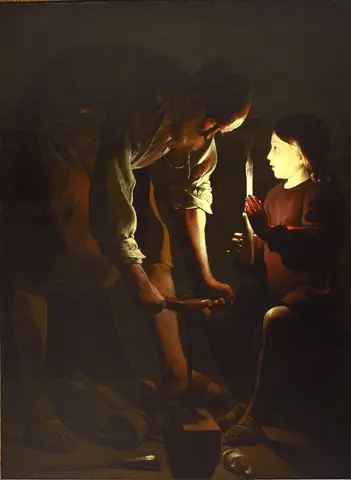
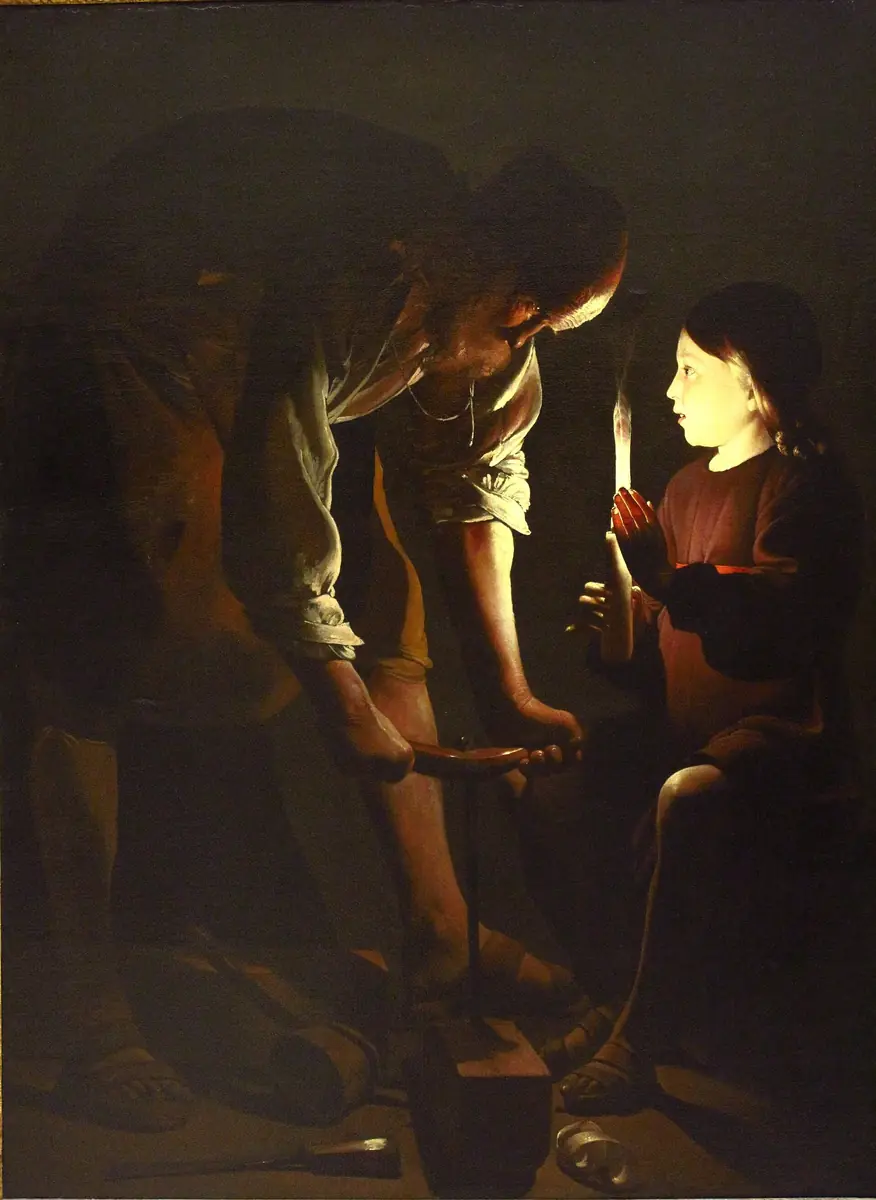
Image: Wikimedia Commons · Public domain (PD-Art) Joseph the Carpenter
Look closely. Joseph leans over his work, an awl or drill in his hands, while the child Jesus holds a candle that lights both faces. Look at the grain of the timber, at the child's intent, almost grave attention, and at how a carpenter's shop at night becomes a picture of earthly fatherhood and of coming sacrifice (the timber and the flame already hint at the Cross).
In the library: The Bible (KJV) · Joseph of Nazareth · Jesus Christ
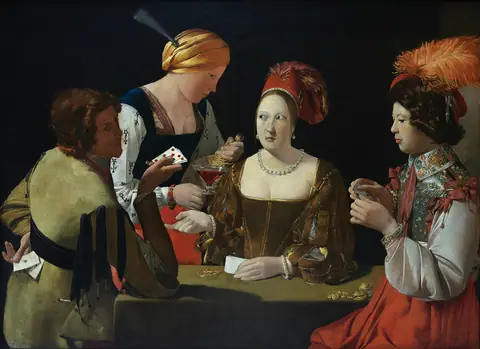
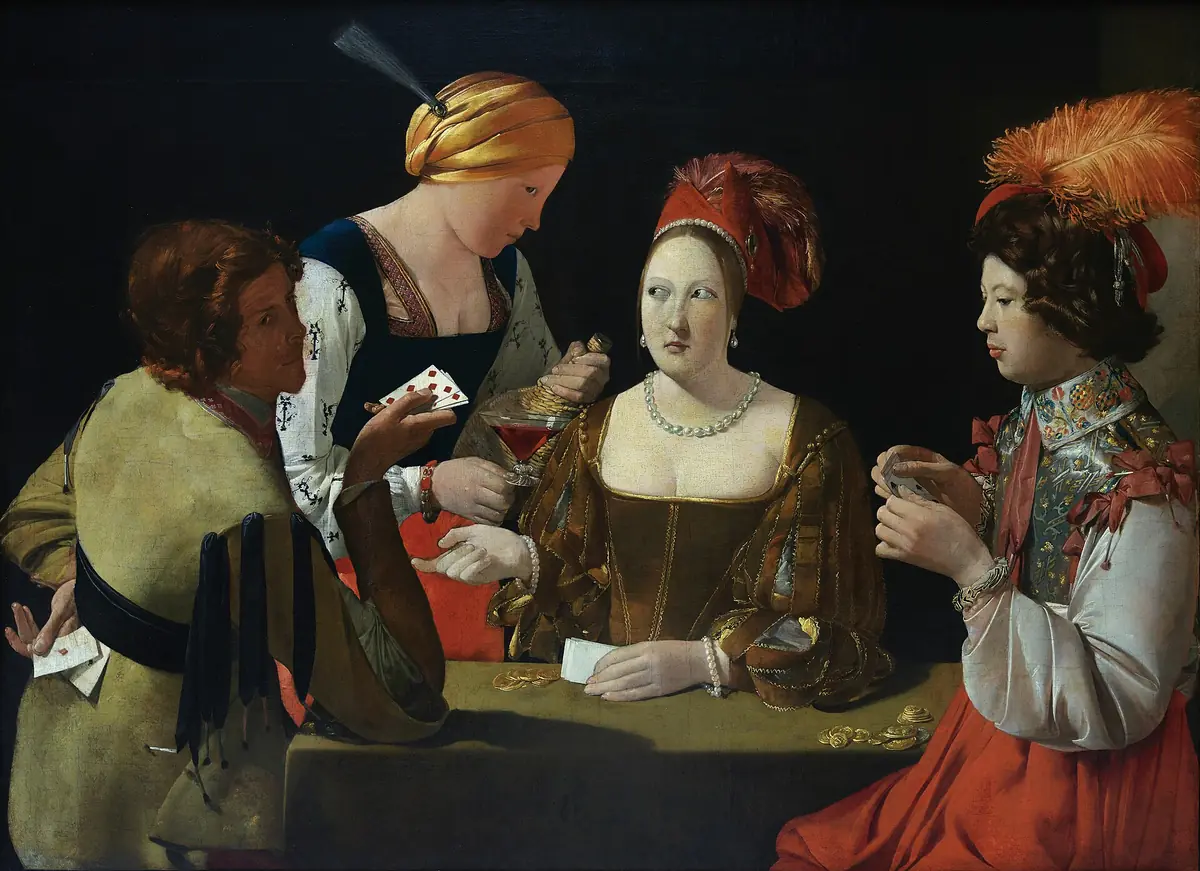
Image: Wikimedia Commons · Public domain (PD-Art) The Cheat with the Ace of Diamonds
Look closely. Around a card table, a richly dressed youth studies his hand while a woman signals and a servant or cheat draws the ace of diamonds from his belt. Look at the contrast between the boy's unguarded profile and the sharp, sidelong faces of the others, at the sheen of the costumes, and at how a genre scene is built like a quiet drama of temptation.
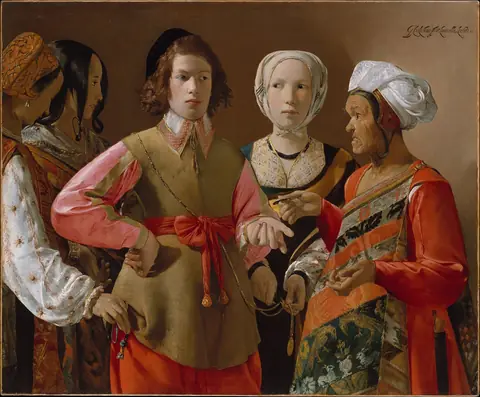
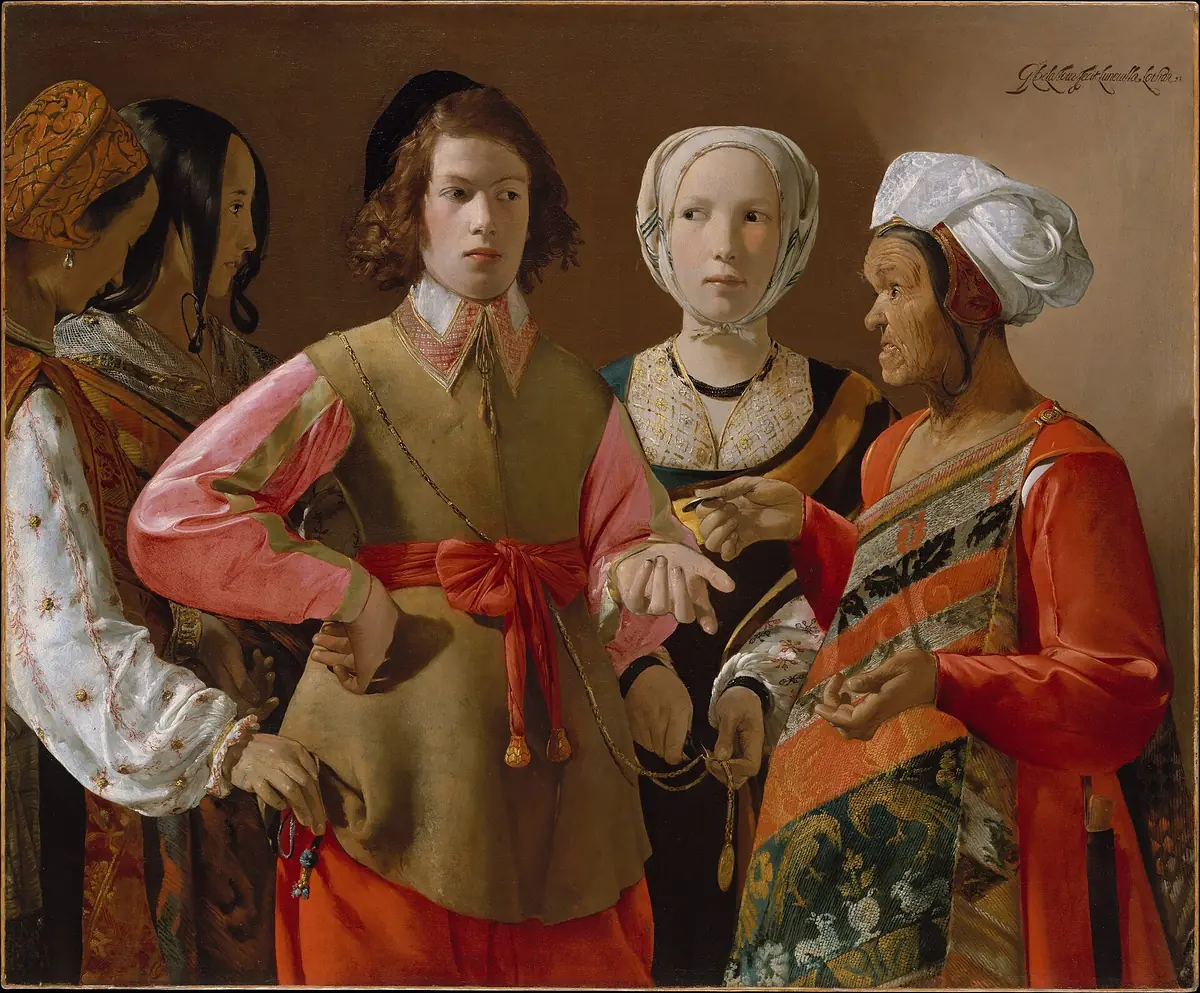
Image: Wikimedia Commons · Public domain (PD-Art) The Fortune Teller
Look closely. A well-dressed young man holds out his palm to a fortune teller while other figures close in at his side and his purse is already in danger. Look at the pale, trusting face, at the busy hands around him, and at the cool daylight — a different world from La Tour's candlelit rooms, but just as carefully staged.
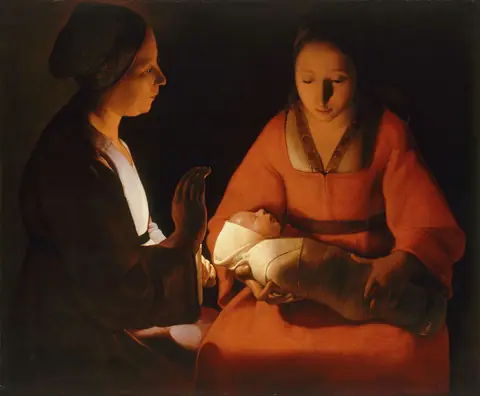
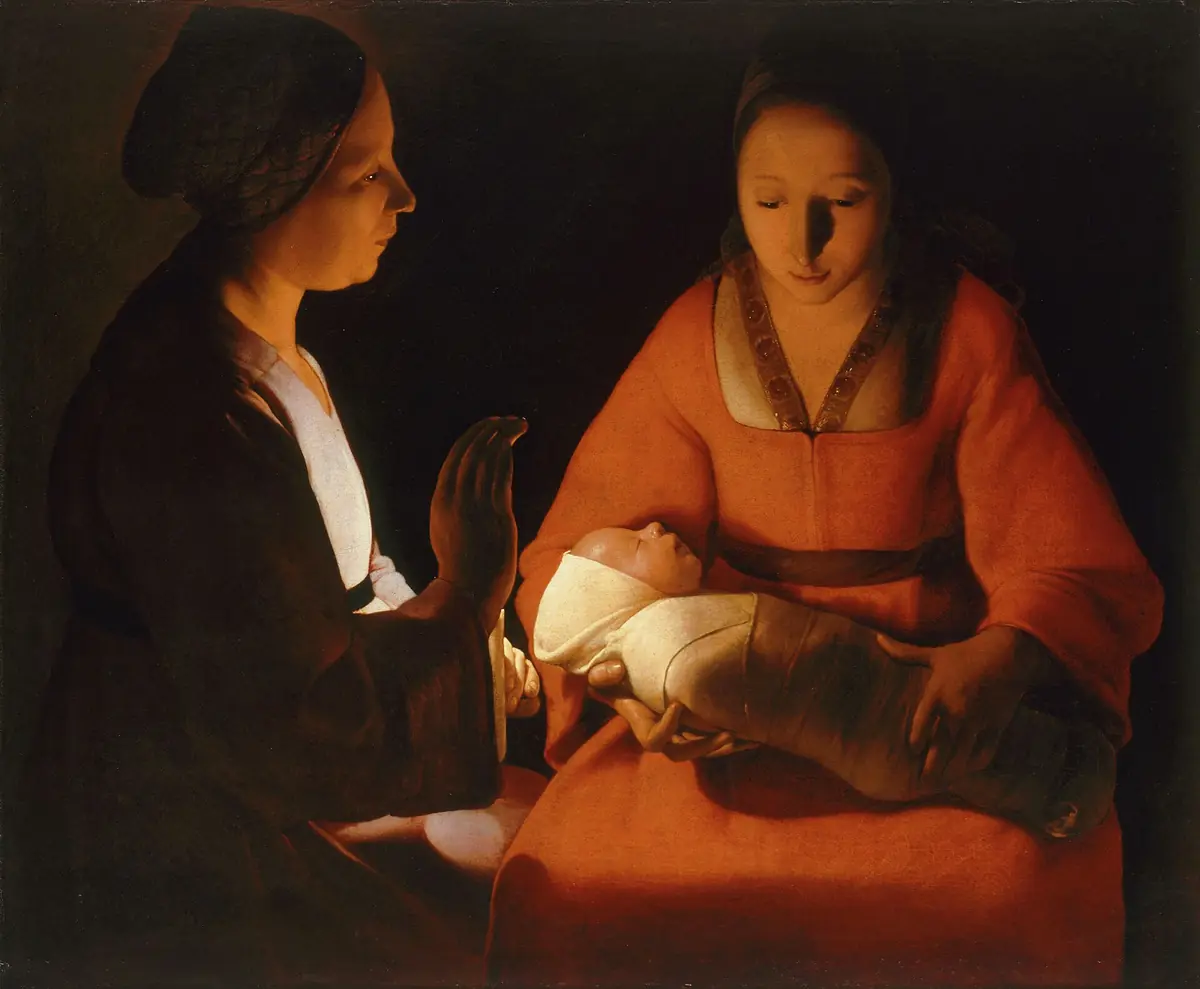
Image: Wikimedia Commons · Public domain (PD-Art) The Newborn
Look closely. Two women, one of them almost certainly Mary, sit in a cave of darkness and look down at a tightly wrapped infant; a hidden candle lights the child's face and their bent heads. There is no stable crowd, no angels: only the new life and the watchers. Look at the oval of light on the swaddling, at the quiet hands, and at how little is needed to make a Nativity.
In the library: The Bible (KJV) · Mary, mother of Jesus · Jesus Christ
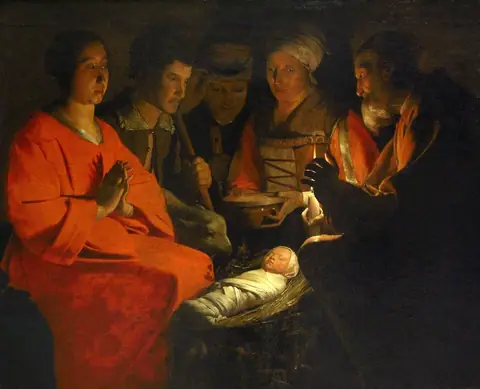
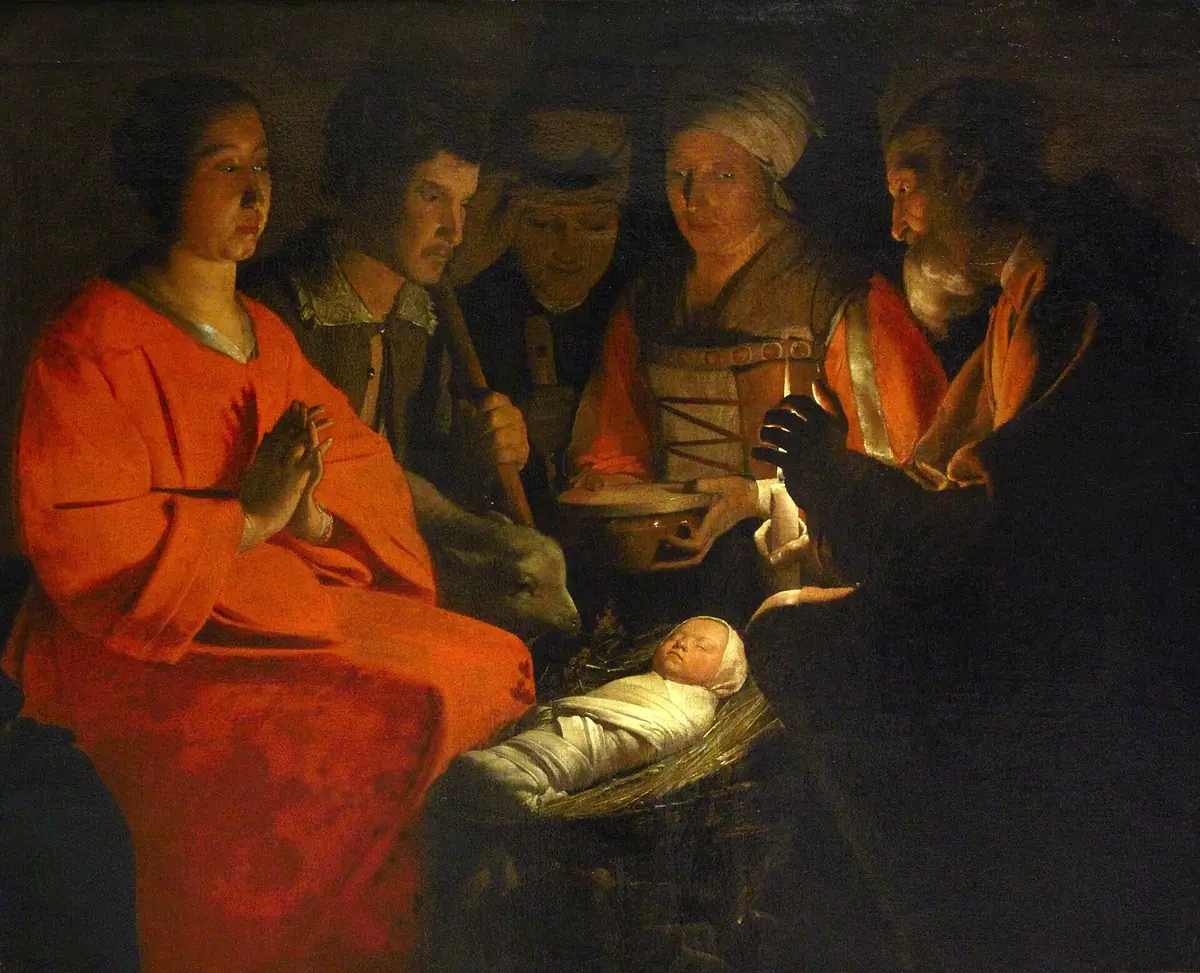
Image: Wikimedia Commons · Public domain (PD-Art) The Adoration of the Shepherds
Look closely. Shepherds gather around the Child in a dark interior; a candle, screened by a hand or a body, lights Mary, Joseph, and the small, sleeping face. Look at the rough, attentive heads of the visitors, at the lamb, and at the way ordinary night-time work clothes are brought into a sacred circle without fuss.
In the library: The Bible (KJV) · Mary, mother of Jesus · Jesus Christ · Joseph of Nazareth
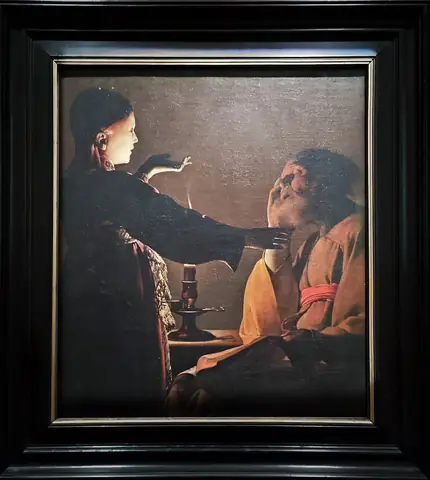
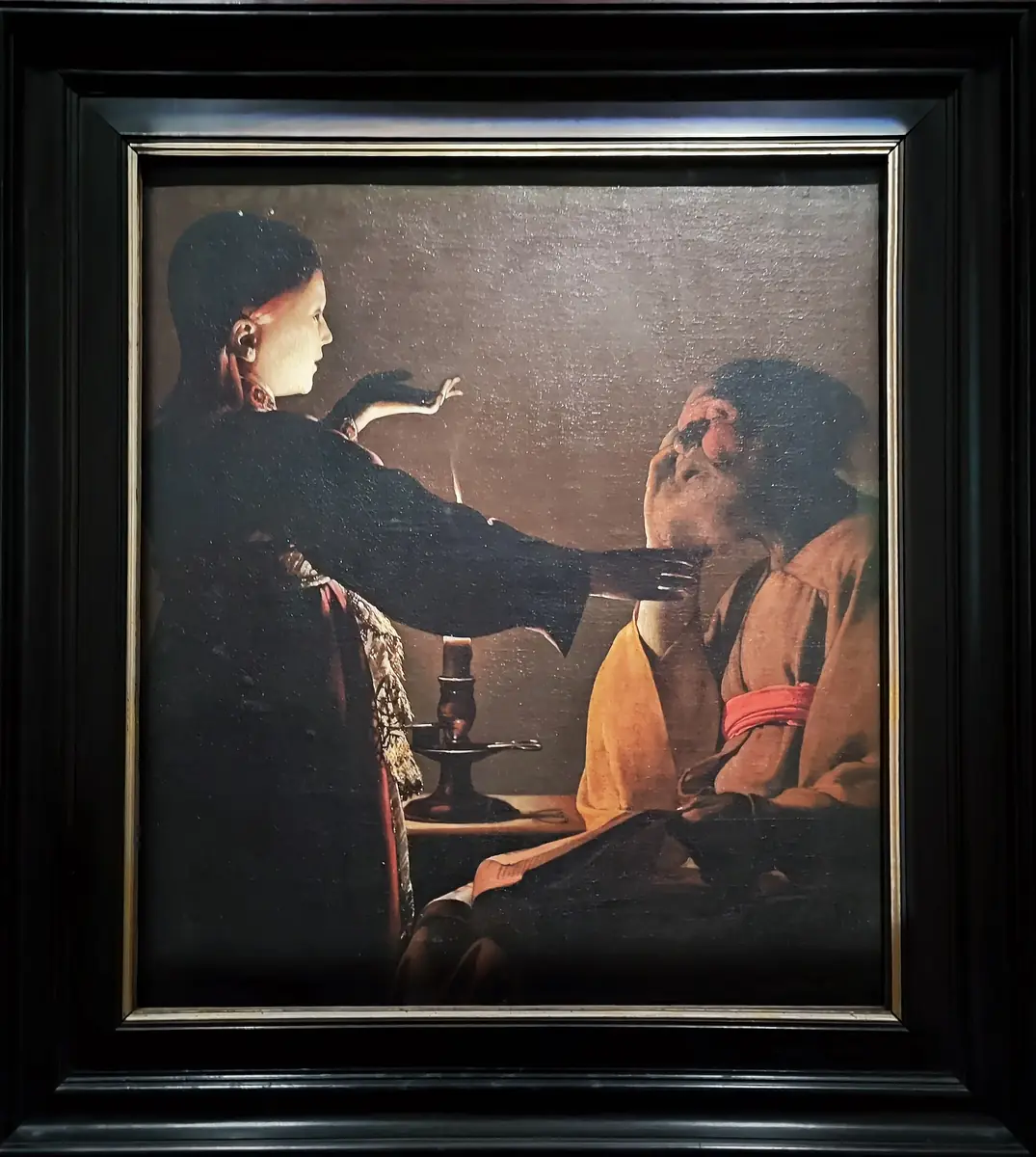
Image: Wikimedia Commons · Public domain (PD-Art) The Dream of Saint Joseph
Look closely. Joseph, an elderly, tired craftsman, has fallen asleep in his chair; a youthful angel at his side raises a hand and seems to speak into the sleep, the profile lit as if by a hidden flame. Look at the contrast between the heavy, sleeping head and the still, upright messenger, and at how quietly a divine warning is given.
In the library: The Bible (KJV) · Joseph of Nazareth


What to watch for in Georges de La Tour
Look slowly- A single flame. Find the candle or the lamp first; every plane of the face and the cloth answers it.
- Hands in the light. Fingers often do as much speaking as eyes.
- A shallow, quiet space. There is rarely a deep landscape; the room is a cell of attention.
- Repetition as devotion. He returned to the Magdalene, to Joseph, and to the newborn, each time with a slightly different light.
- Daylight rascality. The cardsharps and the fortune teller are as carefully built as the sacred night scenes.
For older students
These famous works include nudity, so they are named here but not shown. Teachers and parents can decide when to look at them together.
- Saint Sebastian Tended by Irene (several versions), c. 1649–50, Louvre, Paris, and other collections. Sebastian is shown unclothed but for a loincloth, wounded by arrows. Named here but not shown.
Dates and collections follow the holding museums and Wikidata. Images of paintings are photographs of public-domain pictures from Wikimedia Commons or museum open-access releases; photographs of sculpture are used only when the photograph itself is Public domain, CC0, or CC BY with a named credit. Each picture links to its source page with full licence details.