Great Art · Dutch Golden Age
Frans Hals
The Haarlem portraitist of a sudden smile, a tilted hat, and a brush that seemed to move as fast as the people it caught.
His life
Frans Hals was born around 1582, probably in Antwerp, and spent almost all his working life in Haarlem. He joined the painters' guild there, married twice, and raised a large family, several of his sons becoming painters in their turn. He was never a court artist in a far capital: his sitters were the officers, merchants, children and odd characters of a single Dutch city, and he looked at them as if they had just turned toward him in a doorway.
Late in life he painted the grave regents and regentesses of a Haarlem almshouse, still with a lively brush but with a quieter palette. He died in Haarlem in 1666. His gift was momentary life. A lace cuff, a raised glass, or a child's fist can look as if the paint had only just landed, and yet the likeness holds.
Key works
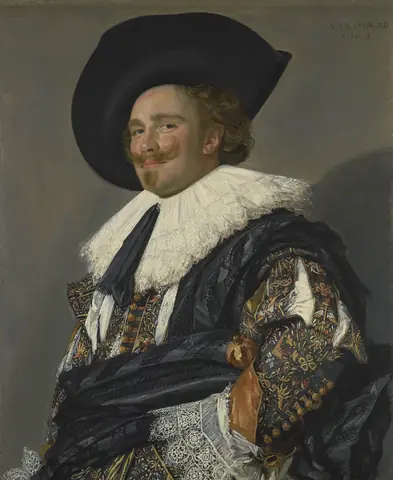
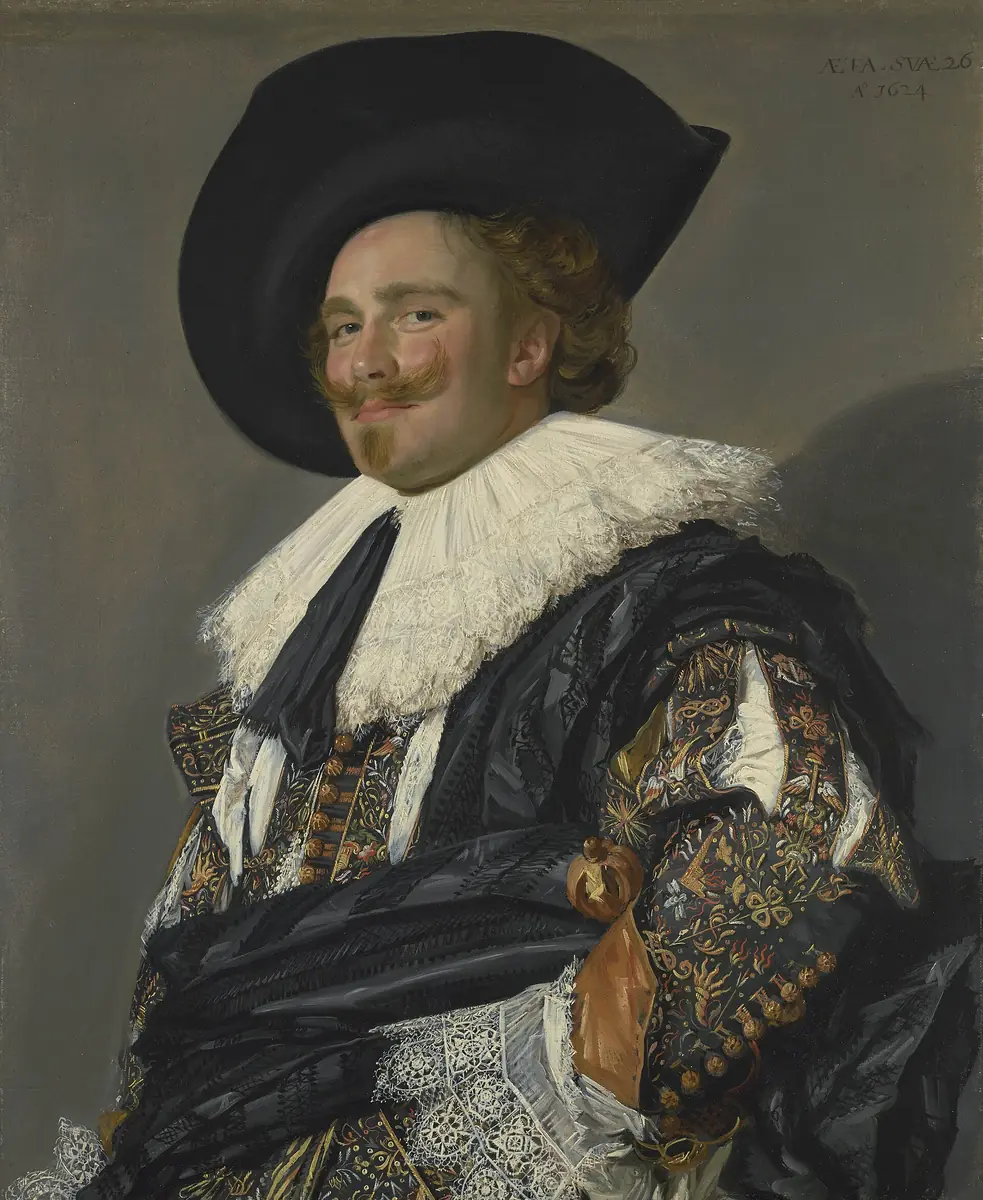
Image: Wikimedia Commons · Public domain (PD-Art) The Laughing Cavalier
Look closely. A young man in a richly embroidered doublet and a wide, tilted hat turns toward us with a half-smile and a bright, assessing look; his left hand is set on his hip, and the lace at his wrist is painted with glittering care. Look at the upturned moustache, at the pattern on the sleeve, and at how little of the laugh is in the mouth — most of it is in the eyes.
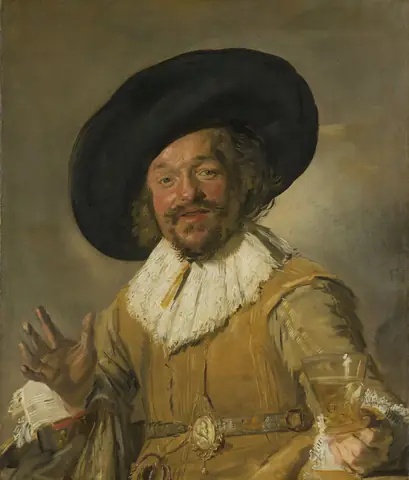
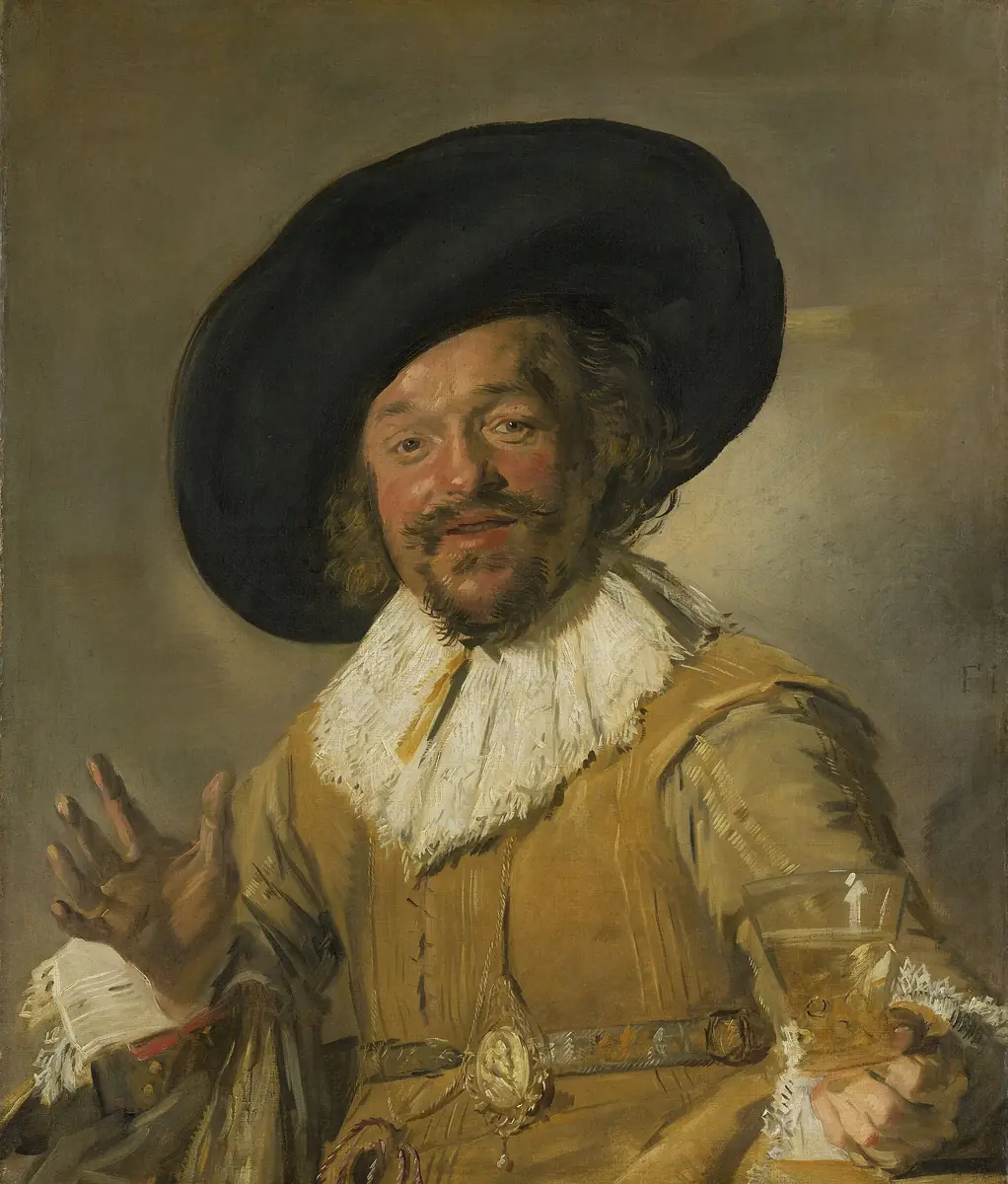
Image: Wikimedia Commons · Public domain (PD-Art) The Merry Drinker
Look closely. An officer in a loose ruff raises a berkemeyer glass and seems to speak or toast as he looks out; the bare hand and the flash of the drink are caught with an open, flickering brush. Look at the flushed face, at the broken lights in the glass, and at how little polish Hals needs to make the moment feel unposed.
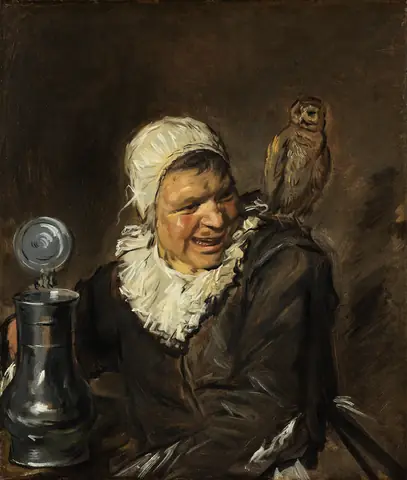
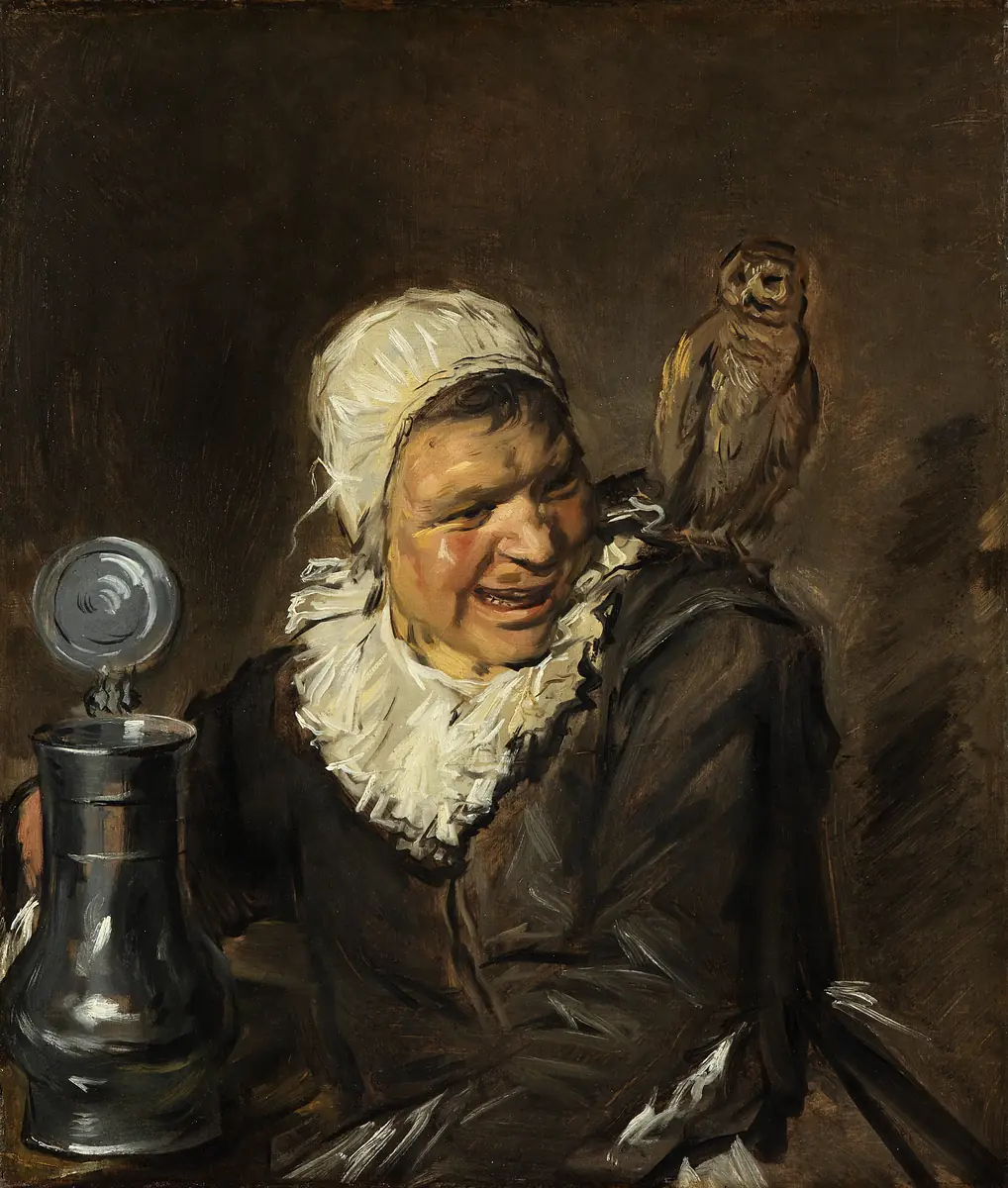
Image: Wikimedia Commons · Public domain (PD-Art) Malle Babbe
Look closely. A woman known in Haarlem as Malle Babbe, or Mad Meg, throws her head back with a stein in her hand and an owl perched on her shoulder. Look at the wild, almost scraped-in hair, at the bird's fierce little profile, and at how the painter gives an outsider the same vivid attention he gave to officers and children.
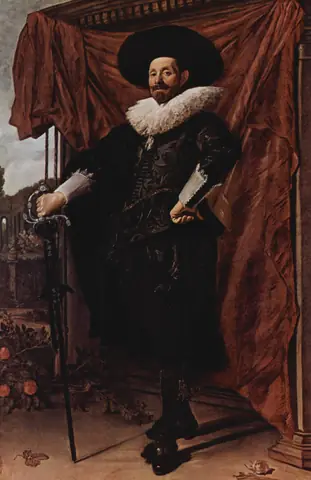
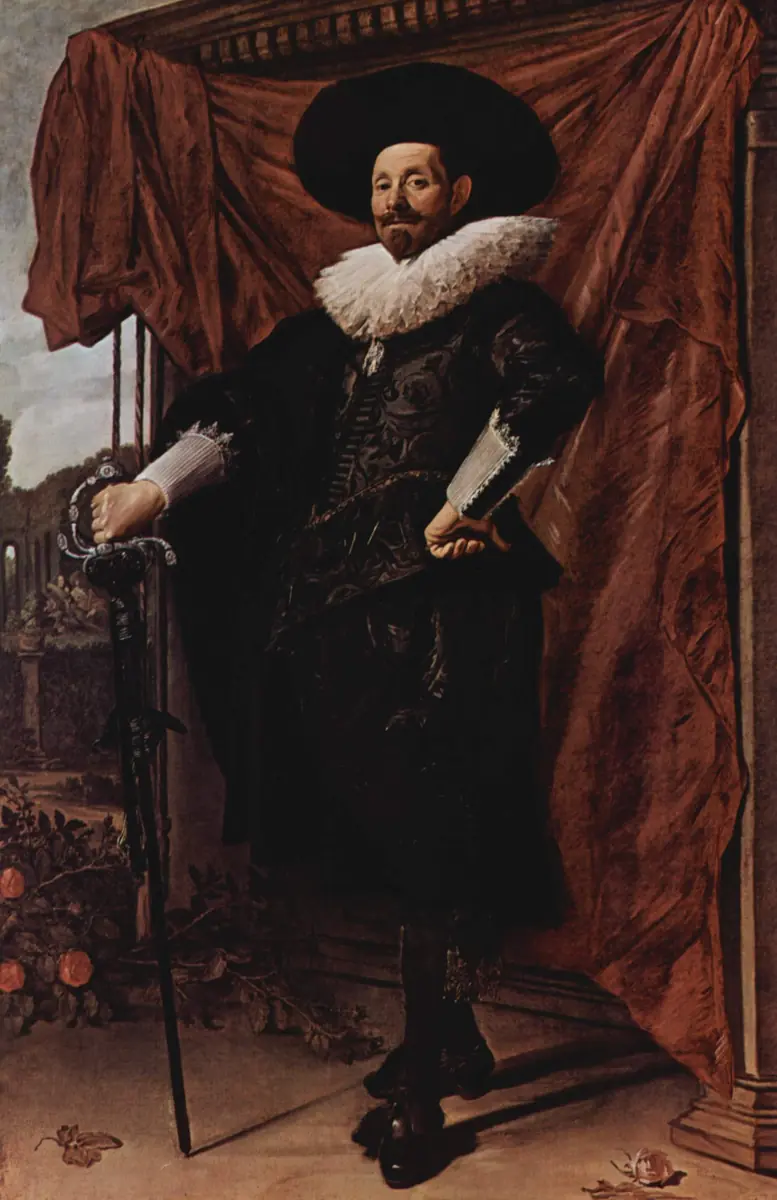
Image: Wikimedia Commons · Public domain (PD-Art) Willem van Heythuysen
Look closely. The Haarlem cloth merchant leans back in a chair, one booted leg swung across the other, a long sword at his side, a luxurious interior behind him. Look at the easy, almost insolent pose, at the sheen of the satin, and at how a private man is given the swagger of a full-length court portrait.
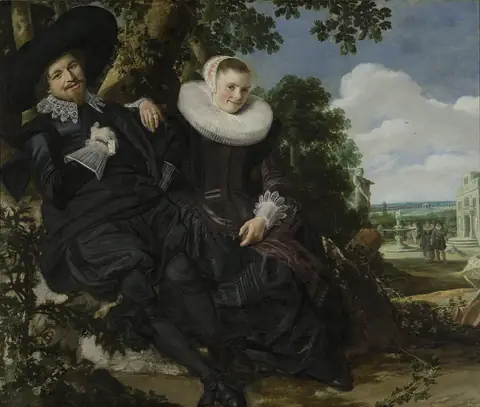
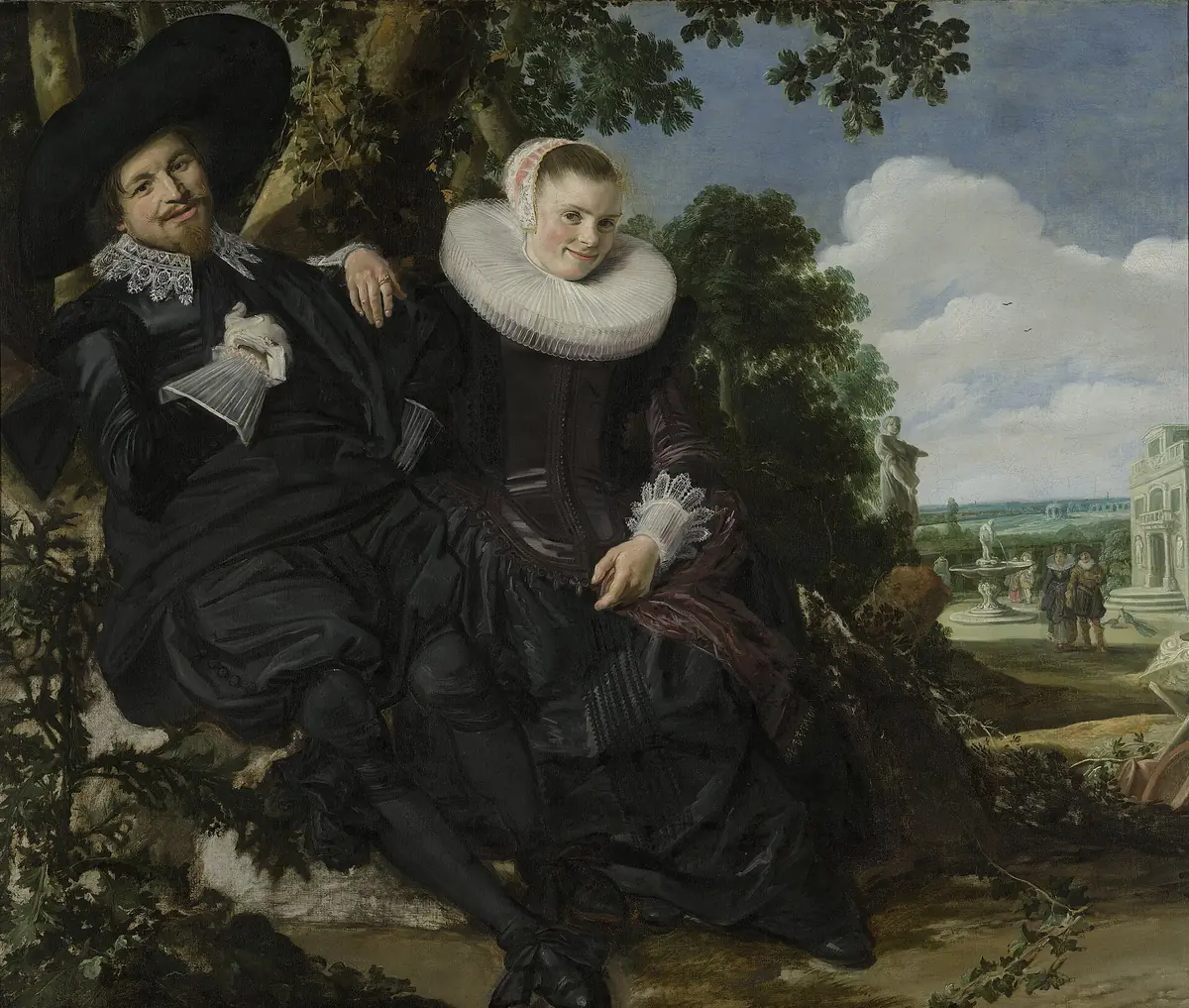
Image: Wikimedia Commons · Public domain (PD-Art) Portrait of a Couple (probably Isaac Massa and Beatrix van der Laen)
Look closely. A smiling couple sit at the foot of a tree in an open landscape, she in a wide ruff and a wreath of flowers, he leaning in as if they had just sat down together. Look at the ivy and the garden behind, at the ease of their bodies, and at how unusual this informal, almost conversational marriage portrait is for its date.
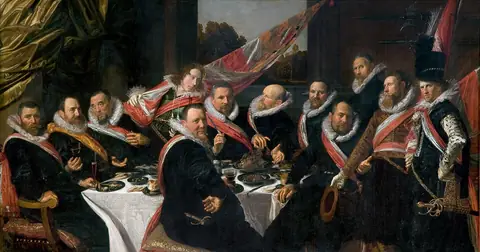
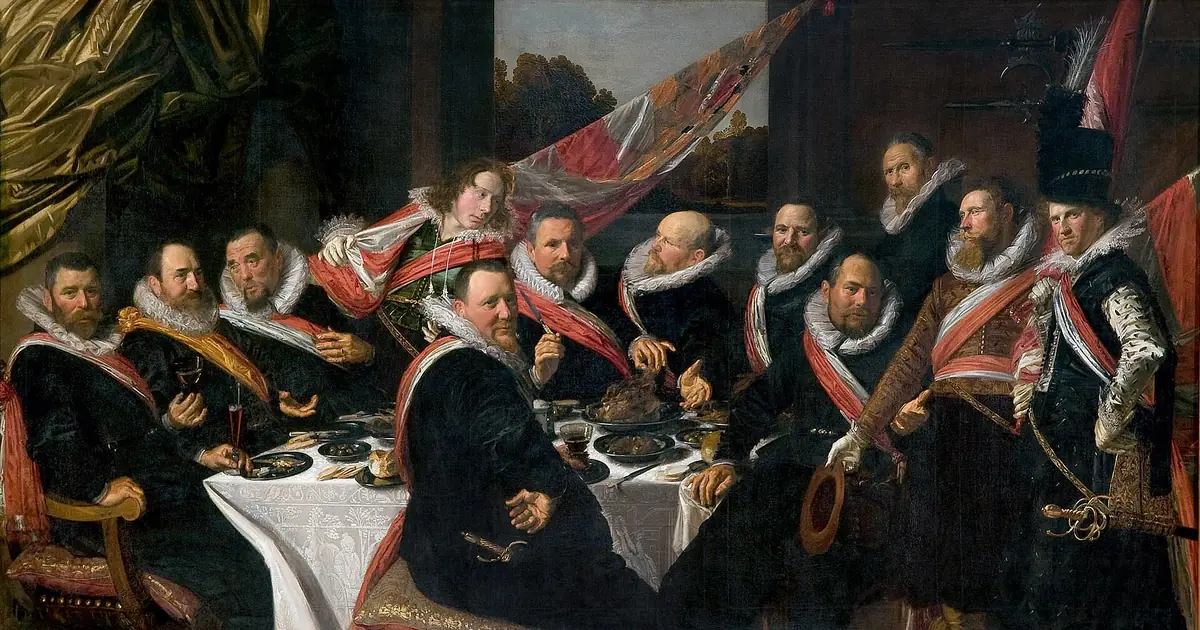
Image: Wikimedia Commons · Public domain (PD-Art) The Banquet of the Officers of the St George Militia Company in 1616
Look closely. Officers of Haarlem's civic guard sit and stand around a laid table, sashes across their chests, plates and glasses catching the light, each head turned a little differently. Look at the flags and the window, at the variety of faces, and at how Hals keeps a large group from becoming a stiff row of uniforms.
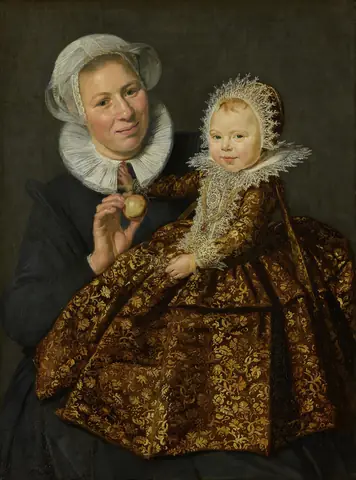
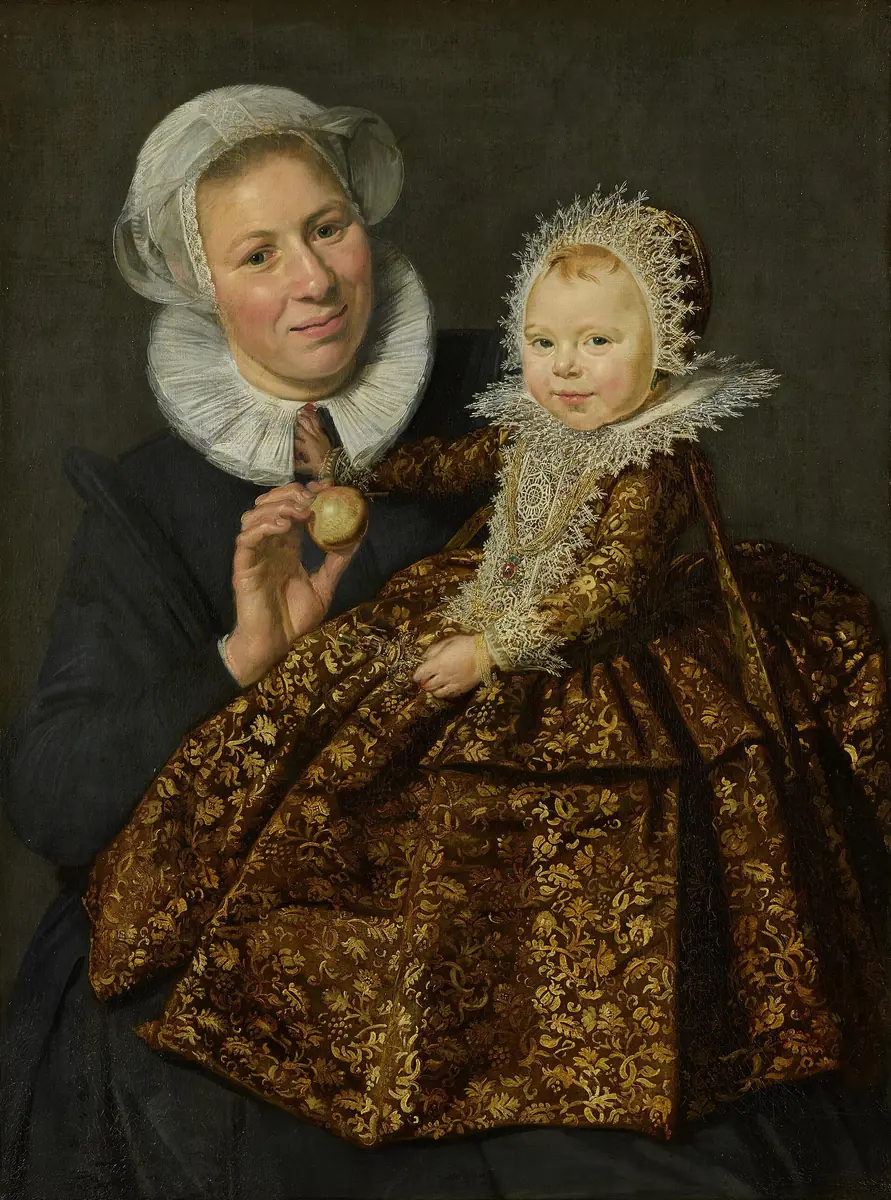
Image: Wikimedia Commons · Public domain (PD-Art) Catharina Hooft with her Nurse
Look closely. A richly dressed toddler in a lace cap and a padded gown stands beside her nurse, who offers a piece of fruit or a toy; the child's small fist and bright face hold the centre. Look at the contrast between the child's finery and the nurse's quieter costume, and at the tenderness of a portrait that is also a picture of care.


What to watch for in Frans Hals
Look slowly- A smile caught mid-way. Look at the mouth and the eyes together; the expression often seems to be happening now.
- A loose, sure brush. At a short distance the paint can look dashed; step back and the face locks into place.
- Black, white and a spark of colour. A sash, a glass, or a flushed cheek does a lot of work against sober Dutch dress.
- Hands as lively as faces. A fist on a hip, a hand on a sword, or a child's grip can carry the portrait.
- A whole company at once. In the militia banquets, try to read each officer as a person, not only as a row of hats.
Dates and collections follow the holding museums and Wikidata. Images of paintings are photographs of public-domain pictures from Wikimedia Commons or museum open-access releases; photographs of sculpture are used only when the photograph itself is Public domain, CC0, or CC BY with a named credit. Each picture links to its source page with full licence details.