Great Art · Early Renaissance
Fra Angelico
A Dominican friar who painted the Gospel for prayer, in clear light and pure colour.
Read Fra Angelico's Great Life →
His life
Guido di Pietro was already a trained painter when, as a young man, he entered the Dominican friary at Fiesole above Florence and took the name Fra Giovanni. He spent the rest of his life as both friar and artist. Later generations called him Fra Angelico, "the angelic brother," and the Catholic Church beatified him in 1982.
His most personal work is in the Convent of San Marco in Florence, where around 1440 he and his helpers painted a fresco in each friar's cell. These were not decorations but aids to prayer: a single quiet scene from the life of Christ, often with Saint Dominic or Mary watching in silence, for a friar to meditate on day after day. Fra Angelico joined the new skills of his time, perspective and solid, believable figures, to an old purpose. He kept his gift in the service of the Church and the people he lived with, and he worked in Florence and Rome until his death.
Key works
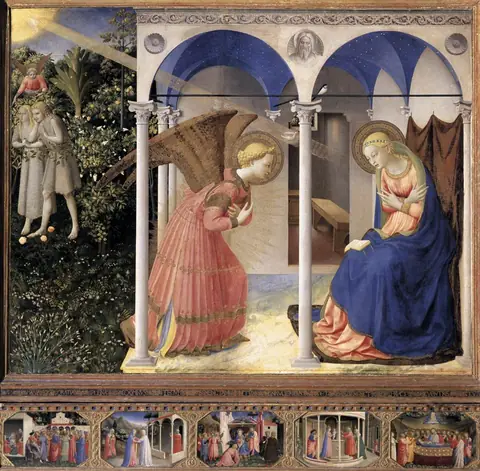
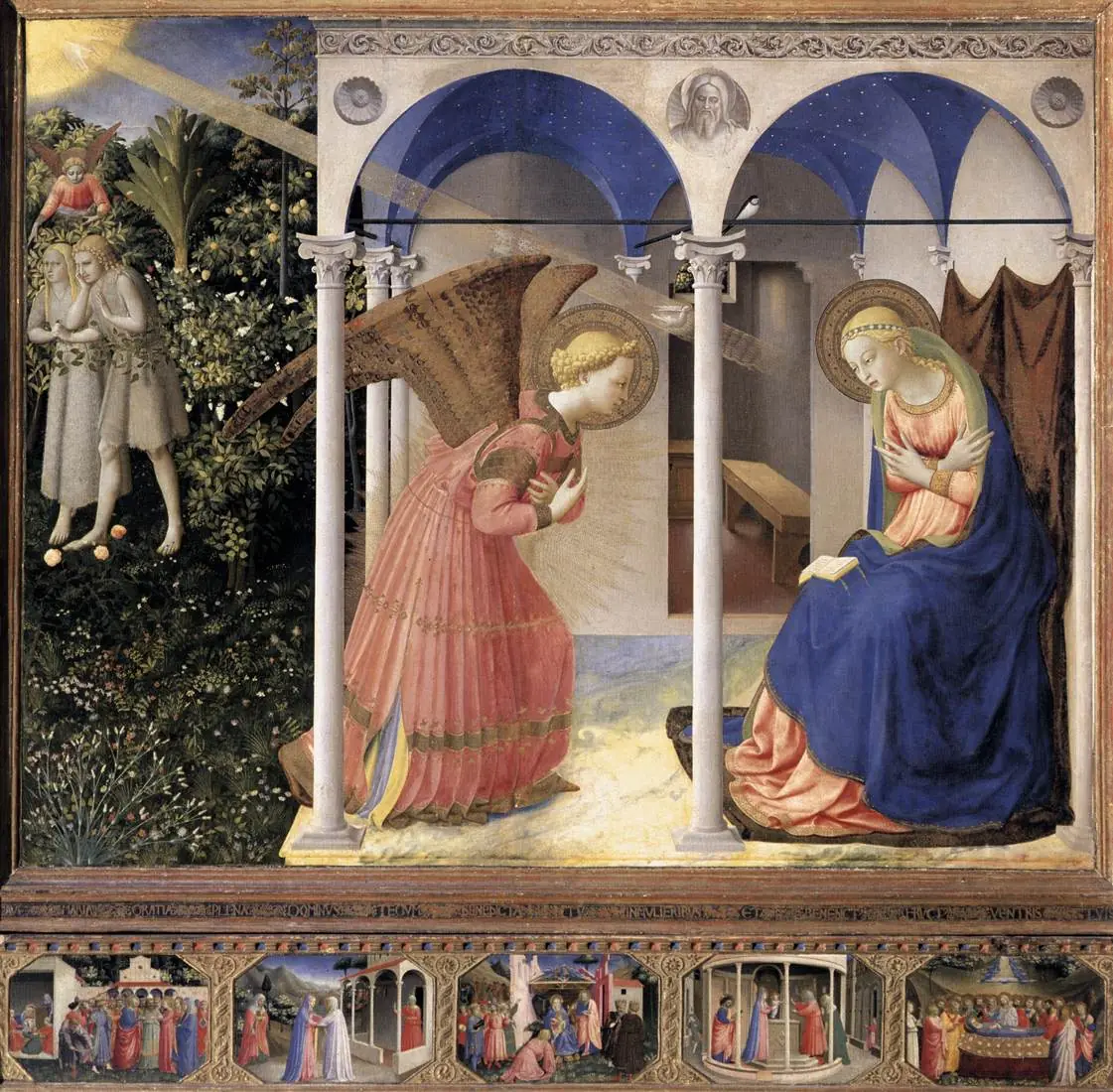
Image: Wikimedia Commons · Public domain (PD-Art) The Annunciation
Look closely. Two stories in one panel. At the left, an angel drives Adam and Eve out of the garden; at the right, Gabriel greets Mary in a loggia. A beam of gold light runs from the hand of God past the dove to Mary, linking the first disobedience to the beginning of the remedy.
In the library: The Bible (KJV) · Mary, mother of Jesus · Adam and Eve
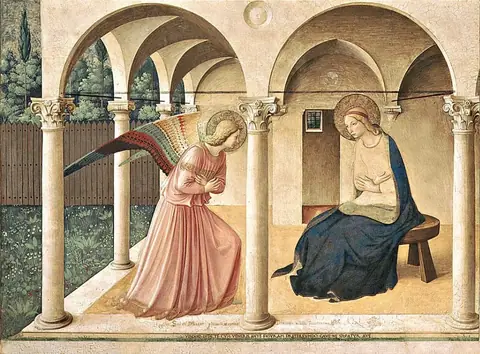
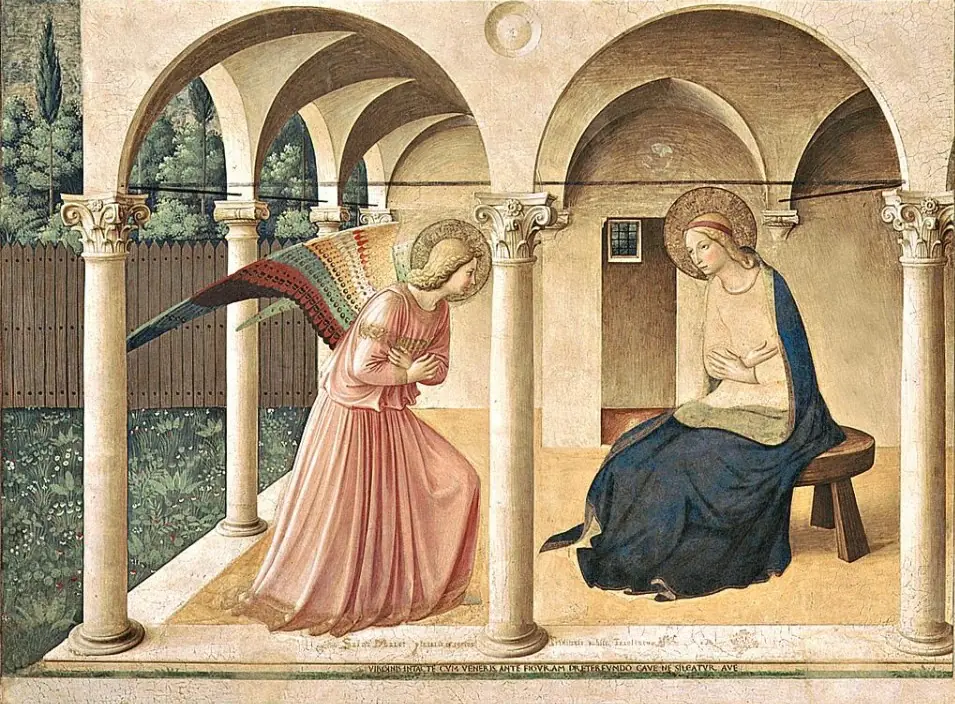
Image: Wikimedia Commons · Public domain (PD-Art) The Annunciation (north corridor)
Look closely. This fresco faces the top of the stairs the friars climbed to their cells. Mary and Gabriel bow toward each other in a plain cloister; the only rich colour is the angel's wings. A Latin inscription below asks those who pass not to fail to say a Hail Mary.
In the library: The Bible (KJV) · Mary, mother of Jesus
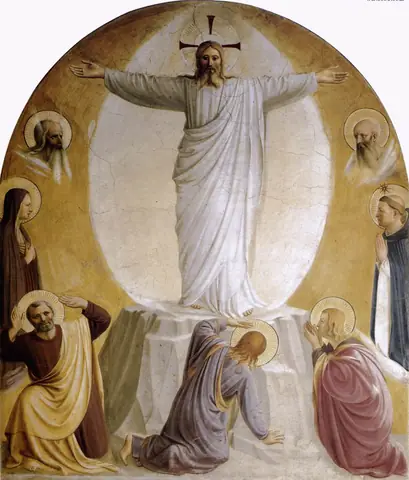
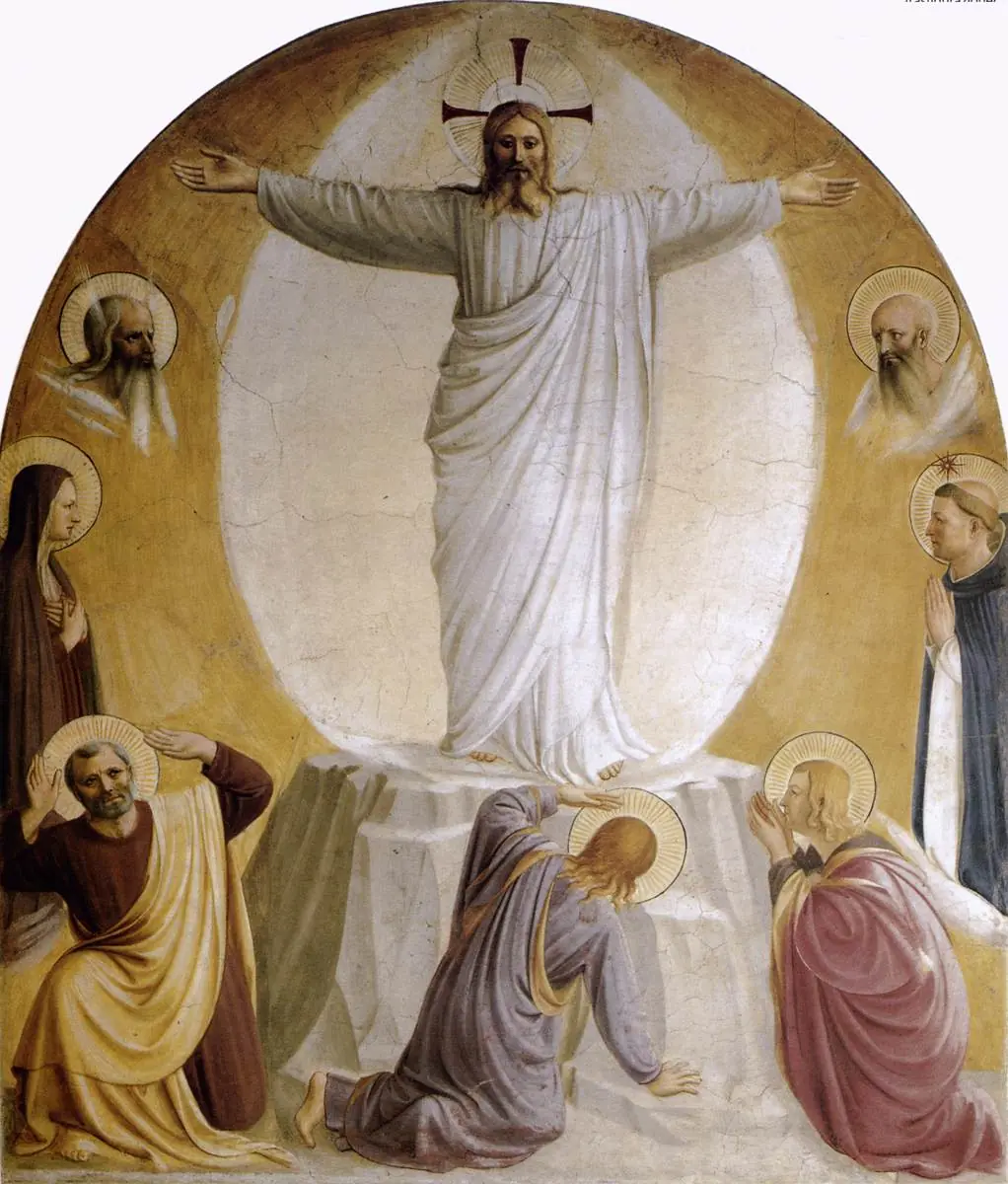
Image: Wikimedia Commons · Public domain (PD-Art) The Transfiguration
Look closely. Christ stands in a white almond-shaped glory with his arms spread wide, already in the shape of the cross. Only the heads of Moses and Elijah appear beside him. Below, Peter, James and John fall back dazzled, while Mary and Saint Dominic watch calmly at the sides.
In the library: The Bible (KJV) · Jesus Christ · Moses · Elijah · Peter
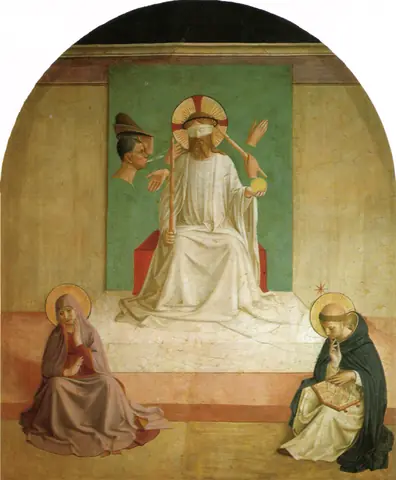
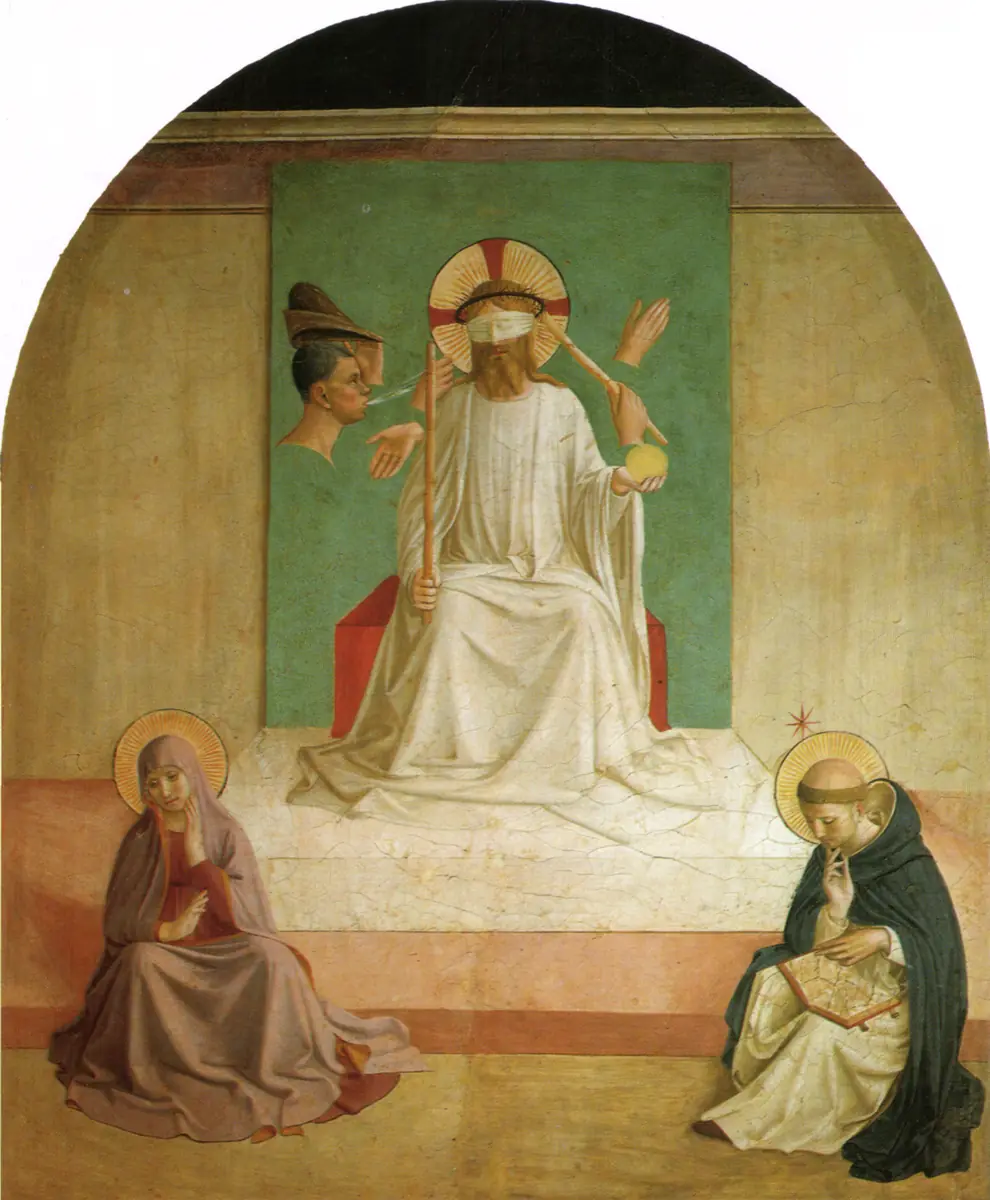
Image: Wikimedia Commons · Public domain (PD-Art) The Mocking of Christ
Look closely. Christ sits blindfolded, holding a reed and an orb like a mock king. His tormentors are shown only as floating hands and a head spitting, as if remembered rather than seen. Below, Mary and Saint Dominic sit absorbed in thought, showing the friar how to meditate on suffering patiently borne.
In the library: The Bible (KJV) · Jesus Christ
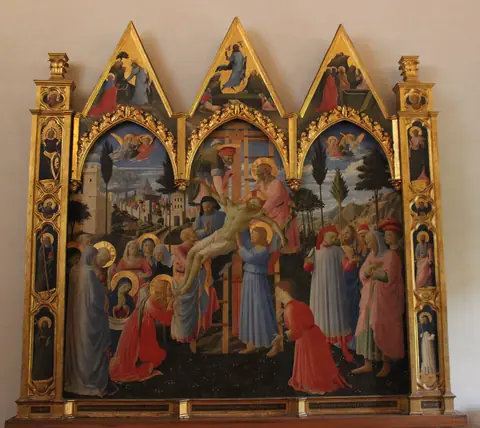
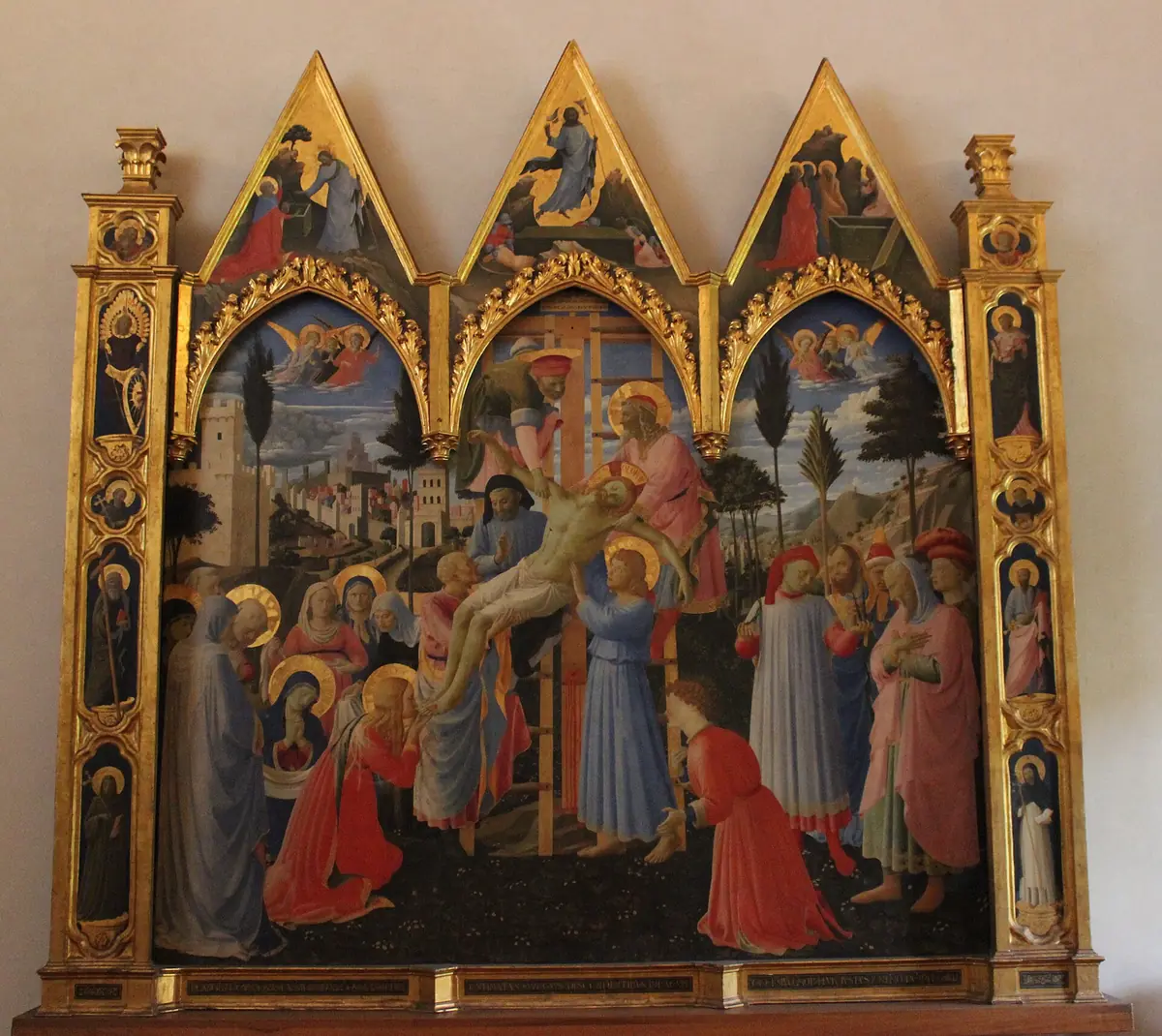
Image: Wikimedia Commons · Public domain (PD-Art) The Deposition (Santa Trinita Altarpiece)
Look closely. Begun by Lorenzo Monaco, who painted the pointed tops, and finished by Fra Angelico. Christ's body is lowered gently from the cross by friends on ladders. Behind them stretches a walled city and Tuscan hills, so that Jerusalem looks like home.
In the library: The Bible (KJV) · Jesus Christ · Nicodemus · Mary Magdalene
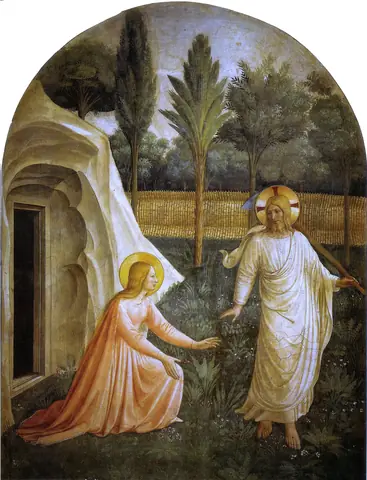
Image: Wikimedia Commons · Public domain (PD-Art) Noli me tangere
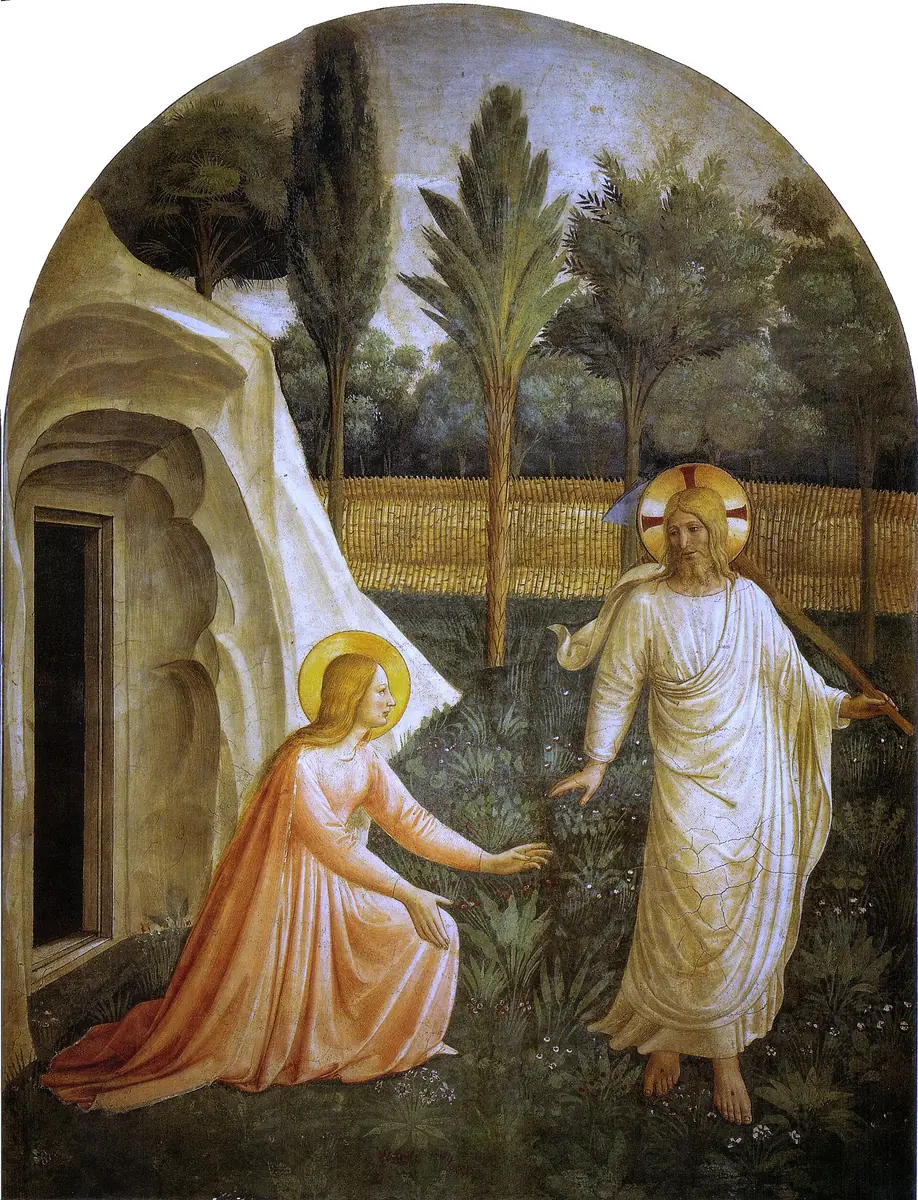
Look closely. Mary Magdalene kneels in a garden of tiny flowers and reaches out; the risen Christ steps away, carrying a hoe, because she had taken him for the gardener. The open tomb is at the left. Notice how little space there is between their hands.
In the library: The Bible (KJV) · Mary Magdalene · Jesus Christ
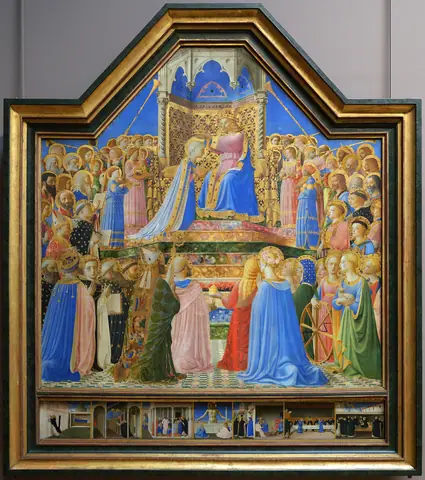
Image: Wikimedia Commons · Public domain (PD-Art) The Coronation of the Virgin
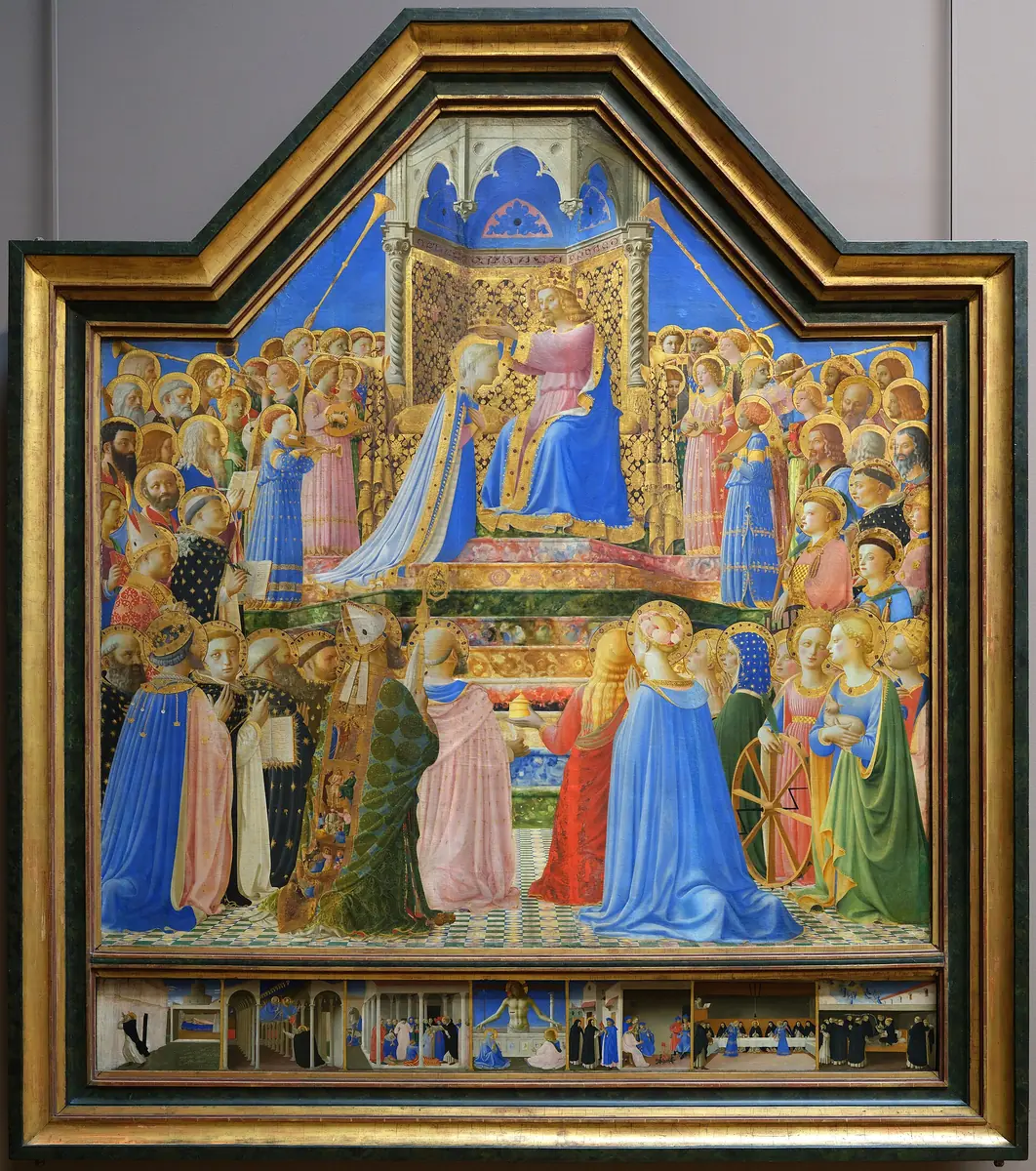
Look closely. Painted for the friars' own church at Fiesole. A flight of steps in perspective climbs to the throne, and rows of saints and angels fill each side. Look for the friars of his own order, the Dominicans, in black-and-white habits among the saints.
In the library: Mary, mother of Jesus


What to watch for in Fra Angelico
Look slowly- Clear, light colour. Pale pinks, blues and gold, with very little shadow: the light of a clear morning.
- Silent witnesses. Saint Dominic or Mary often sit at the edge of a scene, showing the viewer how to watch and pray.
- New perspective in old settings. Arches and loggias recede in real depth, a then-new Florentine skill.
- One scene, one thought. The San Marco frescoes strip a story to its centre so a friar could meditate on it.
- Gestures of welcome and wonder. Crossed arms, bowed heads and open hands tell you how to receive what is shown.
Dates and collections follow the holding museums and Wikidata. Images of paintings are photographs of public-domain pictures from Wikimedia Commons or museum open-access releases; photographs of sculpture are used only when the photograph itself is Public domain, CC0, or CC BY with a named credit. Each picture links to its source page with full licence details.