Great Art · Early Netherlandish
Rogier van der Weyden
The Brussels painter who gave Netherlandish art its most moving grief, especially in the Descent from the Cross.
His life
Rogier van der Weyden was born in Tournai, trained in the workshop of Robert Campin, and by the 1430s was official painter to the city of Brussels. He ran a large workshop that sent pictures across Europe, from Spain to Italy, and he almost certainly travelled to Rome in the jubilee year 1450. Unlike van Eyck, he did not sign his pictures, so some attributions are still argued, but the core of his work is clear.
His gift was feeling shaped with great care: tears on a cheek, a body lowered from the cross in a shallow golden space, a woman's hands pressed together so tightly that the fingers pale. He painted altarpieces for churches and hospitals, and portraits of grave, self-contained sitters. After his death his influence ran through the Netherlands and into Germany and Spain. Pupils and followers kept his patterns of grief and dignity in circulation for decades.
Key works
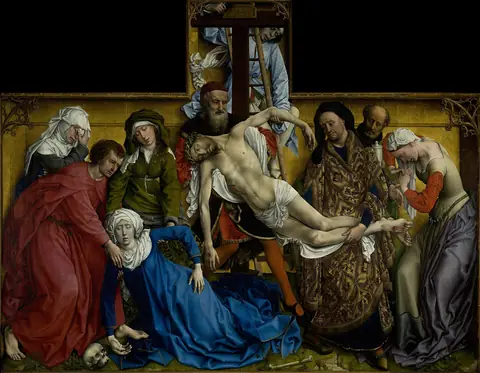
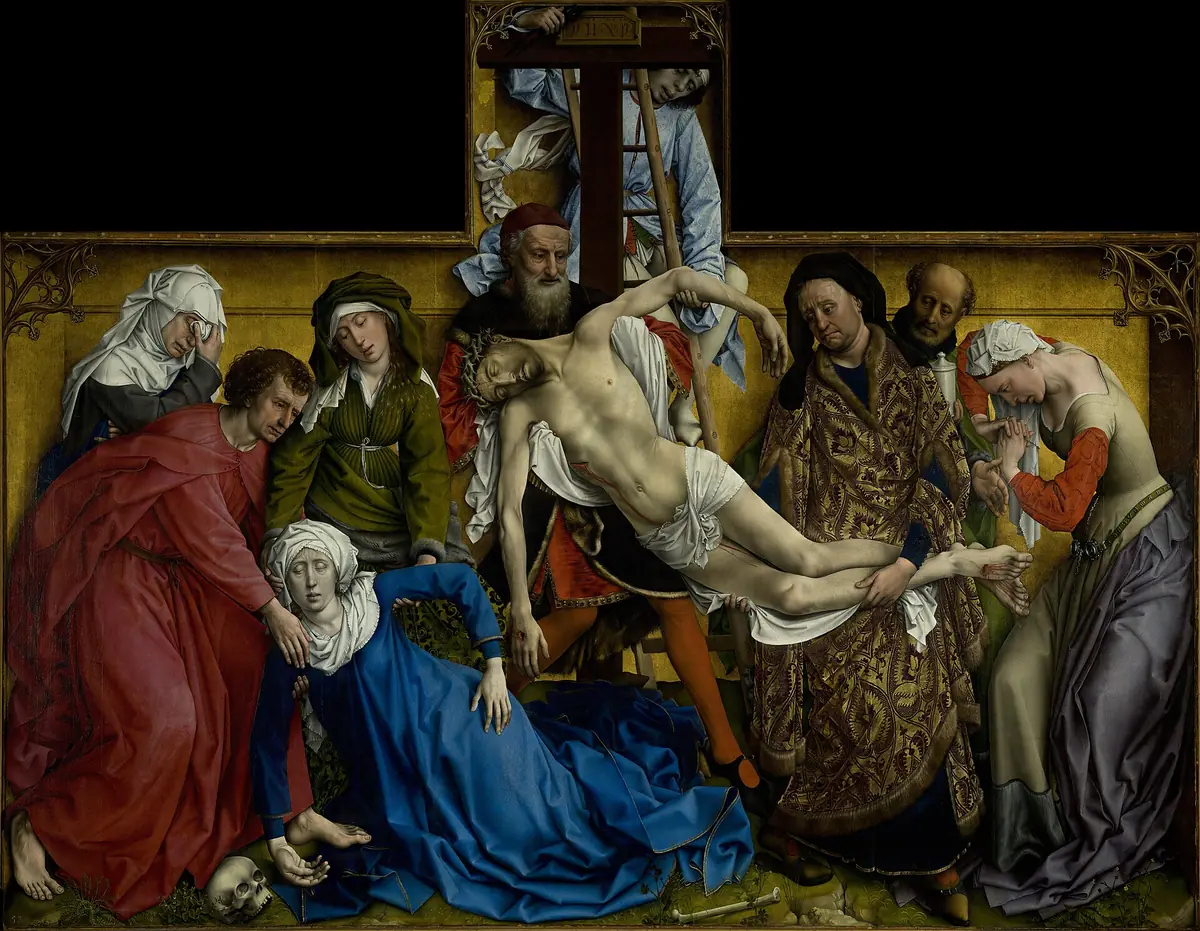
Image: Wikimedia Commons · Public domain (PD-Art) The Descent from the Cross
Look closely. Ten figures are packed into a shallow, gilded box as Christ's body is lowered from the cross. Mary, in blue, faints in a curve that repeats her Son's limp body; the Magdalene wrings her hands at the far right. Look at the tiny skull at the foot of the cross, at the tears on the faces, and at how the gold ground leaves no deep landscape to distract from the grief.
In the library: The Bible (KJV) · Jesus Christ · Mary, mother of Jesus · Mary Magdalene
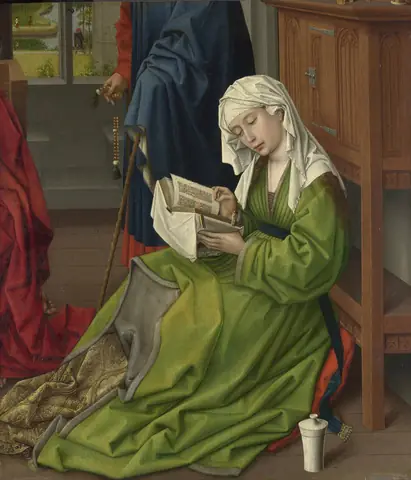
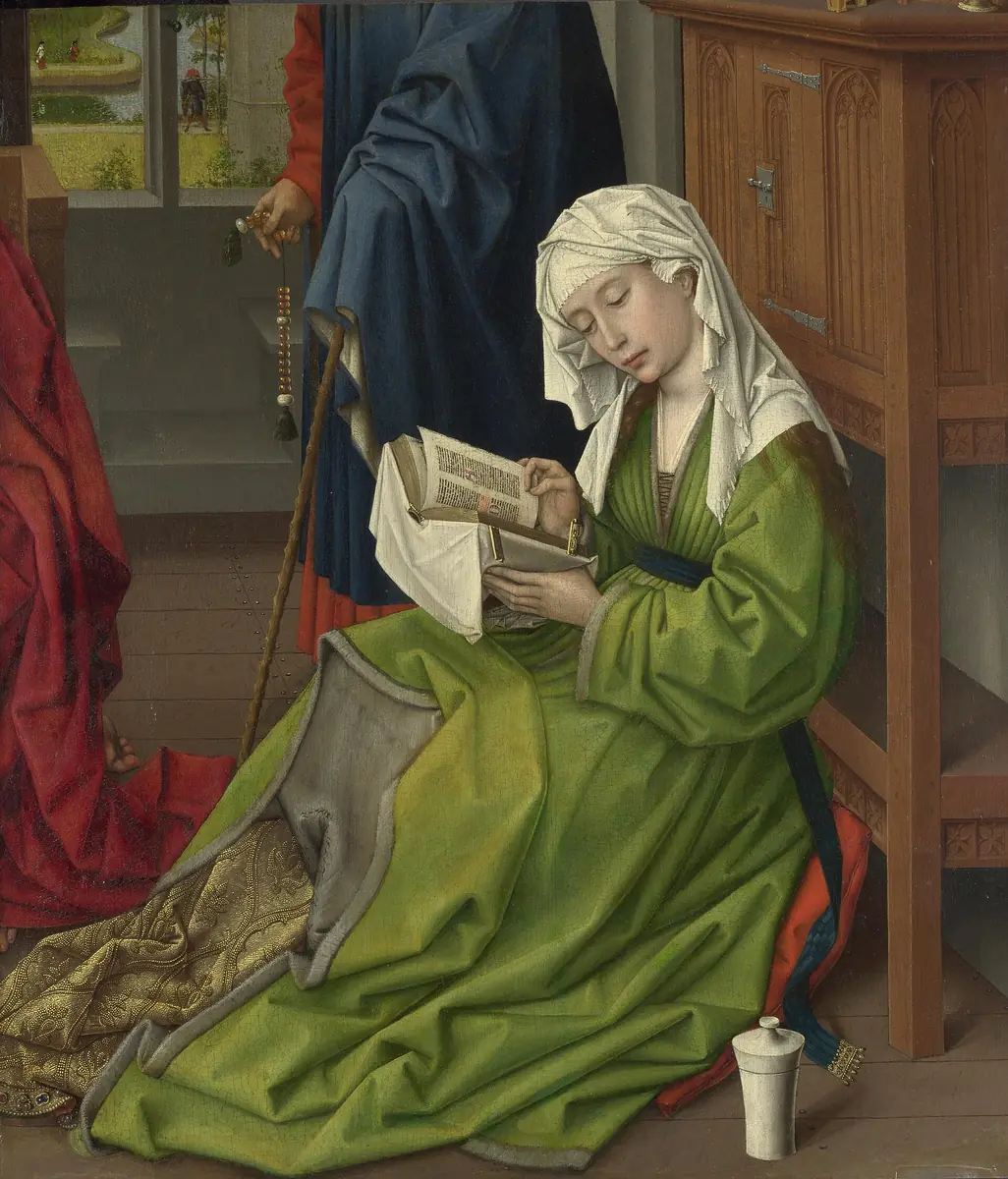
Image: Wikimedia Commons · Public domain (PD-Art) The Magdalen Reading
Look closely. This is a fragment of a larger altarpiece. Mary Magdalene sits on the floor in a rich gold and brown dress, absorbed in a book, her jar of ointment near her. In the background, the legs of another figure and a patch of garden remain from the lost panel. Look at the careful folds of her dress and at the quiet of her reading.
In the library: The Bible (KJV) · Mary Magdalene
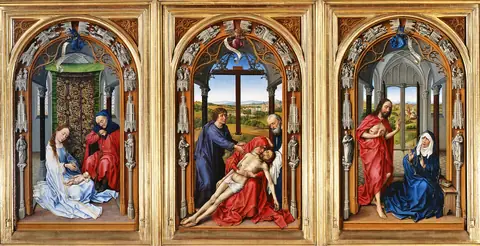
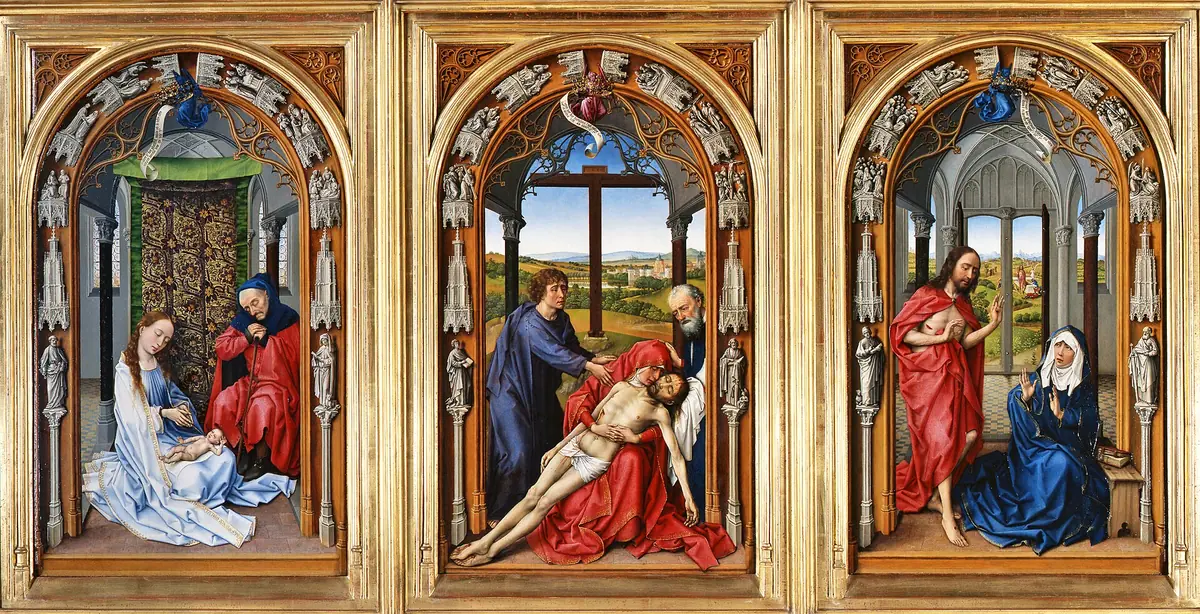
Image: Wikimedia Commons · Public domain (PD-Art) Miraflores Altarpiece
Look closely. Three arched panels, like church doorways, show Mary with the Child, the Lamentation, and the risen Christ appearing to his mother. Each arch is carved with tiny scenes that comment on the main picture. The altarpiece was made for the Charterhouse of Miraflores, near Burgos, a royal foundation in Castile.
In the library: The Bible (KJV) · Mary, mother of Jesus · Jesus Christ
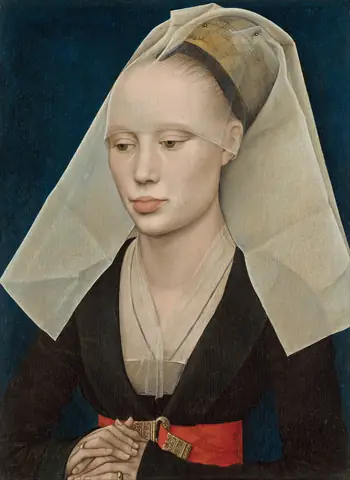
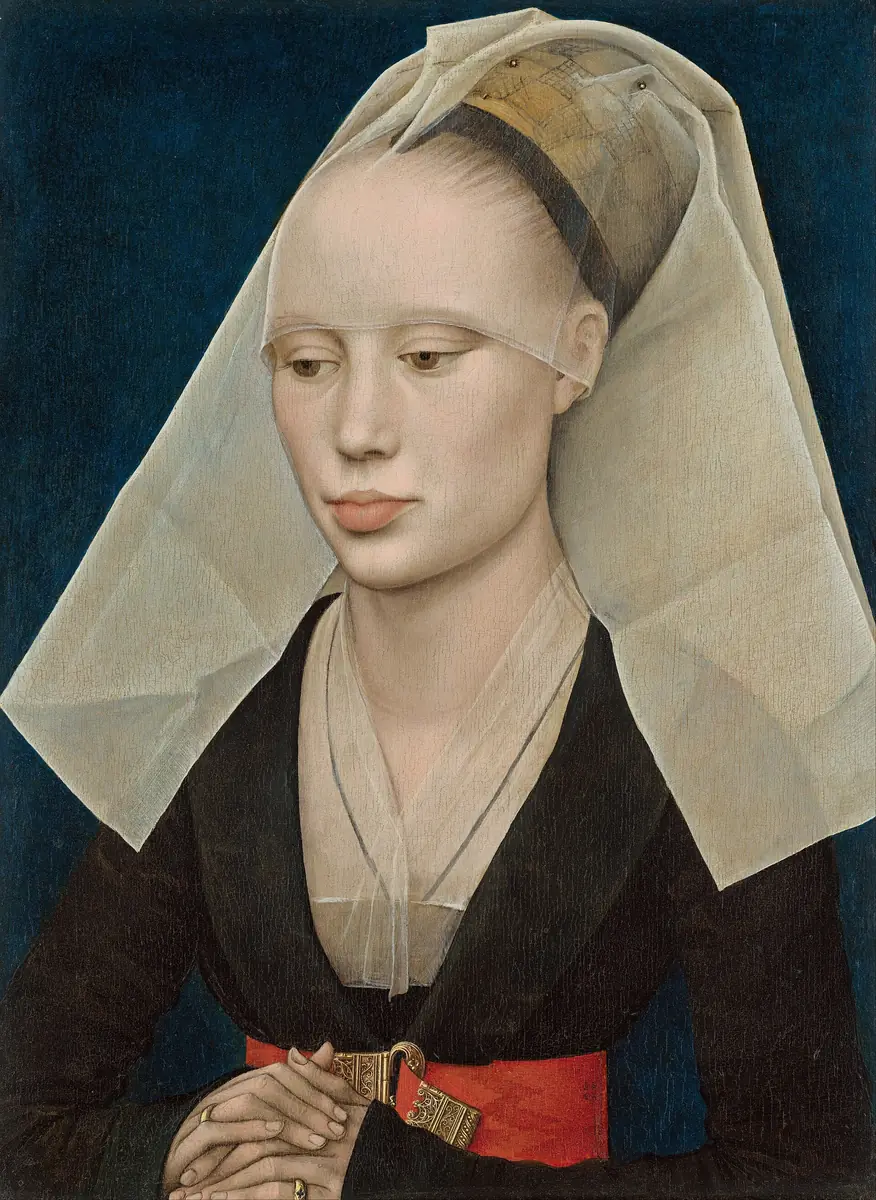
Image: Wikimedia Commons · Public domain (PD-Art) Portrait of a Lady
Look closely. A young woman is shown against a deep blue ground, her high forehead bare, a gauzy veil pinned over a dark dress with a wide belt. Her hands are folded lightly, a ring visible. Rogier gives her no name and almost no setting; the picture is all reserved face, clean line and quiet wealth.
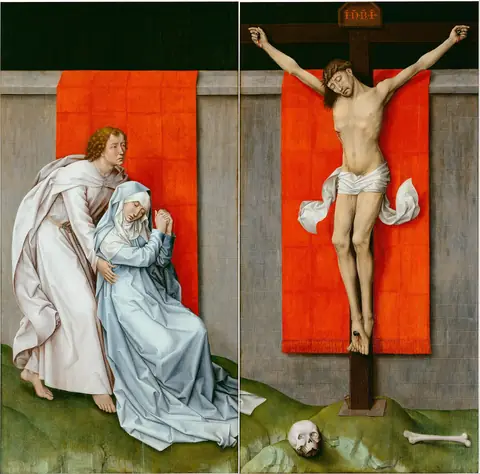
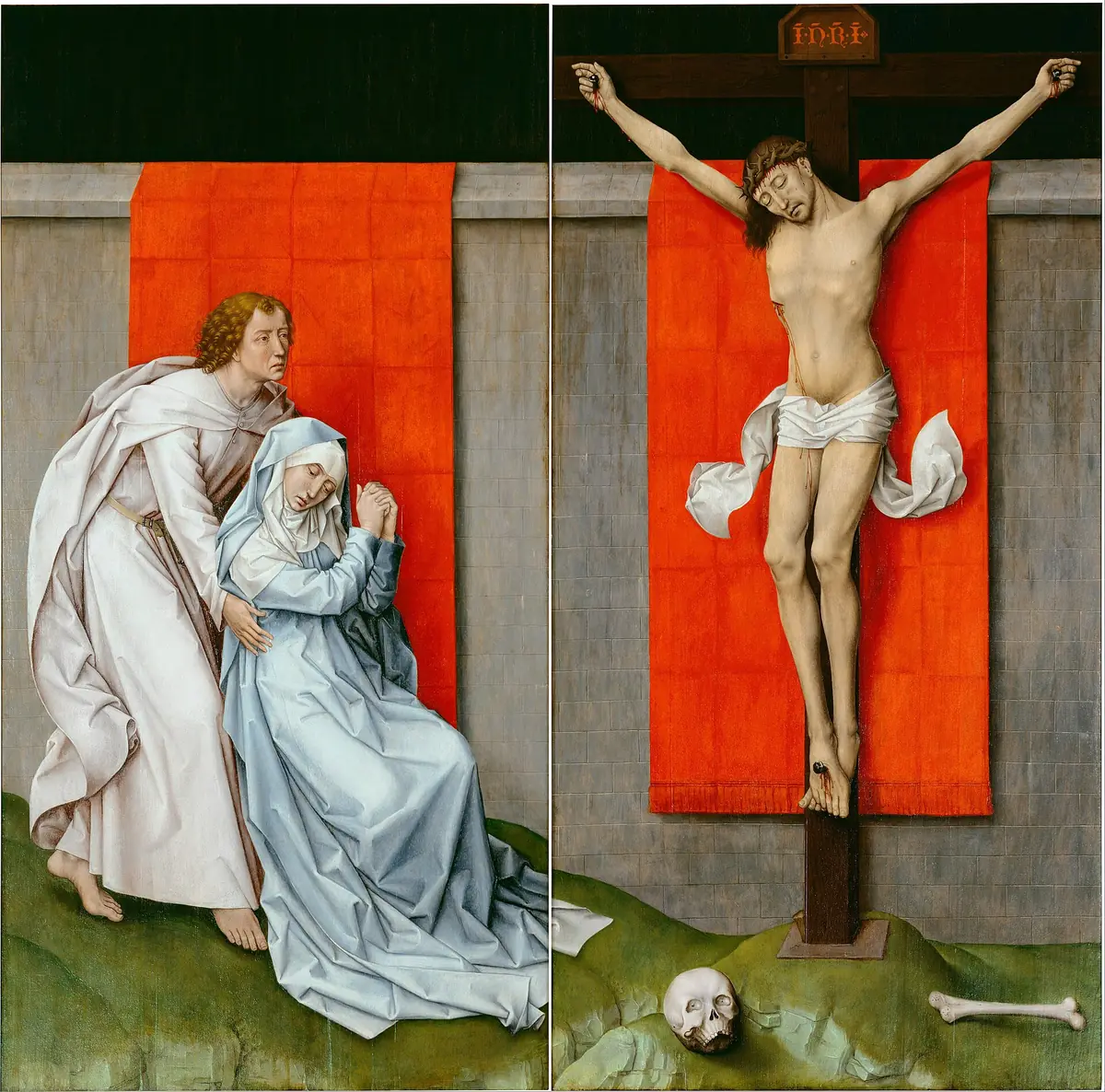
Image: Wikimedia Commons · Public domain (PD-Art) Crucifixion Diptych
Look closely. The two panels are almost bare: a blood-red cloth hangs behind the figures, and the ground is a strip of dark rock. On the left, Mary and John stand in grief; on the right, Christ hangs on the cross. The emptiness is deliberate. Look at how little Rogier needs, late in his life, to make the scene solemn.
In the library: The Bible (KJV) · Jesus Christ · Mary, mother of Jesus · John the Apostle
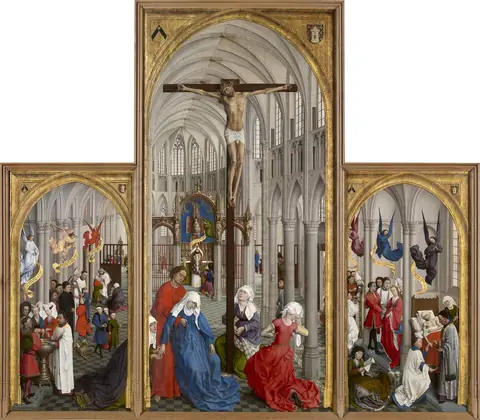
Image: Wikimedia Commons · Public domain (PD-Art) The Seven Sacraments
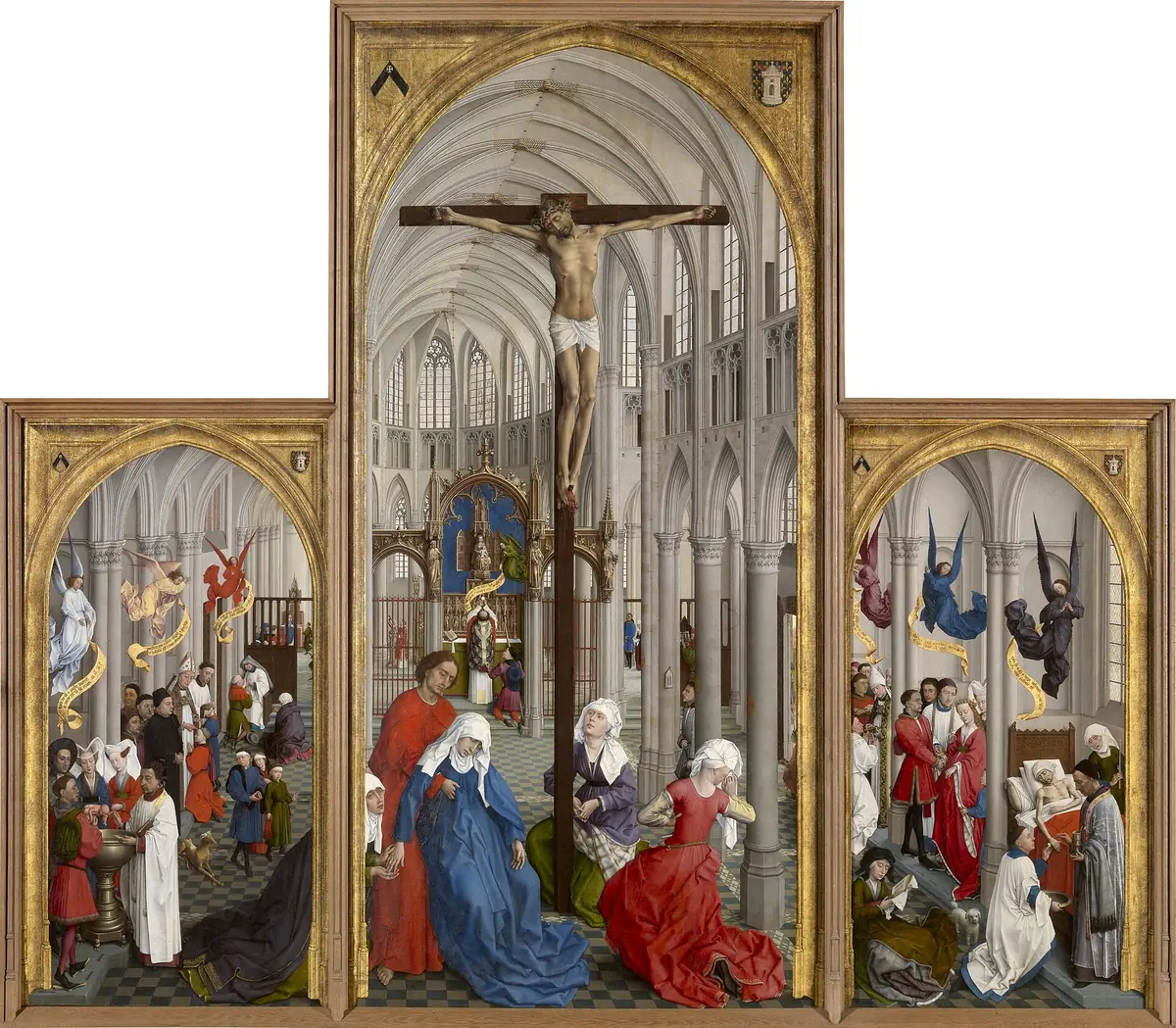
Look closely. A great church interior is filled with the seven sacraments, each shown as a small living scene: baptism, confirmation, confession, the Eucharist at a central Mass before a crucifix, ordination, marriage and the last anointing. The crucifixion stands in the middle of the nave, as if every sacrament takes its meaning from the cross. Look from chapel to chapel and name each rite.
In the library: The Bible (KJV) · Jesus Christ
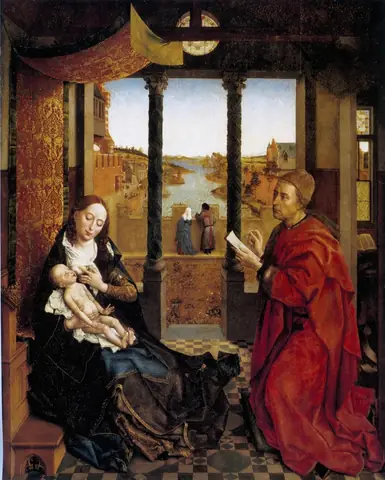
Image: Wikimedia Commons · Public domain (PD-Art) Saint Luke Drawing the Virgin
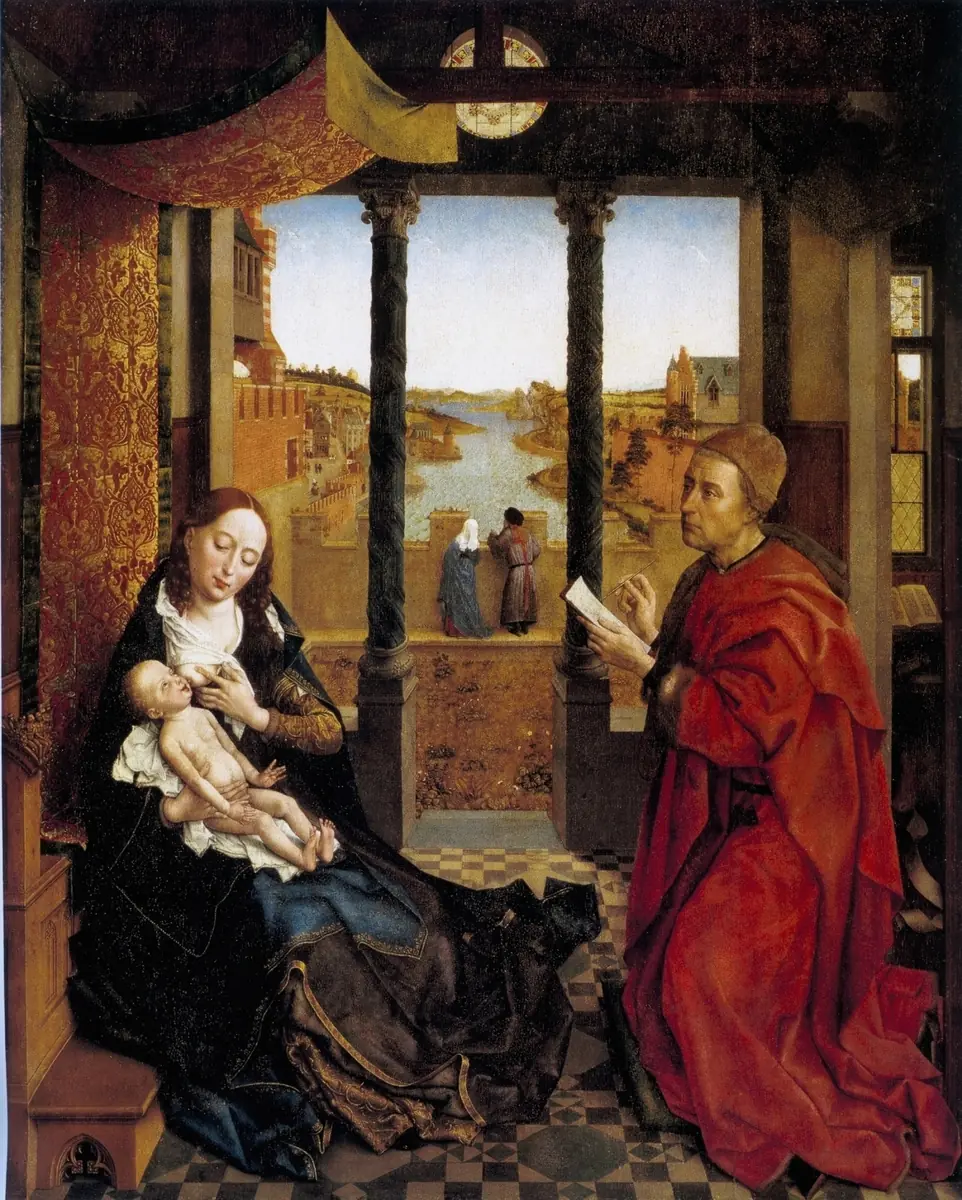
Look closely. Luke, patron saint of painters, kneels and draws Mary and the Child in silverpoint, as a craftsman would. A garden and a river town open beyond the loggia. The saint's face is often thought to be a self-portrait of Rogier; whether or not it is, the picture is a defence of painting as a devout, careful craft.
In the library: The Bible (KJV) · Mary, mother of Jesus · Jesus Christ


What to watch for in Rogier van der Weyden
Look slowly- Tears and hands. Grief is told by a tear on the cheek, a crumpled handkerchief, or fingers locked together.
- Shallow, carved space. Figures are often set in a gilded box, like a painted relief.
- Echoing poses. Mary's faint may repeat the curve of her Son's body, so that their suffering is visually joined.
- Portraits of reserve. Sitters are shown half-length, against plain grounds, with few attributes.
- Pattern and line. Follow the long curves of drapery; they are drawn as carefully as the faces.
For older students
These famous works include nudity, so they are named here but not shown. Teachers and parents can decide when to look at them together.
- The Last Judgment (Beaune Altarpiece), c. 1443–1452, Hôtel-Dieu, Beaune. This large altarpiece for a hospital includes unclothed figures of the blessed and the damned. It is named here but not shown.
Dates and collections follow the holding museums and Wikidata. Images of paintings are photographs of public-domain pictures from Wikimedia Commons or museum open-access releases; photographs of sculpture are used only when the photograph itself is Public domain, CC0, or CC BY with a named credit. Each picture links to its source page with full licence details.