Great Art · Hudson River School
Frederic Edwin Church
Cole's pupil, who travelled farther — Andes, icebergs, Niagara, Jerusalem — and painted the world at a spectacular, careful scale.
His life
Frederic Edwin Church was born in Hartford, Connecticut, in 1826 and studied with Thomas Cole in the Catskills. He became the most widely travelled of the Hudson River painters, working from sketches made in South America, the Arctic, the Middle East and the American wilderness, and he packed exhibition rooms with huge, minutely finished canvases that asked the visitor to look slowly across a vast view.
He built his house, Olana, above the Hudson, and died there in 1900. His gift was the long look: a cross in the foreground of an Andean valley, a fall of water, or the walls of Jerusalem at dawn can be both a record of a place he had seen and a picture of wonder at the size of the world.
Key works
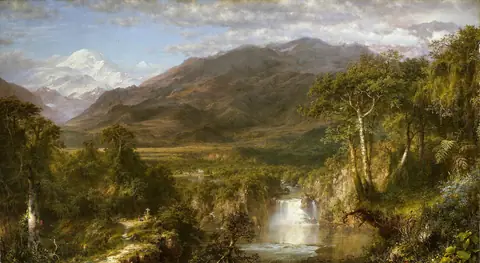
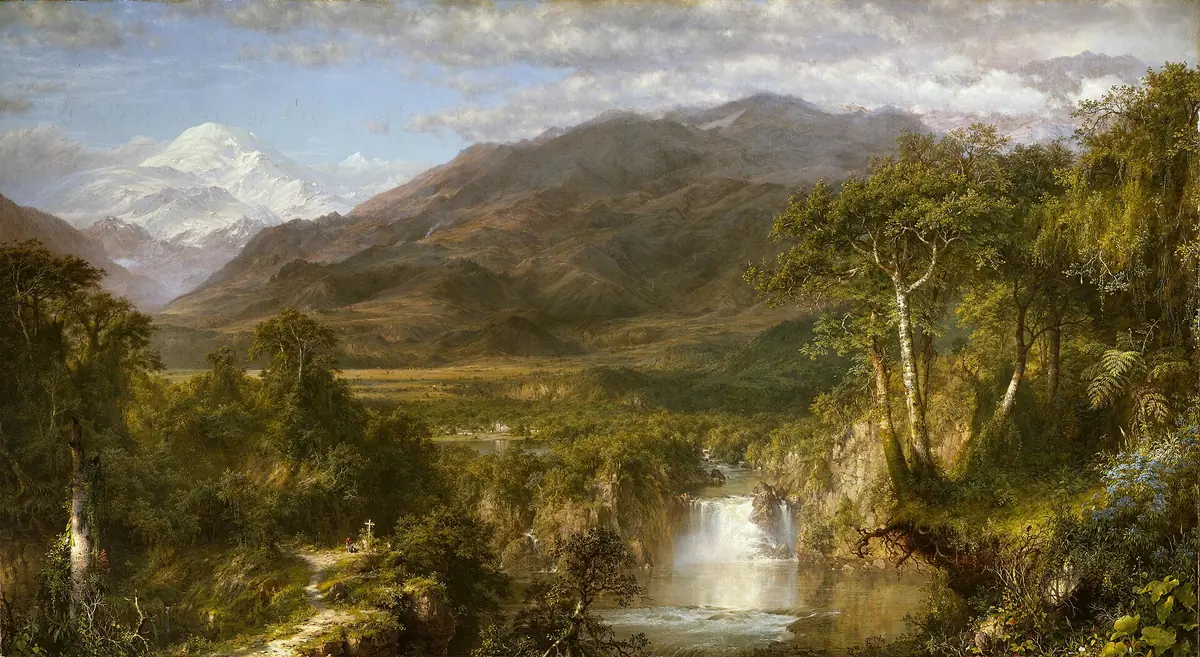
Image: Wikimedia Commons · Public domain (PD-Art) Heart of the Andes
Look closely. A vast Andean valley opens from a detailed, wooded foreground toward snow peaks; a little path, a pool, and a wooden cross by a cluster of trees sit in the lower left as if a traveller had just stepped aside. Look at the cross and the path first, then let the eye travel up through forest, plain and mountain, and at how much close botany is packed into a picture of almost continental depth.
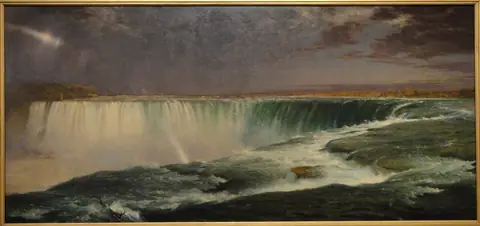
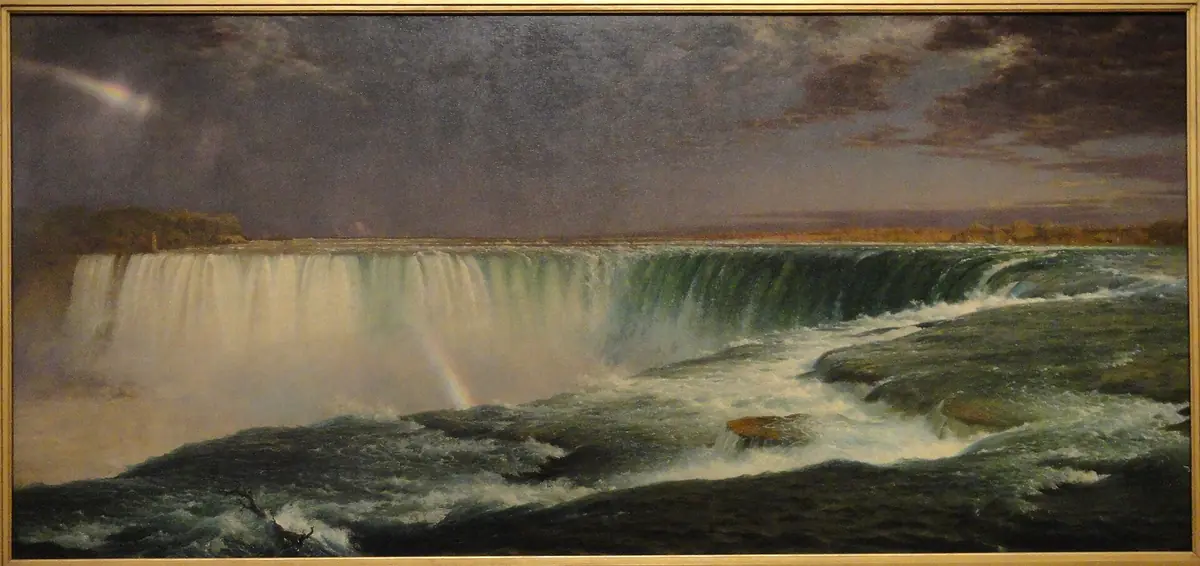
Image: Wikimedia Commons · CC0 (public domain) Niagara
Look closely. The Horseshoe Falls fill almost the whole width of the canvas; there is no safe foreground path, only water moving over the lip and a low, wide horizon of spray. Look at the green of the falling sheet, at the lack of a spectator inside the picture, and at how close Church has brought you to the drop.
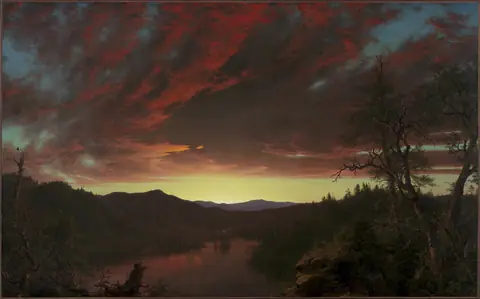
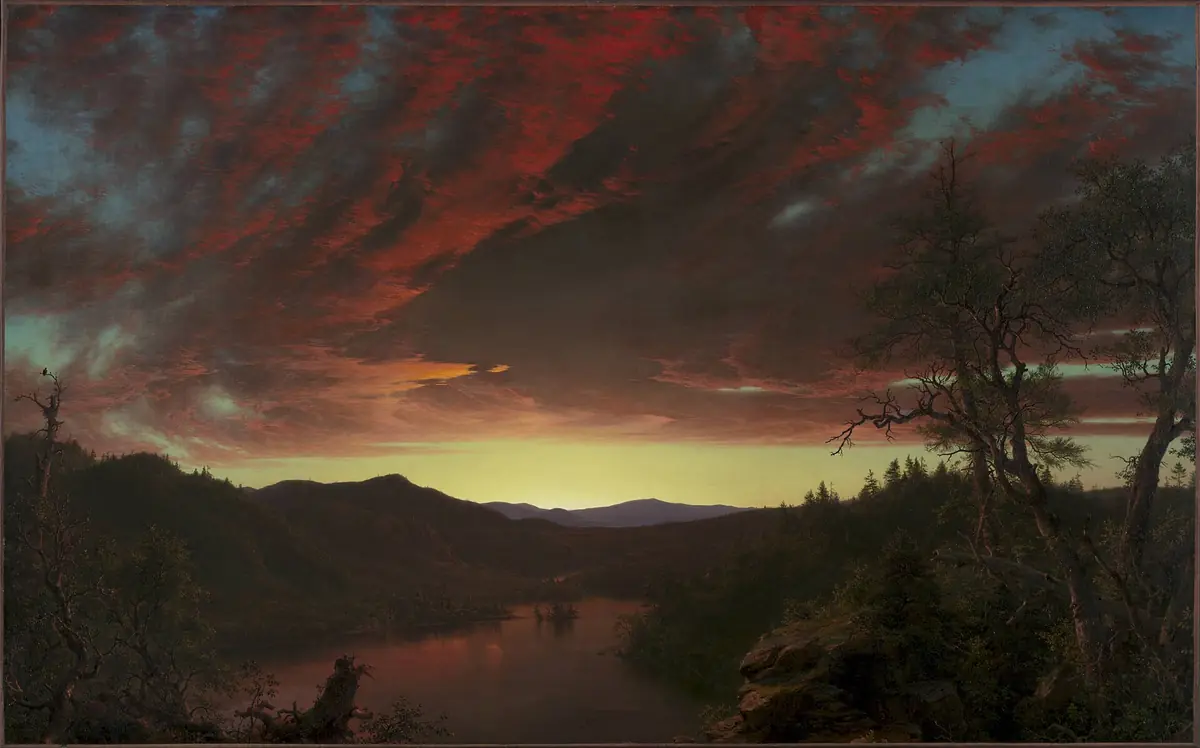
Image: Wikimedia Commons · Public domain (PD-Art) Twilight in the Wilderness
Look closely. A fiery sunset breaks through clouds over a dark wilderness of rock, water and silhouetted pines; there are no figures. Look at the bands of red and gold, at the still water that takes the colour, and at how the last light makes the unpeopled forest feel both grand and severe.
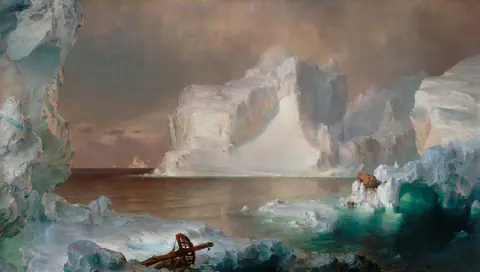
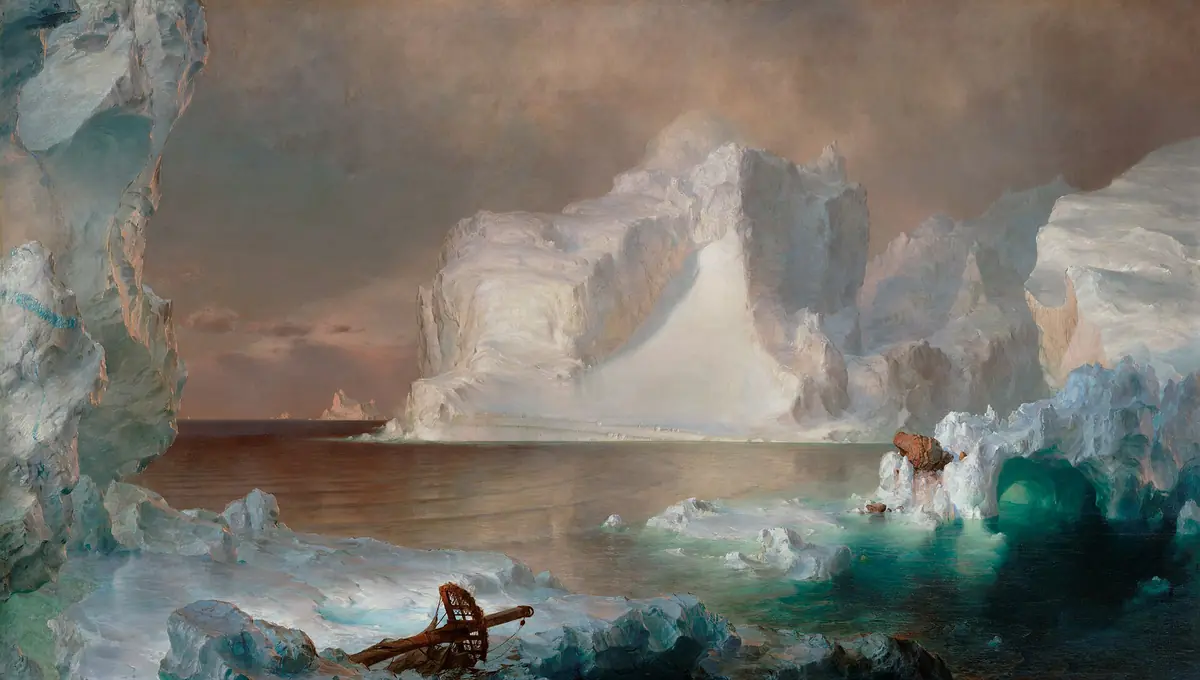
Image: Wikimedia Commons · Public domain (PD-Art) The Icebergs
Look closely. A polar sea of ice rises in towers and caves of blue and white; in the foreground a broken spar or fragment of a wreck is a small, human mark against the bergs. Look at the colour in the ice, at the wreckage that tells you someone has already failed here, and at the cold, clear light.
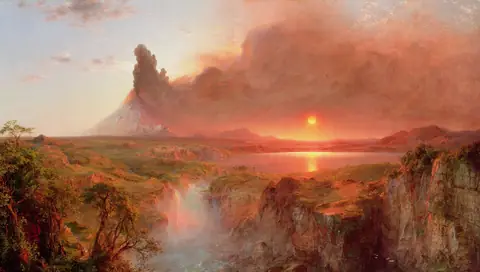
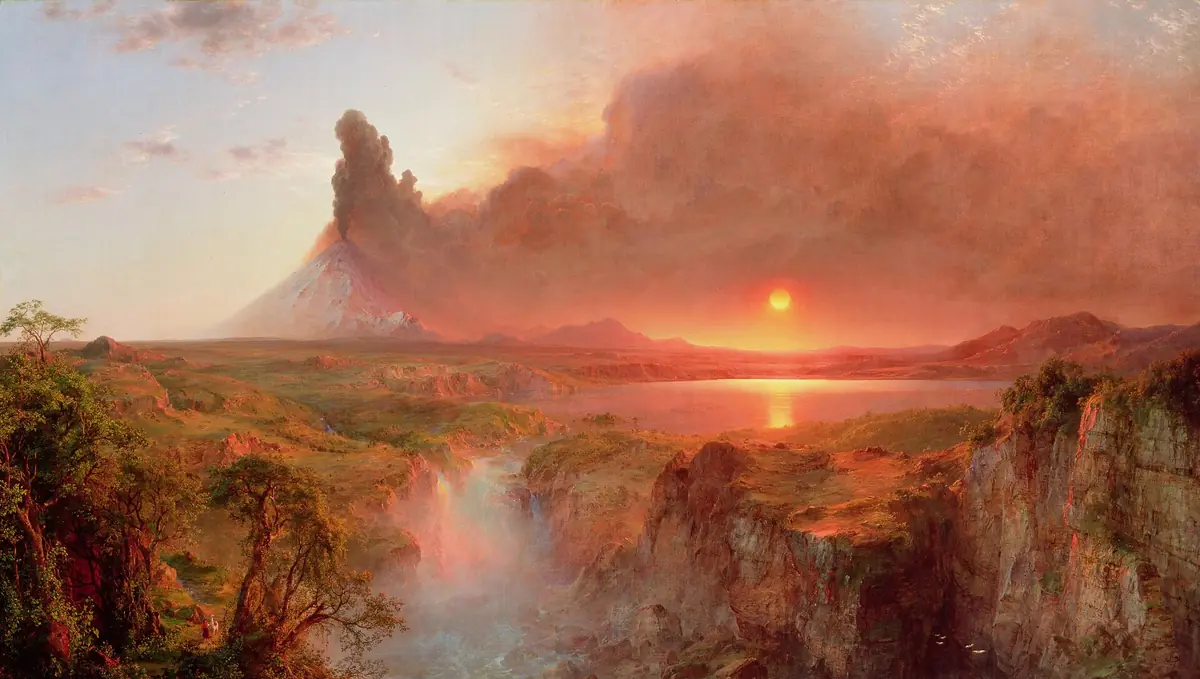
Image: Wikimedia Commons · Public domain (PD-Art) Cotopaxi
Look closely. The volcano Cotopaxi pours a dark, reddish plume across a wide Andean landscape, while a sun low in the sky fights the ash, and a river or falls catches the light in the middle distance. Look at the conflict of smoke and sun, at the travellers or animals if you can find them, and at how a real mountain is treated as a drama of weather and fire.
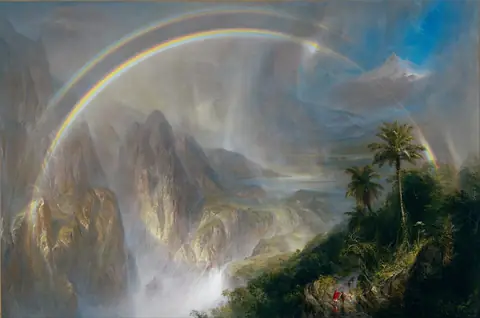
Image: Wikimedia Commons · Public domain (PD-Art) Rainy Season in the Tropics
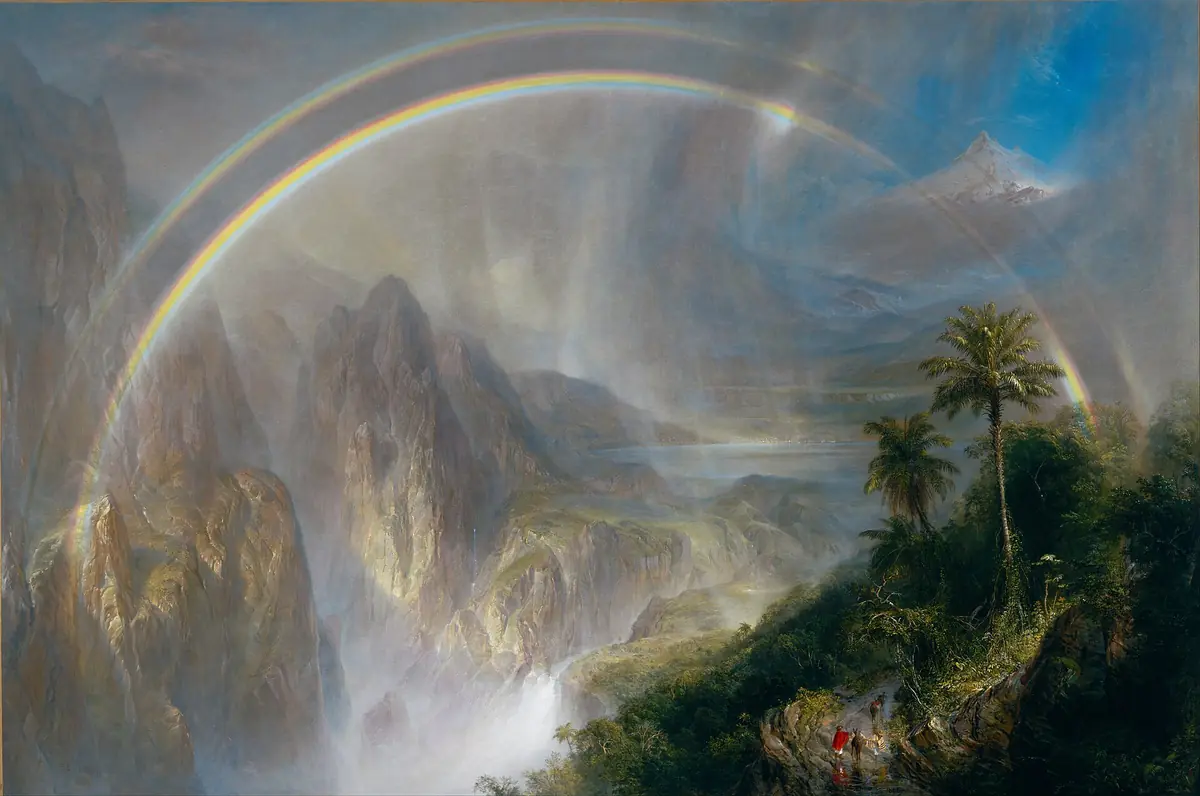
Look closely. A great double rainbow arches over a lush, steep tropical landscape, with a wet forest, a gorge, and a pale burst of sun. Look at the two bows, at the moisture in the air, and at the little path or figures that give the huge weather a human scale.
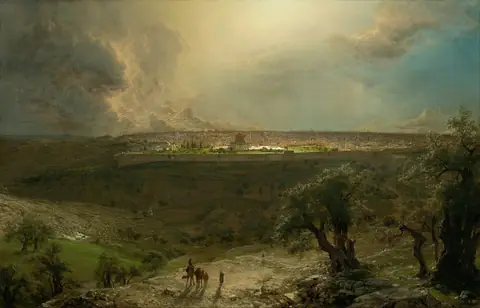
Image: Wikimedia Commons · Public domain (PD-Art) Jerusalem from the Mount of Olives
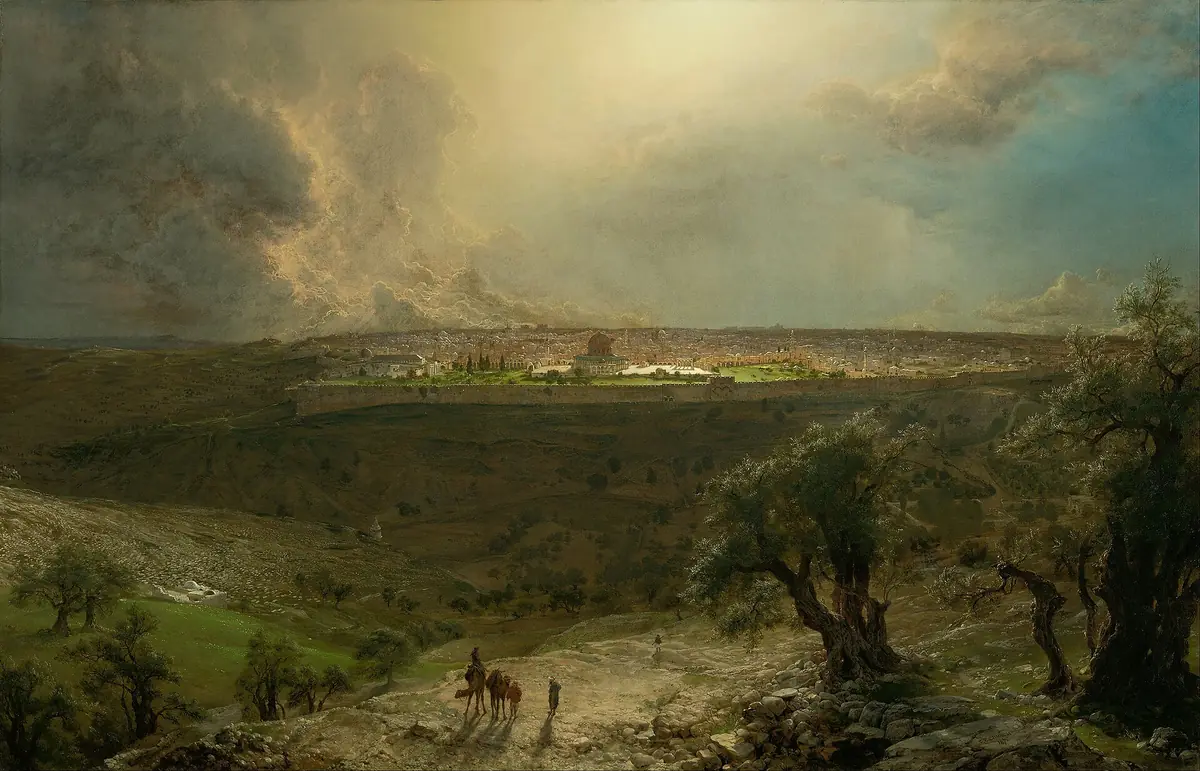
Look closely. The city of Jerusalem is spread in a long, careful panorama under a clear sky, seen from the Mount of Olives, with the land falling away in the foreground and the walls and domes catching the light. Look at the truthfulness of the view as a place, at the quiet of the foreground slope, and at how a holy city is painted as a real city in its hills, not as a vision only.
In the library: The Bible (KJV)


What to watch for in Frederic Edwin Church
Look slowly- A vast view, a small foreground. A cross, a traveller, or a broken mast can set the scale of a continent.
- Travel as study. Andes, ice, tropics and Jerusalem are observed, not invented from a print only.
- Light at the horizon. Sunrise, sunset, or a rainbow often carries the feeling of the picture.
- Finish and distance together. Look close at a leaf or a wave, then step back and read the whole range.
- A hidden path for the eye. Follow water, mist, or a valley into the depth of the canvas.
Dates and collections follow the holding museums and Wikidata. Images of paintings are photographs of public-domain pictures from Wikimedia Commons or museum open-access releases; photographs of sculpture are used only when the photograph itself is Public domain, CC0, or CC BY with a named credit. Each picture links to its source page with full licence details.