Great Art · Realism
Jean-François Millet
The painter of Barbizon who gave gleaners, a sower and a couple at prayer the dignity of a history picture.
His life
Jean-François Millet was born in 1814 in the hamlet of Gruchy, on the Normandy coast, into a farming family, and he never lost the knowledge of what field work feels like in the body. After training in Cherbourg and Paris he settled at Barbizon, at the edge of the Forest of Fontainebleau, and painted peasants — sowing, gleaning, resting, praying — with a seriousness that some city critics first took for politics and that he himself described as the life he knew.
He died at Barbizon in 1875. His gift was gravity. A woman stooping for leftover grain, a man leaning on a hoe, or a couple standing in a field at the hour of the Angelus can be as still and as large in feeling as a sacred scene, because he looked at labour and at prayer without sentimentality.
Key works
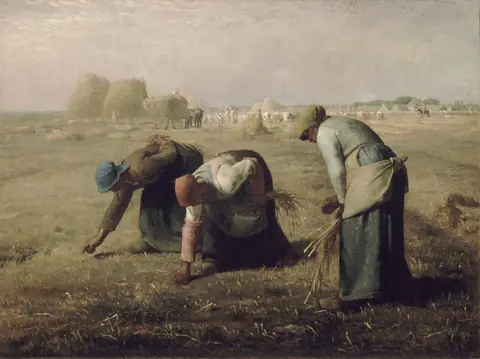
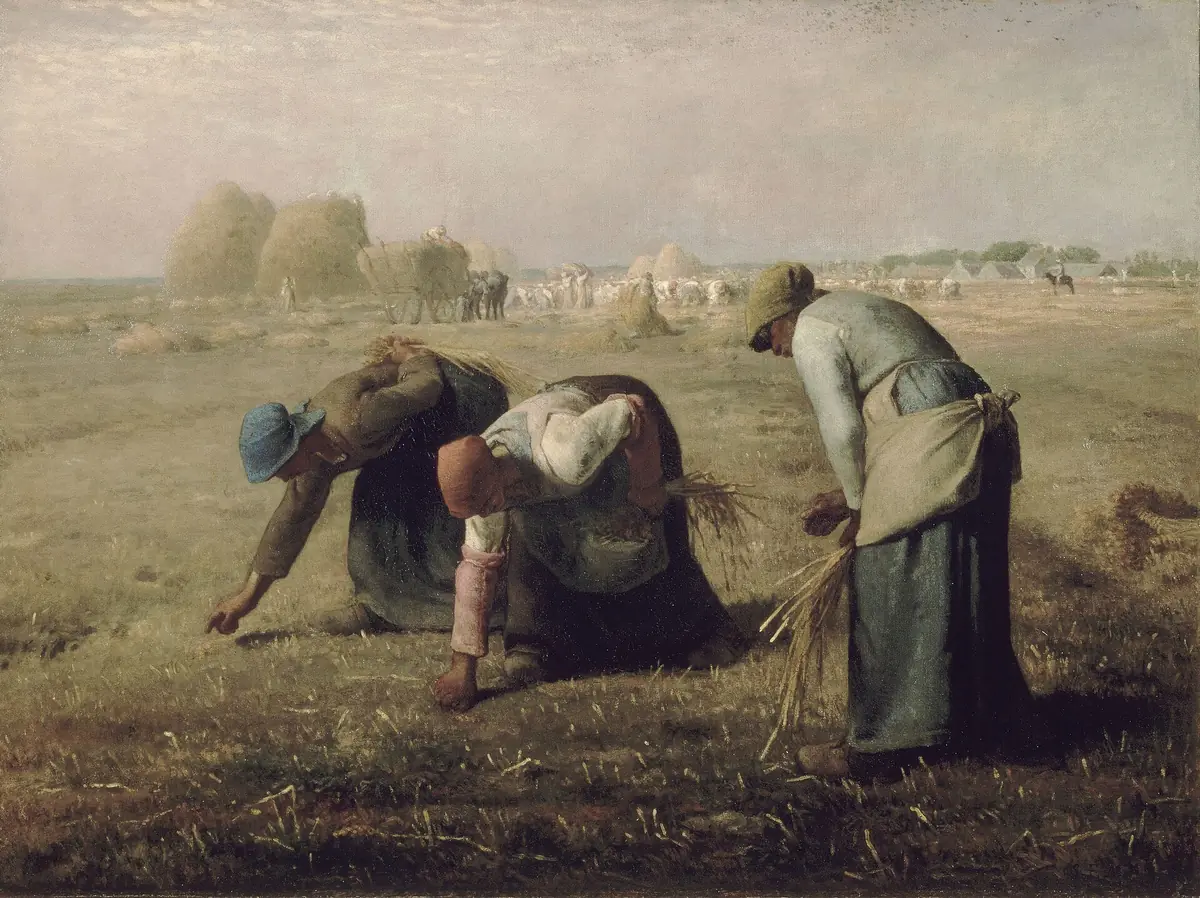
Image: Wikimedia Commons · Public domain (PD-Art) The Gleaners
Look closely. Three women stoop in a harvested field to pick up the leftover ears of grain; behind them the stacks are already high and a steward or overseer sits on a horse in the distance. Look at the different heights of the three backs, at the stubble, and at how little of the picture is given to faces — the subject is the stooping itself.
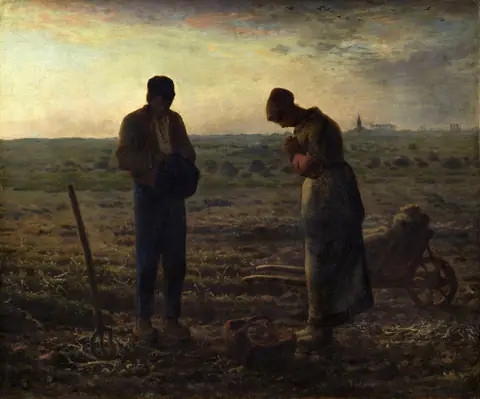
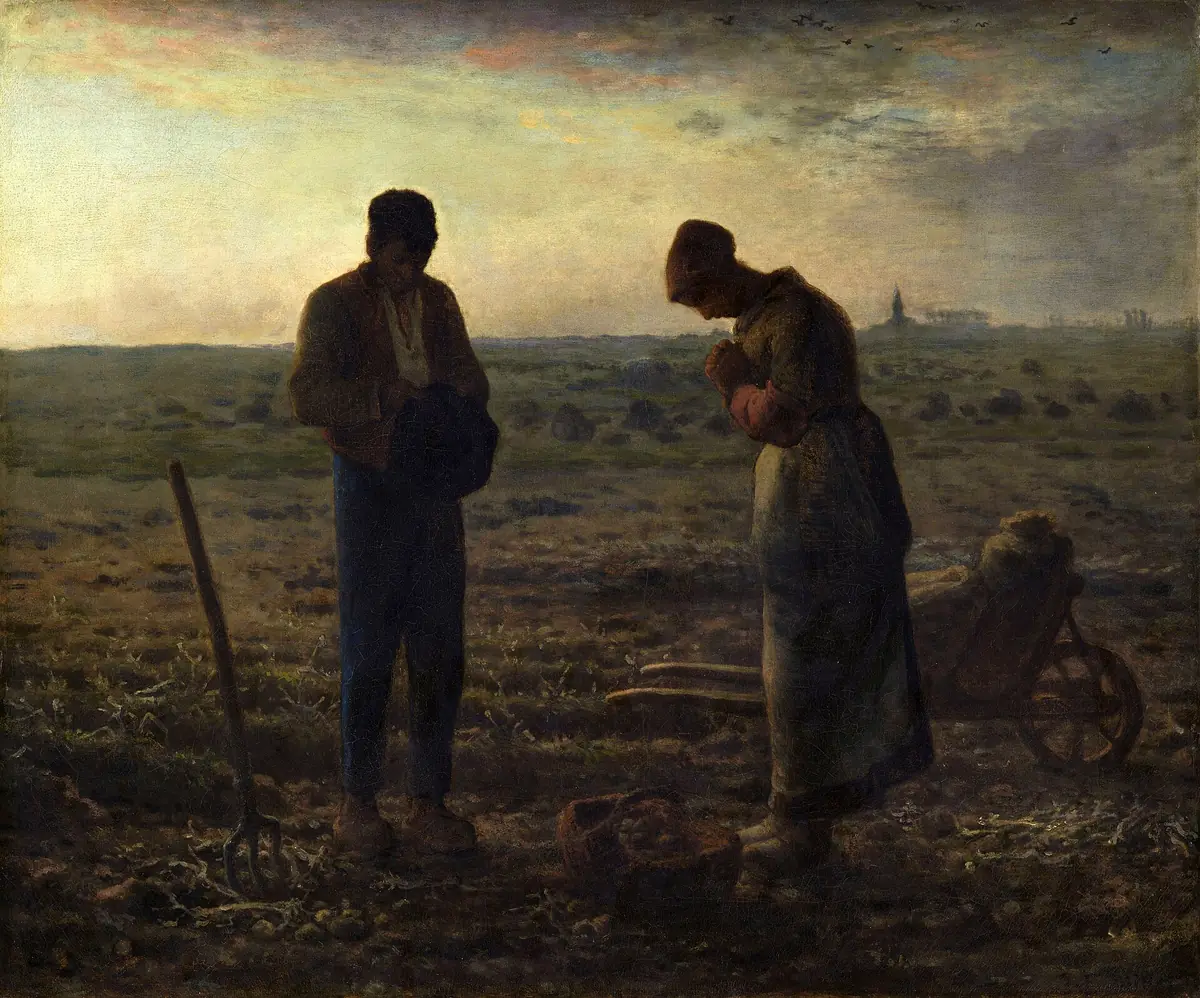
Image: Wikimedia Commons · Public domain (PD-Art) The Angelus
Look closely. A man and a woman stand in a potato field at evening, heads bowed; a basket and a barrow are at their feet, and a small church is just visible on the horizon. Look at the fork stuck in the ground, at the last light, and at the pause in work when the bell for the Angelus would have been heard across the fields.
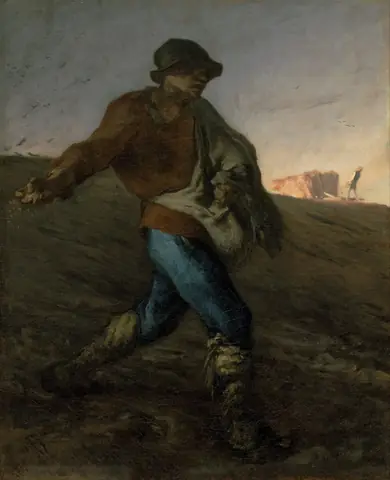
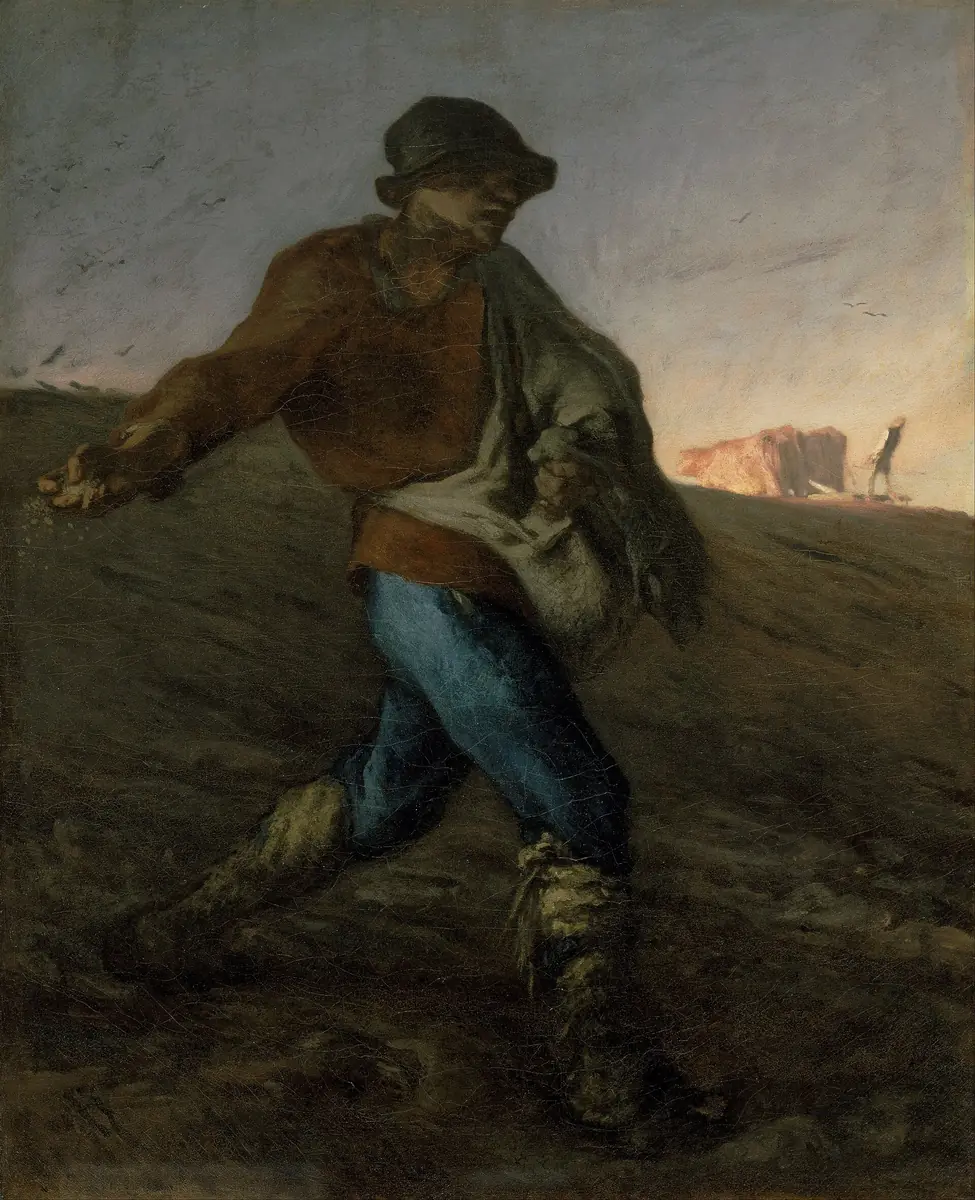
Image: Wikimedia Commons · Public domain (PD-Art) The Sower
Look closely. A single sower strides across a sloping field, his arm out in the act of casting seed, a bag at his side, the ground rising behind him under a dim sky. Look at the force of the step, at the dark silhouette against the field, and at how a repeated farm gesture is given the scale of a monumental figure.
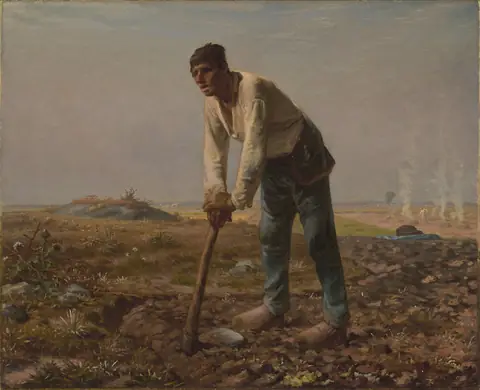
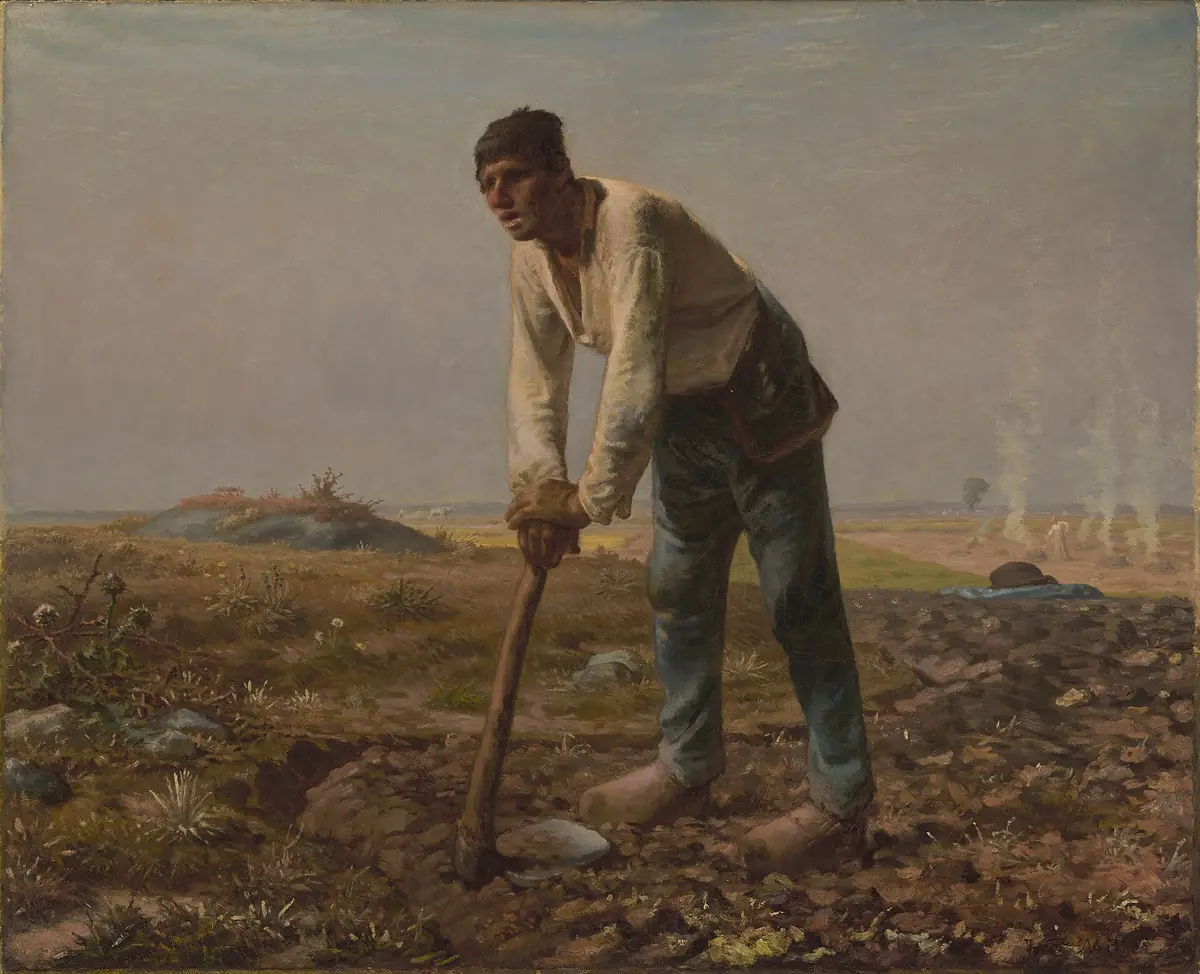
Image: Wikimedia Commons · Public domain (PD-Art) Man with a Hoe
Look closely. A labourer leans on the handle of his hoe in a stony field, his weight sunk, his face in shadow, the tool and the clods taking as much of the picture as he does. Look at the exhausted pose, at the rough ground, and at how little Millet flatters the work: this is rest because the body can do no more for a moment.
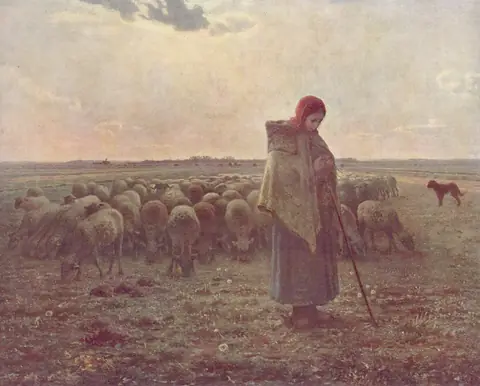
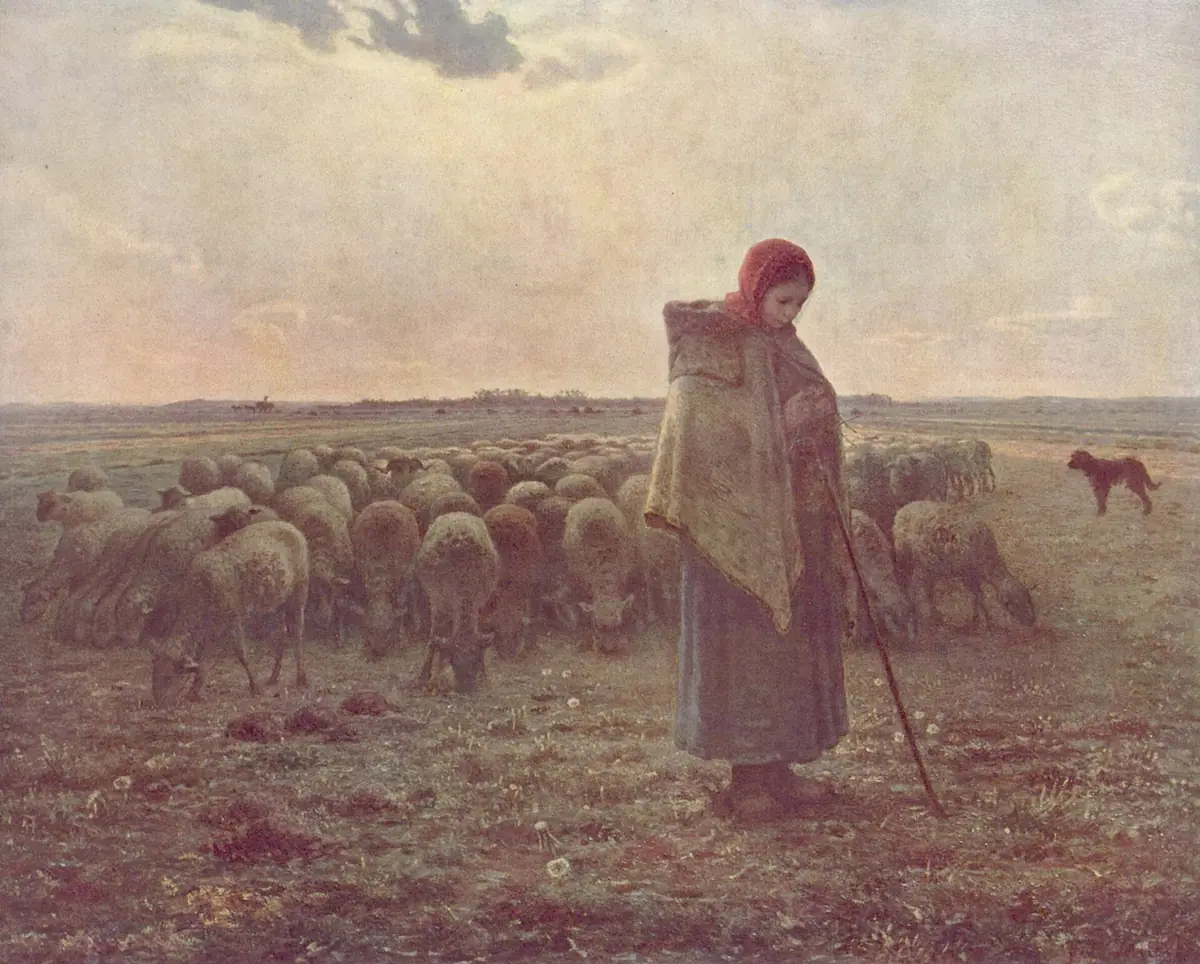
Image: Wikimedia Commons · Public domain (PD-Art) Shepherdess with her Flock
Look closely. A young shepherdess stands in a flat field, head slightly bowed, in a red hood, a rough cloak and a long skirt, a staff in her hand; her sheep are bunched behind her and a dog stands off to the right under a pale, wide sky. Look at the downward glance, at the stillness of the girl against the grazing flock, and at how much of the canvas is empty air and worn ground.
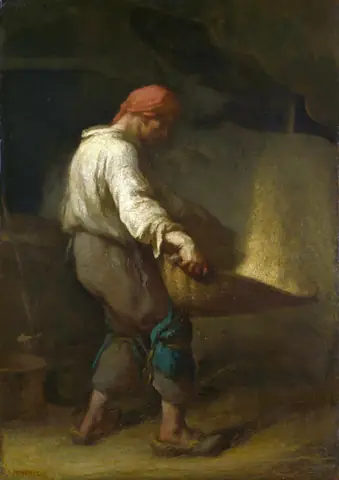
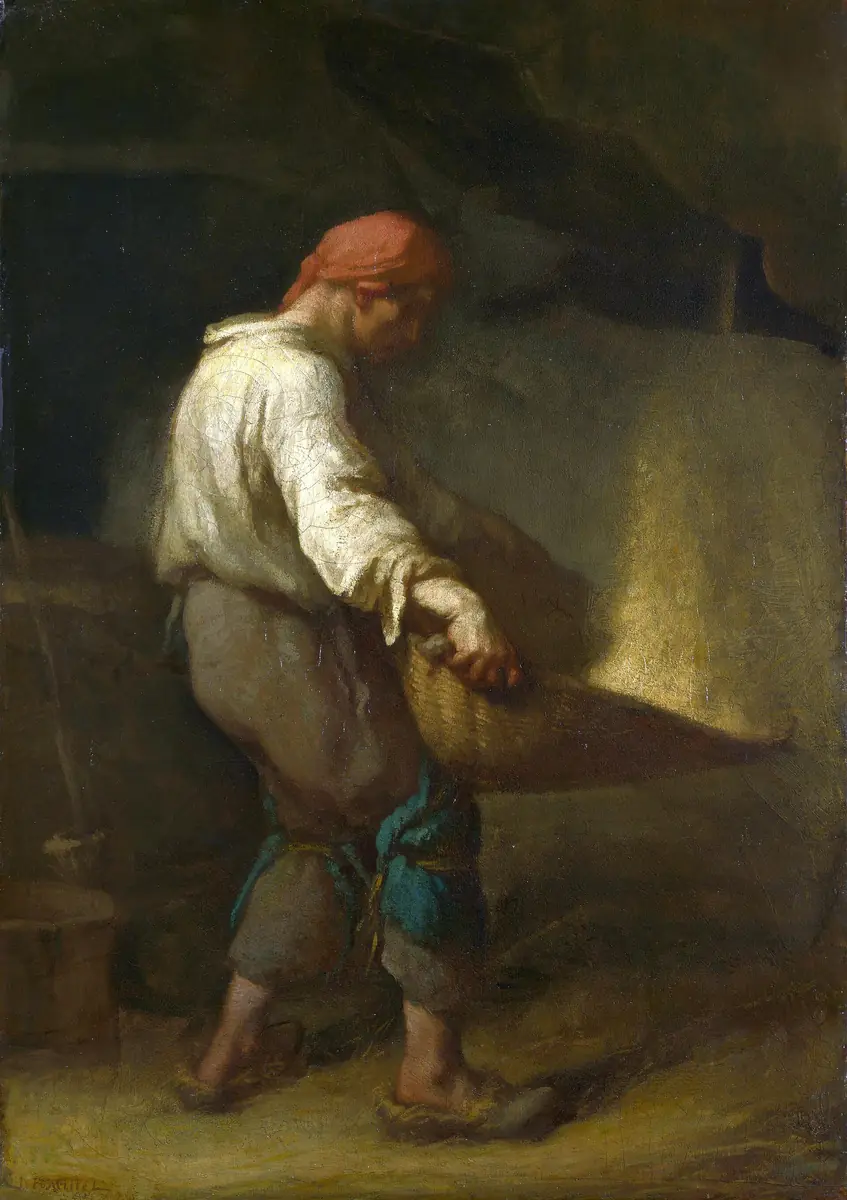
Image: Wikimedia Commons · Public domain (PD-Art) The Winnower
Look closely. In a dark barn, a man in a red kerchief tips a winnowing basket, the grain and chaff caught in a shaft of light. Look at the twist of his body, at the dust in the light, and at the contrast between the close, humble interior and the energy of the work.
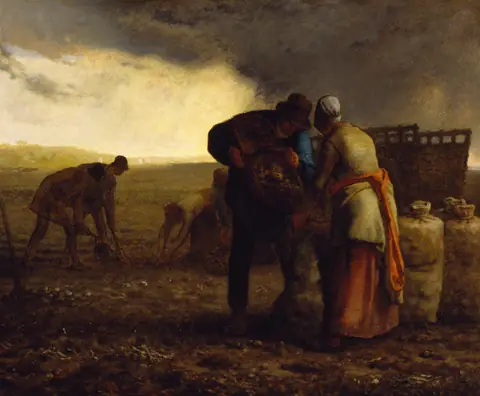
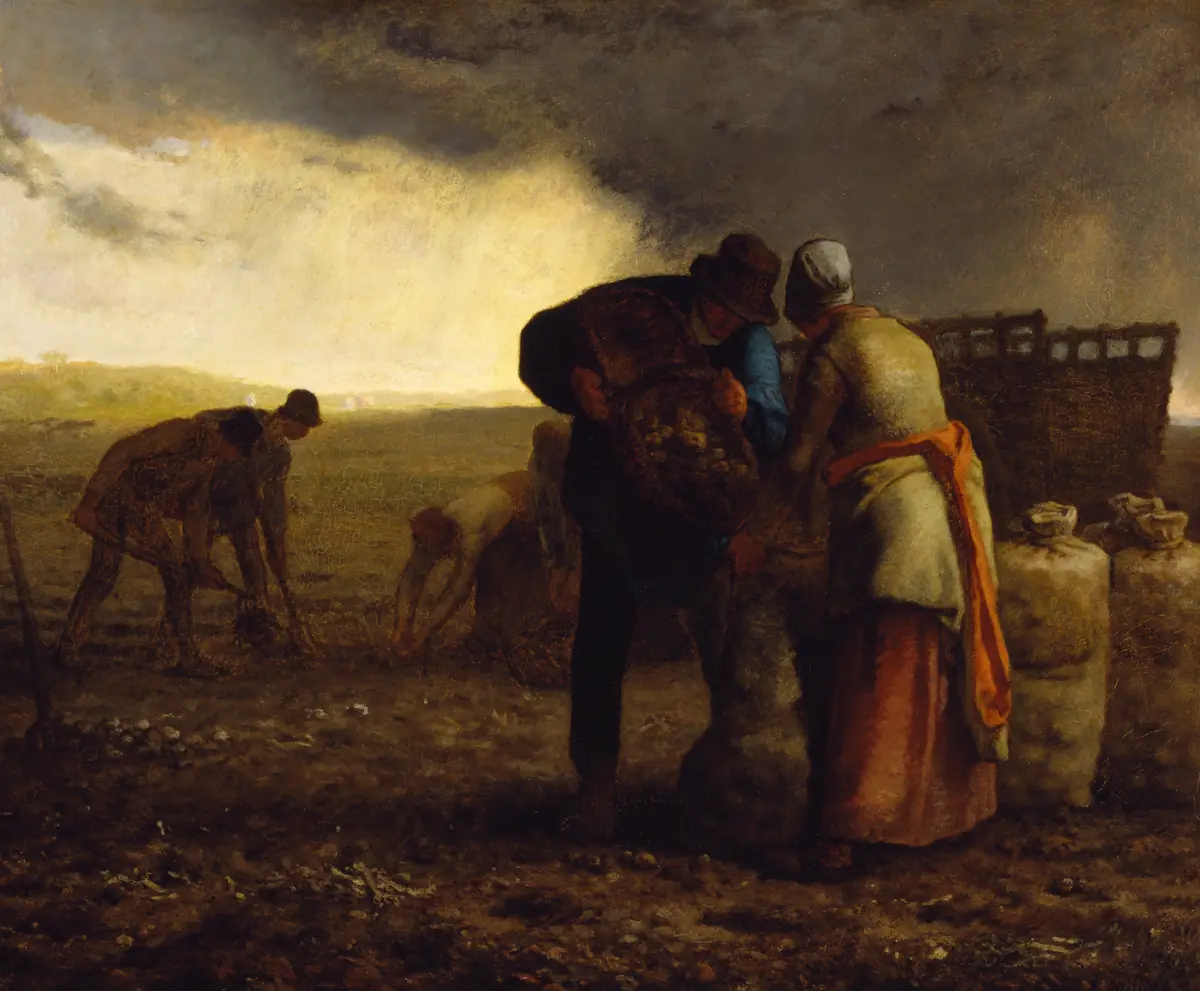
Image: Wikimedia Commons · Public domain (PD-Art) The Potato Harvest
Look closely. Two peasants work over sacks and a basket in a field, the harvested potatoes a modest heap, the sky low and heavy. Look at the bent backs, at the coarse sacks, and at the unheroic, necessary labour of bringing a poor crop in.


What to watch for in Jean-François Millet
Look slowly- The weight of work. Look at backs, hands and the way a body leans on a tool.
- A low horizon. Figures often stand against a great deal of sky.
- Dignity without prettiness. Clothes are worn; the ground is clodded or stubble, not a park.
- A pause in the labour. The Angelus is a stopping, not a spectacle.
- Earth colours. Browns, greys and a little evening pink do most of the work.
Dates and collections follow the holding museums and Wikidata. Images of paintings are photographs of public-domain pictures from Wikimedia Commons or museum open-access releases; photographs of sculpture are used only when the photograph itself is Public domain, CC0, or CC BY with a named credit. Each picture links to its source page with full licence details.