Great Art · Baroque (Flanders)
Peter Paul Rubens
The painter-diplomat of Antwerp, who gave the Catholic Baroque its warmth, weight and motion, and who could also be quiet in a morning landscape.
His life
Peter Paul Rubens was born in 1577 in Siegen, where his family was living in exile, and was raised in Antwerp. After a thorough training he spent about eight years in Italy, working for the Duke of Mantua and studying the older masters, then returned to Antwerp in 1608 and became the leading painter of the Catholic Netherlands. He ran a large studio, married Isabella Brant and later Hélène Fourment, and also served as a diplomat, travelling to Spain and to the court of Charles I.
He died in Antwerp in 1640. His gift was generous life: flesh, silk, horse and tree all seem to have blood in them, and even a solemn altarpiece moves. The great Antwerp cathedral triptychs, the portraits, and the late, calm view of his own house at Het Steen show how wide that gift could run. Mythological nudes are named for older students, not shown here.
Key works
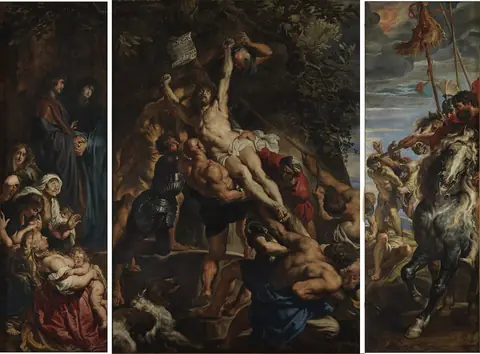
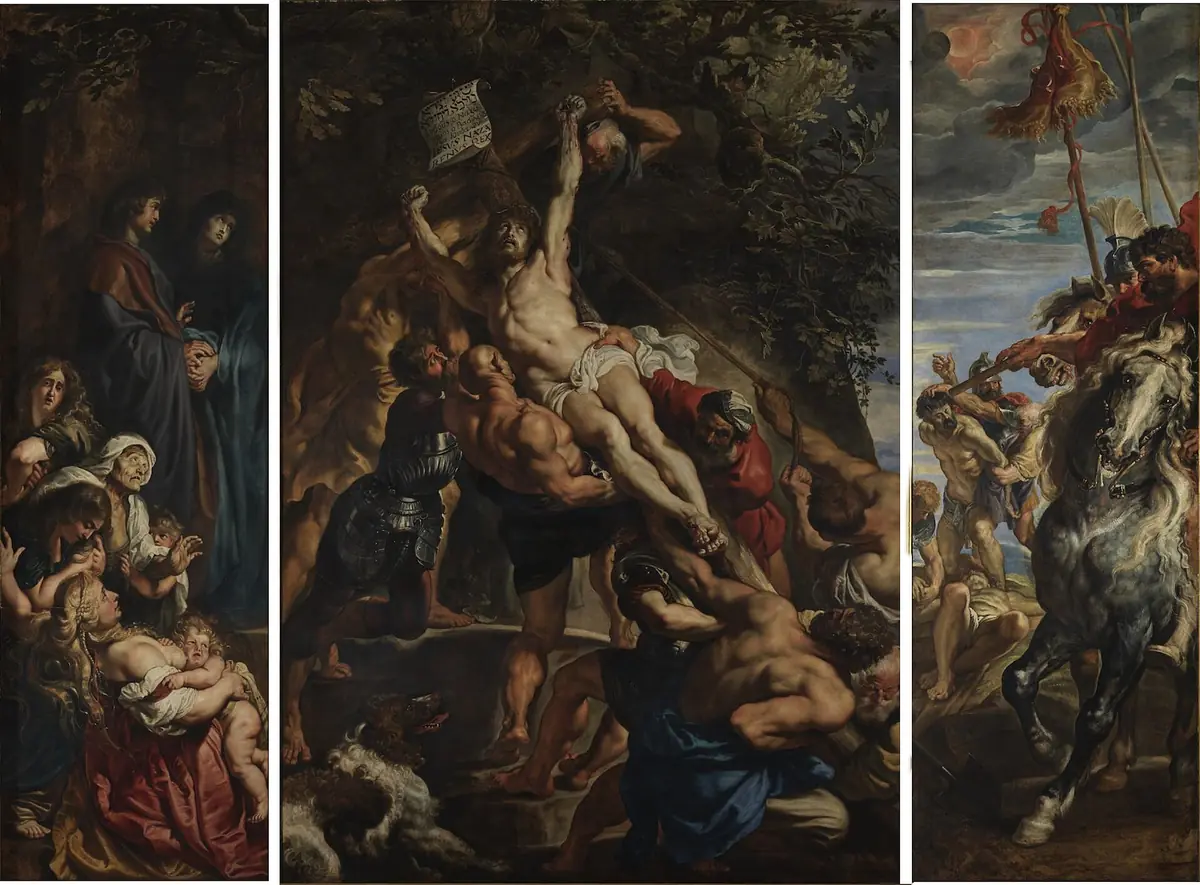
Image: Wikimedia Commons · Public domain (PD-Art) The Elevation of the Cross
Look closely. The central panel of a great triptych: muscular men strain to raise the Cross, Christ's body already nailed and turning, dogs and a horse at the edges, a stormy light on the flesh. Look at the diagonal of the Cross, at the veins and the effort in the lifters, and at how the whole panel is organised as a single act of lifting.
In the library: The Bible (KJV) · Jesus Christ
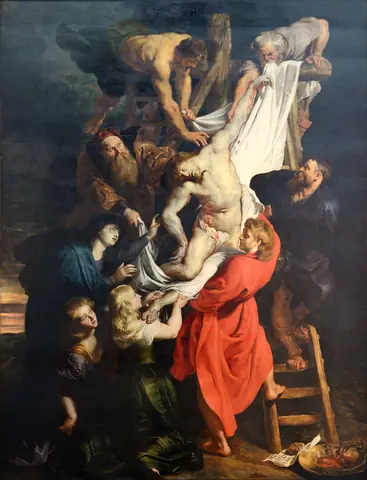
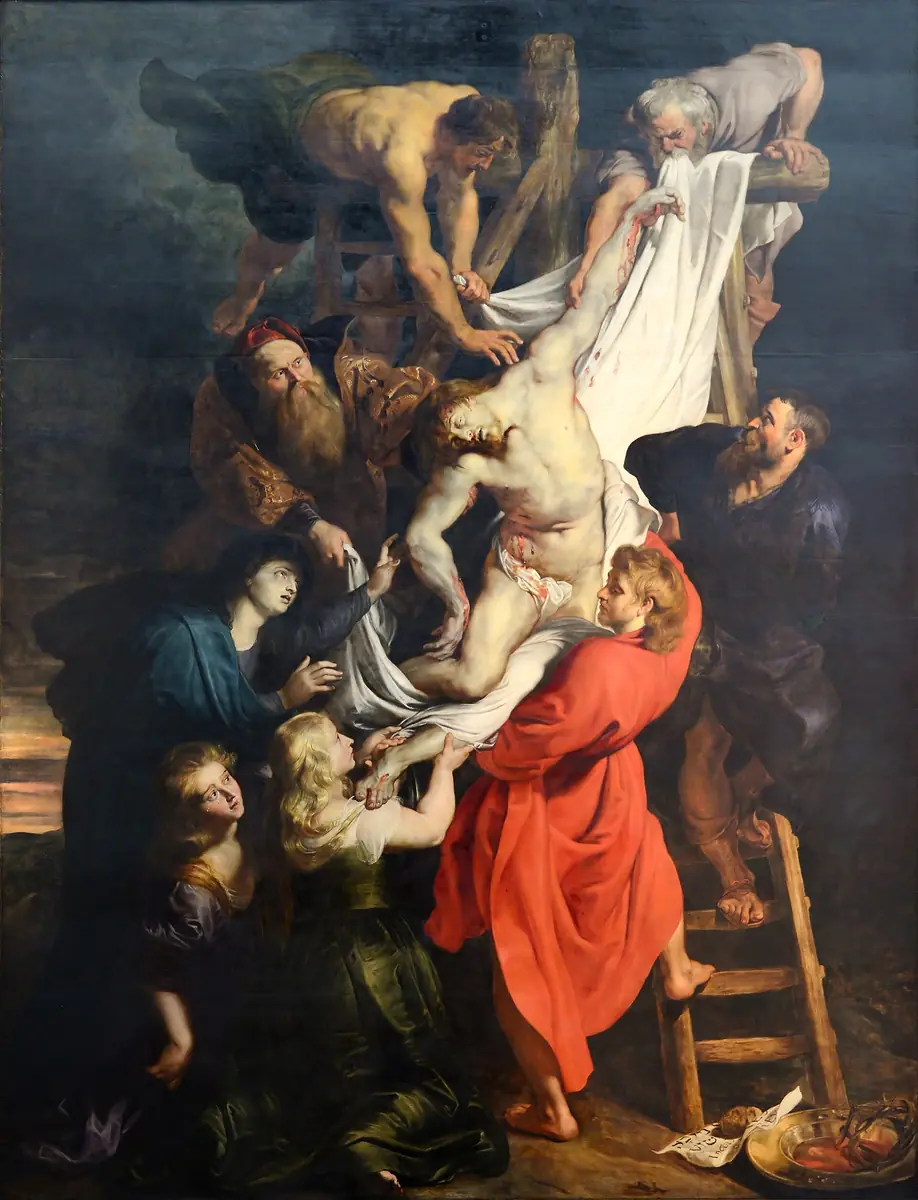
Image: Wikimedia Commons · Public domain (PD-Art) The Descent from the Cross (centre panel)
Look closely. This is the centre panel of the Antwerp cathedral triptych, not the painted exterior of the closed wings. Christ is lowered in a pale sheet; Saint John in a red cloak takes the weight, Mary Magdalene kneels at the feet, and the Virgin reaches toward her son. Look at the ladder, at the crown of thorns in the basin at the lower right, and at how many hands are needed to bring the body down in dignity.
In the library: The Bible (KJV) · Jesus Christ · Mary, mother of Jesus
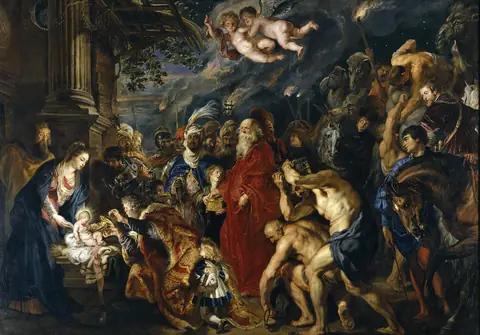
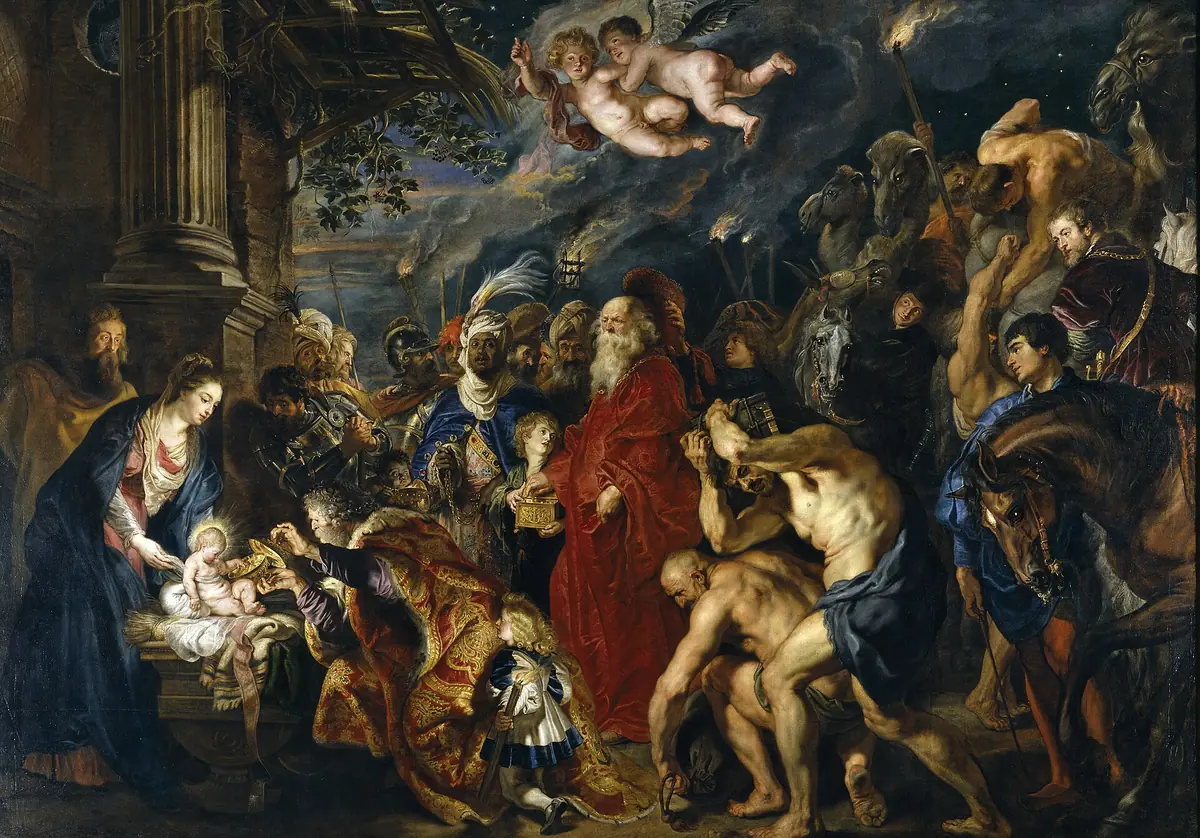
Image: Wikimedia Commons · Public domain (PD-Art) The Adoration of the Magi
Look closely. A crowded, torch-lit Adoration: Mary presents the Child, the kings press in with their gifts, a camel and soldiers fill the sides, and the holy group is almost jostled by the world. Look at the gleam on armour and silk, at the small, pale Child, and at the later strips of canvas — Rubens enlarged the picture when it changed hands.
In the library: The Bible (KJV) · Jesus Christ · Mary, mother of Jesus
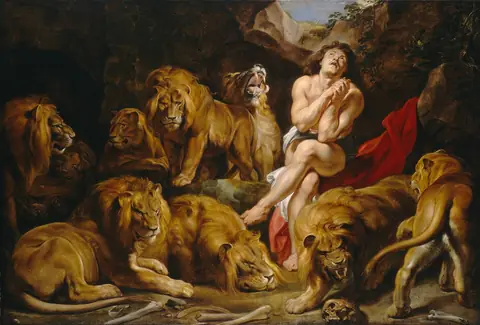
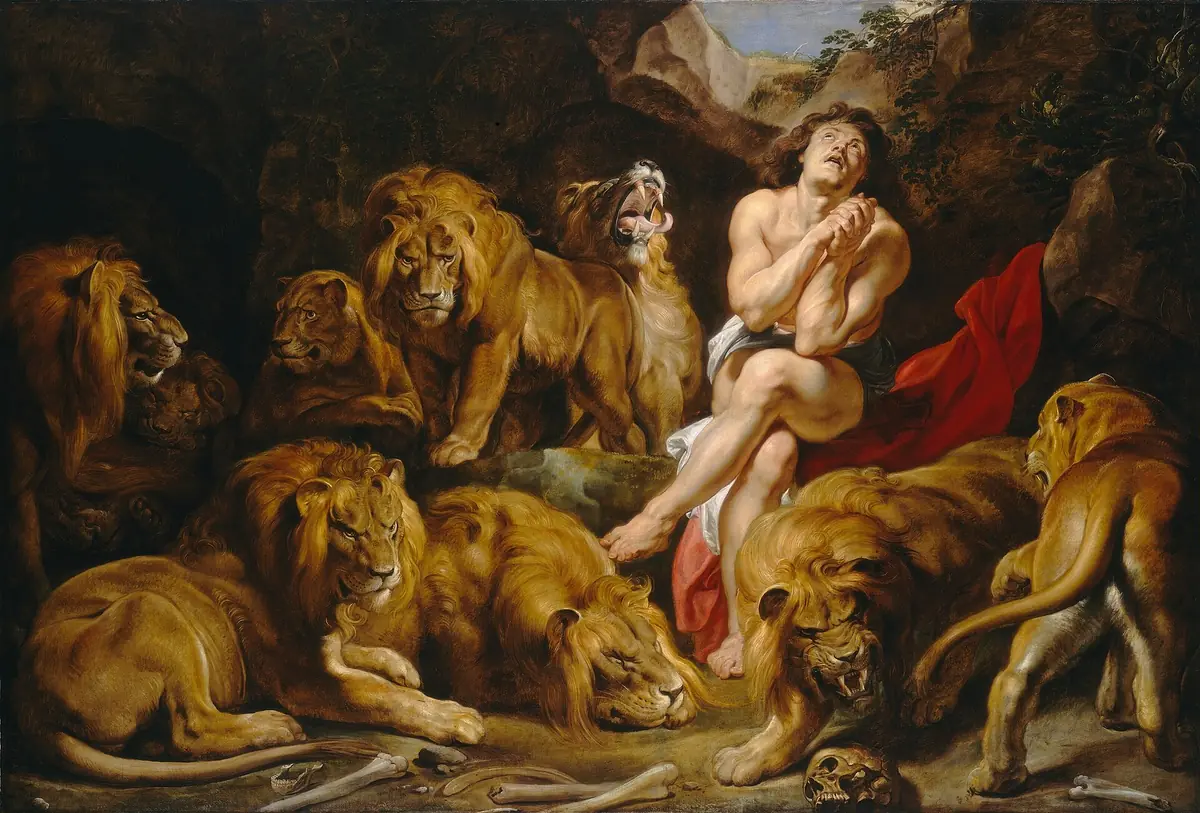
Image: Wikimedia Commons · Public domain (PD-Art) Daniel in the Lions' Den
Look closely. Daniel sits in a stone pit among a dozen lions, hands clasped, looking upward; some of the animals sleep, some pad and watch, and a little light falls from above. Look at the careful, almost portrait-like heads of the animals, at the bones on the ground, and at the stillness of the prophet in the middle of so much heavy, living muscle.
In the library: The Bible (KJV) · Daniel
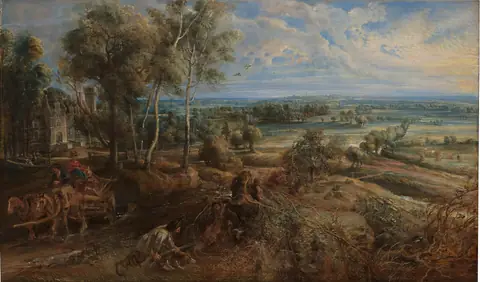
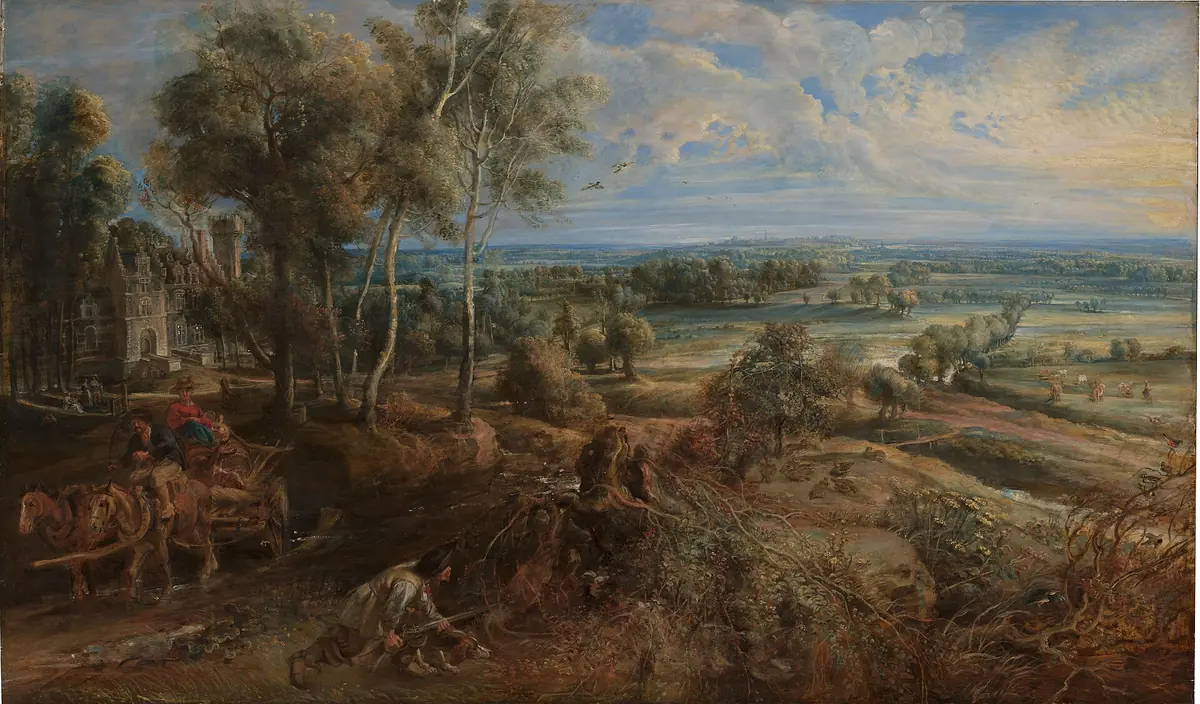
Image: Wikimedia Commons · Public domain (PD-Art) A View of Het Steen in the Early Morning
Look closely. Rubens's own country house sits in a wide autumn landscape at dawn: a hunter with a gun and a dog in the foreground, a cart on the path, cattle, and a pale sky opening over fields and a distant town. Look at the moisture in the air, at the long shadows, and at the ease of a painter who, late in life, is simply looking at a morning he owns and loves.
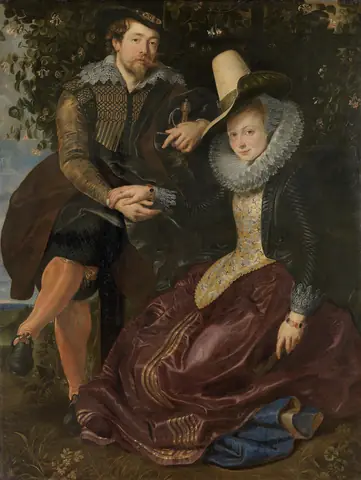
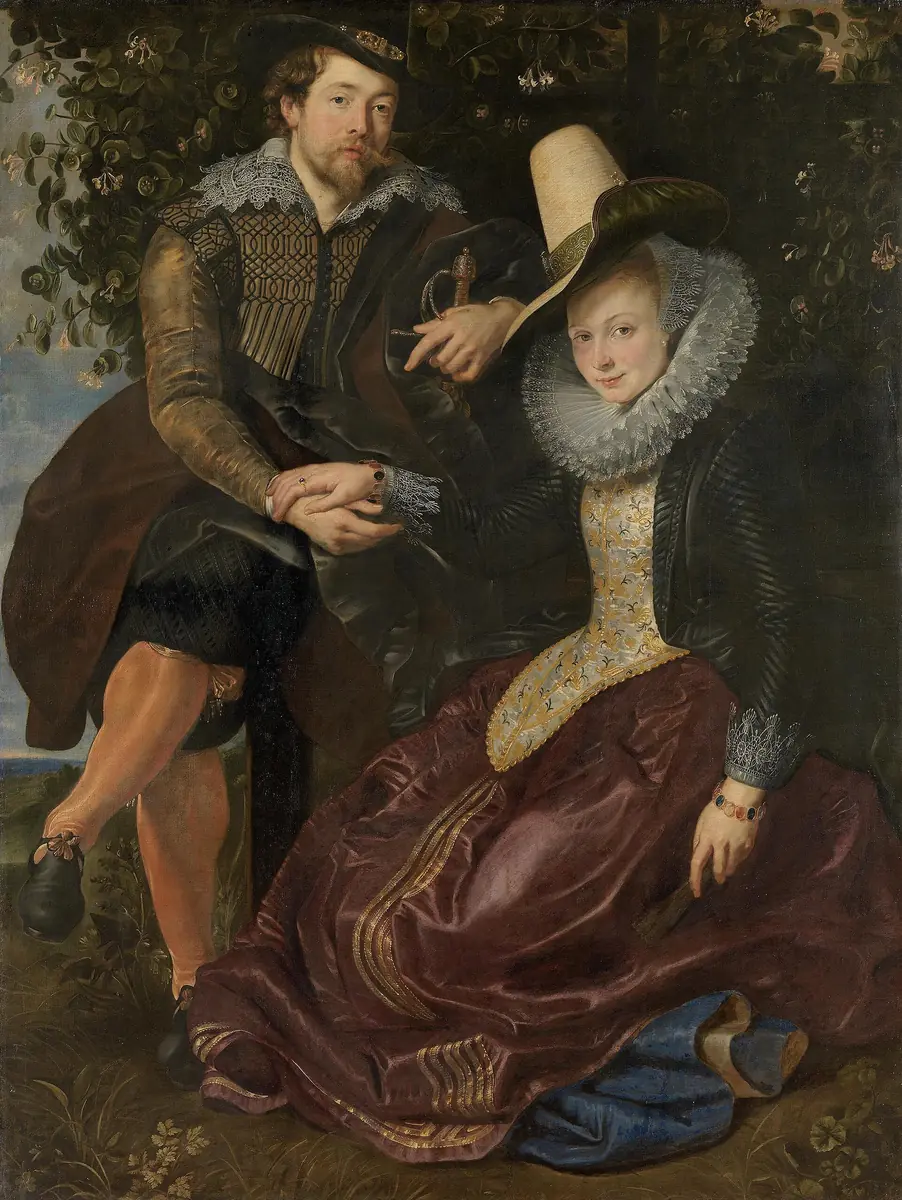
Image: Wikimedia Commons · Public domain (PD-Art) Rubens and Isabella Brant in the Honeysuckle Bower
Look closely. The painter and his first wife sit in the open air under honeysuckle, richly but not stiffly dressed, their hands meeting, a wide hat shading her ruff and her half-smile. Look at the twined fingers, at the plants and the glimpse of landscape at the left, and at the informal happiness of a marriage portrait that still has room to breathe.
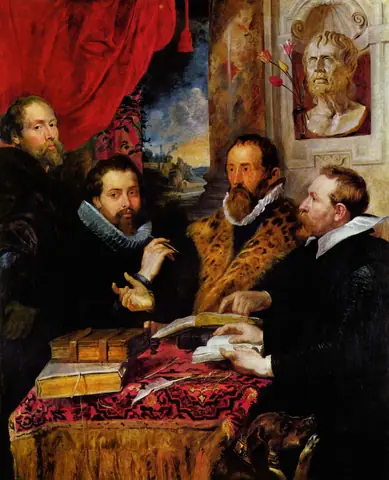
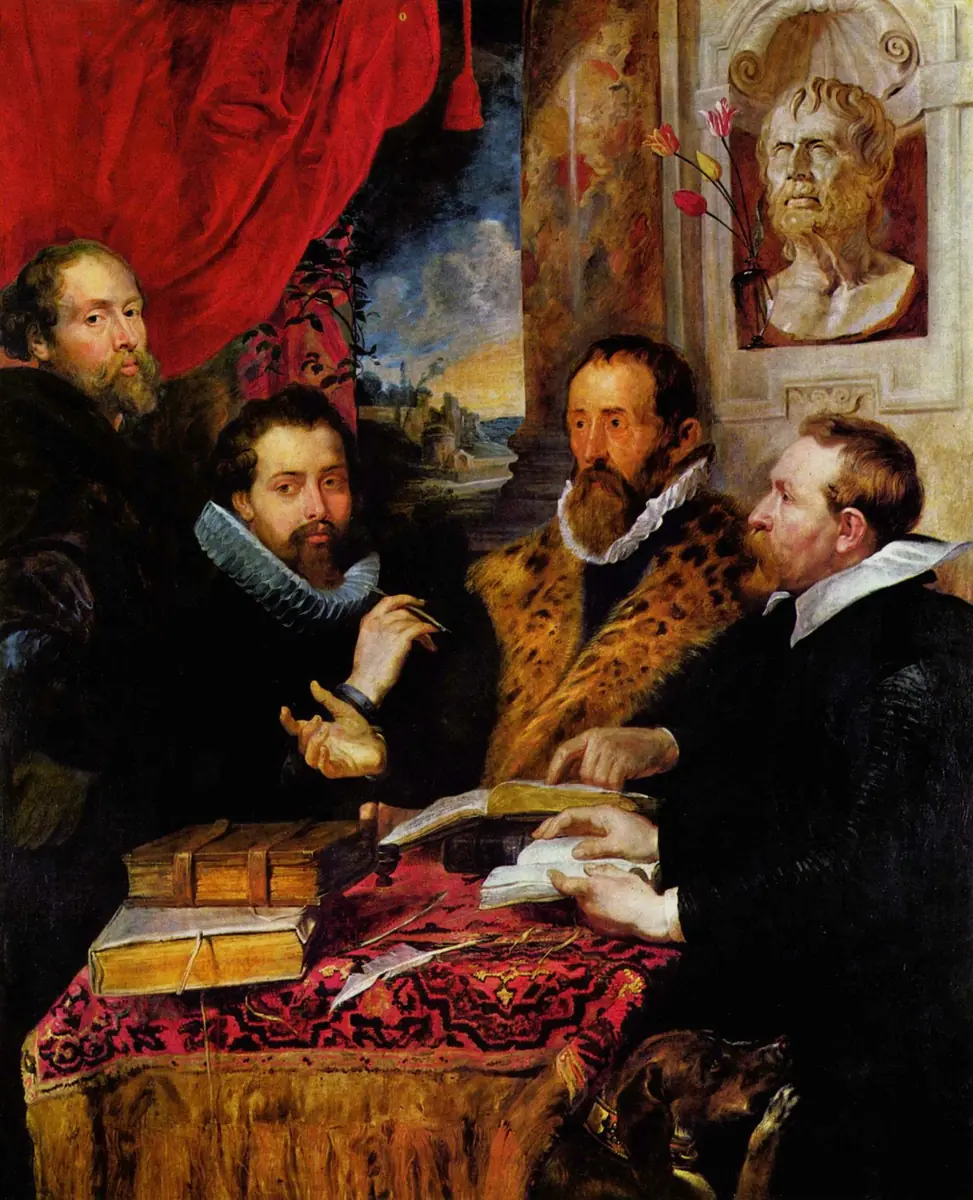
Image: Wikimedia Commons · Public domain (PD-Art) The Four Philosophers
Look closely. Justus Lipsius sits teaching; two pupils lean in, and Rubens himself stands at the left, a bust of Seneca in a niche behind, tulips and books on the table. Look at the meeting of living faces with the stone portrait of the old Stoic, at the rich, sober dress, and at a picture of friendship, study and mourning (Rubens's brother Philip is among the sitters, and had recently died).


What to watch for in Peter Paul Rubens
Look slowly- Bodies that turn. A figure is often caught mid-movement, with weight shifting from one foot or one hand to another.
- A swirl of hands. In the altarpieces, look at how many people are needed to lift, lower or present a sacred body.
- Warm flesh against dark ground. Light often lands on skin, silk and horse first.
- The studio. Pupils and collaborators helped with large commissions; the invention is still his.
- A quieter late eye. Het Steen shows that the same painter could also look at a morning field.
For older students
These famous works include nudity, so they are named here but not shown. Teachers and parents can decide when to look at them together.
- The Three Graces, c. 1630–35, Prado, Madrid. Three unclothed female figures in a landscape. Named here but not shown.
- The Judgement of Paris, several versions, c. 1636 and earlier, Prado, Madrid, and National Gallery, London. The three goddesses are shown unclothed before Paris. Named here but not shown.
- Het Pelsken (The Fur, or Helen Fourment in a Fur Wrap), c. 1636–38, Kunsthistorisches Museum, Vienna. A private, partly unclothed portrait of Rubens's second wife. Named here but not shown.
Dates and collections follow the holding museums and Wikidata. Images of paintings are photographs of public-domain pictures from Wikimedia Commons or museum open-access releases; photographs of sculpture are used only when the photograph itself is Public domain, CC0, or CC BY with a named credit. Each picture links to its source page with full licence details.