Great Art · High Renaissance
Leonardo da Vinci
The painter, engineer and student of nature who made the Last Supper and the Mona Lisa, and who never stopped asking how the world was put together.
Read Leonardo da Vinci's Great Life →
His life
Leonardo was born in Vinci, in the Tuscan countryside, the son of a notary, and trained in the Florence workshop of Andrea del Verrocchio. He was a painter, but also a designer of machines, a student of anatomy, water, flight and the growth of plants. He worked for the Sforza court in Milan, later for Cesare Borgia and for the French king Francis I, who gave him a house at Amboise, where he died in 1519. He left fewer finished pictures than most great painters, and many projects unfinished, because his curiosity kept moving.
The Last Supper, painted on the wall of a refectory in Milan, and the portrait now called the Mona Lisa are among the most recognised pictures in the world. His notebooks, written in a left-handed mirror script, show a man who looked at a uterus, a bird's wing and a river eddy with the same patience. His gift was that patience: he used light, sfumato and close study of faces and water to serve both devotion and inquiry, and he spent himself on seeing clearly.
Key works
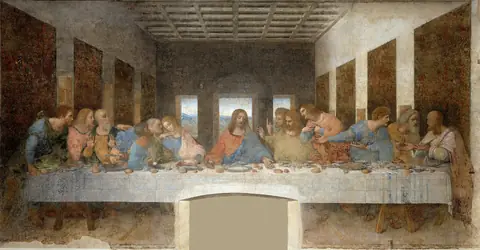
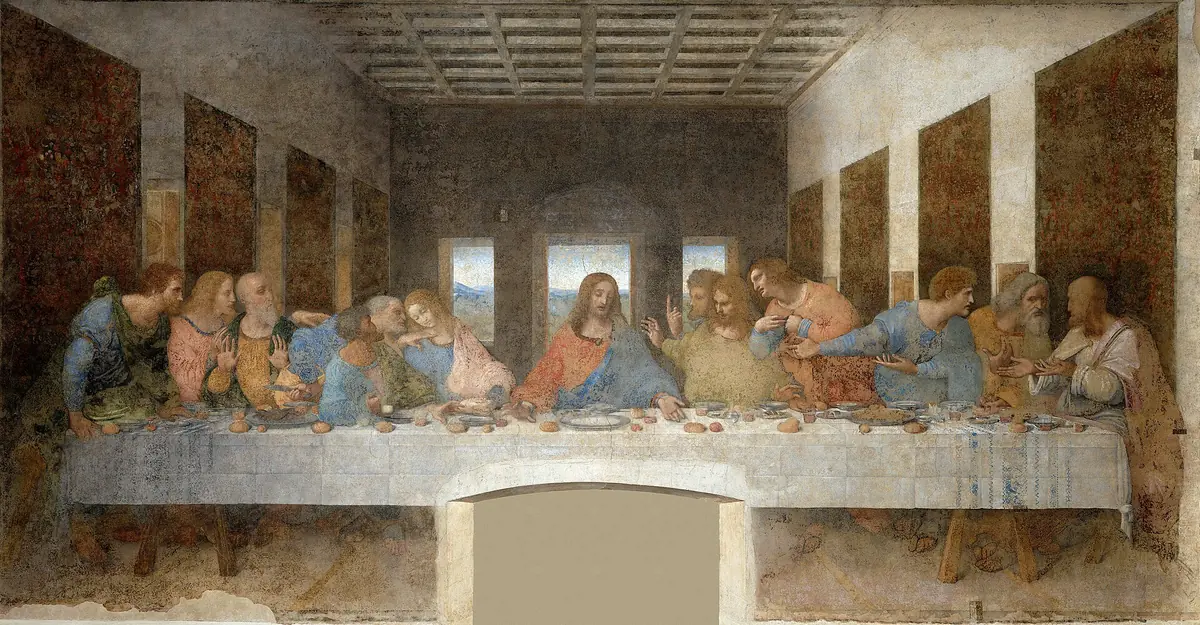
Image: Wikimedia Commons · Public domain (PD-Art) The Last Supper
Look closely. Christ has just said that one of the twelve will betray him. The apostles break into four groups of three, shocked, questioning and grieving, while Judas, near Christ on the left, clutches a bag and recoils. The table sits in a calm perspectival room that once faced the monks' own dining tables. The wall painting is fragile, much restored; look for the composition and the hands, not for a perfect surface.
In the library: The Bible (KJV) · Jesus Christ · Apostle Peter · John the Apostle
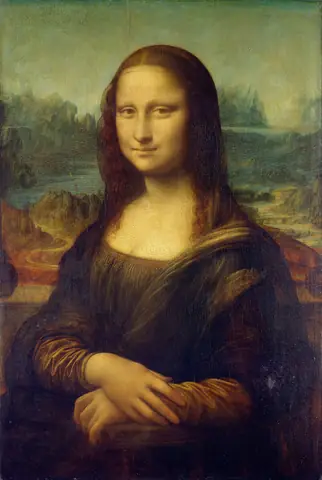
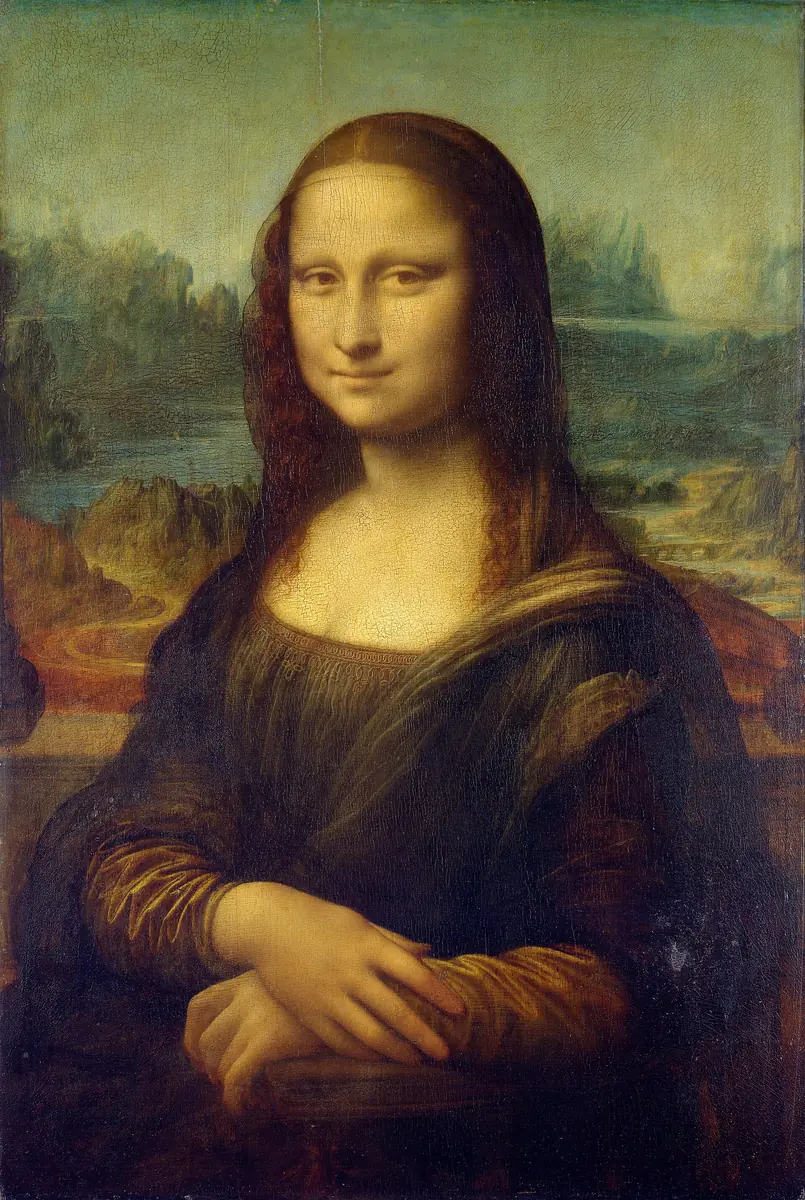
Image: Wikimedia Commons · Public domain (PD-Art) Mona Lisa (Portrait of Lisa Gherardini)
Look closely. Lisa Gherardini, wife of a Florentine merchant, sits with her hands folded on the arm of a chair, a distant landscape of roads and water behind her. The famous smile is very slight. Look at the hands, at the veil over her hair, and at how the two sides of the landscape do not quite meet at the same level — a quiet unease in an otherwise still portrait.
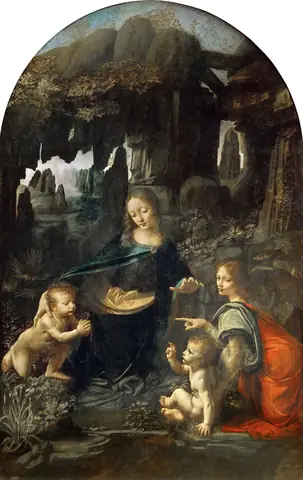
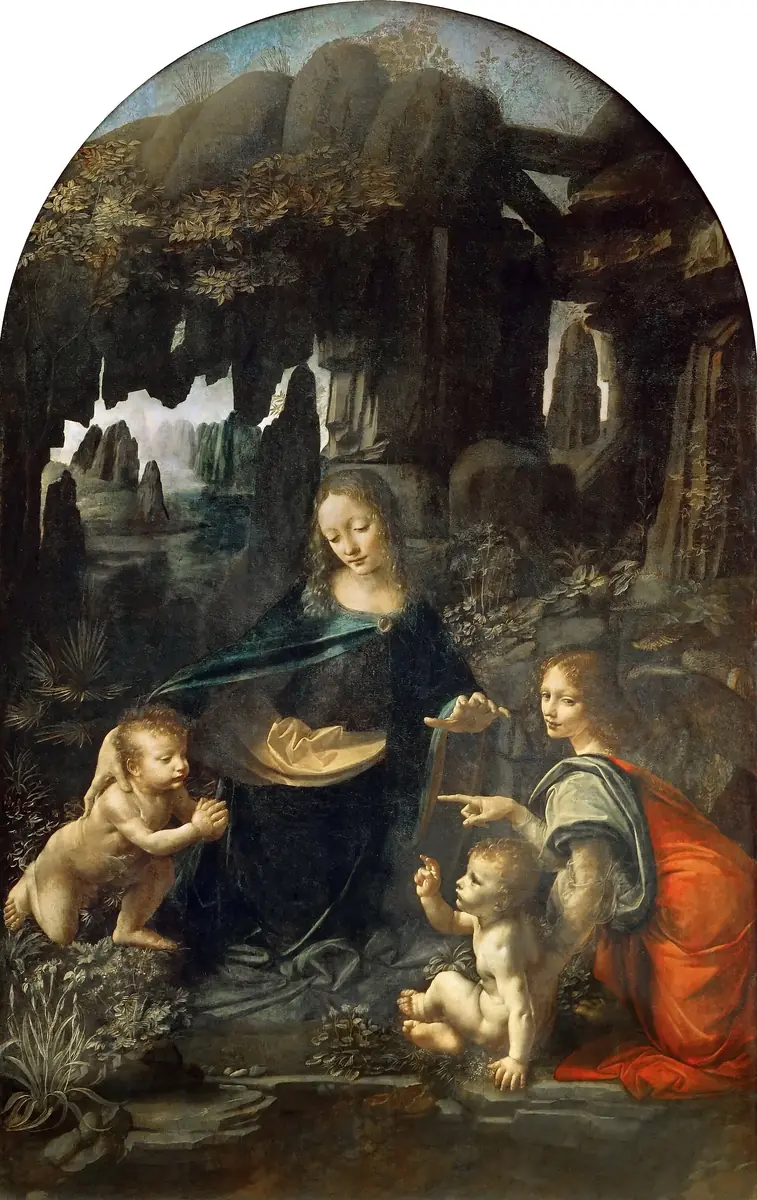
Image: Wikimedia Commons · Public domain (PD-Art) The Virgin of the Rocks
Look closely. Mary, the Child, the infant John the Baptist and an angel sit in a dim rocky grotto, with pale peaks and water beyond. Mary's hand hovers over the Child; the angel looks out and points toward John. This is the earlier of two versions (the later one is in London). Look at the plants in the foreground, studied from life, and at the triangular grouping of the four figures.
In the library: The Bible (KJV) · Mary, mother of Jesus · Jesus Christ · John the Baptist
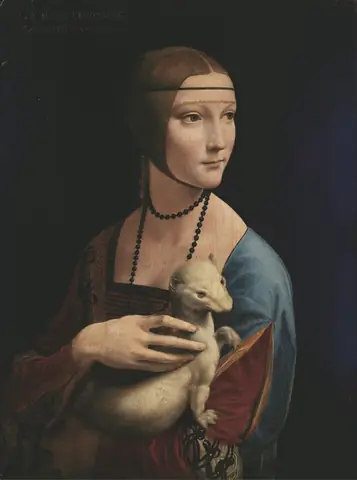
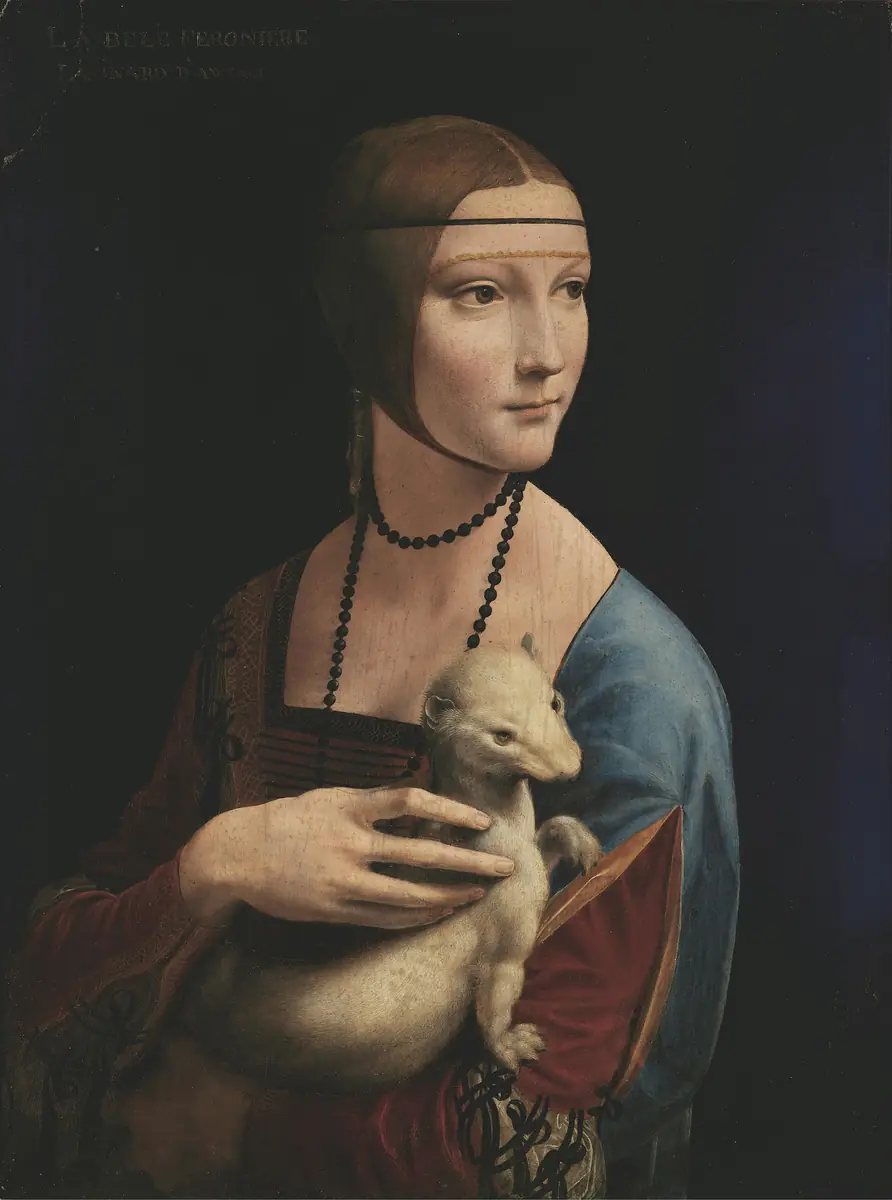
Image: Wikimedia Commons · Public domain (PD-Art) Lady with an Ermine
Look closely. Cecilia Gallerani, a young woman at the court of Milan, turns to the right, an ermine in her arms. The animal turns with her, its head alert. Look at her long fingers, at the twist of the two heads, and at the dark, plain ground that leaves nothing to compete with the face and the creature. The ermine was a badge of her patron, Ludovico Sforza, and a sign of purity.
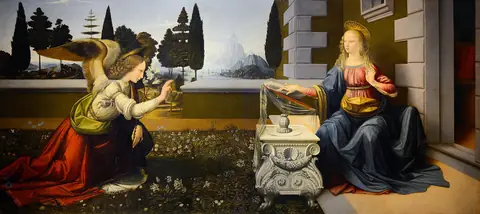
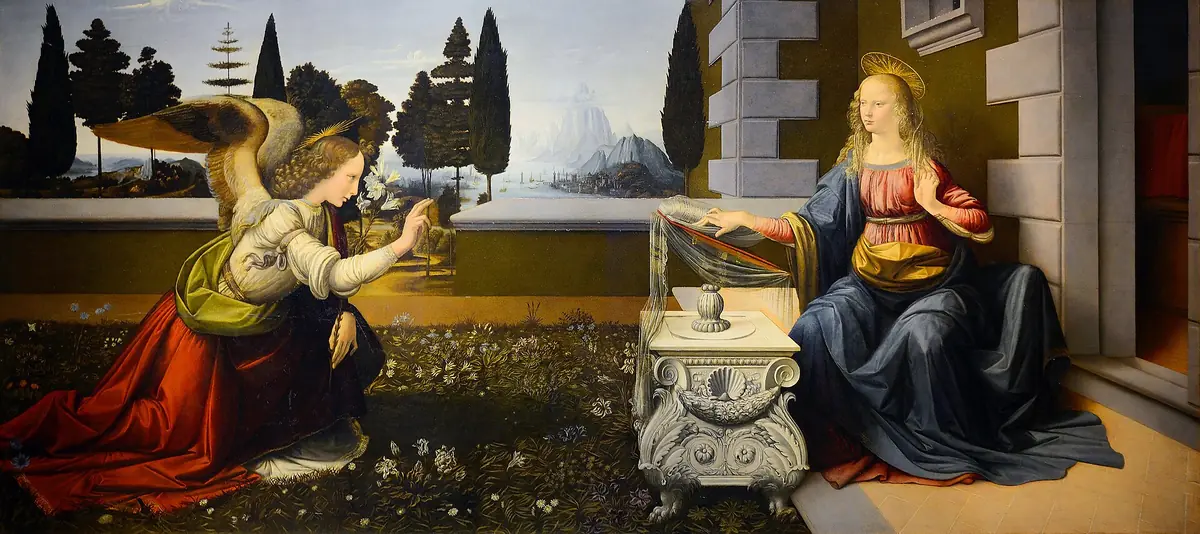
Image: Wikimedia Commons · Public domain (PD-Art) The Annunciation
Look closely. An early work, probably from Verrocchio's workshop, with much of the painting given to the young Leonardo. Mary sits at a lectern in a walled garden; Gabriel kneels on the grass with lilies. Look at the angel's wings, studied from real birds, at the careful flowers in the foreground, and at the distant harbour and hills painted in a thin, watery blue.
In the library: The Bible (KJV) · Mary, mother of Jesus
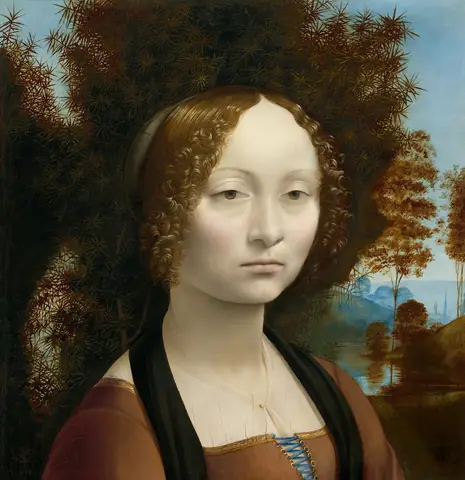
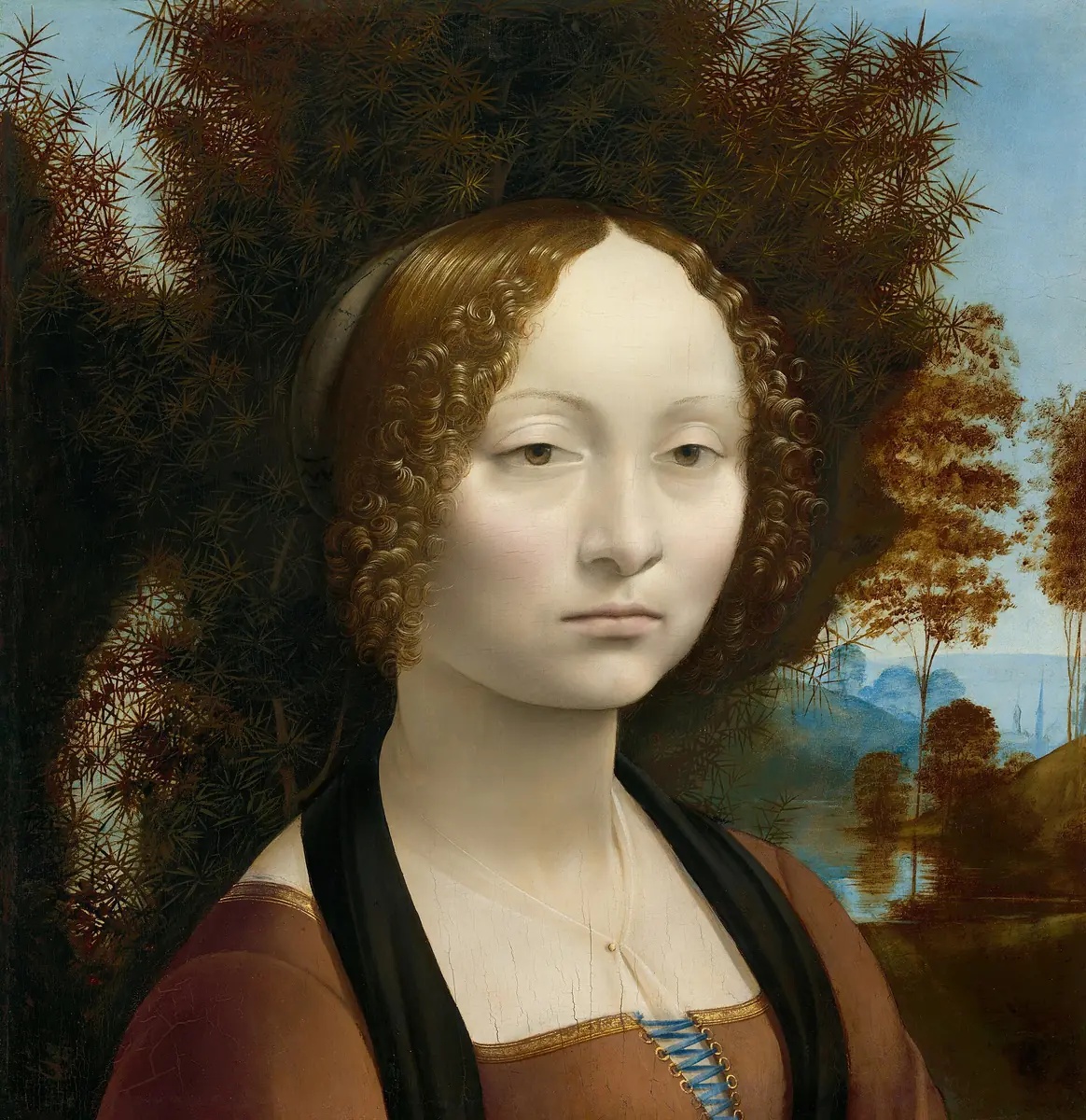
Image: Wikimedia Commons · Public domain (PD-Art) Ginevra de' Benci
Look closely. A young Florentine woman is set against a juniper bush, a visual pun on her name (juniper is ginepro in Italian). This is the only painting by Leonardo in the Americas. The reverse of the panel has a wreath and a motto about virtue and beauty. Look at the tight curls, at the pale landscape to the right, and at the slightly guarded expression.
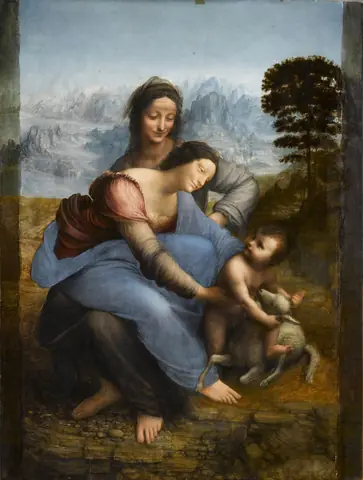
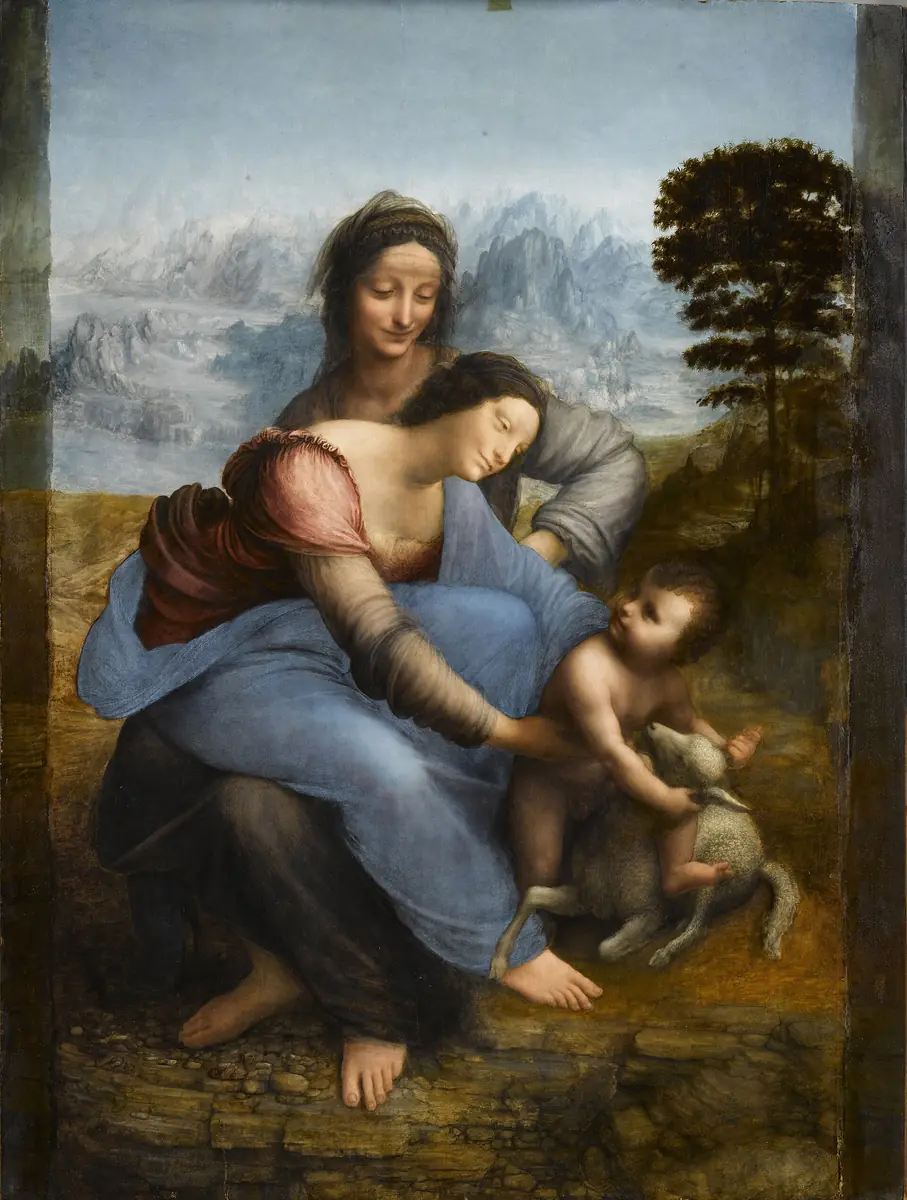
Image: Wikimedia Commons · Public domain (PD-Art) The Virgin and Child with Saint Anne
Look closely. Saint Anne, Mary's mother, sits behind her daughter; Mary reaches for the Child, who plays with a lamb, a sign of his coming Passion. The three generations form a single, turning pyramid in a wide blue-green landscape. Look at how Mary sits on Anne's lap, at the soft modelling of the faces, and at the rocky path that leads the eye into the distance.
In the library: The Bible (KJV) · Mary, mother of Jesus · Jesus Christ


What to watch for in Leonardo da Vinci
Look slowly- Sfumato. Edges soften into shadow; look at how a mouth or an eye is modelled without a hard line.
- Hands. Leonardo tells as much with fingers as with faces — folded, pointing, or resting on a ledge.
- Landscape like a world. Roads, rivers and distant crags recede into a blue, watery air.
- Groups that speak. In the Last Supper, the apostles form four knots of talk on either side of Christ.
- Unfinished as well as finished. Some works were left incomplete; even a sketch can show how he thought.
For older students
These famous works include nudity, so they are named here but not shown. Teachers and parents can decide when to look at them together.
- Vitruvian Man, c. 1490, Gallerie dell'Accademia, Venice. This famous drawing studies the proportions of a man unclothed, standing in a circle and a square. It is named here but not shown.
Dates and collections follow the holding museums and Wikidata. Images of paintings are photographs of public-domain pictures from Wikimedia Commons or museum open-access releases; photographs of sculpture are used only when the photograph itself is Public domain, CC0, or CC BY with a named credit. Each picture links to its source page with full licence details.