Great Art · Pre-Raphaelite
John Everett Millais
The prodigy of the Pre-Raphaelite Brotherhood, who painted Ophelia in a real stream and later became a master of English portraits and scenes.
His life
John Everett Millais was born in Southampton in 1829 and was a star of the Royal Academy Schools while still a boy. With Hunt and Rossetti he founded the Pre-Raphaelite Brotherhood in 1848, and his early pictures — Isabella, Ophelia, The Blind Girl — have the Brotherhood's bright colour, close study from nature, and serious feeling. He later became a hugely successful portrait painter and President of the Royal Academy, a change of manner that some friends regretted and that made him a public institution of Victorian art.
He died in London in 1896. His gift, early and late, was a direct look at faces and at ordinary things — a stream, a pile of leaves, a boy listening to a sailor — painted so that you can almost name the plants and the weather.
Key works
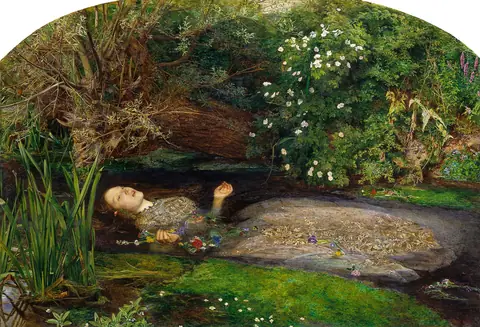
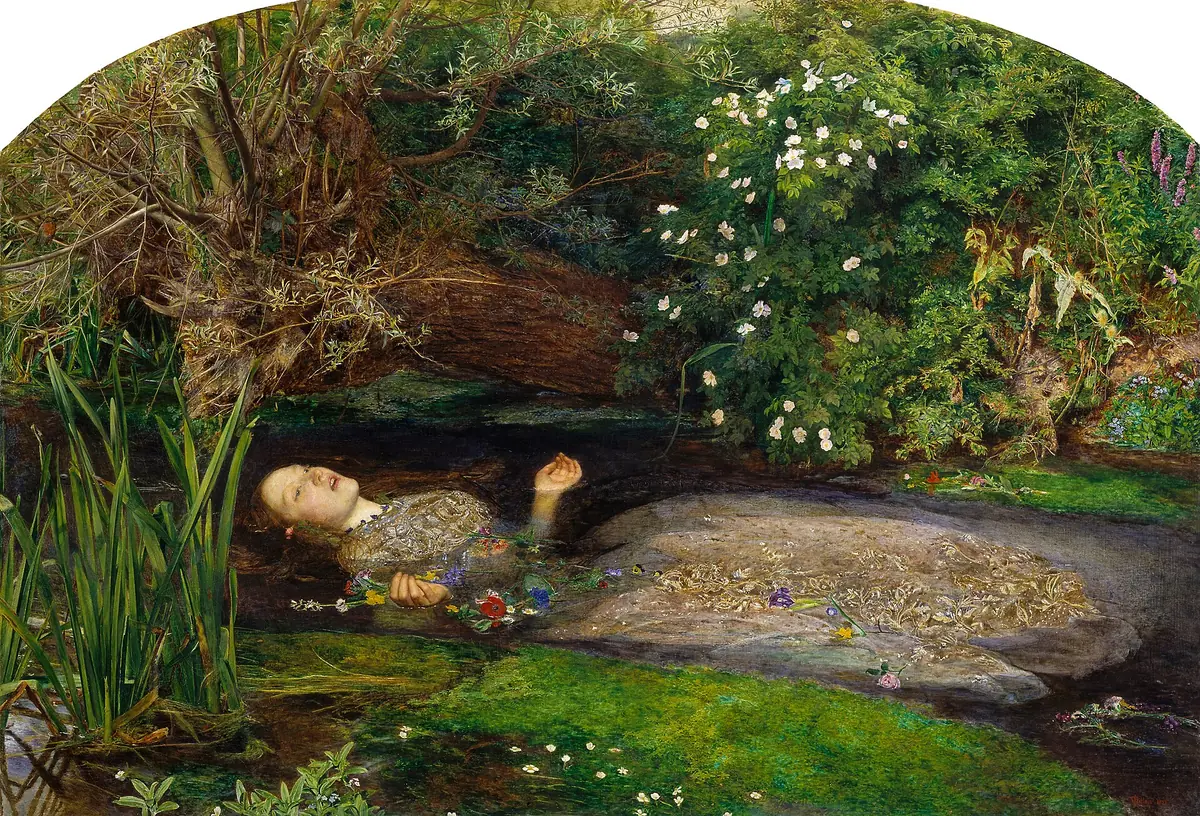
Image: Wikimedia Commons · Public domain (PD-Art) Ophelia
Look closely. Ophelia floats on her back in a close, flower-lined stream, her hands open, her skirt billowing, her face just above the water, with a still, almost scientific attention to every plant on the bank. Look at the forget-me-nots, the willows and the roses, at the last open eyes, and at how a scene from Hamlet is painted as a particular English ditch in a particular season, not as a vague dream.
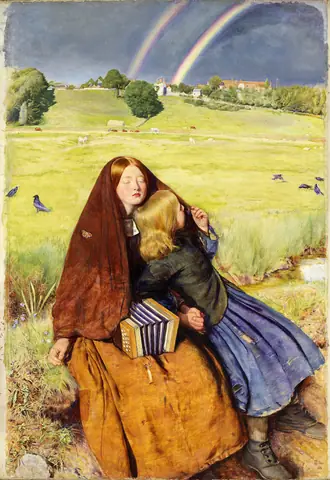
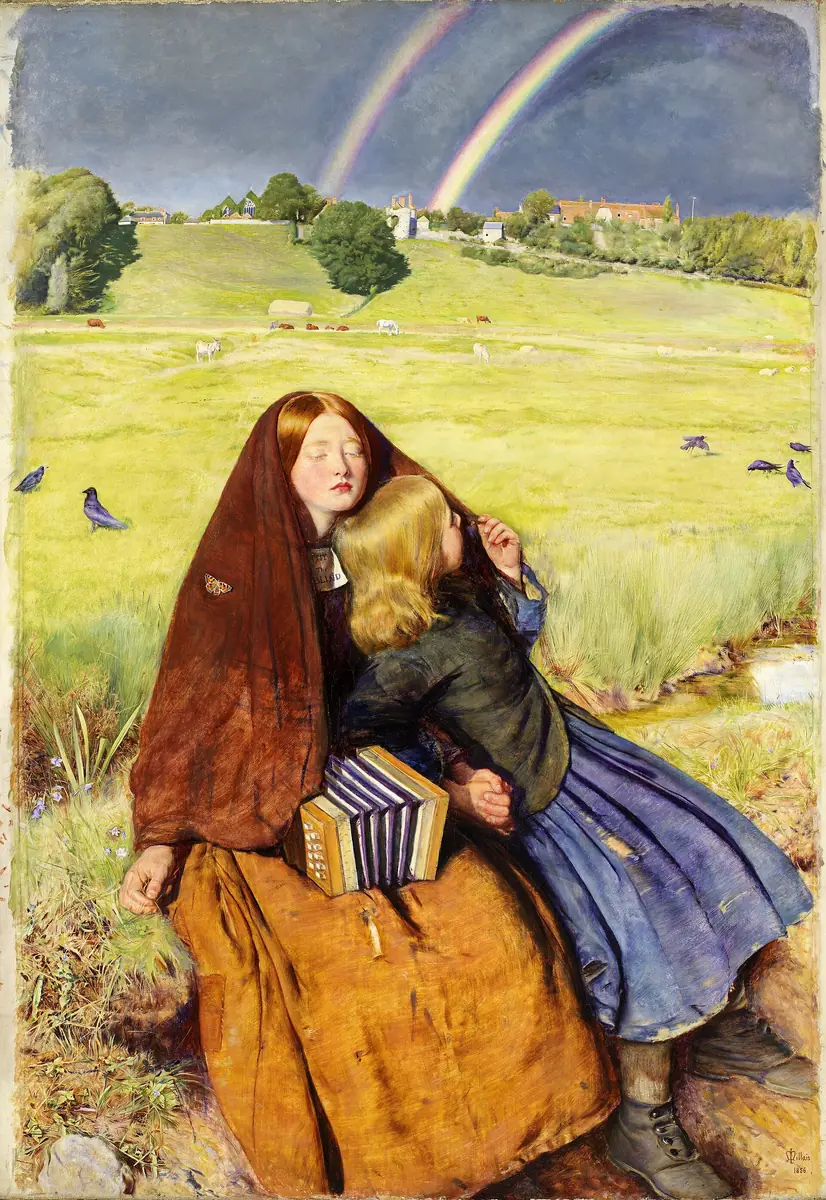
Image: Wikimedia Commons · Public domain (PD-Art) The Blind Girl
Look closely. A blind girl in a rust-red shawl sits by a roadside with a concertina in her lap, her eyes closed, while a younger child with a clear gaze nestles against her and looks out at a double rainbow after rain. Look at the two ways of facing the same weather, at the butterfly on the blind girl's shawl, and at the washed light on the fields behind them.
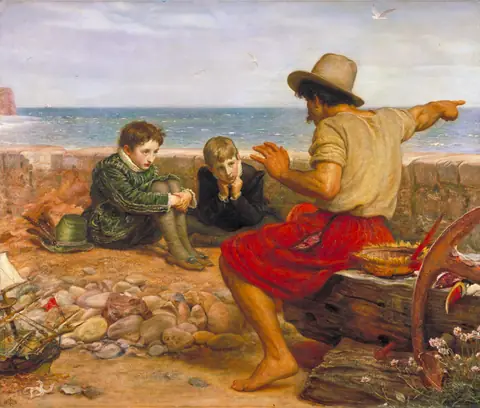
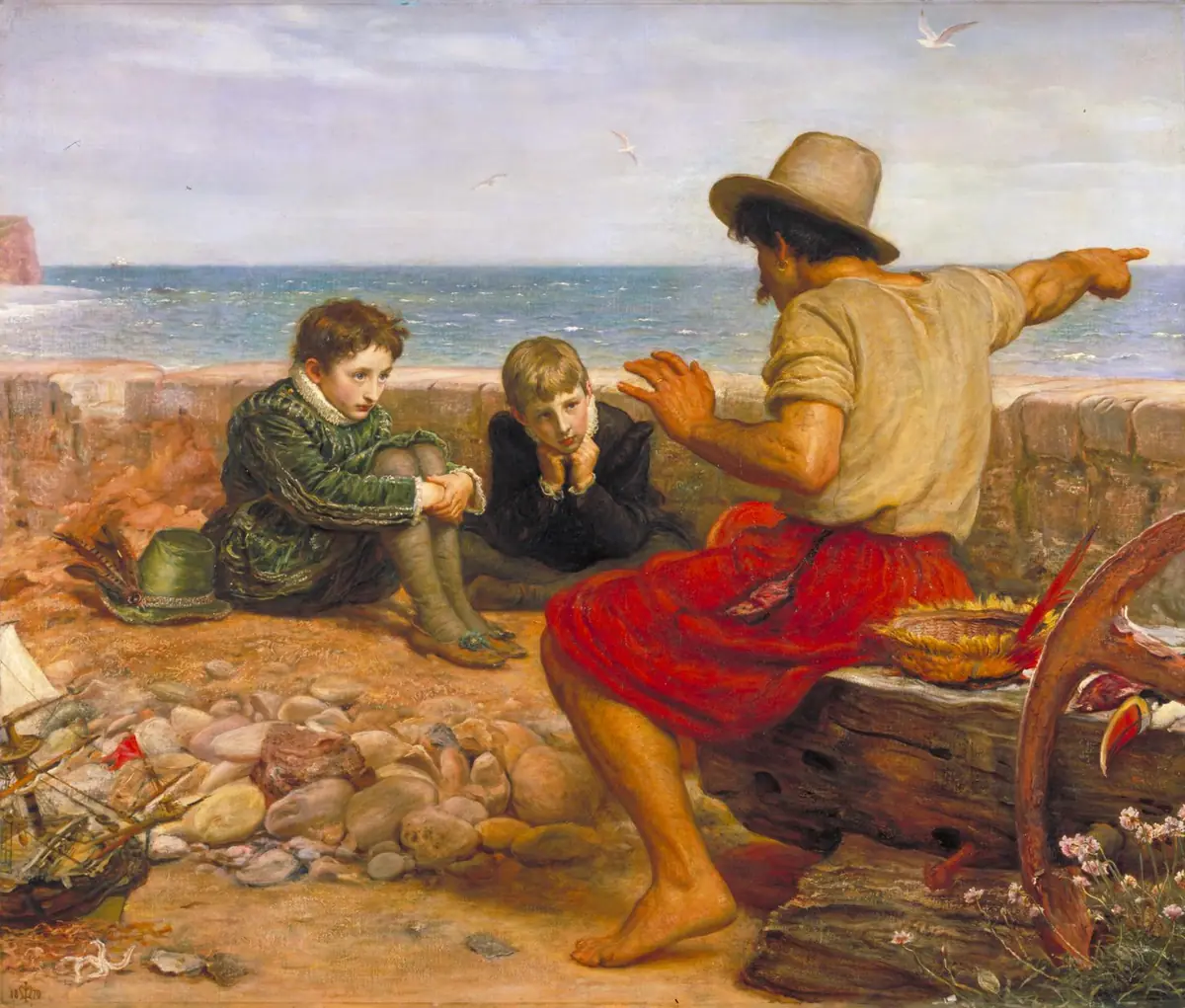
Image: Wikimedia Commons · Public domain (PD-Art) The Boyhood of Raleigh
Look closely. Two boys sit on the ground by the sea, listening to an old sailor who points out toward the water; a toy ship and a piece of coral or seaweed lie near them. Look at the pointing hand, at the boys' different degrees of attention, and at how a famous later life is imagined as an ordinary afternoon of listening.
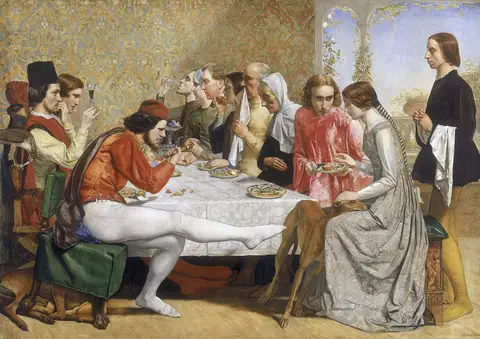
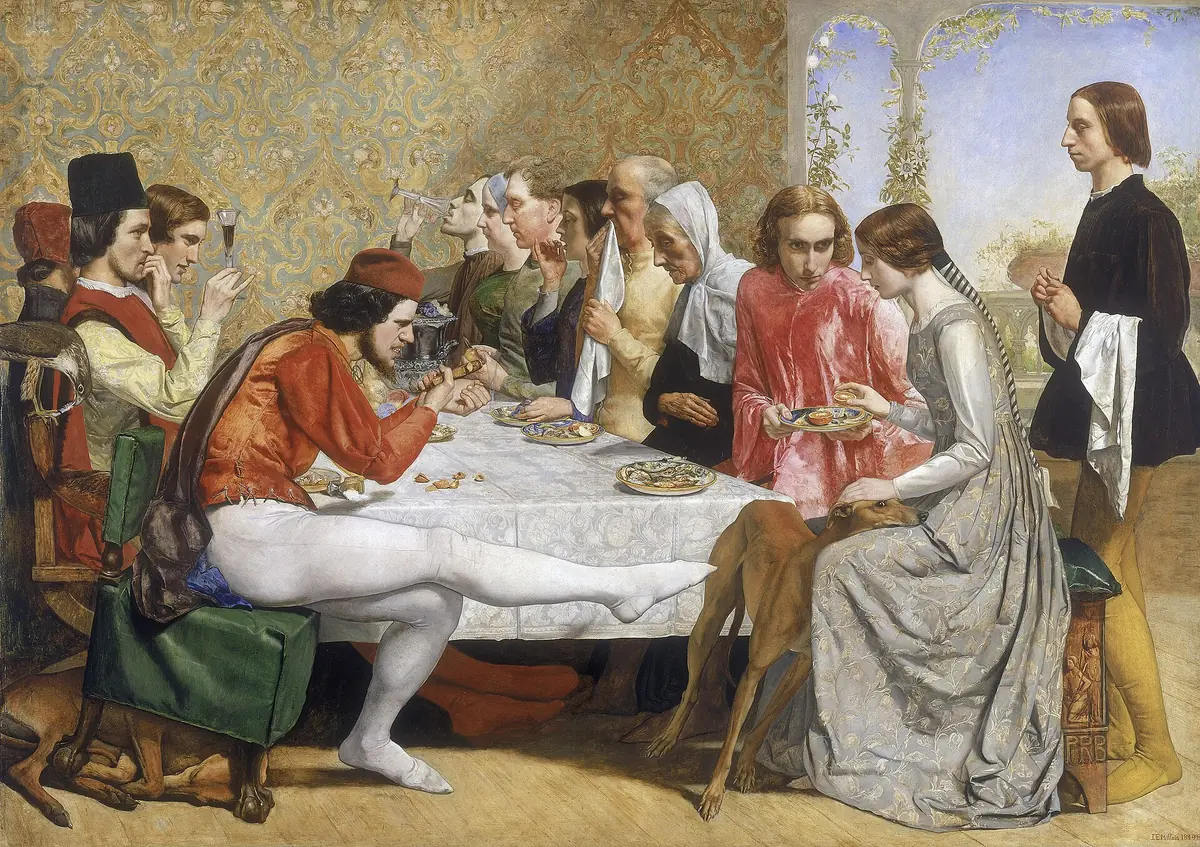
Image: Wikimedia Commons · Public domain (PD-Art) Isabella
Look closely. A tense family meal: Isabella and Lorenzo share a cut blood-orange at one end of the table, while a brutal kinsman at the near side kicks a dog and the rest of the company eat, stare, or fail to notice. Look at the kicked animal, at the lovers' quiet hands, and at the archaic, almost medieval stiffening of the figures — an early Pre-Raphaelite telling of Keats's story.
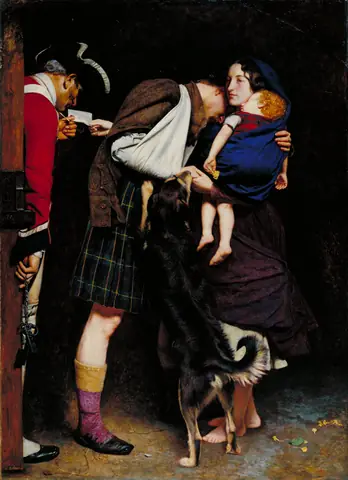
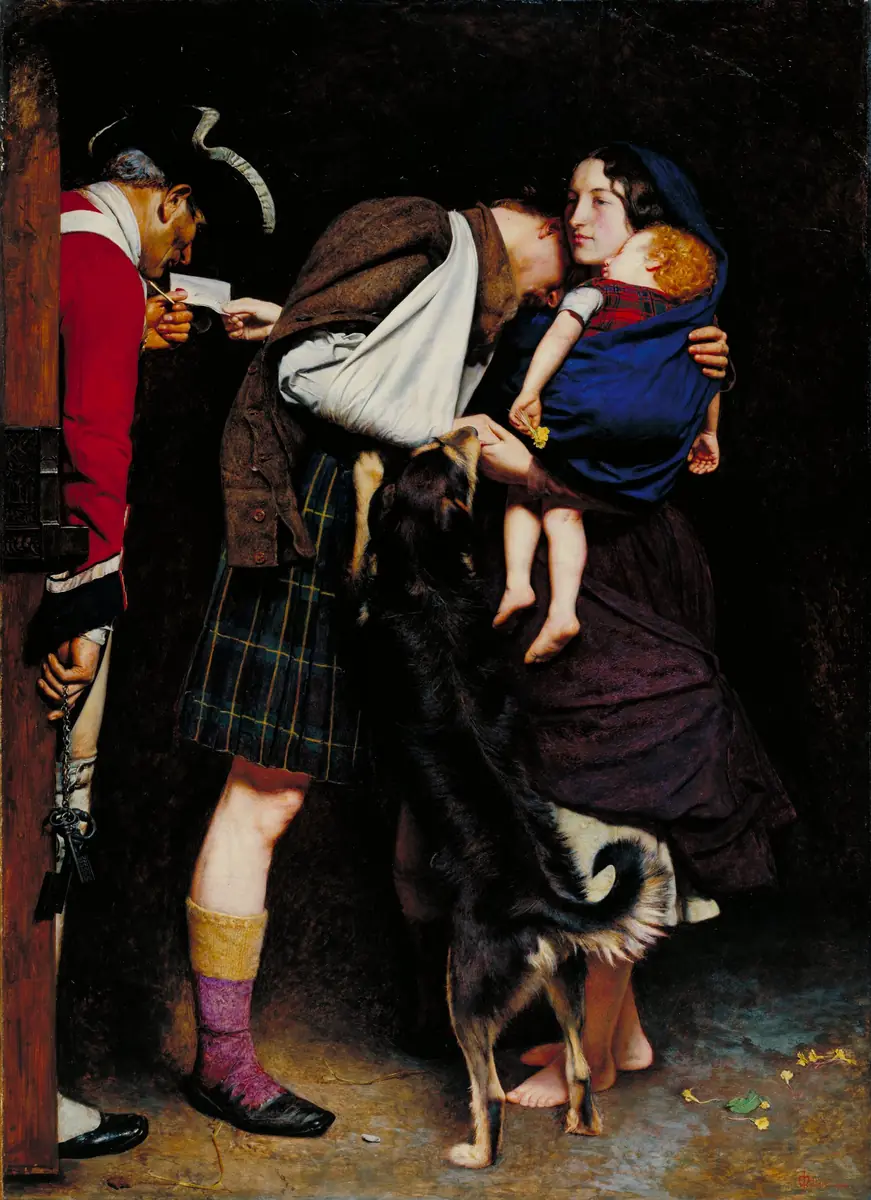
Image: Wikimedia Commons · Public domain (PD-Art) The Order of Release, 1746
Look closely. A Highlander just released from prison is received by his wife, who holds their sleeping child and the pardon paper, while a gaoler looks on at the door. Look at the woman's worn, practical stance, at the man's exhausted lean against her, and at the small official document that has done such a large piece of work.
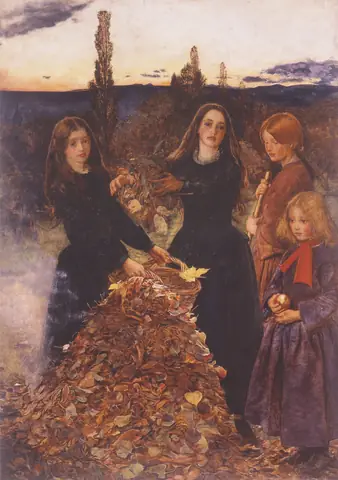
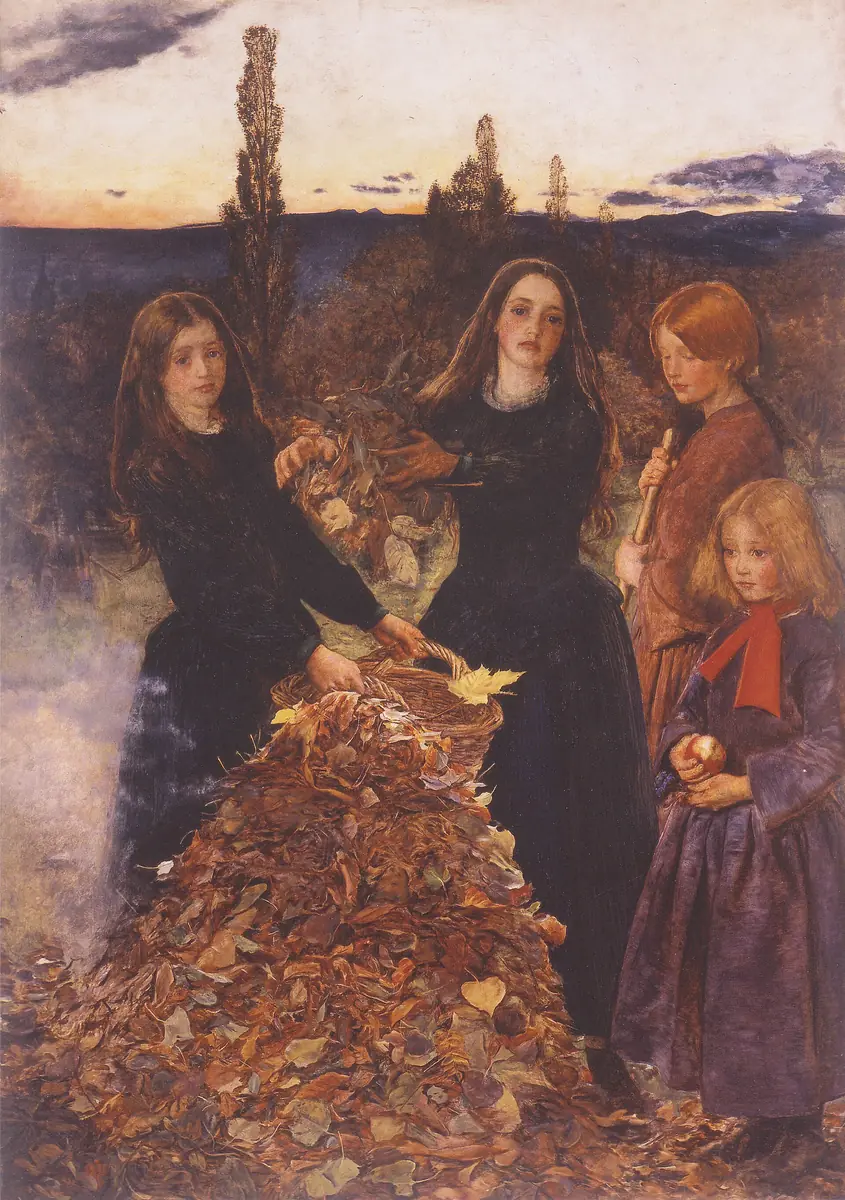
Image: Wikimedia Commons · Public domain (PD-Art) Autumn Leaves
Look closely. Four girls heap fallen leaves for a bonfire in the twilight, the smoke just beginning, a pale evening sky behind them and a glimpse of a field and a house. Look at the different ages and clothes of the four, at the dead leaves in their hands, and at the still, almost ceremonial seriousness of a simple autumn task.


What to watch for in John Everett Millais
Look slowly- Painted from the thing itself. Millais worked for weeks in a real stream, field, or interior.
- Every plant named. In Ophelia and Autumn Leaves, look at how particular the flowers and foliage are.
- A face in a story. Even a literary subject is carried by a likeness, not only by a costume.
- Bright early colour. The Pre-Raphaelite pictures reject a brown glaze.
- A later, broader brush. The portraits and later scenes are looser; compare them with the early work if you can.
For older students
These famous works include nudity, so they are named here but not shown. Teachers and parents can decide when to look at them together.
- Christ in the House of His Parents (The Carpenter's Shop), 1849–50, Tate Britain. A typological Holy Family in a carpenter's shop, with a wound on the Child's hand; the young John and a workman are unclothed to the waist. Named for older students and not shown here.
Dates and collections follow the holding museums and Wikidata. Images of paintings are photographs of public-domain pictures from Wikimedia Commons or museum open-access releases; photographs of sculpture are used only when the photograph itself is Public domain, CC0, or CC BY with a named credit. Each picture links to its source page with full licence details.