Great Art · Victorian
James Tissot
The French painter of London society who later gave years of his life to a careful, observed Life of Christ.
His life
Jacques Joseph Tissot was born in Nantes in 1836, trained in Paris, and after the Franco-Prussian War made a long, successful career in London painting the clothes, docks, parks and visiting classes of Victorian society with a sharp, almost journalistic eye. In the 1880s, after a personal grief and a return to the Catholic faith of his youth, he turned to a great cycle on the life of Christ, travelling in the Holy Land and working for years on watercolours that try to imagine the Gospel scenes in historically studied dress and places.
He died at Buillon, in France, in 1902. His gift was attention to how people actually sit, stand and look at one another — whether in a National Gallery portico, at a picnic under chestnut leaves, or in a crowded scene imagined from the foot of the Cross.
Key works
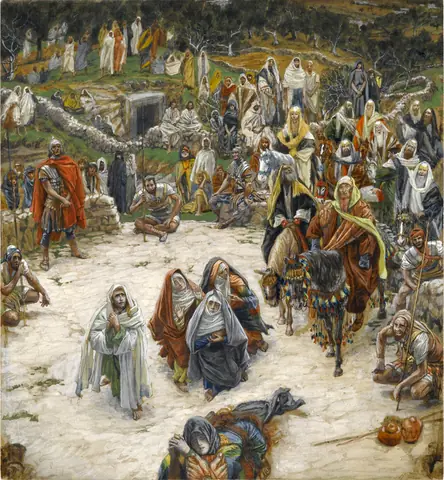
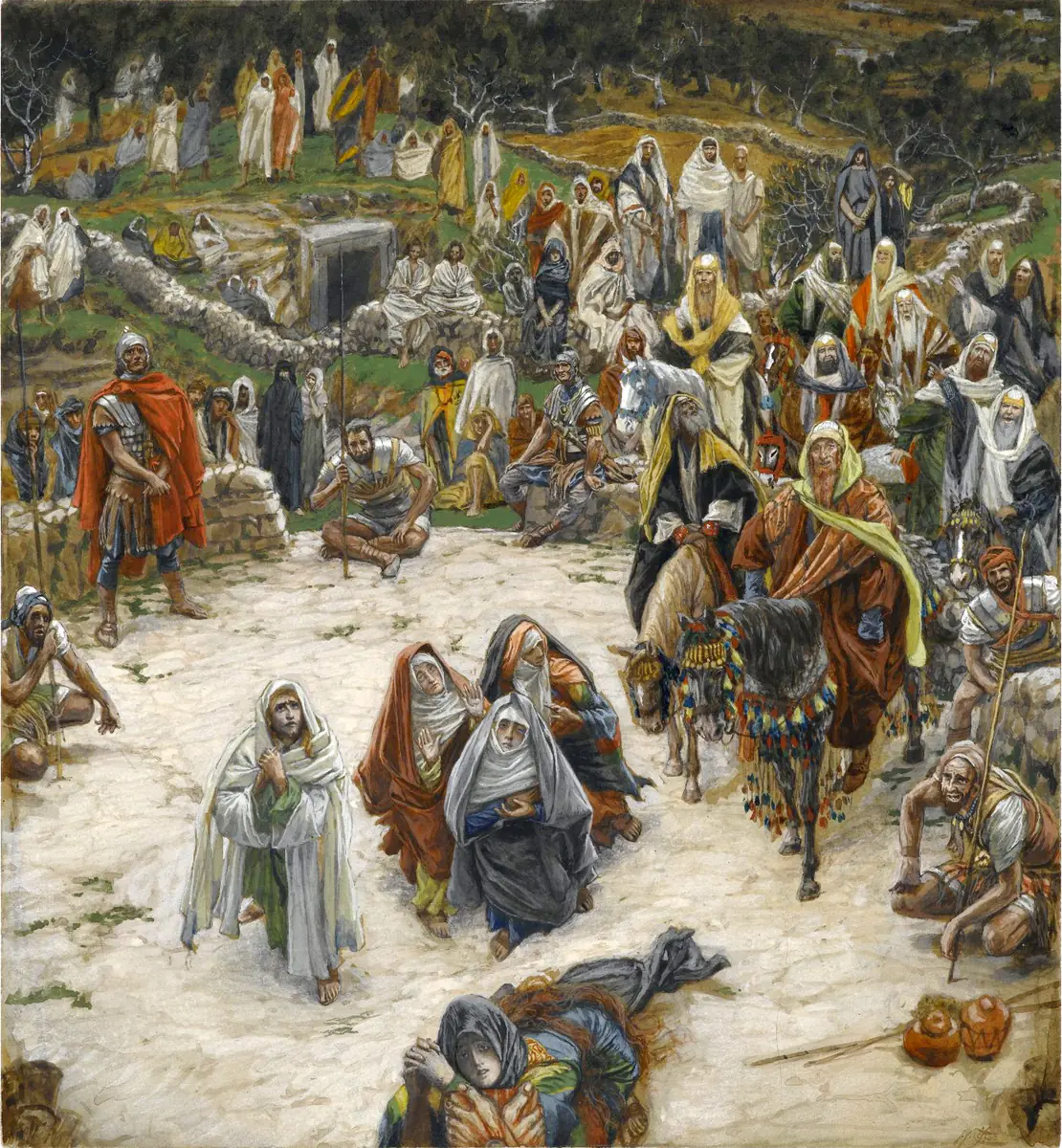
Image: Wikimedia Commons · Public domain (PD-Art) What Our Lord Saw from the Cross
Look closely. The viewpoint is from the Cross itself, looking down on the stony ground: a woman lies prostrate at the lower edge, three women just above her look up — one in white with clasped hands, one in rust-red, one in grey — a Roman soldier in a red cloak stands on a block at the left, and a man on a richly tasselled donkey rides out at the right, with a dark tomb opening in the hillside wall and a crowd beyond. Look at the unusual downward view, at the women closest to us, and at how many ordinary, busy, or grieving figures share the same ground.
In the library: The Bible (KJV) · Jesus Christ · Mary, mother of Jesus · Mary Magdalene
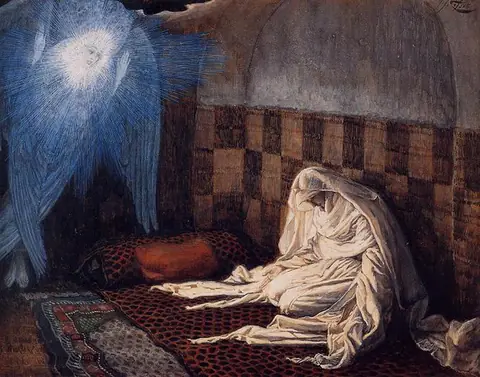
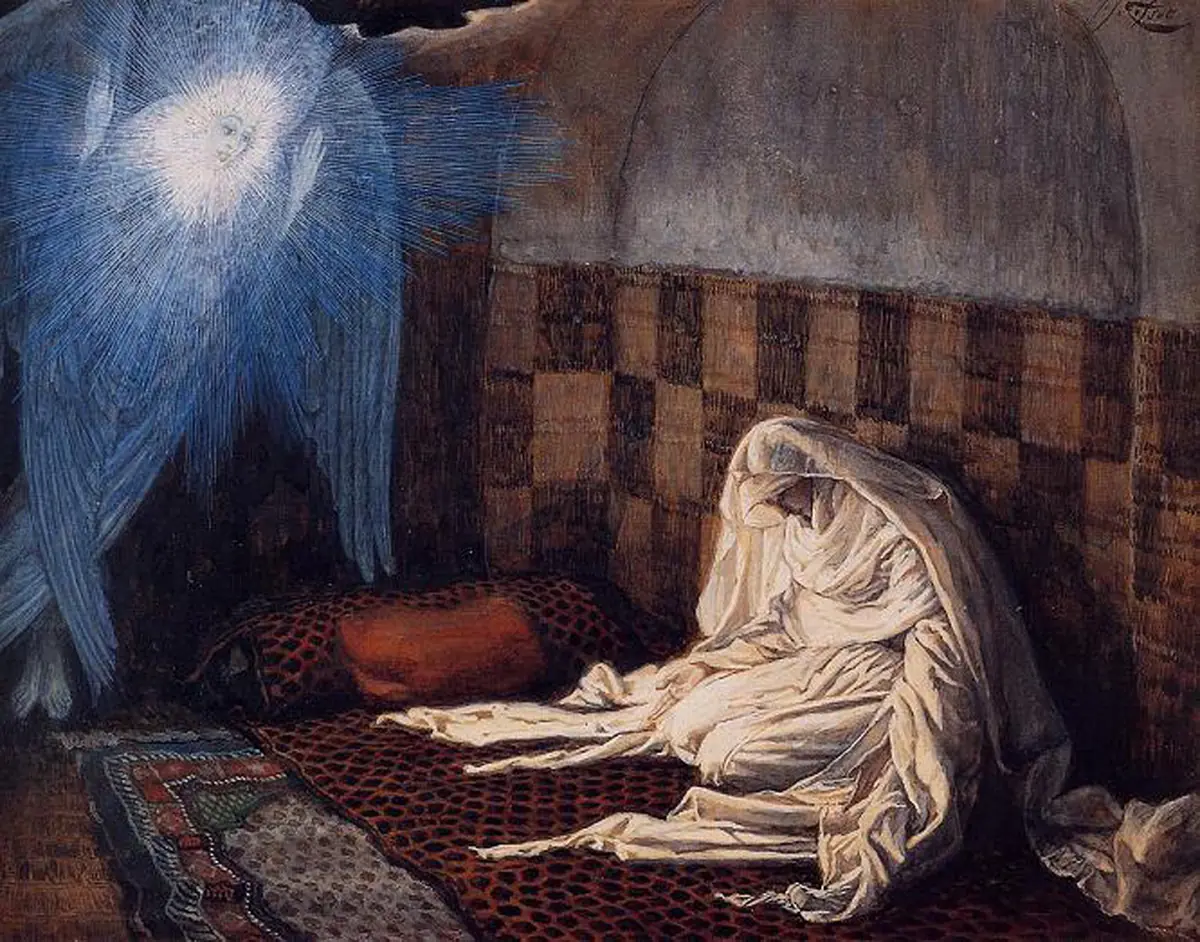
Image: Wikimedia Commons · Public domain (PD-Art) The Annunciation
Look closely. Mary sits on a red patterned rug in a bare, arched room, almost hidden in a heap of white drapery, her head bowed; a radiant, blue-white angel of light, face in a burst of rays, stands at the left. Look at how completely she is wrapped, at the simple cushions and the checkered hanging, and at the angel as light rather than as a merely earthly visitor.
In the library: The Bible (KJV) · Mary, mother of Jesus
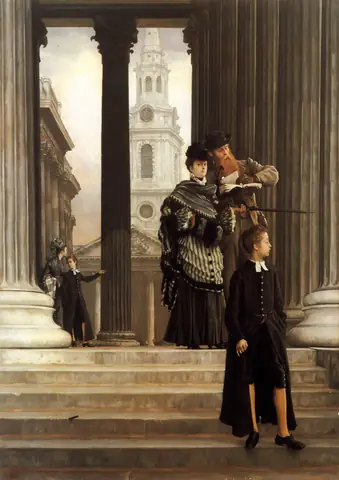
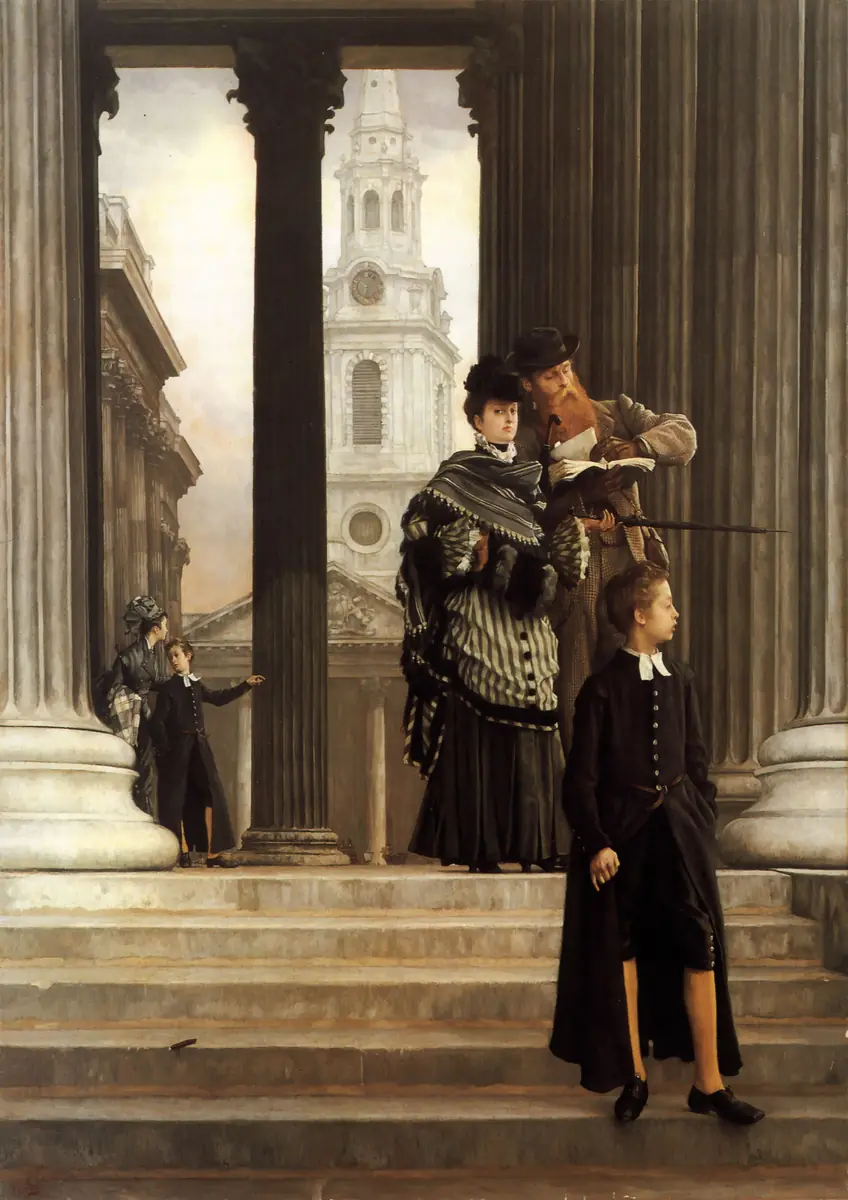
Image: Wikimedia Commons · Public domain (PD-Art) London Visitors
Look closely. On the portico of the National Gallery, a fashionably dressed woman and a bearded man with a guidebook and umbrella stand between great columns, through which rises the steeple of St Martin-in-the-Fields; a schoolboy in black comes down the steps in the foreground, and another woman and boy wait at the left. Look at the boy's self-contained walk, at the visitors' slightly tourist air, and at how the church tower is framed by the museum's own architecture. This is the Toledo version of a subject Tissot also painted in a well-known Milwaukee picture.
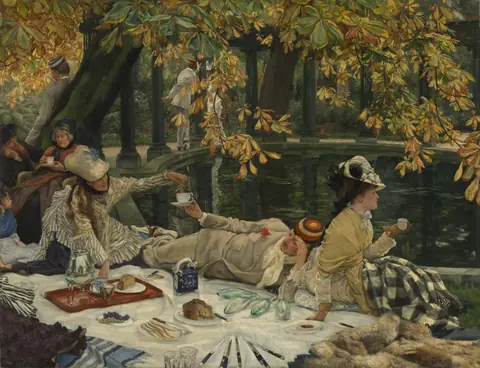
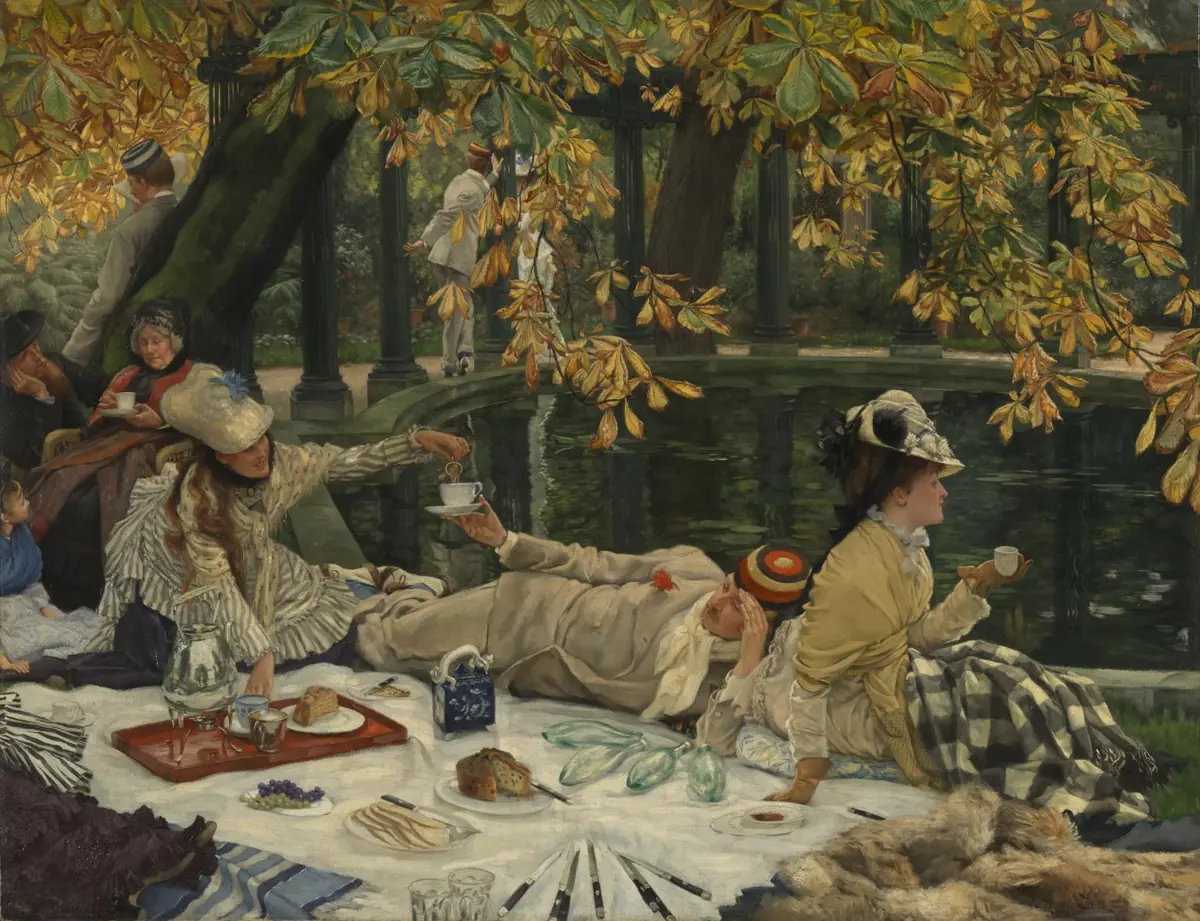
Image: Wikimedia Commons · Public domain (PD-Art) Holyday
Look closely. A picnic is spread on a white cloth under horse-chestnut leaves, beside a still pond and a colonnade; a woman in a striped dress pours tea for a man lying on his back with his cap over his eyes, and another woman in yellow sits with a cup, looking out at the water. Look at the cakes, the glass pitcher, the fan of knives, and the idle, carefully dressed afternoon — a holiday that is almost too comfortable to be simple.
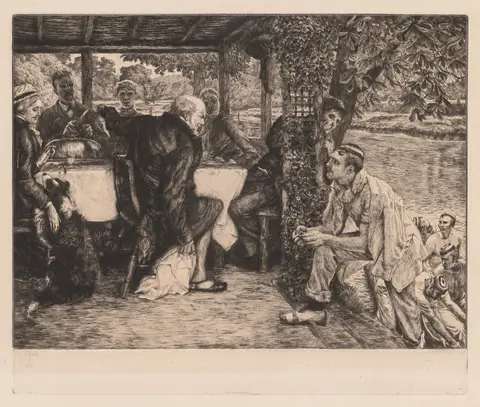
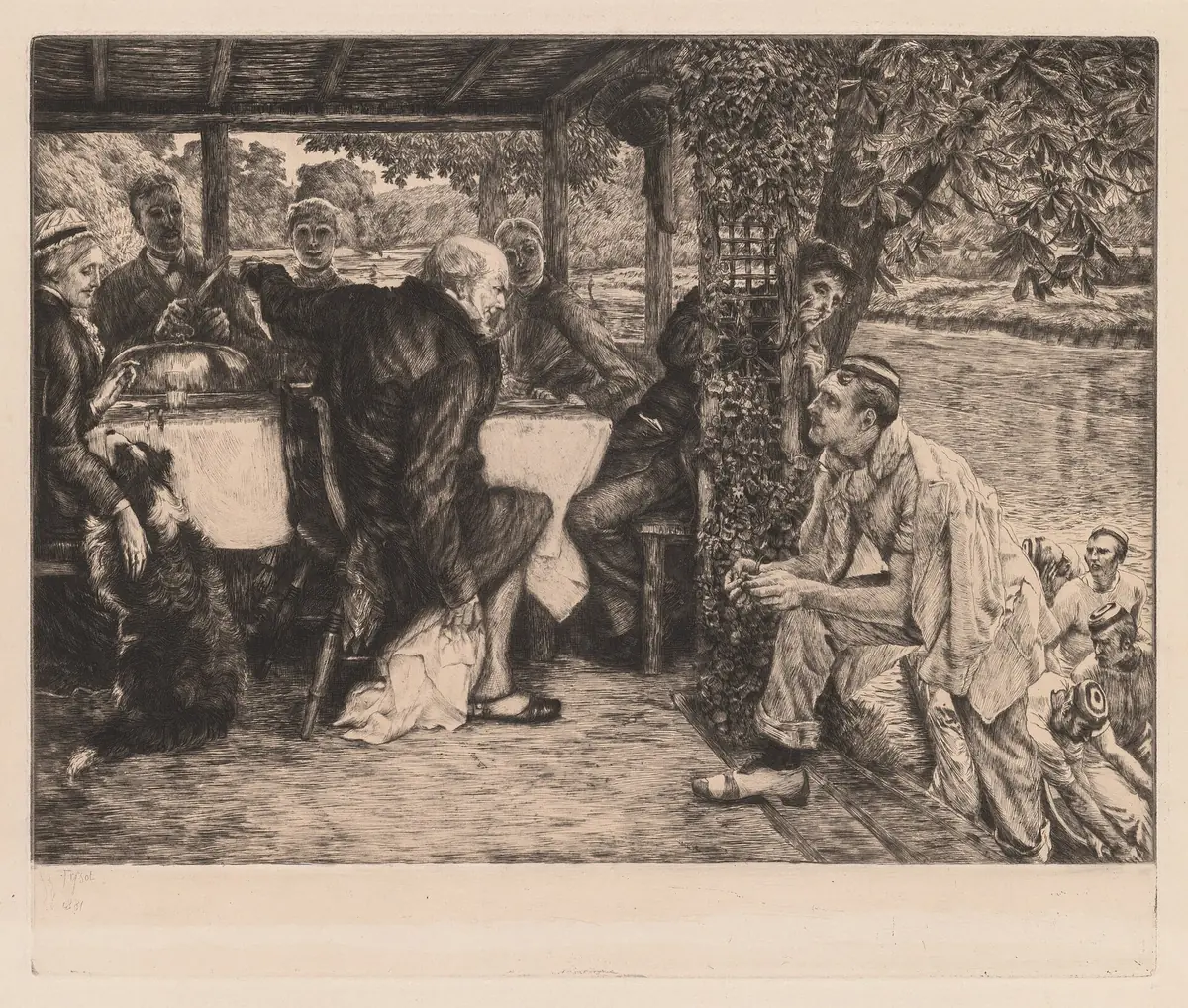
Image: Wikimedia Commons · CC0 (public domain) The Fatted Calf (The Prodigal Son in Modern Life)
Look closely. This is Tissot's etching, not the oil, from his modern-dress series on the parable of the prodigal son: a family meal is set under a vine-covered porch by a river, a dog begs at the table, and a young man in a cap sits on the edge of the platform looking toward the feast, with other watchers at the water. Look at the older man at the table, at the gap between the seated youth and the meal, and at how a Gospel feast is imagined as a contemporary riverside party.
In the library: The Bible (KJV)


What to watch for in James Tissot
Look slowly- Clothes as character. In the London pictures, look at a dress, a guidebook, or a hat as carefully as at a face.
- A modern parable. The Prodigal Son in Modern Life retells a Gospel story in contemporary dress.
- A new viewpoint. What Our Lord Saw from the Cross asks you to look down from the Cross itself.
- Holy Land study. The Life of Christ watercolours aim at observed costume and ground, not a European studio convention only.
- A pause in a crowd. Find who is looking, who is busy, and who has stopped.
For older students
These famous works include nudity, so they are named here but not shown. Teachers and parents can decide when to look at them together.
- The Baptism of Jesus, c. 1886–94, Brooklyn Museum. From The Life of Christ; Christ is unclothed to the waist. Named for older students and not shown here.
Dates and collections follow the holding museums and Wikidata. Images of paintings are photographs of public-domain pictures from Wikimedia Commons or museum open-access releases; photographs of sculpture are used only when the photograph itself is Public domain, CC0, or CC BY with a named credit. Each picture links to its source page with full licence details.