Great Art · Baroque (Spain)
Bartolomé Esteban Murillo
The Seville painter of tender Madonnas, of the Immaculate Conception in a glory of light, and of poor children eating in a doorway.
His life
Bartolomé Esteban Murillo was born in Seville in 1617 and, except for a probable early stay in Madrid, worked there all his life. He painted for the city's churches and charitable foundations, and he also made pictures of street children — ragged, hungry, and treated with a seriousness that is not mockery. His later religious pictures are famous for a soft, vaporous light, especially in the many Immaculate Conceptions.
He died in Seville in 1682 after a fall from a scaffold. His gift was tenderness without weakness. A child with a lamb, a prodigal coming home, or Mary in a swirl of angels can be sweet and still feel sincerely believed.
Key works
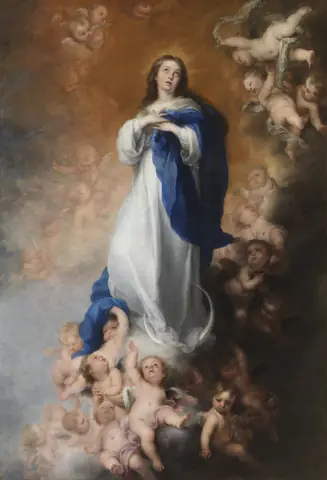
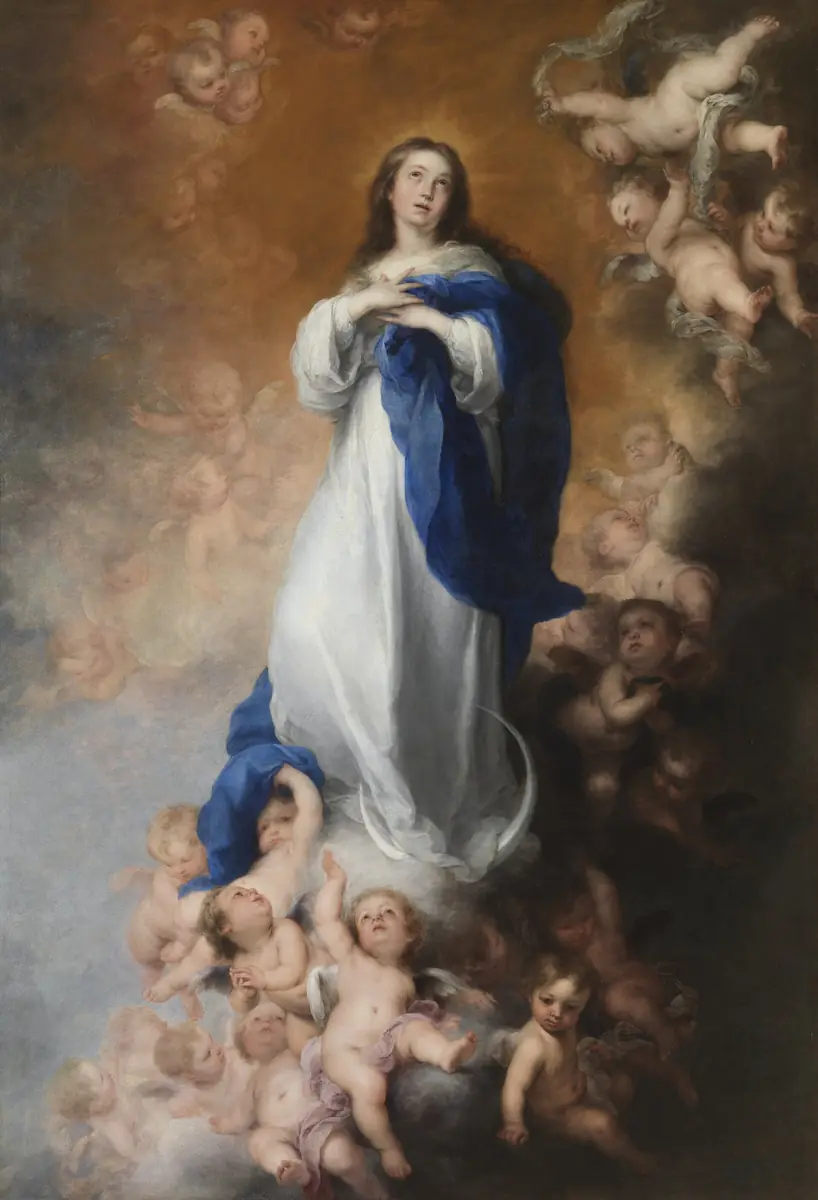
Image: Wikimedia Commons · Public domain (PD-Art) The Immaculate Conception of Los Venerables
Look closely. Mary, in a white tunic and a blue mantle, is lifted on a crescent moon among a swirl of angels, her hands crossed or gathered, her eyes raised. Look at the vaporous gold of the light, at the little cherubs under her feet, and at the gentle, almost weightless upward movement that made this the most famous of Murillo's many Immaculate Conceptions.
In the library: The Bible (KJV) · Mary, mother of Jesus
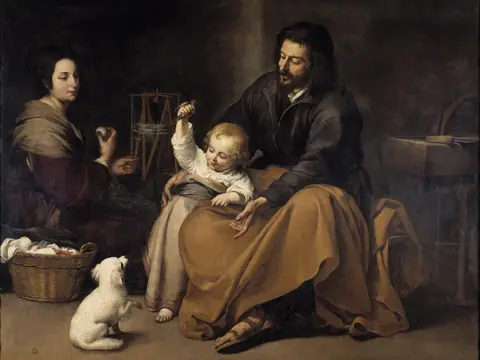
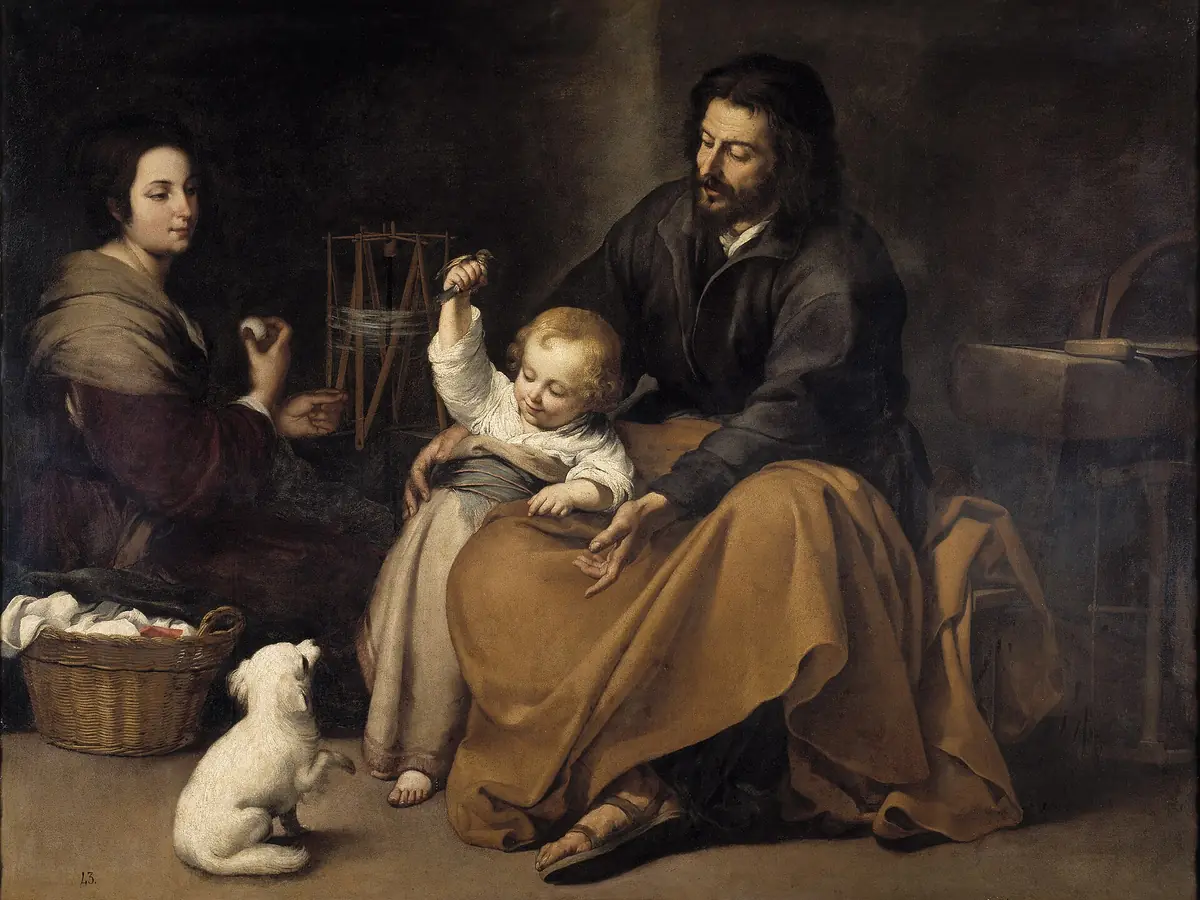
Image: Wikimedia Commons · Public domain (PD-Art) The Holy Family with a Bird
Look closely. A domestic Holy Family: the Child plays with a small white bird and a dog, Mary holds a bit of work, and Joseph looks on, a staff in his hand, in a plain interior. Look at the ease of the group, at the little animals, and at how a sacred family is allowed to look like a household at rest.
In the library: The Bible (KJV) · Mary, mother of Jesus · Joseph of Nazareth · Jesus Christ
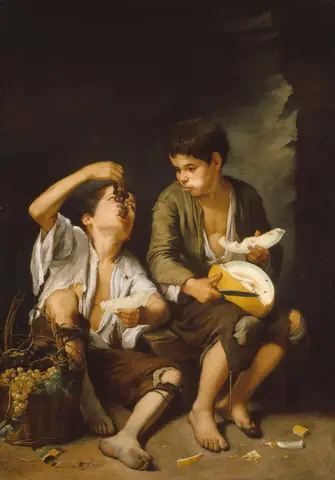
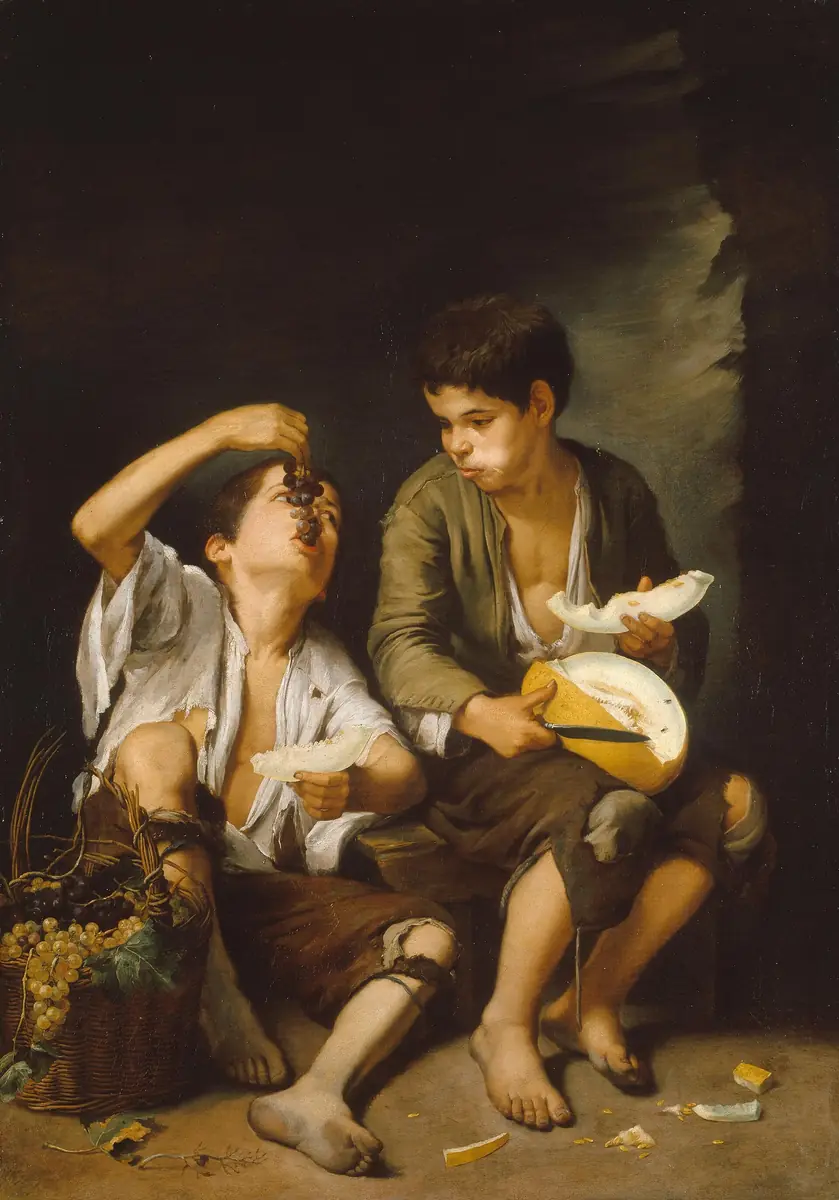
Image: Wikimedia Commons · Public domain (PD-Art) Boys Eating Grapes and Melon
Look closely. Two barefoot boys sit in a doorway: one tilts his head back to eat a bunch of grapes, the other cuts a melon, a basket of fruit at their side, their shirts worn and open. Look at the concentration on the faces, at the rinds on the ground, and at the dignity given to a poor, ordinary hunger.
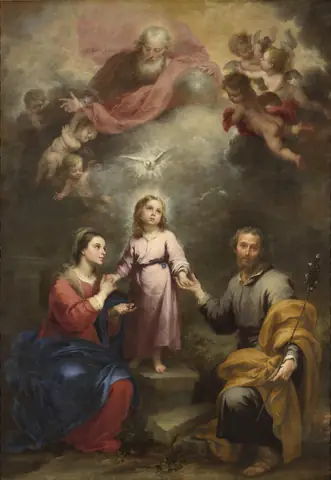
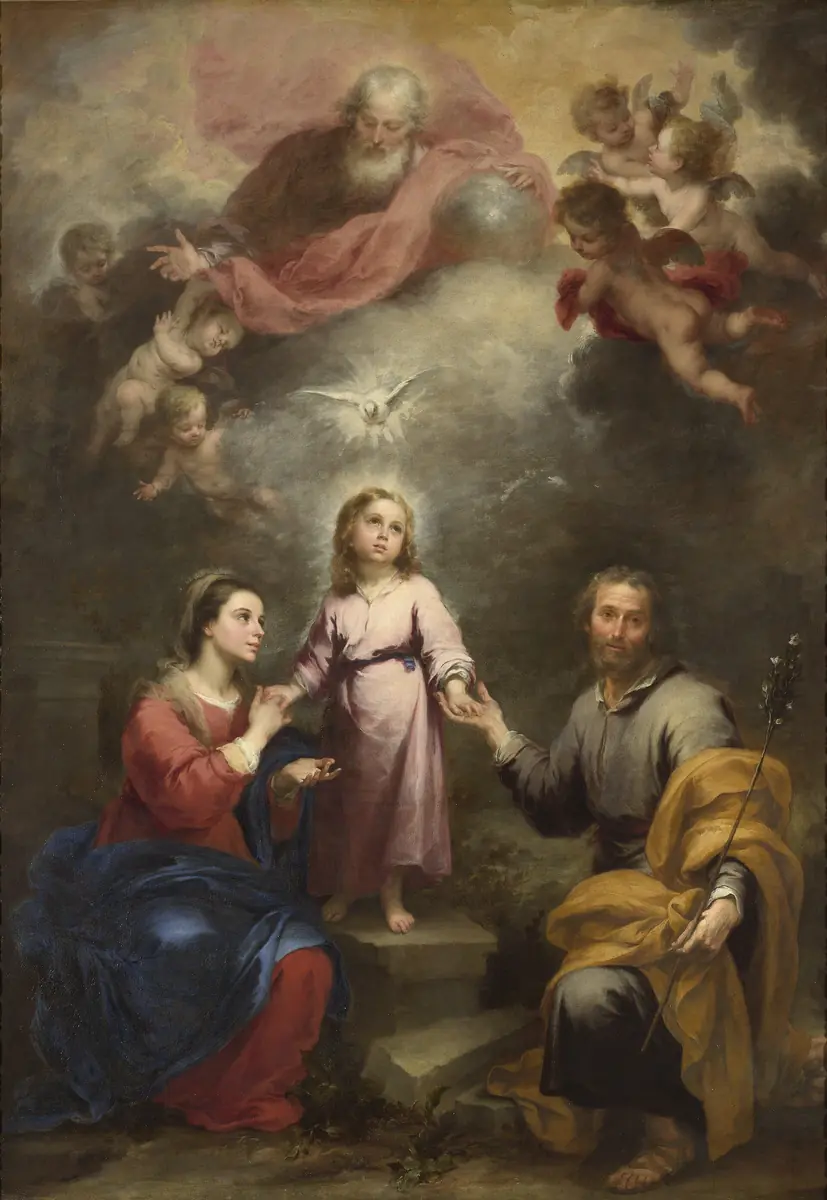
Image: Wikimedia Commons · Public domain (PD-Art) The Heavenly and Earthly Trinities
Look closely. Below, Mary and Joseph present the Child; above, the Father and the Spirit in the form of a dove complete a second trinity, so that heaven and earth meet in the same boy. Look at the Child's raised face, at the joining of the two groups, and at the soft light that knits the earthly family to the glory overhead.
In the library: The Bible (KJV) · Mary, mother of Jesus · Joseph of Nazareth · Jesus Christ
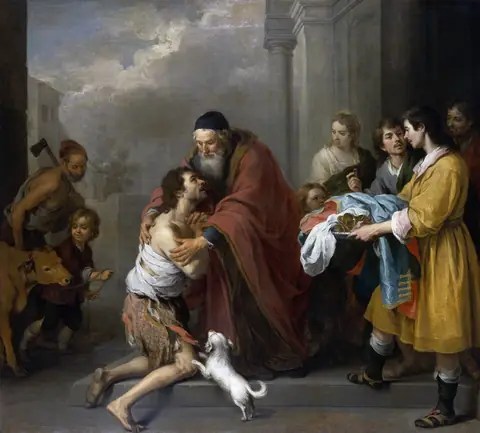
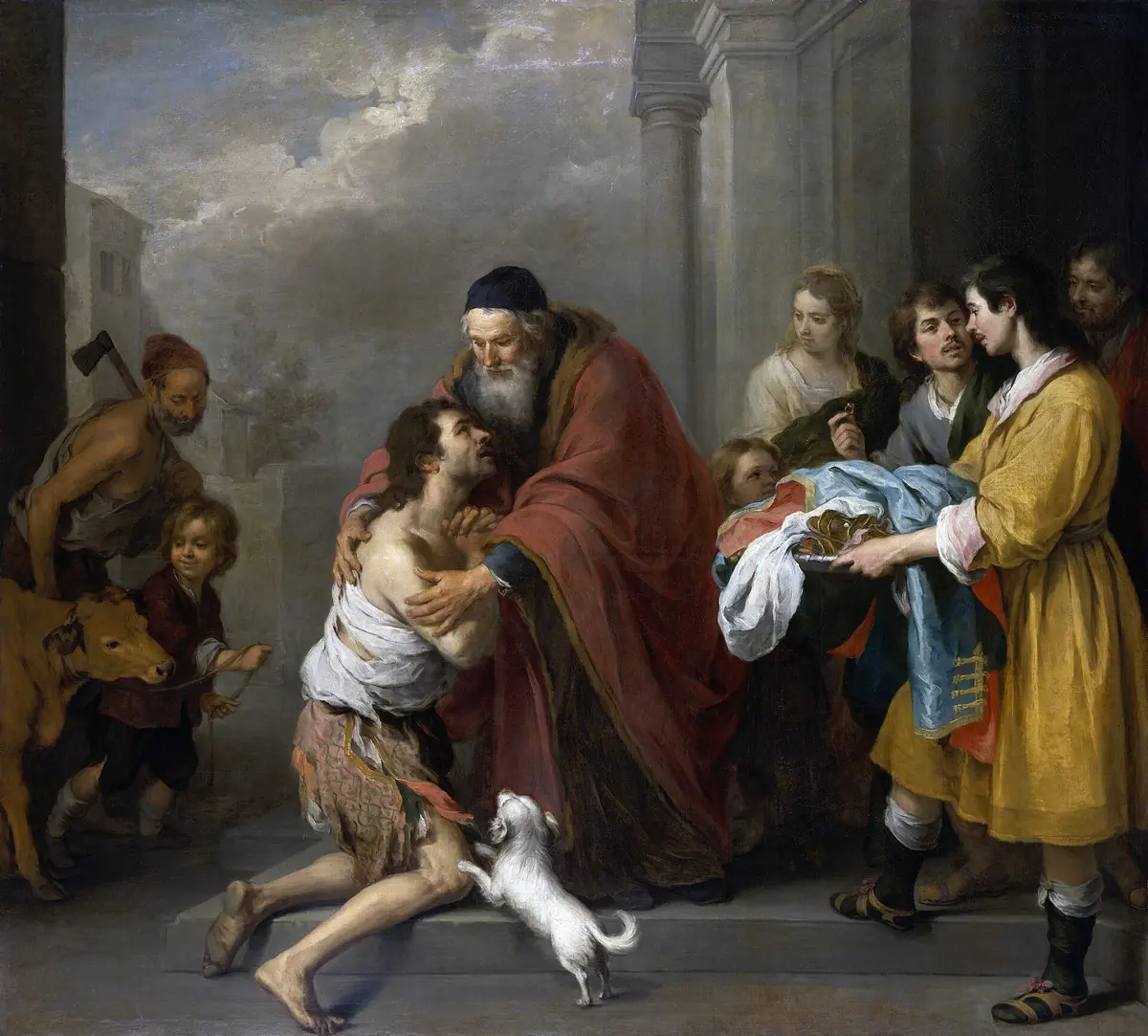
Image: Wikimedia Commons · Public domain (PD-Art) The Return of the Prodigal Son
Look closely. The ragged son kneels and is caught in his father's arms; a servant brings the good robe, and other figures look on from the steps of the house. Look at the contrast of the torn clothes and the rich, welcoming cloak, at the father's bent head, and at how the Gospel parable is staged as a real homecoming, not as an emblem only.
In the library: The Bible (KJV) · Jesus Christ
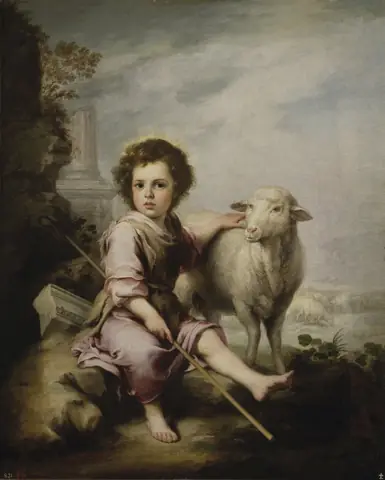
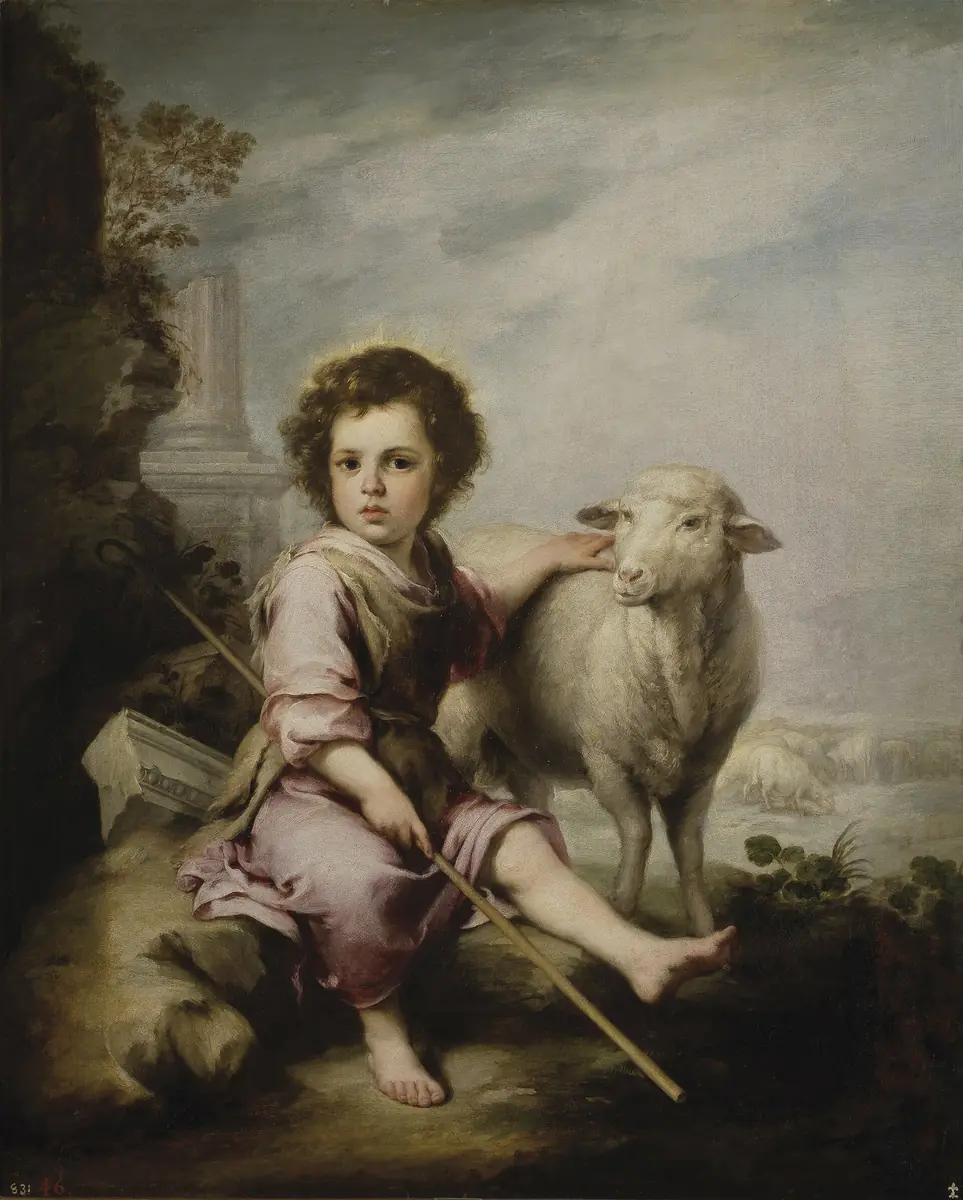
Image: Wikimedia Commons · Public domain (PD-Art) The Good Shepherd
Look closely. The Child Jesus sits as a young shepherd in a pink tunic and a rough sheepskin, a staff in one hand, the other on a standing lamb, a soft landscape behind. Look at the grave, frontal face, at the little halo, and at how the Gospel title is given to a child already at work as a keeper of sheep.
In the library: The Bible (KJV) · Jesus Christ
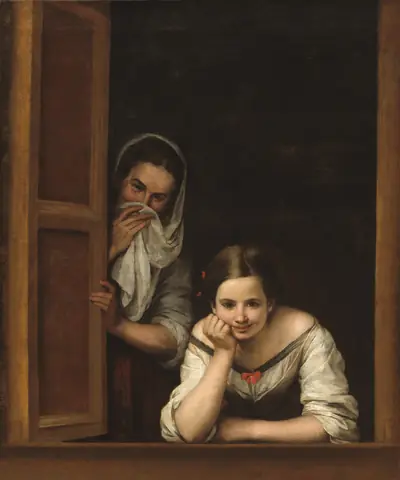
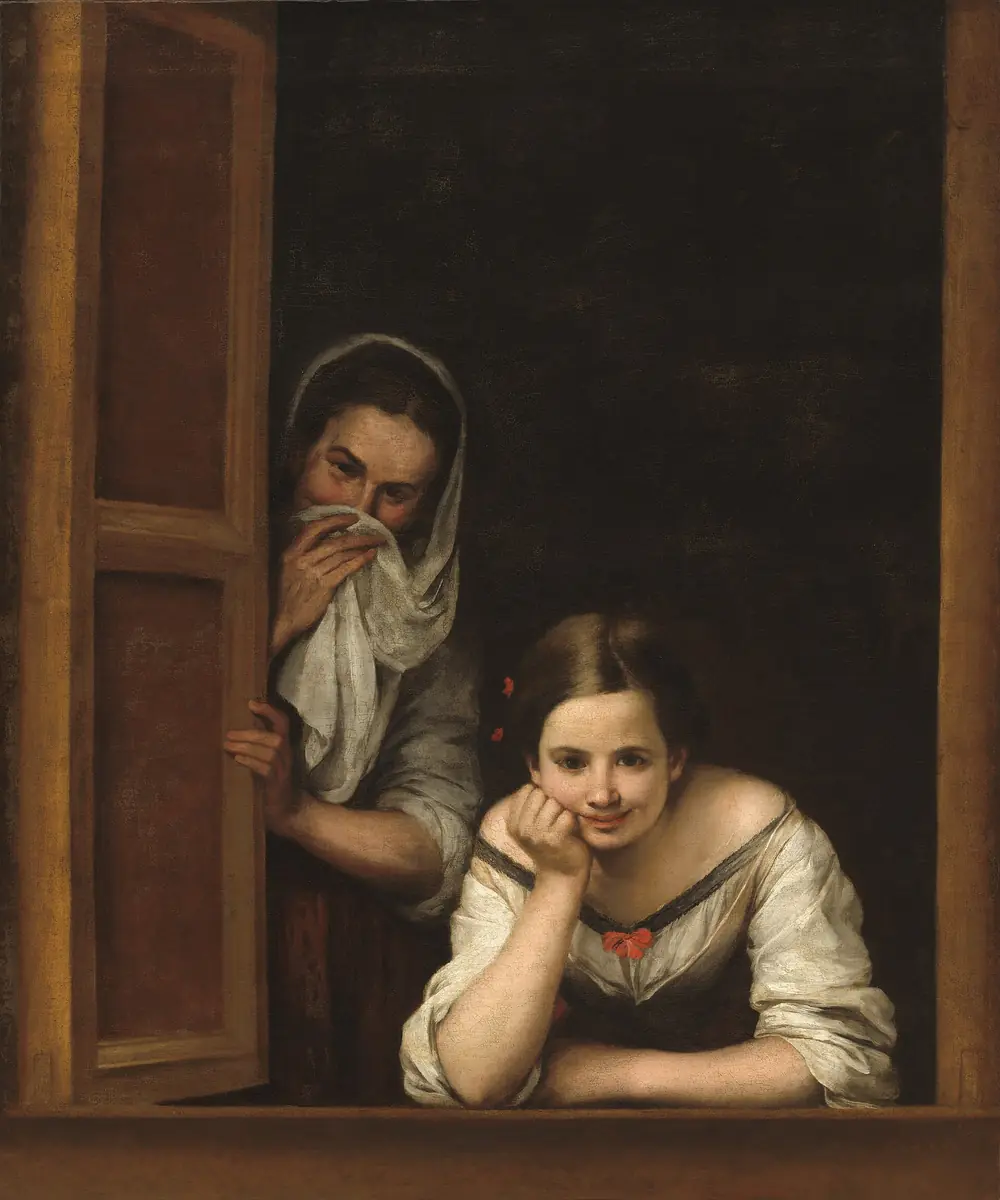
Image: Wikimedia Commons · Public domain (PD-Art) Two Women at a Window
Look closely. A young woman smiles out from a window, her arm on the sill, while an older woman beside her raises a veil and laughs or comments, the shutter and the dark interior framing them like a stage. Look at the liveliness of the two faces, at the gesture with the veil, and at the sense that you have interrupted a private joke.


What to watch for in Bartolomé Esteban Murillo
Look slowly- A soft, breathing light. Edges often dissolve a little, especially in the later Madonnas.
- Children taken seriously. Whether the Child or a street boy, the face is a likeness, not a type only.
- Upward movement. In the Immaculate Conceptions, look at how the figure rides a crescent and a cloud of cherubs.
- Home-like holy scenes. A bird, a dog, or a kitchen object can sit inside a Holy Family.
- Charity as a subject. Almsgiving, homecoming and the care of the poor run through the work.
For older students
These famous works include nudity, so they are named here but not shown. Teachers and parents can decide when to look at them together.
- The Young Beggar, c. 1645–50, Louvre, Paris. A poor boy, lightly clothed, sitting in a doorway. Named here but not shown.
Dates and collections follow the holding museums and Wikidata. Images of paintings are photographs of public-domain pictures from Wikimedia Commons or museum open-access releases; photographs of sculpture are used only when the photograph itself is Public domain, CC0, or CC BY with a named credit. Each picture links to its source page with full licence details.