Great Art · Baroque (Dutch Golden Age)
Rembrandt
The Dutch master of light and shadow, who painted the Bible as a story about real people and their need of mercy.
His life
Rembrandt was the son of a miller in Leiden. He moved to Amsterdam in his twenties, married Saskia van Uylenburgh, and quickly became the most sought-after portrait painter in the city. He painted, drew and etched the Bible more than any other great artist of his time, setting its stories among the faces and streets he knew.
His later life was full of loss. Saskia and three of their four children died young; he spent beyond his means and was declared insolvent in 1656, losing his house and collection; his son Titus died the year before Rembrandt did. Yet in these years he painted his deepest works, and dozens of self-portraits that look at his own ageing face without vanity. He died in Amsterdam in 1669 and was buried in an unmarked grave in the Westerkerk.
Key works
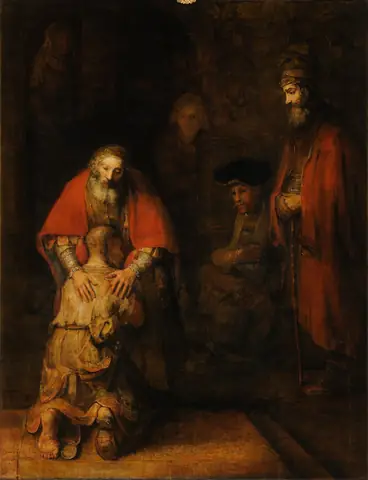
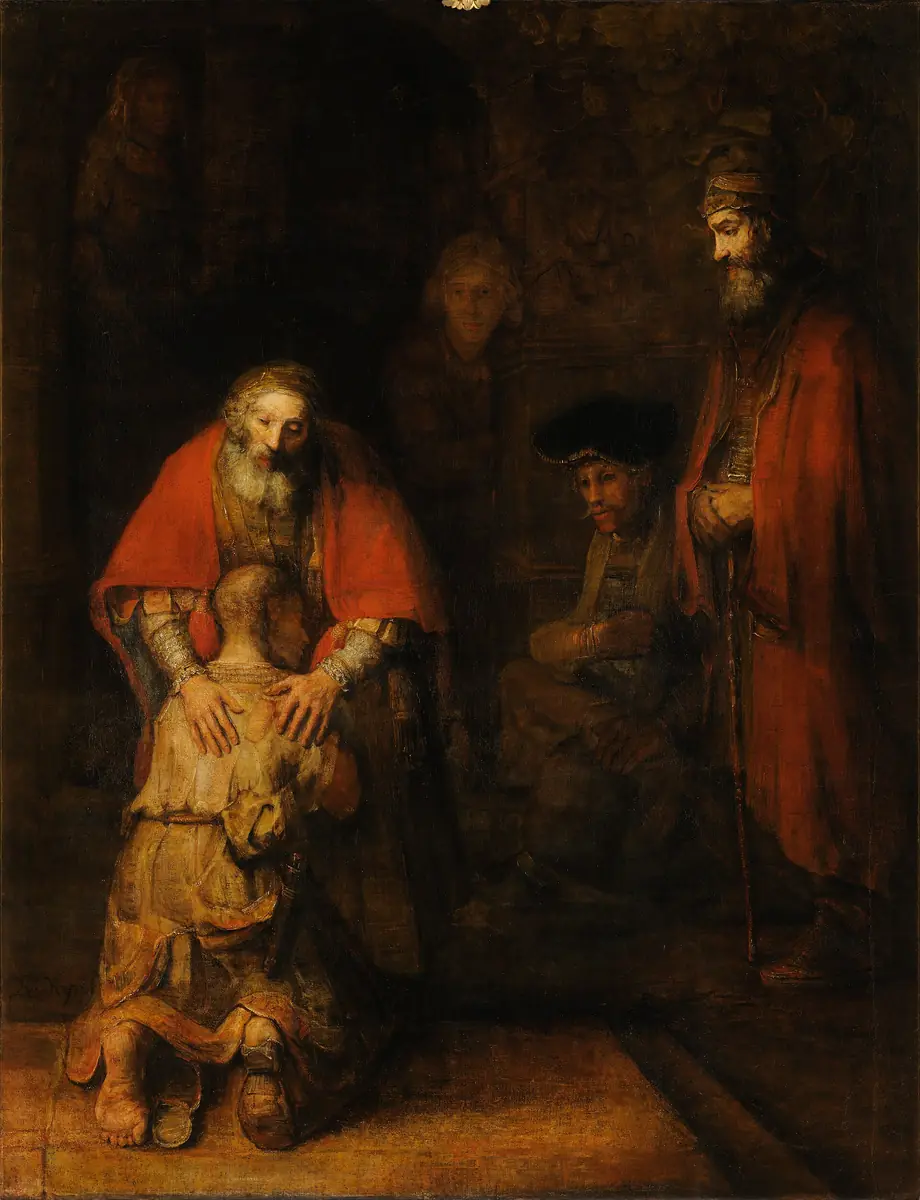
Image: Wikimedia Commons · Public domain (PD-Art) The Return of the Prodigal Son
Look closely. The ragged son kneels with his shaven head against his father's chest. The father's two hands rest on his back, and they are painted differently, one broad and strong, one finer. At the right the elder brother stands upright and apart, watching. The parable ends without telling us what he did; the painting leaves the question open too.
In the library: The Bible (KJV) · Jesus Christ (the parables)
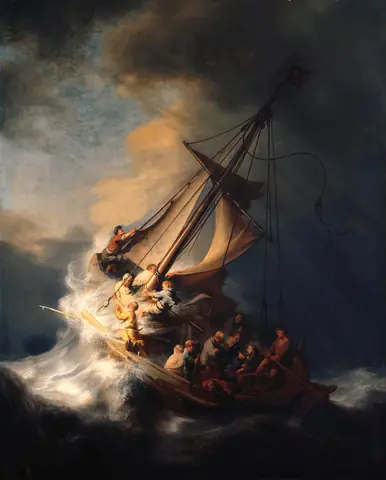
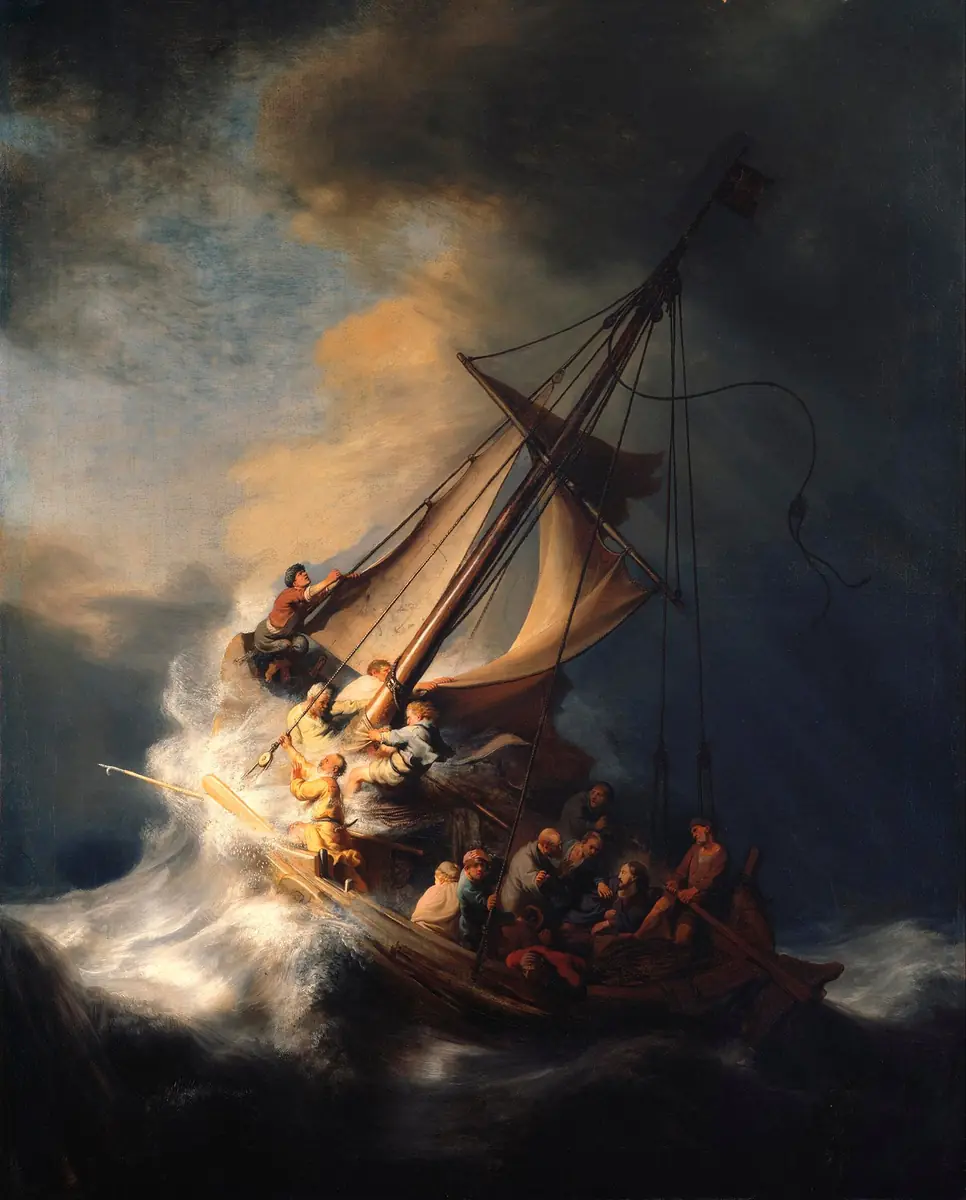
Image: Wikimedia Commons · Public domain (PD-Art) The Storm on the Sea of Galilee
Look closely. Rembrandt's only seascape. A great wave lifts the bow; some disciples fight the sail, one is sick over the side, and others wake the calm Christ at the stern. One man looks straight out at us, often thought to be Rembrandt. The painting was stolen from the Gardner Museum in 1990, and its empty frame still hangs there.
In the library: The Bible (KJV) · Jesus Christ · Peter
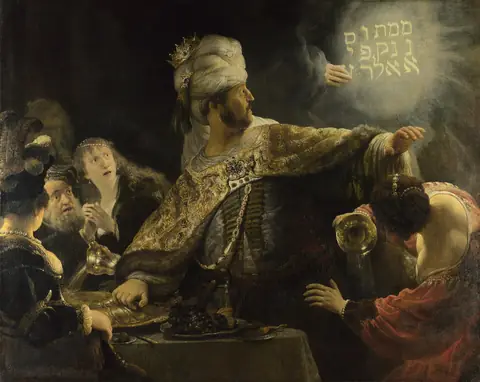
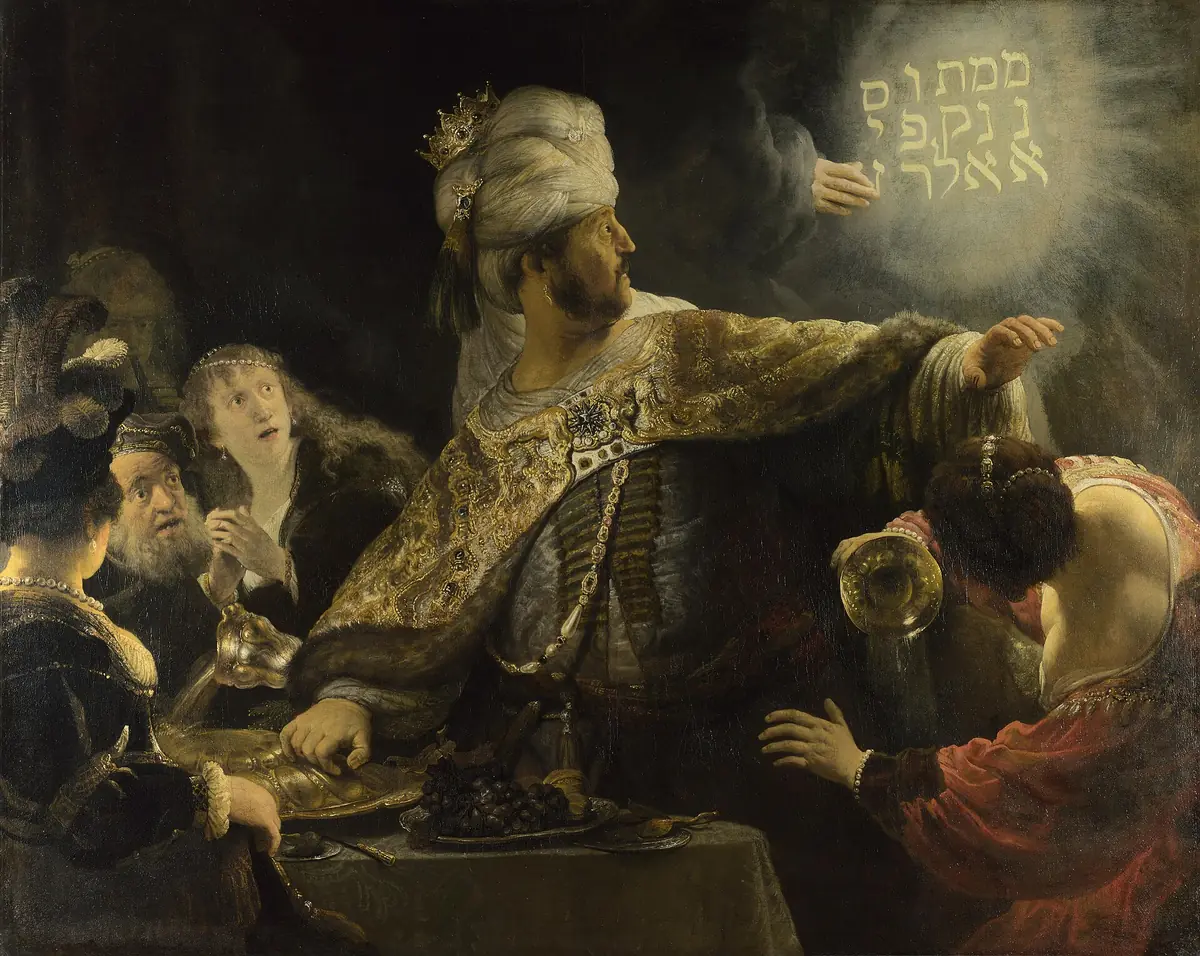
Image: Wikimedia Commons · Public domain (PD-Art) Belshazzar's Feast
Look closely. At a feast where the vessels taken from the Temple are being drunk from, a hand appears and writes on the wall. The king turns in terror and the wine spills. Rembrandt wrote the Hebrew letters in columns, perhaps on the advice of a Jewish scholar he knew, so that the message could not be read straight across.
In the library: The Bible (KJV) · Daniel
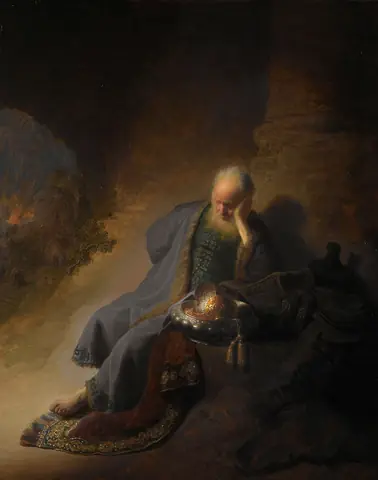
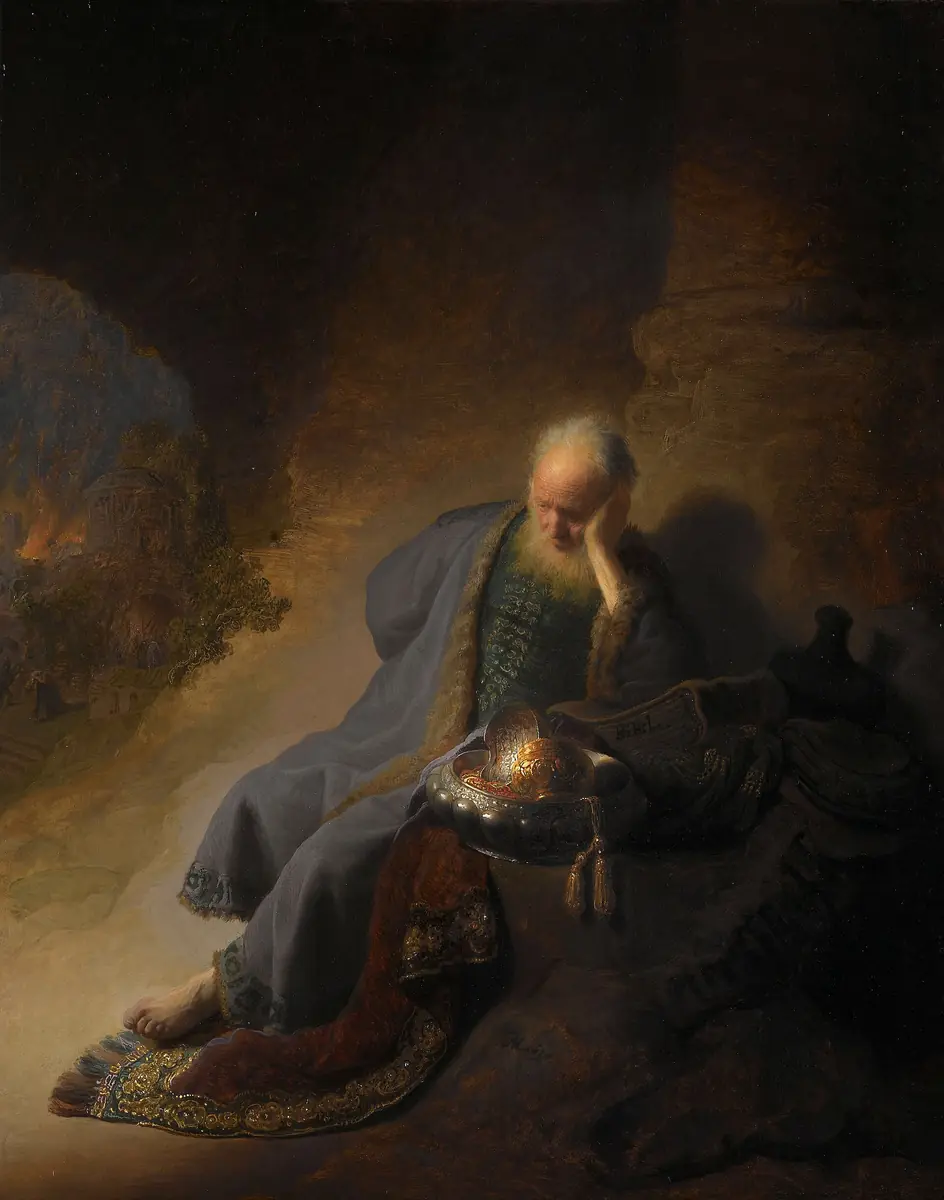
Image: Wikimedia Commons · Public domain (PD-Art) Jeremiah Lamenting the Destruction of Jerusalem
Look closely. The old prophet sits in a cave, leaning his head on his hand. In the dark distance at the left, Jerusalem burns. Beside him are a large book and some precious metal vessels. He warned the city for years and was not heeded. Compare Michelangelo's brooding Jeremiah.
In the library: The Bible (KJV) · Jeremiah · Michelangelo's Jeremiah (Great Art)
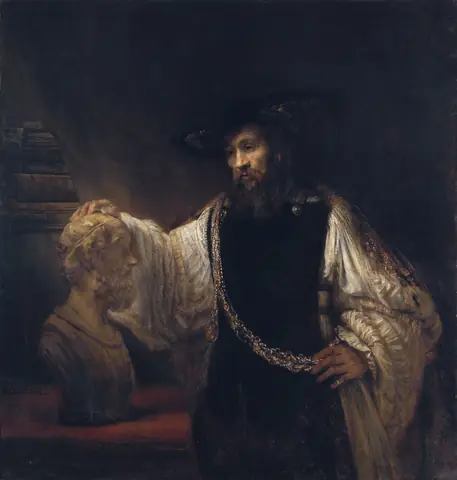
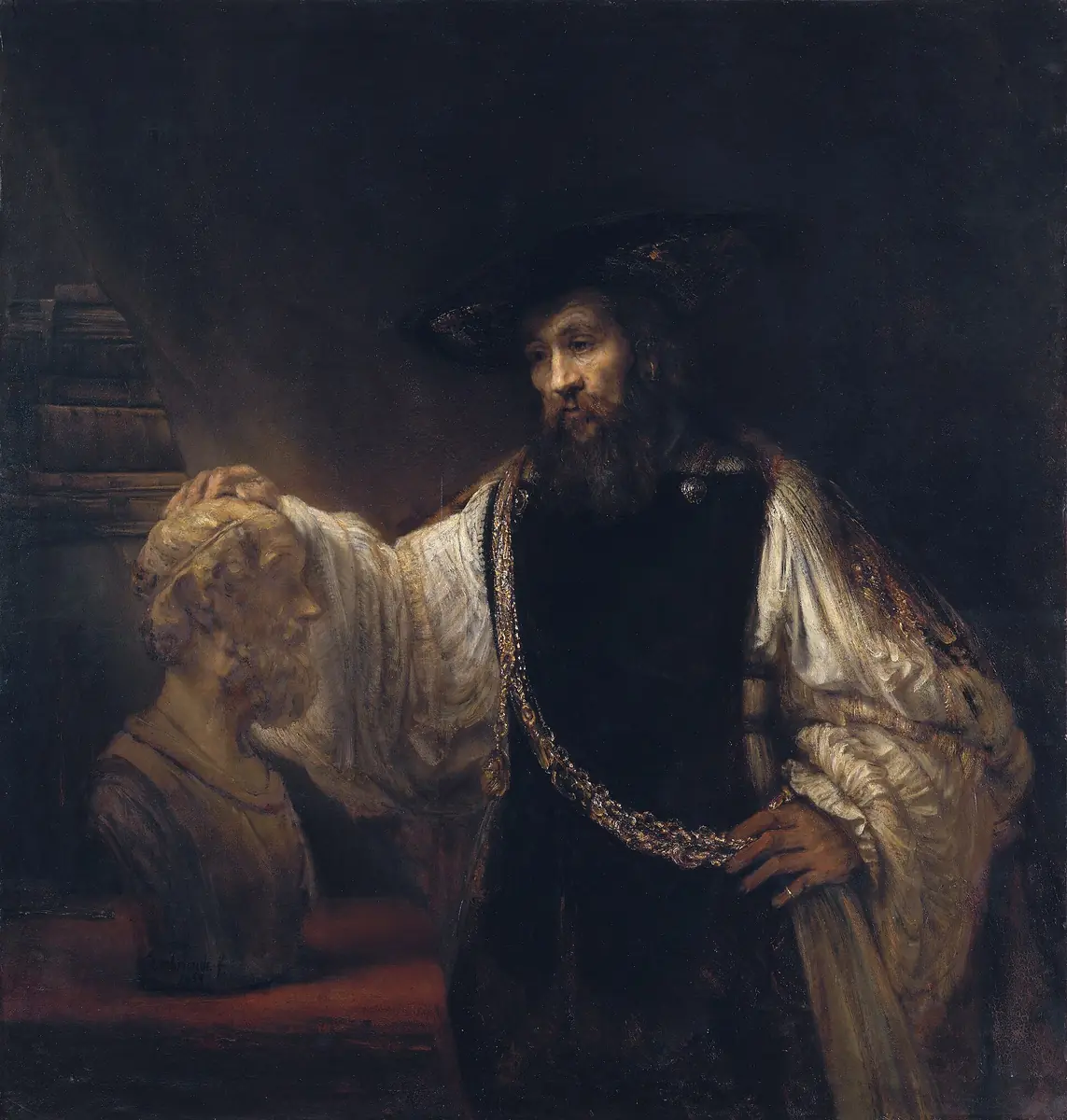
Image: Wikimedia Commons · Public domain (PD-Art) Aristotle with a Bust of Homer
Look closely. The philosopher rests his hand on a bust of the blind poet Homer. From his shoulder hangs a heavy gold chain with a medallion of Alexander the Great, his pupil. Ask what the three men stand for: poetry, wisdom and worldly power. Aristotle's face suggests where his thoughts are.
In the library: Aristotle · Homer · Alexander the Great · Homer, The Iliad · Aristotle, Poetics
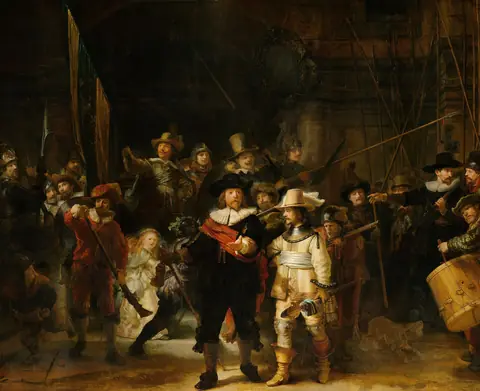
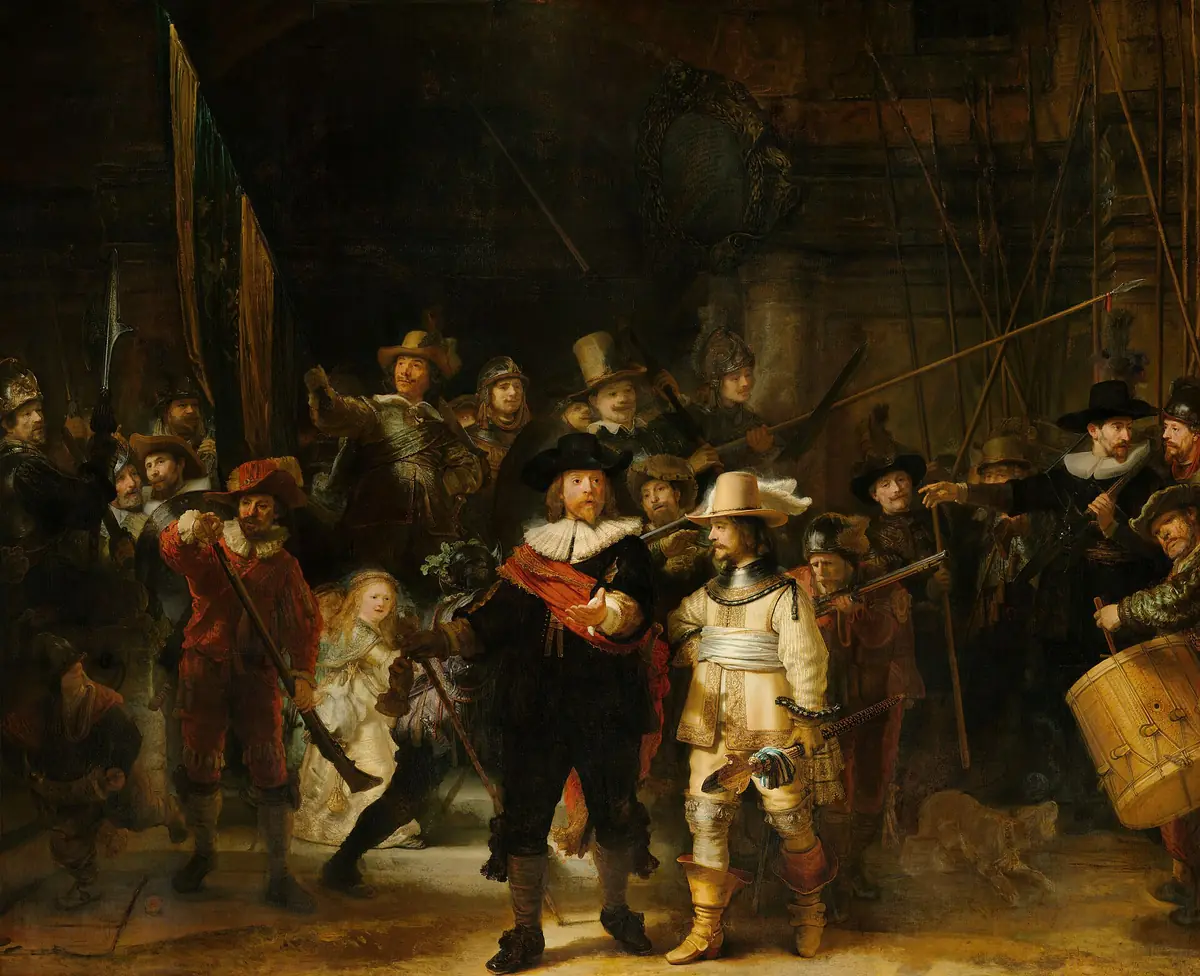
Image: Wikimedia Commons · Public domain (PD-Art) The Night Watch (Militia Company of District II under Captain Frans Banninck Cocq)
Look closely. An Amsterdam militia company sets out, captain and lieutenant in front. It is not actually a night scene: darkened varnish gave it the nickname. Find the girl in gold in the crowd with a dead chicken at her belt; its claws were the company's emblem. Rembrandt turned a group portrait into a moment of action.
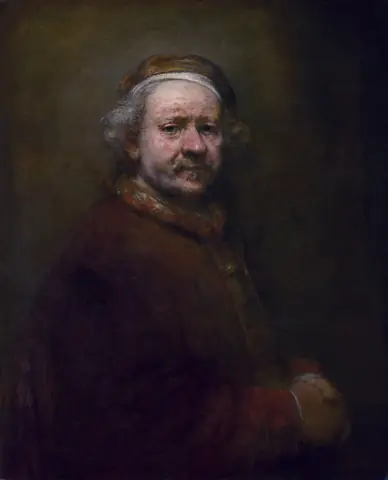
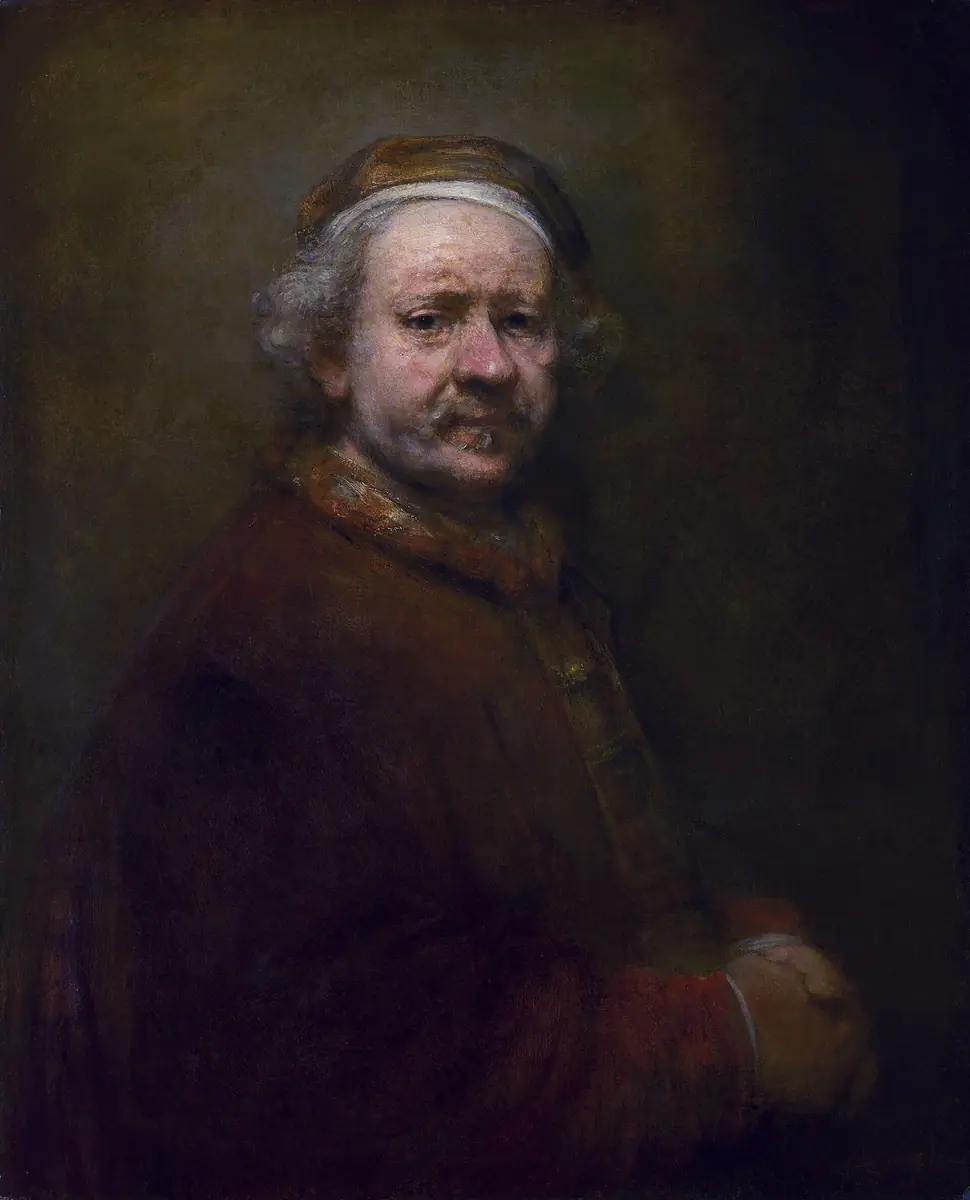
Image: Wikimedia Commons · Public domain (PD-Art) Self-Portrait at the Age of 63
Look closely. Painted in the last year of his life, after bankruptcy and the deaths of his wife and son. He looks at himself directly, without pretence. Compare the soft, puffy face and folded hands with his proud early self-portraits.


What to watch for in Rembrandt
Look slowly- Light out of darkness. A warm light picks out faces and hands from deep brown shadow.
- Thick paint. In later works paint is laid on so thickly it catches the light itself.
- Hands. Rembrandt tells his stories through hands: blessing, grasping, resting, pointing.
- Real faces in holy stories. Apostles and prophets look like Amsterdam neighbours.
- Self-examination. In his self-portraits, watch a face change from proud youth to humble age.
Dates and collections follow the holding museums and Wikidata. Images of paintings are photographs of public-domain pictures from Wikimedia Commons or museum open-access releases; photographs of sculpture are used only when the photograph itself is Public domain, CC0, or CC BY with a named credit. Each picture links to its source page with full licence details.