Great Art · Nineteenth century
Hiram Powers
The American sculptor in Florence who made marble likenesses of Washington, Franklin, and Jackson, and a quiet ideal bust called Ginevra.
His life
Powers grew up in Vermont and Ohio, learned to model wax and then clay, and left for Florence, where he spent the rest of his working life among the marble yards. From Italy he sent home portraits of the American founders and statesmen: Washington in a heavy classical cloak, Franklin in his own coat and buttons, Jackson with the worn face of a man who has spent a life in public. He also made ideal heads and figures, including Ginevra, a draped young woman from a story in a poem, and, most famous of all, The Greek Slave, which is named on this page but not shown.
The gift is a marble surface that still seems like skin and cloth. He polished until a cloak had weight and a forehead had light, and he kept the likeness close enough that a visitor can recognize the man. The work was made far from home, for a country that was still trying to see its own public faces in stone.
Key sculptures
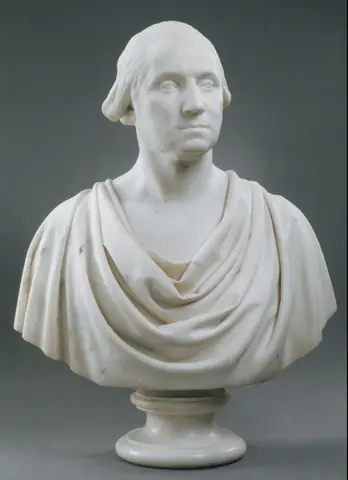
Image: Wikimedia Commons · CC0 (public domain) George Washington
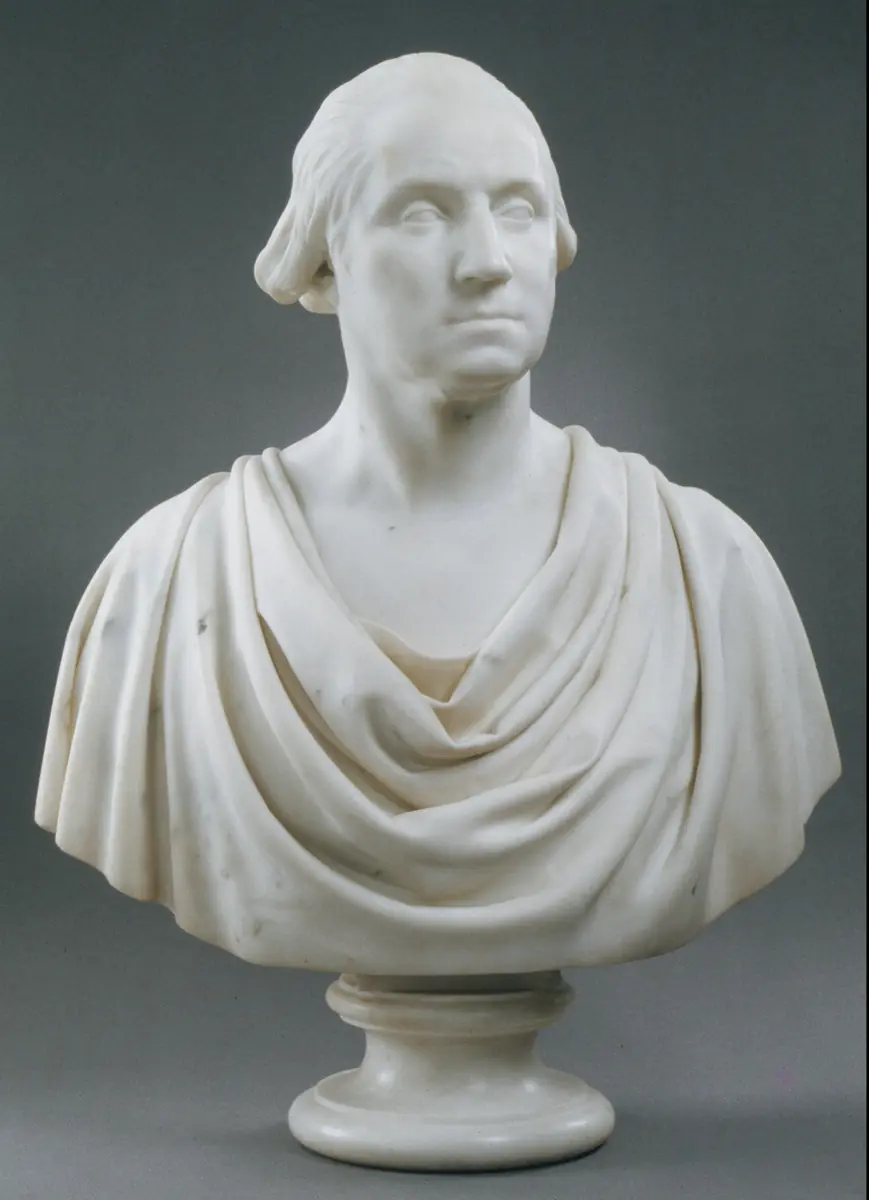
Look closely. A marble bust of Washington, the hair tied back, a heavy cloak folded across the chest and shoulders. Look at the calm of the face and at how the drapery is cut in deep, piled folds rather than as a thin sheet of stone.
In the library: George Washington · Washington's First Inaugural Address
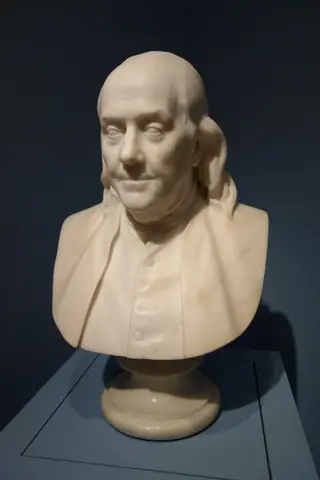
Image: Wikimedia Commons · CC0 (public domain) Benjamin Franklin
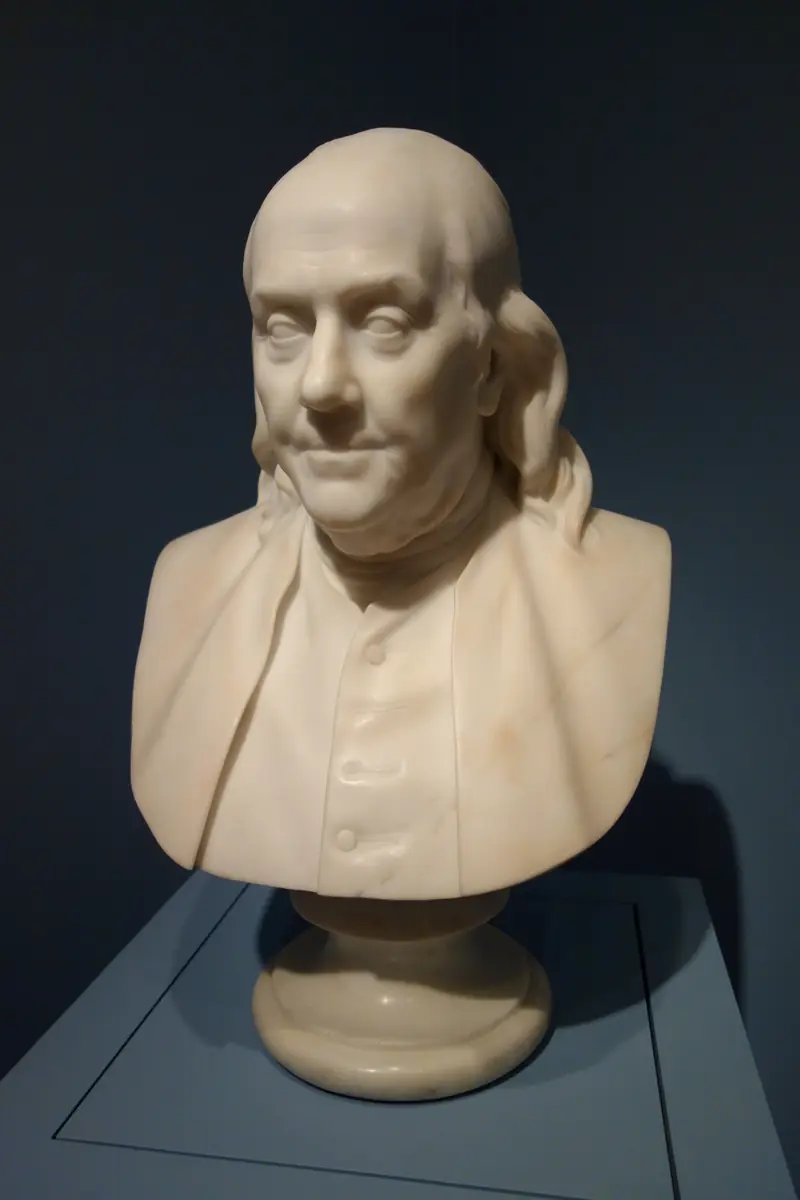
Look closely. Franklin in his own coat, the buttons done in marble, the hair falling at the sides, a slight smile at the mouth. Look at how the likeness is carried by the face and by the ordinary clothes, without a Roman cloak to do the work of dignity.
In the library: Benjamin Franklin · Franklin's Autobiography and Poor Richard
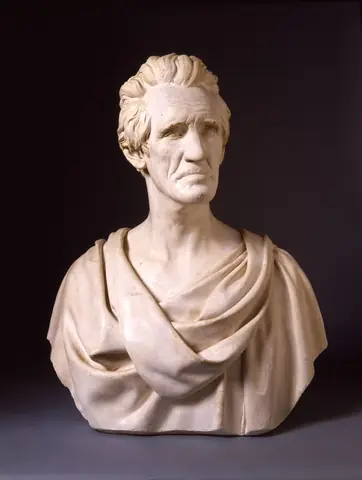
Image: Wikimedia Commons · CC0 (public domain) Andrew Jackson
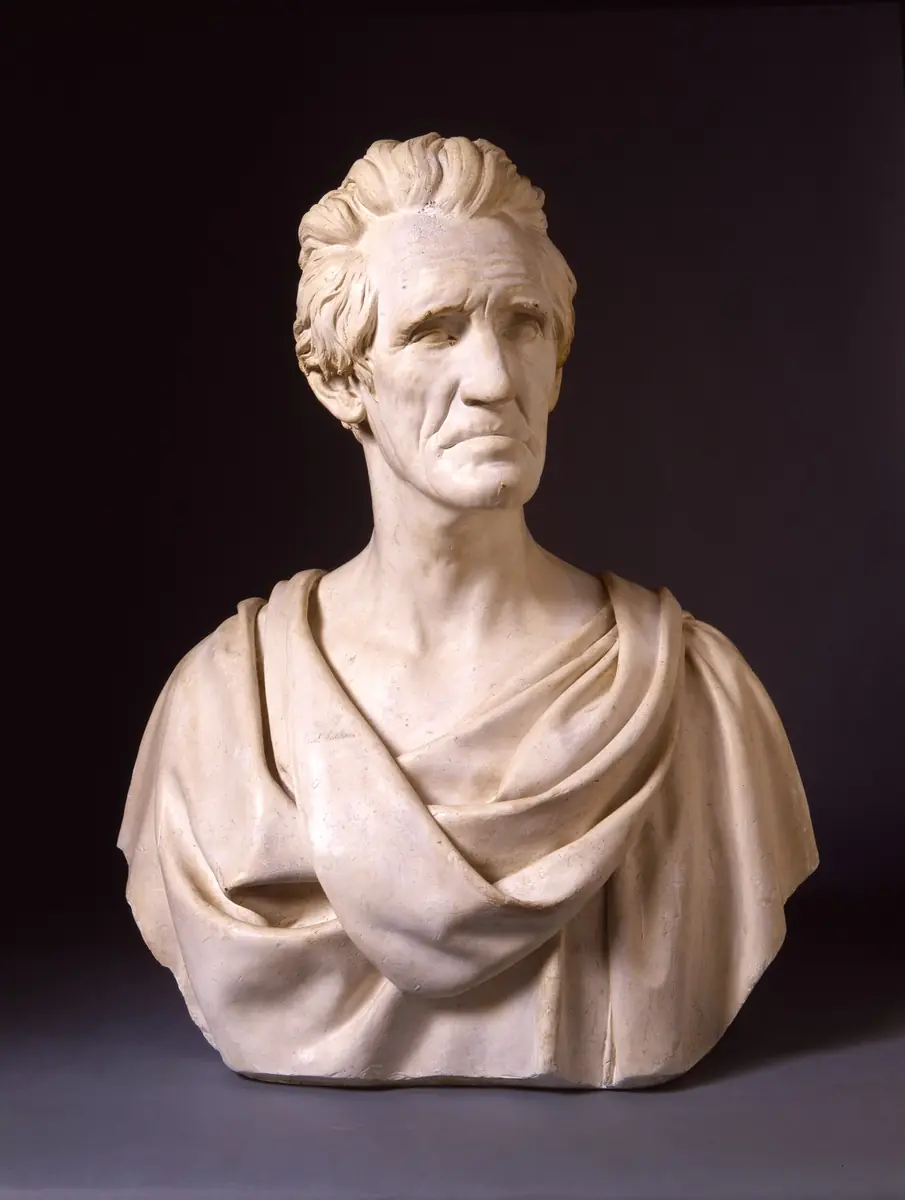
Look closely. A bust of Jackson, the hair brushed back, the face deeply lined, a cloak wrapped across the chest. Look at the skull and the mouth first, then at how the drapery frames a likeness that has not been made gentler than the man.
In the library: Andrew Jackson
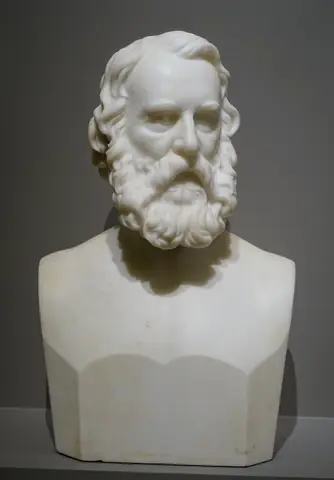
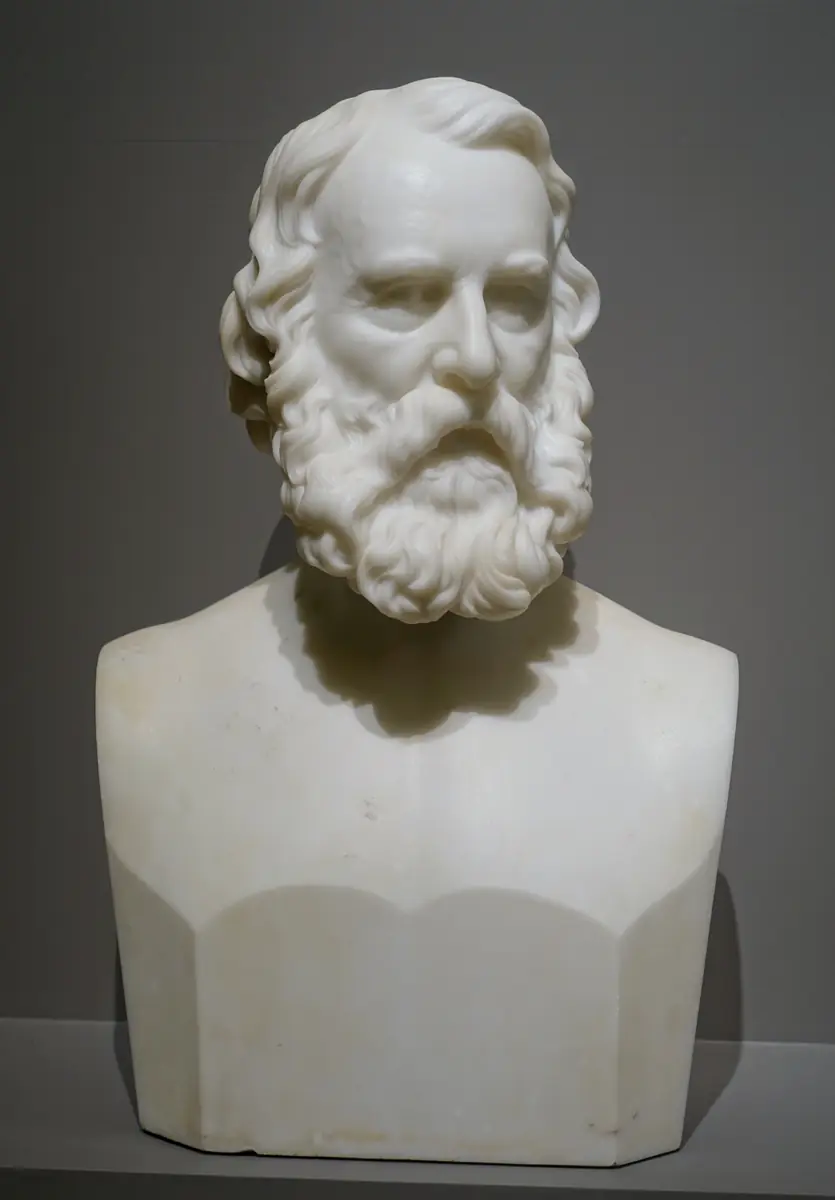
Image: Wikimedia Commons · Public domain Henry Wadsworth Longfellow
Look closely. A marble herm of the poet, cut off at the chest in a plain block, the beard full, the eyes steady. Look at the simplicity of the lower block against the careful modeling of the hair and face, as if the likeness needed no more clothing than that.
In the library: Henry Wadsworth Longfellow
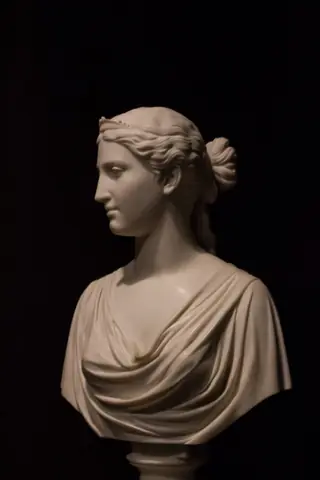
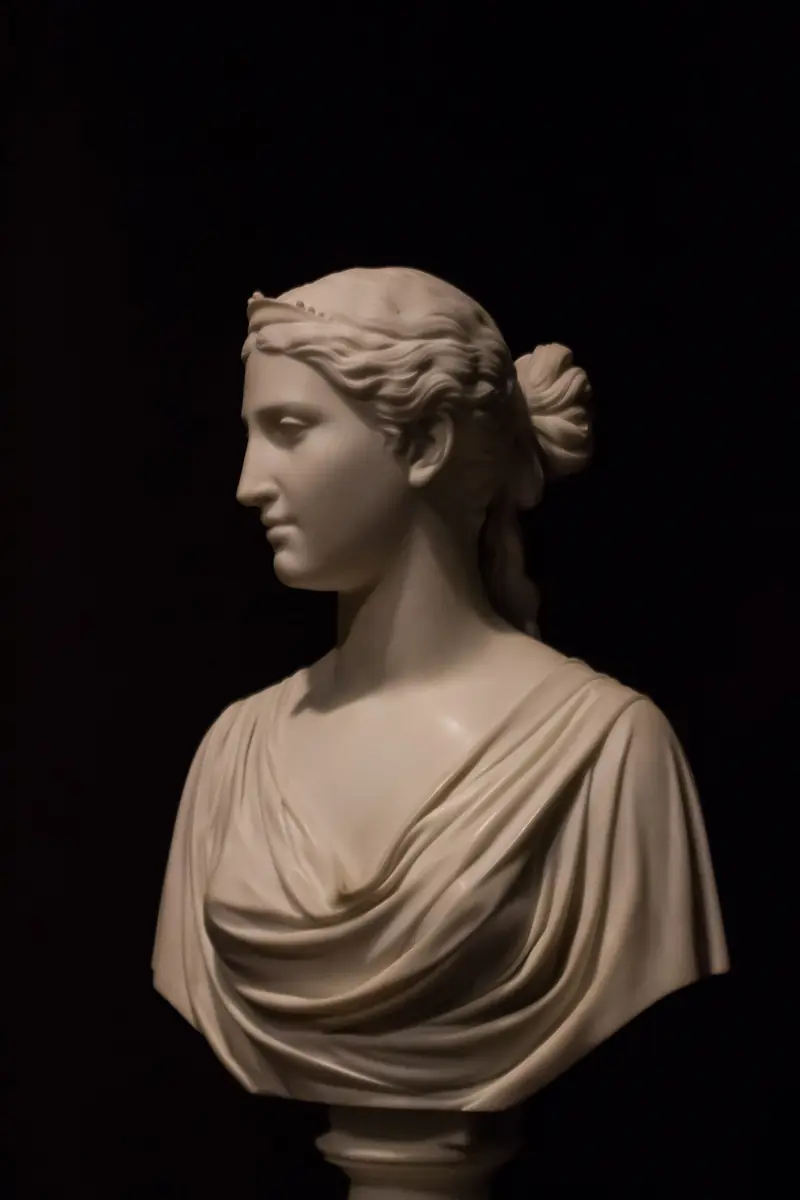
Image: Wikimedia Commons · Public domain Ginevra
Look closely. An ideal bust of a young woman in profile, her hair bound, a draped gown across the shoulders and chest. Look at the clean line of the nose and brow, and at how the cloth is modest and heavy, with a deep fold at the front.


What to watch for in Hiram Powers
Look slowly- A cloak that has folds, not grooves. On the Washington bust, look at how the drapery piles and falls around the chest.
- Franklin in his own clothes. The coat, the buttons, and the set of the mouth belong to a recognizable man, not a Roman type.
- Jackson's face before the cloak. The skull, the lines, and the mouth are observed; the drapery is a framing, not a disguise.
- Longfellow as a poet in marble. The beard and the calm stare are a likeness, cut to the shoulders like a herm.
- An ideal head that is still modest. Ginevra is draped; the beauty is in the profile and the cloth, not in display.
For older students
These famous works include nudity, so they are named here but not shown. Teachers and parents can decide when to look at them together.
- The Greek Slave, modeled 1843; several marble versions followed, Versions include the Newark Museum, the Yale University Art Gallery, and the Brooklyn Museum. Powers's most famous ideal figure, a standing woman in chains, unclothed. It is named here but not shown.
- Eve Tempted and Eve Disconsolate, 1840s–1870s, Versions at the Smithsonian American Art Museum and the Cincinnati Art Museum, among others. Ideal figures of Eve, unclothed, from the story in Genesis. They are named here but not shown.
- The Fisher Boy, modeled 1841–1844, The Metropolitan Museum of Art, New York, and other versions. A standing boy with a shell, unclothed. It is named here but not shown.
- Proserpine, California, and The Last of the Tribes, 1840s–1870s, The Smithsonian American Art Museum, the de Young Museum, and other collections. Ideal busts and a standing figure in which the body is shown unclothed or bare-chested. They are named here but not shown.
Dates and collections follow the holding museums and Wikidata. Images of paintings are photographs of public-domain pictures from Wikimedia Commons or museum open-access releases; photographs of sculpture are used only when the photograph itself is Public domain, CC0, or CC BY with a named credit. Each picture links to its source page with full licence details.