Great Art · Baroque
Caravaggio
The painter of light breaking into darkness, who set the Gospel among the ordinary people of Rome.
His life
Michelangelo Merisi grew up in the town of Caravaggio near Milan and trained in Milan before arriving in Rome, poor and unknown, in the 1590s. Within a few years his paintings for the churches of Rome had made him famous. He painted saints and apostles with the faces and dirty feet of working people, lit by a single strong light out of deep shadow, and the effect was so new that painters across Europe copied it.
His gift was matched by a violent temper. He was arrested many times, and in 1606 he killed a man in a brawl and fled Rome under sentence of death. He spent his last four years on the run in Naples, Malta and Sicily, still painting powerful altarpieces, while friends sought a papal pardon. He died in 1610 on his way back toward Rome. His life is a sober lesson in how a great gift can be wounded by its owner's own sins, and his paintings keep returning to calling, repentance and mercy.
Key works
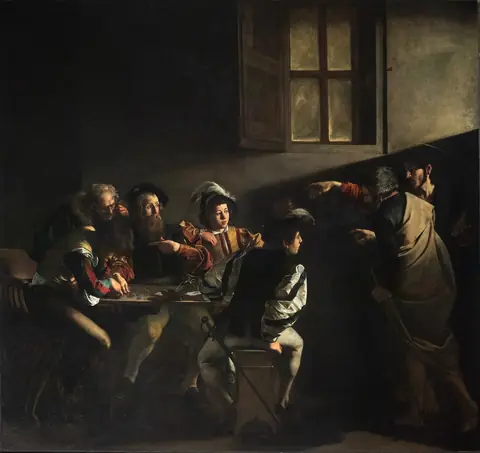
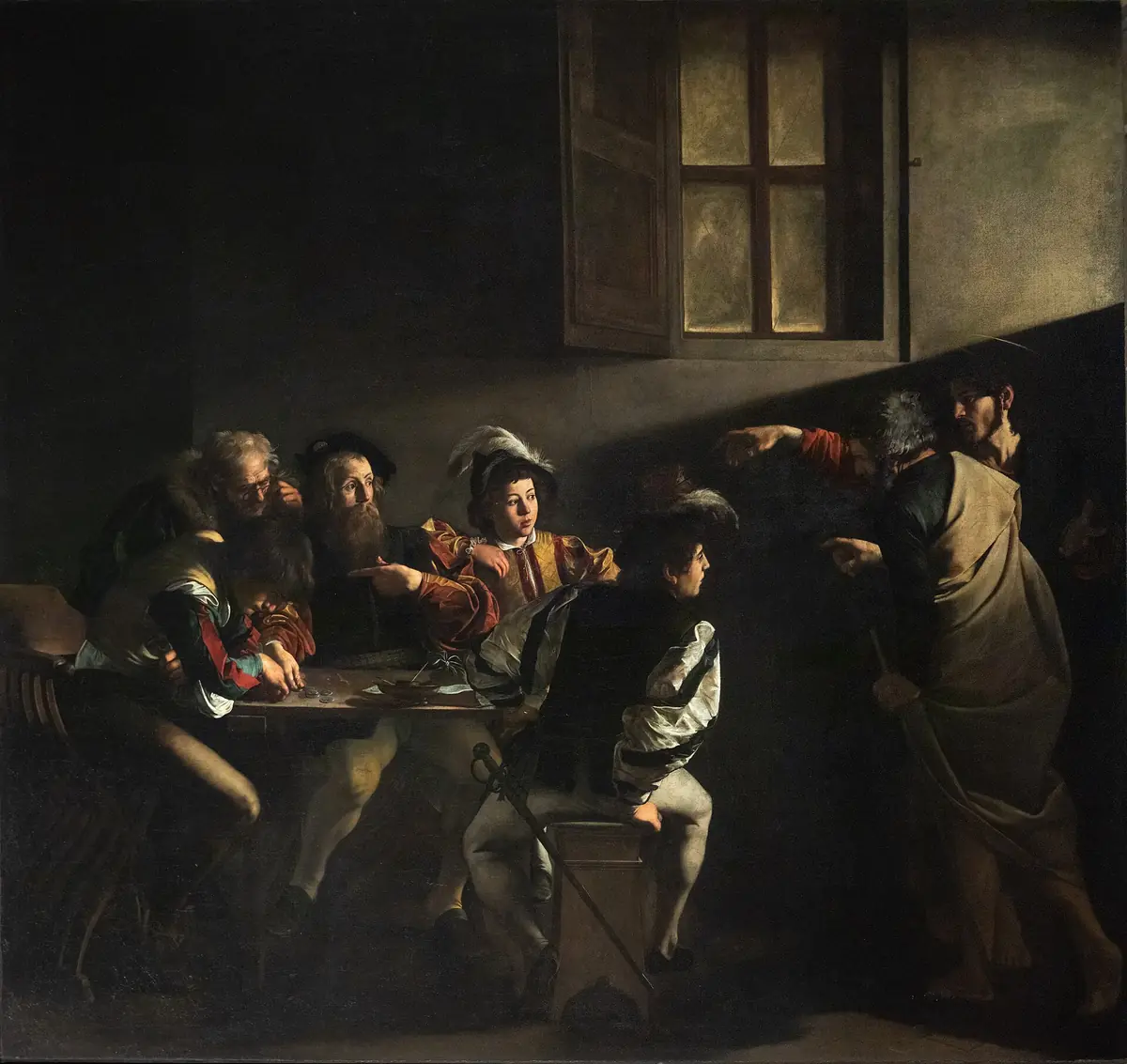
Image: Wikimedia Commons · CC0 (public domain) The Calling of Saint Matthew
Look closely. Tax collectors count money at a table. Christ enters from the right, half hidden behind Peter, and points; a beam of light runs along his arm to the men. His hand echoes Adam's hand in Michelangelo's Creation of Adam. Which man is Matthew? Viewers still disagree, which is part of the picture's power.
In the library: The Bible (KJV) · Matthew · Jesus Christ · Michelangelo (Great Art)
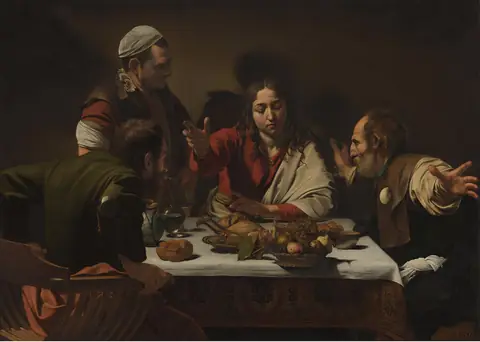
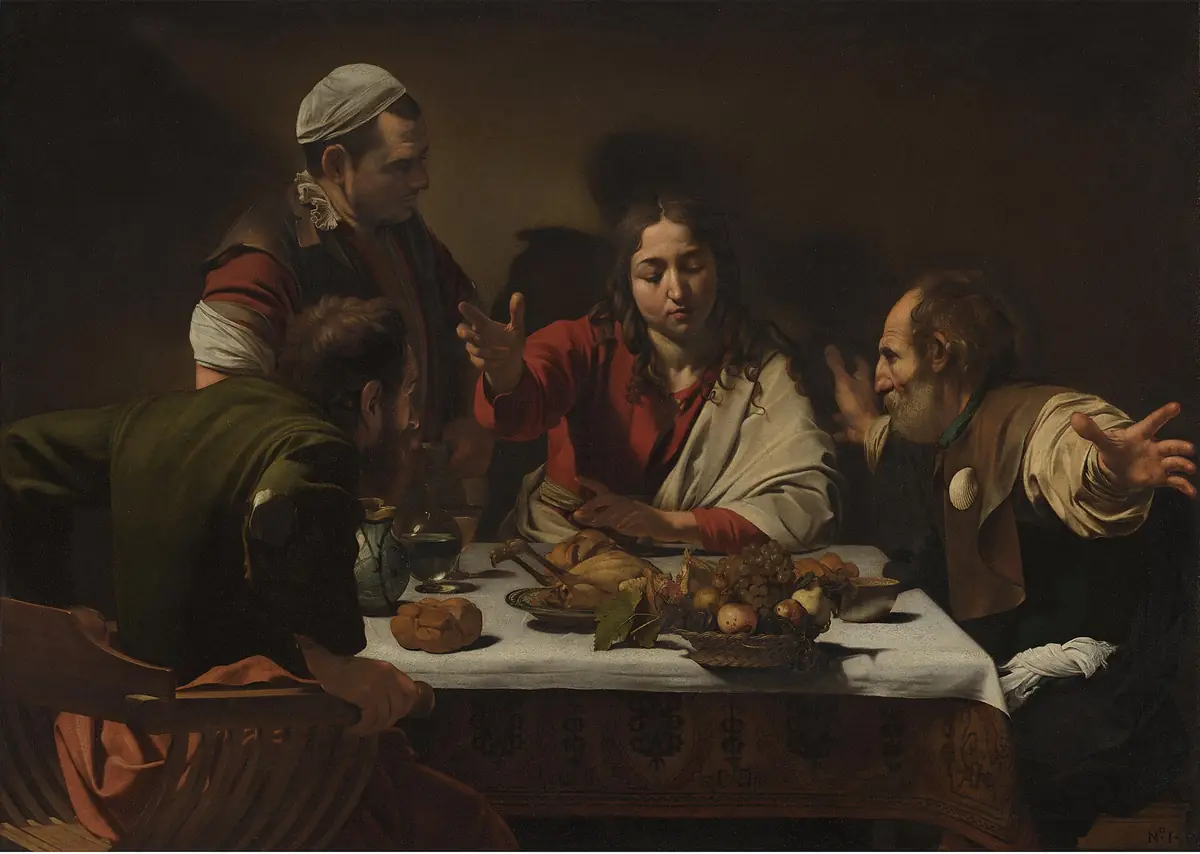
Image: Wikimedia Commons · Public domain (PD-Art) The Supper at Emmaus
Look closely. The instant of recognition. One disciple flings out his arms in the shape of a cross; the other grips his chair to stand. The fruit basket teeters over the table edge toward us. The innkeeper, standing, has not understood. Compare Veronese's calm version of the same moment.
In the library: The Bible (KJV) · Jesus Christ · Veronese's Supper at Emmaus (Great Art)
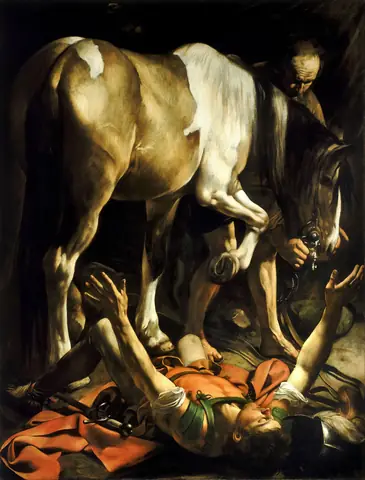
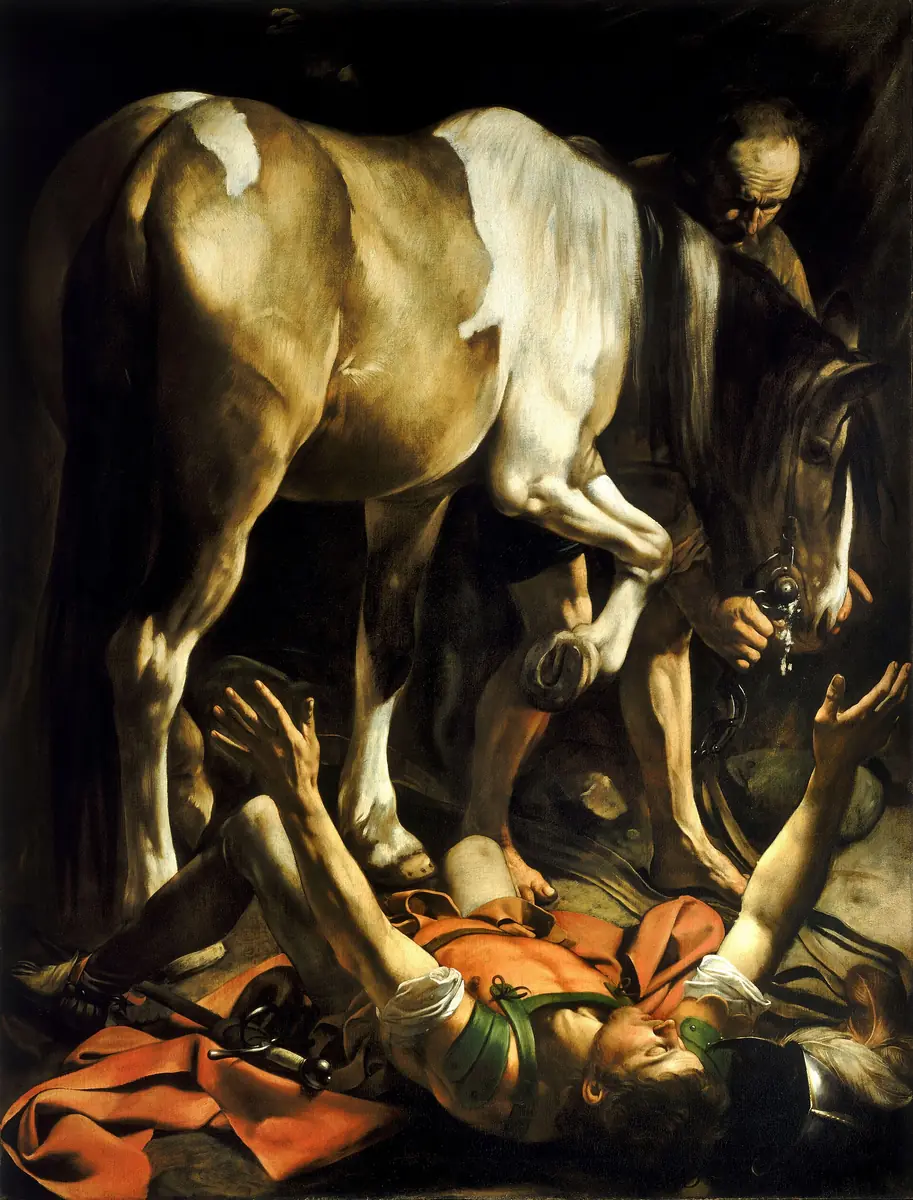
Image: Wikimedia Commons · Public domain (PD-Art) The Conversion of Saint Paul on the Way to Damascus
Look closely. Saul lies flat on his back under his horse, eyes closed, arms opened to the light. No heavenly figure is shown: only the light. The great horse fills the picture and carefully lifts its hoof to avoid him, while the groom notices nothing.
In the library: The Bible (KJV) · Paul
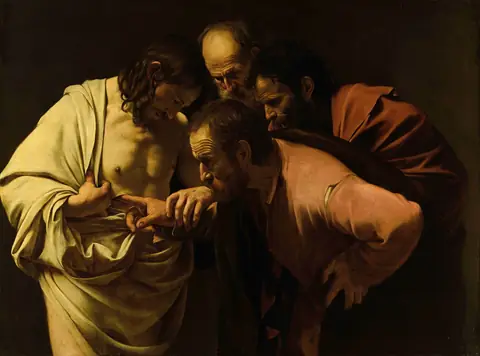
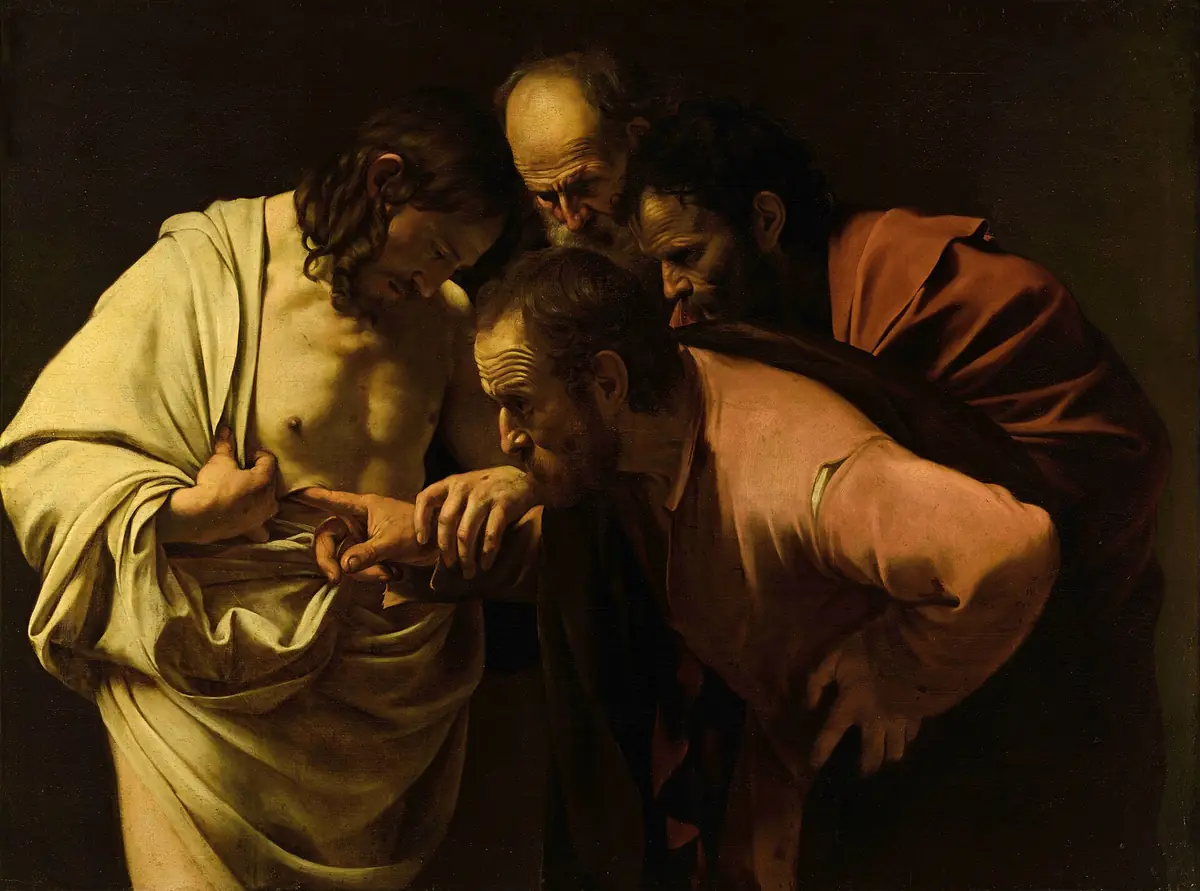
Image: Wikimedia Commons · Public domain (PD-Art) The Incredulity of Saint Thomas
Look closely. Four heads lean together in a tight diamond as the risen Christ guides Thomas's hand to the wound in his side. The furrowed foreheads of the apostles show doubt turning into belief. Ask why Caravaggio lets Christ hold Thomas's wrist.
In the library: The Bible (KJV) · Thomas · Jesus Christ
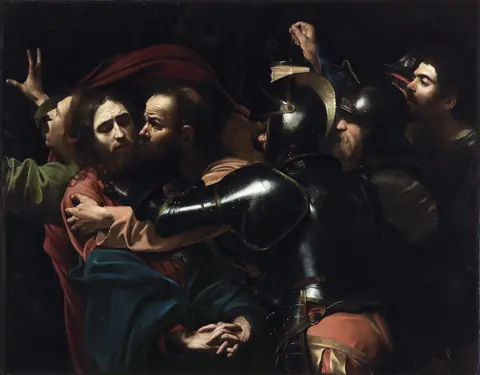
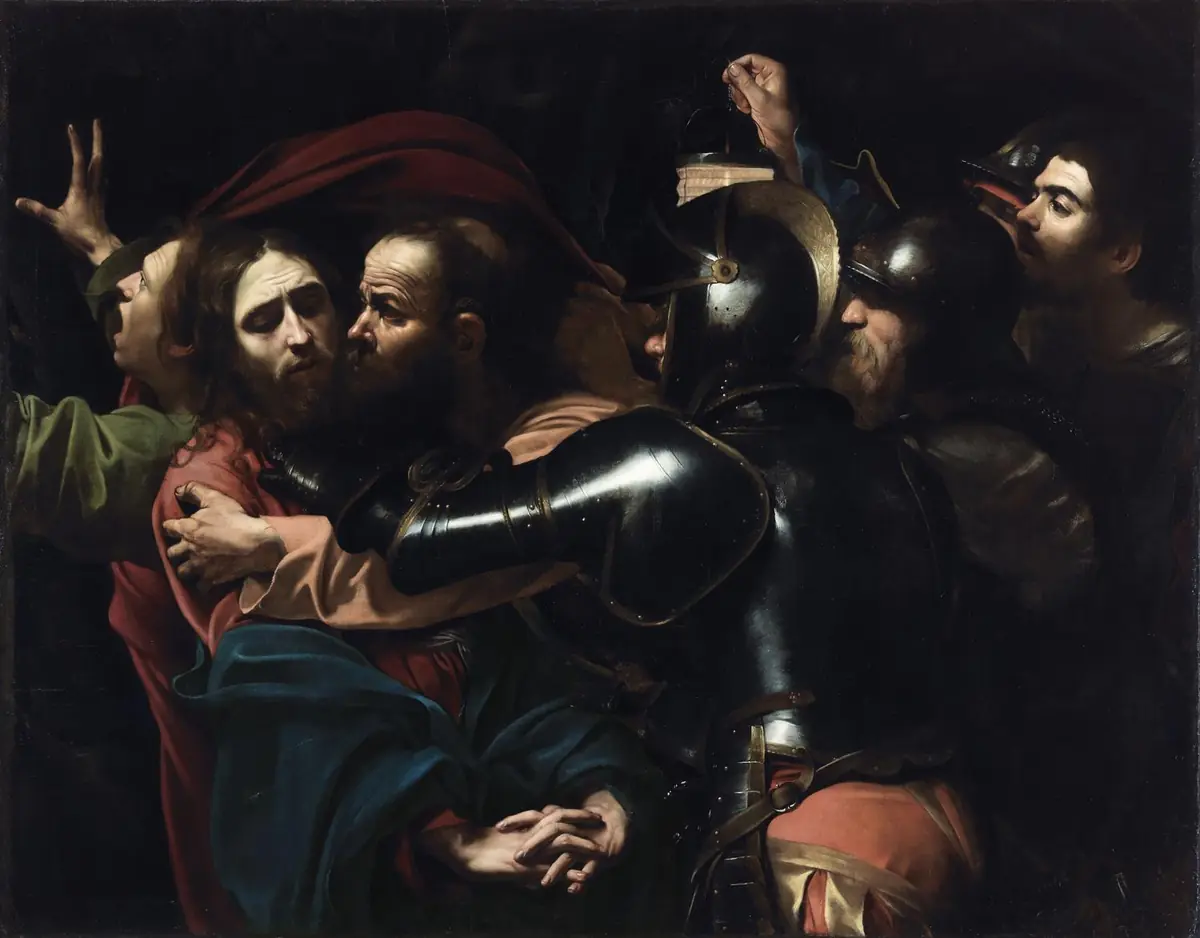
Image: Wikimedia Commons · Public domain (PD-Art) The Taking of Christ
Look closely. Judas kisses Christ, who folds his hands and lowers his eyes, refusing to resist. John flees screaming at the left; armoured soldiers close in. At the far right a man holds up a lantern, often thought to be Caravaggio himself. The painting was lost for centuries and recognised in a Dublin Jesuit house in 1990.
In the library: The Bible (KJV) · Jesus Christ · Giotto's Kiss of Judas (Great Art)
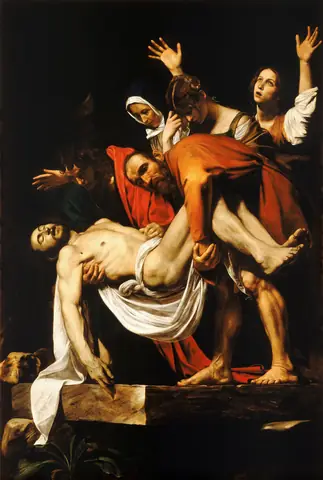
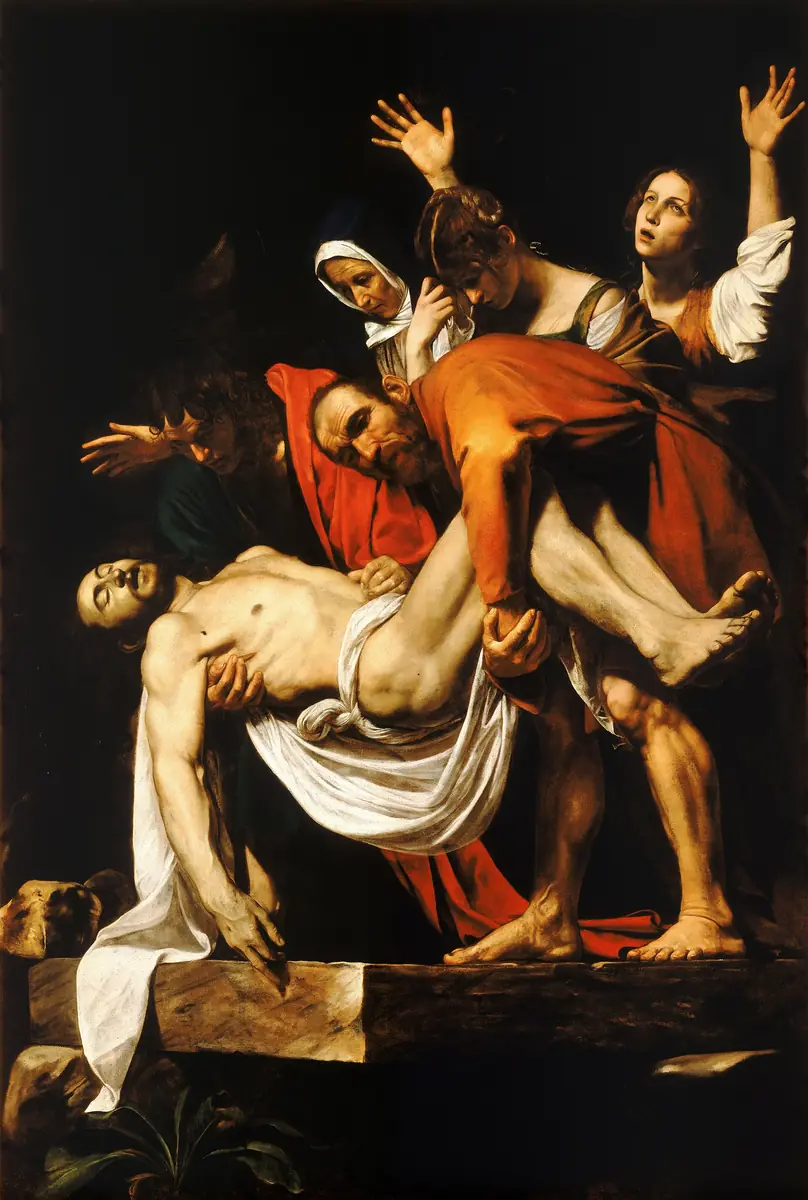
Image: Wikimedia Commons · Public domain (PD-Art) The Entombment of Christ
Look closely. Nicodemus and John lower Christ's body toward the tomb. The corner of the stone slab juts out toward us; in its church the altar stood just below, where the Eucharist was offered. Mary's arms open wide, while Mary Magdalene bows and another Mary cries out to heaven.
In the library: The Bible (KJV) · Nicodemus · John the Apostle · Mary, mother of Jesus
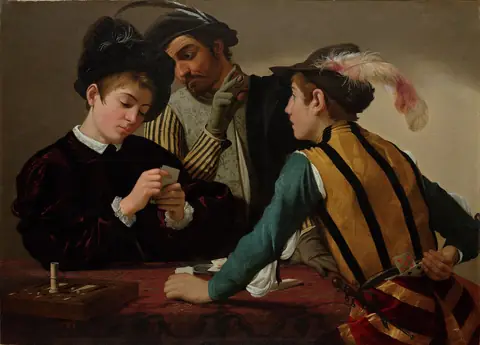
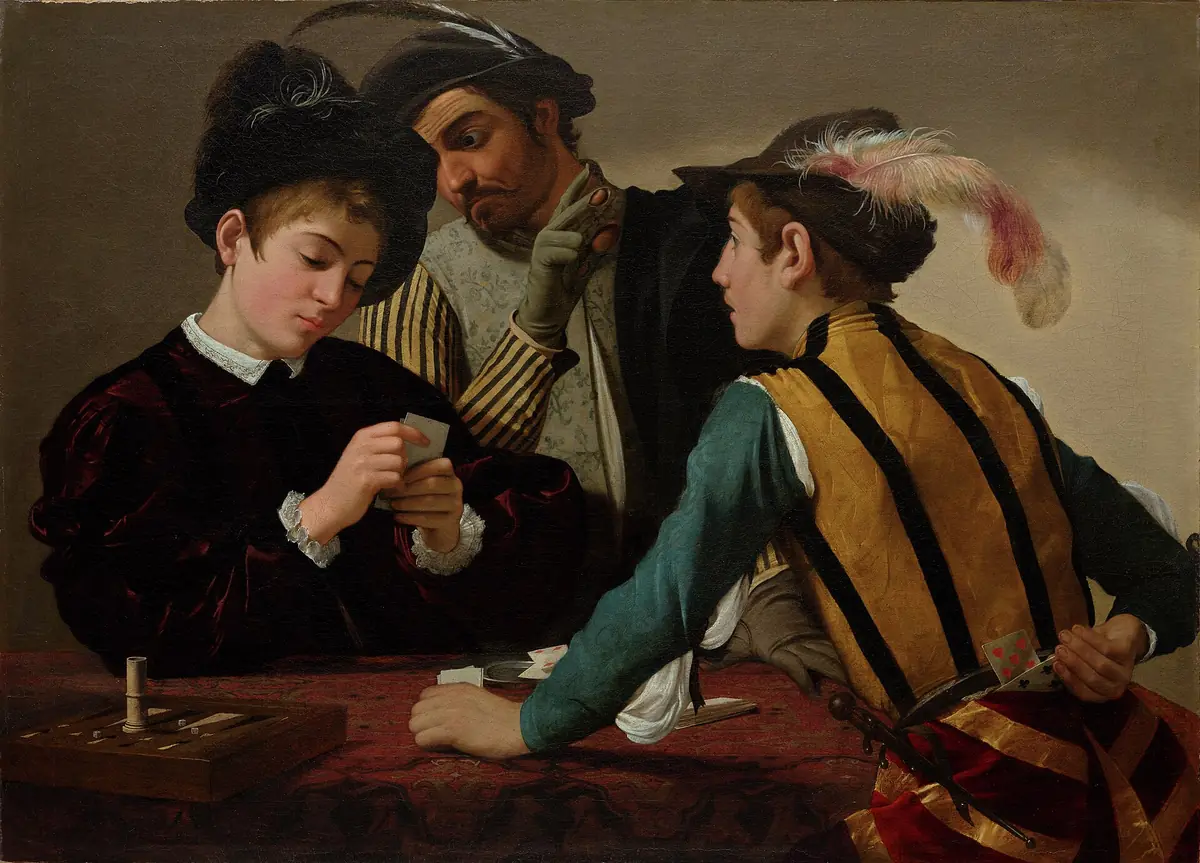
Image: Wikimedia Commons · Public domain (PD-Art) The Cardsharps
Look closely. An innocent young man studies his cards while a cheat behind him signals with his fingers and the other player reaches for a hidden card in his belt. The painting was lost for nearly a century before it was found in 1987. A good picture for talking about honesty, and about how deceit works by watching for the unguarded.


What to watch for in Caravaggio
Look slowly- One light source. A single beam falls from one side; follow it to see who is being singled out.
- Ordinary people. Apostles have worn clothes, wrinkled brows and dirty feet.
- Things pushing out at you. Elbows, baskets and stone edges seem to break through the picture surface.
- The moment of change. He paints the instant of calling, recognition or conversion, not before or after.
- Faces in the dark. Look in the shadows for figures you missed, and sometimes for the painter himself.
Dates and collections follow the holding museums and Wikidata. Images of paintings are photographs of public-domain pictures from Wikimedia Commons or museum open-access releases; photographs of sculpture are used only when the photograph itself is Public domain, CC0, or CC BY with a named credit. Each picture links to its source page with full licence details.