Great Art · Baroque
Anthony van Dyck
The Flemish prodigy who painted kings and saints with elegance, and set the pattern for the English portrait.
His life
Anthony van Dyck was born in Antwerp to a prosperous silk merchant and was painting with his own assistants by his late teens. He worked for a time as the leading assistant of Peter Paul Rubens, then spent six years in Italy, especially in Genoa, painting the city's noble families and studying Titian.
In 1632 King Charles I of England made him his principal painter and knighted him. Van Dyck's portraits of the king, tall, calm and graceful, shaped how the world still pictures Charles and his court, and English portrait painters such as Reynolds and Gainsborough learned from him for more than a century. He also painted moving religious works for the churches of Flanders. He died in London at forty-two, just as the troubles that led to the English Civil War were gathering, and was buried in Old Saint Paul's Cathedral.
Key works
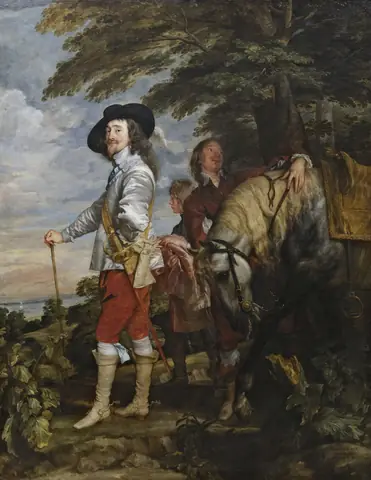
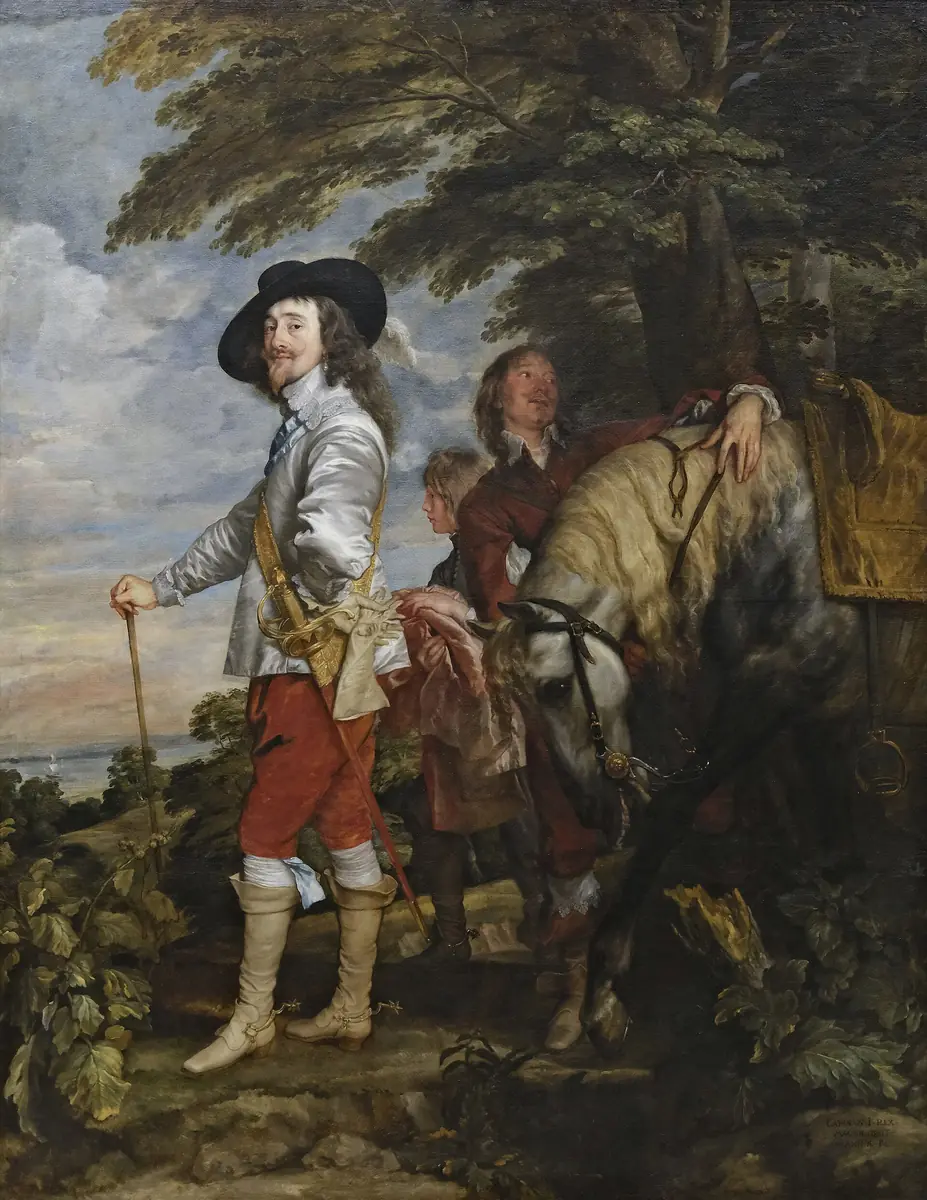
Image: Wikimedia Commons · Public domain (PD-Art) Charles I at the Hunt
Look closely. The king has stepped down from his horse during a hunt and stands, hand on hip, looking down at us. A groom and a page wait with the horse, which bows its head. Charles was a short man; notice how the low viewpoint and the stance make him look tall and at ease.
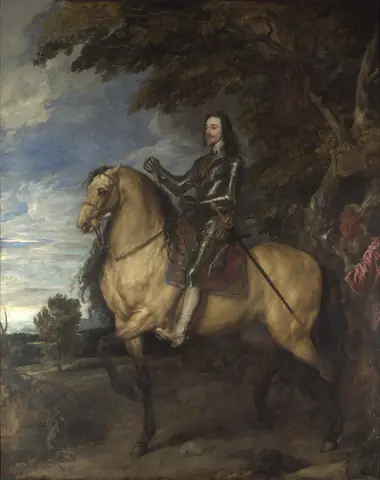
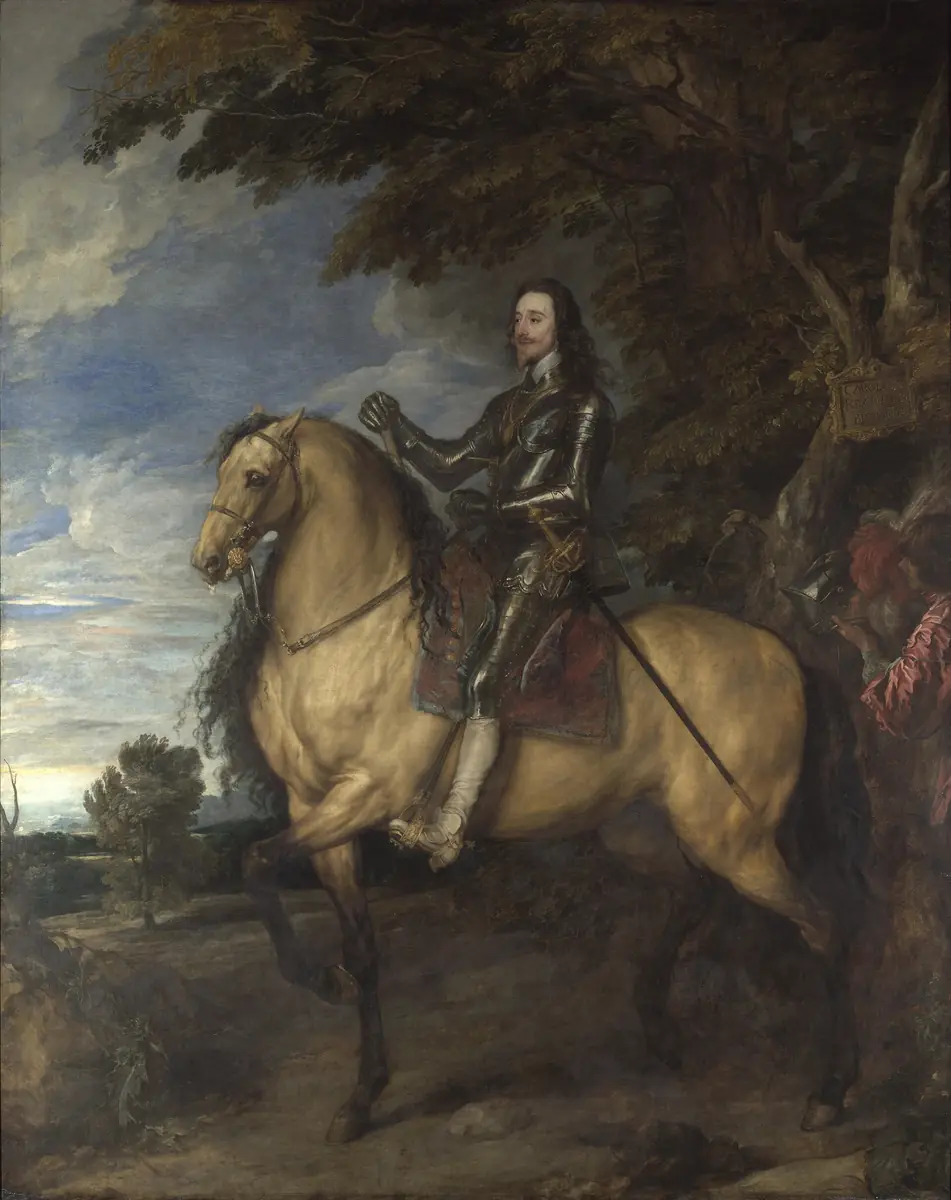
Image: Wikimedia Commons · Public domain (PD-Art) Equestrian Portrait of Charles I
Look closely. The king rides a great horse through a wooded landscape in armour, as a Christian knight and ruler. The pose borrows from ancient statues of emperors on horseback. Compare his calm face with the stormy years that followed: within a decade he would be at war with Parliament.
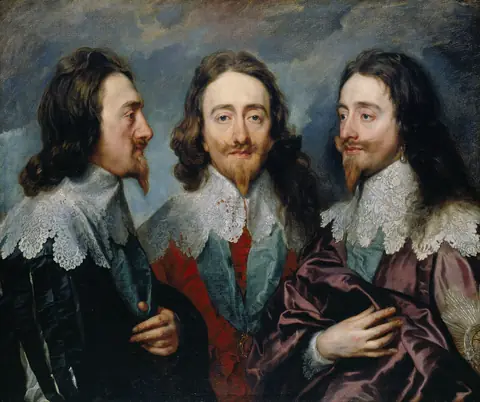
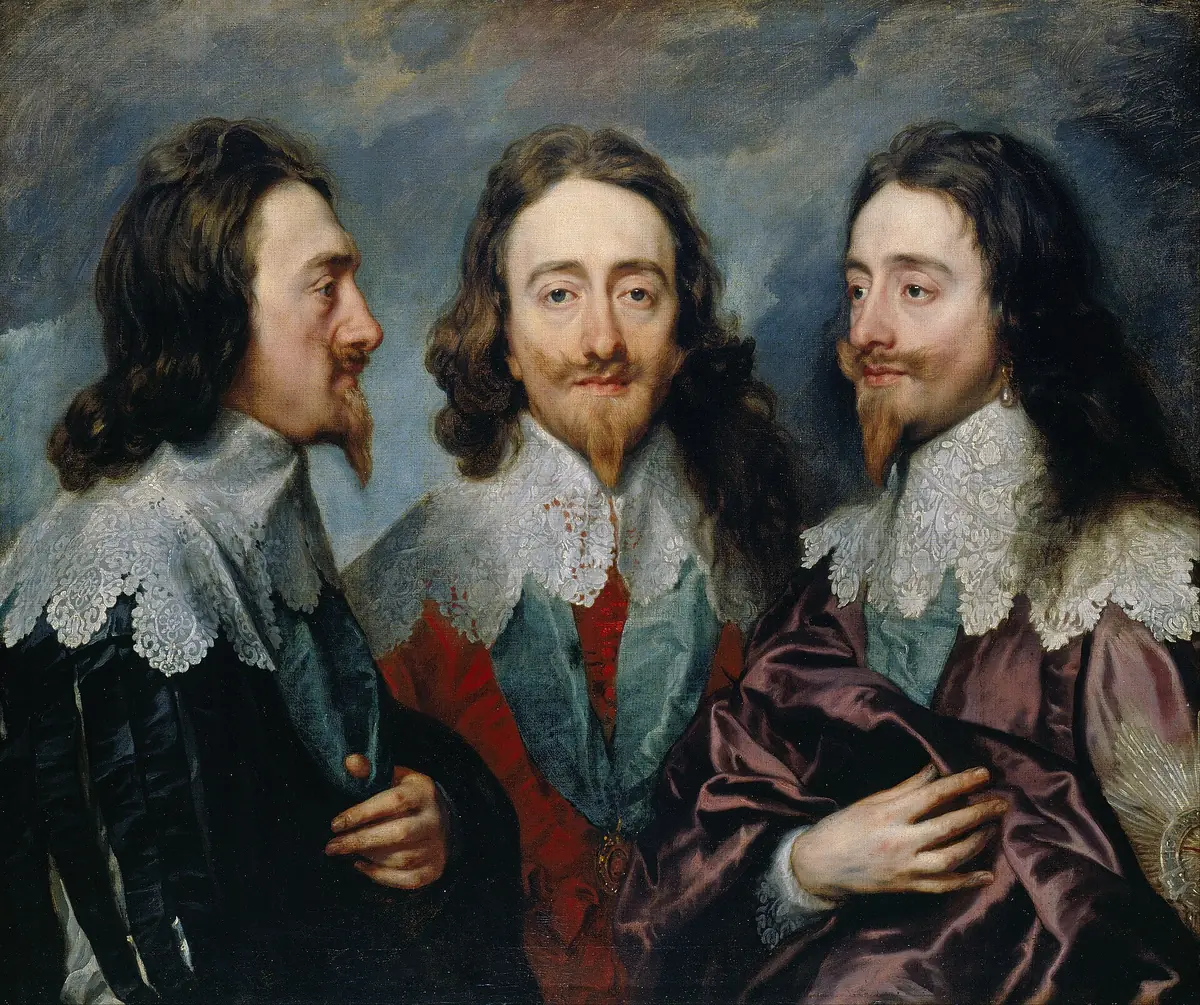
Image: Wikimedia Commons · Public domain (PD-Art) Charles I in Three Positions
Look closely. Three views of one face, painted so that the sculptor Bernini in Rome could carve a marble bust of the king without meeting him. The bust was later destroyed in a fire. Notice that he wears a different coloured suit in each view, and that the lace collar is painted afresh each time.
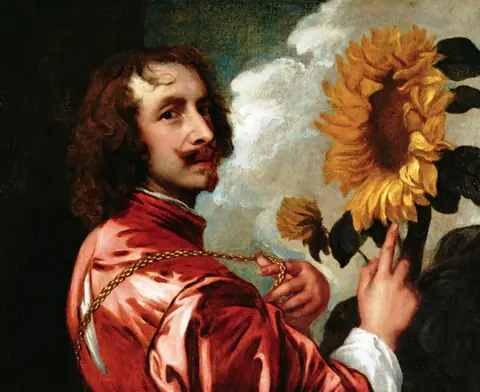
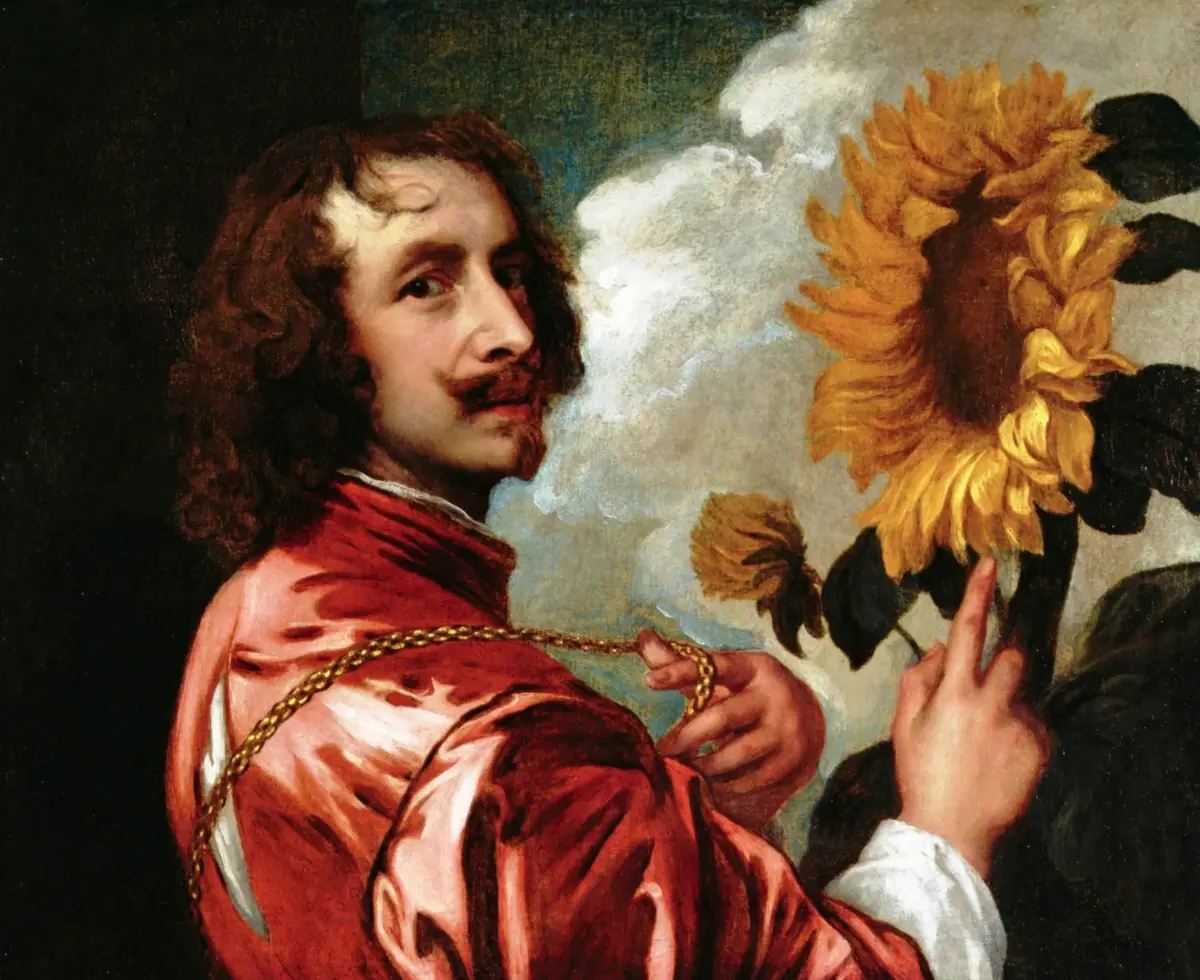
Image: Wikimedia Commons · Public domain (PD-Art) Self-Portrait with a Sunflower
Look closely. Van Dyck points to a sunflower and fingers the gold chain the king gave him. The sunflower, which turns to follow the sun, has been read as a sign of loyalty to the king or of devotion to painting. Ask which reading fits better, and why a painter would want to say either.
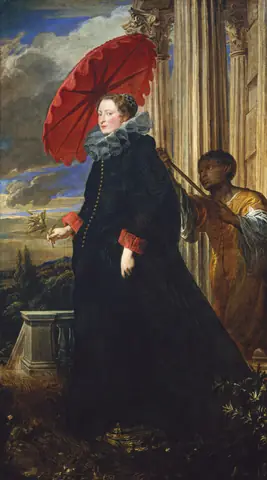
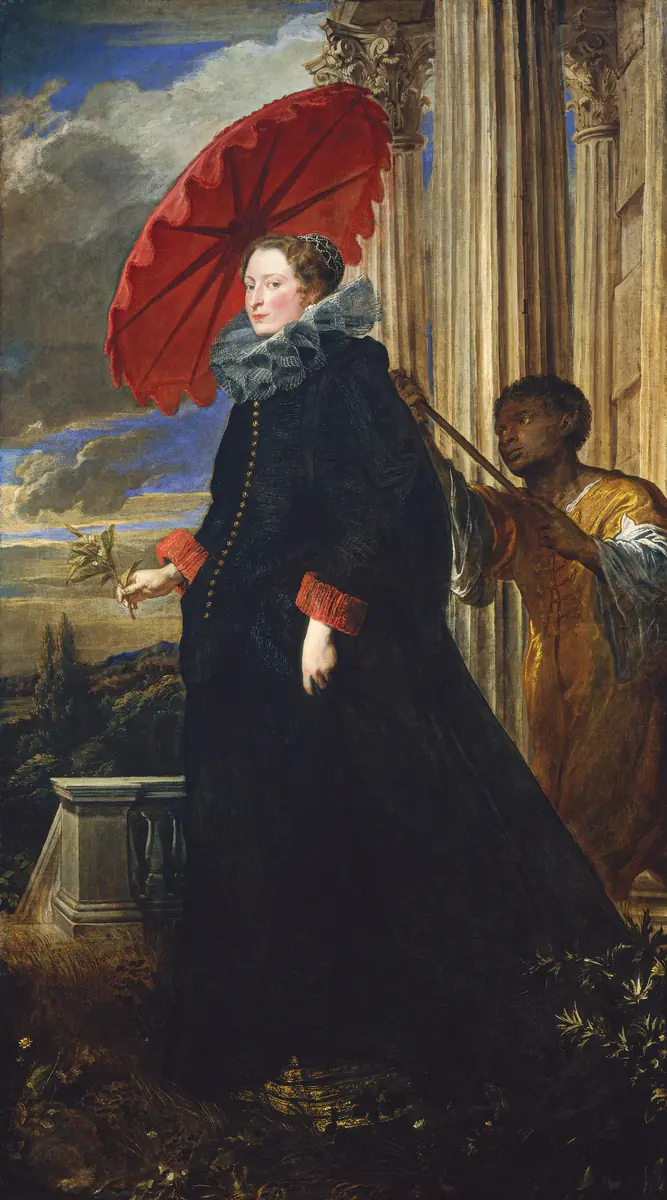
Image: Wikimedia Commons · Public domain (PD-Art) Marchesa Elena Grimaldi Cattaneo
Look closely. A Genoese noblewoman walks on a terrace, very tall in black silk, while a young servant holds a red parasol over her head. The parasol frames her face like a halo. The low viewpoint makes her seem almost to tower over us.
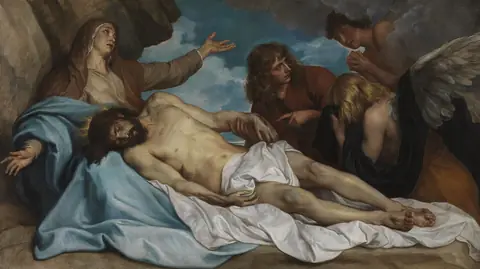
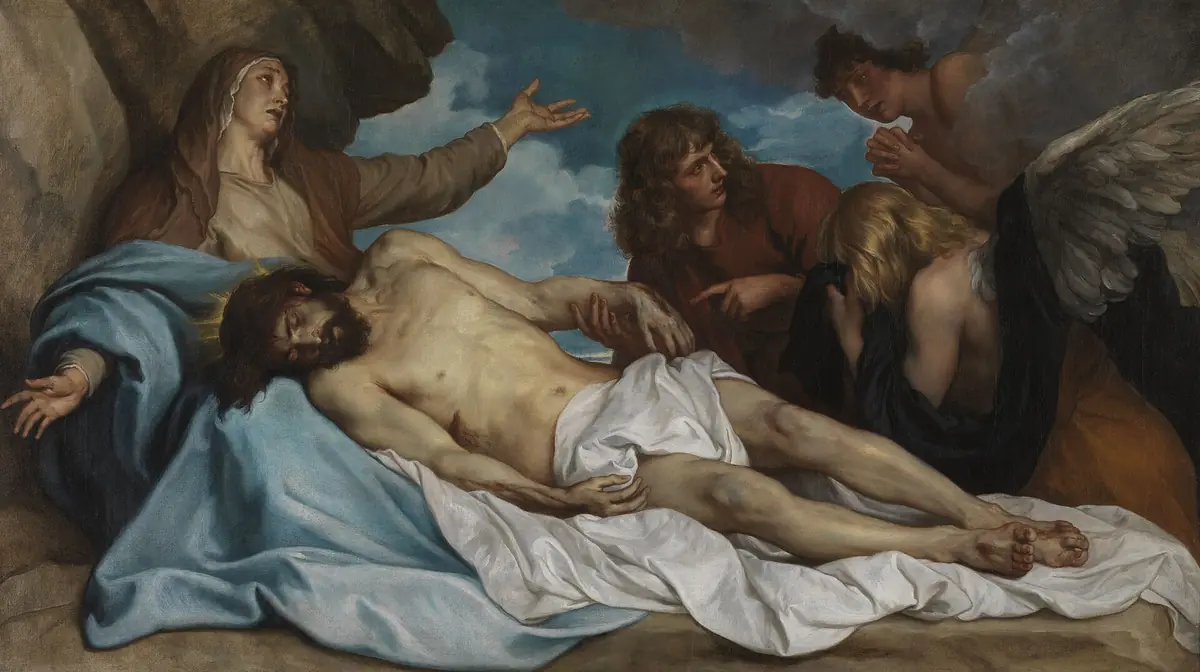
Image: Wikimedia Commons · CC0 (public domain) The Lamentation over the Dead Christ
Look closely. Mary raises her eyes and opens her arms over her son's body. John gently lifts Christ's wounded hand to show it to the weeping angels, one of whom hides his face. Compare it with Giotto's Lamentation, painted three centuries earlier.
In the library: The Bible (KJV) · Jesus Christ · Mary, mother of Jesus · John the Apostle
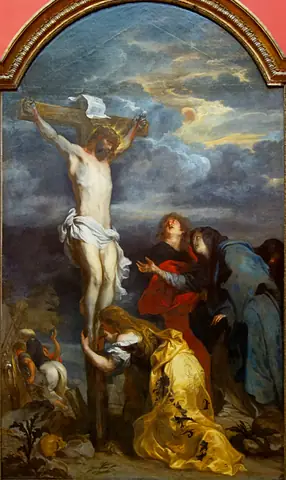
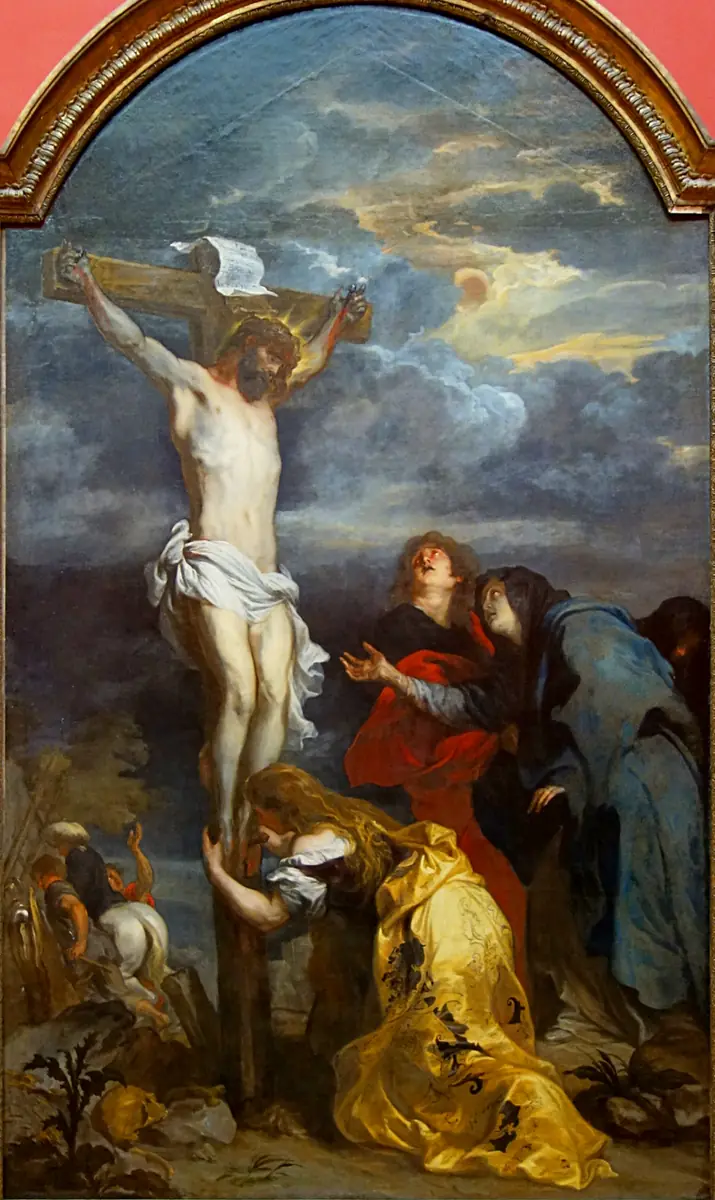
Image: Wikimedia Commons · Public domain (PD-Art) The Crucifixion
Look closely. Painted for a church in Lille. Mary Magdalene, in yellow, clings to the foot of the cross; John in red and Mary in blue stand beside it. Christ lifts his face toward a darkened sky, as the Gospels describe darkness over the land.
In the library: The Bible (KJV) · Jesus Christ · Mary Magdalene · John the Apostle


What to watch for in Anthony van Dyck
Look slowly- Long, elegant hands. Van Dyck gives his sitters slender fingers and relaxed, graceful poses.
- Silk and satin. Watch how a few quick strokes make fabric shine.
- Low viewpoint. He often paints from slightly below, so the sitter seems to look down on us.
- Landscape and sky. Dark trees and stormy skies frame a portrait and set its mood.
- Grief made gentle. In his religious works, sorrow is shown with restraint and tenderness.
Dates and collections follow the holding museums and Wikidata. Images of paintings are photographs of public-domain pictures from Wikimedia Commons or museum open-access releases; photographs of sculpture are used only when the photograph itself is Public domain, CC0, or CC BY with a named credit. Each picture links to its source page with full licence details.