Great Art · Baroque (Spain)
Francisco de Zurbarán
The Spanish painter of monks, of still cloth, and of a lamb or a lemon set down as if it were a prayer.
His life
Francisco de Zurbarán was born in 1598 in Fuente de Cantos, in Extremadura, and made his name in Seville, painting for monasteries and for the devout civic world of Andalusia. He learned to make white habit, dark ground and a few objects carry a whole picture. In the 1630s he was called to the court at Madrid; later, tastes in Seville shifted toward a softer style, and his last years were less secure.
He died in Madrid in 1664. His gift was gravity in ordinary things. A mercedarian habit, a stack of citrus, or a bound lamb can be painted with such stillness that the picture feels like a held breath before God.
Key works
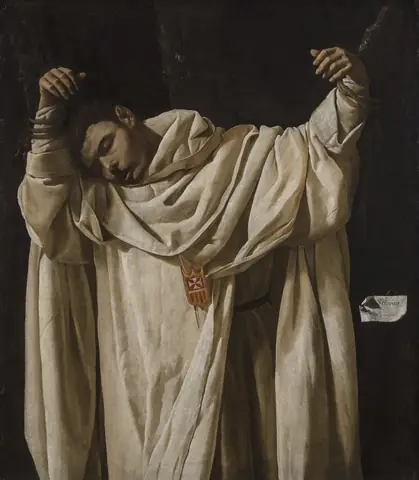
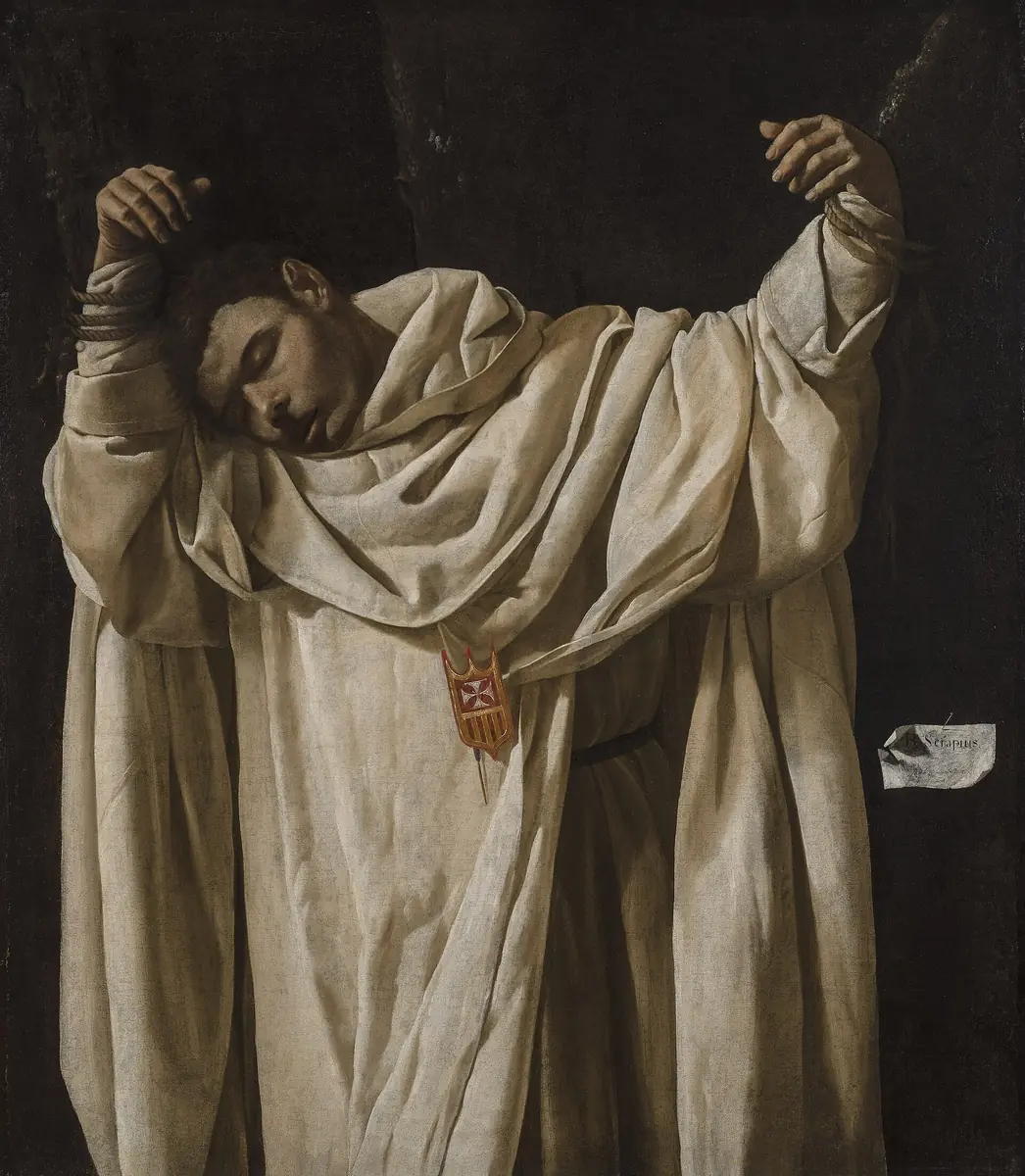
Image: Wikimedia Commons · Public domain (PD-Art) Saint Serapion
Look closely. The Mercedarian martyr hangs by the wrists in a vast white habit, his head fallen to one side, a small coloured shield at his breast and a painted slip of paper with his name at the right. Look at the heavy folds of the cloth, at the quiet face, and at how the picture refuses spectacle: death is shown as a stillness, not as a wound.
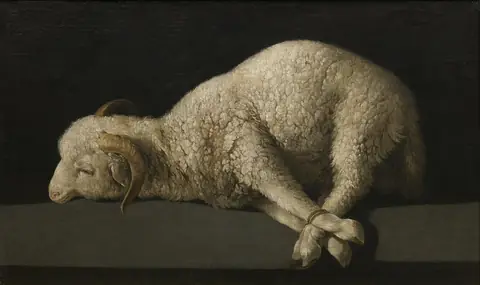
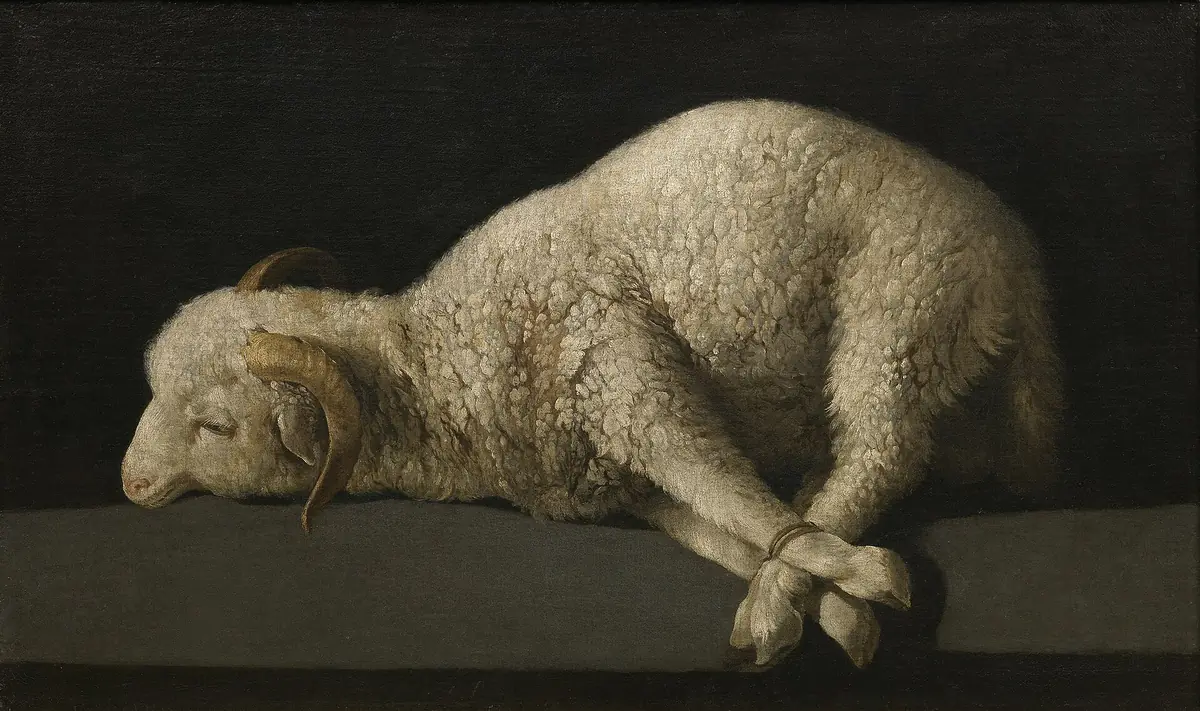
Image: Wikimedia Commons · Public domain (PD-Art) Agnus Dei
Look closely. A bound lamb lies on a grey stone slab, its feet tied, the wool painted almost hair by hair, a dark ground behind. There is no shepherd and no landscape. Look at the light on the ears and the nose, at the rope, and at how a still-life becomes an image of the Lamb of God, silent and ready.
In the library: The Bible (KJV) · Jesus Christ
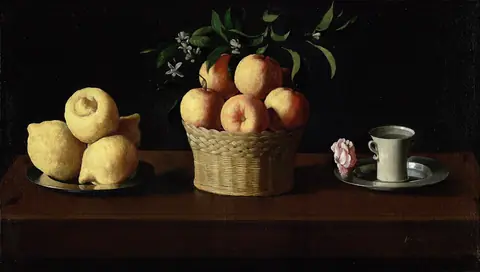
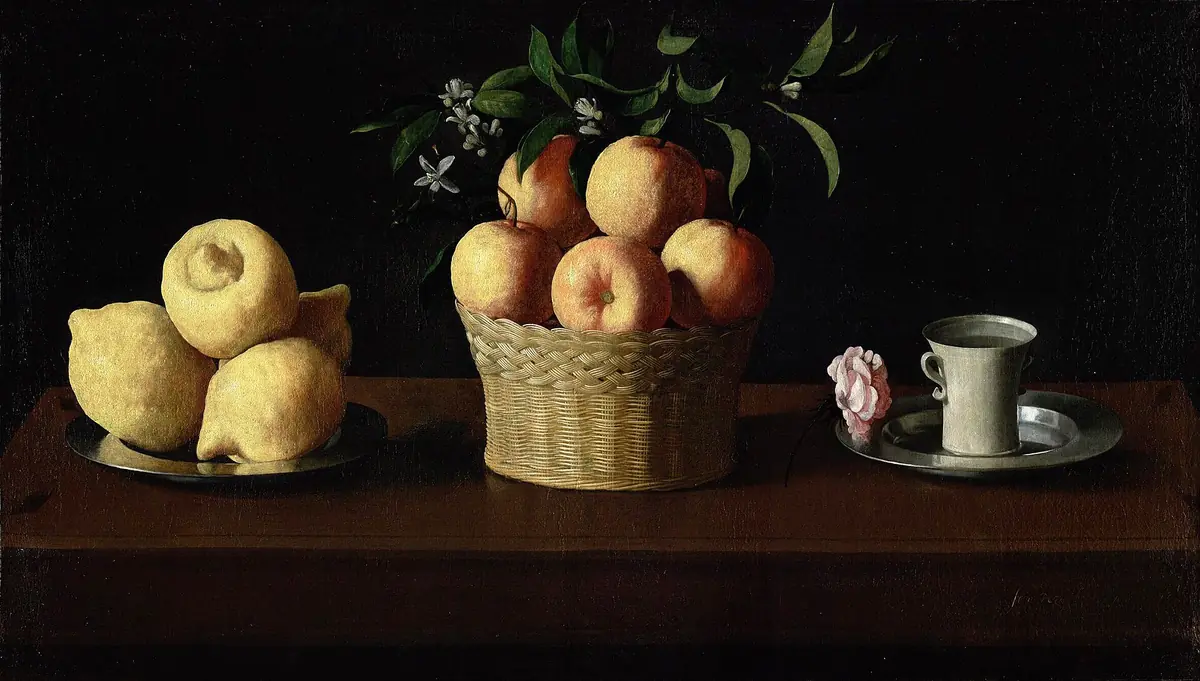
Image: Wikimedia Commons · Public domain (PD-Art) Still Life with Lemons, Oranges and a Rose
Look closely. On a bare table or shelf, a pewter plate of citrons, a basket of oranges with blossom, and a cup of water with a single rose are set in a perfect row against the dark. Look at the different textures — peel, bloom, metal, petal, water — and at the almost liturgical order of three grouped gifts.
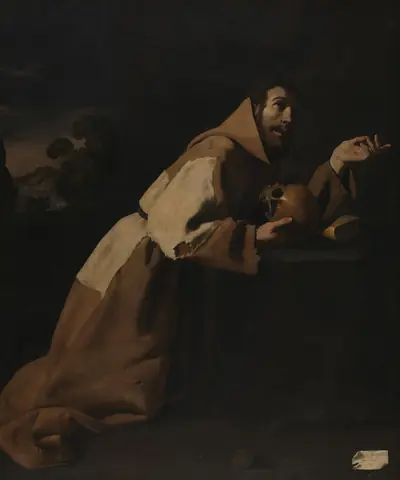
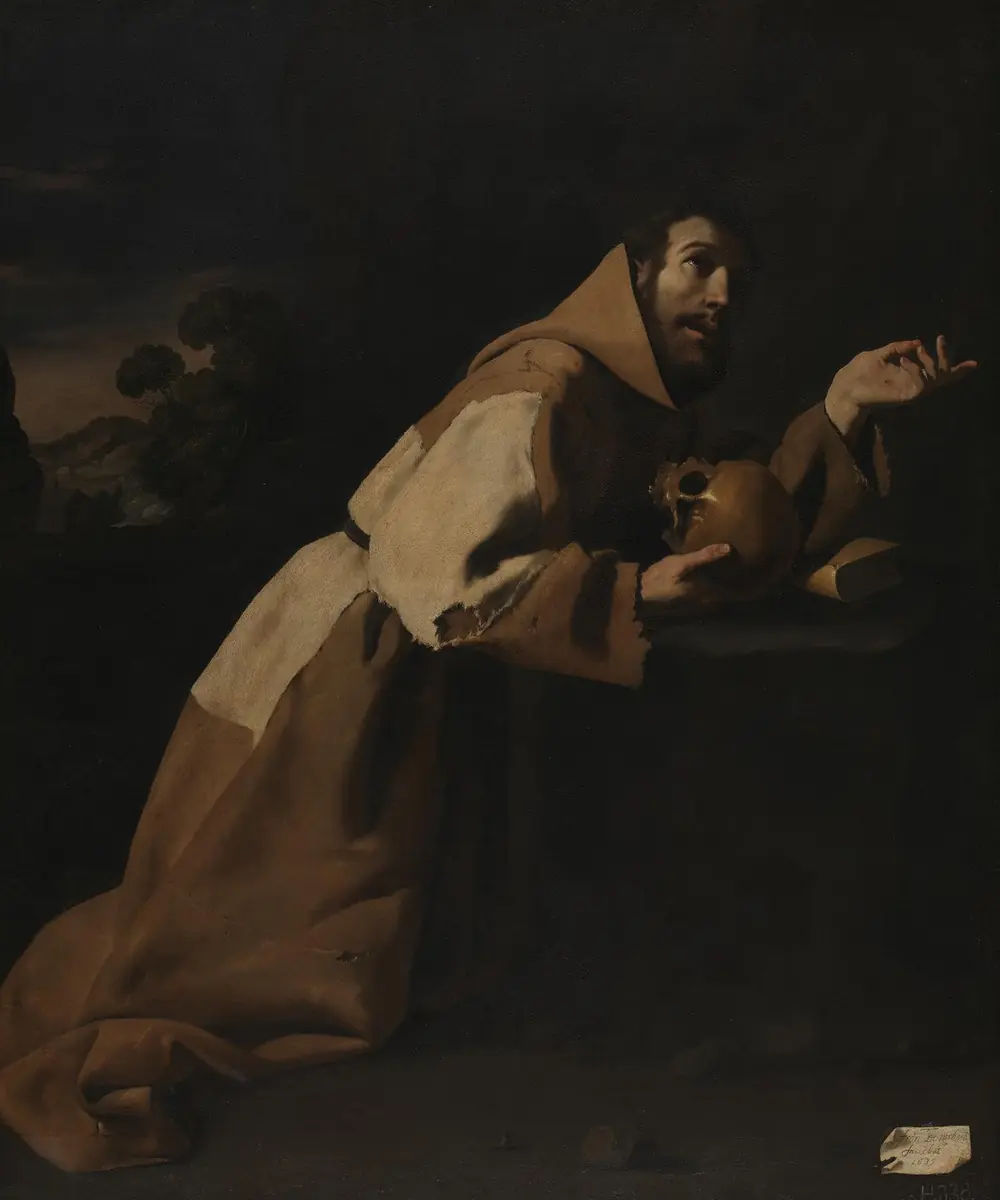
Image: Wikimedia Commons · Public domain (PD-Art) Saint Francis in Meditation
Look closely. Francis kneels in a patched habit, the hood shadowing his face, a skull in his hands, his mouth slightly open as if in prayer or breath. Look at the mended cloth, at the sharp light on the skull, and at the downward, inward turn of a life reduced to poverty and attention.
In the library: Francis of Assisi
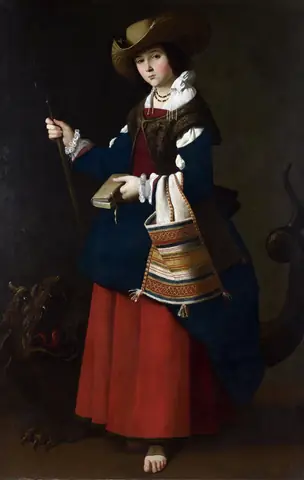
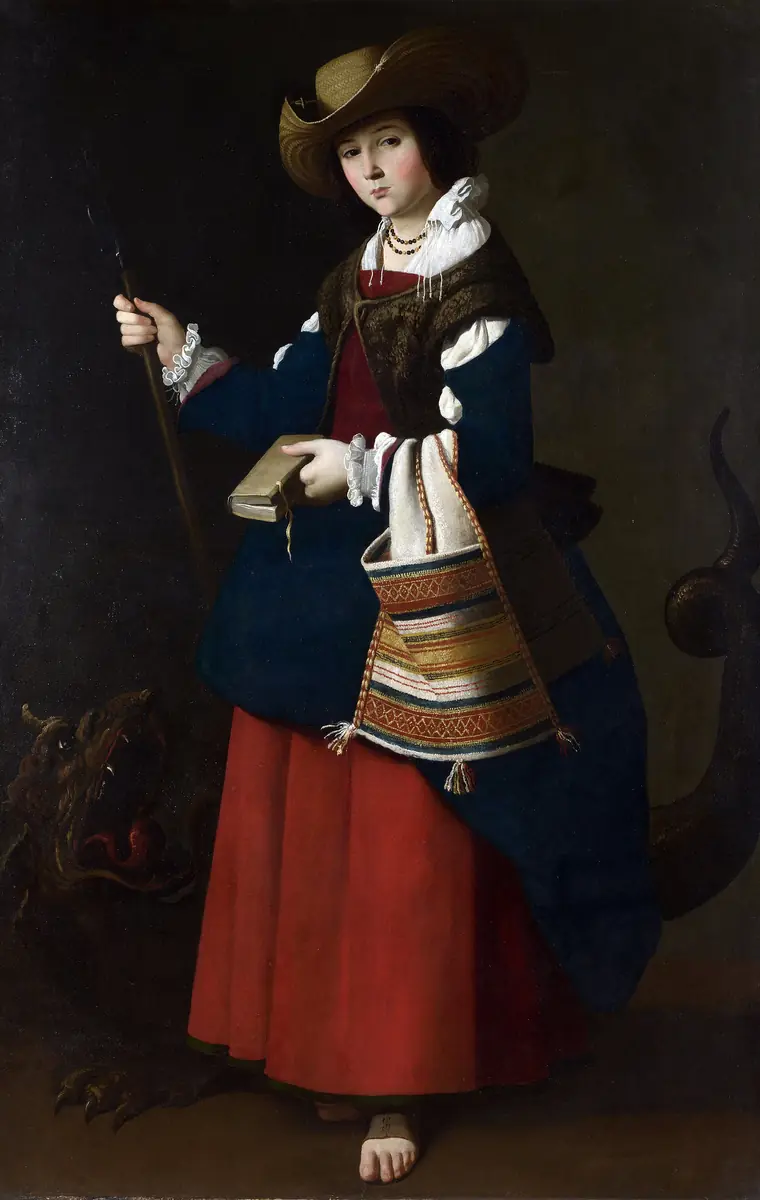
Image: Wikimedia Commons · Public domain (PD-Art) Saint Margaret of Antioch
Look closely. Margaret stands as a shepherdess in a wide-brimmed hat and a richly embroidered jacket, a staff in her hand, the dragon of her legend reduced to a small, almost domestic presence at her feet. Look at the grave, ordinary face, at the careful still-life of her costume, and at how a legendary martyr is made to look like a girl you might meet on a road.
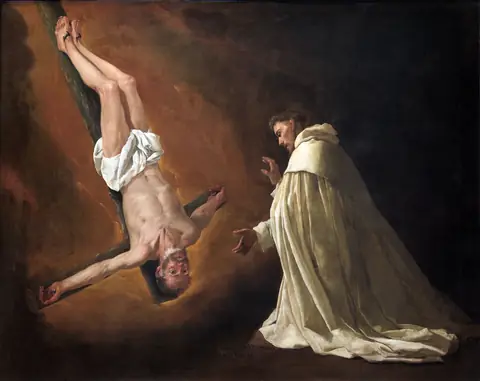
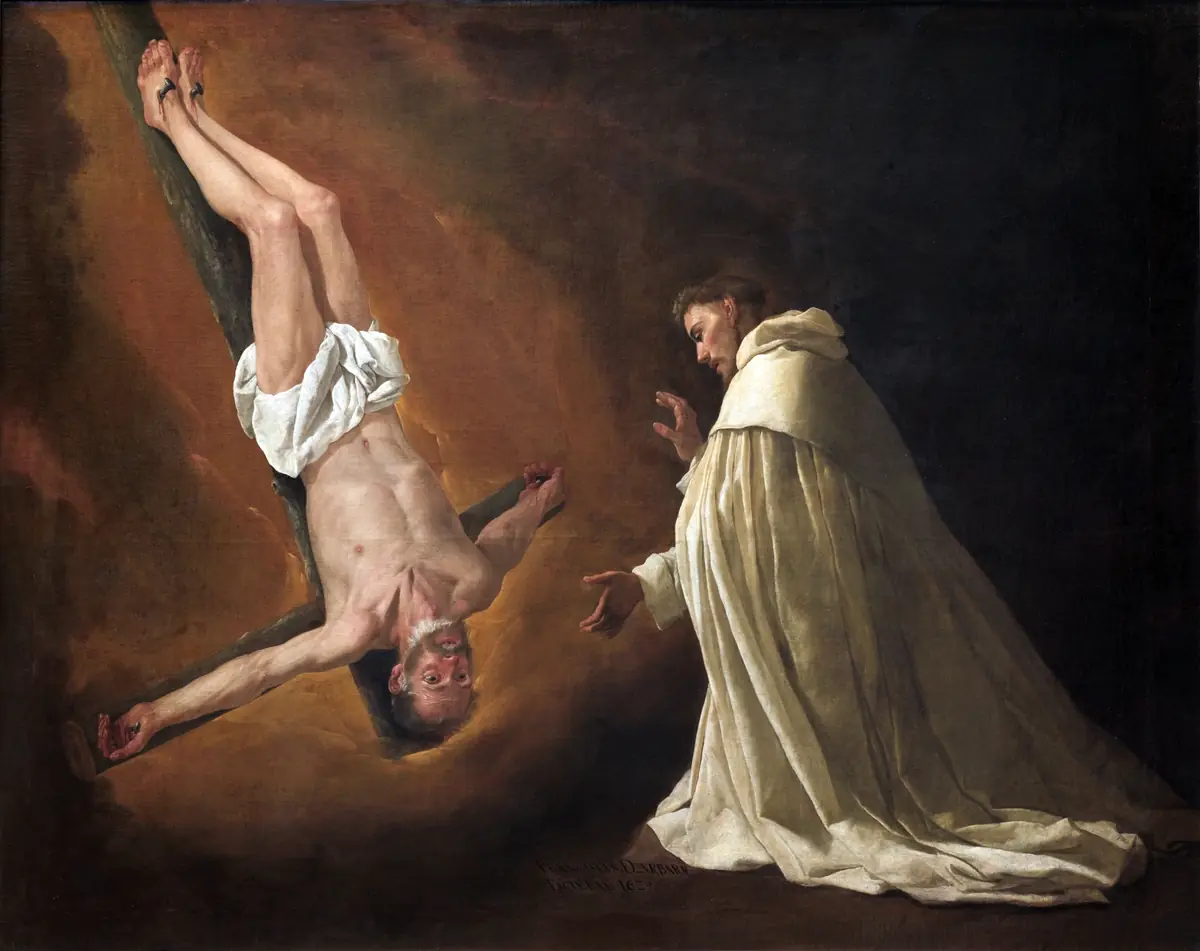
Image: Wikimedia Commons · Public domain (PD-Art) The Apparition of the Apostle Peter to Saint Peter Nolasco
Look closely. The founder of the Mercedarians kneels in a white habit as Saint Peter, an older apostle with keys, appears to him in a matching white, the two figures meeting in a dark, bare room. Look at the doubled white cloth, at the keys, and at the quiet, almost conversational gravity of a vision that needs no swirling sky.
In the library: The Bible (KJV) · Peter
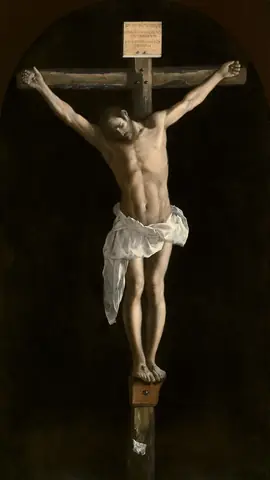
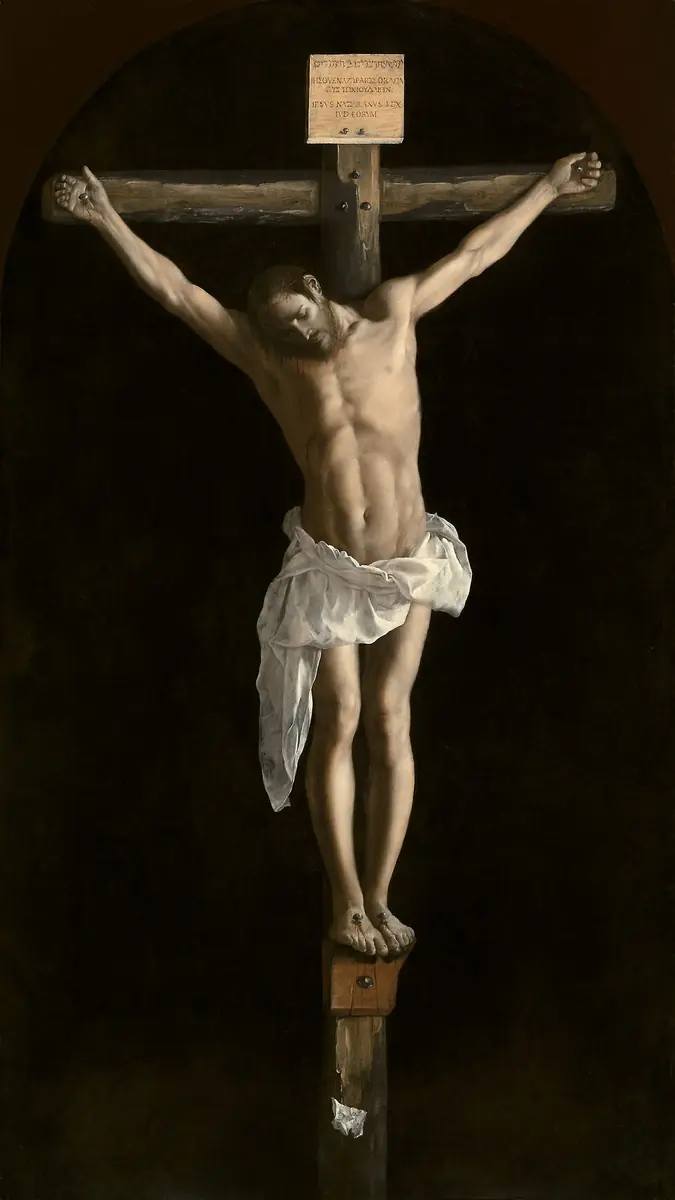
Image: Wikimedia Commons · Public domain (PD-Art) The Crucifixion
Look closely. Christ hangs on a plain cross against a black ground, the body strongly lit, the inscription above, with almost no landscape and no crowd. Look at the pale cloth, at the downward head, and at the isolation: the picture is a single figure in the dark, made for a chapel rather than for a busy narrative wall.
In the library: The Bible (KJV) · Jesus Christ


What to watch for in Francisco de Zurbarán
Look slowly- White cloth in the dark. A habit or a tablecloth often holds the light, with almost no furniture around it.
- Still-life as devotion. Fruit, a rose, a cup, or a lamb can be as serious as a saint.
- A quiet, frontal saint. Figures often stand or hang close to the picture plane, with little depth to hide in.
- The label or the scrap of paper. A painted note or a shield can name the sitter or the subject.
- Hands and wrists. In the martyrs, look at how little violence is shown, and how much is told by a bound hand or a bent head.
Dates and collections follow the holding museums and Wikidata. Images of paintings are photographs of public-domain pictures from Wikimedia Commons or museum open-access releases; photographs of sculpture are used only when the photograph itself is Public domain, CC0, or CC BY with a named credit. Each picture links to its source page with full licence details.