Great Art · Baroque (Spanish Golden Age)
Diego Velázquez
Court painter to Philip IV of Spain, who painted kings, servants and Christ with the same honest eye.
His life
Velázquez trained in Seville, where his early paintings of kitchens, water-sellers and old women cooking showed ordinary things with startling truth. At twenty-four he was called to Madrid and became painter to King Philip IV, whom he served for the rest of his life. He painted the king, the royal children, court jesters and dwarfs with the same seriousness, and he travelled twice to Italy to study and to buy art for the royal collection.
He also carried heavy court duties, rising to marshal of the palace, which took time from his painting. Late in life the king made him a knight of the Order of Santiago, an honour he had long sought. Velázquez's gift was for truth: he painted what he saw without flattery, with loose strokes that come together only when you step back. Later painters from Goya to Manet called him the painter's painter.
Key works
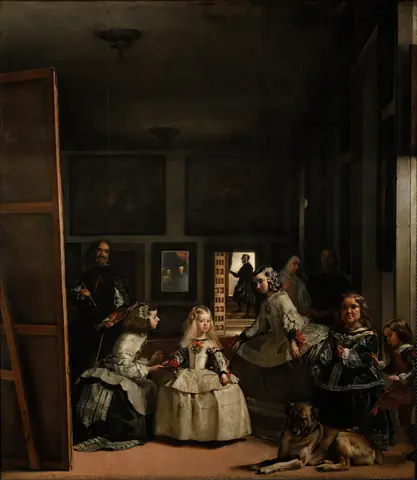
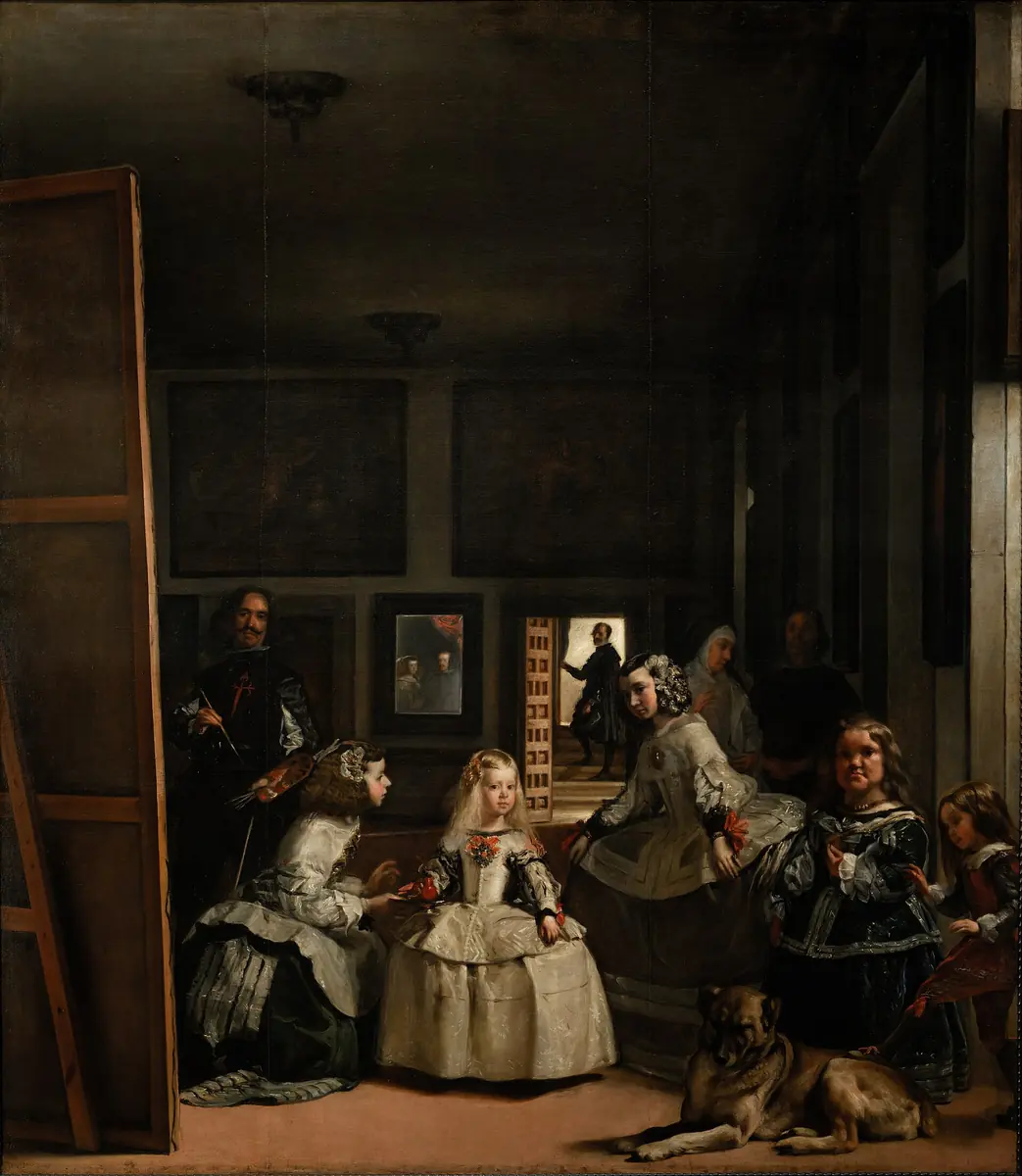
Image: Wikimedia Commons · Public domain (PD-Art) Las Meninas (The Ladies-in-Waiting)
Look closely. The little princess Margaret Theresa stands with her maids, a dwarf and a dog. At the left, Velázquez himself pauses at a huge canvas. In the mirror on the back wall are the king and queen, standing where we stand. Who is looking at whom? On his chest is the red cross of Santiago, added after he was knighted in 1659.
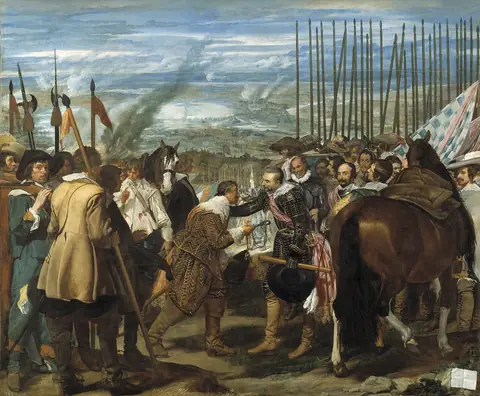
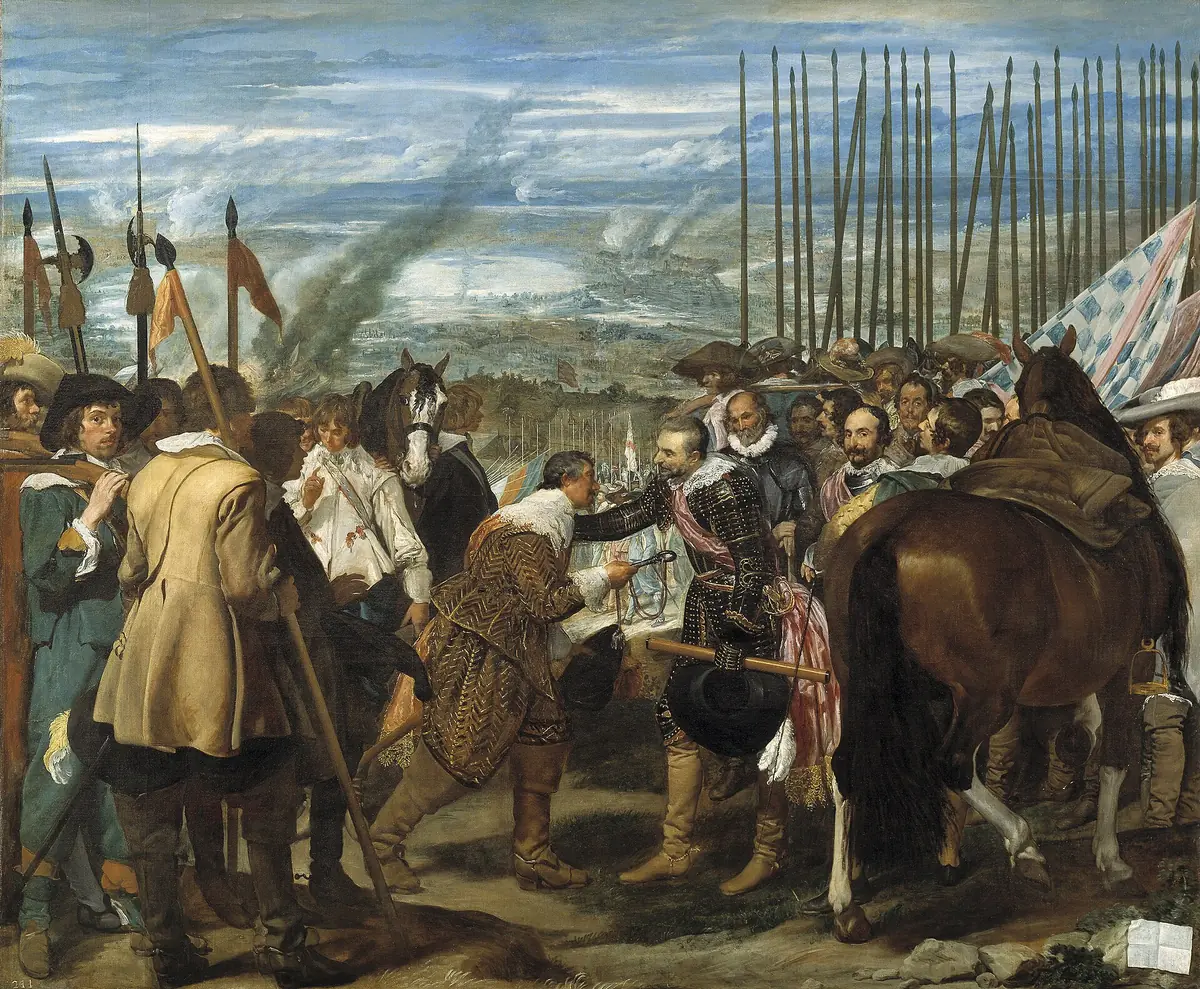
Image: Wikimedia Commons · Public domain (PD-Art) The Surrender of Breda
Look closely. In 1625 the Dutch commander Justin of Nassau hands the keys of Breda to the Spanish general Ambrogio Spinola. Instead of humiliating him, Spinola puts a hand on his shoulder to stop him from kneeling. The upright Spanish lances on the right gave the painting its Spanish nickname, Las Lanzas. A picture of magnanimity in victory.
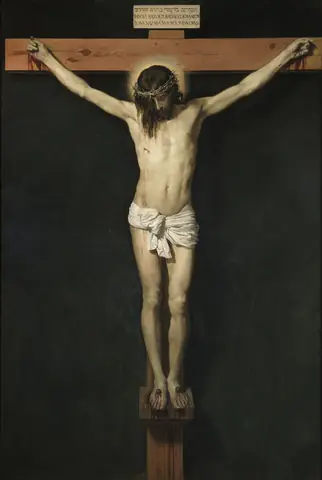
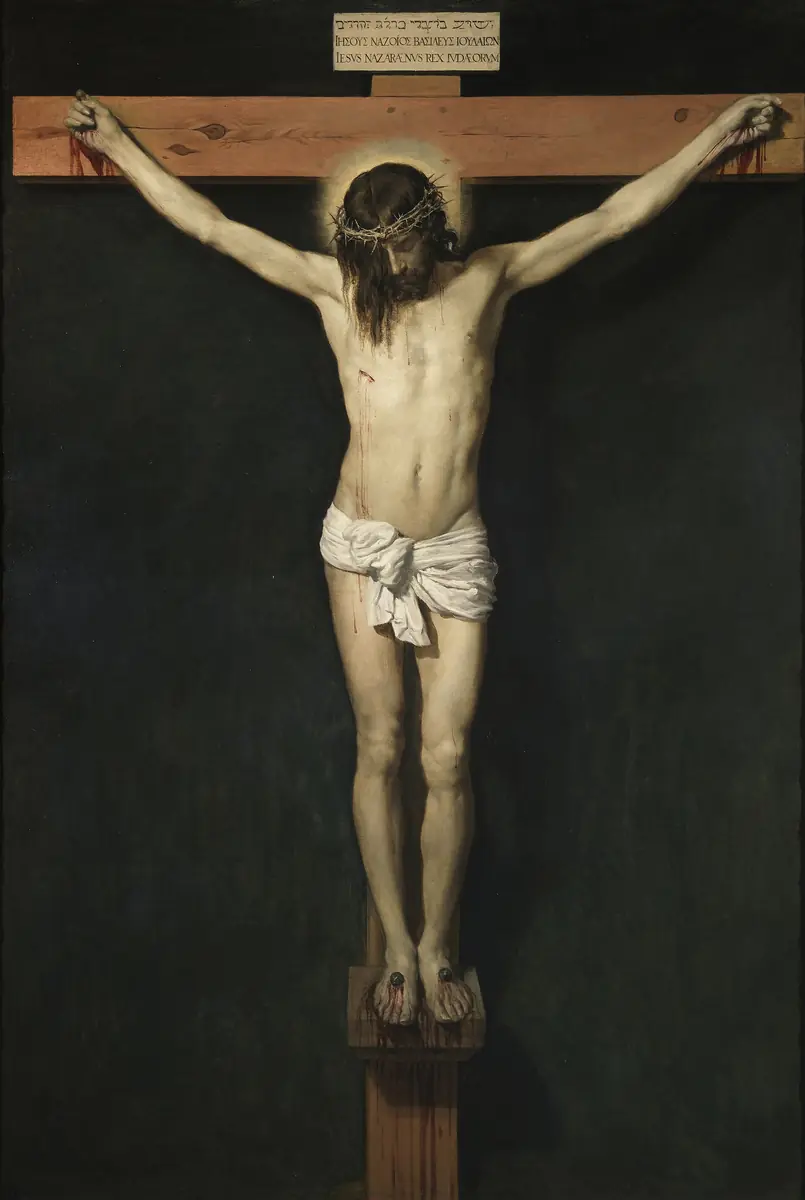
Image: Wikimedia Commons · Public domain (PD-Art) Christ Crucified
Look closely. Christ hangs alone against a dark background, with four nails and his feet resting on a small support. His head has fallen, and his hair half covers his face. Above is Pilate's sign in Hebrew, Greek and Latin. Nothing distracts from the quiet of the death.
In the library: The Bible (KJV) · Jesus Christ
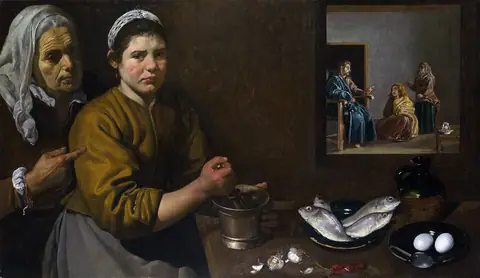
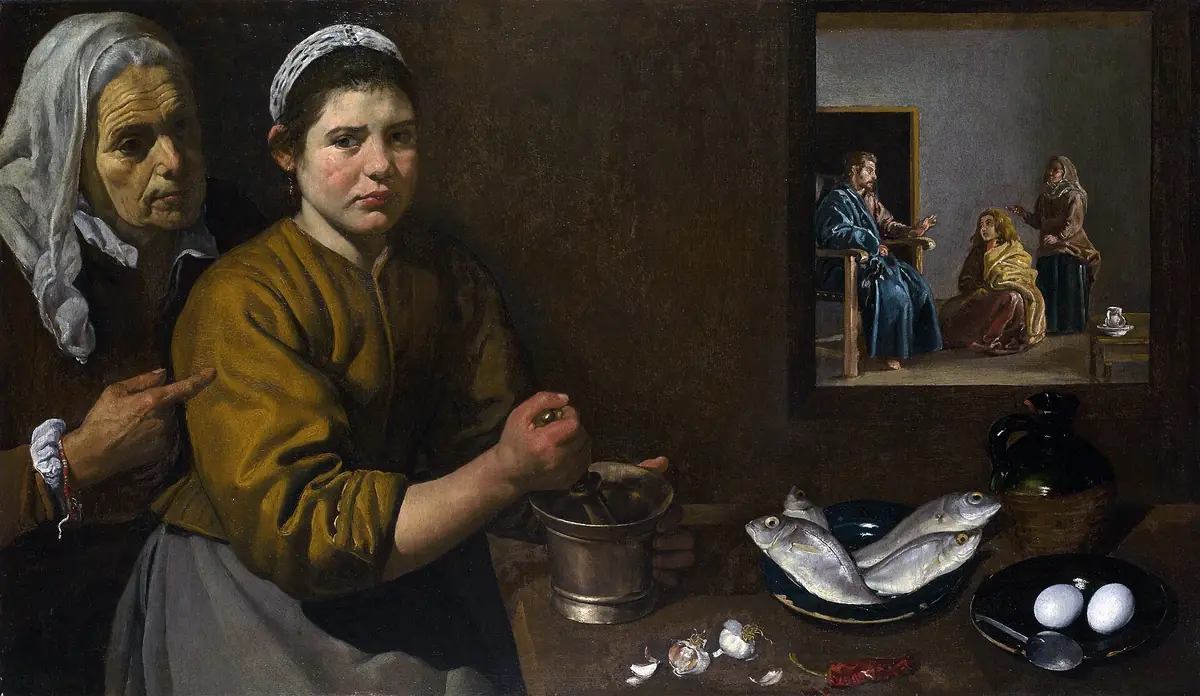
Image: Wikimedia Commons · Public domain (PD-Art) Kitchen Scene with Christ in the House of Martha and Mary
Look closely. In front, a young cook pounds garlic with a sulky face while an old woman points to the scene behind her: Christ in conversation with Mary, who sits at his feet, and Martha. Scholars debate whether that scene is a window, a mirror or a painting on the wall. The Gospel story is about busy work and quiet listening.
In the library: The Bible (KJV) · Martha of Bethany · Mary of Bethany · Vermeer's Martha and Mary (Great Art)
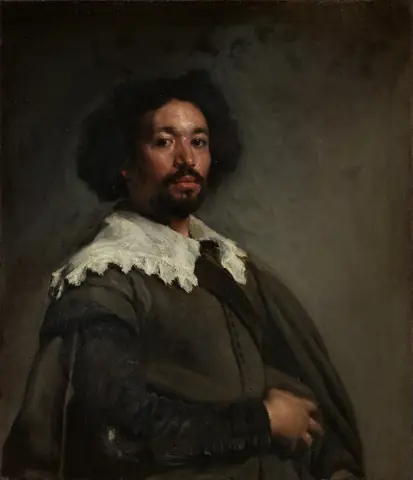
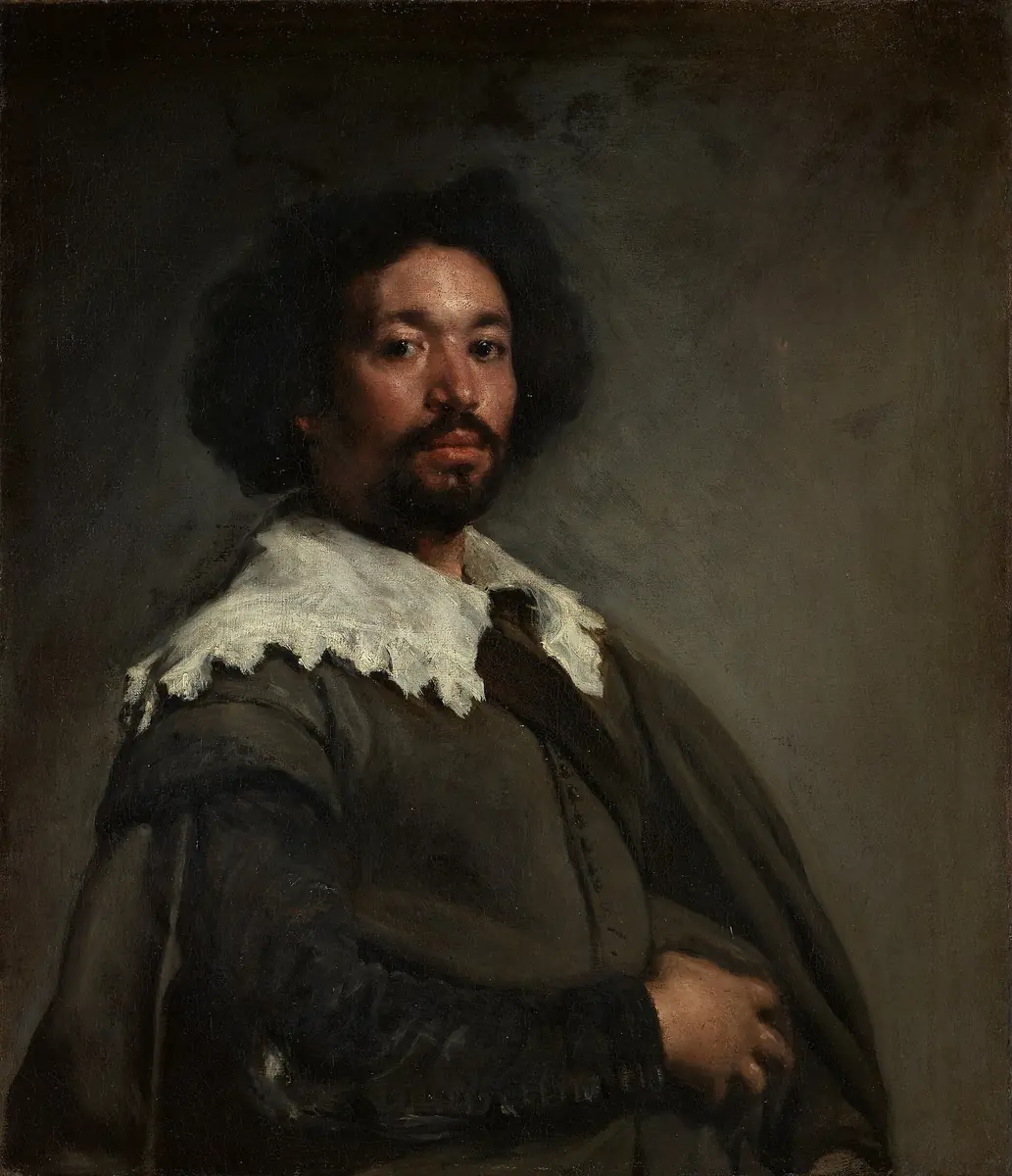
Image: Wikimedia Commons · Public domain (PD-Art) Juan de Pareja
Look closely. Juan de Pareja was enslaved in Velázquez's household and worked as his assistant. Velázquez painted this portrait in Rome, where it was greatly admired, and that same year signed the papers freeing him, to take effect four years later. Pareja became a painter in his own right. Look at the steady, proud gaze Velázquez gives him.
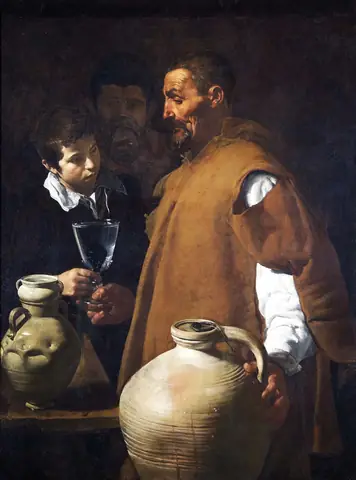
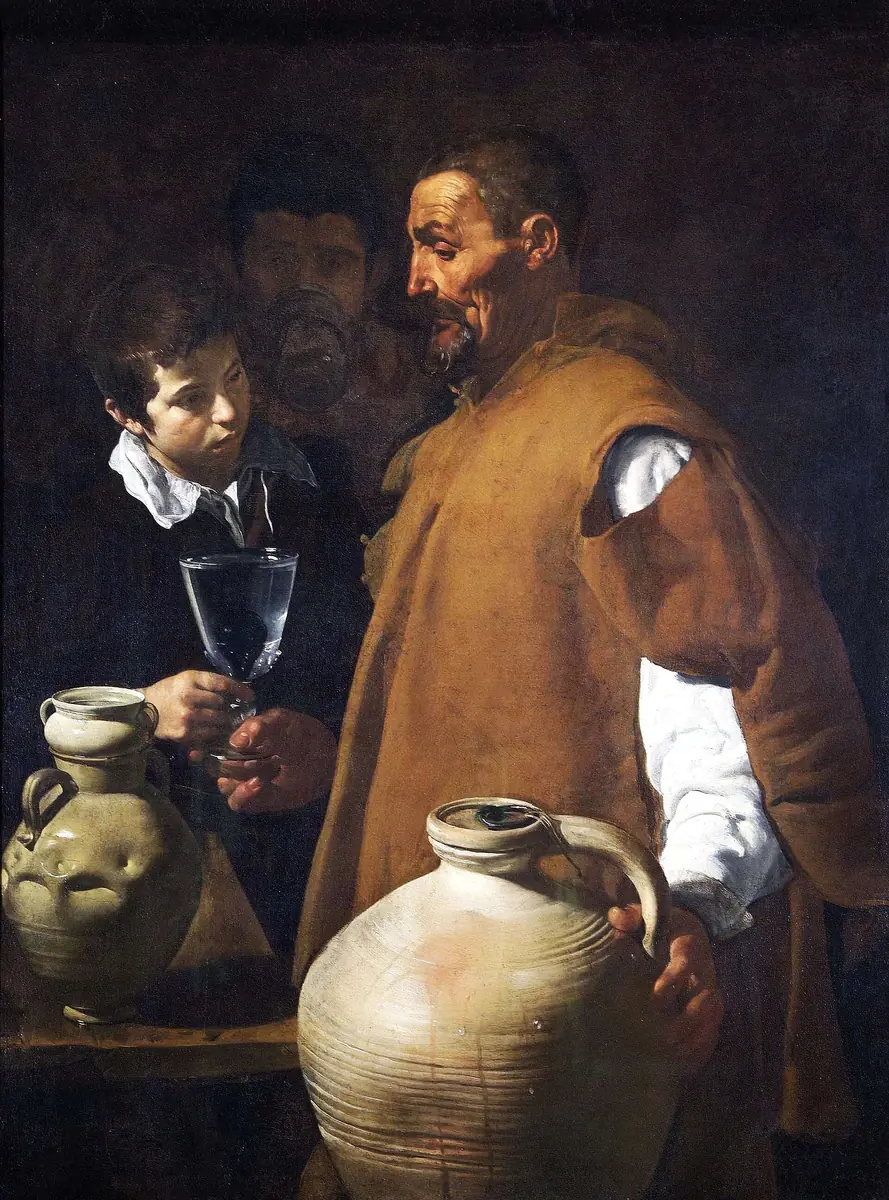
Image: Wikimedia Commons · Public domain (PD-Art) The Waterseller of Seville
Look closely. An old water-seller hands a glass of water to a boy; a fig floats in it to freshen the taste. Look at the drops of water on the great clay jug. The faces, old and young, may suggest the ages of life. The Duke of Wellington captured the painting with the French baggage after the Battle of Vitoria in 1813.
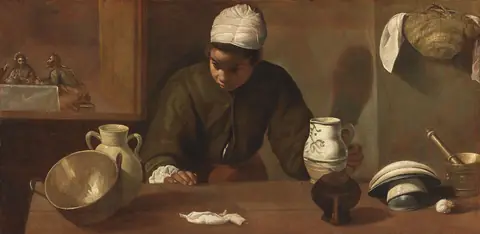
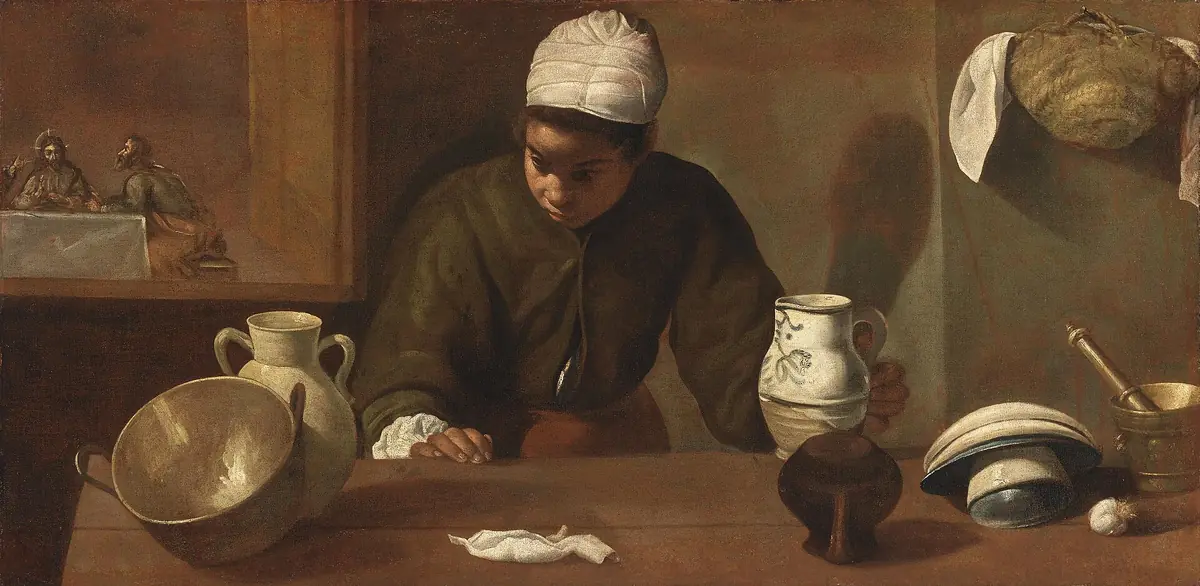
Image: Wikimedia Commons · Public domain (PD-Art) Kitchen Maid with the Supper at Emmaus
Look closely. A young servant leans on a kitchen table among jugs and pots. Through a hatch at the upper left, Christ is breaking bread at Emmaus. That small scene was hidden under overpaint and only revealed by cleaning in the twentieth century. She is listening; compare the larger Emmaus pictures by Veronese and Caravaggio.
In the library: The Bible (KJV) · Jesus Christ


What to watch for in Diego Velázquez
Look slowly- Step back. Up close his brushwork is loose and rough; from a distance it becomes lace, metal or skin.
- Dignity for everyone. Kings, servants and court dwarfs are painted with the same respect.
- Still things. Jugs, eggs, glass and garlic are painted as carefully as faces.
- Pictures within pictures. Mirrors, doorways and hatches open a second scene behind the first.
- Grey-brown air. His backgrounds are made of soft, silvery air rather than detail.
For older students
These famous works include nudity, so they are named here but not shown. Teachers and parents can decide when to look at them together.
- The Rokeby Venus, c. 1647–1651, National Gallery, London. A mythological subject showing an unclothed figure.
- Apollo in the Forge of Vulcan, 1630, Museo del Prado, Madrid. The story from Ovid, Metamorphoses Book IV; the smiths are partly unclothed.
Dates and collections follow the holding museums and Wikidata. Images of paintings are photographs of public-domain pictures from Wikimedia Commons or museum open-access releases; photographs of sculpture are used only when the photograph itself is Public domain, CC0, or CC BY with a named credit. Each picture links to its source page with full licence details.