Ada Lovelace
1815–1852 · English mathematician who wrote what is often called the first computer program.
Augusta Ada Byron was the only legitimate child of the poet Lord Byron and Annabella Milbanke. Her parents separated weeks after her birth, and she never knew her father, who died when she was eight. Her mother, who had studied mathematics, had her taught science and mathematics, partly hoping to steer her away from her father's moody, poetic temperament. As a girl Ada designed a flying machine. At seventeen she met Charles Babbage and saw a working part of his Difference Engine, and they became friends. In 1835 she married William King, later Earl of Lovelace. In 1843 she translated an article by the Italian engineer Luigi Menabrea about Babbage's planned Analytical Engine, and added notes three times longer than the article. The notes included a detailed method for the engine to calculate a series of numbers called Bernoulli numbers, often described as the first computer program, and suggested that such a machine might one day work with symbols and even music, not just numbers. She died of cancer in 1852, at thirty-six. A programming language, Ada, was named after her.
Ada Lovelace is also an author in the library: author page and works.
Faith: Under her mother's influence she had a religious change of heart near the end of her life; her beliefs are otherwise not well documented. Source: Wikipedia
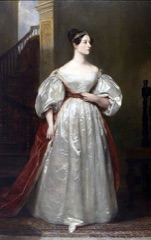
Key dates
- 1815 Born in London
- 1833 Meets Charles Babbage
- 1835 Marries William King
- 1843 Publishes her notes on the Analytical Engine
- 1852 Dies in London
Record-breaker
Firsts and records, worded as the sources give them ("first known", "at the time").
- She was the first to point out that a computing machine could work with things besides numbers, such as music. (Source: Ada Lovelace (Wikipedia))
Watch


Videos load from YouTube in privacy-enhanced mode only when you press play.
Read about them
Grades 9–12
- Notes on Menabrea's Sketch of the Analytical Engine · In the library
More lives
Edwin A. Abbott · Charles Babbage · Claude Bernard · George Boole · Josef Breuer · Lewis Carroll