Avicenna (Ibn Sina)
c. 980–1037 · Persian physician and philosopher, author of the Canon of Medicine.
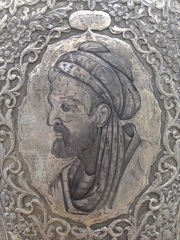
Abu Ali al-Husayn ibn Sina, known in Europe as Avicenna, was born near Bukhara, in present-day Uzbekistan. By his own account he had memorized the Quran by ten, mastered logic and mathematics as a teenager, and was practicing medicine at sixteen. He said he read Aristotle's Metaphysics forty times without understanding it until a commentary by al-Farabi made it clear. After curing the ruler of Bukhara, he was given access to the royal library. Political upheavals forced him to move from court to court across Persia, serving as physician and sometimes as minister, and he was once imprisoned. He wrote some 450 works. His Canon of Medicine, a vast encyclopedia, organized the medicine of Galen and Hippocrates with his own observations, describing contagious diseases, testing of drugs, and the use of quarantine. Translated into Latin in the twelfth century, it was a standard medical textbook in European universities for about six hundred years. His Book of Healing covered philosophy and science, and he argued for the existence of God as the necessary being. He died at Hamadan in 1037.
Avicenna (Ibn Sina) is also an author in the library: author page and works.
Faith: The preeminent philosopher and physician of the Islamic world. Source: Stanford Encyclopedia of Philosophy
Further reading
- Ibn Sīnā (Avicenna): A Very Short Introduction by Peter Adamson (Oxford University Press, 2023)

Key dates
- c. 980 Born near Bukhara
- c. 997 Cures the ruler of Bukhara
- c. 1025 Completes the Canon of Medicine
- 1037 Dies at Hamadan
- 12th century Canon translated into Latin
Fun facts
- A crater on the Moon is named Avicenna. (Source: Avicenna (Wikipedia))
Record-breaker
Firsts and records, worded as the sources give them ("first known", "at the time").
- He was the first known to make perfumed oils from flowers by steam distillation, producing essences such as rose oil. (Source: Avicenna (Wikipedia))
In their words
“Therefore in safeguarding the emotions the health of the mind and body are at the same time maintained.”
Read about them
Grades 9–12
- The Canon of Medicine, Book I · In the library
More lives
Anselm of Canterbury · Thomas Aquinas · Boethius · Dante Alighieri · Abu Hamid al-Ghazali · Ibn al-Nafis