Boethius
c. 477–524 · Roman statesman who wrote The Consolation of Philosophy while awaiting execution.
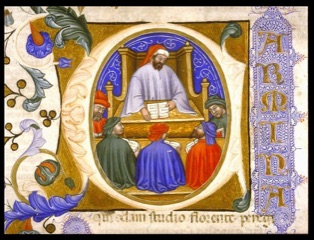
Anicius Manlius Severinus Boethius was born into a noble Roman family a year or so after the last western Roman emperor was deposed. Orphaned young, he was raised by the senator Symmachus, whose daughter he married. Italy was then ruled by Theodoric, king of the Ostrogoths, and Boethius served him as consul in 510 and later as master of offices, one of the highest posts in the government. A brilliant scholar, he planned to translate all of Plato and Aristotle into Latin; he completed Aristotle's works on logic, and wrote textbooks on arithmetic and music used in schools for centuries, as well as short works of Christian theology. Around 523 he defended a fellow senator accused of plotting with the emperor in Constantinople, and was himself accused of treason. He was imprisoned at Pavia and executed in about 524. In prison he wrote The Consolation of Philosophy, in which Lady Philosophy visits him and teaches him that true happiness cannot be taken away by fortune. It became one of the most widely read books of the Middle Ages.
Boethius is also an author in the library: author page and works.
Faith: A Christian Roman aristocrat involved in the church disputes of his time. Source: Stanford Encyclopedia of Philosophy

Key dates
- 510 Consul of Rome
- 522 Becomes master of offices
- c. 523 Arrested for treason
- c. 524 Writes the Consolation; executed at Pavia
Fun facts
- A crater on the Moon was named after him in 1976. (Source: Boethius (Wikipedia))
Read about them
Grades 9–12
- The Consolation of Philosophy · In the library
More lives
Anselm of Canterbury · Thomas Aquinas · Avicenna (Ibn Sina) · Dante Alighieri · Abu Hamid al-Ghazali · Ibn Khaldun