John Dewey
1859–1952 · American philosopher, psychologist and educational reformer, a leading figure of pragmatism.
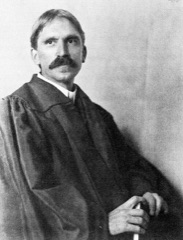
John Dewey was born in 1859 in Burlington, Vermont, and studied at the University of Vermont and then at Johns Hopkins University, where he earned a doctorate in philosophy. He taught at the University of Michigan and in 1894 moved to the University of Chicago, where he founded a Laboratory School to test his ideas about teaching. He believed that children learn best through activity and experience, and that schools should prepare citizens for life in a democracy. In 1904 he moved to Columbia University in New York, where he taught for the rest of his career. With Charles Sanders Peirce and William James, he is regarded as one of the founders of pragmatism, the view that ideas should be judged by their practical consequences. His books include Democracy and Education (1916), Experience and Nature (1925) and Experience and Education (1938), a short reply to critics of progressive education. He lectured in Japan and China and was active in many public causes. He died in New York City in 1952.
John Dewey is also an author in the library: author page and works.
Faith: Raised in the Congregationalist Church. Source: Stanford Encyclopedia of Philosophy

Key dates
- 1859 Born in Burlington, Vermont
- 1894 Moves to the University of Chicago
- 1904 Joins Columbia University
- 1916 Democracy and Education published
- 1938 Experience and Education published
- 1952 Dies in New York City
Read about them
Grades 9–12
- Experience and Education · In the library
More lives
Frédéric Bastiat · Eugen von Böhm-Bawerk · Thomas Carlyle · Carl von Clausewitz · Samuel Taylor Coleridge · Pierre Duhem