Mary Wollstonecraft
1759–1797 · English writer and philosopher, author of A Vindication of the Rights of Woman.
Mary Wollstonecraft was born in London in 1759. Her father wasted the family's money and was often violent, and she tried to protect her mother and sisters. With little formal education, she worked as a lady's companion and then, with her sisters and her friend Fanny Blood, opened a school at Newington Green, near London. Her first book, Thoughts on the Education of Daughters (1787), drew on that experience. After a year as a governess in Ireland, she settled in London as a writer and translator for the publisher Joseph Johnson. She replied to Edmund Burke's criticism of the French Revolution in A Vindication of the Rights of Men (1790), and in A Vindication of the Rights of Woman (1792) she argued that women were not naturally inferior to men but appeared so because they were denied education, and that they should be educated as rational beings. She traveled to Paris to observe the Revolution and later to Scandinavia. In 1797 she married the philosopher William Godwin. She died in London that year, eleven days after giving birth to their daughter, Mary, later the author of Frankenstein.
Mary Wollstonecraft is also an author in the library: author page and works.
Faith: Faith not well documented in detail; she lived and taught in the Dissenting community of Newington Green. Source: Wikipedia
Further reading
- Mary Wollstonecraft: A Very Short Introduction by E. J. Clery (Oxford University Press, 2025), ISBN 9780192862563
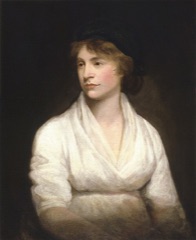
Key dates
- 1759 Born in London
- 1787 Thoughts on the Education of Daughters
- 1790 A Vindication of the Rights of Men
- 1792 A Vindication of the Rights of Woman
- 1797 Marries William Godwin
- 1797 Dies in London
Fun facts
- The asteroid 90481 Wollstonecraft is named after her. (Source: Mary Wollstonecraft (Wikipedia))
Watch
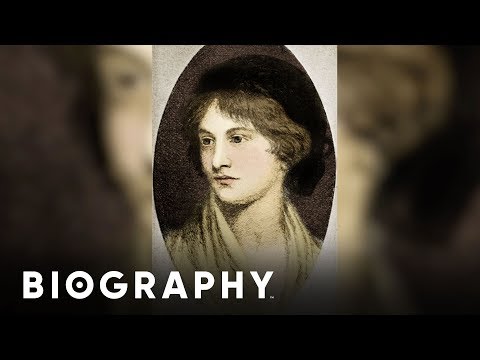

Videos load from YouTube in privacy-enhanced mode only when you press play.
Read about them
Grades 9–12
- A Vindication of the Rights of Woman · In the library
More lives
Cesare Beccaria · George Berkeley · William Blake · James Boswell · Edmund Burke · Robert Burns