Theophrastus
c. 371–287 BC · Greek philosopher who succeeded Aristotle as head of the Lyceum, often called the father of botany.
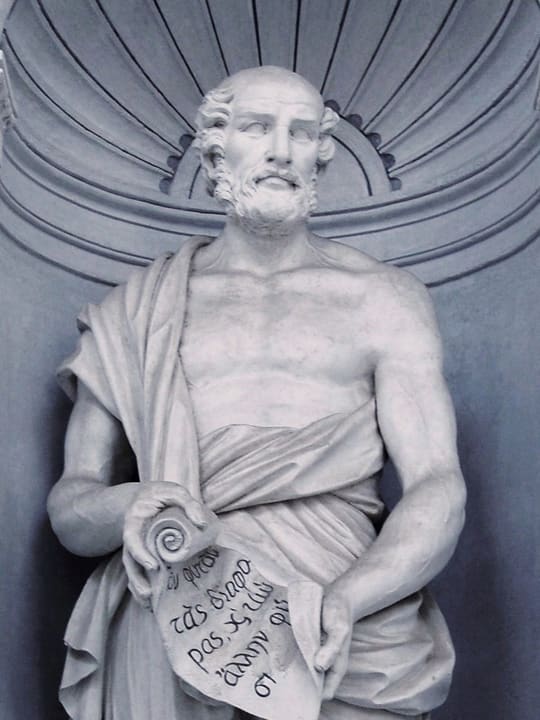
Theophrastus was born around 371 BC in Eresos, on the Greek island of Lesbos. His given name was Tyrtamus; the nickname Theophrastus, meaning 'divine speaker', is said to have been given to him by Aristotle because of the grace of his conversation. After studying philosophy on Lesbos, he moved to Athens, where he may have studied under Plato, and became Aristotle's close colleague. When Aristotle left Athens, Theophrastus took over as head of the Lyceum, the school Aristotle had founded, and led it for about thirty-five years. According to the ancient biographer Diogenes Laërtius, the school flourished and at one time had more than 2,000 students. Theophrastus wrote on almost every area of philosophy and science. His Enquiry into Plants and On the Causes of Plants laid the foundations of botanical science and earned him the title 'father of botany'. His Characters is a set of short sketches of human types. He also wrote on stones, the senses, logic and ethics. He died around 287 BC, and the Athenians honoured him with a public funeral.
Theophrastus is also an author in the library: author page and works.
Faith: Faith not well documented. Source: Wikipedia

Key dates
- c. 371 BC Born in Eresos, Lesbos
- c. 322 BC Becomes head of the Lyceum
- c. 287 BC Dies in Athens
Fun facts
- His real name was Tyrtamus; 'Theophrastus', meaning 'divine speaker', is said to have been a nickname given to him by Aristotle for his graceful way of talking. (Source: Theophrastus (Wikipedia))
Record-breaker
Firsts and records, worded as the sources give them ("first known", "at the time").
- His Characters is the first recorded attempt at systematic character writing. (Source: Theophrastus (Wikipedia))
Read about them
Grades 9–12
- Characters · In the library
More lives
Archimedes · Aristotle · Cicero · Confucius · Pedanius Dioscorides · Epictetus