Wonders & Monuments · Great monuments
Angkor Wat
The great Khmer temple-mountain at Angkor, built in the twelfth century and still standing in the forest.
Still standing. The temple still stands, though it has been repaired and has spent long periods partly overgrown. It was built as a Hindu temple and later used as a Buddhist one. The wider city of Angkor is a landscape of many temples, some in much deeper ruin.
What it is
Angkor Wat was built in the first half of the twelfth century for the Khmer king Suryavarman II, as a temple-mountain dedicated at first to Vishnu. A moat and an outer wall enclose a vast complex of galleries, courtyards and towers, with a raised central shrine. The plan is of great exactness; the walls carry long narrative reliefs. In later centuries the temple was used as a Buddhist sanctuary. It is the largest religious monument at Angkor, and the best preserved.
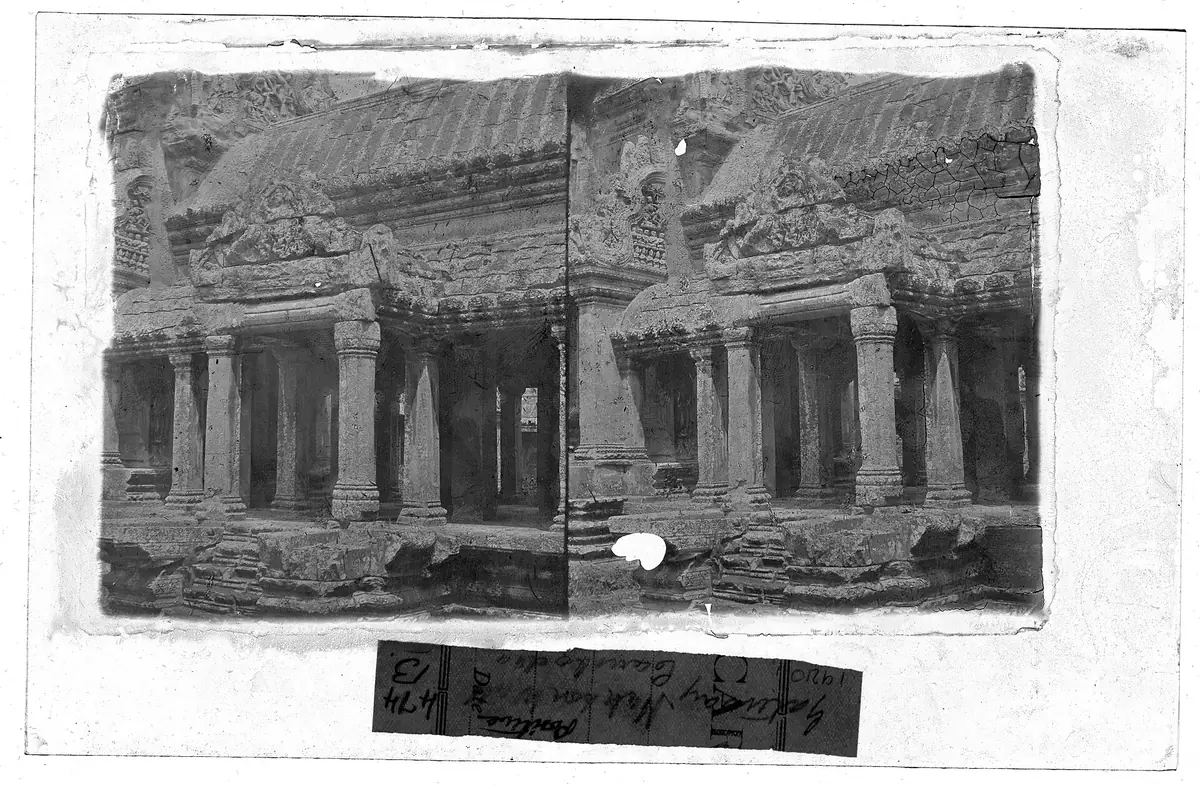
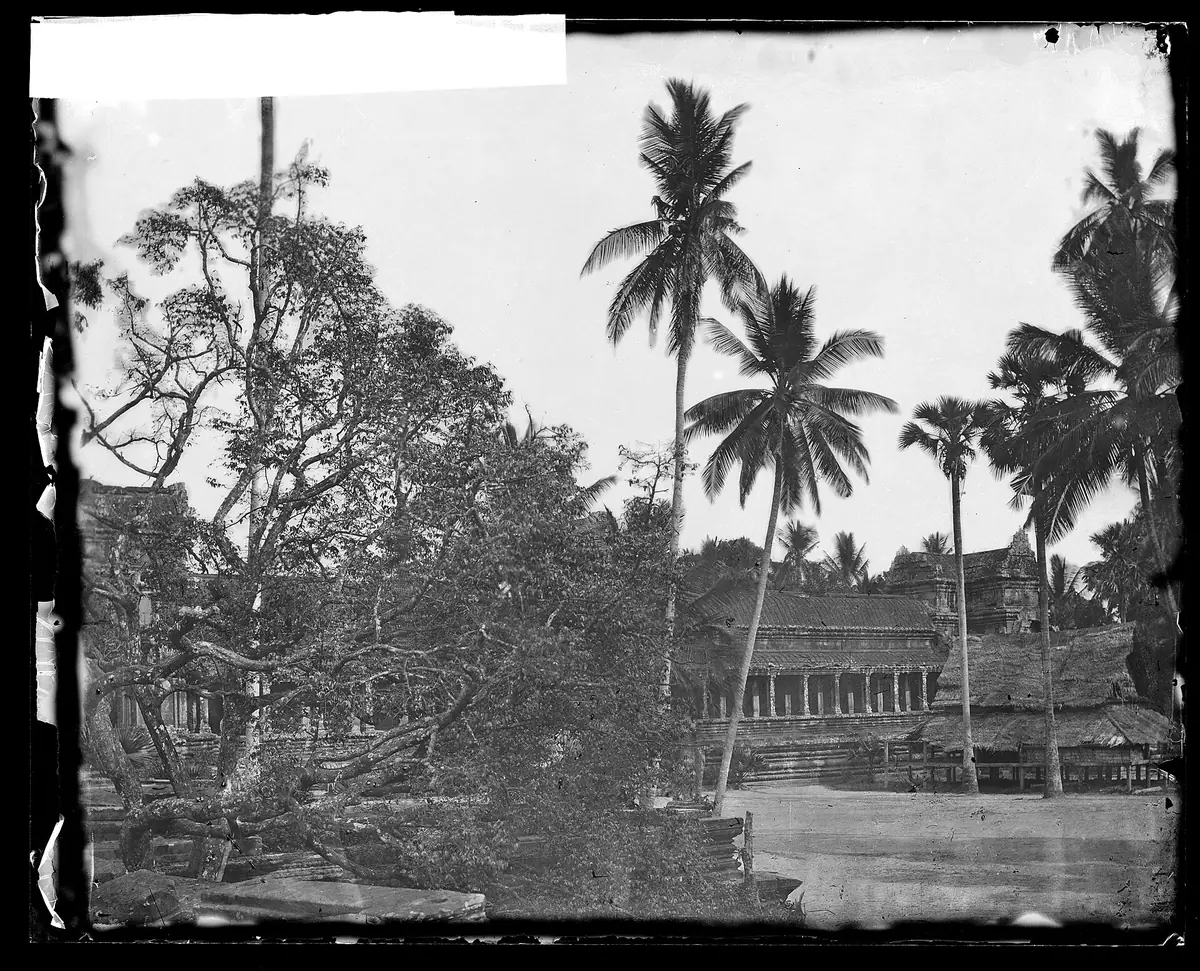
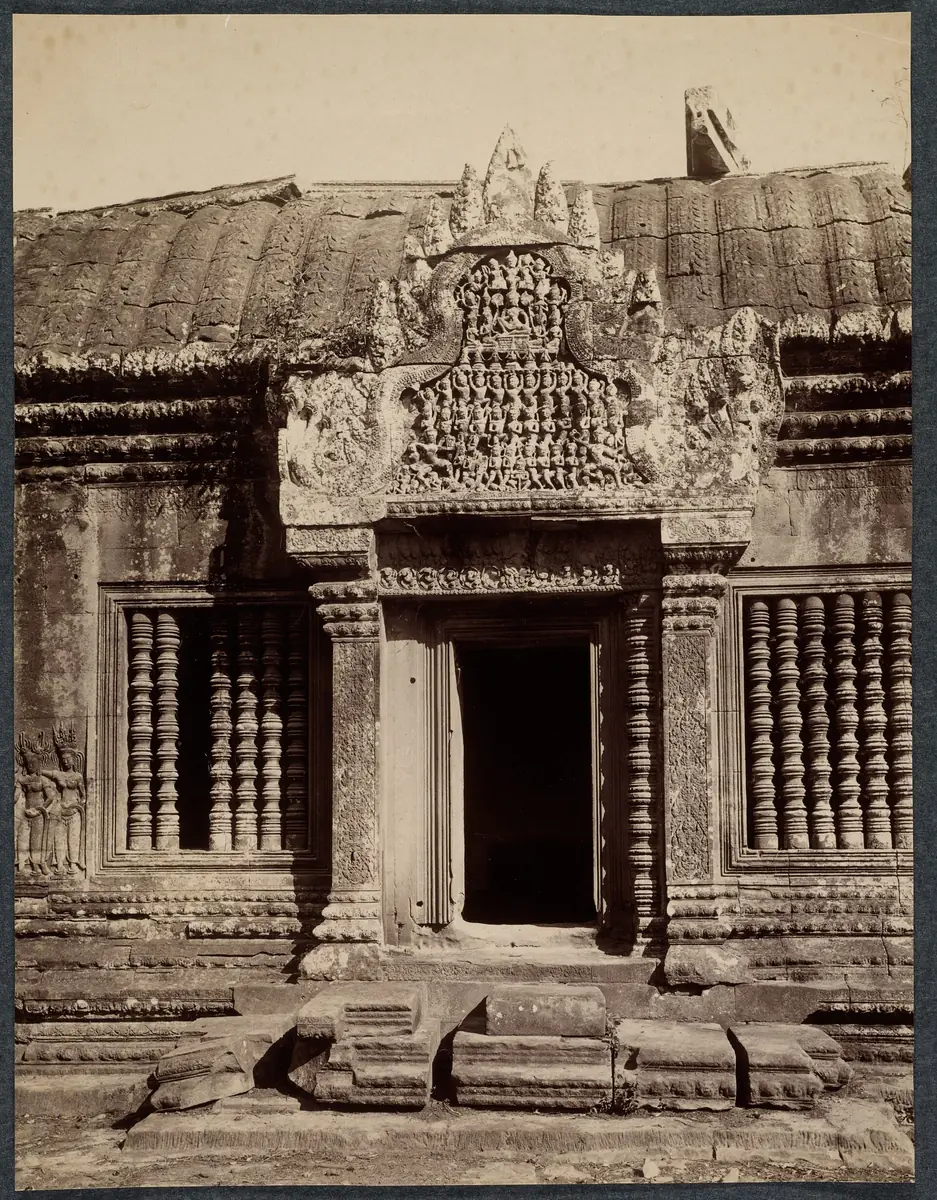
John Thomson photographed the site in 1866, when trees, village houses and fallen stone still crowded the approaches. Those plates are early records, sometimes damaged, and they show the temple before later clearing and restoration. A doorway in an inner enclosure, in a later historic photograph, shows the carved stone close to. The jungle and the ruin of the wider city are part of the truth of Angkor; Angkor Wat itself was never wholly lost.
Why it matters
This is costly work offered to the gods, at the scale of a city-temple, and kept through a change of worship. The virtue to notice is perseverance — in the building, and in the later care that kept the towers standing. Beauty here is the plan, the carved doorways, and the galleries among the trees.
Look closely
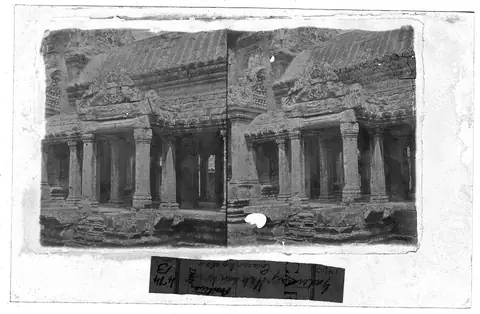
Image: Wellcome Collection · CC BY 4.0 · Photo: John Thomson; Wellcome Collection A gateway or portico at Angkor Wat, 1866
Look closely. Thomson’s photograph of a portico and colonnade at the temple, made in 1866. The stone architecture is clear, even though the plate is worn at the edges. This is the temple as an early camera found it, not as a later restored avenue.
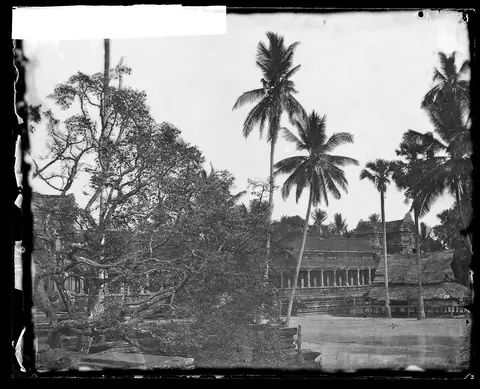
Image: Wellcome Collection · CC BY 4.0 · Photo: John Thomson; Wellcome Collection Galleries and palms, 1866
Look closely. Another Thomson plate, with the temple galleries and a tower among palm trees, and a thatched structure in the foreground. The monument stands in a lived landscape, half cleared, half overgrown. The white damage at the edge of the plate is a fault of the photograph, not of the stone.
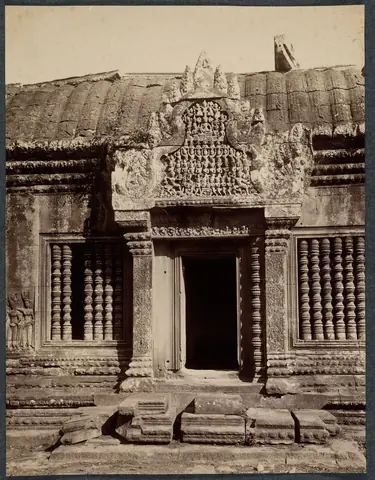
Image: Wikimedia Commons · CC0 (public domain) A doorway in an inner enclosure
Look closely. A closer historic photograph of a carved stone doorway in an inner enclosure of Angkor Wat. Use it to look at the mouldings, the planted columns and the depth of the opening, after the wider Thomson views have given you the setting.


What to watch for
Look slowly- A temple-mountain. The towers rise in a pyramid of terraces, not as a single European spire.
- Galleries and reliefs. Long covered corridors are as important as the central towers. Look for columns and carved walls.
- Early photographs. Thomson’s 1866 plates show trees, thatch and fallen stone around the temple. They are records, and some are worn.
- Hindu, then Buddhist. The first dedication was to Vishnu; later use was Buddhist. Both belong to the history of the site.
- One temple in a city. Angkor is many monuments. This page is about Angkor Wat, not every ruin in the forest.
Sources
Dates follow standard historical references and, where we quote a book, the wording of the edition hosted in this library. Photographs are used only when the photograph itself is Public domain, CC0, or CC BY with a named credit. Lost wonders are shown in later engravings and reconstructions, which are imaginings, not photographs of the original work. Each picture links to its source page with full licence details.