Wonders & Monuments · Great monuments
Machu Picchu
The Inca royal estate on a mountain ridge, abandoned in the sixteenth century and still a ruin in the Andes.
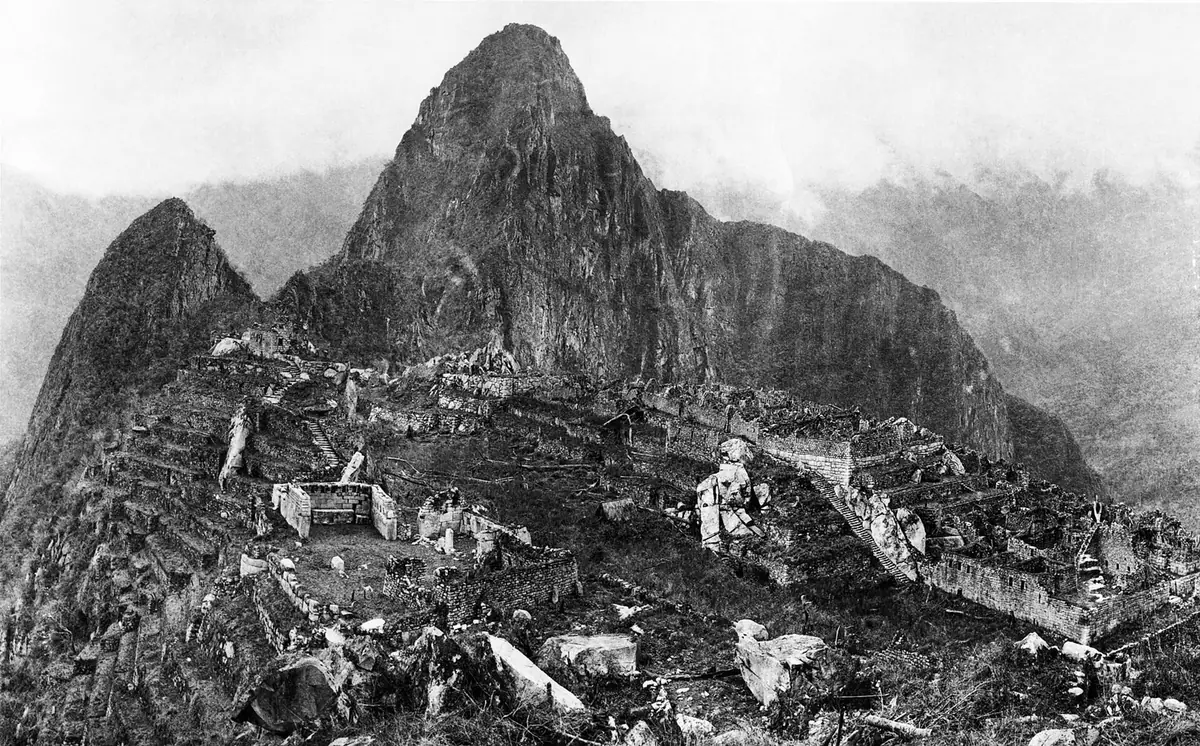
In ruins. The stone city still stands as a ruin on its ridge, above the Urubamba. It was not a lost city to everyone in the region, but it was unknown to outsiders until the early twentieth century. The photographs here were made soon after Hiram Bingham’s 1911 expedition, when the site was only partly cleared.
What it is
Machu Picchu is an Inca site of the fifteenth century, built on a narrow ridge high above the Urubamba river in the Andes of Peru, probably as a royal estate in the time of Pachacuti. Terraces, temples, houses and stairways of carefully cut stone follow the shape of the mountain. The place was abandoned in the sixteenth century, after the Spanish conquest, and the forest grew over much of it.
In 1911 Hiram Bingham, with local help, brought the site to wide outside attention. The photographs on this page come from that early period: the ridge in its mountain setting, the three-windowed temple, and the city as it looked when the trees had only begun to be cleared. They are not pictures of the trimmed tourist circuit of a later age. The work is Inca; the famous “discovery” is a chapter in its afterlife.
Why it matters
This is costly work offered to a king and to the gods, fitted to a mountain with extraordinary skill. The virtue to notice is the exactness of the stone, and the humility of a city that follows the ridge instead of flattening it. Ruin here is abandonment and return, not the collapse of every wall.
Look closely
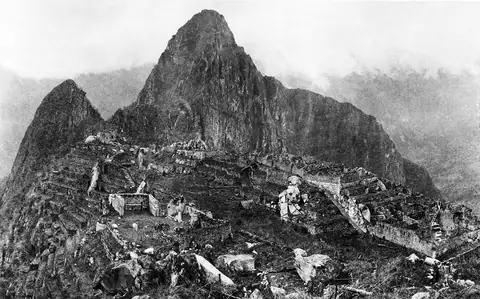
Image: Wikimedia Commons · Public domain Machu Picchu after its clearing had begun
Look closely. An early photograph from Bingham’s expedition, showing the ruins on their ridge, with steep peaks beyond and vegetation still among the walls. This is the city as an outsider’s camera first recorded it, not as a later swept terrace. The mountain setting is the first fact of the place.
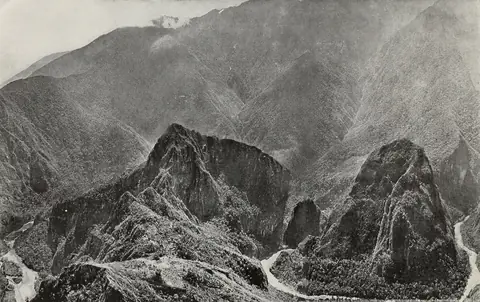
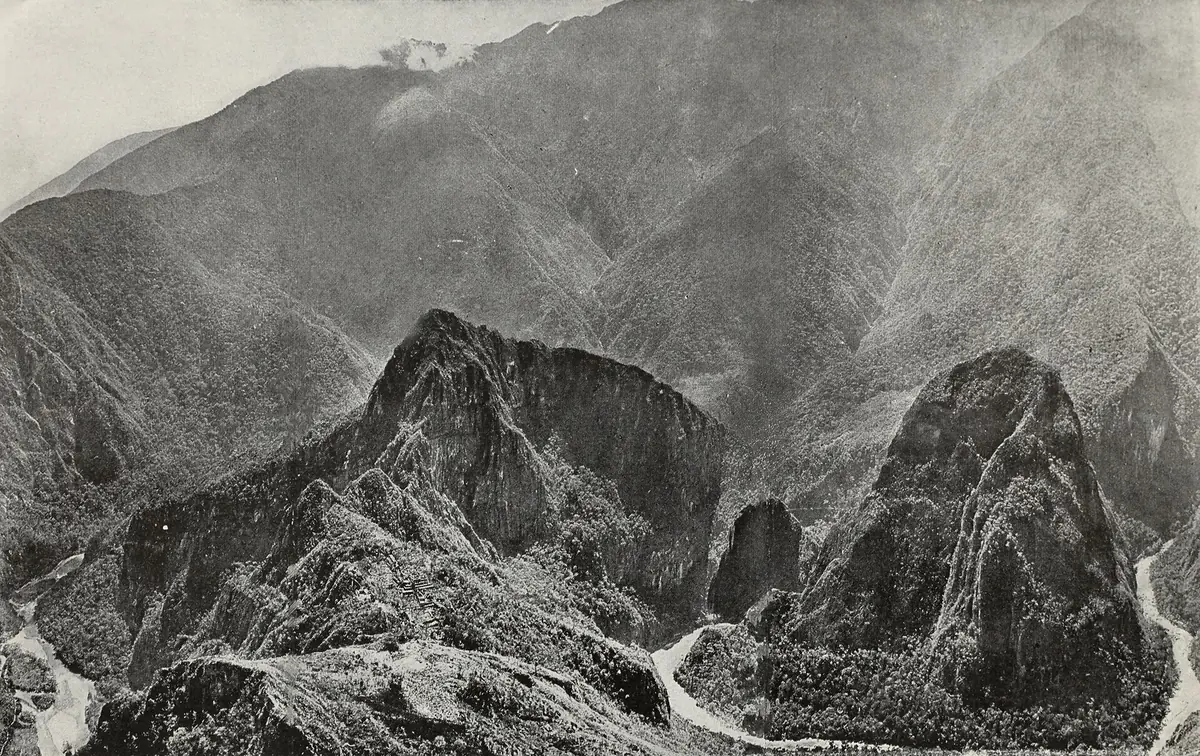
Image: Wikimedia Commons · Public domain Machu Picchu and the Urubamba canyon
Look closely. The site in its wider setting, with the ruins on the ridge and the great canyon of the Urubamba beyond. The photograph is about place as much as about buildings: a city in the clouds, above a river it does not touch.
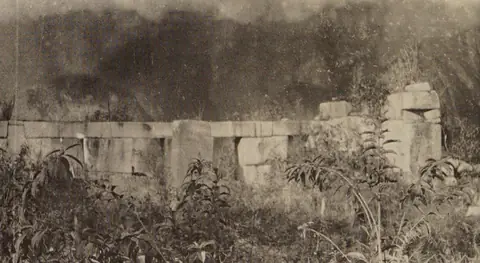
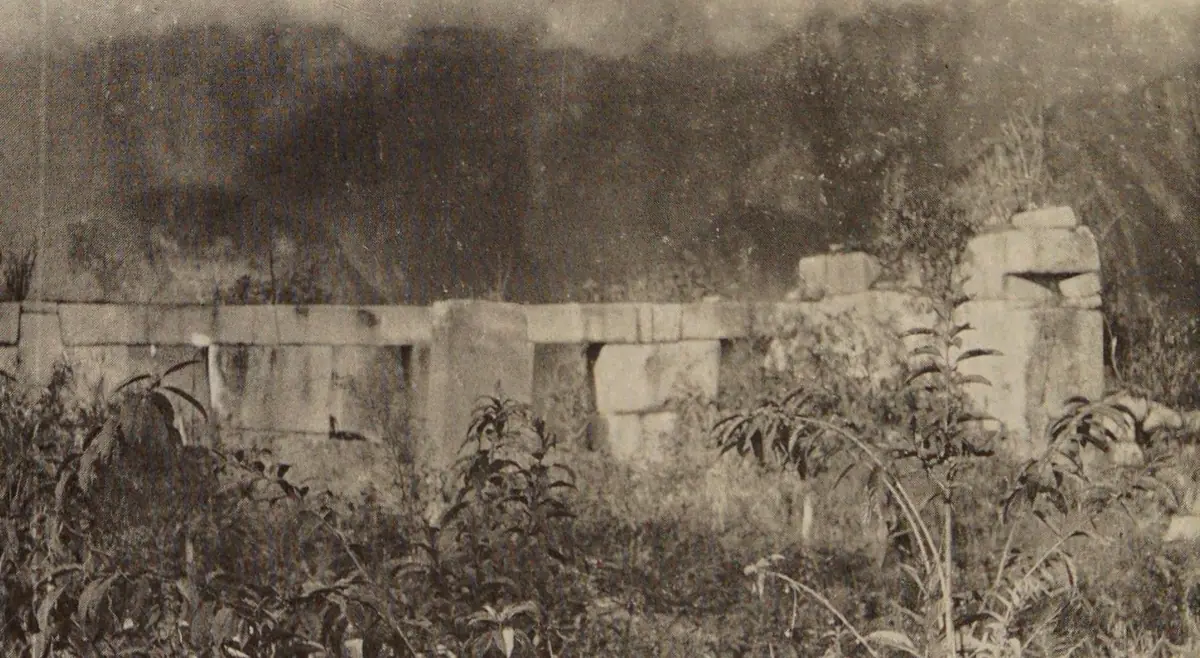
Image: Wikimedia Commons · Public domain The temple of three windows, 1911
Look closely. The three-windowed temple facing the plaza, photographed in 1911, with the openings in the carefully cut wall and loose stone still about the building. Use it to look at Inca masonry close to, and to remember how recently the ruin had been cleared.


What to watch for
Look slowly- A ridge, not a plain. The city is fitted to a narrow mountain saddle, with steep drops on either side.
- Ashlar stone. Notice the tight, mortarless joints in the better walls, especially at the temples.
- Early clearing. Bingham’s photographs show trees and rubble still in the ruins. That is the site as first widely recorded.
- The three-windowed temple. One of the principal sacred buildings, facing a plaza, with its distinctive openings.
- Not a secret to everyone. Local people knew the place. Bingham’s expedition is how the wider world learned of it.
Sources
Dates follow standard historical references and, where we quote a book, the wording of the edition hosted in this library. Photographs are used only when the photograph itself is Public domain, CC0, or CC BY with a named credit. Lost wonders are shown in later engravings and reconstructions, which are imaginings, not photographs of the original work. Each picture links to its source page with full licence details.