Wonders & Monuments · Great monuments
The Taj Mahal
The white marble mausoleum at Agra, built by Shah Jahan for his wife Mumtaz Mahal.
Still standing. The mausoleum, the four minarets, the mosque and jawab, the gateway and the garden still stand. The work has been repaired at times; the essential design is of the seventeenth century.
What it is
The Taj Mahal was built at Agra in the 1630s and 1640s by the Mughal emperor Shah Jahan as a tomb for his wife Mumtaz Mahal, who died in 1631. A white marble mausoleum, with a great onion dome and four minarets, stands at the end of a formal garden on the bank of the Yamuna. A monumental gateway opens the long water axis; a mosque and a matching building (the jawab) flank the tomb. The complex is one of the masterpieces of Mughal architecture, in which Persian, Islamic and Indian traditions are joined.
The nineteenth-century photographs on this page show the mausoleum and the gateway before later crowds and later cleanings fully changed the look of a visit. They are records of the same design you can still walk: a garden of water and trees, a gate, and the white tomb at the end of the path.
Why it matters
This is costly work offered to the dead, and to a husband’s grief, at an imperial scale. The virtue to notice is love joined to magnificence, and the patience of marble inlay and of a garden laid out as a path toward a tomb. Beauty here is symmetry, reflection, and a dome that seems to float.
Look closely
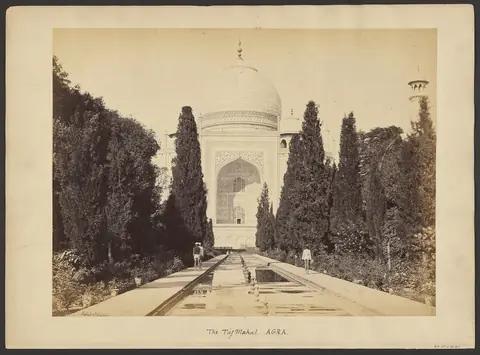
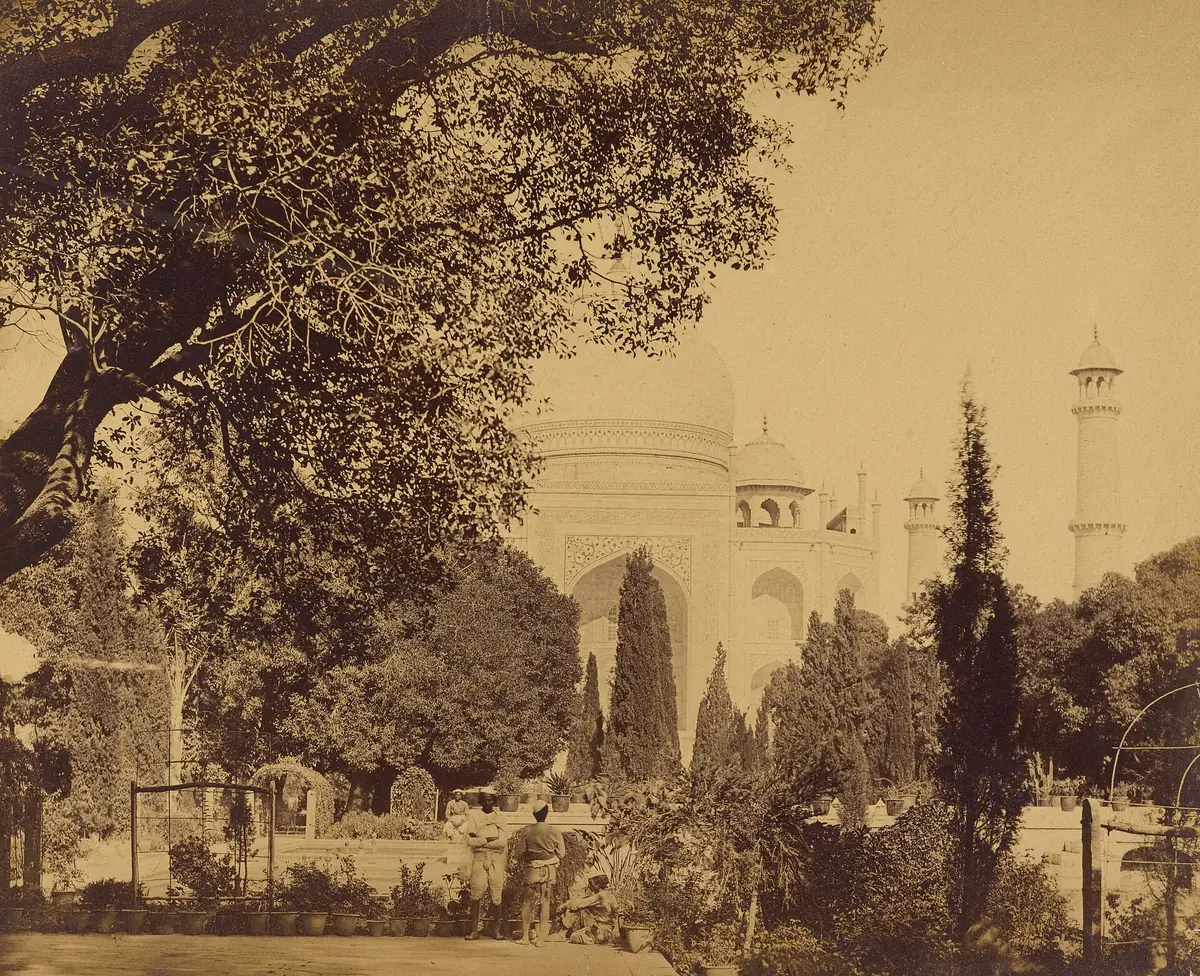
Image: Wikimedia Commons · CC0 (public domain) The Taj Mahal from the garden, 1859–1860
Look closely. A mid-nineteenth-century photograph looking down the garden axis toward the white mausoleum and its minarets. The path, the trees and the distant tomb are the whole design in one view. This is the approach a visitor was meant to walk, recorded before later crowds filled the foreground.
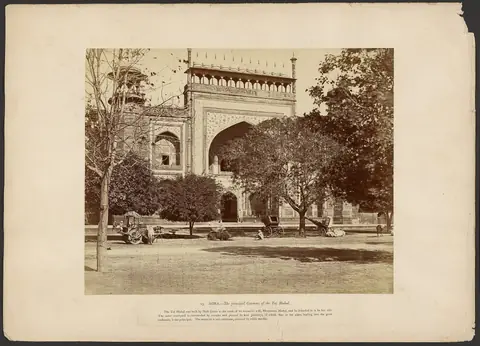
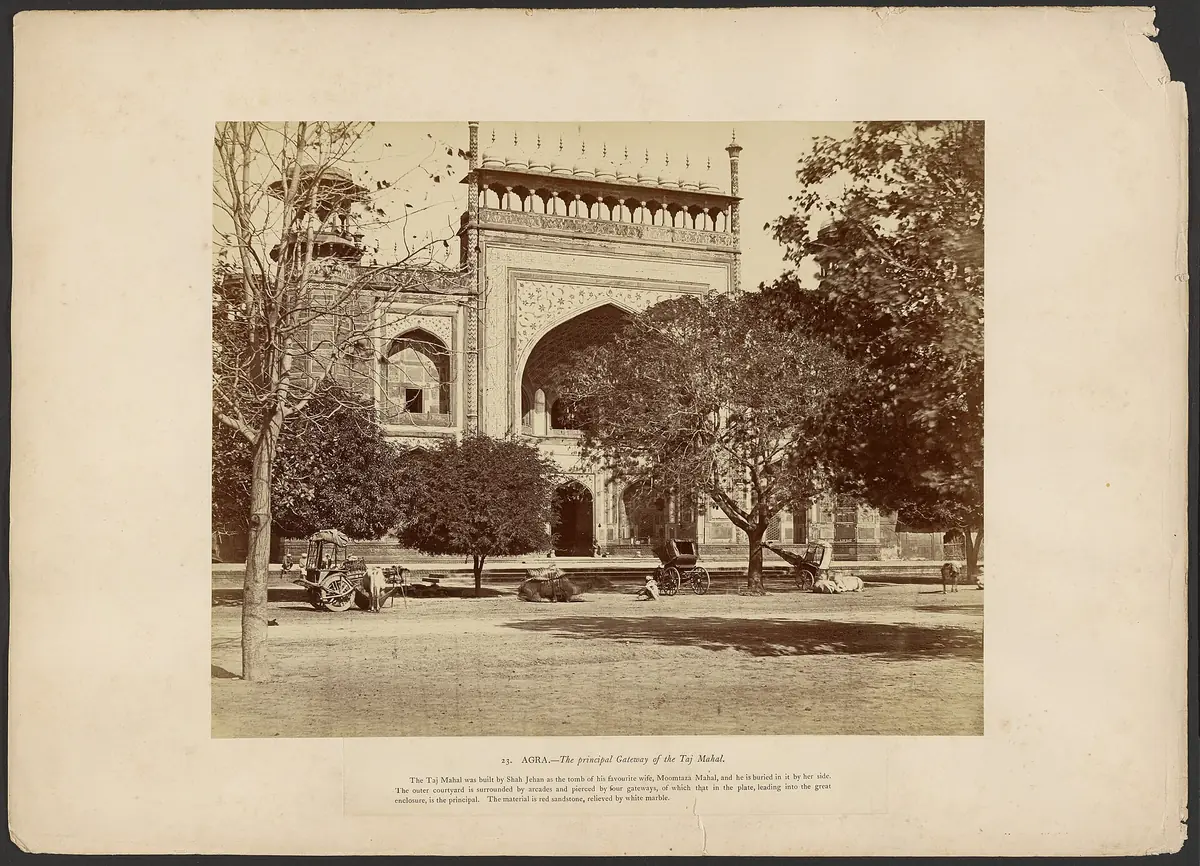
Image: Wikimedia Commons · CC0 (public domain) The principal gateway
Look closely. The great entrance gate to the garden, a monumental building of its own, with a high arch and flanking chambers. Many visitors photograph only the white tomb; this picture restores the gate as the first architecture of the visit.
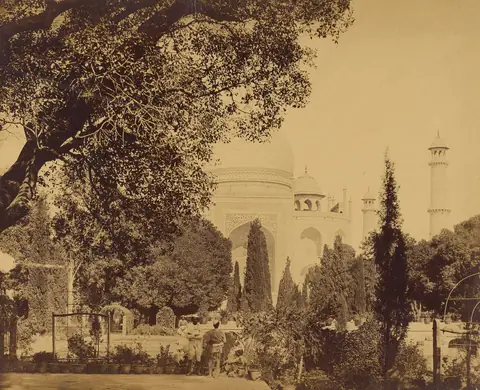
Image: Wikimedia Commons · CC0 (public domain) The mausoleum, a closer front view
Look closely. A closer historic photograph of the marble tomb itself, with the great arch, the dome and the minarets. Use it to read the inlaid panels, the windows, and the way the dome sits on the square mass of the mausoleum.
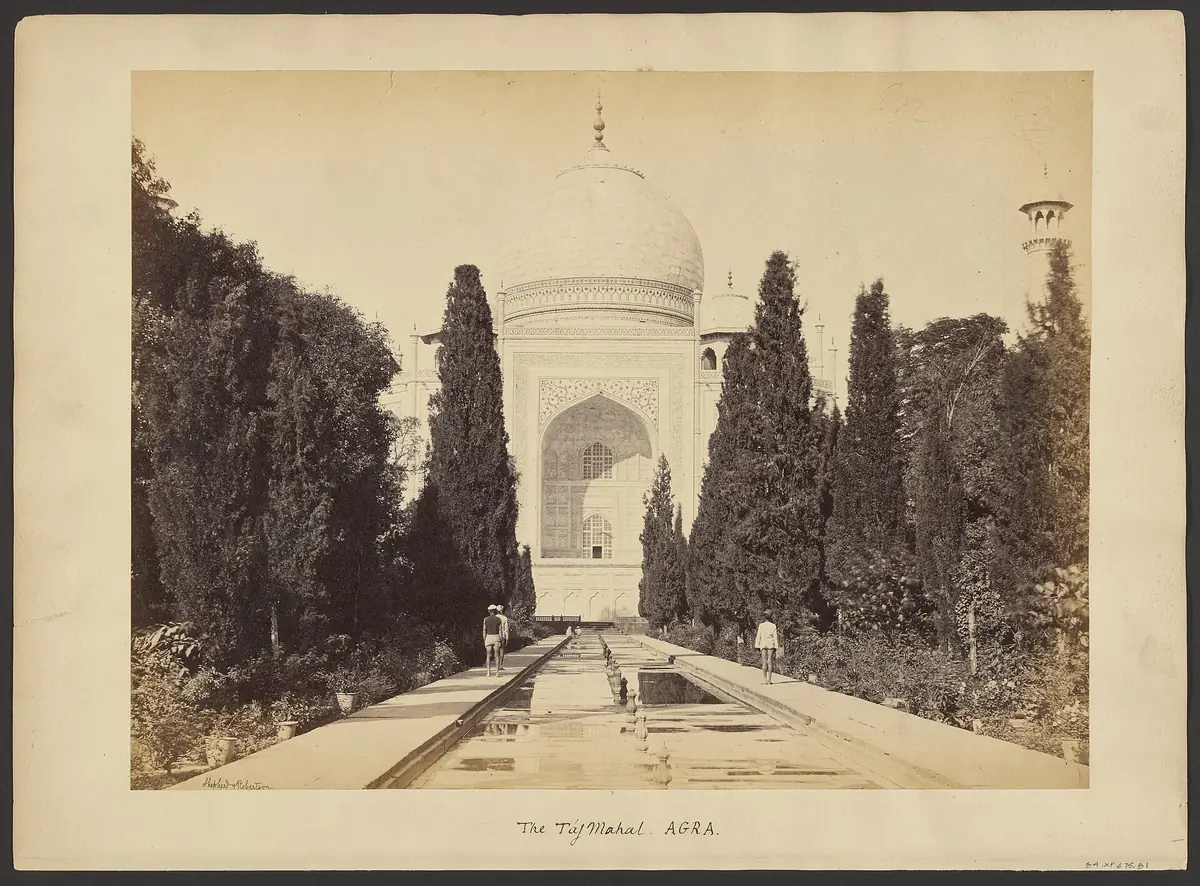


What to watch for
Look slowly- The long axis. The garden and the water-course are not decoration around the tomb; they are the approach to it.
- Gateway and tomb. The great gate is a monument in its own right. The white mausoleum is the destination beyond it.
- Four minarets. They frame the tomb and lean very slightly outward, a precaution as well as a design.
- River and garden. The tomb sits at the end of the garden on the river bank, not in the exact centre of a closed square.
- A working tomb. This is a mausoleum, not a palace or a mosque only, though a mosque stands beside it.
Sources
Dates follow standard historical references and, where we quote a book, the wording of the edition hosted in this library. Photographs are used only when the photograph itself is Public domain, CC0, or CC BY with a named credit. Lost wonders are shown in later engravings and reconstructions, which are imaginings, not photographs of the original work. Each picture links to its source page with full licence details.